Connect with us

Politics

Ekiti election will be transparent, credible and inclusive — State REC

Published

on

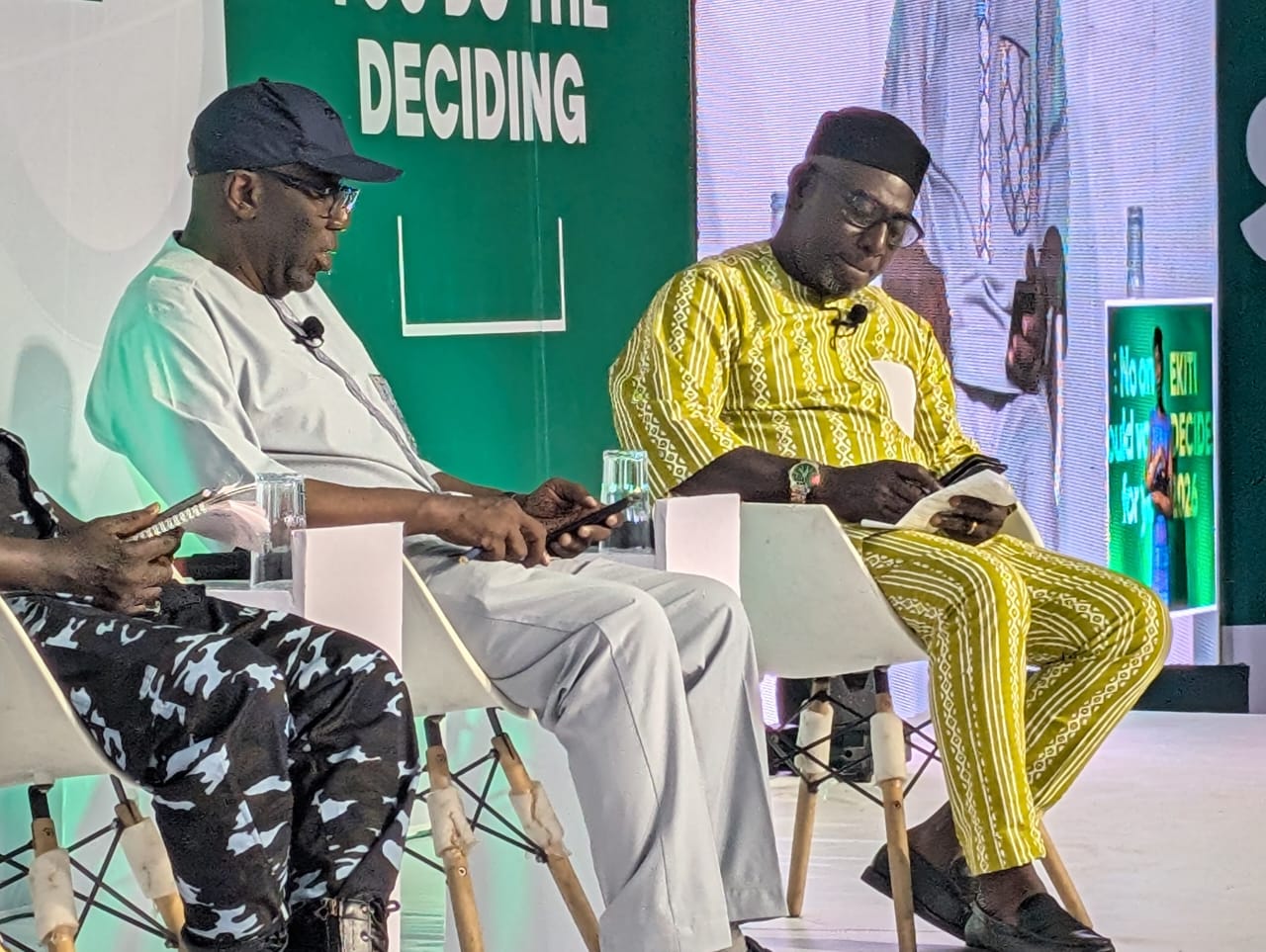
The Resident Electoral Commissioner in Ekiti State, Dr Bunmi Omoseyindemi, says the Independent National Electoral Commission is fully prepared for the June 20 governorship election, with BVAS machines ready and personnel adequately trained. In this interview with ABIODUN NEJO, he speaks on the commission’s preparations, voter apathy, the threat of fake news, election security and assurances of a credible, transparent and peaceful poll

The Ekiti election is two days away. How far has INEC gone with preparations for the exercise?

We have done most of the things we need to do. The only things we are waiting for are the sensitive materials and the conduct of the election. Every other thing is set.

What arrangements have you made for people with disabilities?

We have done a lot of sensitisation for them. They have even been part of the people going around as Civil Society Organisations to mobilise their members. We have the braille ready, as well as all other facilities that will assist people with disabilities.

What is the total number of registered voters for the poll, and are there concerns about voter apathy?

There are 1,059,063 registered voters. When you talk about voter apathy, it is the responsibility of people, as citizens, to come out and vote. As much as possible, we want people to come and vote, but you cannot force them unless there is a law that makes voting mandatory. To vote or not to vote is a matter of choice. In some other countries, however, if you do not participate in the electoral process, there are certain benefits you will not get. So, voter apathy is an issue for citizens, while INEC has the duty to conduct elections. However, there are a lot of uncollected PVCs at INEC offices. That is why when people talk about low voter turnout or voter apathy, most times it is based on the total number of registered voters instead of the number of PVCs collected. The number of PVCs collected is different from the number of registered voters. It is the number of people who collected their voter cards that will determine the percentage of people who voted. For instance, if we have one million registered voters, how many of them collected their voter cards? The uncollected cards are there; either some of the owners have passed on or some people have changed location.

See also  Declare Diri’s seat vacant over PDP resignation, Kenneth Okonkwo urges INEC

Do you think the country needs to toe the line of making participation in the electoral process mandatory?

It has to be discussed with the citizens, and people must decide whether that is what they want or not. It is a democratic setting; people have to decide what they want and what they do not want.

Many people criticise governments for poor performance but fail to vote during elections. Why do you think many citizens choose not to vote?

Psychologists, political scientists and sociologists are to provide answers to this. They need to conduct studies on why people are not voting. Their findings will form recommendations on the needs of the people. Is it out of ignorance? Is it out of fear? Is it out of intimidation? These are issues that need to be studied. Sociologists, political scientists and psychologists should find solutions to why people are not coming out to vote on election days. My responsibility here as a REC is to conduct a credible, inclusive, transparent and peaceful election.

Are there intelligence reports or developments that worry INEC as far as the Ekiti election is concerned?

Any intelligence report will be divulged to the appropriate quarters — the security agencies — to do the needful.

But are there worries?

I do not have worries. I am very positive. I have confidence in the people that they will do the right thing.

What is the biggest challenge for INEC going into the Ekiti election?

We are well prepared for the election. The biggest challenge is people spreading fake news. We have had meetings with media personalities, those in charge of online publications and others. People should not announce results that have not been announced by INEC, and they should not spread fake news about insecurity. For this election, the biggest challenge is fake news.

How does fake news affect INEC?

Fake news affects INEC and everybody as well. It can cause disorderliness, insecurity and anxiety among the people. It can intimidate people and discourage them from participating in the electoral process. For us, we know the people spreading fake news; we are not the ones. We know which reports are false because we are the custodians of information as far as the electoral process is concerned. So, when certain things are circulated, we know whether they are true or false. We have been able to train some people and organisations. Also, organisations such as the International Press Centre and the Centre for Media and Society have visited Ekiti State to train journalists on fact-checking. I think media practitioners should utilise the training and fact-check their stories. Some people like sensationalism. They want to break news and end up spreading false information, thereby losing their credibility. Journalists must wake up so they do not lose their credibility. Anything you want to know, ask INEC and we will provide the information.

See also  I Am The Worst Politician, Nigerians Don’t Like My Type – Buba Galadima

How ready are the Bimodal Voter Accreditation System machines for the election?

They are fully charged and ready. We conducted a mock accreditation exercise in some local governments last Friday to test the machines. Definitely, everything is set. INEC will deploy the machines to all the polling units. We have 2,445 polling units. That means 2,445 BVAS machines.

How confident is INEC that the result transmission process will be seamless and transparent?

We rely on technology. It will be seamless and transparent because we have confidence in our officers. I have to be confident in what I am doing. I am highly confident in the process and in what we are doing at INEC.

What is your message to political actors regarding adherence to the rules of engagement?

Political actors should follow the rules and regulations — the Electoral Act and INEC guidelines. They should caution their supporters and encourage and mobilise their people to vote. When you talk about mobilisation, INEC has a responsibility, but the main responsibility lies with the politicians. They are the ones who want people to vote for them, so they should go and talk to them one by one. You can see elections in other parts of the world where politicians engage citizens and talk to them. It should not be a case of making noise everywhere and then complaining that people are not coming out to vote. It is the responsibility of political parties to mobilise voters. For instance, if you are a banker looking for deposits, will the money come to you on its own? You go out and talk to your customers. It is the parties that want to sell their candidates to the people that should mobilise and convince them.

See also  LP senators shrink to four as Chukwu joins APC

What are your expectations from the Ekiti electorate?

We expect the electorate to be orderly, come out en masse and vote for the candidates of their choice. It is the responsibility of eligible citizens to vote. If people believe it is their civic responsibility, they should come out and vote on Election Day. People should wake up to their civic responsibilities. Nigerians always talk about rights, but they do not talk about responsibilities. Their responsibility is to participate in the electoral process so that they can put the people they want in power. Without participatory democracy, you cannot have sustainable development. Sustainable development is premised on a participatory process. People must participate. You cannot just sit in your house complaining or be an online tiger without being on the ground. People should wake up, talk to one another and realise that this country belongs to all of us. We can make it better by living up to our responsibilities at every level and at all times.

What assurances can you give Ekiti people about the credibility of this election?

The credibility of the election depends on us at INEC and on the people on the field. We have trained our personnel thoroughly and our machines are ready. It is not going to be like in the past when people were brought in to thumbprint without being captured by BVAS. BVAS has removed all those kinds of practices. The people should rest assured that the election will be transparent, credible, peaceful and inclusive. That is the assurance I am giving the people of Ekiti.

What difference will this election make that the 2027 general elections can take a cue from?

We are well prepared and we are going to start the election on time, with adequate security in place. There will be lessons to learn from the processes we have put in place and from our ability to commence the election on schedule. One thing, however, is that this is a stand-alone election, which is different from the general elections. In the general elections, you are saddled with many other responsibilities.

punch.ng

FOLLOW US ON:

FACEBOOK

TWITTER

PINTEREST

TIKTOK

YOUTUBE

LINKEDIN

INSTAGRAM

Continue Reading
Click to comment

Leave a Reply

Your email address will not be published. Required fields are marked *

Politics

Osun 2026: Adeleke campaign raises BVAS, PVC concerns

Published

on

The Imole Campaign Council, the group leading the re-election campaign of Osun State Governor, Ademola Adeleke, has urged the Independent National Electoral Commission to avoid the lapses witnessed during some recently conducted off-cycle elections.

Addressing journalists in Osogbo on Monday, the Director-General of the campaign council, Lere Oyewumi, alleged that during off-cycle and by-elections in Ogun, Oyo, Jigawa and Ekiti states, individuals suspected to be mercenary voters were issued Permanent Voter Cards shortly before voting.

Oyewumi, who also raised concerns over the deployment of insufficient ballot papers and other sensitive materials, alleged that already thumb-printed ballot papers were distributed during the 2026 Ekiti State governorship election.

He said the off-cycle election in Ekiti and the FCT Area Council elections were also marred by technical challenges associated with the Bimodal Voter Accreditation System.

The lawmaker further alleged that during the recent elections in Anambra, Ekiti and the FCT, political parties that did not field candidates in the polls appeared on both ballot papers and result sheets used for the elections.

Highlighting other concerns identified by the council ahead of the Osun governorship election, Oyewumi said, “We have been inundated with boastful statements reportedly made by some Osun APC leaders about preloading BVAS machines ahead of the governorship election in the state.

“This claim, if true, strikes at the heart of electronic accreditation and suggests a predetermined outcome rather than the genuine will of the people.

“We have been notified about the commencement of the distribution of new PVCs by INEC. However, we have serious concerns about the transparency of the process, and we hereby warn that any move to disenfranchise Osun voters by withholding their PVCs will not be tolerated.

See also  Australia-based Medical Doctor, Wole Oluyede, Wins Ekiti PDP Guber Ticket

“We categorically demand that this distribution must be transparent and should not allow collection by proxy.”

Insisting that the issues raised by the council should be addressed, Oyewumi said the concerns were not aimed at undermining confidence in INEC but at strengthening the electoral process through constructive engagement.

He added, “The Osun governorship election presents another important opportunity for Nigeria to demonstrate that democratic institutions can continue to improve and inspire public confidence.

“The people of Osun are peaceful, politically conscious and deeply committed to democracy.

“They expect nothing short of a free, fair, transparent and credible election that faithfully reflects the wishes of the electorate.

“We, therefore, call on INEC to treat these observations with the seriousness they deserve and implement all necessary corrective measures before August 15.”

The PUNCH reports that voters in Osun State will go to the polls on Saturday, August 15, to elect a governor.

Fourteen political parties are fielding candidates in the election.

The incumbent governor, Adeleke, vying on the Accord ticket, Bola Oyebamiji of the All Progressives Congress and Dr Najeem Salaam of the African Democratic Congress are the three leading candidates in the election.

punch.ng

FOLLOW US ON:

FACEBOOK

TWITTER

PINTEREST

TIKTOK

YOUTUBE

LINKEDIN

Continue Reading

Politics

Kwankwaso revealed that Obi signed one-term presidency accord

Published

on

The vice-presidential candidate of the Nigeria Democratic Congress, Dr Rabiu Kwankwaso, has confirmed that the party’s presidential candidate, Peter Obi, signed a written agreement with him to serve only a single tenure of four years and allow power to return to the North if elected president in 2027.

Kwankwaso disclosed this during an interview on Channels Television on Monday, saying the agreement was aimed at ensuring power returns to the North after a single four-year tenure in line with the party’s power-sharing arrangement.

The former Kano State governor said he had no reason to doubt Obi’s commitment to honouring the agreement.

“Oh yes, I personally believe him. I don’t think, based on what I now know about him, that he will change his mind when the time comes. We are all gentlemen,” he said.

Asked whether the understanding had been documented, Kwankwaso replied that both the party and the two candidates signed separate agreements.

“We have done one for the party, and we have done another one between the two of us,” he said.

Explaining the substance of the agreement, Kwankwaso said it provides for a single four-year tenure for Obi before the presidency returns to the North.

“The agreement is what you said, that for four years, we will work together, team together as a group, party, friends and brothers so that after his term of four years (2027-2031), it comes back to the North. That is the general agreement.”

He said he accepted the vice-presidential slot because both leaders agreed that the South should retain the presidency for only one term before power rotates back to the North.

See also  Declare Diri’s seat vacant over PDP resignation, Kenneth Okonkwo urges INEC

“Together we felt that the presidency should go to the South for four years; thereafter it will come back to the North.

“We believe that should be the consensus of everybody in this country so that we can move together as a family, both North and South,” he said.

On whether he intends to contest the presidency in 2031, Kwankwaso said the party remained focused on winning the 2027 election while keeping its long-term political plans in view.

“We have a short-term plan which we are executing now and, of course, we also have our medium and long-term plans for the country, and that is what we are working on now,” he said.

Obi had in May announced that he would serve only one term if elected president, saying the decision was intended to promote political stability and strengthen national unity.

“I want to be a one-term president because of stability. I would not stay a day, with a gun to my head, longer than four years,” Obi had said.

The NDC has consistently defended its power-sharing arrangement, presenting the Obi-Kwankwaso ticket as a consensus aimed at balancing the country’s regional interests ahead of the 2027 presidential election.

punch.ng

FOLLOW US ON:

FACEBOOK

TWITTER

PINTEREST

TIKTOK

YOUTUBE

LINKEDIN

Continue Reading

Politics

2027: PDP, APC upload gov candidates on INEC portal

Published

on

The Peoples Democratic Party and the ruling All Progressives Congress have commenced the upload of names of their governorship and state Houses of Assembly candidates for the 2027 general elections.

Speaking exclusively with The PUNCH, the PDP National Organising Secretary, Umar Bature, disclosed that the party commenced the upload process on Saturday.

Also, a senior APC official, who spoke on condition of anonymity because he was not authorised to comment publicly, told our correspondent that the party would upload only the governorship and state Houses of Assembly candidates whose nominations had been cleared by the primary election appeal panel and the National Working Committee.

Earlier, in line with the Independent National Electoral Commission’s timetable, political parties submitted the nomination lists of their presidential and National Assembly candidates between June 27 and July 11, 2026.

The process also included the submission of Forms EC9 and EC9A to EC9E, as required under Section 29(1) of the Electoral Act, 2026.

INEC also fixed the submission of nomination forms for governorship and state Houses of Assembly candidates to run from 9:00 a.m. on July 18 to 6:00 p.m. on August 8, 2026.

The timetable further indicates that the personal particulars of presidential and National Assembly candidates will be published on August 8, while those of governorship and State House of Assembly candidates will be displayed on August 29.

It also sets August 22 as the deadline for the withdrawal or substitution of presidential and National Assembly candidates, while governorship and state House of Assembly candidates have until September 19 to withdraw or be substituted.

See also  LP senators shrink to four as Chukwu joins APC

When contacted, Bature disclosed that the PDP began uploading its candidates’ details on Saturday, adding that the exercise is ongoing and will be concluded before August 8.

He stated, “The Peoples Democratic Party commenced the upload of its governorship and state Houses of Assembly candidates’ details to INEC’s nomination portal on Saturday.

“The exercise has been progressing smoothly without any technical issues, and we are confident that the upload process will be completed well ahead of the deadline.”

Also, the APC source said the party has commenced the upload of its candidates on the INEC portal, with priority given to the 16 incumbent governors seeking re-election.

The 16 incumbent governors expected on the APC list are Umo Eno of Akwa Ibom, Hyacinth Alia of Benue, Uba Sani of Kaduna, Abba Yusuf of Kano, Dikko Radda of Katsina, Nasir Idris of Kebbi, Umaru Bago of Niger, Caleb Mutfwang of Plateau, Ahmed Aliyu of Sokoto, Agbu Kefas of Taraba and Dauda Lawal of Zamfara.

The source also said the party’s governorship list would feature 12 first-time flagbearers, including Obafemi Hamzat (Lagos), Solomon Adeola (Ogun), Kingsley Chinda (Rivers), Eric Opah (Abia), Mohammed Abubakar (Bauchi), Mustapha Gubio (Borno), Jamilu Gwamna (Gombe), Ahmed Wadada (Nasarawa) and Baba Malam Wali (Yobe).

He stated, “I can confirm that the party commenced the upload process yesterday (Saturday), with priority given to the 16 governors seeking re-election.

“The party has also established a committee headed by Jibrin Bancir, the Principal Private Secretary to the APC National Chairman, to coordinate the smooth transmission of documents and materials required for upload to the INEC portal.

See also  Yilwatda, Basiru cleared as APC maps out 2027 convention

“The committee is responsible for receiving documents from state chairmen, verifying the details, ensuring all requirements are met, and forwarding them to the ICT department for upload.

“The arrangement is aimed at making the process seamless, efficient and timely.

“There could be slight changes to the initial list of candidates, as the primary election appeal committee had reviewed some petitions and submitted its recommendations to the National Working Committee.

“So, only candidates who passed the appeal committee’s review and received the approval of the NWC were uploaded to the INEC portal.

“We are confident that the exercise will be completed before the deadline.”

The PDP, APC and other political parties are expected to upload a total of 28 governorship candidates and 993 state Houses of Assembly candidates nationwide.

Governorship elections will not take place in the eight states of Anambra, Bayelsa, Edo, Ekiti, Imo, Kogi, Ondo and Osun due to off-cycle election schedules.

Earlier, political parties participating in the presidential and National Assembly elections had submitted and uploaded their candidates’ lists on the INEC portal.

punch.ng

FOLLOW US ON:

FACEBOOK

TWITTER

PINTEREST

TIKTOK

YOUTUBE

LINKEDIN

Continue Reading

Trending