About N500bn was deducted from the Federation Account Allocation Committee revenue for May 2026 to fund a national security emergency intervention, multiple sources familiar with the development told The PUNCH.
The deduction was made before the monthly revenue sharing exercise among the Federal Government, states and local government councils, according to senior officials privy to the FAAC proceedings.
Confirming the development, one of the sources said, “FAAC deducted N500bn for national security emergency fund this month.”
Another official added that the deduction accounted for a significant portion of the gap between the total revenue generated and the amount eventually distributed to the three tiers of government.
“That is where the FAAC windfall is going too,” the source said.
He further disclosed that commissioners of finance from the 36 states, who are members of the FAAC, were aware of the deduction.
“Commissioners are not talking about it, which means they are in the loop,” the official added.
However, an official FAAC allocation document obtained by The PUNCH on Thursday showed that substantial deductions from federation revenues were disclosed during the May 2026 FAAC meetings.
The document indicated that N250bn was set aside for a Military Intervention Fund, while another N252bn was allocated as an Infrastructure Development Fund to states.
It also showed a N450bn deduction to the Non-Oil Excess Revenue Account, bringing the combined value of the three major deductions to N952bn.
The revelation comes as the Federation Account Allocation Committee announced the distribution of N2.3tn to the Federal Government, state governments and the 774 local government councils as revenue allocation for May 2026.
According to a statement issued on Wednesday by the Director of Press and Public Relations in the Office of the Auditor-General of the Federation, Bawa Mokwa, the Federation Account Allocation Committee shared N2.30tn among the Federal Government, states and local government councils from May 2026 revenue, representing an increase of N43bn from the N2.26tn distributed in the previous month.
The allocation marks a 1.9 per cent month-on-month increase and continues the upward trend in federation revenues. The N2.257tn shared from April 2026 revenue had itself exceeded the N2.04tn distributed for March revenue by N217bn, while the March allocation was N150bn higher than the N1.89tn shared in February.
The statement said the N2.300tn distributable revenue comprised N1.611tn in statutory revenue and N688.785bn in Value Added Tax revenue.
A communiqué issued after the meeting showed that total gross revenue available in May stood at N3.395tn. From this amount, N123.546bn was deducted as the cost of collection, while N971.610bn was set aside for transfers and refunds.
A breakdown of the N2.300tn distributable revenue showed that the Federal Government received N818.680bn, while state governments received N759.141bn.
The 774 local government councils received N534.277bn, while oil-producing states shared N188.132bn as 13 per cent derivation revenue.
Although the official FAAC communiqué did not provide details of the individual items captured under transfers and refunds, sources said the N500bn security deduction formed part of the pre-distribution adjustments made to the federation revenue for the month.
The deduction comes against the backdrop of persistent security challenges across Nigeria, with federal and state governments facing mounting pressure to strengthen military and intelligence operations.
In recent years, the country has grappled with multiple security threats, including insurgency in the North-East, banditry and mass kidnappings in the North-West, violent clashes between farmers and herders in the North-Central, separatist agitations in the South-East and crude oil theft and pipeline vandalism in the Niger Delta.
Despite billions of naira budgeted annually for defence and security, attacks on communities, abductions for ransom and assaults on security formations have continued to stretch the country’s security architecture.
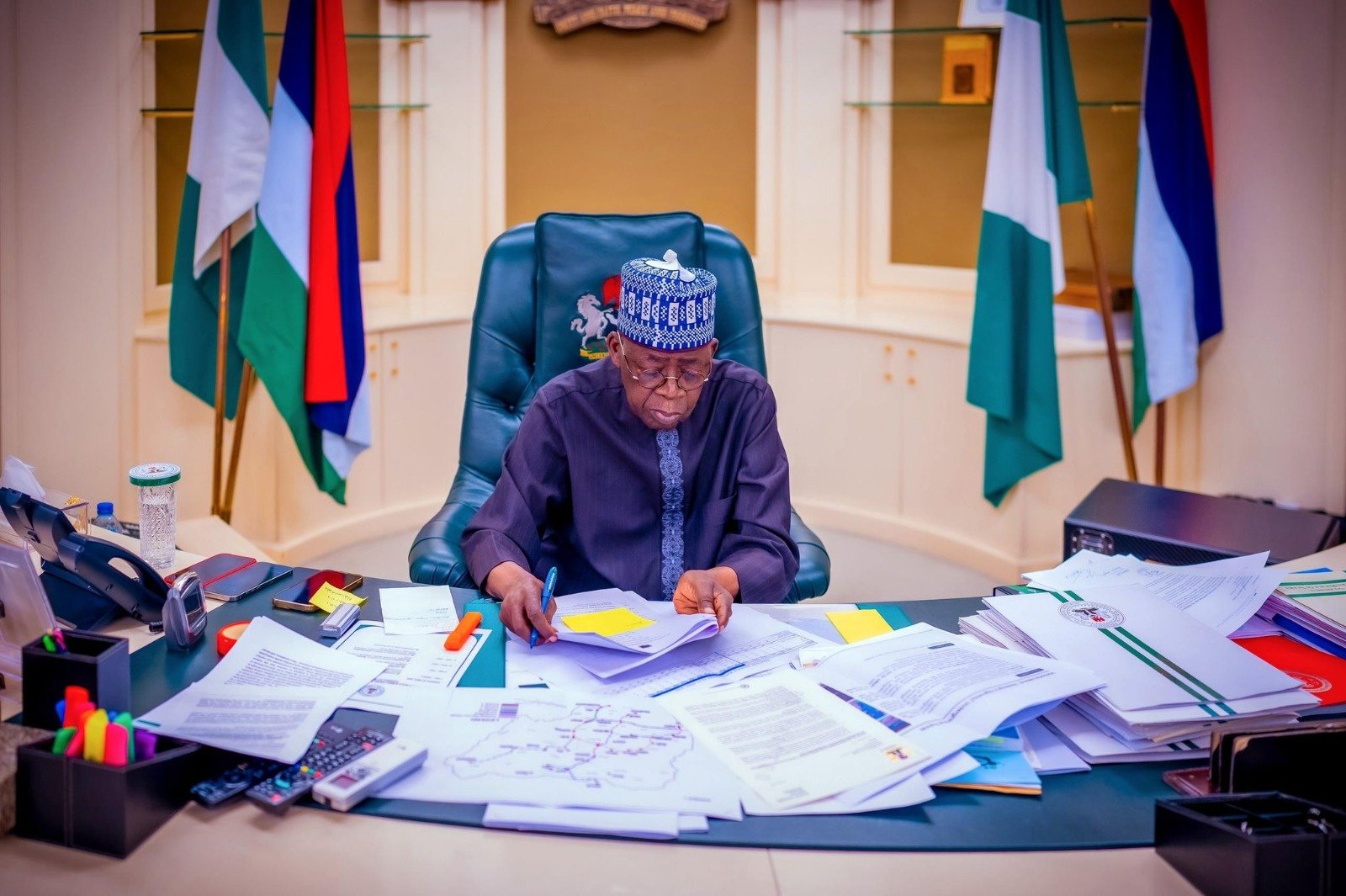
The administration of President Bola Tinubu has repeatedly pledged to prioritise national security, describing it as a prerequisite for economic growth and social stability.
Since assuming office in May 2023, the Federal Government has approved increased funding for the armed forces, procured military hardware and intensified intelligence-driven operations aimed at combating insurgency, banditry and other forms of violent crimes.
Security analysts say the creation of a national security emergency fund, if sustained, could provide additional fiscal support for urgent security interventions, especially as the country continues to battle evolving threats across different regions.
Economists welcome move
Economists have welcomed the Federal Government’s plan to establish a N500bn national security emergency fund but urged authorities to ensure transparent and accountable spending that delivers improved security and protects investments across the country.
In separate phone interviews with The PUNCH, economists, including the Chief Executive Officer of Economic Associates, Dr Ayo Teriba, said no Nigerian would oppose increased funding for security because existing funding gaps remained obvious.
Teriba noted that the country required more resources for troop funding, equipment procurement, personnel remuneration, surveillance infrastructure and the recruitment of security personnel such as forest guards.
“Everybody agreed that not enough is being done on security, not enough is being spent on security, and the funding gaps on security are obvious,” Teriba said.
He noted that the government’s decision to source the fund from FAAC allocations rather than impose fresh levies on citizens would likely attract support, although Nigerians would expect transparency in the management of the resources.
“If the government wants to set aside a security fund, nobody will be opposed to it. They are saying they will take it from FAAC before sharing the money. If they want to sacrifice money that they need for security, that is the only way,” Teriba said.
The economist stressed that the success of the initiative would depend on the government’s willingness to operate transparently.
“It is up to them to reassure Nigerians that this time they mean well and that they can be transparent about what they want to use this funding for,” Teriba said.
He added that additional funding could support the recruitment of more police officers, military personnel and forest guards across the country.
Teriba also backed the opposition of the Department of State Services to foreign donations into the proposed trust fund.
“I am happy that the DSS is saying no foreign funding because some of the insurgents are being funded by some foreign interests. Some foreign countries might be complicit, and you shouldn’t take funding from such,” Teriba said.
Also speaking, Professor of Economics and Public Policy at the University of Uyo, Prof. Akpan Ekpo, described security as a critical requirement for economic growth and investment.
“Security is very crucial. Without security, all the investments coming in will not work. With security, you can develop a place. Without security, you can’t,” Ekpo stressed.
He argued that a dedicated emergency fund to strengthen security operations and procure modern equipment was a step in the right direction, provided the resources were managed efficiently.
“If you have an emergency fund to boost security, to get modern equipment and fight insurgency and terrorism, it is a step in the right direction, provided the money is used efficiently, and there is transparency,” Ekpo said.
However, he questioned the effectiveness of previous security allocations, noting that billions of naira had already been budgeted for security over the years.
He warned that without accountability, public confidence in the fund could be undermined, especially given persistent concerns about corruption.
‘No foreign funding’
The Department of State Services on Thursday urged the House of Representatives to remove provisions allowing international organisations to fund its proposed Security Trust Fund, warning that foreign contributions could expose sensitive intelligence operations to external influence and compromise Nigeria’s national security.
The Service made its position known at a public hearing organised by the House Committee on National Security and Intelligence on bills seeking to strengthen the operational capacity of the country’s domestic intelligence agency through dedicated funding, professional training and research development.
Presenting its submission on the bill to establish the Department of State Services Trust Fund, the DSS, represented by Emmanuel Duabry, endorsed the legislation but proposed far-reaching amendments, including the deletion of provisions permitting grants, donations and endowments from international organisations.
The Service argued that accepting foreign funding for security operations could undermine institutional independence and expose intelligence activities to external scrutiny.
Duabry said, “Section 3(d), which permits grants, donations, and endowments from international organisations, should be expunged.
“Allowing foreign funding for a security-related Trust Fund raises serious concerns relating to sovereignty, operational confidentiality, and institutional independence. International funding arrangements may impose reporting and disclosure obligations capable of compromising sensitive security operations, including intelligence methods, procurement processes, and deployment strategies.
“There is also a risk that foreign funding may introduce external influence over domestic security priorities, which may not always align with Nigeria’s specific security realities, including insurgency, banditry, and kidnapping.”
The DSS consequently proposed that the Trust Fund should only receive grants, donations and endowments from local organisations.
Despite its reservations, the DSS described the proposed legislation as a major step towards strengthening intelligence and security operations through sustainable financing.
According to the Service, the Fund will provide dedicated resources for intelligence gathering, counterterrorism operations and rapid response to emerging security threats, while reducing delays associated with conventional budgetary processes.
It said, “The Bill for an Act to establish the Department of State Services Trust Fund proposes the creation of a dedicated DSS Security Trust Fund aimed at ensuring stable and flexible financing for intelligence gathering, counterterrorism efforts, and broader national security operations.
“The Fund is designed to facilitate the acquisition of modern operational equipment, enhance training, and enable swift responses to emerging security challenges, while also minimising delays often associated with conventional budgetary procedures and safeguarding the confidentiality required for sensitive activities.
“It is further intended to guarantee the availability of prompt funding during emergencies such as terrorism incidents, civil unrest, and other crises.”
The agency also proposed changes to the funding structure of the Trust Fund, arguing that the current bill leaves too much discretion to the National Assembly in determining annual allocations.
According to the DSS, a clearly defined funding formula or fixed percentage contribution would provide greater certainty and stability for long-term security planning.
The Service also recommended amendments to the composition of the proposed governing board.
It argued that the board should include mandatory legal representation and questioned the inclusion of the Nigerian Governors’ Forum, describing it as a voluntary association without statutory backing.
The DSS proposed that the Nigerian Bar Association should nominate a representative with expertise in national security and human rights matters.
It further recommended that the Board Secretary should be appointed by the President and must be a serving or retired DSS officer not below the rank of Assistant Director who is also a legal practitioner with at least 10 years post-call experience.
The agency additionally sought provisions allowing board members to resign through written notice to the President and empowering the President to remove members for misconduct, gross incompetence or inability to perform their duties.
Notwithstanding its recommendations, the DSS urged lawmakers to pass the bill.
The Service also raised concerns over another proposed legislation seeking to establish a Strategic Intelligence Management Institute.
According to Duabry, the proposed institute substantially overlaps with the National Institute for Security Studies established under the National Institute for Security Studies (Establishment) Act, 2019.
It noted that both institutions would perform similar functions by providing strategic and specialised training for intelligence personnel and public officials.
To avoid duplication, the DSS recommended that the proposed institute be redesigned to focus exclusively on external intelligence operations and international intelligence cooperation in line with the mandate of the National Intelligence Agency.
The DSS said such restructuring would eliminate institutional overlap, provide greater clarity of mandates and strengthen Nigeria’s external intelligence architecture.
The Chairman of the House Committee on National Security and Intelligence, Ahmed Satomi, said the three bills under consideration were designed to strengthen the operational effectiveness of the DSS through sustainable funding, professional intelligence training and indigenous technological development.
“These bills are interlinked. One addresses funding, the second addresses professional training and coordination, and the third addresses indigenous capacity and technology. Together, they aim to position our intelligence agencies to better protect Nigerians and Nigeria’s national interest,” he said.
Satomi said the public hearing was convened to obtain expert opinions and stakeholder input before the bills proceed to the next legislative stage.
“The bills before us seek to strengthen funding, build professional capacity, and enhance indigenous research capacity within our premier domestic security agency. No law made in isolation of the people it is meant to serve can stand the test of time. That is why you are here,” he noted.
The committee chairman assured participants that all credible recommendations would be reflected in the committee’s final report to the House.
In his contribution, Speaker of the House of Representatives, Abbas Tajudeen, represented by House Leader Prof Julius Ihonvbere, described national security as the most critical pillar for Nigeria’s survival and development.
According to him, challenges such as terrorism, banditry, kidnapping, cybercrime and transnational organised crime require greater investment in intelligence, innovation and institutional capacity.
Abbas urged stakeholders to make constructive contributions to enrich the legislative process, stressing that public participation remains vital to effective lawmaking.
DIGs relocated
In a related development, the Deputy Inspectors-General of Police deployed to the six geopolitical zones have relocated to their designated areas and resumed duties as part of efforts to strengthen security operations across the country.
The Force Public Relations Officer, Anthony Placid, confirmed the development on Thursday, saying the senior police officers had returned to their assigned zones and commenced work.
“Since last Friday, all the DIGs have been redeployed to their political zones. All these DIGs are back to their bases and have resumed work,” Placid said.
The redeployment follows a directive by the Inspector-General of Police, Olatunji Disu, who on June 15, 2026, assigned Deputy Inspectors-General of Police to the six geopolitical zones to address rising insecurity and improve operational effectiveness.
The initiative is aimed at bringing strategic police leadership closer to the field, enhancing intelligence-led policing, strengthening operational oversight, and improving coordination of security responses nationwide.
On his part, the Deputy Inspector-General of Police in charge of Information and Communication Technology and Supervising DIG for the South-West Geopolitical Zone, DIG Fayoade Adegoke, has commenced an official tour of duty across the South-West region.
His first stop was Oyo State, where he held a strategic engagement at the Oyo State Police Command Headquarters, Eleyele, Ibadan.
The meeting brought together police officers, stakeholders and community representatives to discuss measures for strengthening security, improving police-community relations and enhancing operational effectiveness across the region.
The deployment of the DIGs is part of ongoing efforts by the Nigeria Police Force to decentralise operational leadership and improve responses to emerging security challenges in different parts of the country.