Connect with us

Crime

Fraudsters rake in N134bn from banks, customers – CBN

Published

on

Banks and their customers lost a combined N134.48bn to fraud between 2020 and 2025 amid a significant expansion in digital payments and financial technology adoption across the country, according to data contained in the Central Bank of Nigeria’s Nigeria Payments System Vision 2028 document.

The document, obtained by The PUNCH from the apex bank’s website, showed that attempted fraud across the banking and payments ecosystem amounted to N187.79bn during the six-year period, while actual losses stood at N134.48bn.

The losses were recorded across multiple payment channels, including over-the-counter transactions, Automated Teller Machines, cheques, e-commerce platforms, Internet banking, mobile banking, Point of Sale terminals, web channels and other electronic payment platforms, highlighting the growing challenge of safeguarding Nigeria’s increasingly digital financial system.

An analysis of the data showed that fraud losses increased steadily from N11.61bn in 2020 to N12.77bn in 2021 and N14.32bn in 2022. The figure rose further to N17.67bn in 2023 before surging dramatically to N52.26bn in 2024, the highest annual loss recorded within the six-year period.

The 2024 figure alone accounted for nearly 39 per cent of the total N134.48bn lost between 2020 and 2025, showing the scale of the fraud challenge faced by banks, payment service providers and customers.

Similarly, attempted fraud climbed from N13.26bn in 2020 to N14.48bn in 2021, N16.41bn in 2022 and N19.72bn in 2023 before jumping to N86.36bn in 2024. However, both attempted fraud and actual losses declined in 2025, falling to N37.57bn and N25.85bn, respectively. The report attributed the sharp rise in fraud losses in 2024 largely to a major internal fraud case involving N30bn.

See also  FG gets tough, begins trial of over 600 terrorism suspects

According to the document, “Fraud amounts in Internet Banking, Mobile, and POS channels declined, yet overall losses rose by 196 per cent, primarily due to a major internal case involving N30bn. Web fraud incidents also increased by 169 per cent.”

The apex bank noted that the trend demonstrated how a single large-scale fraud incident could significantly distort industry-wide loss figures despite improvements in several digital payment channels.

Before the 2024 spike, the report showed that fraud patterns had evolved across different payment platforms.

In 2021, web-based fraud declined by 43 per cent, but losses still increased because of a 276 per cent rise in Point of Sale fraud incidents. In 2022, fraud losses rose by 12 per cent, driven largely by major fraud incidents affecting corporate accounts, while ATM fraud surged by more than 2,000 per cent despite declines in mobile, POS and web channels.

The report further revealed that fraud losses in 2023 increased by 23 per cent, largely due to an explosion in e-commerce-related fraud cases. “Fraud losses rose by 23 per cent, largely due to a spike in e-Commerce incidents, which escalated by 1,961 per cent. Mobile, POS, and Web channels recorded moderate increases,” the CBN stated.

Despite the persistent fraud threat, the regulator said the industry recorded a notable improvement in 2025 following stricter controls and enhanced collaboration among stakeholders.

The document stated, “In 2025, electronic payment fraud declined by 51 per cent, demonstrating the success of stricter regulations, increased industry cooperation, enhanced prevention strategies, and improved monitoring.”

It added that the Central Bank of Nigeria, working alongside industry stakeholders, had strengthened oversight and introduced collaborative safeguards aimed at reducing vulnerabilities across payment platforms.

See also  Pregnancy claim at Alex Ekubo ’s burial excites fans

The findings come as Nigeria experiences an unprecedented shift towards electronic payments, with instant transfers, mobile banking, fintech applications and digital wallets becoming central to daily commercial activities.

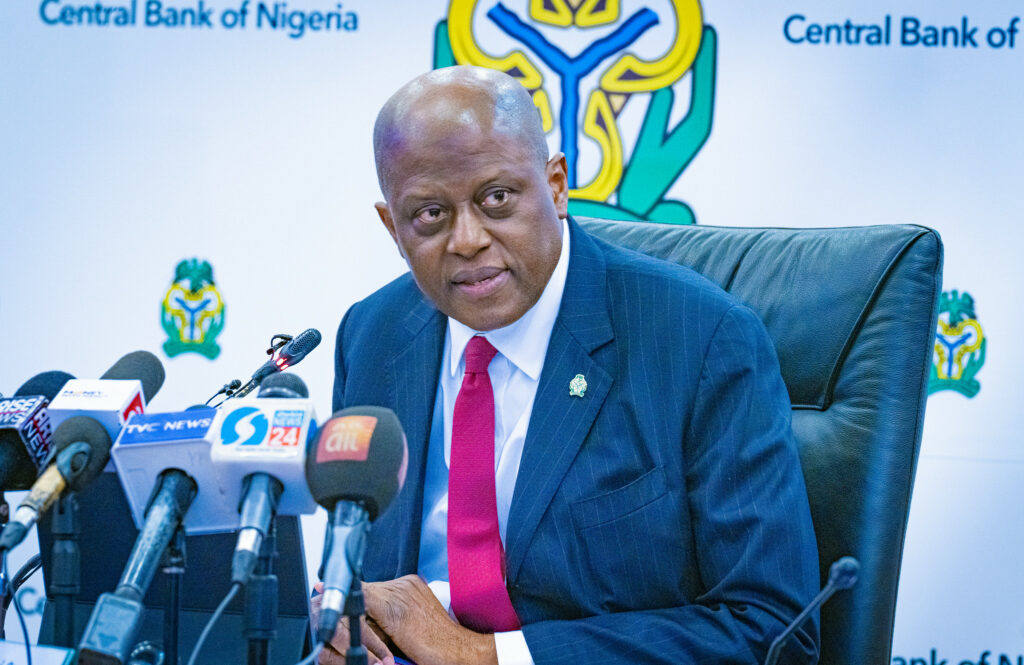
In the foreword to the Payments System Vision 2028 document, CBN Governor Olayemi Cardoso said Nigeria’s payments ecosystem had evolved into one of the most dynamic and innovative in the world over the past decade, driven by real-time payments, digital adoption and fintech-led transformation.

Cardoso said the country had recorded significant growth in electronic payments and digital financial services under the previous Payments System Vision 2025 framework but stressed that the next phase would require stronger resilience and coordination as the system continued to expand.

The CBN acknowledged that while digitalisation has improved financial inclusion and lowered transaction costs, it has also created new risks that require stronger cybersecurity measures, consumer protection mechanisms and fraud-monitoring systems.

Under the new Payments System Vision 2028, the regulator plans to prioritise security, trust, innovation, interoperability, inclusion and collaboration as guiding principles for the next stage of payments system development. The framework also seeks to strengthen regulatory oversight, improve cyber resilience and deploy emerging technologies to combat increasingly sophisticated fraud threats.

punch.ng

FOLLOW US ON:

FACEBOOK

TWITTER

PINTEREST

TIKTOK

YOUTUBE

LINKEDIN

Crime

Manhunt begins as two inmates escape Kogi prison

Published

on

The Nigerian Correctional Service has said that two inmates escaped from the Medium Security Custodial Centre in Okene, Kogi State, on Sunday, November 8, 2026.

In a statement on Tuesday, the Service’s Public Relations Officer, Chief Superintendent of Corrections Jane Osuji, said the NCoS had begun working with other security agencies to recapture the fugitives.

She said, “The NCoS confirms that two inmates escaped from the Medium Security Custodial Centre, Okene, Kogi State, on Sunday, 8th November, 2026.

“The service has commenced necessary actions in collaboration with relevant security agencies to ensure the prompt recapture of the fleeing inmates.”

Osuji said a full report on the incident was being awaited to establish how the inmates escaped.

“A comprehensive report on the incident is being awaited to establish the circumstances surrounding the escape,” she said.

Osuji said the Controller-General of Corrections had ordered a thorough investigation into the incident.

According to her, the directive was aimed at identifying any lapses and taking appropriate action where necessary.

“The Controller-General of Corrections has also directed that the incident be thoroughly investigated, with a view to identifying any lapses and taking appropriate action where necessary,” she said.

Osuji assured the public that the matter was receiving attention and that all appropriate measures were being taken to rearrest the inmates.

“The service assures members of the public that the situation is being given the necessary attention and that all appropriate measures are being taken to rearrest the fleeing inmates,” Osuji said.

She added that the service would provide updates once verified information became available and thanked the public for its understanding and cooperation.

See also  US commits $3.5m to monitor Nigeria’s religious violence

The Okene escape follows that of an awaiting-trial inmate from the Auchi centre in Edo State in October 2026. The Edo State Command of the NCoS confirmed that the inmate, identified as Thomas, escaped from the Medium Security Custodial Centre, Auchi, where he was being held over conspiracy and stealing.

Source: punchng.com

FOLLOW US ON:

FACEBOOK

WHATSAPP CHANNEL

TWITTER

PINTEREST

TIKTOK

YOUTUBE

LINKEDIN

INSTAGRAM

Continue Reading

Crime

Delta woman fakes kidnap to extort N15m from brother

Published

on

The Delta State Police Command has arrested a 54-year-old woman for allegedly faking her kidnapping to extort N15m from her younger brother.

The woman reportedly claimed that she had been abducted and taken to the bush by some men, who demanded N15m ransom for her release.

The police public relations officer of the command disclosed this in a video showing the woman confessing to the alleged crime.

The police spokesperson said the case was reported at the Ogwashi-Uku Divisional Police Headquarters on October 23, 2026, prompting the Commissioner of Police to direct the Anti-Kidnapping Unit in Obu-Luku, Aniocha South Local Government Area, to investigate.

He said the operatives launched an intelligence-led investigation which exposed the alleged plot and led to the woman’s arrest.

The spokesperson said, “On October 23, 2026, a case of suspected kidnapping was reported at Oguachukwu Division, and the Commissioner of Police, in his wisdom, directed the Anti-Kidnapping Unit of Obu-Luku to investigate.

“They started the investigation, and the result was alarming. In the past, we have heard of cases of self-kidnapping and fake kidnappings involving underage persons or teenagers aged 15, 16, 17 or 18 to 20.

“But we have never had a case involving a 54-year-old woman. It is quite unfortunate that she faked her own kidnapping because she wanted to extort N15m from her younger brother.

“We embarked on an intelligence-led investigation, which led to the eventual discovery that the kidnapping was fake. She was arrested before she started opening up.”

In a confessional statement contained in the video, the suspect admitted to staging her abduction and demanding the money from her brother.

See also  Enugu woman arraigned for accusing husband of defiling children

She said, “I kidnapped myself. I told my brother I had been kidnapped when I went out to buy medicine, and it took me to the bush. I called my brother and told him.

“I told him they wanted N15m and that if he didn’t pay the money, they would kill me. It was the devil’s work. I want forgiveness. It was the devil’s work.”

The police spokesperson said the woman claimed to have been held for 12 days before her arrest.

He added that the investigation had revealed that she did not act alone, as some people were allegedly involved in the plot.

He said, “She claimed that she was kidnapped on October 23 and remained in captivity for 12 days, all in a bid to extort N15m from her brother.

“But thanks to the intelligence of the Anti-Kidnapping Unit here in Obu-Luku, she was eventually arrested, and the cat was let out of the bag.

“Some of the people she conspired with are being tracked, and we are definitely going to arrest them.”

Source: punchng.com

FOLLOW US ON:

FACEBOOK

WHATSAPP CHANNEL

TWITTER

PINTEREST

TIKTOK

YOUTUBE

LINKEDIN

INSTAGRAM

Continue Reading

Crime

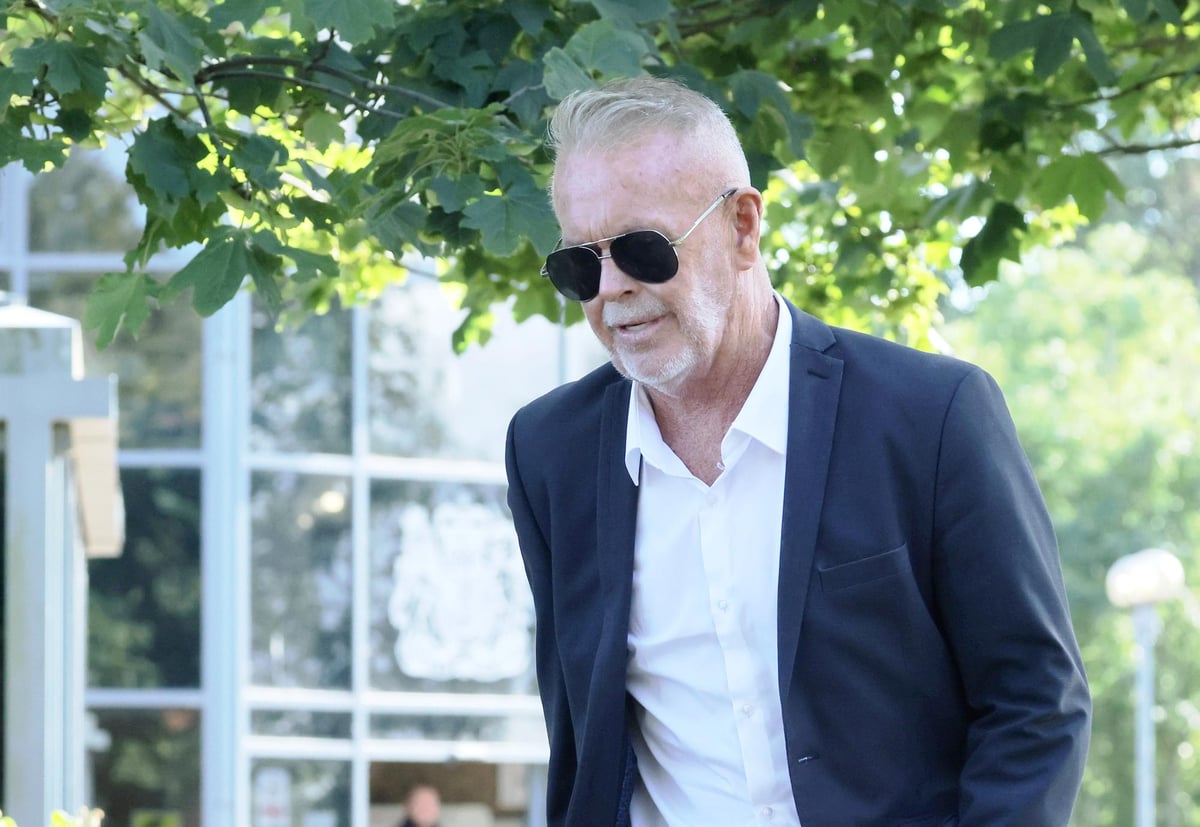
UK councillor, Glenn Gibbins convicted over call to ‘melt’ Nigerians, read details

Published

on

A United Kingdom court has convicted a 66-year-old Sunderland councillor, Glenn Gibbins, over “grossly offensive” comments he made about the city’s Nigerian community.

According to a report published by UK news outlet Chronicle Live on Monday, the former Reform UK councillor, who was elected in May, was found guilty after a three-hour trial at South Tyneside Magistrates’ Court.

District Judge Zoe Passfield, the report said, sentenced him to a 12-month community order with 150 hours of unpaid work.

Gibbins was said to have admitted that his comments were offensive but denied that they were grossly so. He made the remarks in a Facebook post in March 2024.

The report said the suspended councillor told the court that his comment, which suggested that Nigerians should be melted down and used to fill potholes, was “naughty” but was not meant to be taken literally.

The post reportedly came to light after the group Hope Not Hate reviewed his social media posts when Gibbins was announced as a Reform UK candidate for Sunderland City Council.

Chronicle Live reported that the authorities were alerted to the post after he was elected.

In the post, Gibbins wrote, “Can’t believe the amount of Nigerians in town… should melt them all down and fill in the potholes!!”

The report quoted the prosecuting counsel, Emma Dowling, as saying, “The comment about melting them down conjures up despicable images.”

She said the remark implied that Nigerians were “somewhat less than human, stripping people in that group of humanity”.

Giving evidence in court, a Nigerian community leader in Sunderland, Godwin Ejeh, said he led a protest outside the City Hall building on the day Gibbins was expected to be sworn in, hoping that the councillor would apologise.

See also  Petrol price drop in doubt after Hormuz disruption

However, Gibbins had already been suspended by Reform UK after the post emerged and did not attend the ceremony.

Ejeh, who stood as a Liberal Democrat councillor in the May elections, denied trying to make political capital out of the situation, telling the court, “We are talking about humanity here; it’s way beyond politics.”

In his defence, Gibbins said, “I thought it was a tongue-in-cheek joke. It was an unreal scenario. No one took it literally.”

He explained that he had set up his business in the Bridges shopping centre and recalled that, on the day he made the post, some Nigerians had approached him about buying some of his printing equipment.

Gibbins said he had exchanged banter with the Nigerians at his stall and that the conversation had been good-natured.

The report said he told the court that, later that night, after “a couple of cans of beer”, he saw a Facebook post about Nigerians which he tried unsuccessfully to share. He then typed out the message himself and published it on his public Facebook profile.

When Dowling asked what reaction he intended to provoke, he said, “It was tongue-in-cheek, a bit naughty, but I thought it was fun.”

Speaking about his earlier interaction with the Nigerians at his stall, he said, “They had done my head in, in a funny way, not a bad way.”

Asked what was funny about the post, Gibbins replied, “It’s an unreal scenario; you cannot melt people down. Anyone who takes that literally… you cannot do that. I wouldn’t dream of joking about killing people.”

See also  Bandits' attacks: Fed Govt raises N500bn emergency security fund

He told the court that he was not particularly political and that, when Reform UK approached him about becoming a councillor in March, he considered the position a source of income “to tide me over” during the quieter summer period for his business.

He also said he enjoyed helping residents during the brief period before his suspension.

Summarising the prosecution’s case, Dowling said the post was grossly offensive and dehumanising. She said it was shared “for no reason whatsoever other than to offend and humiliate people from Nigeria who live in Sunderland”.

Defence counsel Adam King described the post as “unfunny” and “an unpleasant joke/non-joke”.

He cited professional comedians such as Jo Brand, who had joked about throwing acid on Nigel Farage, and Jimmy Carr, who had made jokes about gipsies and the Holocaust, arguing that they had not been prosecuted.

The court found that the nature of Gibbins’ remarks had crossed the threshold of being “grossly offensive” to reasonable members of the public.

Christopher Atkinson of the Crown Prosecution Service in the North East said, “Racially charged and grossly offensive comments like this cross the line between free speech and criminal behaviour. They can be particularly upsetting and dehumanising for those in affected communities.

“I would remind anyone using social media that grossly offensive commentary of the type used by Glenn Gibbins is a criminal offence, and those posting similar material could face prosecution as a result of their actions.”

Continue Reading

Trending