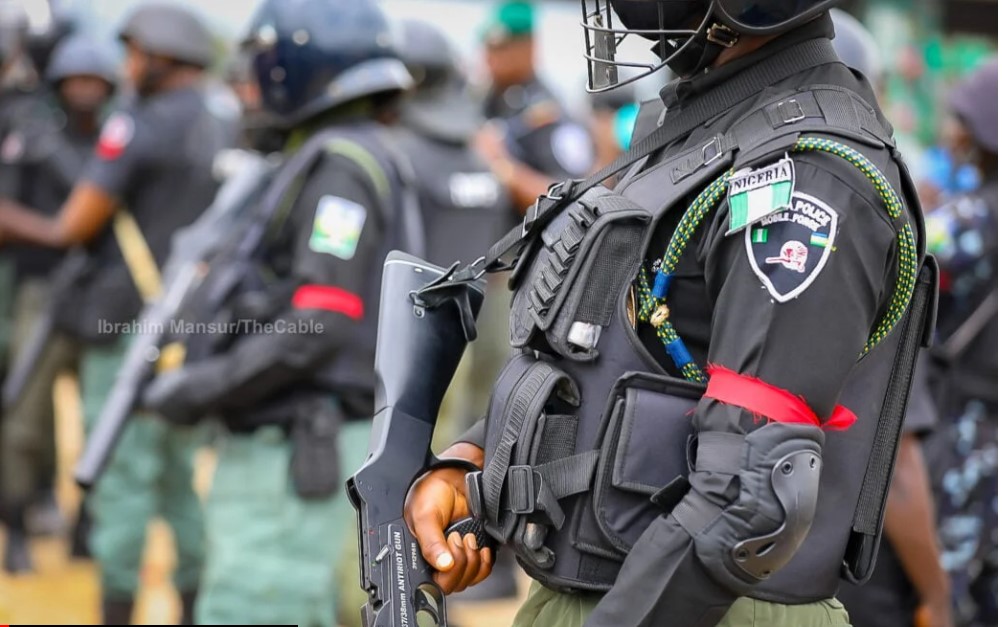
Support for the proposed state police gathered momentum on Thursday as speakers of the 36 State Houses of Assembly, governors, the Labour Party and the Forum of APC Speakers backed the constitutional amendment passed by the Senate, raising hopes that the bill could secure the approvals needed to become law.
The endorsements came barely 24 hours after the Senate passed the Constitution Alteration Bill seeking to establish state police across the federation, a major step in Nigeria’s decades-long effort to decentralise policing and tackle worsening insecurity.
The bill must now be approved by at least 24 state Houses of Assembly before it can be transmitted to President Bola Tinubu for assent.
While many stakeholders described the proposal as a necessary response to growing cases of terrorism, banditry, kidnapping and communal violence, the Peoples Redemption Party opposed the move, questioning the motives of the Tinubu administration and urging Nigerians to reject it.
Among the early supporters was Benue State Governor, Hyacinth Alia, who commended the National Assembly for passing the bill and described the development as a landmark step towards strengthening the country’s security architecture.
In a statement issued by his Chief Press Secretary, Kula Tersoo, the governor praised lawmakers for advancing what he described as a landmark reform capable of transforming the country’s security framework.
According to him, “the passage of the bill is a courageous and timely step,” adding that he has always been a strong advocate of state policing as a necessary measure to strengthen the nation’s security architecture and enhance the protection of lives and property.
The governor said, “The House of Representatives had passed the law a few weeks ago, and the concurrence by the Senate a few days ago has confirmed the genuine intentions of national assembly members to address the problem of insecurity in the country.”
Alia further argued that state police formations would possess a better understanding of local terrain, cultures and community dynamics, thereby enabling faster and more effective responses to security threats.
He also commended President Tinubu for what he described as visionary leadership in advancing reforms that had remained trapped in national debate for years.
In Kano State, deliberations on the bill began almost immediately as the State House of Assembly convened a stakeholders’ meeting with Governor Abba Kabir Yusuf to review the implications of the proposed amendment.
The Public Relations Officer of the Assembly, Kamaluddeen Shawai, confirmed the meeting on Thursday.
“We’re at the moment in a stakeholders meeting with the State Governor, Abba Yusuf,” Shawai said.
He added that the House would make its position known after consultations.
“The House will not comment on the bill for now until after the stakeholders meeting.”
The swift engagement in Kano reflected the urgency with which many states are approaching the proposed reform, given the security challenges confronting several regions of the country.
In Gombe State, Speaker of the House of Assembly, Abubakar Luggerewo, said lawmakers would subject the bill to detailed scrutiny but disclosed that their preliminary assessment was positive.
“As soon as we receive communication from the National Assembly about the ratification of that bill, the House will receive and refer it to the committee led by the Deputy Speaker.
“They will do the needful, which involves public hearing, stakeholders’ engagement and others. They will report their findings and, based on their findings, we will make our decision,” he said.
The Speaker explained that the Assembly would carefully evaluate the bill’s provisions and assess their implications for the state before taking a final position.
“From the committee stage, the House can be certain on the clauses of the bill. We will also look at our state’s peculiarities to be sure we are protected by the bill. If it suits our activities, we will go for it, but if we find in any way there are clauses we are not comfortable with, we will vote against it,” Luggerewo stated.
Despite the planned review process, he said lawmakers were generally favourably disposed to the proposal.
“In a nutshell, our general understanding of the bill is that it’s a welcome development. We are certain it will address the lingering security challenges that are happening in various locations.
“We are hoping the bill will create an avenue for the states to invest more in security. We will make decisions in the best interest of the state,” he said.
In Akwa Ibom, Speaker Udeme Otong said lawmakers would first study the bill before taking a definitive position.
“They just finished yesterday in the Senate; we have not gone through what the Senate sent to us. We cannot just decide on anything until we look at it.
“We have to look at the bill before you know the inputs that you have. For now, we don’t have the bill in our hands. How can you know what should be amended and what should not be amended? It was passed yesterday; how can it come to Akwa Ibom today?
“We don’t work like that. This is an executive bill; we don’t work anyhow. You need to see the bill, work on it and see the areas that need some input. You then call a public hearing. The bill is for the public to make their inputs.”
Bayelsa lawmakers also indicated support for the proposal.
Chairman of the House Committee on Information, Brown Ebizi, said the Assembly was prepared to expedite consideration of the bill once transmitted.
He said, “We are in full support of the bill, and we believe that when it arrives in the state, we will work on it expeditiously. We are convinced that it is for the benefit of the state and the people.”
Support also came from the Forum of Progressive Speakers of State Legislatures under the APC.
In a statement signed by its Chairman and Speaker of the Jigawa State House of Assembly, Haruna Dangyatin, the forum described the Senate’s action as a historic breakthrough.
“The passage of this bill is a resounding victory for effective governance and community-focused policing,” Dangyatin stated.
He added that the legislation would empower states to protect their citizens more effectively.
“For years, the clamour for a security structure that understands the local terrain has been loud.
“With this enactment, we are empowering states to better protect their people and respond swiftly to security threats.”
Dangyatin assured Nigerians that APC-controlled legislatures would facilitate ratification and establish strong oversight mechanisms.
“We will ensure state policing operates within the bounds of human rights, professionalism, and the rule of law.”
He further pledged collaboration with state executives to ensure adequate funding for training, equipment and personnel welfare.
Similarly, the Labour Party endorsed the proposed reform and urged governors and state lawmakers across the federation to support it.
In a statement issued by its National Publicity Secretary, Ken Asogwa, the party described the Senate’s action as a major milestone in efforts to strengthen internal security.
“The Labour Party commends the National Assembly, particularly the Senate, for its courage, swiftness and sense of patriotism in passing the State Police Bill recently transmitted to it by President Bola Tinubu,” Asogwa said.
He noted that Nigerians had long demanded a policing system that is closer to communities and more responsive to local security threats.
“For years, Nigerians across all regions have clamoured for a more effective and responsive policing architecture capable of addressing the growing and increasingly complex security challenges confronting the nation.
“The passage of this bill, therefore, represents a significant step towards strengthening internal security and bringing law enforcement closer to the people.”
The LP acknowledged fears that governors could abuse state police formations but argued that constitutional safeguards incorporated into the bill would minimise such risks.
“While the party acknowledges the concerns expressed in certain quarters regarding the possibility of abuse of the state police system, especially in view of our experience with State Independent Electoral Commissions and allegations of undue interference by some state governors, the realities of contemporary Nigeria make a compelling case for a decentralised policing structure,” he stated.
According to him, “The Labour Party is particularly encouraged by the constitutional safeguards embedded in the amendment bill, especially the provisions contained in section 17, which establish clear mechanisms to prevent abuse and ensure accountability in the operation of state police.
“These safeguards, if faithfully implemented, should serve as effective checks against arbitrary control or misuse of the system by any state executive.”
He further argued that no policing arrangement was flawless.
Asogwa said, “The party further notes that no policing model is perfect. However, given the evident limitations of the current centralised policing arrangement in adequately securing a vast and diverse country such as Nigeria, there is an urgent need to embrace innovative approaches and fresh ideas capable of improving security outcomes for citizens.”
The party subsequently called on governors and lawmakers nationwide to support the amendment.
“As the bill now awaits the concurrence of the State Houses of Assembly before being transmitted to the President for assent, the Labour Party calls on governors and state lawmakers across the 36 states of the federation to rise above partisan considerations and lend their support to this important constitutional reform in the overriding interest of national security and public safety.
“We believe that with proper oversight, transparency and adherence to constitutional provisions, state policing can become a vital instrument for combating crime, enhancing community security and strengthening the federation,” he stated.
The Conference of Speakers of State Legislatures in Nigeria also signalled support for the proposal.
Its Chairman and Speaker of the Delta State House of Assembly, Emomotimi Guwor, said state legislatures remained committed to giving the bill diligent consideration.
“As Speakers of the 36 State Houses of Assembly, we had earlier indicated our support for the proposed legislation because we believe that community-based policing, properly structured under law, will enhance safety and response time across our states. Security is local, and our people deserve policing architecture that understands their terrain and challenges.”
He added, “With the Bill now proceeding to the next legislative stage, the Conference assures Nigerians that State Assemblies will give it diligent consideration in line with Section 9(2) of the 1999 Constitution.”
Also lending his voice, former lawmaker representing Ekiti North, Senator Ayodele Arise, described the bill as a critical step towards addressing insecurity.
“It is a very welcome development. Having state police is a much-needed measure to reduce the security threats we face in the country.
“There is no way security challenges will be eliminated. But kudos to Mr President for being very proactive on this issue as we continue to battle the challenges of insecurity in the country,” he noted.
The former lawmaker argued that local policing would improve intelligence gathering and enable quicker responses to threats.
Addressing concerns about possible abuse by governors, Arise said constitutional checks and balances should be strengthened.
He said, “Many of the objections are legitimate concerns, but most of the federal states we know around the world, like the United States and Canada, have this multi-layered policing system that has worked for them over the years.
“So, the challenges are there, especially now that we are just trying to experiment with it.
“It is our responsibility to ensure that we put a few checks and balances here and there to curtail the excesses of any governor who intends to use the Police against the people of his state.”
The Plateau State House of Assembly also pledged support for the reform.
Speaker Naanlong Daniel said the legislature was prepared to prioritise the bill when transmitted.
“The Assembly believes state policing will contribute significantly to ending the prolonged insecurity affecting parts of Plateau State and other regions of the country.”
He added that lawmakers had consistently advocated its establishment and assured stakeholders of the Assembly’s readiness to provide the required legislative backing.
In Ondo State, Speaker Olamide Oladiji similarly backed the proposal, describing it as a necessary response to Nigeria’s security challenges.
“Insecurity issue in the country now, I think it’s very, very important that the government come up with this state police creation, and from the look of things, virtually all the states are keyed into it.”
Oladiji dismissed fears that governors would weaponise state police against political opponents.
“I want to disagree on that aspect. Look at our Amotekun here; it has been created for some time now. Did you hear any negative comments? There is no negative comment, even from the opposition, that the government of the day uses it against any of their political opponents, journalists or activists,” he said.
He cautioned politicians against undermining the reform.
“We should not politicise the issue of the state police. We should not allow even the so-called politician to politicise it in such a way that it will not allow it to come to fruition,” he said.
However, the PRP strongly criticised the initiative and urged Nigerians to reject it.
In a statement by its National Chairman, Dr Hakeem Baba-Ahmed, the party questioned the credibility of the current administration to oversee such a major restructuring of policing.
The statement read, “The Peoples Redemption Party is deeply concerned over plans by President Tinubu’s administration to procure state police through constitutional amendment at a time when its credibility and competence are at an unprecedented low level in our democratic history.”
The PRP argued that while constitutional procedures might ultimately facilitate the amendment, the administration lacked the public trust required for such a far-reaching reform.
“This administration lacks the moral assets and the trust of Nigerians to undertake a major shift in the policing structure of the country. The APC administration has failed to manage our security structure and institutions. “ It’s a plan to engineer the emergence of state police that is suspicious, and it should be rejected,” it stated.
The party advised that the issue should be deferred until after the next general election.
“The PRP advises that the forthcoming election should be a threshold which should be crossed with credibility and popular acclaim before the nation decides on important issues such as state police structures,” he said.
Despite the opposition, momentum appears to be building behind the amendment as state assemblies prepare to begin formal consideration of the proposal.
The Senate had on Wednesday approved the constitutional amendment after a clause-by-clause review of the report presented by the Senate Committee on the Review of the Constitution, chaired by Deputy Senate President Barau Jibrin.
The legislation seeks to create a dual policing structure under which state governments can establish police services within their jurisdictions while the Nigeria Police Force retains responsibility for national security issues such as terrorism, border protection, cybercrime, arms trafficking and other federal offences.
Lawmakers inserted several safeguards aimed at preventing abuse, including provisions prohibiting state police authorities from targeting individuals or groups solely for criticising governments and allowing federal intervention in cases involving breakdown of public order, human rights violations or threats to national security.
The Safeguards
Meanwhile, an analysis of the bill by our correspondent on Thursday showed that the proposed constitutional amendment seeking to establish state police services across Nigeria could create far-reaching restructuring of the country’s policing architecture.
This includes the expansion of the National Police Council to accommodate representatives of the Nigerian Bar Association, the Nigeria Labour Congress, the National Human Rights Commission and all state attorneys-general.
The proposal, contained in A Bill for an Act to Alter the Constitution of the Federal Republic of Nigeria 1999 to Provide for the Establishment of State Police Services and for Related Matters, seeks to create a broader oversight mechanism for policing while balancing state control with federal safeguards.
In the bill, the National Police Council would become one of the most diverse security oversight bodies in the country, bringing together legal practitioners, labour leaders, human rights advocates, retired senior police officers and state representatives.
The council would be chaired by a chairman appointed by the President and confirmed by the National Assembly.
Other members would include the Attorney-General of the Federation, a serving police officer not below the rank of Deputy Inspector-General representing the Federal Police Service, attorneys-general of all states, six retired police officers representing the six geopolitical zones, a representative of the National Human Rights Commission, a representative of the Public Complaints Commission, a representative of the Nigeria Labour Congress, a representative of the Nigerian Bar Association and a secretary appointed by the President.
According to the bill, the council would be responsible for coordinating national policing policies, strengthening cooperation between federal and state police services, recommending appointments and removals of police chiefs and supervising the activities of policing institutions across the federation.
Part of the bill read, “The National Police Council shall comprise the following members: a Chairman to be appointed by the President, subject to confirmation by the National Assembly; Attorney-General of the Federation; a serving police officer not below the rank of a Deputy Inspector General of Police to represent the Federal Police Service; the Attorney-General of each State of the Federation.
“Others are six retired police officers not below the rank of Commissioner of Police representing each of the geo-political zones of the country to be appointed by the President, subject to confirmation by the National Assembly; one representative of the National Human Rights Commission; one representative of the Public Complaints Commission; a representative of the Nigeria Labour Congress to be nominated by the President of the Nigerian Labour Congress; a representative of the Nigerian Bar Association to be nominated by the President of the Nigerian Bar Association; and the Secretary to the Council to be appointed by the President.”
The functions of the National Police Council shall include the organisation and administration of the Federal Police Service and all other matters relating thereto, recommending to the President on the appointment and removal of the Inspector-General of Police, recommending to the Governor of a State on the appointment and removal of the Commissioner of Police, coordinating national policing policy and inter-governmental cooperation between the Federal Police Service and State Police Services, and supervising the activities of the Federal Police Service and State Police Services.”
The proposed composition appears designed to address long-standing concerns about political interference and inadequate civilian participation in police oversight.
By bringing state attorneys-general, labour representatives, lawyers and human rights advocates into the council, the amendment seeks to establish a broader accountability framework capable of monitoring both federal and state police operations.
The bill also introduces constitutional safeguards aimed at protecting state commissioners of police from arbitrary suspension or dismissal by governors.
Under the proposal, a state commissioner of police can only be suspended or removed for stated reasons, after a fair hearing, on the recommendation of the National Police Council and with the approval of not less than two-thirds of members of the state’s House of Assembly.
The bill provides, “A Commissioner of Police of a State shall not be suspended or removed except for stated cause, in accordance with a fair hearing, on the recommendation of the National Police Council and subject to approval by a resolution supported by not less than two-thirds majority of members of the House of Assembly of the State.”
The provision is expected to address concerns raised by critics of state policing who fear governors could transform state police services into political tools.
The amendment equally bars governors from issuing operational directives targeting specific individuals, political parties, associations or groups.
According to the bill, no governor shall direct a commissioner of police to arrest, detain, investigate or refrain from investigating any named individual except in accordance with the law.
It further prohibits directives that could result in unlawful actions, violations of fundamental rights, suppression of lawful political activity or discrimination on ethnic, religious or political grounds.
While the bill grants states the authority to establish and operate their own police services, it also preserves federal powers to intervene under exceptional circumstances.
According to the proposed amendment, the Federal Police Service may temporarily assume operational responsibility over a state police service where public order has broken down, where a state police service becomes incapable of functioning, where there is evidence of systematic human rights abuses, or where national security is threatened.
Specifically, federal intervention may occur where there is an actual or imminent breakdown of public order that a state police service is unable or unwilling to contain; where a governor formally requests intervention; where serious administrative or financial incapacity threatens public safety; where there is substantial evidence of partisan intimidation, ethnic or religious persecution; or where threats transcend state boundaries and endanger national security.
The proposal, however, imposes strict conditions on such interventions.
It states that any intervention must be authorised in writing by the President and must clearly state the grounds, territorial scope, functions and duration of the intervention.
The bill further requires that the governor, the State House of Assembly, the National Police Council and the National Assembly be notified within 48 hours of the commencement of any intervention.
It reads, “An intervention under this section shall be authorised in writing by the President and shall state the grounds, territory, functions and duration of the intervention; and notice of the intervention shall be given to the Governor of the State, the Speaker of the House of Assembly of the State, the National Police Council and the National Assembly within forty-eight hours of the start of any intervention.”
The proposal also provides that any intervention extending beyond the period prescribed by law must receive Senate approval and remain subject to judicial review.
It further states that no intervention shall dissolve a state police service or suspend elected institutions of a state except as provided by the Constitution.
Another notable provision in the bill is the attempt to insulate police service commissions from political influence.
The amendment proposes that both the Federal Police Service Commission and State Police Service Commissions should be empowered to make rules regulating their procedures without requiring presidential or gubernatorial approval.
According to the proposal, state police service commissions shall function independently and may confer powers and responsibilities on officers necessary for carrying out their constitutional duties without interference from governors.
The bill noted that the provision is aimed at strengthening institutional autonomy and ensuring professionalism in recruitment, promotion and disciplinary processes.
The bill formally replaces the existing constitutional framework, establishing a single Nigeria Police Force with a dual policing system comprising the Federal Police Service and State Police Services.
Under the arrangement, the Federal Police Service would retain responsibility for federal crimes, terrorism, cybercrime, organised crime, arms trafficking, border security, protection of federal institutions and policing within the Federal Capital Territory.
State police services, on the other hand, would be responsible for enforcing state laws, maintaining public safety and order, protecting lives and property and carrying out other local policing functions prescribed by state laws.
However, no state police service would commence operations until it has been established by a law passed by the state’s House of Assembly and certified as meeting national minimum standards prescribed by the National Assembly.
The debate over state policing has intensified in recent years amid rising insecurity, including banditry, kidnapping, communal conflicts and terrorism across various parts of the country.
Supporters argue that state police would improve intelligence gathering, enhance community policing and enable quicker responses to local security threats.
Opponents, however, have expressed fears that governors may abuse state police structures to intimidate political opponents and suppress dissent.
The constitutional amendment seeks to strike a balance between these competing concerns by granting states policing powers while establishing layers of federal oversight, legislative checks, judicial review and civilian participation through an expanded National Police Council.
punch.ng
FOLLOW US ON: