In the quiet corners of Abeokuta, the Ogun State capital, a bitter secret is cutting short the lives of both young and aged desperate women.
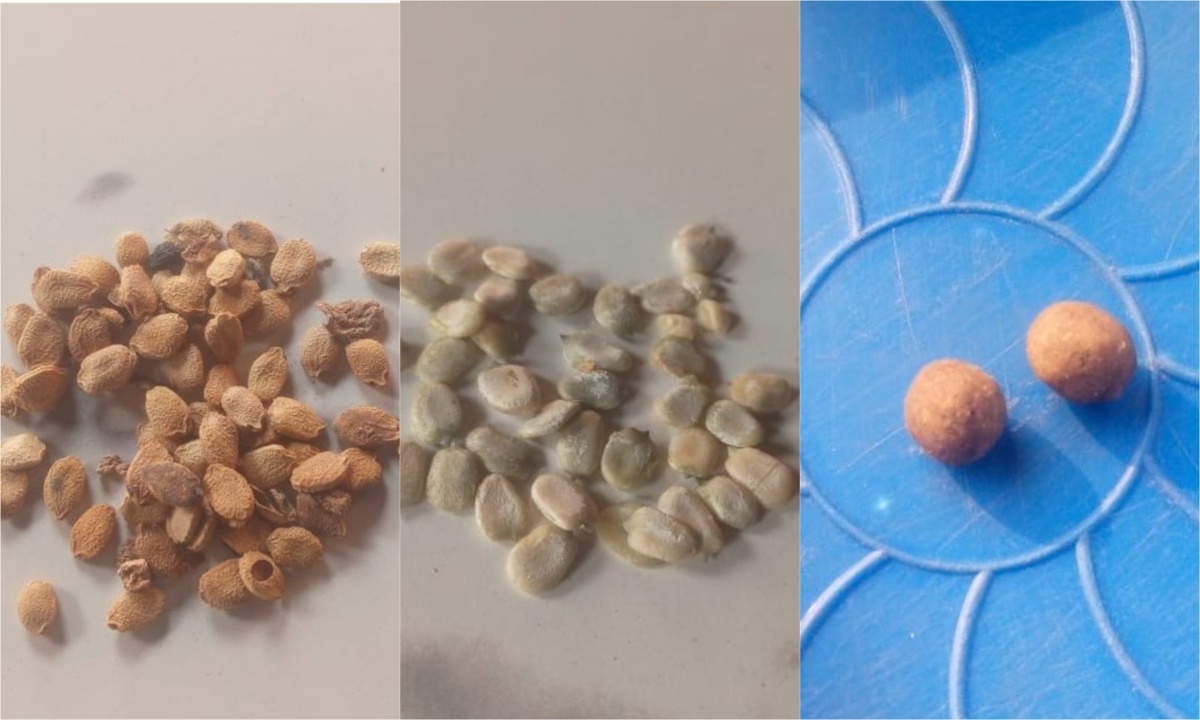
To the casual observer, ‘Egusi ai je’ is merely a wild, bitter melon crawling across the soil but to others, it has been whispered about in low tones as an ancestral ‘remedy’ for unwanted pregnancies.
It is not a new trend; it is an entrenched ancestral practice, a substance not brewed or swallowed, but inserted into the vagina.
For 35-year-old Ashabi (not real name) a resident in the Abeokuta South local government area of the state, this herbal gamble proved to be a fatal mistake, turning a private crisis into a public tragedy and leaving her family to mourn a life cut short.
The mother of three wasn’t new to it as it had always been her safe haven until the very day it claimed her life.
According to her younger sister who spoke under anonymity, Ashabi left it too long in her, leading to the disruption of her intestines and then her death.
“If it stays long in your body, it can get to your stomach and damage your intestines.
“My elder sister already had three kids and got pregnant so she decided to use it. She has been using it before and it was okay but on that day she did it, It wasn’t perfect.
“After using it, she saw the blood…let’s say 3 hours after insertion but forgot to remove it back.
“Before we could rush her to the hospital so it can be flushed out, it was already too late. The doctor said it had damaged all of her intestines,” she said.
“If anybody wants to use it they have to be careful, it’s very dangerous and it kills especially if one is not careful. I know so many people who use it and it comes out perfect.
“When you insert it, don’t allow it to go too deep because it is very powerful, once you notice blood after insertion you must remove it. Don’t forget it inside,” she added.
A lady simply identified as Kafilat said that she used it alongside other herbs to remove an ectopic pregnancy, describing the experience as “hell”.
“I have also used it, but I prepared it with other herbs to flush out an ectopic pregnancy. It was hell, I felt like I was going to die when I took the herbs and when the blood was coming out it was very very painful” she grimaced, shaking her head as she recalled the memory.
“It’s very dangerous and isn’t kept around children,” Kafilat added.
Our correspondent on visiting a popular herb seller in the Oke Ilewo area of Abeokuta, learnt that the preparation itself is simple: the wild melon is peeled, pounded with a little amount of water, and molded into small, potent balls.
It is safe, just use a new candle for insertion – Herb seller insists
A herb seller popularly known as Aunty Alagbo dismissed fears, insisting that aside from being affordable, it’s entirely safe and devoid of side effects, provided one follows a specific ritual of insertion.
“It’s not expensive and with just N2,000 I can prepare it for you” she told our correspondent.
It was ready two days after making payment.
“The important thing is to insert it well. Don’t use your bare finger because of infection, use a new candle, the back of the candle is what you will use to push it into your vagina so it can enter very well,” Aunty Alagbo said with ease, suggesting that the depth of the insertion is the key to success.
“You will insert the two of them,” she instructed, adding: “Insert one first and insert the other immediately after.”
While the sister of the deceased stated that leaving the substance in for too long led to organ disruption, the herb seller argued that the substance should remain in the vagina until the body reacts, a process which according to her could take two to three days.
“After some days, it all depends on the type of body system, but after 2-3 days, you will see blood coming out like menstruation.
“You can also take gin or hot water so it can work fast,” she added.
Unsafe methods leave women bleeding, infertile, or on dialysis – Gynaecologist
Dr. Modupe Adedeji, Consultant Obstetrician & Gynaecologist, Lagos State University Teaching Hospital, warned that ‘Egusi Aije’ and other backstreet abortion methods are dangerous.
Modupe in an interview , asserted that anything inserted into the vagina must be sterile, asserting that the presence of foreign body can lead to infection and that alone is enough to cause contraction, which results in the termination of pregnancy.
“And maybe that is what they are assuming is working, that is making the baby come out. By the time victims get to the hospital, the damage is severe.
“The patient will have a fever. The patient will be bleeding. The temperature will be very high. That is what we call septic abortion.
“Treatment then goes beyond removing products of conception to managing kidney failure, intestinal infection and other complications that follow,” she said.
The women’s health advocate popularly known as Dupsythegynae, argued that some of the complications can be lifelong and even result in death.
“Some people even end up on dialysis. If the kidneys don’t recover, then you may have to talk about kidney transplant.
“At times, the uterus is so damaged we have to remove it.
“Imagine a young girl at 17, 18, and you’re removing the uterus, if she’s supposed to live 100 years. How do you think she will survive without having children?” She queried.
The Obstetrician lamented that septic abortion accounts for about 10% of maternal deaths in Nigeria, ascribing the cause to stigma and restrictive abortion laws.
“When we say 10% of for example 100 million women, that’s already 10 million. When we talk about the percentage, it looks small.
“But we’re talking about deaths. The young girl is someone’s daughter, her future is supposed to be bright, but then, that life goes.
“At the end of the day, people keep doing these things and hide them. Because if you are caught, you, and the person that is helping you to do it, everybody is a criminal.
“Even though it doesn’t sound right or sounds like it’s not happening, it’s really happening.”
The gynecologist, however, called for better insurance coverage and legal reforms saying, “Let the insurance work. Most importantly, the government should look into that law very well.
“Let’s open up our borders so that those people that really need the services can access safe care. When a woman gets to that point she becomes desperate. It’s the desperation that makes them fall into all these things.”
Maputo Protocol vs. The Nigerian Reality
It was gathered that women do not turn to these toxic wild melons just because they want to, they use them because safe, legal healthcare options are treated like a tight-lipped taboo.
Sadly, this dangerous black market exists even though Nigeria signed a major international agreement to protect women’s reproductive health rights.
Recall that 22 years ago, the African Charter on Human and Peoples’ Rights adopted the Maputo Protocol.
It made history as the first legally binding international treaty to explicitly guarantee a woman’s right to a safe, legal abortion.
Under Article 14(2)(c), state parties are obligated to permit the medical termination of a pregnancy under specific conditions: in cases of sexual assault, rape, and incest; when the pregnancy poses a risk to the pregnant person’s life or mental health; or in cases of severe fetal abnormalities.
Yet, across Africa, the implementation of these rights remains fractured. Findings have shown that out of the 55 African states, 44 states have ratified the Maputo Protocol, 8 have signed but not ratified and 3 states have neither signed nor ratified.
It was reports that 12 countries like South Africa, Cape Verde, and Rwanda permit abortion above and beyond the baseline legal thresholds listed in the protocol.
While 11 countries like Ghana, Angola, Burkina Faso, Congo, legalized it precisely within all the conditions outlined by the treaty.
Meanwhile, 16 others, including Nigeria, Algeria, and Cameroon recognized some, but not all, of the protocol’s provisions, leaving the legal boundaries confusing and unclear, while places like Senegal, Congo(Brazzaville), Sierra Leone and Mauritania ban abortion completely, no matter the circumstances.
While Nigeria sits in the “partial access” category, on paper, federal and state laws allow for a pregnancy to be ended to save a mother’s life or under extreme health complications, but out on the streets, these legal exceptions are wrapped in a suffocating silence, leaving the average woman in the dark about what is actually allowed.
Convinced that formal hospitals will judge them or turn them away, vulnerable women are now forced to make desperate choices.
They bypass the healthcare system entirely, turning instead to backstreet herb sellers.
Women right advocate calls for more awareness, prosecution of quacks
Wemimo Adewumi Obiwale, a women’s rights advocate and sexual reproductive health trainer, asserted that women and girls in vulnerable situations who do not want pregnancies will always seek alternatives, often at great risk to their lives.
Wemimo harped on the need for intensified public awareness and campaigns, lamenting that despite adopting the Safe Termination of Pregnancy, STOP, guidelines, many residents in Ogun state remain unaware of the policy, forcing them to resort to dangerous methods.
“Imagine the trend of taking a form of egusi and inserting it into the vagina to procure abortion, which, by experience and by fact, leads to heavy bleeding, could lead to complications, and in cases has even led to death, but they still keep exploring these dangerous methods, because they are not aware that in Ogun state, there is now a safe termination of pregnancy guideline.
“Laws can end up as documents in drawers gathering dust if people do not know about them, if people who should implement are not being monitored, and if there’s no accountability. These laws are about saving the lives of women. It’s a public health emergency because the numbers of women dying from unsafe abortions are high,” she stated.
According to her, women and girls should know the designated health centres where they can access care for complicated or unwanted pregnancies.
“So the Ogun State government has done very well, but now they need to do a lot more awareness campaigns.
“Let women and girls know the designated centers they can go to when they have complicated pregnancies or unwanted pregnancies. It’s time to accelerate work, advocacy, and move into the communities, roll up the sleeves, work to save lives,” she said.
The rights advocate also called for the training, engagement and collaboration with traditional medicine practitioners and herb sellers, stating that they remain highly trusted in local communities and many residents still patronize them.
Meanwhile, Adewumi argued that quacks, when found, should be prosecuted, asserting that accountability is key to stopping harmful practices that put women’s lives at risk.
“We need to engage them (trado-medical practitioners) and monitor them. It’s not enough to teach them, there’s also a need to discipline them.
“We need to expose the quacks. The ones killing women and girls. We need to make an example of them for others to learn from,” she advocated.
Ogun to begin crackdown on unregistered practitioners, quacks
In an interview , the Executive Secretary for the Alternate Medicine Board in Ogun State (OGAMB), Dr Ayodeji Erinle, disclosed that efforts are ongoing to crackdown unregistered and quack traditional medicine practitioners operating underground across the state.
He admitted that many untrained individuals are currently posing as herbal practitioners, explaining that the move will sanitize the alternative medicine sector and protect residents from unsafe herbal practices.
According to him, a task force would soon be deployed to apprehend and prosecute those involved in illegal practices.
Erinle noted that the board is also intensifying efforts to register and monitor trained traditional medical practitioners, explaining that registration would only be granted after proper verification of training and competence.
According to him, the registration drive will enable OGAMB to track practitioners, verify claims, and take action when complaints arise.
“What the board is doing is to register the herb sellers. We expect them to be registered and before registering them we ensure that they are well trained in their own local and proper training and then monitor them.
“But of course, there are so many of them that are actually fake or have not been trained properly. They are just doing what they know and those that are well trained are actually not happy with their activities.
“So, what we are doing now is to encourage those that are trained to come, let’s know them, we know some of them but we want to know more of them. Let them be registered and then, we would now go after those that are not registered and those who do all kinds of illegal practices.
“Very soon a task force will come out to ensure that the quacks are stopped. The full force of the law will come heavily on those that refuse to register,” he warned.
Meanwhile, Erinle noted that the board also conducts sensitisation programmes across the state to educate women and youths on the dangers of patronising quacks, and informs the public about approved standards and channels for safe practice.
“If you are sure of yourself and know what you are doing, come and register under the board. We would check you out and certify you,” he added.
Source: Dailypost.ng
FOLLOW US ON:
FACEBOOK
TWITTER
PINTEREST
TIKTOK
YOUTUBE
LINKEDIN
INSTAGRAM