Connect with us

Business

CBN orders banks to freeze six terror suspects’ accounts

Published

on

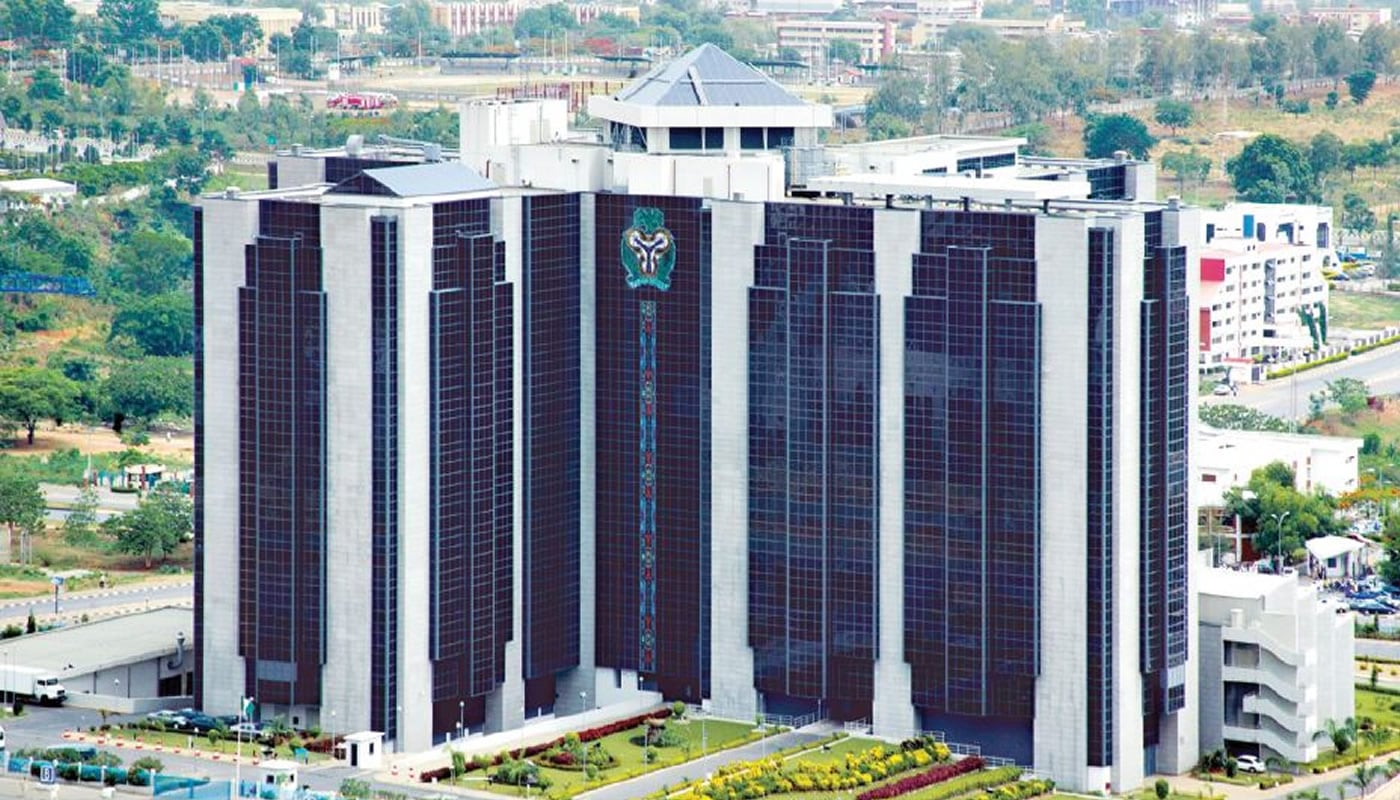
The Central Bank of Nigeria (CBN) has directed banks and other financial institutions to immediately freeze the accounts and assets of individuals and companies designated for terrorism and terrorism financing following fresh sanctions issued by Nigerian and United States authorities.

The directive was contained in a circular dated June 24, 2026, issued by the CBN’s Compliance Department and addressed to all banks, Payment Service Banks, and other financial institutions regulated under the Banks and Other Financial Institutions Act 2020.

According to the circular, the action follows recent sanctions designations by the Nigeria Sanctions Committee and the United States Department of the Treasury’s Office of Foreign Assets Control under Executive Order 13224, as amended, on terrorism and terrorism financing.

“The Nigeria Sanctions List has been updated as of June 18, 2026. These designations constitute binding sanctions measures requiring immediate implementation by all regulated entities,” the apex bank said.

The CBN listed six individuals designated under the sanctions regime as Muktar Muhammad Adamu, Babangida Muhammed Adamu Hammajam, Abdullahi Umar Usman, Ibrahim Abubakar, Adamu Chiroma, and Yakubu Ogirima Ibrahim.

It also named four Nigeria-based Bureau de Change operators designated as being owned or controlled by the individuals. They are Generation Currency Bureau de Change Limited, Manhattan Bureau de Change Limited, Nine to Nine Exchange Bureau de Change Limited, and Abbal Bako & Sons Bureau de Change Limited.

As part of the compliance measures, the apex bank directed all financial institutions to immediately screen existing customers, beneficial owners, and all incoming and outgoing transactions against the updated sanctions lists, including known aliases and identifiers.

See also  How Nigerians can apply for 2027/2028 UK commonwealth scholarship – FG

It also ordered banks to freeze, without prior notice, all funds, assets, and other economic resources belonging to or controlled, directly or indirectly, by the designated persons and entities.

The circular stated, “Identify and immediately freeze, without prior notice, all funds, assets, and other economic resources belonging to, owned, held, or controlled (directly or indirectly) by the designated persons and entities, including those owned 50 per cent or more, individually or collectively.”

The CBN further directed financial institutions to ensure that no funds, financial services, or economic resources are made available, directly or indirectly, to the sanctioned persons or entities.

It instructed banks to immediately file Suspicious Transaction Reports with the Nigerian Financial Intelligence Unit for any confirmed or attempted matches.

The regulator also directed all financial institutions to submit compliance reports to the CBN within 48 hours of the circular, stating whether any matches were identified, the accounts affected, amounts frozen or restricted, and actions taken.

It added that institutions with no matching accounts must also submit mandatory nil returns.

The circular also directed banks to intensify monitoring for terrorism-financing indicators, including the structuring and rapid movement of funds, the use of money service businesses, bureaux de change, and informal channels, as well as transactions involving high-risk jurisdictions.

It further ordered financial institutions to conduct retrospective reviews to identify previous or attempted transactions and customer relationships linked to the designated parties.

Warning against non-compliance, the CBN said all submissions must be accurate, complete and verifiable, noting that false or misleading information would constitute a regulatory violation.

See also  Volkswagen to cut 50,000 jobs as profit slides

“Any false or misleading information shall constitute a regulatory violation and will attract sanctions under BOFIA 2020 and other applicable laws,” the circular stated.

It added that the CBN would conduct off-site reviews, on-site examinations and supervisory engagements to verify compliance, stressing that the directive “takes immediate effect.”

The United States recently designated a Nigerian national and three companies operating in the country as alleged financial facilitators of activities linked to the terrorist group, the Islamic State of Iraq and Syria.

They were designated in the latest action, which targeted a total of three individuals and six entities accused of facilitating the movement of funds for ISIS operations globally.

The PUNCH earlier reported that the Association of Bureaux De Change Operators of Nigeria strongly condemned terrorism financing, declaring its full support for recent domestic and international enforcement efforts aimed at safeguarding the integrity of Nigeria’s financial system.

punch.ng

FOLLOW US ON:

FACEBOOK

TWITTER

PINTEREST

TIKTOK

YOUTUBE

LINKEDIN

Continue Reading
Click to comment

Leave a Reply

Your email address will not be published. Required fields are marked *

Business

Nigerian states’ revenues rise 93%, but education spending drops — World Bank

Published

on

The World Bank says Nigeria’s 36 states recorded a 93 per cent increase in revenues between 2023 and 2025 but education received a declining share of the sector’s expenditure.

The bank disclosed this in its latest Nigeria Development Update, which examined how increased public revenues have influenced spending priorities across the federation.

The report was made available to the News Agency of Nigeria by the World Bank in Washington D.C.

According to the report, states’ aggregate revenues rose by approximately 93 per cent in real terms, while expenditure increased by 92 per cent during the period.

The report attributed the improvement partly to exchange-rate reforms, petrol subsidy removal, stronger revenue administration and increased allocations from the federation account.

It said states also benefited from refunds, settlement of longstanding federal obligations, intervention funds, and stronger Value Added Tax collections.

However, education’s share of total state expenditure declined from 14.9 per cent in 2021 to 12.1 per cent in 2025, according to the report.

Health expenditure remained broadly stable at approximately seven per cent, while social protection’s share increased from 1.4 per cent to 4.4 per cent.

The bank said capital expenditure increased significantly, accounting for 61 per cent of state spending, compared with 46 per cent previously.

Transport infrastructure recorded the largest increase, alongside substantial spending on housing, agriculture and other economic investments.

The report quoted Mathew Verghis, the World Bank Country Director for Nigeria, as saying that increased revenues provided the opportunity to improve infrastructure, education, healthcare, and water services.

See also  Nigerians battle shortage of cooking gas as price of 12.5kg cylinder of gas rises to N25,000

He said greater spending efficiency, accountability and improved service delivery were essential to ensuring that additional public resources benefited Nigerians.

The bank acknowledged improvements in states’ fiscal reporting, transparency and internally generated revenue.

It, however, stressed that stronger investment in human capital was necessary to translate economic reforms into sustainable employment and improved living standards.

The report also projected average economic growth of 4.4 per cent between 2026 and 2028, subject to sustained reforms and improved service delivery.

It urged federal and state authorities to ensure that increased public revenues translated into tangible improvements in Nigerians’ welfare.

NAN

Source: punchng.com

FOLLOW US ON:

FACEBOOK

TWITTER

PINTEREST

TIKTOK

YOUTUBE

LINKEDIN

INSTAGRAM

Continue Reading

Business

Nigeria promotes investment without building production capacity – UNILAG don

Published

on

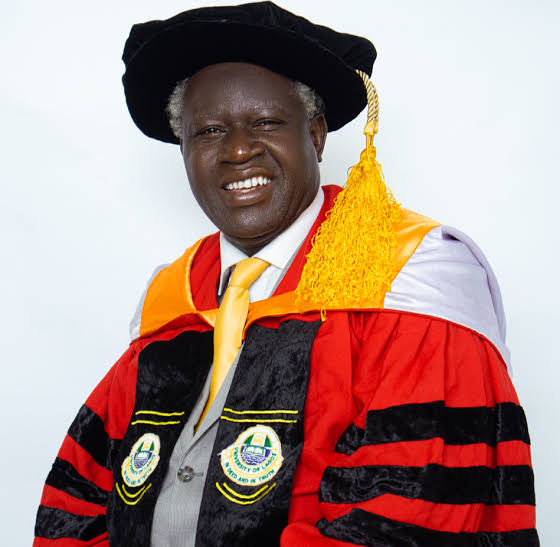
A professor of Comparative Political Economy at the University of Lagos, Adelaja Odukoya, has asserted that Nigeria’s economic policies promote investment without sufficiently strengthening domestic production.

Odukoya argued that the contradiction had weakened the country’s productive foundations, with policies encouraging investment and entrepreneurship while failing to create the technological capacity, productive employment and processing industries needed to drive sustainable development.

Odukoya spoke at the maiden edition of the Adeleke University Toyin Falola Annual Lecture, held on Thursday at the Performing Arts Theatre, Adeleke University, Ede.

The lecture had as its theme, “History, Power and Accumulation: Reimagining Africa in the Globally Disorderly Order.”

Odukoya identified several contradictions in the way the Nigerian state manages economic activity.

He said, “The state promotes investment without creating conditions for technological transfer. It encourages entrepreneurship without generating sufficient productive employment.

“It expands primary-product exports while leaving processing capacity undeveloped. It constructs infrastructure without establishing strong linkages with domestic production.”

According to him, the contradictions explain why increased economic activity and accumulation do not necessarily translate into development.

“Accumulation is not synonymous with development,” Odukoya stated.

He argued that genuine development should be measured by the expansion of productive, technological, institutional and human capabilities.

“A country could attract investment, export minerals and agricultural commodities and record economic activity while still failing to build the domestic industries and technological capabilities required for long-term development,” he said.

His argument was echoed by Prof Toyin Falola, who said Africa’s vast natural resources would continue to reinforce dependency unless governments developed the industrial, technological and institutional capacity to transform them into productive power.

See also  How Nigerians can apply for 2027/2028 UK commonwealth scholarship – FG

Falola said Africa’s resource problem was not simply one of historical exploitation, but also the continent’s failure to convert its resource endowments into power.

“The issue, however, is not just to repeat the history of exploitation. It is more important to know how Africa turns its great resources into power,” Falola said.

He argued that Africa could not afford to remain a spectator as global economic and geopolitical arrangements continued to change, stressing that resource ownership without the capacity to add value would not guarantee influence.

Falola said the continent required a combination of knowledge, government policy and industrial capacity to change its economic position.

“There must be universities that generate new knowledge; there must be governments that translate this knowledge into policies; there must be industries that add value to the continent’s natural resources,” he said.

He added that Africa needed more than improved infrastructure and stronger economies if it wanted to exercise greater influence in the global system.

“The future of the continent will require more than just better infrastructure, improved economies, and more effective political institutions,” Falola said.

Source: punchng.com

FOLLOW US ON:

FACEBOOK

TWITTER

PINTEREST

TIKTOK

YOUTUBE

LINKEDIN

INSTAGRAM

Continue Reading

Business

Import waivers, insecurity end two-year agric trade surplus

Published

on

Import waivers meant to ease hunger and insecurity on farms have led to a deficit, ending a two-year run of surpluses, as Nigeria’s agricultural trade balance swung from a N740.27bn surplus in the first half of 2025 to a N56.13bn deficit in H1 2026, according to agriculture and trade experts.

Recent foreign trade data from the National Bureau of Statistics showed that agricultural exports fell by 33.28 per cent, or N985.14bn, to N1.98tn in H1 2026 from N2.96tn in H1 2025.

Agricultural imports fell by only 8.50 per cent, or N188.74bn, to N2.03tn from N2.22tn over the same period. The gap between the two movements produced a N796.40bn swing in the trade balance.

Nigeria recorded a N365.74bn deficit in H1 2023, when imports of N926.25bn far exceeded exports of N560.51bn. The balance then turned to a N194.92bn surplus in H1 2024 before it widened to N740.27bn in H1 2025.

In separate phone interviews with The PUNCH, Agribusiness experts, including the Chairman of the Lagos Chamber of Commerce and Industry’s Agricultural and Allied Group, Tunde Banjoko, explained that recent government policy led to the shift.

Banjoko said, “Some waivers were given for products like palm oil and rice, and the import tariffs were drastically reduced. It became more favourable for people to import than to patronise local producers.”

He said the waivers on food commodities hurt domestic producers, even though lower tariffs on tractors and manufacturing equipment helped them.

According to Banjoko, “The effect is that our imports will rise above our exports. Second, we will discourage local production. Thirdly, we will be reducing employment, because some factories will shut down if they are not able to compete.”

See also  APC will win 2027 elections convincingly, Yilwatda boasts

Banjoko also said weak funding for processors compounds the problem. He said foreign direct investment flows mainly into the capital market rather than into production and processing, so local processors cannot scale.

He urged the Federal Government to speed up the Special Agro-Industrial Processing Zones programme. “We should speed up such projects where we can produce enough for our country and start exporting, not look for shortcuts by reducing prices,” Banjoko added.

Meanwhile, the Chief Executive Officer of the Centre for the Promotion of Private Enterprise, Dr Muda Yusuf, identified two major factors behind the deficit. He said the first was the Federal Government’s decision to allow some food imports to tackle runaway inflation.

Yusuf said, “The first is the decision of the government to allow for some food imports as a result of the challenges of food inflation, which at a point was getting almost completely out of hand.”

He added that insecurity worsened the supply gap and cut export capacity, stating, “Insecurity led many farmers to leave their farms. Many of them have ended up in IDP camps, and quite a number have completely abandoned farming.”

He added that farmers cannot export without output. Yusuf said, “You can only export when you have the output.”

Yusuf also said high input costs and falling produce prices have discouraged farming. He said, “Most of these inputs are imported, so the exchange rate situation has seriously affected the cost of inputs, and the prices of produce have gone down.”

He urged the Federal Government to cut the cost of fertiliser, agrochemicals, machinery and improved seedlings. He also called for a minimum guaranteed price for agricultural produce.

See also  Volkswagen to cut 50,000 jobs as profit slides

Yusuf said, “The government can establish a threshold below which, if prices fall, it will give farmers some compensation. That is the way it is done in many other economies.”

Source: punchng.com

FOLLOW US ON:

FACEBOOK

TWITTER

PINTEREST

TIKTOK

YOUTUBE

LINKEDIN

INSTAGRAM

Continue Reading

Trending