Connect with us

Business

Cooking gas prices ease as supply improves

Published

on

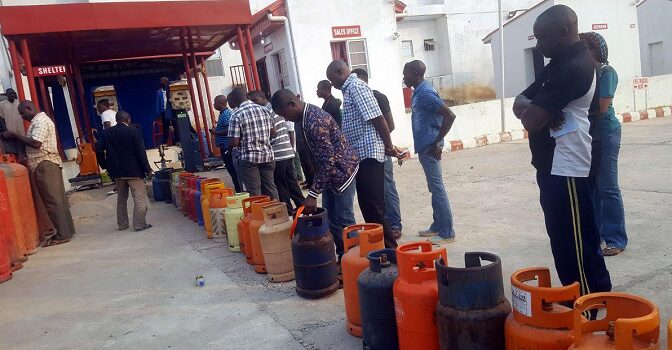
Households across parts of the country are beginning to experience relief as retail prices of Liquefied Petroleum Gas, popularly known as cooking gas, decline following improved product supply and softer depot prices, The PUNCH reports.

The latest market update from gas marketers showed that retail LPG prices have started easing in major cities after weeks of elevated prices, although the reductions have not been uniform because of varying transportation costs, distance from supply depots and retailer margins.

Checks by marketers indicated that cooking gas is now selling for between N1,100 and N1,350 per kilogramme in Lagos, Ibadan and Abeokuta, while consumers in Benin City, Port Harcourt and Warri are paying between N1,150 and N1,400/kg.

In Onitsha and Enugu, retail prices range from N1,200 to N1,450/kg, while consumers in Abuja pay between N1,250 and N1,500/kg.

The National President of the Nigerian Association of Liquefied Petroleum Gas Marketers, Edu Inyang, told our correspondent that northern cities, including Kano and Kaduna, currently record prices of N1,300 to N1,550/kg, while consumers in Maiduguri and parts of the North-East still pay the highest prices, ranging from N1,350 to N1,650/kg, reflecting the additional logistics costs of transporting products to the region.

Overall, Inyang said the national retail price range now stands at approximately N1,100 to N1,650 per kilogramme, although some neighbourhood retailers continue to charge above the range where transportation and distribution costs remain elevated.

The improvement marks a reversal from the sharp increases witnessed from May, when supply tightness and rising depot prices pushed cooking gas costs significantly higher across several parts of the country.

See also  FG offers up to 16.54% yield on September savings bonds

According to the NALPGAM president, the latest decline follows improved product availability from both domestic production and imports, as well as lower depot prices. He also attributed the easing to increased competition among marketers and the disappearance of panic buying that had briefly tightened supplies.

“Following reports of improved LPG supply and softer depot prices in late June 2026, retail cooking gas prices have started easing in some markets, although the reduction has not been uniform across Nigeria. Transport costs, distance from depots, and retailer margins still create noticeable differences between cities.

“Overall, the national retail range is roughly N1,100 to N1,650 per kilogramme, with some neighbourhood retailers charging slightly above this range where logistics costs remain high. The recent easing reflects lower depot prices as supply improved, increased product availability from domestic sources and imports, reduced panic buying and hoarding after government market interventions, and more competition among marketers in major cities,” Inyang said.

The development is expected to provide some relief to households grappling with rising living costs, although industry players noted that prices may continue to differ from one location to another depending on local distribution expenses.

Based on the prevailing retail prices, a 5kg cylinder refill now costs between N5,500 and N8,250, while a 6kg refill ranges from N6,600 to N9,900. Inyang said consumers refilling a standard 12.5kg cylinder are expected to pay between N13,750 and N20,625, depending on location and retailer.

Despite the improvement, marketers cautioned that retail prices are yet to stabilise nationwide, noting that communities located farther from major LPG depots may continue to experience relatively higher prices because of transportation costs.

See also  Trump threatens to end cooking oil purchases from China

Industry operators expressed optimism that sustained product availability from local producers, alongside steady imports, would further moderate prices in the coming weeks, provided there were no major disruptions to supply or logistics.

Also, the National Chairman of the Liquefied Petroleum Gas Retailers Branch of the Nigeria Union of Petroleum and Natural Gas Workers, Ayobami Olarinoye, told our correspondent that normalcy was gradually returning to the sector.

However, Olarinoye, whose members sell gas in neighbourhood shops, said they currently sell to consumers at prices ranging from N1,600 to N1,800/kg. “The inflow and supply are gradually getting back to normal. There is more availability.

“The price is also coming down gradually. As of today (Monday), we buy from between N1,300 and N1,500 per kg from the marketers (plant operators), depending on the locations, while we sell between N1,600 and N1,800 per kg to consumers. This also depends on the location and associated logistics.”

The PUNCH earlier reported that as cooking gas prices rose by about 140 per cent in many locations across the country, marketers finalised plans to import the product on a large scale to improve affordability and availability.

Cooking gas prices rose from an average of N1,000 per kilogramme in January and February this year to as high as N2,400 between May and June. Consequently, the regulator began issuing licences for the importation of LPG. This followed the inability of local LPG producers to meet domestic demand, according to industry operators.

Meanwhile, the Minister of Petroleum Resources (Gas), Ekperikpe Ekpo, intervened, warning operators against hoarding and profiteering.

See also  Dangote refinery slashes petrol gantry price by N75/litre; read details

punch.ng

FOLLOW US ON:

FACEBOOK

TWITTER

PINTEREST

TIKTOK

YOUTUBE

LINKEDIN

Continue Reading
Click to comment

Leave a Reply

Your email address will not be published. Required fields are marked *

Business

Oil cargoes meant for naira-for-crude deal supplied to Dangote – NNPC

Published

on

The Nigerian National Petroleum Company Limited has insisted that it supplied all available crude oil cargoes allocated under the Federal Government’s naira-for-crude initiative to the Dangote Petroleum Refinery, saying there had been no withholding on its part.

The national oil company stated this even as a top management official of the Dangote Group disclosed exclusively to The PUNCH that the refinery was receiving just four million barrels of crude oil monthly under the arrangement, instead of about 13 million barrels envisaged after President Bola Tinubu’s 2024 directive.

The refinery had attributed its decision to switch from naira-denominated fuel sales to dollar transactions to the crude supply shortfall, saying it would also increase exports of refined petroleum products to earn foreign exchange.

Responding on Monday, the NNPC, through its spokesman, Andy Odeh, said the company had fully discharged its obligations under the naira-for-crude policy. “As a 7.25 per cent equity shareholder in Dangote Petroleum Refinery and Petrochemicals, NNPC Limited has a direct and genuine interest in seeing the refinery operate at full capacity. That is not in dispute.

“What the figures being cited require is context. Under the naira-denominated crude supply arrangement, NNPC Limited has allocated 100 per cent of all available naira crude cargoes to DPRP in 2026 — there has been no withholding on our part. Actual off-take in any period is shaped by several variables: crude availability, nomination timelines, and the refinery’s own operational scheduling.

Odeh said the NNPC has met its obligations to the refinery, saying the two parties are resolving any existing gaps together. “NNPC Limited has met its 2026 supply obligations to the refinery. Our engagement with DPRP management remains constructive, and where any gaps exist, we are resolving them together — as the partners we are.

“A fully supplied, fully operational Dangote refinery serving the Nigerian market is an obligation NNPC Limited shares without reservation,” he added.

However, the Dangote Group maintained that the crude volumes supplied under the arrangement were inadequate to sustain naira-denominated fuel sales.

A top management official of the Dangote Group had told The PUNCH that crude supply under the naira-for-crude arrangement had been limited to just four million barrels monthly despite the increase in Nigeria’s crude oil production.

See also  Banks: Bad loans rise after CBN ends forbearance

The official, who pleaded anonymity because of the sensitivity of the matter, said the refinery was now set to export a larger percentage of its products in exchange for foreign exchange.

“Since the traders have brought lots of imported products to the market, we are focusing on exports. We can’t, and we shouldn’t be fighting against the government’s policies,” the source said.

Our correspondent told the official that exporting without adequately supplying the domestic market would not be good for the country, but he responded with a question: “Is issuing massive import licences and releasing forex for imports good for the country, when 45 per cent of our production can meet 100 per cent of the entire country’s requirements in terms of petrol, diesel and aviation fuel?”

When told that the NNPC said it had increased crude supply to the Dangote refinery, the official replied, “Do you think that they will keep quiet if we process the naira crude and export the products? We are getting just four million barrels monthly.”

With the sale of petrol in dollars to local marketers, the Dangote official disclosed that the refinery would now process whatever crude it receives under the naira arrangement and supply the equivalent refined products in naira to the Nigerian market through the NNPC.

“We will account for every barrel of crude we receive against the naira payment by supplying equivalent products in naira. We will do that through the NNPC. The NNPC buys a lot from us,” he said.

The refinery had maintained that the inability to secure the expected crude volumes under the naira-for-crude initiative compelled it to abandon naira-denominated fuel sales and adopt dollar pricing for petroleum products.

Last week, the refinery announced a new dollar-denominated pricing template, fixing the ex-depot price of petrol at $0.779 per litre, diesel at $1.087 per litre and aviation fuel at $0.942 per litre.

The move has drawn criticism from petroleum marketers, who warned that it could increase pressure on fuel prices, although the Nigerian Midstream and Downstream Petroleum Regulatory Authority said the decision was consistent with the provisions of the Petroleum Industry Act, which allows refiners to recover their costs.

Supply worsens

Meanwhile, petrol supply in the Federal Capital Territory, Abuja, worsened on Monday with the closure of some major filling stations in Abuja and a fresh increase in the pump price of petrol.

See also  Petrol Landing Cost Drops To ₦840/Litre, But Pump Prices Remain High

Checks by one of our correspondents showed that some stations operated by NNPC Limited and MRS along the Airport Road Expressway were shut when visited on Monday.

At stations that were dispensing the product, petrol was being sold at between N1,250 and N1,280 per litre. Bovas sold petrol at N1,250 per litre, while Azman Filling Station at 6th Avenue dispensed the product at N1,280 per litre. Salbas also sold petrol at N1,280 per litre.

The development has further heightened concerns among motorists and other consumers over the rising cost and availability of petrol in the nation’s capital. For motorists in Abuja, Monday’s development meant longer searches for petrol, closed stations and prices as high as N1,280 per litre at outlets that had the product available.

Meanwhile, truck traffic has surged across major private petroleum depots in Lagos as marketers scramble for petrol supplies following the fifth consecutive day of suspended loading at Dangote Petroleum Refinery amid growing expectations that wholesale prices could rise when operations resume.

Expert reacts

Meanwhile, Professor Emeritus of Petroleum Economics and Principal Facilitator at the FUPRE Energy Business School, Wumi Iledare, said the Dangote refinery’s decision to sell petrol in dollars should be viewed within the broader context of petroleum economics and Nigeria’s energy security rather than merely the currency in which products are priced.

According to Iledare, the move is a commercial response to the realities of the global oil market, where crude oil, the refinery’s major feedstock, is traded in United States dollars.

Iledare explained that pricing refined products in dollars enables the refinery to reduce its exposure to exchange rate volatility and provides greater revenue certainty, although it shifts part of the foreign exchange risk to fuel marketers and, ultimately, consumers, where the costs are passed on.

He stressed that the refinery’s dollar pricing would not automatically translate to higher fuel prices, noting that domestic petrol prices would instead become more closely tied to movements in international crude oil prices and the naira-dollar exchange rate.

“Does this necessarily mean higher fuel prices? Not necessarily. What it does mean is that domestic fuel prices become more closely linked to two key variables: international crude oil prices and the naira-dollar exchange rate. If crude prices rise or the naira weakens, pump prices are likely to increase. Conversely, if crude prices decline or the naira strengthens, consumers should also expect prices to adjust downward. That is how a market-oriented pricing system is expected to function,” he said.

See also  Nigeria’s Non-Oil Exports Hit $3.225bn In H1 2025

The petroleum expert maintained that despite concerns over dollar-denominated pricing, the Dangote refinery had strengthened Nigeria’s energy security by reducing dependence on imported petrol and improving the availability of petroleum products.

He, however, noted that domestic refining alone could not guarantee affordability, saying fuel prices would continue to depend on exchange rate stability, international crude prices, logistics costs and the level of competition in the downstream sector.

“The refinery has significantly improved the availability of petroleum products by reducing Nigeria’s dependence on imported PMS. That alone makes the country less vulnerable to disruptions in international supply chains and enhances supply reliability.

“This is why I would say that Dangote Refinery can shield Nigeria more effectively from supply shocks than from price shocks. Domestic refining improves energy security, but it cannot completely insulate Nigeria from global petroleum market dynamics because crude oil still has an international opportunity cost, whether it is refined in Lagos, Rotterdam, or Houston,” he stated.

On the implications for the naira, Iledare argued that pricing petroleum products in dollars would not automatically weaken the local currency. “As for the impact on the naira, the answer is more nuanced than many assume. Dollar pricing by itself does not automatically weaken the naira. What matters is whether the arrangement increases or reduces Nigeria’s net demand for foreign exchange,” he said.

He urged policymakers to focus less on the currency in which petroleum products are priced and more on building an efficient and competitive downstream market.

“The real issue is therefore not the currency of pricing. The real issue is whether Nigeria’s downstream petroleum market satisfies the four tests of good public policy: efficiency, effectiveness, equity, and ethics. Those are the standards by which this development should be judged,” he added.

punch.ng

FOLLOW US ON:

FACEBOOK

TWITTER

PINTEREST

TIKTOK

YOUTUBE

LINKEDIN

Continue Reading

Business

143 firms battle for 50 oil blocks today; read details

Published

on

The Nigerian Upstream Petroleum Regulatory Commission will open the decisive commercial phase of the 2025 oil and gas licensing round on Tuesday (today), with 143 companies set to compete for 50 blocks across Nigeria’s major and emerging hydrocarbon basins.

The commercial bid conference, by invitation only, is scheduled to take place in Abuja. The development marks the latest stage in a licensing process that began in November 2025 and has attracted significant interest from companies seeking access to Nigeria’s upstream petroleum assets.

In a statement issued on Monday, the Head of Media and Corporate Communications at the NUPRC, Eniola Akinkuotu, said companies that successfully scaled the prequalification process had been notified and invited to physically attend the commercial bid conference.

According to the commission, the 50 blocks on offer cover a wide range of geological terrains and include 16 blocks in the Niger Delta Onshore, 18 in the Niger Delta Shallow Water and one in the Niger Delta Deep Offshore.

The assets also include three blocks in the Benin Basin Onshore, four in the Anambra Basin Onshore, four in the Chad Basin Onshore and four in the Benue Trough.

The statement read, “The Nigerian Upstream Petroleum Regulatory Commission has invited qualified companies to the highly anticipated Commercial Bid Conference slated for July 21, 2026.

“These companies, which scaled through the transparent and rigorous process, have been notified and are expected to physically attend the Commercial Bid Conference taking place at the Conference Centre, Transcorp Hilton Hotel, Abuja. Attendance is strictly by invitation.

See also  FG offers up to 16.54% yield on September savings bonds

“On offer are 50 oil and gas blocks across diverse terrains: Niger Delta Onshore (16), Niger Delta Shallow Water (18), Niger Delta Deep Offshore (1), Benin Basin Onshore (3), Anambra Basin Onshore (4), Chad Basin Onshore (4) and Benue Trough (4).

“In line with the guidelines, the elements of the bid parameters include the signature bonus, the work programme commitment and commitment to performance security, culminating in a weighted technical and commercial score that will determine the winning bid.”

The spread of the blocks reflects the Federal Government’s effort to attract investment beyond the traditional Niger Delta producing areas and stimulate exploration in frontier basins with significant hydrocarbon potential.

The commercial bids will be assessed using key parameters, including signature bonus, work programme commitments and commitment to performance security. The parameters will be combined into a weighted technical and commercial score that will determine the successful bidders.

The commission said the companies invited to the conference had emerged from a transparent and rigorous prequalification process. The 2025 Licensing Round was first announced on November 11, 2025, in line with the provisions of the Petroleum Industry Act, 2021.

The bid portal was subsequently launched on December 1, 2025, to enable interested companies to register and participate in the process. A pre-bid conference was held on January 14, 2026, at Eko Hotels and Suites, Lagos, to explain the guidelines and procedures to registered bidders and other interested stakeholders.

The registration and submission of documents for prequalification closed on February 27, 2026, while the prequalification stage was completed on March 16, 2026.

See also  Petrol Landing Cost Drops To ₦840/Litre, But Pump Prices Remain High

A total of 286 companies submitted applications for prequalification. Following the evaluation process, 196 companies were prequalified to proceed to the technical and commercial bidding phase.

The commission said 143 of the prequalified companies subsequently submitted a total of 200 bids for the available assets. These 143 companies are now expected to participate in the commercial bid conference on Tuesday.

The number of bids submitted indicates that some companies are competing for more than one block, further underscoring the level of interest generated by the licensing round.

The commercial bid conference is expected to provide the commission with an opportunity to formally evaluate and compare the financial and operational commitments of the qualified bidders.

The process is also expected to test the seriousness of investors by placing emphasis not only on the amount offered as signature bonus but also on the work programmes and financial guarantees required to develop the assets.

The 2025 bid round is taking place against the backdrop of the Federal Government’s efforts to increase crude oil and gas production, attract fresh investment into the upstream sector and unlock previously underdeveloped petroleum assets.

Nigeria has struggled for years to attract sufficient investment into exploration and production due to concerns over regulatory uncertainty, insecurity, ageing infrastructure, project delays and the high cost of operating in the upstream sector.

The NUPRC has, however, said recent reforms under the Petroleum Industry Act and improvements in the regulatory environment are aimed at creating a more predictable framework for investors.

The licensing round also comes as the commission seeks to increase production to support government revenue, strengthen energy security and provide the feedstock required by Nigeria’s expanding domestic refining industry.

See also  Nigerians now hold $59bn in Cryptocurrency assets —FDC

The successful conclusion of the commercial bidding phase will therefore be closely watched by investors and industry stakeholders as a key test of the country’s ability to convert its petroleum resources into new exploration activity, production and economic value.

The commission’s invitation to 143 companies for the commercial bid conference represents the latest milestone in a process that began with 286 applications and has now narrowed the competition to the companies that submitted 200 bids for the 50 blocks on offer.

Following the commercial bid conference and the completion of the subsequent stages of the process, successful bidders are expected to emerge in line with the applicable rules and evaluation criteria for the 2025 Licensing Round.

punch.ng

FOLLOW US ON:

FACEBOOK

TWITTER

PINTEREST

TIKTOK

YOUTUBE

LINKEDIN

Continue Reading

Business

Reps member faces petition over alleged N19m travel debt

Published

on

A member of the House of Representatives representing Obudu/Bekwarra/Obanliku Federal Constituency of Cross River State, Peter Akpanke, has been petitioned over an alleged unpaid travel debt of more than N19.15m arising from the procurement and reissuance of international and local airline tickets.

The petition, addressed to the Independent Corrupt Practices and Other Related Offences Commission and obtained by our correspondent, was written by Ohanele Udokanmma, solicitor to Johnson Ugochukwu of Havilah Global Travels Limited, who accused the lawmaker of failing to settle outstanding payments despite repeated demands.

According to the petition, Akpanke engaged the travel agency on January 16, 2026, to procure three Business Class airline tickets to Rome for himself and two associates at a total cost of N24.48m.

The solicitor stated that the tickets were purchased with the agency’s funds at the request of the lawmaker. The petition further alleged that while in Rome on January 24, 2026, Akpanke requested the reissuance of the tickets for two of his companions at an additional cost of N5.79m.

It added that he subsequently requested the reissuance of another passenger’s ticket at a further cost of N1.52m. According to the petitioner, the total value of the international tickets rose to N31m.

The solicitor, however, acknowledged that the lawmaker made part payments, stating that he paid N10m before embarking on the trip and another N4m upon his return from Rome, bringing the total amount paid to N14m.

The petition stated, “The total amount our client received so far from Hon. Peter Akpanke was N14,000,000 with a balance of N17,794,468 from N31,000,000.”

See also  Petrol Landing Cost Drops To ₦840/Litre, But Pump Prices Remain High

It also alleged that the travel agency later procured an additional local airline ticket for the lawmaker valued at N1.36m, which also remains unpaid. Cumulatively, comprising the outstanding international ticket balance and the local ticket, the petitioner claimed that Akpanke is indebted to the agency in the sum of N19,154,468.

The petition further alleged that all efforts to recover the debt had failed. The solicitor wrote, “Owing to the above facts, Hon. Peter Akpanke is now indebted to our client in the sum of N19,154,468.

“Our client has made repeated demands for the payment of these sums of money due to him as debt from Hon. Peter Akpanke, which he has refused, failed and neglected to pay, with the sole aim of not paying our client his money.”

The solicitor urged the authorities to investigate the matter, saying, “We hereby indulge you to please use your good office to investigate the matter such that justice should be done.”

When contacted, Akpanke denied owing Havilah Travels the N19.15m claimed in the petition, insisting that while he had an outstanding balance with the travel agency, the figure being circulated was false.

Speaking on the possible motive behind the petition, the lawmaker said, “If it is not politically motivated, if he has petitioned me to an anti-graft agency, why is he getting across to journalists again today?”

He added, “Number one, it’s a lie. I’m not owing Havilah Travels N19m. I’m having some balances to pay them, but it’s not up to N19m.”

See also  Dangote Refinery reorganises workforce over sabotage, denies mass sack

Akpanke argued that having an outstanding business obligation was not a criminal offence, stressing that commercial debts should not automatically be portrayed as wrongdoing.

“To owe somebody is not a crime, my brother. That’s business. If we did business and maybe I’m owing him, a lot of people are owing me too. I’m not saying I’m not owing him. He has petitioned me to an anti-graft agency. Why not allow them do their work now? Why are you engaging journalists again?” he said.

Rejecting suggestions that he had used his political position to avoid payment, the federal lawmaker maintained that he had enjoyed a longstanding business relationship with the travel agency.

“What has political power got to do with buying tickets? Is that the first time he is buying tickets for me? He has bought tickets for me worth over N100m. Maybe I stayed owing him for some time and it made him petition me. That man had no business doing that,” Akpanke said.

He further defended the practice of purchasing airline tickets on credit, saying, “Which law says you cannot buy tickets on credit? I don’t like blackmailing people because tomorrow is pregnant.”

While admitting that he had transacted with Havilah Travels, Akpanke insisted he had been making payments and could provide proof.

“I will not tell you that I didn’t do business with Havilah Travels. I did. And I’m not owing them N19 million. I’ve been paying. I can show you evidence of the last payment I made to him. So what is all that rubbish now? The person who introduced us together has even told him, ‘Don’t worry, I will bear the liabilities.’ So why is he going to journalists?” he said.

See also  Nigerians now hold $59bn in Cryptocurrency assets —FDC

He warned that he could also publicise his experience with the agency, adding, “I can equally blackmail them and let Nigerians know that when you do business with them, once you owe them, they begin to petition you to the EFCC and all those places. Has it ever stopped me from paying? I know that I have an obligation to pay him.”

punch.ng

FOLLOW US ON:

FACEBOOK

TWITTER

PINTEREST

TIKTOK

YOUTUBE

LINKEDIN

Continue Reading

Trending