Connect with us

Business

‘It’s not only akara,’ Remi Tinubu defends comments, says FG also supports tomato, pepper sellers

Published

on

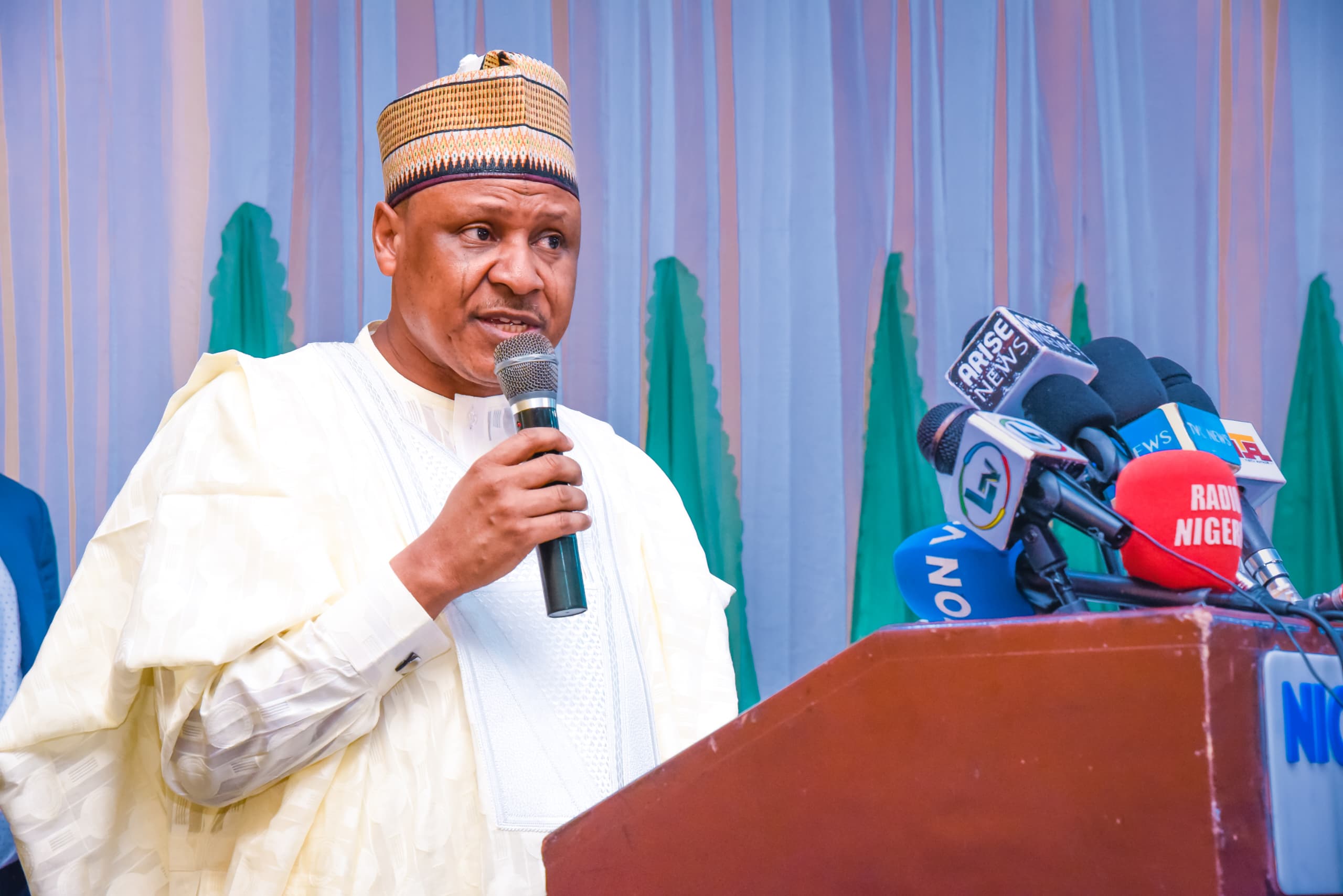
The First Lady, Senator Oluremi Tinubu, has defended her earlier comments on small-scale businesses, saying the Federal Government’s empowerment programmes extend beyond akara sellers to include traders in tomatoes, pepper, vegetables and roasted plantain.

Tinubu spoke on Monday during the inauguration of the newly constructed Abubakar Maje Haruna Hall at the Emir of Hadejia’s Palace in Jigawa State, according to a video aired by TVC News.

Her remarks come days after comments she made about akara, roasted corn and kuli-kuli businesses sparked widespread backlash on social media, with many Nigerians accusing her of trivialising the country’s economic hardship.

Addressing the criticism directly, the First Lady said the Federal Government had donated N100m to the Jigawa State Government to empower 2,000 petty traders in the state.

“Because of the atmosphere, what is going on, I’ve told Her Excellency that we’ve already given, donated about 100 million to her to use to empower 2,000 petty traders.

“And I know they’ve been talking that I said akara. It’s not only akara, we also have tomato sellers. We have boole, and those also selling pepper, selling vegetables for us in the market.

“We will continue to empower them and add to their resources so that their trade can really be sustainable. So that is what we are doing,” she said.

Tinubu said the beneficiaries would each receive N50,000 to recapitalise their businesses.

“We continue to carry the capacity. We have the amount of 2,000 women who are already in small businesses. They will recapitalise their businesses with the N50,000 each. We’ve already given the N100 million,” she added.

See also  NNPCL reiterates 2m bpd oil output target by 2027

She maintained that the criticism trailing her earlier remarks would not deter the government from its empowerment programmes.

“I know all those people who are affected, they do appreciate it. And we are not intimidated by all those wrong reports. But we are forging ahead and making sure that our people, you know, are well cared for,” Mrs Tinubu said.

The First Lady also spoke about Nigeria’s untapped resources, citing an orange orchard she visited in Benue State, and expressed hope that young Nigerians would explore opportunities beyond oil.

“Nigeria is a really blessed country. I’ve been travelling, and I pray that our young people will see the resources we have in this nation. We have not even gone to explore yet because we are thinking it’s oil. But there are so many things,” she said.

punch.ng

FOLLOW US ON:

FACEBOOK

TWITTER

PINTEREST

TIKTOK

YOUTUBE

LINKEDIN

Continue Reading
Click to comment

Leave a Reply

Your email address will not be published. Required fields are marked *

Business

Remi Tinubu defends her akara/roasted corn business idea, says petty traders given N50, 000 empowerment appreciate it

Published

on

The First Lady of Nigeria, Senator Oluremi Tinubu, has defended her recent remarks urging low-income citizens to engage in micro-businesses, such as frying akara, roasting corn, or producing kuli-kuli.

The initial comments, delivered to journalists in Abuja on Thursday, June 25, sparked widespread public backlash. Critics argued that promoting low-yield, traditional petty trading is regressive at a time when global economies are transitioning toward technology-driven industries.

Addressing the controversy during an official event in Jigawa State on Monday, June 29, the First Lady dismissed the criticisms, emphasizing that the federal government remains committed to supporting grassroots commerce. She noted that national empowerment initiatives regularly target small-scale vendors, including those selling tomatoes, pepper, vegetables, and roasted plantains.

To support her stance, Tinubu disclosed that the government has distributed ₦100 million in financial grants so far. Under this scheme, approximately 2,000 petty traders have received ₦50,000 each to recapitalize and expand their businesses.

“ I’ve told Her Excellency that we’ve already given, donated about 100 million to her to use to empower 2,000 petty traders. And I know they’ve been talking that I said akara. It’s not only akara, we also have tomato sellers. We have boole, and those also selling pepper, selling vegetables for us in the market.

We will continue to empower them and add to their resources so that their trade can really be sustainable. So that is what we are doing,” she said.

She maintained that the criticism trailing her earlier remarks would not deter the government from its empowerment programmes.

See also  Reps probes tax deductions, multiple charges by banks

“I know all those people who are affected; they do appreciate it. And we are not intimidated by all those wrong reports. But we are forging ahead and making sure that our people, you know, are well cared for” she said

Mrs Tinubu prayed that Nigerian youths explore other opportunities around them to empower themselves economically.

“Nigeria is a really blessed country. I’ve been travelling, and I pray that our young people will see the resources we have in this nation. We have not even gone to explore yet because we are thinking it’s oil. But there are so many things” she said

FOLLOW US ON:

FACEBOOK

TWITTER

PINTEREST

TIKTOK

YOUTUBE

LINKEDIN

INSTAGRAM

Continue Reading

Business

Local refineries import 2m barrels Libyan crude oil amid domestic shortage

Published

on

Nigeria imported an average of two million barrels of crude oil from Libya, the first of such imports from the North African country ever. Dangote Petroleum Refinery is the major importer of crude into Nigeria.

The import comes amid the high export of crude locally produced in Nigeria to other countries, leaving local refineries with no option but to seek feedstock elsewhere.

Libya Review, a local media outlet in the country, reports that Libya’s crude oil exports reached a new milestone after Nigeria imported Libyan oil for the first time on record, highlighting the growing role of Libyan supplies in regional energy markets amid ongoing disruptions to global trade flows.

According to data published by the Energy Research Unit, Nigeria imported around 64,500 barrels per day of Libyan crude in May 2026, equivalent to approximately two million barrels for the month.  “The shipment marks the first recorded Nigerian import of Libyan crude in available historical data dating back to 2013,” the report said.

Recall that there were reports in 2024 that the Dangote Petroleum Refinery was in talks with Libya for the purchase of crude oil. However, the Libyan oil corporation denied negotiating or entering into talks regarding the crude oil supply to any Nigerian refinery.

The statement, written in Arabic in 2024, translates, “The National Oil Corporation denies that it has negotiated or entered into any talks regarding the supply of crude oil to an oil refinery in Nigeria.”

The National Oil Corporation also confirmed then that it was committed to its contracts with its international partners and committed to the legal mechanism for selling Libyan oil raw materials and that it did not work with an immediate sales mechanism.

See also  You Are Not Prevented From Investing, Don’t Use Cry Of Monopoly To Stop Growth – Dangote Warns Critics

“In addition, the process of determining raw material prices is carried out through a committee of experts and is approved by the corporation and the Ministry of Oil and Gas,” Libya said in July 2024.

But it appears the agreement has finally been concluded with the supply of 2 million barrels to the Dangote refinery in just one month. By ramping up capacity to 700,000 barrels per day and eyeing 1.4 million barrels per day in 2028, the Dangote refinery is increasingly in need of feedstock from multiple sources.

In 2026, the refinery has already imported cargoes of Angola’s Cabinda and Saxi Batuque crudes, Ghana’s Jubilee crude and, for the first time, Libyan and Guyanese supplies, all of the light sweet or medium sweet variety, according to S&P Global Energy data.

In Nigeria, local refiners have consistently complained of insufficient crude supply due to higher exports. Nigeria exported an estimated 148.9 million barrels of crude oil valued at about N20.22tn in the first five months of 2026, showcasing the scale of the country’s oil export despite persistent concerns over the domestic crude supply obligation.

The crude barrels were exported by both international and indigenous oil companies, including the Nigerian National Petroleum Company Limited.

The figures obtained from the Central Bank of Nigeria indicate that the total volume of crude oil produced by the country during the five-month review period in 2026 was 216.85 million barrels, out of which about 149 million barrels were exported.

Overall, Nigeria exported about 68.7 per cent of the crude oil it produced during the five months, leaving roughly 67.95 million barrels available for domestic refining, storage, operational use, and inventory adjustments.

See also  FG weighs policy tweaks as Middle East war lingers

The import of crude from Libya is coming as international oil markets continue to adjust to supply disruptions linked to the US-Iran conflict and the resulting challenges affecting energy shipments through the Gulf region. These conditions, it was learnt, have allowed Libyan crude to expand its presence in both African and European markets.

Libya is also strengthening energy ties with neighbouring countries while also competing with Nigeria for major oil investors.

It was gathered that Egypt imported approximately 33,000 barrels per day of Libyan crude in April 2026, following imports of 57,000 barrels per day in February. The purchases marked Egypt’s first imports of Libyan crude since 2019 and form part of efforts to secure alternative supplies following agreements to import more than one million barrels per month from Libya.

Tunisia also increased purchases of Libyan crude during 2026, importing around 19,000 barrels per day in March and 10,000 barrels per day in May, despite only occasionally buying Libyan oil in previous years.

Italy remained Libya’s largest customer, importing 348,000 barrels per day in May, accounting for roughly one-third of total Libyan crude exports. Greece, Spain and Turkey followed among the leading buyers of Libyan oil.

The Dangote refinery recently purchased two cargoes of crude oil from the United Arab Emirates, marking its first-ever procurement of Middle Eastern crude as it expands its feedstock sources amid persistent domestic supply constraints.

According to a report by S&P Global Commodity Insights, the two cargoes will be the first sourced by the refinery from any Middle Eastern supplier, signalling a shift from its traditional reliance on Nigerian, African, and United States crude grades.

punch.ng

FOLLOW US ON:

FACEBOOK

TWITTER

PINTEREST

TIKTOK

YOUTUBE

LINKEDIN

Continue Reading

Business

Cooking gas prices ease as supply improves

Published

on

Households across parts of the country are beginning to experience relief as retail prices of Liquefied Petroleum Gas, popularly known as cooking gas, decline following improved product supply and softer depot prices, The PUNCH reports.

The latest market update from gas marketers showed that retail LPG prices have started easing in major cities after weeks of elevated prices, although the reductions have not been uniform because of varying transportation costs, distance from supply depots and retailer margins.

Checks by marketers indicated that cooking gas is now selling for between N1,100 and N1,350 per kilogramme in Lagos, Ibadan and Abeokuta, while consumers in Benin City, Port Harcourt and Warri are paying between N1,150 and N1,400/kg.

In Onitsha and Enugu, retail prices range from N1,200 to N1,450/kg, while consumers in Abuja pay between N1,250 and N1,500/kg.

The National President of the Nigerian Association of Liquefied Petroleum Gas Marketers, Edu Inyang, told our correspondent that northern cities, including Kano and Kaduna, currently record prices of N1,300 to N1,550/kg, while consumers in Maiduguri and parts of the North-East still pay the highest prices, ranging from N1,350 to N1,650/kg, reflecting the additional logistics costs of transporting products to the region.

Overall, Inyang said the national retail price range now stands at approximately N1,100 to N1,650 per kilogramme, although some neighbourhood retailers continue to charge above the range where transportation and distribution costs remain elevated.

The improvement marks a reversal from the sharp increases witnessed from May, when supply tightness and rising depot prices pushed cooking gas costs significantly higher across several parts of the country.

See also  FG weighs policy tweaks as Middle East war lingers

According to the NALPGAM president, the latest decline follows improved product availability from both domestic production and imports, as well as lower depot prices. He also attributed the easing to increased competition among marketers and the disappearance of panic buying that had briefly tightened supplies.

“Following reports of improved LPG supply and softer depot prices in late June 2026, retail cooking gas prices have started easing in some markets, although the reduction has not been uniform across Nigeria. Transport costs, distance from depots, and retailer margins still create noticeable differences between cities.

“Overall, the national retail range is roughly N1,100 to N1,650 per kilogramme, with some neighbourhood retailers charging slightly above this range where logistics costs remain high. The recent easing reflects lower depot prices as supply improved, increased product availability from domestic sources and imports, reduced panic buying and hoarding after government market interventions, and more competition among marketers in major cities,” Inyang said.

The development is expected to provide some relief to households grappling with rising living costs, although industry players noted that prices may continue to differ from one location to another depending on local distribution expenses.

Based on the prevailing retail prices, a 5kg cylinder refill now costs between N5,500 and N8,250, while a 6kg refill ranges from N6,600 to N9,900. Inyang said consumers refilling a standard 12.5kg cylinder are expected to pay between N13,750 and N20,625, depending on location and retailer.

Despite the improvement, marketers cautioned that retail prices are yet to stabilise nationwide, noting that communities located farther from major LPG depots may continue to experience relatively higher prices because of transportation costs.

See also  Turkish Airlines reiterates commitment to workers’ welfare

Industry operators expressed optimism that sustained product availability from local producers, alongside steady imports, would further moderate prices in the coming weeks, provided there were no major disruptions to supply or logistics.

Also, the National Chairman of the Liquefied Petroleum Gas Retailers Branch of the Nigeria Union of Petroleum and Natural Gas Workers, Ayobami Olarinoye, told our correspondent that normalcy was gradually returning to the sector.

However, Olarinoye, whose members sell gas in neighbourhood shops, said they currently sell to consumers at prices ranging from N1,600 to N1,800/kg. “The inflow and supply are gradually getting back to normal. There is more availability.

“The price is also coming down gradually. As of today (Monday), we buy from between N1,300 and N1,500 per kg from the marketers (plant operators), depending on the locations, while we sell between N1,600 and N1,800 per kg to consumers. This also depends on the location and associated logistics.”

The PUNCH earlier reported that as cooking gas prices rose by about 140 per cent in many locations across the country, marketers finalised plans to import the product on a large scale to improve affordability and availability.

Cooking gas prices rose from an average of N1,000 per kilogramme in January and February this year to as high as N2,400 between May and June. Consequently, the regulator began issuing licences for the importation of LPG. This followed the inability of local LPG producers to meet domestic demand, according to industry operators.

Meanwhile, the Minister of Petroleum Resources (Gas), Ekperikpe Ekpo, intervened, warning operators against hoarding and profiteering.

See also  You Are Not Prevented From Investing, Don’t Use Cry Of Monopoly To Stop Growth – Dangote Warns Critics

punch.ng

FOLLOW US ON:

FACEBOOK

TWITTER

PINTEREST

TIKTOK

YOUTUBE

LINKEDIN

Continue Reading

Trending