Connect with us

Business

Dangote, importers battle as fuel prices holds above N1,000

Published

on

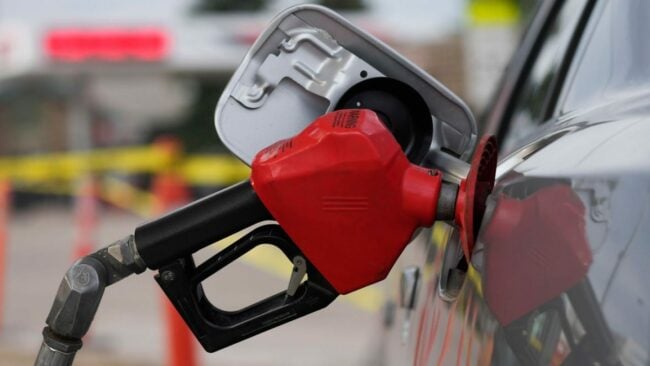
Fuel prices in Nigeria may not drop below N1,000 per litre any time soon unless importers decide to initiate a price war against the Dangote Petroleum Refinery, The PUNCH reports.

As crude prices crashed to about $70 per barrel following the gradual return of oil supply through the Strait of Hormuz, many Nigerians expected fuel prices to fall to levels recorded before the US-Iran war began on February 28.

However, prices have remained high, with only marginal reductions by the Dangote refinery, the country’s major supplier of petrol, diesel, and aviation fuel.

Since the fourth quarter of 2024, the Dangote refinery has been Nigeria’s price setter, taking over from the Nigerian National Petroleum Company Limited, which previously played that role when it was virtually the country’s sole petrol importer due to the absence of functioning refineries.

As calls intensify for lower fuel prices following the drop in global crude oil prices, many Nigerians are looking to the Dangote refinery. However, the refinery appears to be looking elsewhere.

In an exclusive interview with our correspondent, a senior official of the Dangote Group said the Federal Government should instead ask the importers it granted licences to reduce their prices.

The official, who requested anonymity because of the sensitivity of the matter, said he was surprised that importers bringing in cheaper Russian petrol had not reduced pump prices.

“The Federal Government has been giving huge quantities of import licences for the past few months. And the importers bring cheaper Russian products (cheaper because they are banned commodities). So, why are the importers not selling cheaper?” the source asked.

When told that importers might be waiting for the Dangote refinery to take the lead, he queried the assumption, saying, “How can they be waiting for us when their vessels are arriving every day?”

The source also disclosed that the refinery still holds significant volumes of crude purchased at higher prices, making an immediate crash in fuel prices difficult. He revealed that the refinery has massive crude storage capacity, while additional crude cargoes are still en route to Nigeria and others are under forward purchase agreements.

See also  Tinubu orders FIRS, Customs to review revenue deductions

“We have huge crude oil storage capacity in our crude tank farm. Further, there would be crude oil in the ships, at different points, sailing from the country of origin to Nigeria. In addition, there would be crude oil under forward purchases, which have yet to be shipped. But, since the country trusts importers, let them go and sell at the low imported price plus profit,” he said.

The Dangote official also stated that the government was not supplying the refinery with sufficient crude, forcing it to rely on imported crude while exporting refined products. “The government is giving us small quantities of crude oil. So, we import our crude oil and export our products. If you say the masses will be at the receiving end, you should know that it’s a sad situation for the investor too,” he submitted.

Data from the Major Energies Marketers Association of Nigeria, a body with major fuel importers as members, showed on Wednesday that the landed cost of imported petrol was N1,023 per litre, while Dangote’s gantry price stood at N1,075.

Despite the lower landing cost of imported petroleum products, the reductions have yet to adequately reflect at filling stations.

Speaking with our correspondent, the National Publicity Secretary of the Independent Petroleum Marketers Association of Nigeria, Chinedu Ukadike, said importers remained cautious because of uncertainty over Dangote’s next pricing move, given the price wars witnessed in 2025.

“This business is like a ding-dong game. Dangote is a refiner. It is being sparked by these licences that were given to importers. And these importers are also very wary of Dangote’s antics and the strength of the price at purchase. So, it becomes very sceptical for importers to go out and continue to import unprecedentedly without watching what Dangote’s next move would be.

“Now, Dangote, in its own stance, is also talking about the old crude stock that it bought when the Strait of Hormuz was locked. And it needs to exhaust refining those crude stocks before it can reduce prices significantly. Though the refinery has been reducing prices gradually.

See also  Vehicle imports slide 10% on weak consumer spending

“I know that this price reduction is systematic. So, this is what I call a ding-dong game. Importers are wary that because of Dangote’s significant fiscal position in the oil and gas industry, it might make a drastic reduction that would affect those who have imported. And they will go home with a lot of losses; even we independent marketers are losing money with the recent reductions by Dangote,” Ukadike said.

Meanwhile, petrol loading prices at Nigerian depots recorded mixed movements on Thursday, with modest reductions dominating the Lagos market, while diesel prices also eased at some major depots, according to Petroleumprice.ng’s market report.

In Lagos, several depots reduced the price of Premium Motor Spirit by between N3 and N4 per litre. African Terminal, Bono, Emadeb, Integrated and Sahara cut their ex-depot prices to N1,117 per litre from N1,120, while Aiteo reduced its price to N1,115 from N1,118. Techno Oil also lowered its price by N4 to N1,117 per litre.

Dangote Refinery, MRS, NIPCO and Pinnacle retained their previous prices at N1,126, N1,125, N1,118 and N1,121 per litre, respectively, indicating that price adjustments remained selective across depots.

These reductions and price retentions were before Dangote announced a N50 cut in its gantry price for petrol on Thursday.

Diesel prices also softened in parts of the Lagos market. Dangote Refinery reduced its diesel loading price by N12 to N1,488 per litre from N1,500, while Duport cut its price by N5 to N1,450 per litre. Aiteo retained its diesel price at N1,450 per litre, while NIPCO’s price remained N1,460 per litre.

In Port Harcourt, the PMS market showed a firmer trend. Matrix increased its ex-depot price by N2 to N1,127 per litre, while Sigmund raised its price by N4 to N1,127 per litre. Bulk Strategic retained its price at N1,123 per litre, while Liquid Bulk was quoted at N1,121 per litre. Diesel prices remained unchanged, with Matrix maintaining N1,520 per litre and Sigmund retaining N1,518 per litre.

See also  FG earmarks N1.7tn in 2026 budget for unpaid contractors

The depot price movements came as international crude oil prices continued to decline, with Brent crude trading around $71 per barrel on Thursday amid easing supply concerns following progress in US-Iran talks, raising expectations that fuel prices would continue to decline globally.

Baffled by the slow pace of price reductions in Nigeria, the Minister of State for Petroleum Resources (Oil), Heineken Lokpobiri, warned on Monday that the government would not tolerate profiteering and other practices that exploit fuel consumers.

Lokpobiri said that although the era of government-fixed petrol prices was over, deregulation did not mean regulators should abdicate their responsibility to protect consumers.

Speaking in Abuja, the minister acknowledged public concerns over the failure of refiners and importers to reduce gantry prices despite crude prices falling from a high of $120 per barrel during the US-Iran war to about $70 per barrel.

On Sunday, the Federal Competition and Consumer Protection Commission expressed concern over what it described as possible consumer exploitation in the downstream petroleum sector following the failure of fuel prices to decline significantly despite the sharp drop in global crude oil prices.

Reacting, fuel marketers declared that filling stations would stop selling petrol if the Federal Government attempted to enforce price controls.

The National Publicity Secretary of IPMAN, Ukadike, denied allegations of profiteering, saying many marketers were already operating at a loss following the series of price reductions by the Dangote refinery.

He warned, “Marketers will shut down if they try somehow to enforce price control. We are going to shut down our stations nationwide. You can’t be regulating a deregulated market. You can’t tell me how much to sell my product without trying to know how much I bought it.”

Nigerians are now waiting to see who will make the first move to reduce fuel prices as the government remains constrained by the realities of market deregulation.

punch.ng

FOLLOW US ON:

FACEBOOK

TWITTER

PINTEREST

TIKTOK

YOUTUBE

LINKEDIN

Continue Reading
Click to comment

Leave a Reply

Your email address will not be published. Required fields are marked *

Business

Shell, banks launch $3bn financing for oil contractors

Published

on

Shell Nigeria Exploration and Production Company Limited has partnered with nine Nigerian banks to launch a $3bn contract finance facility aimed at improving access to credit for indigenous oil and gas contractors executing projects for the company.

According to a statement, the financing scheme, unveiled on Thursday, is designed to provide credit support to local contractors handling projects for SNEPCo and will be available in both naira and United States dollars.

The participating banks are First Bank, Guaranty Trust Bank, Zenith Bank, Access Bank, United Bank for Africa, Stanbic IBTC, Standard Chartered Bank, First City Monument Bank, and Fidelity Bank.

Speaking at the signing of the Memorandum of Understanding in Lagos, the Managing Director of SNEPCo, Ronald Adams, said the initiative aligns with the objectives of the Nigerian Oil and Gas Industry Content Development Act by promoting greater in-country value retention.

“The initiative reflects the spirit of the Nigerian Oil and Gas Industry Content Development Act, which is aimed at in-country value retention. Our partner banks offer capital and discipline.

“SNEPCo brings contracts and domiciliation of payments that de-risk lending.

On their part, the contractors provide performance. Each is accountable to the others, and the mutual accountability gives the arrangement its strength,” he said.

The Vice President, Finance, Shell Nigeria, CJ Akwaeze, said the financing scheme demonstrates Shell’s commitment to supporting the growth of oil and gas operations in Nigeria.

The Chairman of the Petroleum Technology Association of Nigeria, Wole Ogunsanya, who was represented by Dr Joan Faluyi, described the facility as a major boost for indigenous contractors.

See also  Vehicle imports slide 10% on weak consumer spending

Ogunsanya lauded the initiative as a “gateway to unlocking contractor financing issues, which will also drive efficiency in contract execution.”

Representatives of the participating banks also commended SNEPCo for introducing the financing arrangement, saying the partnership would strengthen local contractors, and pledged their continued support for the initiative.

SNEPCo said Nigerian companies have continued to play significant roles in its operations and project delivery. It noted that earlier this year, 43 wholly Nigerian companies participated in the turnaround maintenance exercise at the Bonga Floating Production Storage and Offloading vessel out of the 53 companies involved in the exercise.

According to the company, the Contract Finance Facility is expected to further strengthen the capacity of Nigerian companies and enhance value delivery in the operations of Nigeria’s premier deepwater producer.

punch.ng

FOLLOW US ON:

FACEBOOK

TWITTER

PINTEREST

TIKTOK

YOUTUBE

LINKEDIN

Continue Reading

Business

Nigeria faces lubricant squeeze as imports tighten globally

Published

on

Nigeria may face a lubricant supply squeeze in the coming months as tightening global base oil supplies and rising prices limit imports into West Africa, according to a report by global energy and commodity intelligence firm Argus.

The report, based on insights from Argus’ Head of Base Oil Pricing, Gabriella Twinning, said lower availability of base oils and rising global prices linked to disruptions caused by the US-Iran conflict are reducing offers into the West African market despite the announcement of a peace deal.

It noted that West Africa remains heavily dependent on imported base oils, with average annual imports standing at about 135,752 tonnes over the past five years. According to the report, the Dangote refinery expansion includes a base oil production unit, but the facility has yet to commence operations, leaving the region dependent on imports.

“Lower availability of base oils and rising global prices due to the continued disruption associated with the US-Iran war are curbing offers into the West African market despite a peace deal announcement,” Twinning stated.

On the region’s dependence on imports, Twinning said West Africa is a net importer of base oils, with average imports of around 135,752 tonnes annually over the past five years.

The report disclosed that the last major shipments arrived in March, warning that replacement cargoes are unlikely to be available from exporting countries throughout the summer. “The last large shipments arrived in March, and replenishment cargoes look unavailable from exporting nations over the summer,” she stated.

Explaining the supply constraints, Twinning said, “Bulk European Group I volumes, usually used for engine, marine and industrial oil lubricants and greases, are unavailable following PK Orlen’s five-week maintenance shutdown and restart at the end of May.

See also  Fuel price cut imminent as oil falls

“Bulk volumes out of the US are also limited as refiners service domestic demand and stockpile volumes for hurricane season. Crude changeovers at some Group I US refineries are also hampering output.”

The report noted that Nigerian buyers could switch to alternative grades where product formulations permit. “Nigerian buyers could purchase Group II heavy grades as alternatives to Group I where formulations allow. These are more readily available outside Asia. However, Asian sellers are prioritising higher prices from blenders in South America,” Twinning said.

She further stated that volumes from Russia had also declined as several refineries undergo repair works. According to her, higher spot prices are also discouraging purchases into the region.

“Rising spot prices to record highs in June since the start of the conflict will also make any cargo unattractive to West African buyers given the complicated payment process,” Twinning said.

Warning of the implications for the local market, she added that West African blenders would need to increase ex-tank prices and bid levels to compete with buyers in other regions.

“Demand is rising despite the rainy season, when transport and logistics typically slow. This is because no replenishment cargoes have arrived since March and tanks are running dry,” she noted.

punch.ng

FOLLOW US ON:
FACEBOOK

TWITTER

PINTEREST

TIKTOK

YOUTUBE

LINKEDIN

Continue Reading

Business

African startups raise $3.9bn as funding rebounds – Report revealed

Published

on

African startups raised $3.9bn across 506 deals in 2025, signalling a recovery in fundraising activity after earlier market challenges, according to a new report by Bloomwit Africa.

The report stated that technology funding exceeded $4bn through a combination of equity and debt financing, representing an estimated 25 per cent year-on-year increase, with venture debt emerging as a significant source of capital.

Bloomwit Africa, a foremost PR and communications firm, stated in its report that the positive trend extended into 2026, with startup funding reaching $705m in the first quarter, up 26.5 per cent year-on-year, as investment activity spread across key markets, including Egypt, South Africa, Kenya and Nigeria.

According to the report, “the improvement in funding reflects growing investor interest in Africa’s technology ecosystem despite global funding pressures that have affected venture capital markets in recent years.”

The report noted that increasing use of venture debt alongside equity financing is providing startups with additional funding options, while investment activity continues to broaden beyond a few traditional markets.

It added that the wider geographical spread of funding across leading African economies suggests a more diversified investment landscape as investors seek opportunities across the continent.

The report stated that sustained capital inflows into technology startups could support innovation, business expansion, and job creation, while strengthening Africa’s position as an emerging destination for venture investment.

punch.ng

FOLLOW US ON:

FACEBOOK

TWITTER

PINTEREST

TIKTOK

YOUTUBE

LINKEDIN

See also  Fuel price cut imminent as oil falls
Continue Reading

Trending