Connect with us

Lifestyle

Drug menace fuels insecurity, stalls development, FG warns

Published

on

The Federal Government has warned that drug abuse and illicit trafficking pose a direct threat to Nigeria’s national development, describing the fight against the menace as a shared responsibility that cannot be left to any single agency or sector.

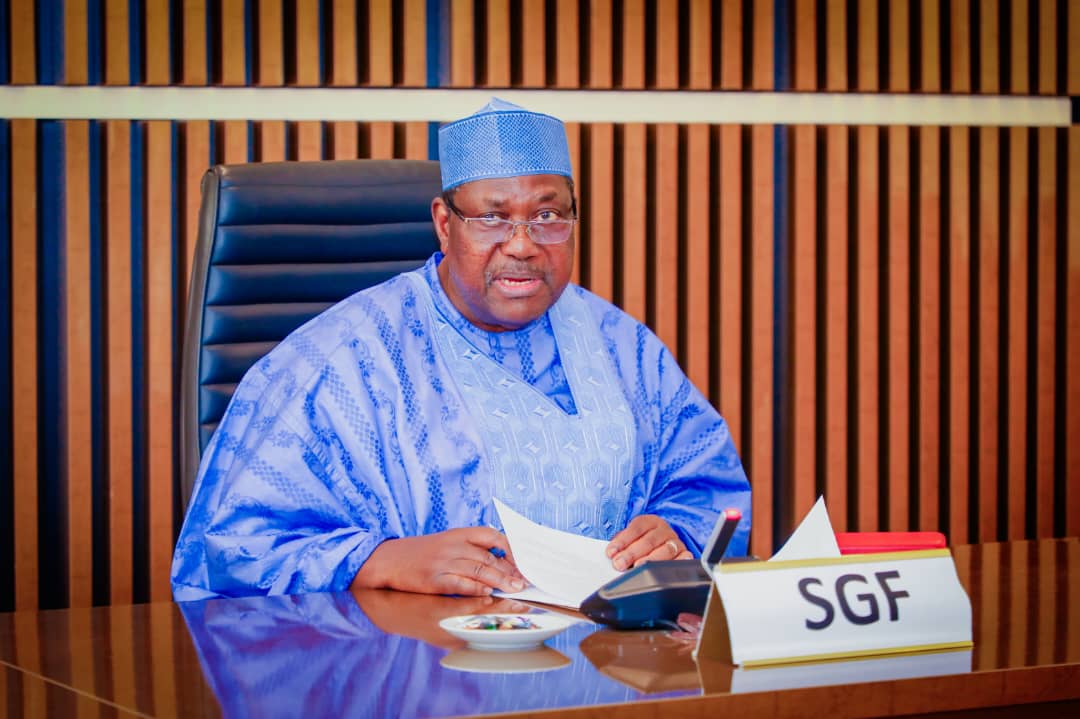
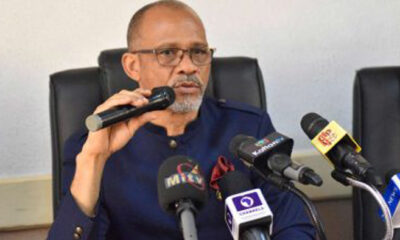
The Secretary to the Government of the Federation, George Akume, represented by the Permanent Secretary, General Services, Office of the Secretary to the Government of the Federation, Ibrahim Kana, gave the warning at the National Drug Use Summit, jointly convened by the Federal Ministry of Health and Social Welfare, the National Drug Law Enforcement Agency, and the United Nations Office on Drugs and Crime in Abuja on Wednesday.

Speaking on the summit’s theme, “Addressing Illicit Drug Use and Trafficking: A Call to National Action,” Akume said the fight against drugs required a collective national response.

“It is a glaring call to every Nigerian in government and out of government to recognise that the fight against illicit drugs is not the burden of one agency, not the burden of one ministry, not the burden indeed of one sector alone. It is a national responsibility that calls for a national response,” he said.

He noted that drug use and trafficking had grown into major global threats to public health, national security, social cohesion and economic development, and that Nigeria was not immune to these pressures.

“We continue to witness with great concern the devastating toll of substance use disorders on our people, which includes rising cases of mental illnesses, broken families, interrupted education, unemployment and, of course, crime,” he said.

He identified young Nigerians as the most vulnerable to drug abuse, warning that their exposure to addiction was a threat to the country’s future.

See also  Ghana: Return Home, We’ve Wandered For Too Long – Yul Edochie to Ndigbo

“Their vulnerability to drug abuse and addiction is not merely a personal tragedy for each affected family. It is a direct threat to our national development,” he said.

Akume also raised concern over the growing links between drug trafficking and other organised crimes, including violent extremism, banditry, kidnapping and money laundering, saying such networks “prey upon the vulnerabilities within our communities.”

He stressed that substance use disorders were not merely criminal justice issues but complex health and social challenges requiring coordinated responses.

“No single institution, however capable, can address this problem in isolation.

“What is required therefore is a whole of government approach, a whole of society approach,” he said, listing families, communities, schools, healthcare providers, security agencies, the private sector, faith-based organisations and civil society as key stakeholders.

He also called for enhanced intelligence sharing and interagency collaboration against trafficking, improved research and data systems, and the building of resilient communities capable of responding to drug-related problems.

“No nation can achieve sustainable development when its young population is threatened by drug abuse and addiction,” he said.

In his welcome address at the ceremony, Chairman/Chief Executive Officer of NDLEA, Brig Gen Buba Marwa (retd), stated that the summit was convened as a national platform for reflection, dialogue and collective action on the growing burden of drug use and substance use disorders.

He noted that despite the efforts and successes recorded in recent years by NDLEA in drug supply and drug demand reduction, it has become increasingly clear that no single institution can successfully confront the drug problem in isolation.

“The scale of this challenge demands a whole-of-government and whole-of-society response, one that mobilises every stakeholder: government institutions, communities, families, development partners, the private sector, religious and traditional leaders, civil society and the media.

See also  El Mafrex (born Mfreke Obong Ibanga; 14 May 1984)

“This summit is, therefore, both timely and necessary. It aligns with the global call to confront persisting drug challenges with innovative, collaborative responses, and it offers us a unique opportunity to build consensus around a coordinated National Action Plan, one that strengthens prevention, treatment, rehabilitation, data collection, policy implementation and community resilience.

“Over the years, the National Drug Law Enforcement Agency has remained steadfast in its mandate to combat this menace through a balanced and comprehensive approach,” he added.

Speaking on the supply reduction front, Marwa said the agency recorded significant successes in drug seizures, arrests, convictions and the dismantling of trafficking networks.

“Our operational feats in the last 18 months alone speak to this: a total of 29,262 arrests leading to the seizure of 5,305,484.88 kilograms of assorted illicit drugs valued at over N1.5tn and the conviction of 5,225 offenders.

“We have broadened access to counselling, treatment and rehabilitation services, while advancing preventive interventions such as our school-based Non-Punitive Drug Testing Policy.

“Within the same period of 18 months, we have conducted 6,645 drug use prevention-focused sensitisation and awareness creation programmes in schools, worship centres, workplaces, markets, motor parks, communities, and correctional facilities, among others, equipping nearly five million Nigerians with the life skills to resist drug abuse.

“Equally significant is the counselling, treatment and rehabilitation of 13,508 drug users across our 31 rehab centres spread all over the country.

“Worthy of particular note, too, is the launch of the Alternative Development Initiative for cannabis sativa growers, designed to support their transition from illicit cultivation to cash crop production and other sustainable livelihoods.”

See also  Tinubu, Soyinka, Ladoja relive NADECO battle at Opadokun’s book launch; read details

He expressed confidence that through partnership, shared responsibility and sustained commitment, Nigeria could significantly reduce the burden of drug use and build a healthier, safer and more prosperous nation.

Minister of Health and Social Welfare, Prof Ali Pate, urged that the summit must not end as a talk shop.

“The measure of this summit will not be the communique. It will be the number of young people who choose not to start using drugs. It will be the number of patients who sleep without pain. It will be the number of families restored.

“The Federal Ministry of Health stands ready to lead, to coordinate, to collaborate and to deliver.”

Also speaking, the Country Representative, United Nations Office on Drugs and Crime, Cheikh Toure, represented by Dr Akanidomo Ibanga, commended the strong collaboration across ministries, agencies, civil society, the private sector, and development partners, adding that the gathering was a powerful demonstration of Nigeria’s commitment to addressing the drug challenge in a coordinated and forward-looking manner.

According to him, “As the United Nations, we stand here today not as individual agencies, but as one system—united in our support to Nigeria.

“The UN family is working collectively to support a comprehensive, balanced, and evidence-based response. We meet at a critical time.”

punch.ng

FOLLOW US ON:

FACEBOOK

TWITTER

PINTEREST

TIKTOK

YOUTUBE

LINKEDIN

Continue Reading
Click to comment

Leave a Reply

Your email address will not be published. Required fields are marked *

Lifestyle

We’ll keep preaching in buses, PFN president vows to defy proposed ban

Published

on

The President of the Pentecostal Fellowship of Nigeria (PFN), Bishop Wale Oke, has criticised the National Assembly over the proposed legislation seeking to prohibit preaching in commercial buses, declaring that Christians would continue to evangelise despite the measure.

Oke, who spoke during a church sermon on Sunday, vowed that members of the PFN would resist any attempt to enforce the law, insisting that preaching the gospel remained a divine mandate.

“Make all the stadiums in Nigeria become prisons; if you want to enforce that law, we are coming. We will break that law. Our Master told us to go into the world and preach the gospel to every creature. You sit somewhere there, and you are saying we shouldn’t preach in buses. We will preach in buses! We will preach everywhere! Because you are making evil decrees. We will rather obey God than man,” he said.

The cleric accused lawmakers of focusing on religious preaching instead of tackling insecurity and violent crimes across the country.

“You don’t go after killers; you are not going after those beheading; you are not going after rapists; you are not going after kidnappers. You are not going after bandits who are unlawfully carrying arms. You are going after us who are preaching the message of peace that changes people’s lives. We wouldn’t listen to you. You are not God!

“Those promoting that law, God will cut them off. We will rain curses upon you and your family unless you repent. This law, we will break it,” he added.

See also  Tinubu, Soyinka, Ladoja relive NADECO battle at Opadokun’s book launch; read details

The PFN president’s comments come amid growing reactions from Christian leaders over the proposed legislation, which prescribes penalties for individuals who preach or engage in unsolicited religious activities inside commercial buses.

Recall that the Senate recently clarified that the prohibition of preaching and hawking inside commercial vehicles is not a new provision introduced by the ongoing amendment to the Federal Road Safety Commission Establishment Act, insisting that the offences have existed in Nigerian law since 2007.

The clarification followed widespread public criticism after PUNCH Online reported on July 17 that the Senate passed the Federal Road Safety Corps (Amendment) Bill, 2026, which proposes a N50,000 fine for anyone convicted of hawking, trading or preaching inside commercial vehicles.

In a statement issued on Monday by the Directorate of Media and Public Affairs in the Office of the Senate Leader, Opeyemi Bamidele, the Senate said the controversial provision had long been contained in the existing FRSC Act and National Road Traffic Regulations.

“The Senate has duly noticed public concerns on the purported proscription of preaching and hawking in a commercial vehicle under the ongoing amendment to the Federal Road Safety Commission (Establishment) Act, No. 22, 2007,” the statement read.

Meanwhile, several prominent clerics have also faulted the purported proscription.

The founder of Dunamis International Gospel Centre, Dr Paul Enenche, recently argued that evangelism remains a core Christian obligation and warned against any policy that seeks to restrict peaceful gospel preaching in public places.

Similarly, the Presiding Bishop of Living Faith Church Worldwide, Bishop David Oyedepo, has repeatedly maintained that evangelism is central to the Christian faith, urging believers not to relent in soul-winning despite perceived opposition.

See also  Ghana: Return Home, We’ve Wandered For Too Long – Yul Edochie to Ndigbo

The General Overseer of the Redeemed Christian Church of God, Pastor Enoch Adeboye, has also consistently encouraged Christians to continue sharing their faith peacefully and in accordance with biblical injunctions.

punch.ng

FOLLOW US ON:

FACEBOOK

TWITTER

PINTEREST

TIKTOK

YOUTUBE

LINKEDIN

Continue Reading

Lifestyle

Nigerian girls detained in Mauritius regain freedom, NiDCOM confirms

Published

on

The Nigerians in Diaspora Commission has confirmed the release of the Nigerian girls who were recently detained abroad, saying they are on their way back to Nairobi.

The development follows public concern over a viral video showing the girls in detention, which prompted calls for the Nigerian government to intervene.

On Instagram, #Queenbethia had posted the video on Sunday: “Pls tag every relevant authority because this is nonsense !!!! This cannot keep happening!! Mauritius is notorious for this !!!”

They have been held at the Mauritius airport since July 31, 2026, she lamented.

NiDCOM, in a statement issued on Monday by its Digital Media Unit, disclosed that the girls had regained their freedom and that efforts were underway to ensure the circumstances surrounding their detention were fully addressed.

“The Nigerians in Diaspora Commission (NiDCOM) wishes to inform the public that the Nigerian girls who were previously detained have been released.

“They are currently on their way back to Nairobi,” the commission stated.

NiDCOM added that its Chairman/Chief Executive Officer, Abike Dabiri-Erewa, was engaging the relevant Nigerian mission to pursue the matter with the authorities in the country where the incident occurred.

“The Chairman/CEO of NiDCOM, Hon. Abike Dabiri-Erewa, is actively engaging the relevant Nigerian Embassy who have formally taken up this matter with the authorities of the country concerned, to ensure full accountability and prevent any recurrence,” the statement read.

The commission reiterated its commitment to the welfare and protection of Nigerians living or travelling abroad, saying the intervention aligns with the Federal Government’s renewed focus on citizens’ welfare.

See also  Sanitary Inspectors in Nigeria: The Era of the Wole-wole (PHOTOS)

“NiDCOM, in line with Mr President’s Renewed Hope Agenda, remains committed to the welfare and protection of all Nigerians home and abroad,” it added.

NiDCOM did not disclose the identities of the girls, the country where they were detained, or the circumstances that led to their arrest.

The commission also did not indicate when they are expected to arrive in Nairobi or Nigeria.

Similarly, neither the Mauritius government nor the airport have spoken officially about the reasons behind their delay at the airport.

punch.ng

FOLLOW US ON:
FACEBOOK

TWITTER

PINTEREST

TIKTOK

YOUTUBE

LINKEDIN

Continue Reading

Lifestyle

Avoid Eating Eggs If You Have These Medical Conditions

Published

on

Eggs are widely celebrated for their nutritional value, packed with high-quality protein, essential vitamins, and minerals. However, despite their health benefits, eggs are not suitable for everyone.

For individuals with certain medical conditions, consuming too many eggs may pose health risks rather than benefits.

Here are the key conditions where you should limit or avoid eggs:

1. High Cholesterol

People with elevated cholesterol or a history of heart disease should be cautious with egg yolks. Rich in dietary cholesterol, yolks can increase “bad” LDL cholesterol levels, raising the risk of heart-related complications.

2. Egg Allergy

Egg allergies, common in children, can trigger reactions ranging from skin rashes and stomach upset to severe cases like anaphylaxis. Avoiding eggs entirely is essential for those affected.

3. Diabetes

Individuals with type 2 diabetes may face higher cardiovascular risks from frequent egg consumption. Saturated fats and cholesterol in eggs can worsen insulin resistance and heart health concerns in some cases.

4. Liver Disorders

For people with liver conditions such as fatty liver, hepatitis, or cirrhosis, processing high-fat egg yolks can place additional strain on the liver and potentially exacerbate existing issues.

5. Gallbladder Disease

Those with gallstones or gallbladder problems may experience discomfort after eating eggs. Egg consumption stimulates bile production, which can trigger pain or gallbladder attacks.

Eggs remain a nutritious food for most healthy individuals. But if you have any of the conditions listed above, it’s wise to limit or avoid them.

Always consult a healthcare professional before making eggs a regular part of your diet.

See also  Why I Sold Limousine Car Someone Gifted Me – Pastor Adeboye

FOLLOW US ON:

FACEBOOK

TWITTER

PINTEREST

TIKTOK

YOUTUBE

LINKEDIN

INSTAGRAM

Continue Reading

Trending