Connect with us

News

Lagos Assembly backs state police, advances anti-begging bill

Published

on

The Lagos State House of Assembly on Wednesday renewed its push for the establishment of a fully autonomous state police, urging state legislatures across the country to fast-track approval of the constitutional amendment.

The assembly also advanced a bill to outlaw street begging and related activities in Lagos.

The two security-focused measures dominated the plenary as lawmakers argued that decentralised policing and stricter regulation of street begging were critical to addressing rising security concerns across the state.

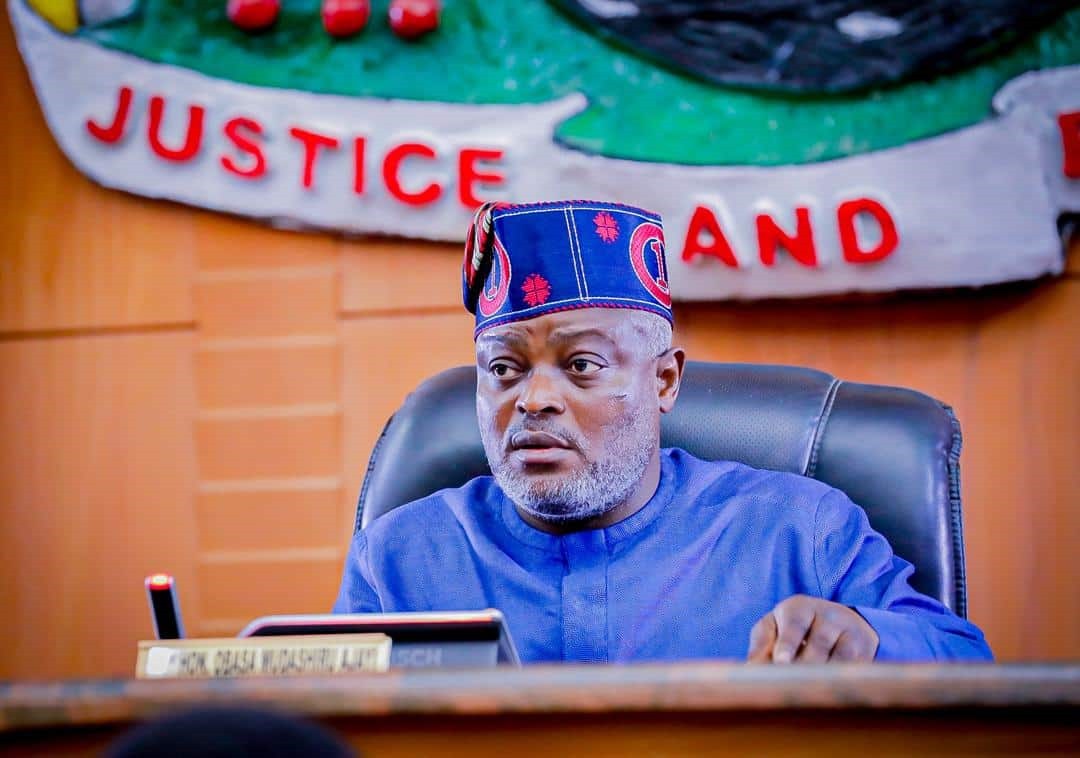
Presiding over the session, Speaker of the House Mudashiru Obasa described state police as Nigeria’s best opportunity to tackle insecurity, insisting that any constitutional framework establishing the system must grant states operational and administrative independence.

“The initiative remains the most practical solution to the security challenges confronting the country, including kidnapping, banditry and other violent crimes,” Obasa said.

He argued that state police would only be effective if state governments were constitutionally empowered to recruit, screen and appoint personnel familiar with the peculiar security realities of their communities.

According to him, “Any intervention by the Federal Government in the operations of state police should be clearly defined by law and limited strictly to matters that threaten national security.”

Obasa also endorsed the proposal allowing governors to appoint state commissioners of police, subject to confirmation by state houses of assembly, but said legislative oversight should extend beyond that office.

“I also believe appointments of Area Commanders, Zonal Commanders and other senior officers should equally be subjected to confirmation by the respective state houses of assembly,” he said.

See also  Presidential order fails to curb soaring drug prices

Responding to concerns that governors could misuse state police for political purposes, the Speaker dismissed the argument as insufficient to derail the reform.

“Similar concerns have always existed regarding the Nigeria Police Force under the Federal Government, yet the institution continues to function. We must not allow such fears to weaken a reform whose primary objective is the protection of lives and property,” he said.

He commended President Bola Tinubu, the National Assembly and other stakeholders for advancing the constitutional amendment process, describing the current effort as a significant milestone towards decentralising policing.

Earlier, while moving the motion, Stephen Ogundipe noted that Section 214 of the 1999 Constitution currently recognises only the Nigeria Police Force, but said ongoing constitutional amendments presented an opportunity to establish state police as part of wider security reforms.

Other lawmakers also backed the proposal, saying Lagos had consistently advocated community policing and had repeatedly called for constitutional changes that would allow states to assume greater responsibility for internal security.

The House simultaneously passed for second reading a bill seeking to prohibit street begging, street urchins and related activities across Lagos, with lawmakers describing the proposed legislation as another important step towards improving public safety.

The proposed law, titled A Bill for a Law to Prohibit Street Begging, Street Urchins and Related Vices in Lagos State and for Connected Purposes, received unanimous support during debate.

Leading discussions, lawmakers argued that criminal elements increasingly exploit street begging as cover for theft, robbery and other offences, particularly in traffic corridors and public spaces.

Contributing to the debate, Desmond Elliot cautioned against treating poverty as a criminal offence.

See also  Vladimir Putin to visit India in December

“We must give this legislation a human face. There should be rehabilitation centres where those taken off the streets can receive care, support and opportunities for reform,” he said.

Elliot added that the eventual establishment of state police would strengthen enforcement of the proposed law.

Deputy Chief Whip David Setonji said weak enforcement had undermined several existing laws and urged that the Lagos State Neighbourhood Safety Corps be included among agencies responsible for implementing the legislation.

Also speaking, Bonu Solomon said the Assembly had enacted numerous laws over the years but often struggled with implementation.

He argued that the bill should address both child and adult begging and also target those who encourage the practice through indiscriminate alms giving.

Majority Leader Noheem Adams described the bill as timely, noting that some northern states and the Federal Capital Territory had already introduced similar measures.

In his remarks, Obasa clarified that the proposed law was not designed to discourage charity but to regulate how assistance reaches vulnerable persons.

“We are not saying people should not give. What we are saying is that the process should be organised in a way that enhances security and restores order,” he said.

The Speaker warned that criminals increasingly disguise themselves as beggars, particularly at night and during traffic congestion, creating security risks for motorists and pedestrians.

He also condemned the growing exploitation of women and children for street begging, describing it as a business operated by individuals who profit from vulnerable people.

According to him, “Government should establish dedicated institutions where members of the public can channel their donations while those removed from the streets receive rehabilitation, welfare support and opportunities for reintegration.”

See also  Do not allow your children be recruited as terrorists, bandits – Islamic scholar warns parents

Obasa further argued that discouraging indiscriminate street giving would reduce organised begging.

“If there is no giver, there will be no beggar,” he said.

While acknowledging concerns about enforcement capacity, he maintained that the absence of existing structures should not prevent the state from enacting the legislation.

He urged the government to establish holding and rehabilitation centres across Lagos to ensure effective implementation, adding that lawmakers still had the opportunity to improve the bill before its final passage.

Following the second reading, the Assembly referred the bill to its Committee on Youth and Social Development, directing the committee to report back within two weeks.

punch.ng

FOLLOW US ON:

FACEBOOK

TWITTER

PINTEREST

TIKTOK

YOUTUBE

LINKEDIN

Continue Reading
Click to comment

Leave a Reply

Your email address will not be published. Required fields are marked *

News

WFP’s report of looming severe hunger in northern Nigeria raises concern

Published

on

The United Nations agency, the World Food Programme, WFP, last week raised the alarm over an imminent food crisis in northern Nigeria if the government does not make a concerted effort to control the situation.

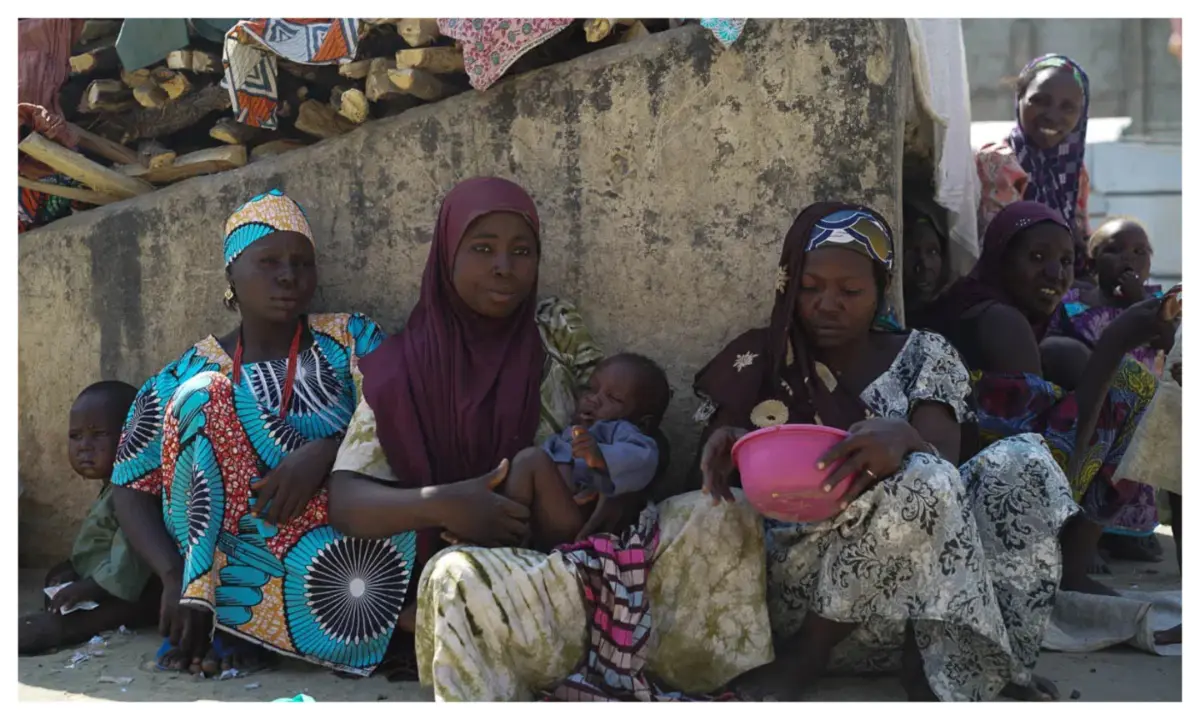
It warned that the escalating conflict and dwindling humanitarian funding were pushing northern Nigeria into its worst hunger crisis in nearly a decade, with millions of people facing severe and acute food insecurity.

The agency called for immediate financial support, without which hunger would deepen further, with more people being displaced and instability spreading across the region.

The warning, contained in the agency’s statement, confirmed the reality on ground, that Nigerians, particularly most northerners are living on edge with tension rising as the economic hardship continues to worsen by the day.

Many Nigerians blame the situation on the worsening insecurity which has prevented farmers from going to farm, with the resultant effect of food shortages, not only in the north but across Nigeria.

According to the WFP, the food security situation had deteriorated faster than previously projected, following the renewed attacks across northern Nigeria, which has continued to displace communities, restrict humanitarian access and cut people off from food assistance.

Recall that in March 2024, the WFP raised a similar alert when it stated that the inflation rate had exceeded 33 percent year-on-year, eroding the frail purchasing power of households in a country, where 38 percent of the citizens live below the poverty line.

In the same vein, the World Bank and the United Nations, had, at different times equally raised concerns about the looming hunger.

In 2021, the World Bank noted that inflation had pushed about seven million Nigerians into poverty in 2020, stressing that Nigeria’s economic growth was being hindered by food inflation, heightened insecurity, unemployment and stalled reforms.

It noted that persistent inflationary pressure was driven largely by accelerating food prices, while the nation’s inflation rate rose steadily throughout 2020 and reached a four-year high in March 2021.

Lead economist for Nigeria and co-author of the report, Marco Hernandez, explained at that time that inflation, especially in food prices, was exacerbating poverty and food insecurity in the country.

Also, the United Nations, in 2022, reported that 70 percent of Nigerians in the North West were living below the poverty line.

The world body bemoaned the spate of the nutrition crisis in the North West region of Nigeria, saying 70 percent of the region’s population lived below the poverty line.

The UN Resident and Humanitarian Coordinator for Nigeria, Mr. Matthias Schmale, who made the disclosure said he was in Katsina to get a better understanding of the nutrition and food security situation of the state, describing the nutrition crisis bedeviling children in the region as staggering and worrisome.

He explained that it was traumatising to see how children were suffering because they could not get the right or enough food to eat, saying the situation should be addressed in order to alleviate the plights of the victims.

He, however, noted that insecurity, poverty and lack of knowledge were the driving factors of the nutrition crisis afflicting children in Katsina and the North West region in general.

See also  Bandits attacked Kwara community for 10 hours before soldiers arrived – Village head

But in the latest WFP report, over 17 million people across nine conflict-affected states in northern Nigeria are experiencing crisis, emergency or catastrophic levels of hunger, representing an increase of almost two million people since the previous projections.

The report showed that Borno State remained the hardest hit, with more than three million people acutely food insecure following intensified insurgent attacks and reductions in food assistance.

It added that more than 750,000 people in the state were experiencing severe hunger conditions, while over 10,000 people were facing catastrophic hunger.

The WFP Regional Director for West and Central Africa, Kinday Samba, said the growing geographical spread of insecurity was worsening the humanitarian situation.

“What concerns us most is how this crisis is expanding. For years, insurgent attacks and violence were largely concentrated in parts of Northeast Nigeria.

“Today, they are spreading across a much wider area and forcing people from farmland, driving displacement and restricting humanitarian access, meaning hunger is quick to follow,” he said.

The organisation said worsening insecurity, access constraints and severe funding shortages had significantly reduced its ability to deliver life-saving assistance to vulnerable populations.

It noted that the number of inaccessible locations had doubled, with 15 additional areas now considered partially inaccessible to frontline humanitarian workers.

It emphasised that attacks and illegal checkpoints along major transport routes were disrupting the movement of relief supplies, leaving air transport as the only viable option in many locations.

The agency further disclosed that although the number of food-insecure people across the three Northeastern states had risen to 6.2 million, it currently had resources to assist only 740,000 people, leaving about 5.5 million people, particularly children, without life-saving food and nutrition support.

It noted that the development marked a sharp decline from the 1.3 million people it was able to assist during the peak of the 2025 lean season.

The WFP expressed concern that the suspension of food assistance in some communities due to funding shortages was forcing vulnerable households to adopt desperate survival strategies.

The agency said reports from affected communities indicated that some individuals were joining armed groups in search of food or income, highlighting the growing security risks associated with worsening hunger.

It also warned that the suspension of food assistance in some displacement camps had triggered an alarming increase in exploitation and gender-based violence, with women and children bearing the greatest burden.

“When people lose access to food, the risks of displacement, exploitation and instability increase. Yet, resources are at their lowest at the time they are needed most,” Samba said.

To sustain food and nutrition assistance as well as critical logistics operations across northern Nigeria, WFP said it urgently requires $89 million over the next six months.

The agency warned that without immediate financial support, hunger would deepen further, more people would be displaced and instability would continue to spread across the region.

The report also indicated that the overall number of food-insecure people across Nigeria had risen to 36.2 million, reflecting the growing scale of the country’s humanitarian and food security challenges.

See also  Renowned Author Chimamanda Ngozi Adichie loses one-year-old son after brief illness

However, this latest report has again brought to the fore the reality the government and its agencies are running away from and the urgency of the required intervention.

Reactions have continued to trail the report with some people insisting that even with the WFP’s report, Nigerians across board, not only in the north, are aware that acute hunger is lurking around.

Those who hold this view believe that once the producers of food are no longer producing, there is bound to be a shortage of food and when that happens, the result is acute hunger, malnutrition, disease, and ultimately, death.

There are others who are angry that even though the government has failed to provide security so that farmers can go to farm, the government has also failed to provide security for agencies that want to help with food aid.

Others are equally angry that what makes the headlines everyday is how billions and trillions of Naira were mismanaged and squandered by one government official or the other, while the people die of hunger.

One of those who believe that insecurity is the primary cause of the current situation is Dr. Pogu Bitrus, president of the Middle Belt Forum, MBF.

He believes that the government needs to take decisive action against banditry, kidnapping and all forms of criminalities to create enabling environments for farmers to go back to farm, so that there could be enough food to feed Nigerians.

He said that the government needs to reassess some of its economic policies which appear to have contributed more to the people’s economic hardship.

“If possible, see how such policies could be touched to bring about improvement in the citizens’ economic fortunes, and by extension, their standard of living,” he stated.

A policy analyst, James Adedayo also wondered why the government has not been able to restore sanity in the land.

“How can anybody convince me that the Federal Government is not capable of securing Nigeria so much that our farmers cannot go to the farm.

“Look, the government should not play politics with people’s lives. We are talking about people’s existence. Why can’t the government flush out these bandits and terrorists once and for all, and let Nigerians return to their normal lives? Enough of all this nonsense.

“We can feed ourselves. Our farmers are capable of feeding the nation but they must be allowed to do that without fear of being killed or kidnapped,” he stated.

He stressed that the government should create an enabling environment for farmers to do their farm work without fear of being attacked, kidnapped or even killed by bandits and terrorists.

He also wondered why the government cannot assist some agencies with the funds to procure food for some Nigerians that are facing acute and severe hunger.

“And why should agencies like the WFP not have access to hunger-prone areas in the North due to insecurity and the government is keeping quiet?

“I think the government needs to do more than issuing press statements. It needs to take the bull by the horn. It needs to protect Nigerians at all costs,” he added.

See also  Presidential order fails to curb soaring drug prices

He expressed worry at the rate food prices keep rising on a daily basis, warning that if the government does not take urgent steps to arrest the development, the situation would spread to other parts of Nigeria.

“It is when farmers go to farm that they can produce food. A situation where bandits, kidnappers, herdsmen and Boko Haram Islamist insurgents have driven farmers away from the farms, without any reaction from any quarter, what do you expect?

“Do you expect manna to fall from heaven in this 21 century? No, that won’t happen. Acute food shortage with its attendant hunger and starvation will be the outcome,” he added.

Adekunle Ajibade, a retired teacher, also contributing to the development argued that since the government had failed to provide security to farmers; a situation that has led to acute food shortage in parts of the North, it should assist agencies that want to help.

“Such assistance should be in the form of finance and security. It should be able to earmark funds for food importation to areas that are facing acute hunger.

“Secondly, the government must also be able to provide security for such agencies to be able to distribute the food items to those that need them.

“A situation where those who want to assist with food and other materials are prevented from reaching the people in need by bandits, terrorists and other criminal gangs, doesn’t speak good about the government. All this nonsense must stop,” he warned.

In his contribution, a real estate agent, Rowland Adebayo, bemoaned the situation in which some people in Nigeria find themselves.

“According to him, after air and water, food is the next most important need of man to survive, wondering why the government should play with such an existential matter as food.

“Do you know that in the hierarchy of man’s need food ranks third in that scale? After air and water, it is food. So, why should any responsible government play politics with such an important part of human existence?

“That’s why some of us believe that this government needs to be changed. Let us try another set of leaders.

“For God’s sake, food should not be a problem to a country like Nigeria that is blessed with abundant human and mineral resources as well as wonderful weather conditions.

“Why should the government allow a few hoodlums who call themselves bandits, terrorists or whatever, to be running riot across Nigeria and preventing our farmers from going to do their farm work?

“How did we descend to this level? I believe the cause of all these problems is politics and it is time Nigerians put aside politics of religion and ethnicity and look for a leader with competence and character to bring us out of this dead wood,” he submitted.

FOLLOW US ON:

FACEBOOK

TWITTER

PINTEREST

TIKTOK

YOUTUBE

LINKEDIN

INSTAGRAM

Continue Reading

News

UN says Mass k!llings, r@pes, abductions, and starvation by Sudan Force amount to gen0cide

Published

on

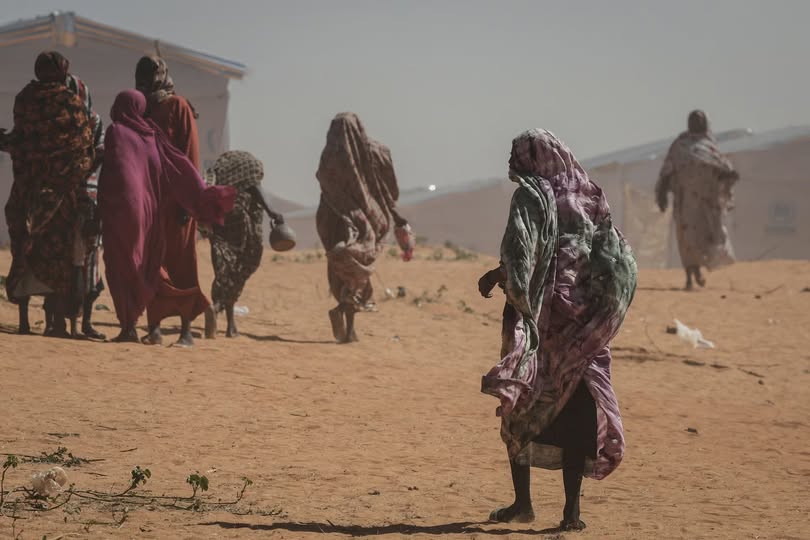
Sudan’s Rapid Support Forces (RSF) carried out mass killings, abductions of women and girls, mass gang rapes, and forced starvation in a city they besieged and captured last year as part of an intentional policy amounting to genocide, a United Nations probe found.

The RSF, which is battling the Sudanese army in a civil war, committed these crimes in al-Fashir in north Darfur after a long siege. Survivors described being raped in rooms where the bodies of recently killed civilians, including their own family members, were still lying on the ground.

The report found that the RSF and its allies committed the war crime of starvation by imposing a prolonged siege on the city, impeding relief supplies, and shelling food production systems. The RSF has denied such abuses throughout the civil war, claiming the accounts are manufactured by adversaries.

The U.N. human rights chief warned that a similar catastrophe is unfolding around another large city, al-Obeid, the capital of North Kordofan state. His office has documented patterns of summary executions, abductions, torture, and sexual violence in the surrounding region. Members of the U.N. Human Rights Council condemned the violence and established an urgent inquiry into the alleged abuses there.

International observers have warned of a severe risk of large-scale atrocities as the RSF masses forces around al-Obeid, which is currently home to around half a million people, including more than 83,000 internally displaced persons.

The fact-finding mission previously concluded that mass killings of non‑Arab communities when the RSF captured al-Fashir bore hallmarks of genocide. This latest report details additional evidence that the widespread and systematic pattern of conduct including large-scale killings, mass-scale rape, and deliberate starvation—was part of an intended policy.

See also  Renowned Author Chimamanda Ngozi Adichie loses one-year-old son after brief illness

The patterns documented in al-Fashir, including encirclement, attacks on civilian infrastructure, restrictions on humanitarian access, and widespread abuses against civilians, serve as a stark warning. The international community is urged to heed these lessons and act to prevent further catastrophe.

FOLLOW US ON:

FACEBOOK

TWITTER

PINTEREST

TIKTOK

YOUTUBE

LINKEDIN

INSTAGRAM

Continue Reading

News

Top court upholds South Korean ex-president’s seven-year jail term

Published

on

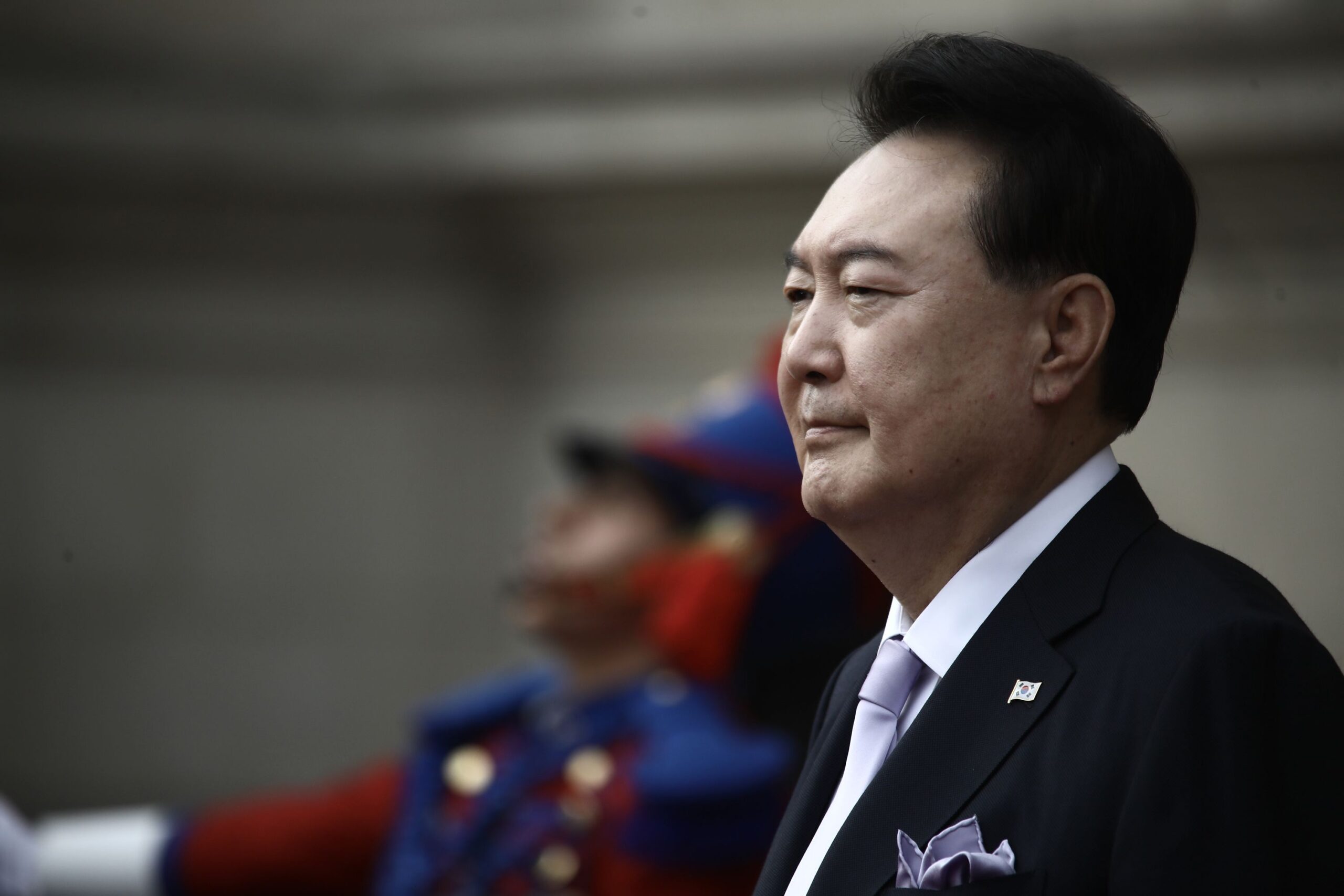
South Korea’s highest court on Thursday upheld ex-president Yoon Suk Yeol’s seven year prison sentence over crimes tied to his botched 2024 martial law declaration and its chaotic aftermath.

The case covered accusations that Yoon had obstructed cabinet deliberations and used forged signatures of the prime minister in the lead-up to the 2024 declaration, as well as using presidential security agents to block his own arrest after lawmakers had nullified it.

The disgraced former president is already in detention while he appeals a separate life sentence for leading an insurrection with his martial law declaration, which he insists was motivated by the public interest.

In the case brought before the Supreme Court, Yoon was accused of obstructing deliberations by convening only a select group of ministers for a meeting shortly before he declared martial law.

Other charges included allegedly creating and destroying a false martial law decree bearing forged signatures from the prime minister, ordering officials to distribute a misleading press release to foreign media, and directing an army commander to delete records from secure military phones.

Prosecutors had sought a 10-year prison sentence for Yoon.

In January, a lower court had sentenced Yoon to five years in prison after convicting him on most charges.

In April, an appeals court upheld the ruling, added a guilty verdict over the misleading press release, and raised the sentence to seven years.

Both prosecutors and Yoon’s legal team had appealed to the Supreme Court, whose rulings are final.

“All appeals are dismissed,” a Supreme Court judge said in a televised ruling, adding that the lower court’s judgment “contained no errors”.

Yoon’s legal team expressed “deep regret”, accusing the Supreme Court of concluding the case “without sufficient deliberation”.

See also  Man Escapes Death After Truck Crashes From Oshodi Bridge

The ex-president’s lawyers plan to challenge the ruling on constitutional grounds and said they would raise a complaint.

• Political crisis
The shock late-night national televised address in December 2024 that suspended civilian rule plunged South Korea into an unprecedented political crisis.

Martial law lasted only about six hours as lawmakers raced to vote it down in an emergency session.

However, Yoon’s move triggered protests, sent the stock market plunging and caught key allies like the United States off-guard.

In a separate case, a court handed Yoon a 30-year prison sentence for sending drones into North Korea to “manufacture” a crisis ahead of his martial law bid.

The former president has insisted his martial law declaration was “solely for the sake of the nation”.

In 2024, he also defended it as necessary to root out “anti-state forces” and quash what he claimed were threats from North Korea.

Yoon was ousted over the martial law bid in April 2025, triggering elections that gave the presidency to Lee Jae Myung of the centre-left Democratic Party.

AFP

punch.ng

FOLLOW US ON:

FACEBOOK

TWITTER

PINTEREST

TIKTOK

YOUTUBE

LINKEDIN

Continue Reading

Trending