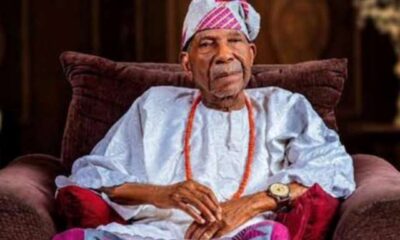



The Archbishop of Onitsha and Metropolitan of the Onitsha Ecclesiastical Province, Most Rev. Valerian Okeke, has celebrated his 73rd birthday with inmates at the National Correctional Centre in Onitsha, Anambra State.
Okeke said the annual gesture was a way of showing love to the inmates, giving them a sense of belonging and expressing gratitude to God.
In his homily, titled ‘Necessity of Giving Thanks’, delivered at the correctional centre on Tuesday in the presence of inmates and other dignitaries, the archbishop said thanksgiving and gratitude to God were necessities.
He explained that thanksgiving was a virtue that made a person great before God, adding that the more one gave thanks, the more one was blessed by God.
The cleric urged the faithful to cultivate the habit of thanksgiving to attract God’s blessings, describing it as man’s greatest weapon of prayer because it helped people receive more from God.
He also urged the inmates to put their faith in God, pray and remain hopeful for a better future. He said their stay at the correctional centre could serve as a spiritual retreat to strengthen their faith and possibly save them from death or other permanently worse life conditions.

He said, “When you see yourself in prison and think you are being punished, you are not right. What brought you inside the prison could have taken your life. Most times, we consider what God did not give us, but do not consider the ones He has done for us.
“Thanksgiving is a virtue that makes a man great before God. The more you give thanks, the more you are blessed by God. Thanksgiving is our greatest weapon of prayer, because it helps us to receive more from God.
“The highest form of prayer is to give thanks to God Almighty. It’s more blessed to give than to received.”
The prelate also urged the faithful to share with others, saying one of the best ways to thank God for His blessings was to share them with others.
Okeke presented the inmates with food and other relief items, including live cows, bags of rice, toiletries, clothing, detergents and other materials.
He said, “We are happy that the number of inmates in the Correctional Centre is reducing. It is an indication that there is a reduction in the crime rate in the society.
“We pray that the dream of the Federal Government in changing Nigerian Prison Service to Nigerian Correctional Service will be realised,” the cleric added.
Also speaking during the Mass, the Chaplain of St. Maximilian Golbe Chaplaincy, Onitsha Custodial Centre, Reverend Father Batho Okpalaugo, congratulated the archbishop on his 73rd birthday and wished him more fruitful years.
Okpalaugo noted that for the past 20 years, the archbishop had made it an annual ritual to celebrate his birthdays with inmates, giving them gifts and words of encouragement.
He also thanked Okeke for helping to make the custodial centre a place of happiness by ensuring the establishment of primary and secondary schools, an Open University and a skills acquisition centre, enabling inmates to earn certificates and acquire skills while in custody.
Speaking to journalists after the homily, the candidate of the Nigeria Democratic Congress for Idemili North and South Federal Constituency in the 2027 general election, Eric Anyamele, praised Okeke for the gesture towards the inmates.
Anyamele said everybody was proud of the priest because of the enormous transformation he had brought to the custodial centre, adding that other religious leaders should emulate such gestures.
The Anambra State Commissioner for Youth Development and Sports, Patrick Aghamba, also praised Okeke for his devotion to the gospel and humility.
The Nigerian Correctional Service is responsible for the safe custody, rehabilitation and reintegration of inmates into society. Educational programmes and skills acquisition initiatives in custodial centres are aimed at equipping inmates with knowledge and practical skills to support their reintegration after release.
Aghamba urged the inmates to take advantage of the transformations introduced by the archbishop to improve their lives.
He also assured them that his ministry would partner with Okeke and the correctional centre in efforts to transform the inmates.
Source: punchng.com
FOLLOW US ON: