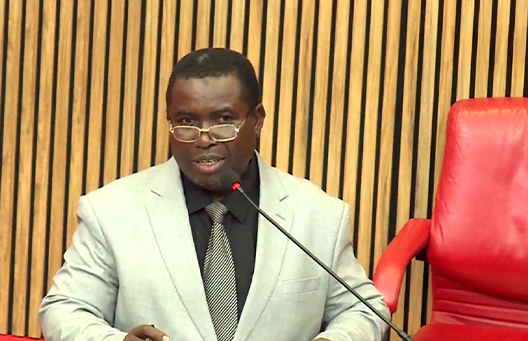
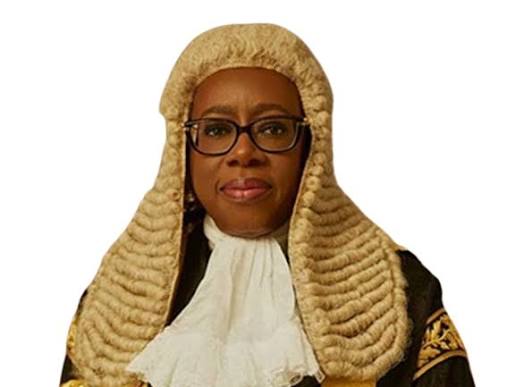
The Chief Justice of Nigeria, Justice Kudirat Kekere-Ekun, has urged judges, particularly heads of courts, to guard against forum shopping, concealment of related proceedings and attempts to obtain conflicting orders ahead of the 2027 general elections.
Kekere-Ekun said election-related disputes often attract intense public interest and considerable pressure on the courts, requiring judicial officers to remain impartial and strictly adhere to the law.
She spoke in Abuja on Monday at the opening of the 2026 Roundtable for Heads of Courts, organised by the National Judicial Institute.
The CJN said the judiciary must be prepared to handle politically sensitive cases without allowing public sentiment or pressure from any quarter to influence judicial decisions.
“The judiciary must be prepared to discharge its constitutional responsibilities with impartiality, courage and fidelity to the law.
“Political sensitivity, public sentiment or the urgency with which a matter is presented must never displace the careful application of the Constitution, the Electoral Act and the applicable rules of court,” she said.
Kekere-Ekun urged heads of courts to establish appropriate administrative arrangements for the timely and orderly handling of election-related cases.
“Judicial officers must be reminded of the need to scrutinise applications carefully, insist on full and frank disclosure of relevant facts, pay due regard to related proceedings and resist any attempt to use urgent applications or ex parte orders to secure an improper advantage.
“The integrity of judicial proceedings must not be compromised by competing political interests or pressure from any quarter,” she added.
The CJN described forum shopping as particularly damaging to the judiciary, warning that the practice undermined consistency, encouraged abuse of court processes, and exposed the institution to avoidable public controversy.
“Your Lordships must therefore ensure that existing procedural safeguards are observed and that appropriate steps are taken whenever attempts to circumvent established judicial processes come to light.
“No litigant should be permitted to manipulate the judicial system in search of a favourable decision. Public confidence in the judiciary will be tested during this period,” she said.
She reminded heads of courts of their responsibility to ensure that election-related cases were handled competently, expeditiously and strictly in accordance with the law.
The CJN also expressed concern over delays in the determination of cases, describing timely justice delivery as one of the most pressing challenges confronting the judiciary.
According to her, delays impose financial and emotional burdens on litigants, diminish the practical value of judicial remedies and weaken public confidence in the justice system.
“While some causes of delay arise from inadequate funding, infrastructure and judicial manpower, others can be addressed through effective administration.
“Inefficient docket management, repeated adjournments, poor scheduling and failure to monitor inactive cases can prolong proceedings unnecessarily,” she said.
Kekere-Ekun urged heads of courts to monitor their caseloads, identify cases that had remained pending for long periods and develop strategies to reduce backlogs.
“Every head of court should have a clear understanding of the condition of the court’s docket, including the number of pending cases, their age, the categories experiencing the greatest delays and the reasons for their continued pendency.
“This information should inform realistic strategies for reducing backlog, improving the allocation of hearing dates and ensuring that concluded matters are promptly removed from the active docket,” she said.
However, she cautioned against measuring judicial efficiency solely by the number of cases disposed of, stressing the need to protect litigants’ rights.
“Efficiency, however, must not be measured solely by the number of cases disposed of. It requires cases to be determined fairly, competently and within a reasonable time, with the right to fair hearing fully protected,” the CJN added.
On judicial appointments, Kekere-Ekun called for transparent, fair and merit-based selection processes, urging heads of courts to resist external pressure and prioritise competence, character and suitability.
She said, “Public confidence in the judiciary depends, in part, on the assurance that those entrusted with judicial office have emerged through rigorous and credible processes.”
The CJN also urged heads of courts to promote professional standards, support the development of judicial officers and foster an institutional culture that upholds impartiality and accountability.
She further directed them to establish mechanisms to ensure that judges commenced sittings on time and that litigants and lawyers were promptly informed whenever court sessions were cancelled.
Describing punctuality as a professional responsibility, she said it “must be treated as a professional obligation, not a matter of personal preference.”
Kekere-Ekun said it was unacceptable for lawyers and litigants to travel long distances at considerable expense only to discover upon arrival that their cases would not be heard.
She urged heads of courts to ensure that court registries had reliable procedures for notifying affected parties of changes to sitting schedules.
On courtroom conduct, the CJN said judicial authority should be exercised with fairness, composure and respect.
“Every litigant, regardless of social status, financial means or education, deserves dignity, while lawyers are entitled to courteous treatment. Firmness and courtesy are entirely compatible. A judge can control proceedings without humiliating counsel or a litigant,” she said.
She also directed heads of courts to ensure that courtrooms remained professional environments free from bullying and harassment.
The CJN called for sustained investment in judicial support staff, including registrars, research officers, administrative personnel and information technology workers.
She also urged judicial authorities to introduce structured mentorship programmes under which newly appointed judges would work with experienced judicial officers for a defined period before sitting independently.
Earlier, the Administrator of the NJI and retired President of the National Industrial Court of Nigeria, Justice Babatunde Adejumo, said the judiciary remained under constant public scrutiny because of its role as custodian of justice and guardian of the rule of law.
He said the responsibility placed on judicial leaders required them to safeguard the institution’s image and shape positive public perceptions.
Adejumo described the annual roundtable as an opportunity for heads of courts to exchange views on common challenges and collectively develop solutions.
He said the programme was deliberately designed to minimise external intervention and allow heads of courts to direct discussions and determine outcomes.
The retired judge also commended Kekere-Ekun for the reforms she had introduced, which he said had strengthened judicial independence and enhanced integrity across all levels of the judiciary.
Source: punchng.com
FOLLOW US ON:
FACEBOOK
WHATSAPP CHANNEL
TWITTER
PINTEREST
TIKTOK
YOUTUBE
LINKEDIN
INSTAGRAM