Connect with us

News

Employers reject FG’s pension contribution hike

Published

on

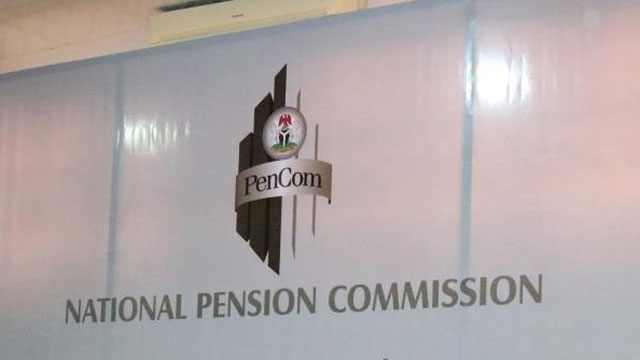
The Organised Private Sector of Nigeria has expressed deep concern over the recent announcement by the Director-General of the National Pension Commission regarding a proposed increase in mandatory pension contributions and the introduction of an additional three per cent mandatory annual contribution equivalent to three per cent of the total wage bill.

The OPSN members include the Manufacturers Association of Nigeria, the National Association of Chambers of Commerce, Industry, Mines and Agriculture, the Nigeria Employers’ Consultative Association, the Nigerian Association of Small and Medium Enterprises, the Nigerian Association of Small Scale Industrialists, and 25 sectoral employer associations.

In a statement on Thursday jointly signed by MAN, NACCIMA, NECA, NASME and NASSI, obtained by The PUNCH, the OPSN described the proposed hike as both premature and counterproductive.

While the proposal may be presented as an effort to improve retirement benefits, the OPSN warned that, under the prevailing economic conditions, it could become a “Greek gift” to Nigerian workers, “an apparently beneficial policy that ultimately threatens employment, wage growth, business sustainability and escalates compliance risks.”

The OPSN maintained that the strength of any contributory pension system depends fundamentally on the survival of businesses, the availability of decent jobs and the capacity of employers and employees to make consistent contributions.

“Under the Pension Reform Act 2014, Nigeria’s minimum pension contribution already stands at 18 per cent of an employee’s monthly emoluments, comprising 10 per cent from the employer and 8 per cent from the employee. This is broadly comparable with the OECD average effective mandatory pension contribution rate of 18.8 per cent at the average-wage level in 2024.

“Nigeria’s existing contribution rate therefore cannot reasonably be regarded as inadequate, based on contribution percentages alone. Any proposal for an increase must be supported by Nigeria-specific actuarial evidence demonstrating that the current rate is insufficient and that a higher rate would not undermine employment, wages, compliance and enterprise sustainability,” the statement read in part.

See also  Police revealed why Sowore was arrested in court

Speaking in Lagos, the Director-General of NECA, Mr Adewale-Smatt Oyerinde, emphasised that the proposed hike is both premature and counterproductive.

“The OPSN supports efforts aimed at strengthening Nigeria’s pension system and improving retirement outcomes for workers. However, announcing that contribution rates will increase while consultations are still ongoing risks prejudging the outcome of the process and reducing subsequent stakeholder engagements to a mere formality,” Oyerinde said.

He stressed that previous adjustments to pension contribution rates were preceded by extensive engagement among government, employers, organised labour and other relevant stakeholders.

“Any proposed adjustment must be supported by credible actuarial, economic and employment-impact assessments. It must also emerge from genuine and transparent social dialogue. Retirement security should not be pursued in a manner that threatens the businesses and jobs upon which the pension system itself depends,” he stated.

Elaborating on the macroeconomic consequences, the Director-General of MAN, Mr Segun Ajayi-Kadir, highlighted the direct threat to enterprise viability and worker earnings.

“Businesses are already contending with high energy costs, elevated interest rates, exchange rate volatility, multiple regulatory obligations, weak consumer demand and rising production expenses. Imposing an additional statutory payroll cost without a comprehensive impact assessment will place further pressure on already struggling enterprises,” Ajayi-Kadir said.

He explained that higher employment costs could compel businesses to slow recruitment, postpone wage reviews, reduce staff strength, increase outsourcing, suspend expansion plans or pass additional costs to consumers through higher prices.

“The proposed increase may directly raise the existing employee contribution, but its wider consequences could still be borne by workers through weaker wage growth, reduced employment opportunities, job losses and higher prices of goods and services,” he added.

See also  Atiku condemns Adamawa attacks, demands urgent action

Highlighting the contradiction with broader fiscal policies, the Director-General of NACCIMA, Mr Sola Obadimu, warned against imposing additional financial levies on a struggling business environment.

According to him, at a time when businesses are struggling to recover from prolonged economic pressures and the Federal Government is implementing reforms intended to improve competitiveness, “imposing another statutory financial obligation on employers could undermine the benefits of those reforms.”

He maintained that government policies must be properly coordinated and evaluated based on their cumulative impact on businesses.

“A reform cannot be considered successful merely because it promises improved retirement benefits. Its impact on employment, investment, wage growth, prices, compliance and business survival must also be carefully considered,” he stated.

The Director-General of NASSI, Ifeanyi Oputa, stressed that micro, small and medium-sized enterprises would be disproportionately affected by any increase in mandatory employer pension contributions.

“MSMEs operate with narrow margins and limited access to affordable finance. Many are still struggling with rising energy costs, declining purchasing power, multiple levies and increasing operating expenses. An additional statutory burden could threaten their survival and discourage them from employing workers formally,” he stated.

Oputa maintained that the proposal could also deepen non-compliance and push more businesses and workers into informal employment arrangements outside the pension system.

“A policy intended to strengthen the pension system must not produce the opposite result by shrinking the number of formal employers and contributors,” he added.

Meanwhile, the OPSN urged the Federal Government and PenCom to pivot away from policies that erode purchasing power and instead prioritise macroeconomic stability, enterprise sustainability and job preservation.

The OPSN advised the government to direct its attention towards reining in inflation, preserving workers’ immediate cash flow and promoting business sustainability to create decent jobs and improve welfare.

“A detailed assessment should be conducted to determine the likely effects of the proposal on employment costs, wage growth, recruitment, job security, investment, production costs, inflation, business formalisation and MSME sustainability. While the private sector is not entirely opposed to future adjustments, any increase must be the product of constructive, transparent social dialogue among all critical stakeholders and delayed until broader economic stability is achieved.

See also  Tinubu brokers peace as Fubara, Wike exit Villa together

“No adjustment should be introduced without adequate consideration of its impact on existing jobs, future recruitment, inflation and the capacity of businesses to remain competitive and sustainable,” the OPSN added.

The OPSN reiterated that it is not opposed to reforms that improve retirement security for Nigerian workers, stressing that sustainable pension reform must balance future retirement benefits with the present realities of workers, employers and the wider economy.

“A strong pension system cannot be built on weakened enterprises, declining formal employment and rising business closures. The government must therefore avoid any policy that increases the cost of employment without first addressing the economic conditions threatening the survival of businesses.

“Any reform that promises improved retirement outcomes while placing additional pressure on the businesses and jobs that fund those outcomes would ultimately amount to a ‘Greek gift’ to Nigerian workers,” it concluded.

In 2026, the Federal Government, through PenCom, announced plans to review the Pension Reform Act 2014 and increase the mandatory pension contribution rate beyond the current 18 per cent.

According to PenCom, the proposal forms part of broader pension sector reforms designed to strengthen the financial security of Nigerian workers in retirement. The commission stated that consultations are ongoing with key stakeholders, including organised labour, employers, pension operators and the National Assembly, before any amendment is presented for legislative approval.

punch.ng

FOLLOW US ON:

FACEBOOK

TWITTER

PINTEREST

TIKTOK

YOUTUBE

LINKEDIN

Continue Reading
Click to comment

Leave a Reply

Your email address will not be published. Required fields are marked *

News

Lagos Assembly approves N200bn bond, FAAC financing scheme

Published

on

The Lagos State House of Assembly on Thursday approved the state government’s request to issue a N200bn bond and participate in the Federation Account Allocation Committee Receivables Discounting Programme to finance critical infrastructure projects across the state.

The approvals followed the adoption of the Joint Committee on Economic Planning and Budget and Finance’s report during plenary.

Presenting the report, Chairman of the Joint Committee, Sa’ad Olumoh, said the panel examined the executive’s requests and found them suitable for legislative approval.

Olumoh said the Commissioner for Finance, Abayomi Oluyomi, informed the committee that the Federal Government introduced the FAAC Receivables Discounting Programme following a proposal by the Nigeria Governors’ Forum to enable states to access funding for infrastructure development.

He explained that under the arrangement, participating states would execute an irrevocable standing payment order authorising the Accountant-General of the Federation to deduct agreed sums from their monthly FAAC allocations over 11 months.

According to him, the deductions would be paid into a sinking fund managed by the Debt Management Office and domiciled with the Central Bank of Nigeria.

Olumoh said the initiative would provide Lagos with immediate liquidity to finance priority capital projects, including legislative quarters and other strategic infrastructure.

The committee also recommended approval of the state’s request to raise N200bn through a Series V conventional bond under its existing N1tn Debt and Hybrid Instruments Issuance Programme.

Contributing to the debate, the Chairman of the House Committee on Waterfront Infrastructure, Gbolahan Yishawu, described the FAAC facility as an advance-payment arrangement under the ISPO framework rather than conventional borrowing.

See also  PHOTOS: Nigerian woman who was childless for 14 years d!es hours after delivering quintuplets

He said the programme would strengthen the state’s revenue profile because it attracted no interest, but stressed the need for the government to clearly identify the projects to be financed with the proceeds.

Yishawu also called for transparency to ensure the financing arrangement amounted to a restructuring of funding sources rather than an increase in the state’s overall budget.

Speaker of the House, Mudashiru Obasa, backed the borrowing plan, saying responsible borrowing remained necessary to fund capital projects and accelerate infrastructure development.

He explained that the increase in the proposed bond to N200bn reflected additional funding requirements and not a computational error.

Obasa added that the utilisation of the funds would remain subject to legislative oversight and approval to ensure accountability and prudent financial management.

Following deliberations, lawmakers unanimously adopted the committee’s recommendations with amendments, authorising the state government to participate in the FAAC Receivables Discounting Programme and proceed with the N200bn bond issuance.

The approvals pave the way for the state to finance major projects, including the New Massey Children’s Hospital, the Lagos Rail Mass Transit Line, Lagos Island General Hospital, Omu Creek Bridge and other strategic infrastructure projects.

punch.ng

FOLLOW US ON:
FACEBOOK

TWITTER

PINTEREST

TIKTOK

YOUTUBE

LINKEDIN

Continue Reading

News

North East must do more against terrorism, banditry — Tinubu

Published

on

President Bola Tinubu on Thursday charged governors from the six northeastern states of Adamawa, Bauchi, Borno, Gombe, Taraba and Yobe to do more in the face of terrorism and banditry.

He declared that Nigeria had stabilised economically and entered what he described as a golden age.

Tinubu gave the charge when he received a delegation of North-East political leaders and senior government officials from the region at the Aso Rock Presidential Villa, Abuja.

Officials who earlier spoke to our correspondent said the meeting is a formal thank-you visit following the President’s decision to retain Vice President Kashim Shettima as his running mate for the 2027 general election.

Tinubu told the gathering, “I could see the leadership of the Northeast challenged because of terrorism and banditry. I could see our collaboration. We work together.

“Only when we stick together, think together, and face the challenges the best way possible as a united country do we prevail.”

He added, “The golden age is here now. If you can stabilise the economy, Nigerians are not asking for too much: simple stability and social welfare.

“We have our hands on the plough. We are never going to look back. I promise you, through the twists and turns of this democracy, Nigeria will survive.

“We will find our unity in diversity, a good path for democratic stability and prosperity. I promise you that.”

Tinubu said he was making good on his infrastructure commitments to the region, referencing promises he had made earlier in his tenure to build road networks in the Northeast.

“I remember when I asked passionately for some road networks in the Northeast, as if we were starting the journey and writing a new manifesto. But I fulfilled the promise. I fulfilled it,” he affirmed, referencing the flag-off of the Akwanga-Bauchi-Gombe-Biu-Maiduguri superhighway, which began earlier this year.

See also  Atiku condemns Adamawa attacks, demands urgent action

He also addressed pensioners in the gathering, saying his administration was clearing pension backlogs left by predecessors.

According to him, “Among the divisions today are some pensioners. I hope you are receiving your pensions. I am clearing the mess created before me, but I won’t complain.”

The President also paid tribute to former Vice President Babagana Kingibe who attended the meeting, recalling their shared history in progressive politics dating back to the Social Democratic Party era of the Third Republic.

He said, “When I started in politics, you were the chairman of our Social Democratic Party. You gave us the footing and the confidence of a progressive philosophy that should have been the hallmark of this country.

“Glad that you are alive through the twists and turns of democracy. Thank you for being who you are.”

In his remarks earlier, Borno State Governor, Prof Babagana Zulum, who led the delegation and chairs the North-East Governors Forum, said the visit was to formally and profoundly thank the President for renominating Shettima as his running mate for 2027.

Zulum explained, “Your Excellency, we are here for just one overriding purpose, to show our appreciation and thank you most profoundly for the renomination of an accomplished son of our region, His Excellency Senator Kashim Shettima, as your vice-presidential running mate in the forthcoming 2027 presidential election on the platform of our great party, the All Progressives Congress.

“By this decision, you have once again demonstrated your great quality of being a leader who recognises and rewards loyalty, competence, and commitment.

See also  Immigration boss suspends Lagos-Seme border commanders over extortion allegations

“Vice President Shettima has demonstrated for all to see these qualities and more in the last three-plus years that he has served as your trusted lieutenant, as you led our nation with purpose, dedication, and profound vision.”

Zulum added that under the APC’s power-sharing arrangement, the President had the liberty to choose a running mate from any of the three northern zones, and that Tinubu’s decision to continue with a northeastern partner required consultation with and buy-in from the North-Central and North-West.

“We are therefore also grateful to our brothers and sisters in the two other northern zones for their solidarity and self-abnegation in indicating their full support for your decision.

“We hope to express this appreciation to them in the near future, and we look forward to reciprocating their gesture of brotherhood whenever the occasion arises,” he stated.

The governor said the delegation also came to acknowledge the administration’s infrastructure commitments to the region, particularly the commencement of the Akwanga-Jos-Bauchi-Gombe-Biu-Maiduguri Superhighway and other strategic road projects, rehabilitation of internally displaced persons, and investments in education, agriculture and job creation.

On the region’s stance in the 2027 polls, Zulum affirmed, “On behalf of the governors, ministers, National Assembly members, party members, women, youths, and our teeming supporters, I wish to assure Your Excellency that the North-East remains solidly behind your administration.

“Come 2027, by God’s will, the North-East will massively deliver your ticket and all other APC candidates at all levels.

“We will do this not only because of what you have already done for the region, but because we believe in your leadership and share your vision of the future Nigeria you are building.”

See also  Boost climate action funding, Tinubu urges World Bank, IMF

Kingibe, who ran alongside MKO Abiola on the SDP platform in the annulled June 12, 1993, presidential election, stressed that political leaders like him who are not always visible in the media remained active forces of legitimacy and guidance in their communities.

Kingibe said, “We are not all active politicians you see on screens or in the media every day, but we are there.

“We are with our people. We guide them. We explain to them what the implications of government policies are, and what the alternatives would be. We are there to give legitimacy because our people trust us.

“Our people believe in us, and they know that wherever we are, that is where truth and hope lie.”

Drawing on June 12 and its long aftermath, Kingibe said: “Mr President, we are with you. We are with your administration, and by the grace of God, you will continue where we stopped in 1993, and bring hope to our great fatherland.”

The delegation included the former Chief of Army Staff, Lt Gen Tukur Buratai; former governors and senators from the six northeastern states; the Deputy Chief of Staff to the President, Ibrahim Hadejia; former Borno State Governor and APC chieftain, Ali Modu Sheriff; former FCT Minister Musa Bello; state party chairmen from Adamawa, Bauchi, Borno, Gombe, Taraba and Yobe; traditional rulers, including the Shehu of Borno and the Emir of Gombe; and former ambassadors, among others.

punch.ng

FOLLOW US ON:

FACEBOOK

TWITTER

PINTEREST

TIKTOK

YOUTUBE

LINKEDIN

Continue Reading

News

Obasanjo faults Osoba, accuses Atiku of impeachment plot before 2003 Poll; read details

Published

on

Former President Olusegun Obasanjo on Thursday rejected former Ogun State Governor, Chief Olusegun Osoba’s account of the political events leading to the 2003 general elections, insisting that he never deceived the leadership of the Alliance for Democracy.

In a lengthy statement titled, “Reply to Your Inaccurate Posture: ‘How Obasanjo Deceived Us in 2003’,” the former President described Osoba’s article published in The Legal Observer on July 20 as inaccurate, incomplete and “farfetched.”

Obasanjo also alleged that his former Vice-President, Atiku Abubakar, sponsored an impeachment plot against him during his first term and secretly worked with some political actors to stop his re-election in 2003.

He disclosed details of the political intrigues that shaped the country’s Fourth Republic.

The former President said he took “strong and serious objection” to Osoba’s allegation that he deceived the Yoruba political leadership ahead of the 2003 elections.

“I take strong and serious objection to your calling me a deceiver because I deceived nobody.

I always presented my case and all issues as I had them and as I understood them, no matter whose ox is gored,” Obasanjo said.

He argued that Osoba was not privy to several sensitive political engagements that took place between him and the leadership of Afenifere and the Alliance for Democracy, adding that many of the issues were handled by elders of the Yoruba political movement.

“There were issues you did not know or understand because, as you pointed out, they were above your head. They were handled by your elders in Alliance for Democracy and Afenifere,” he stated.

Obasanjo defended the outcome of the controversial 2003 governorship elections in the South-West, which saw the PDP capture five of the six states controlled by the Alliance for Democracy.

He maintained that the defeats suffered by the AD governors reflected the mood of the electorate.

“Your loss or defeat in 2003 was genuine in all the six states except the one where the figures were successfully and murderously changed,” he alleged.

He also claimed that Osoba barely campaigned before the election and eventually apologised to Ogun residents during a television appearance for what he described as his arrogant disposition.

He said: “Your loss or defeat in 2003 was genuine in all the six states except the one where the figures were successfully and murderously changed as Chief Tinubu, the Head of Service in Lagos State then, accurately reported to me. I took it as what God allowed.

“From information that reached me from the political field, you barely campaigned, and at the tail end of the campaign, you went on TV to apologise to the people for your arrogance and informed them that the starch in your agbada caused your arrogant appearance.”

Obasanjo also alleged that his former Vice-President, Atiku, masterminded an impeachment plot against him through the then Speaker of the House of Representatives, the late Ghali Na’Abba.

See also  Police revealed why Sowore was arrested in court

According to the former President, the alleged plot began while he was away from the office on a Friday.

He claimed that the Vice-President invited Na’Abba to his office and allegedly provided him with N5m to commence impeachment proceedings.

Obasanjo said: “And that takes me to Na’Abba’s impeachment you glowingly talked about. And the way you wrote about it, talking about remorse would suggest stack ignorance on your part or being an accomplice. And both were possible.

“Na’Abba’s impeachment began at the presidency by the Vice-President, who on a Friday when I was out of the office, invited Na’Abba to his office and convinced him, as he had convinced himself and some others but of insignificant number, that I should have only one term as President and this was the act of a man I brought up from governorship to Vice-President.

“From the first day as Vice-President, he raised campaigners for his presidency. On the Friday, he invited Na’Abba; he gave him N5 million to begin his impeachment work. It was all noted, recorded and reported to me by my Chief of Staff, a professional intelligence officer.

“The game continued to be played on with me treating it with contempt as I have committed no impeachable offence except my Vice-President who wanted to take over by hook or by crook.

“It was President Shagari who, on his own volition, asked me about impeachment and I told him that for me, there was absolutely nothing in it.

“He requested my permission to handle it and, of course, I gave him the go-ahead. Aremo Olusegun Osoba, please show me what you will be remorseful for if you were in my position.”

The former President further alleged that after the impeachment bid failed, the former Vice-President pursued another political arrangement involving the six AD governors.

Obasanjo said: “There is one thing more that you may need to be reminded of in the AD governors and my Vice-President honeymoon.

“When he failed in the impeachment exercise, he made a two-track approach: one to go with Alex Ekwueme and Alex to hand over to him in the third year of his presidency; second is for the six AD governors of South-West not to have competition from any other party in 2003 so that in 2007, you would all yield the field to my Vice-President.

“You were all convinced of this anti-democratic plan, and you all fell for it. I was told that I was said to be selling the idea, and if that was said of me, it was a lie.

“Aremo, such was sold to you: an idaro. And none of you thought it fit to check with me, or I was not worth checking with, since I was not a nominee of AD/Afenifere. Have no dealings with Obasanjo as President but deal with his Vice-President and you would get the best that was a clever political move.”

See also  Airlines under pressure after jet fuel surges 100%

Tracing events after his release from prison, Obasanjo disclosed that although he initially wanted to focus on family matters, particularly his children’s education, he was later persuaded by different political groups to return to active politics.

According to him, the first delegation urging him to contest for office was led by Lawan Katsina at his Ota Farm, followed by another headed by the late Chief S.M. Afolabi, while a third delegation was led by the late Dr Martins Kuye.

He explained that because the latter delegations were predominantly Yoruba, he insisted that consultations should be broadened to reflect Nigeria’s diversity.

Obasanjo said he subsequently embarked on consultations across the country’s three major regions before joining the Peoples Democratic Party.

He said he consulted prominent leaders including the late Chief Meredith Akinloye, the late Chief Bola Ige, the late Chief Richard Akinjide, Prof Oyeleye, the late Sunday Awoniyi, the late Adamu Ciroma, Prof Anezi Okoro and Arthur Mbanefo.

“That quick consultation was like a sounding board. It gave me a quick and good feel,” he said.

The former President maintained that politics should never create permanent enemies, stressing that competition should be based on ideas rather than personal animosity.

To illustrate the point, he recalled his cordial relationship with the late former Vice-President, Dr Alex Ekwueme, despite contesting against him for the PDP presidential ticket.

“While competing with Alex Ekwueme, I was a guest in his house when I went to Anambra to campaign. We ate together, and the following morning, I went out to campaign,” he said.

Obasanjo also revisited his relationship with the late Afenifere leader, Chief Abraham Adesanya, revealing that despite repeated visits to seek support, the elder statesman consistently maintained that the Yoruba would not vote for him.

“On three occasions, I visited Chief Abraham Adesanya, and on the three occasions, he vowed that the Yoruba would not vote for me. I never stopped calling on him to report and to campaign.”

According to Obasanjo, Adesanya urged him to join the Alliance for Democracy, but he declined because he believed the party had become “essentially a tribal party.”

“I told him that AD as essentially a tribal party was in a cul-de-sac,” he stated.

The former President said their political disagreement never affected their personal relationship.

Obasanjo defended his decision to accommodate members of the Alliance for Democracy in his administration after assuming office in 1999.

He said the move was driven by national integration rather than political weakness.

“Bringing PDP and AD to join me for a sort of national government was not out of weakness; rather, it was out of strength and the unity and progress of the country,” he said.

He disclosed that immediately after his inauguration, he appointed defeated PDP governorship candidates from the South-West to federal positions while simultaneously beginning consultations with influential AD leaders across the region.

See also  Ghana accepts Nigerians, other West Africans deported from US

According to him, one of the earliest political figures he persuaded to join the PDP was the late Mrs Mobolaji Osomo.

“My position was simple: the Yoruba had been in the periphery for so long; let them come to the mainstream,” he said.

Responding to Osoba’s suggestion that he sought the assistance of the six AD governors to stabilise his administration, Obasanjo dismissed the claim as illogical.

He argued that with the support of 21 PDP governors, nine APP governors, the National Assembly and the Federal Executive Council, it was inconceivable that six opposition governors could dictate to him.

“Six to dictate to thirty is ridiculous. I had an Executive Council, I had a National Assembly, I had a virile political party, 21 governors and nine other governors from another party with my government,” Obasanjo said.

He insisted that while he was always willing to listen to opposing views, he would never surrender the authority of the Presidency to regional political interests.

The former President criticised Afenifere for what he described as its inability to evolve beyond ethnic politics.

He argued that the group’s refusal to support him stemmed largely from his refusal to identify with tribal politics.

“There were lessons to learn on both sides. I learned the lesson of whether the other side is right or wrong, there should be no bitterness, and there should be accommodation and tolerance.

“Afenifere and its political party never rose beyond tribal cul de sac. There is a lesson for all in that. And it would appear that once you were not an AD or Afenifere member, you would be a liar or a deceiver.

“If you failed to follow my line, you must be maligned and set out as an enemy. I have never believed in tribal politics,” the former President said.

Obasanjo added that several late Afenifere leaders, including Chief Adesanya, Chief Gani Daudu and Chief Ayo Adebanjo, later expressed regrets to him before their deaths over the direction the organisation eventually took.

Despite the sharp criticism, Obasanjo praised Osoba for allocating the land on which the Olusegun Obasanjo Presidential Library now stands in Abeokuta.

He described the gesture as one of the former governor’s greatest contributions to Ogun State.

“The greatest service you rendered for me and for Abeokuta is the land allocated for the Olusegun Obasanjo Presidential Library. It has become the most significant landmark in Abeokuta,” he said.

He urged Osoba to embrace humility and gratitude, saying politics should never destroy enduring personal relationships.

“It is not over until it is over and there is no end to humility and thanksgiving.

“In politics, no one should be ignored or disregarded, and politics may end, relationships may live till life’s end,” the former President said.

punch.ng

FOLLOW US ON:

FACEBOOK

TWITTER

PINTEREST

TIKTOK

YOUTUBE

LINKEDIN

Continue Reading

Trending