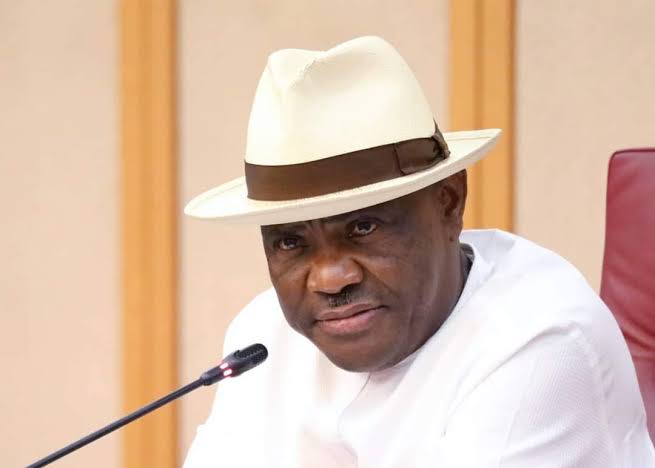
CHIMA AZUBUIKE examines the political dynamics surrounding the fresh Gombe State governorship primary holding Tuesday (today), which pits former minister Isa Pantami against Khamisu Mailantarki and Usman Garry
Today, former Minister of Communications and Digital Economy, Prof. Isa Pantami; businessman and politician Khamisu Mailantarki; and Usman Garry will again hit the field to battle for the Peoples Democratic Party governorship ticket in Gombe State for the 2027 election. The fresh governorship primary election complies with an order by the Federal High Court sitting in Gombe. The court, in a judgment on September 24, nullified the May 26 primary that produced Pantami, directing the PDP to conduct another exercise within 30 days, in compliance with its Constitution, guidelines and relevant electoral laws.
The judgment delivered by Justice Amina Mohammed followed a suit filed by Usman Garry, a PDP governorship aspirant, who challenged the process through which Pantami emerged as the party’s candidate. Garry objected to the affirmation of Pantami as the standard-bearer of the Abdulrahman Mohammed-led faction and eventually filed a suit against the former minister. Garry had asked the court to set aside Pantami’s emergence because the PDP did not conduct a valid governorship primary in accordance with its rules and applicable electoral laws.
The Federal High Court nullified the process that produced Pantami and ordered the PDP to conduct a fresh primary. The court found problems with the process that produced Pantami and directed the party to repeat the exercise in accordance with its guidelines and applicable electoral laws.
Before joining the PDP, the former minister had sought the governorship ticket of the All Progressives Congress. When the APC settled on Jamilu Gwamna as its consensus candidate, Pantami withdrew from the contest and subsequently moved to the PDP. His arrival immediately altered the calculations within the opposition party.
Pantami’s impending movement to the PDP circulated while Mailantarki, Saleh Abdulkadir, Garry and Monica Kaltho were preparing for the party’s governorship contest.
Pantami will again slug it out with other aspirants, Mailantarki and Garry, who reject the former minister’s entry into the governorship ticket race.
Between Pantami, Mailantarki, and Garry
Pantami enters Tuesday’s contest as a politician whose national profile gives the primary a significance beyond the ordinary competition for a party ticket. A former Director-General of the National Information Technology Development Agency and former minister, Pantami boasts supporters who argue that his experience, networks and resources make him capable of mounting a serious challenge against the APC candidate, Gwamna.
Mohammed Kudu, a PDP chieftain, dismissed the capacity of some of the other aspirants to confront the governing party, describing Mailantarki, Saleh Abdulkadir and Garry as weak to confront the APC candidate.
Kudu said, “Who among Khamisu Mailantarki, Saleh Abdulkadir, Garry Usman has what it takes to challenge the APC? We recognise that Jamilu Gwamna is grassroots; hence, the only person that can face him, man to man, is Malam (Ali Pantami). He has made money as former Minister of Communications and Digital Economy, and as former Director-General of NITDA and as a visiting lecturer. Maybe Saleh Abdulkadir, who seems genuine, but you know he is not as wealthy as he used to be.”
He added, “He (Ali Pantami) has the capacity to defeat Gwamna of APC in a fair contest because he has international connections and he has built enough capital in both human and other resources that translate into wealth. All that will count in the build-up to the election.”
Kudu’s comments reflect one side of the political argument surrounding the PDP contest: that the party needs a candidate with sufficient political, financial and organisational resources to confront the APC.
But that argument is contested by opponents of Pantami’s emergence.
For them, the issue is not simply whether Pantami possesses the resources or profile to contest the 2027 election. They question the circumstances surrounding his entry into the PDP and his rapid movement from APC aspirant to PDP governorship candidate.
Dr Maryam Abubakar, a policy analyst, described what she called the “unprecedented desperation” surrounding Pantami’s political journey.
She said, “How can you once say politics is dirty, only for late President Muhammadu Buhari to appoint you from NITDA to cabinet minister, and you suddenly forget your sermons where you lashed politics and politicians.”
Abubakar also questioned Pantami’s relationship with the APC before his defection.
She said the former minister, despite developing an interest in politics, failed to support the governing party sufficiently.
“Even when his interest began to manifest, he refused to empower the party members or support the party to achieve its mandate in the state. Instead, we started hearing rumours that Malam (Ali Pantami) was funding African Democratic Congress in Gombe but refused to identify with them publicly because of court cases ADC faced and alleged possible witch-hunt by the anti-graft body,” she added.
“How can you contest this week in APC and next week become a PDP candidate? It’s the height of desperation. As a technocrat and Islamic scholar, we expected a new order in the way of doing things, not doing things like regular politicians who lack ideals and purpose. What was baffling was allowing yourself to be a product of a corrupt process.”
So, the PDP held the May 26 primary amid misgivings. The decision to challenge the primary was therefore not unexpected.
Gombe’s political landscape is shaped by local structures and established political networks, while national visibility and access to influential political actors can also affect a candidate’s campaign.
The PDP’s choice will therefore be watched beyond the immediate party contest.
The Gombe PDP primary has consequently evolved from an ordinary intra-party contest into a test of how political ambition, party organisation and electoral law intersect.
Today’s exercise is, therefore, a bid to correct issues of the past. The PDP is now conducting a new nomination process, creating a fresh opportunity for all three cleared aspirants.
Although Saleh Abdulkadir was prominent in the initial contest and was mentioned among those who challenged Pantami’s emergence, the PDP’s current list of cleared aspirants for Tuesday’s primary comprises Pantami, Mailantarki and Garry.
That means the field has narrowed considerably from the wider contest that preceded the May primary.
Abdulkadir’s absence from the fresh contest further concentrates the battle among three political camps.
For the PDP, this may make the primary easier to organise, but it does not necessarily make the political dispute less complicated.
The principal disagreement remains over the process that brought Pantami into the party’s nomination race and the question of whether the fresh exercise can finally settle the matter.
For Pantami, it provides the opportunity to seek a new mandate from the party after his first nomination was nullified.
For Mailantarki and Garry, it offers the opportunity to challenge Pantami through a fresh process in which they have been cleared to participate.
And for the PDP, it presents another opportunity to conduct a process that can withstand judicial scrutiny.
Circumventing legalities
The legal questions surrounding Tuesday’s contest became complicated on September 24 when the Supreme Court restored provisions of the Electoral Act 2026 dealing with party membership registers and the nomination of candidates. The apex court upheld the validity of Sections 77(5), 77(6), 77(7) and 84(2), reversing the earlier Court of Appeal position that had voided the provisions.
Section 77(5) requires that persons eligible to vote at party primaries must have their names contained in the membership register submitted to the Independent National Electoral Commission within the prescribed period.
The controversy followed the timing of Pantami’s movement from the APC to the PDP.
According to the account supplied by Gombe public affairs commentator, Chika Udenkwo, Pantami left the APC on May 19, while the APC primary was held on May 21 and the PDP primary took place on May 26.
Udenkwo therefore argues that the key question is not simply whether Pantami defected from the APC before the PDP primary.
The more precise question, he says, is whether Pantami’s name appeared in the PDP membership register submitted to INEC within the statutory period applicable to the May 26 primary.
He said, “Pantami left the APC on May 19. The APC primary followed on May 21. And on May 26, Pantami emerged from the PDP primary.”
He added, “The question now is not simply whether he had left the APC before joining the PDP. The more precise question is this: Was Pantami’s name contained in the PDP membership register submitted to INEC within the statutory period applicable to the May 26 primary?”
According to Udenkwo, if May 26 is used as the reference date, the 21-day period would take the relevant deadline back to May 5.
“That makes the documentary evidence critical. Was Pantami already a PDP member by that date? Was his name on the register submitted to INEC? When exactly was that register submitted? And was the same register actually used for the May 26 primary?” he asked.
Those questions, however, must be distinguished from the legal effect of the September 24 Supreme Court judgment itself.
The Supreme Court’s ruling restored the provisions; it did not, by itself, pronounce on Pantami’s individual eligibility for Tuesday’s Gombe primary.
As today’s fresh primary holds, one of the questions includes whether the party has complied with the applicable requirements for the new primary, including membership records, notice, screening, participation and its own guidelines.
The membership-register question could nevertheless become significant if a litigant argues that an aspirant or delegate was not properly qualified under the restored provisions.
On the contention, Udenkwo argued, “A victory on Tuesday would give Pantami a fresh nomination, not a reliance on the May 26 exercise that has already been nullified.
“But that victory would still have to survive any subsequent legal challenge—one based on compliance with the Electoral Act, the PDP Constitution, the court’s order, and the applicable membership register.”
He added, “In other words: winning the primary and establishing the legal validity of the nomination are related—but distinct—questions. That reasoning also applies to Mailantarki and Garry.
“If either defeats Pantami, the resulting nomination would equally be subject to the statutory and party requirements governing the fresh primary.”
For Mailantarki and Garry, Tuesday’s contest is an opportunity to reset a process that both have spent months challenging.
Their opposition to Pantami’s emergence was not limited to political statements. Their objections eventually formed part of the litigation that produced the Federal High Court’s order for a fresh primary.
The two now have to shift from challenging the previous process to competing within the new one. That presents a different political calculation.
Instead of asking the court to remove Pantami from a ticket already produced by the party, they must now persuade delegates or eligible party members to choose either of them over the former minister.
The question therefore becomes whether the legal challenge has translated into political momentum.
Mailantarki’s position has also been affected by the withdrawal of Kaltho, who had initially been part of the challenge before later aligning with Pantami.
Kaltho’s movement altered the political arithmetic around the opposition to Pantami, leaving Mailantarki, Garry and Abdulkadir among the figures challenging the earlier emergence.
Whether that change will have an effect on Tuesday’s voting remains a political question to be answered by the primary.
A primary under scrutiny
The September 29 exercise is also taking place under a level of scrutiny that the May primary did not successfully withstand.
The Supreme Court, in its judgment, restored statutory provisions concerning party membership registers and nomination procedures.
Political observers are consequently watching not only the outcome but the process.
Tuesday’s primary presents a credibility test for the PDP.
The party has already experienced the consequences of an internal nomination process that ended in litigation.
The Federal High Court’s order provides the party with an opportunity to correct the procedural issues that led to the nullification of the earlier exercise.
Udenkwo said, “The question becomes whether the PDP has complied with the requirements applicable to this fresh primary: the membership register, notice, screening, delegate participation, and the party’s own constitution and guidelines.”
He added, “And here, the Supreme Court’s ruling makes the membership register particularly significant. The law does not merely require a party to maintain a register. It requires that register to be submitted to INEC within the prescribed period—and it restricts participation in the primary to persons whose names appear in it.”
Today, the PDP will have to be able to demonstrate compliance with the court order and the applicable electoral framework.
The scrutiny will extend to the eligibility of delegates, the party’s register and the conduct of the exercise.
Udenkwo said, “The Supreme Court has now made the statutory validity of Sections 77 and 84 clear. What it has not done is determine the factual circumstances of every candidate or every primary conducted before its judgment.”
“That leaves room for litigation—where an aspirant believes a party failed to comply with the membership-register requirements or other statutory conditions,” he added.
For now, however, the PDP’s immediate responsibility is to conduct the fresh exercise ordered by the Federal High Court.
For Pantami, Tuesday offers a second opportunity to secure the party’s ticket through a fresh primary. For Mailantarki and Garry, it offers a second opportunity to challenge him directly rather than through the previous process. For the PDP, it offers the chance to close a chapter that has already generated substantial internal disagreement and legal action.
But whether Tuesday finally closes that chapter will depend not only on who wins, but on how the party conducts the exercise.
The 2027 question
Tuesday’s primary cannot be viewed entirely in isolation from the wider 2027 contest.
The APC has already positioned Jamilu Gwamna as its candidate.
The contest is therefore framed along the line of having a candidate that can challenge the APC in the general election.
For Kudu, Pantami’s national profile and network give him the capacity to confront Gwamna.
But the argument also exposes one of the central issues before PDP delegates: whether the choice of candidate should be determined primarily by political experience, organisational structure, personal resources, grassroots networks, national connections or some combination of these factors.
Source: punchng.com
FOLLOW US ON:
FACEBOOK
TWITTER
PINTEREST
TIKTOK
YOUTUBE
LINKEDIN
INSTAGRAM