Connect with us

News

NEPC, workers dismiss strike reports, affirm industrial harmony

Published

on

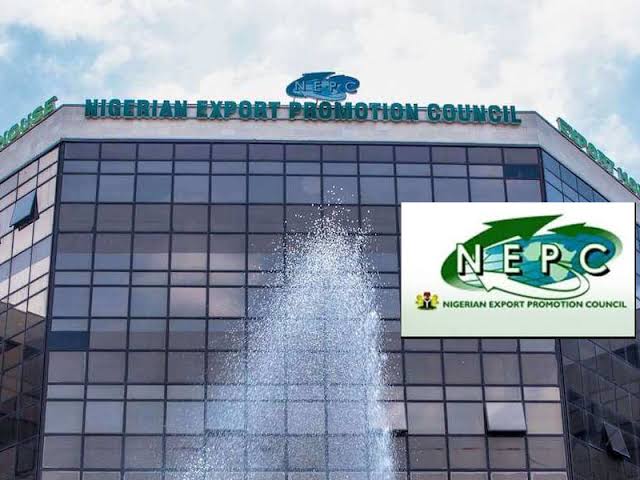
The Nigerian Export Promotion Council (NEPC) and its workers’ union on Monday jointly dismissed reports of a planned industrial action, describing the claims circulating on some online media platforms as false and insisting that the council continues to enjoy industrial harmony.

The council also denied reports alleging the appointment of directors and claims of favouritism and nepotism within the organisation, saying the allegations were unfounded and intended to mislead the public.

The clarification followed a joint meeting between the management of the council and the leadership of the Association of Senior Civil Servants of Nigeria, NEPC Unit.

In a statement by the Head of Corporate Communications, Aliu Sadiq, the council urged exporters, stakeholders and members of the public to disregard what it described as misleading reports of an impending strike.

The statement read, “The Management of the Nigerian Export Promotion Council debunks misinformation circulating in some sections of the online media alleging a planned strike action by NEPC staff.

“Following a joint meeting held with the leadership of the Association of Senior Civil Servants of Nigeria, NEPC Unit, Management wishes to inform the exporting community and the general public that there is no planned or contemplated industrial action within the Council.

“The purported strike action is false, baseless, and should be disregarded by the general public.”

According to the statement, the Chairman of the ASCSN, NEPC Unit, Moruf Ogunlana, reaffirmed that the council remained peaceful and that the union neither authorised nor had prior knowledge of the alleged strike.

See also  Lagos NLC demands N225,000 minimum wage

The statement said Ogunlana confirmed that “the Council continues to enjoy industrial harmony,” adding that “neither the Union nor its members were consulted on any purported strike call as alleged.”

It added that the union “disassociated the Union from the online publications and pledged continued cooperation with Management.”

Addressing reports of alleged appointments of directors, the management maintained that no such appointments had been made.

The statement added, “There was no appointment of Directors to the Council,” adding that “to support the day-to-day running of her office, Management will not only continue to work with the existing organisational structure and staff across all Departments but further enhance their capacity and work skills.”

The council said the approach reflected the commitment of the Executive Director and Chief Executive Officer, Nonye Ayeni, to strengthening internal capacity rather than outsourcing responsibilities.

It stated that under Ayeni’s leadership, opportunities for career progression had expanded through the widening of the directorate cadre and the creation of advancement pathways across different staff levels.

The council also highlighted improvements in staff welfare, saying more than 75 per cent of its workforce had received professional training since 2023.

According to the statement, the Executive Director also introduced the Export Skills Acquisition Centre, which has trained more than 500 youths and women in garment and bag production for export.

The management and the union also rejected allegations of favouritism and nepotism, describing the claims as inconsistent with the realities within the organisation.

The statement said both parties “jointly debunked allegations of favouritism and nepotism, describing them as unfounded and inconsistent with the reality within the Council.”

See also  Hantavirus scare: WHO reports three deaths, launches emergency response

It added that the union affirmed that Ayeni “has consistently demonstrated fairness, professionalism and inclusiveness, treating all employees equitably regardless of tribe or background.”

The council further defended its recent performance, stating that Nigeria recorded a non-oil export value of $6.1bn in 2025, the highest since the establishment of the council.

It attributed the achievement to reforms and export promotion initiatives implemented under the current leadership in line with the Federal Government’s Renewed Hope Agenda.

The statement added that NEPC had also implemented a third-party certification programme covering HACCP, FDA, HALAL and ISO standards, enabling more than 150 exporters to secure internationally recognised certifications and gain easier access to global markets.

It said, “We therefore urge the public to disregard the misleading online reports as Management and the entire staff of the Council reiterate its commitment to work harmoniously with all relevant stakeholders to advance Nigeria’s non-oil export agenda in line with the Renewed Hope vision of the Federal Government.”

punch.ng

FOLLOW US ON:

FACEBOOK

TWITTER

PINTEREST

TIKTOK

YOUTUBE

LINKEDIN

Continue Reading
Click to comment

Leave a Reply

Your email address will not be published. Required fields are marked *

News

Anthropic flags five Claude AI uses linked to biological weapons research

Published

on

Anthropic, the company behind Claude AI, says it identified five cases in which users employed its artificial intelligence models in ways that could support biological weapons development.

The company disclosed this in its latest threat intelligence report published on Thursday, saying the cases were among a range of malicious or potentially harmful activities detected and disrupted on its platform between December 2025 and August 2026.

Anthropic particularly flagged five Claude AI use cases that involved research into areas including chikungunya virus, highly pathogenic avian influenza, orthopoxviruses, venom peptides and toxins.

The company said it had banned the accounts involved and incorporated information from its investigations into its safeguards, enforcement and threat intelligence systems.

However, Anthropic stressed that it was not asserting that the scientists involved intended to cause harm.

“We do not assert that they intended harm, and identifying them or their labs could expose them to harm,” the company said, adding that it would withhold the names of the research institutions, countries and specific biological agents or techniques involved.

Anthropic said the cases demonstrated the difficulty of distinguishing between legitimate scientific research and activities that could be used for harmful purposes.

“Biological misuse is one of the most serious risks of frontier AI models,” the company said, warning that AI could potentially be used to make existing pathogens more dangerous or create new ones.

“The same information that can be used to develop a biological weapon could also be used to develop, for example, a vaccine or a cure for a disease,” the AI giant added.

See also  US launches another massive round of strikes on Iran

In the first case, Anthropic said its biological safety classifier blocked a request to help prepare a grant application involving gain-of-function research on chikungunya virus.

The company said its subsequent investigation found that a reseller platform was being used to provide access to Claude to researchers in regions where Anthropic does not offer its services.

The platform also allegedly routed requests rejected by Claude to other AI models with more permissive safeguards.

Anthropic said it banned the associated accounts, worked with partners to take down the relay networks and shared its findings with AI companies and government authorities.

In a second case, the company said a researcher outside the US used Claude over several weeks while planning research involving highly pathogenic avian influenza and its adaptation to mammals.

According to Anthropic, the researcher used Claude for study planning, data analysis, interpretation and prioritisation of experiments, as well as editorial assistance.

The company said its safeguards restricted the researcher to weaker Claude models and that the AI’s contribution was primarily limited to clerical assistance, study ideation and design.

Anthropic said the case nevertheless provided evidence of active research programmes involving pathogens with enhanced pandemic potential.

A third case involved a grant application for orthopoxvirus research at a state-associated infectious disease laboratory. Anthropic said a reseller relay serving more than a dozen customers used Claude to draft the application.

The company said the application involved research into how orthopoxviruses interact with the immune system and was produced using Claude Opus 5 in about an hour.

The fourth and fifth cases involved research into venoms and toxins.

See also  Heavy rain causes Air Peace flight delays in Lagos

Anthropic said one researcher used Claude to develop an atlas of venom toxin peptides and a generative system for optimising toxin characteristics, with the stated goal of developing therapeutic molecules.

In another case, a researcher used Claude in projects involving the computational redesign of toxins under a national public research programme. Anthropic said the researcher deliberately obscured the identities of some toxins and viral proteins in progress reports.

The company said both accounts were banned in May 2026 for violating its Supported Regions Policy.

Anthropic said the cases highlighted the challenge of regulating AI-assisted biological research because many applications are “dual use”, meaning they can have both beneficial and harmful applications.

Anthropic, however, cautioned against interpreting its findings as evidence that Claude was currently enabling imminent biological threats.

“We take these cases as evidence not of the imminence of biological threats currently uplifted by Claude, but rather as evidence that significant dual-use research efforts are associated with state actors of concern,” the company said.

The report is part of a wider disclosure by Anthropic on the misuse of its AI systems.

The company said its investigations over the past eight months also uncovered cyber operations, surveillance, influence operations, scams and fraud, conventional weapons development and attempts to illicitly distil its models.

The report comes shortly after concerns raised publicly by former Anthropic researcher Jacob Coxon about the risks posed by increasingly capable AI systems.

PUNCH Online previously reported that Coxon resigned from Anthropic and said “people building AI earnestly believe that it could kill us all by the end of the decade.”

See also  Presidential pardon: AGF orders multi-agency probe

Anthropic’s latest report also said it had identified a Russia-linked cyber espionage operation in which Claude was used to automate parts of attacks against organisations in Ukraine and Europe.

Source: punchng.com

FOLLOW US ON:

FACEBOOK

TWITTER

PINTEREST

TIKTOK

YOUTUBE

LINKEDIN

INSTAGRAM

Continue Reading

News

South Korea, Iran discuss Strait of Hormuz security

Published

on

The foreign ministers of South Korea and Iran discussed the Strait of Hormuz in a phone call on Friday, Seoul said, days after confirming it was weighing a “contribution” to the waterway’s security.

US President Donald Trump has repeatedly pressured ally South Korea to provide help for the war in the Middle East, saying Seoul rejected his request for assistance in securing the waterway that is crucial to global oil supplies.

South Korean Foreign Minister Cho Hyun spoke by phone with his Iranian counterpart Abbas Araghchi at Tehran’s request, “discussing the recent situation in the Middle East”, and the Strait of Hormuz, the foreign ministry in Seoul said in a statement.

The Friday announcement followed a warning from Tehran earlier this week that any South Korean military contribution to the conflict would have “serious consequences”.

South Korea sent a fact-finding team to assess the situation in the strait and has repeatedly said it has not decided whether to deploy its military to Hormuz.

Traffic through the vital shipping route has been virtually paralysed since the US-Iran war began on February 28, disrupting global energy markets.

Negotiations between Iran and the United States have stalled as they vied for control over Hormuz, which normally carries around a fifth of the world’s oil and liquefied natural gas exports.

AFP

Source: punchng.com

FOLLOW US ON:

FACEBOOK

TWITTER

PINTEREST

TIKTOK

YOUTUBE

LINKEDIN

INSTAGRAM

See also  US launches another massive round of strikes on Iran
Continue Reading

News

US arms NAF for terror war

Published

on

The United States has delivered military equipment to the Nigerian Air Force as part of efforts to strengthen the security partnership between both countries and support Nigeria’s counter-terrorism operations.

The United States Africa Command disclosed this in a post on its X handle on Thursday, along with pictures of a U.S. Air Force C-17 aircraft delivering the equipment.

AFRICOM said the equipment was supplied under a foreign military sales agreement between the two countries.

“PARTNERSHIP IN ACTION: A U.S. Air Force C-17 delivers equipment to the Nigerian Air Force this weekend. The equipment is part of a foreign military sales agreement that furthers the U.S.-Nigerian partnership and will aid in Nigeria’s efforts to counter terrorism in the region,” the command said.

The latest delivery comes against the backdrop of continued military cooperation between Nigeria and the United States, including training and capacity-building programmes.

On August 23, US forces began training Nigerian troops in unmanned aircraft systems, combat casualty care and other military skills at Operating Location Bauchi, as part of efforts to strengthen security cooperation between the two countries.

According to AFRICOM, the training covered combat lifesaver and tactical combat casualty care instruction, weapons familiarisation, camouflage, water treatment and testing, explosive ordnance disposal, small-unit tactics and unmanned aircraft systems.

The command said the training was developed based on the expertise available among US forces and areas identified by their Nigerian counterparts as beneficial.

It added that unmanned aircraft systems generated particular interest among Nigerian forces, with about 10 members of the Nigerian Air Force Special Forces Regiment receiving practical training on operating the systems.

See also  PSC declines promotion of 179 ASPs, elevates 952 to DSP

The US personnel also trained the Nigerian troops on techniques for employing unmanned aircraft systems and incorporating information gathered by the systems into military operations.

The development followed AFRICOM’s disclosure in July that the United States had withdrawn most of its troops deployed to Nigeria for a specific counter-terrorism operation, while retaining an intelligence-sharing and security partnership with the country.

Despite the withdrawal, both countries have continued to engage in military cooperation through intelligence sharing, training and other capacity-building initiatives.

Source: punchng.com

FOLLOW US ON:

FACEBOOK

TWITTER

PINTEREST

TIKTOK

YOUTUBE

LINKEDIN

INSTAGRAM

Continue Reading

Trending