





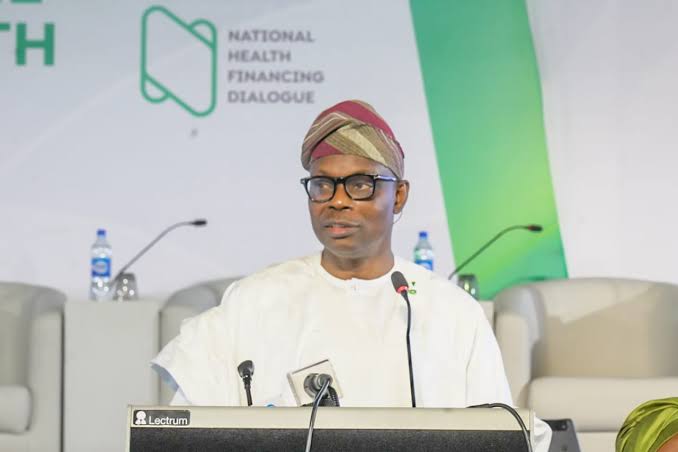
The Minister of State for Health and Social Welfare, Dr Iziaq Salako, has urged Nigerian doctors to embrace technological innovations, preventive healthcare and continuous professional development to improve healthcare delivery in the country.
Salako also called on medical practitioners to prioritise their personal health, adopt healthy lifestyles and pay greater attention to their mental wellbeing as part of efforts to secure the future of the medical profession.
The minister, who was represented by the Acting Provost and Medical Director of the Neuropsychiatric Hospital, Aro, Abeokuta, Dr Sunday Amosu, made the call on Thursday at the opening of the 2026 Physicians’ Week organised by the Ogun State chapter of the Nigerian Medical Association.
Salako said doctors needed to continually improve their professional competence and adapt to emerging developments in medicine while placing greater emphasis on disease prevention and personal wellbeing.
According to him, strengthening the medical profession requires practitioners to embrace technology, improve their skills and adopt preventive approaches to healthcare.
Speaking on the theme of the celebration, “Securing the Future of Medicine in Nigeria,” Salako said, “We must continue professional development. We need to up our game and be up there. We need to go the way of technology. We need to go preventive health.
“What are we talking about? We need to take care of ourselves. I’ve run all the available tests a few months back, including PSA, including lipid profile. Anything that you can talk of, except the MRI.
“We must take care of our health. When you see somebody who is still looking young, ask him what he’s been doing. And sincerely, who is your own doctor? I did ask myself. I have a doctor, but it’s not official. Maybe you need to make it official.
“You are also what you eat. I don’t need to tell you that everything that has to do with non-communicable diseases has to do with our lifestyle. And I’m sure you know all of these things. In my house, I have an orchard. I planted everything there. I can tell you I eat vegetables all year round.
“At one time, my lipid profile was like 250 or so. And they wanted to put me on a drug, but I told them not to worry, that I know what to do. I ran away from all those things that I knew could have been the contributing factors. So, we have to also prioritise a healthy lifestyle.”
He stressed that preventive healthcare and healthy living were particularly important in addressing the growing burden of non-communicable diseases, many of which are associated with lifestyle choices.
He urged doctors to lead by example by undergoing regular medical examinations, monitoring their health status and making informed decisions about their diets and daily habits.
Meanwhile, the Ogun State Commissioner for Health, Dr Tomi Coker, urged doctors to prioritise their physical, mental and financial wellbeing, warning that the demands of medical practice could take a toll on their health.
Coker said physicians continued to shoulder enormous responsibilities despite challenges including inadequate infrastructure, ageing equipment and staff shortages across healthcare facilities.
She noted that doctors were not only responsible for diagnosing and treating patients but also provided emotional support to individuals and families facing economic and social difficulties.
“To secure the future of medicine, we have to first of all secure ourselves. You have to make sure your wellbeing, mental wellbeing, physical wellbeing, financial wellbeing, which a lot of us ignore.”
Also speaking, the Chairman of the NMA in Ogun State, Dr Sunday Enimola, called for improved working conditions, adequate staffing and better remuneration to address the challenges confronting the medical profession.
Enimola said Nigeria could not secure the future of medicine by continually demanding more from doctors without providing the resources and working environment required for effective service delivery.
He identified workforce shortages, medical migration, burnout, insecurity and inadequate infrastructure as major challenges requiring urgent attention.
“We are asking our healthcare professionals to do more, often with fewer resources. We cannot secure the future of medicine by simply asking doctors to work harder,” he said.
The NMA chairman called for policies that would encourage doctors to remain in Nigeria by providing professional fulfilment, career opportunities, dignity and improved welfare.
He also advocated the integration of artificial intelligence, telemedicine, electronic health records and other digital innovations into healthcare delivery, stressing that technology should support rather than replace medical practitioners.
Enimola further called for reforms in medical education to equip future doctors with the clinical competence, technological knowledge and adaptability required to meet changing healthcare needs.
He urged government agencies, universities, healthcare institutions and technology companies to collaborate on developing affordable and accessible digital health solutions suited to Nigeria’s circumstances.
The NMA chairman said securing the future of medicine required collective action, urging stakeholders to translate discussions at the Physicians’ Week into practical measures that would improve healthcare delivery and protect the well-being of medical professionals.
Source: punchng.com
FOLLOW US ON: