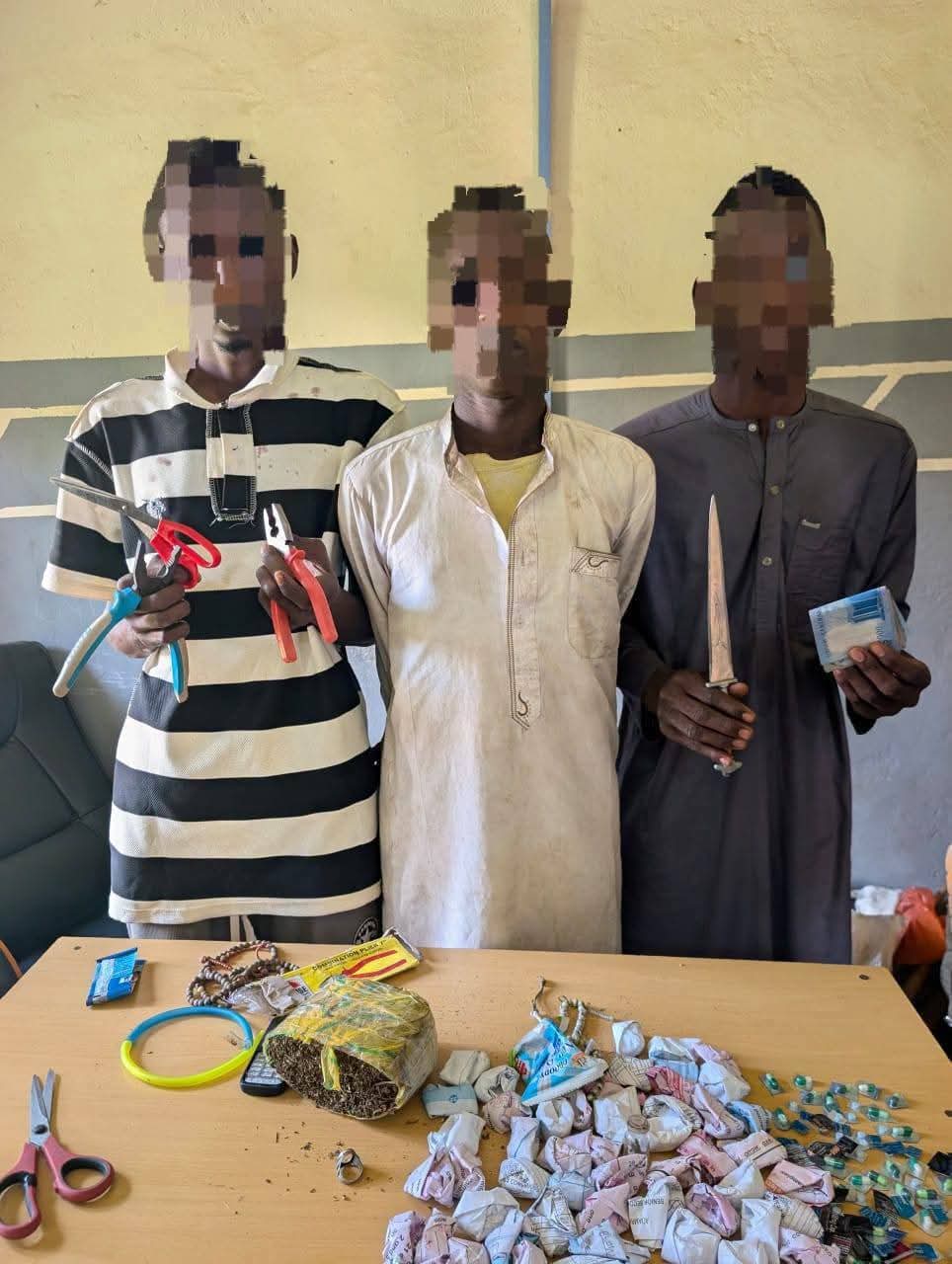
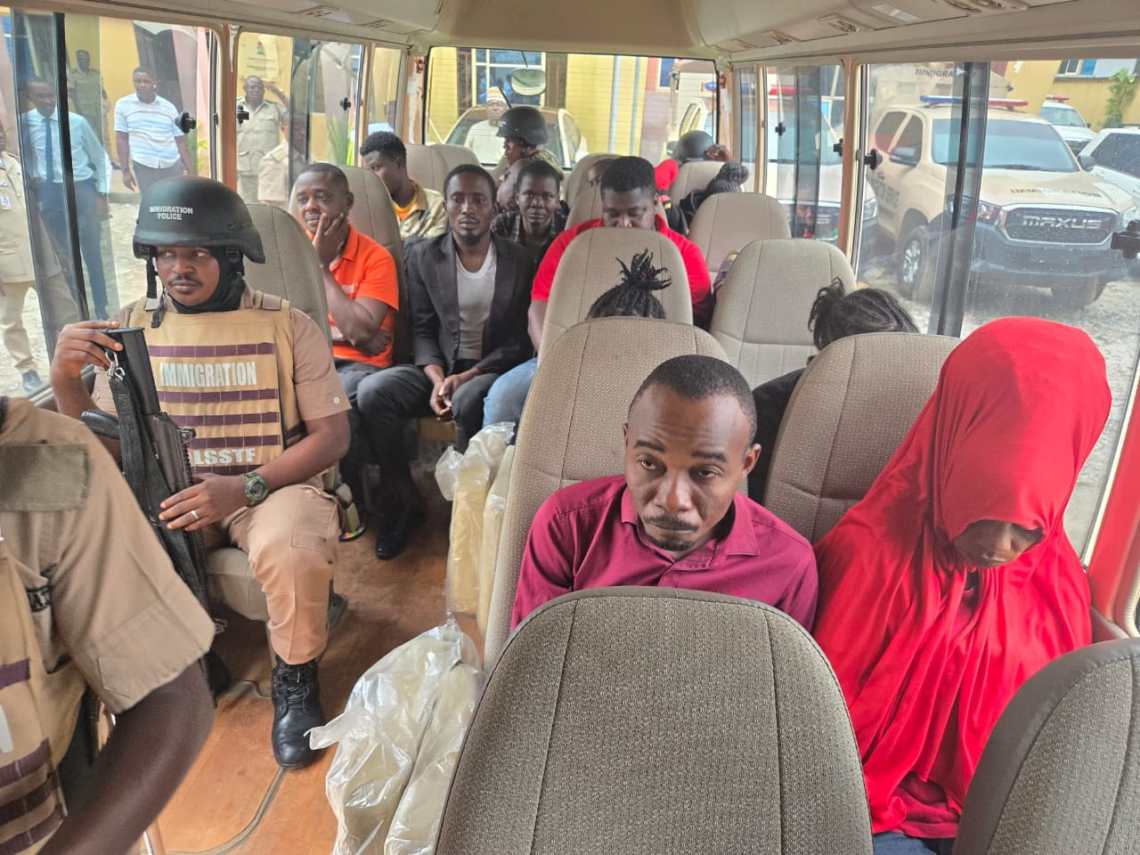
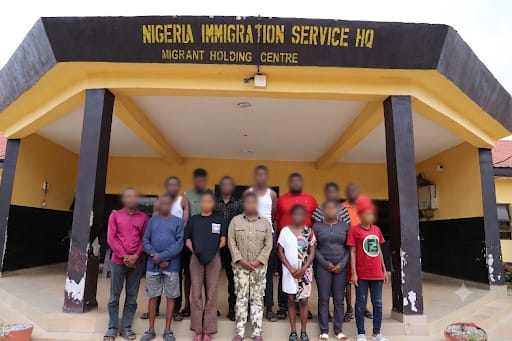



At first, Dauda Shehu and other detainees struggled to find space inside the cell.
Then, according to him, they began struggling for something more basic — air.
Shehu was one of 65 suspected illegal miners allegedly crammed into a cell at the Nigerian Security and Civil Defence Corps office in Minna, Niger State, after their arrests on September 15 and 16.
For three days, the detainees reportedly remained in custody.
But what happened inside the cell has now become the subject of a national investigation after at least 37 were confirmed dead.
Shehu, an indigene of Allawa in Shiroro Local Government Area of Niger State, survived.
His account of those terrifying moments paints a picture of men trapped in an allegedly poorly ventilated enclosure, desperately searching for air and banging on the door as fellow detainees began to suffocate.
“All of a sudden, we realised that we could not breathe and we were all struggling for where to get fresh air,” Shehu said.
As panic spread through the cell, he said the detainees screamed for help.
They banged on the door.
Again and again, they called out to the NSCDC officers.
But according to Shehu, nobody came to their rescue.
“We even appealed to the officers several times; we banged the cell door but they refused to answer us,” he alleged.
“Even when we raised the alarm that some people were being suffocated, nobody answered us. They were watching us gasp for breath and screaming for help but they ignored us.”
By the time the scale of the tragedy became apparent, dozens of the detainees were dead.
A viral video seen by Saturday PUNCH showed the bodies of the miners, many of them minors, sprawled on a light-green tarpaulin.
The circumstances of their deaths remain disputed.
While the NSCDC attributed the deaths to a disease outbreak without identifying the illness, survivors alleged that the detainees suffered from suffocation and dehydration inside the overcrowded cell.
The Niger State Governor Mohammed Bago said preliminary forensic findings showed foam mixed with bloodstains in the mouths of some of the deceased and peeling skin, raising the possibility of lead poisoning.
Our correspondents gathered that the state NSCDC commandant, Suberu Aniviye, and 21 other officers had been detained in Abuja over the incident.
‘We drank our urine’
Another survivor said conditions became so desperate that some detainees resorted to drinking their own urine.
“We resorted to drinking our urine inside the cell because of the suffering we were going through. The messy situation of the cell made our brothers die,” he said.
Yet another survivor, who requested anonymity, believes his position inside the cell may have been the difference between life and death.
He said he and some of those who survived were fortunate to have been close to the entrance, where they apparently had better access to air.
“We survived because we were close to the entrance and we were screaming for help,” he said.
“Even when we were telling them that people were dying, they did not believe us.”
He said some of the miners had been displaced from their homes in Allawa by bandits and had turned to mining in Minna to earn a living.
“We were chased away from our homes in Allawa by bandits. We are just trying to make a living in Minna,” he said.
“We do not carry any arms or weapons, they are lying.”
Shehu also raised questions about the number of people who survived and the official death toll.
“Out of the 65 of us that were in the cell, they brought only six of us to the general hospital. Where are the remaining 26 people if they claimed it is only 33 that died? We were 65 people that were arrested,” he said.
Families brought food, met bodies
While the miners allegedly fought for air inside the cell, some of their families were outside hoping they would soon return home.
Among them was Musa Abdullahi.
His son, Salim, was one of those detained.
For three days, Abdullahi said, family members took food to the detainees.
They also pleaded with the NSCDC to release them.
Then came Thursday.
Abdullahi went back as usual, expecting to see his son alive.
Instead, he said he discovered that Salim and many of the others were dead.
“We were taking food to them for the three days in detention. But when we took food to them on Thursday, we saw that my son and many others were already dead,” the grieving father said.
For Abdullahi, Salim was more than a son.
He was the breadwinner of the family.
Now, the father wants to know what happened between the moment his son entered NSCDC custody and the moment he saw his body.
He said the families had not been allowed access to the corpses and demanded an independent autopsy.
“They have refused us to see the dead bodies for us to be sure that they were not shot, tortured or killed,” Abdullahi alleged.
“They should tell us what truly killed our children. Was it that they poisoned or tear-gassed them?
“What is the reason for killing my son and the others? We need justice. They should release the corpses to us and we will seek an independent autopsy. We will not let this go down like this.”
17-year-old among dead
For Babao Natsira, the tragedy claimed the life of his 17-year-old younger brother, Saleem.
Natsira said the families had completed processes for the detainees’ release before their deaths but alleged that the NSCDC refused to grant them bail.
Like Abdullahi, he rejected the explanation that a disease outbreak was responsible for the mass deaths.
“They killed our children and brothers,” he alleged.
“We visited them for the three days that they were arrested, only for us to hear that they had died.”
He questioned how a disease could kill so many detainees without apparently affecting the officers guarding them.
“They must tell us what really killed them,” he said.
‘They sprayed cell with perfume’
Another survivor, who spoke in Hausa during a televised address on Friday, told the state governor and the Minister of Interior, Olubunmi Tunji-Ojo, that 17 people were initially held in the cell before more detainees were brought in.
He said the detainees complained that the room was too small and hot, but more people were subsequently added.
“They locked us in a very small room. We were 17 in number. Then they added more people. And we started complaining that the room was small. The room was very hot. The room became extremely hot,” he said.
According to the survivor, the detainees were later ordered to stand up as the officers prepared to lock the room.
He alleged that a substance that looked like perfume was sprayed inside the cell.
“As they were about to lock the room, they sprayed something that looked like perfume, and the smell started disturbing everyone in the room, and that’s how people started falling down,” he said.
The survivor further alleged that the heat inside the cell became unbearable.
“The room became extremely hot. We pleaded with them to give us water, but they said no one would open the door for us that same night,” he said.
Deaths ignite Minna, govt declares curfew
News of the deaths quickly spread through Minna.
Soon, the grief turned to anger.
Mourners and residents took to the streets on Thursday and Friday, but Saturday PUNCH gathered that the protests were later hijacked by hoodlums.
Vehicles were vandalised.
Government and party offices were attacked.
Businesses were looted.
Shops and markets hurriedly closed.
Around Tunga Road, some people were reportedly injured as the violence escalated.
Gunshots and teargas filled parts of the city as security operatives attempted to disperse the crowds, while motorists searched for alternative routes.
Governor Bago subsequently imposed a 24-hour curfew on Minna, saying vandals had taken over the streets.
He also suspended mining activities across the state pending soil tests to determine whether hazardous substances could have played a role in the deaths.
Exactly what killed the miners remains unresolved.
The NSCDC’s explanation pointed to a disease outbreak.
Survivors, however, described an overcrowded cell where detainees allegedly struggled for air and suffered dehydration.
Bago introduced another possibility when he disclosed that preliminary forensic findings showed foam mixed with bloodstains in the mouths of some victims and peeling skin.
He said the signs raised the possibility of methane, cyanide or lead poisoning but stressed the need for a full investigation.
Tinubu orders probe
President Bola Tinubu on Friday described the deaths as a grave matter requiring urgent investigation and accountability.
He ordered a comprehensive investigation covering the arrests, the condition of the suspects when they entered custody, the detention environment, the number of people held at the facility, the medical attention provided and the events leading to the deaths.
Tinubu said being suspected of illegal mining did not deprive the detainees of their rights to life, dignity and humane treatment.
“Government will not tolerate mass deaths arising from official negligence, dereliction of duty or failure by public officials to protect the lives placed under their care,” the President said in a statement.
The Federal Government also suspended the Niger State Commandant of the NSCDC, Aniviye, pending the outcome of the investigation.
The Minister of Interior, Tunji-Ojo, who met some of the survivors on Friday, promised that the government would do what was necessary and work with the Niger State Government to ensure justice.
He said, “Every time we have had our backs to the wall in the Ministry of Interior, we have always bounced back, making sure it never happens again.
“For us, we will do the needful on our part. We will collaborate very well with the government of Niger State. We will collaborate and work with you to ensure that we are able to take this pain in the least way possible.”
Niger NSCDC commandant, 21 others detained
Saturday PUNCH gathered that the suspended Niger State Commandant and 21 other officers had been detained.
A top NSCDC officer at the national headquarters said the officers were summoned to Abuja and detained.
“As I am talking to you, the suspended commandant, the arresting officer, the investigation officer, and all other personnel involved in the incident are currently in custody. They arrived in Abuja today (Friday),” he said on condition of anonymity.
The NSCDC spokesperson, Afolabi Babawale, confirmed to Saturday PUNCH that the suspended commandant and other personnel were “in custody.”
Babawale said the affected officers included the head of the legal unit, the head of intelligence, the head of the mining unit, and the officer in charge of the cell.
He stated that the officers were being interrogated by the head of the corps intelligence unit.
“Investigation is ongoing into the matter,” he added.
Mining ministry unveils panel, IG pledges collaboration
The Minister of Solid Minerals Development, Dele Alake, said on Friday that a “high-powered team” of officials had been deployed to Niger State to investigate the incident.
The minister, in a statement, said the team would ascertain the facts of the case.
Alake stressed the need for a transparent and independent inquiry, adding that the investigation should establish accountability and help prevent a recurrence in detention and correctional facilities.
Also, the Inspector-General of Police, Olatunji Disu, noted that the police would investigate the circumstances surrounding the deaths.
The IG, who spoke at the Niger State Government House in Minna during a condolence visit on Friday, said the police would collaborate with the NSCDC and the state government.
The police chief described deaths in custody as a serious matter that fell within the purview of the Nigeria Police Force.
“Cases of death while in custody is a very serious one and falls under the confines of the Nigeria Police Force, wherever it happens. Most especially this that have 37 victims,” he said.
Northern govs, Atiku, Sowore demand justice
Reacting, the Chairman of the Northern Nigeria Governors’ Forum and Governor of Gombe State, Muhammadu Yahaya, expressed condolences to the families of the deceased miners.
Speaking on behalf of his colleagues, Yahaya, through the Director-General, Press Affairs, Government House, Gombe, Ismaila Misilli, said the northern governors were saddened by the deaths.
He called for a thorough investigation to establish the circumstances surrounding the incident, urging the relevant authorities to ensure that the probe was comprehensive and transparent.
Similarly, the African Democratic Congress presidential candidate, Atiku Abubakar, said the incident required more than condolences, insisting that those responsible should face the consequences if the investigation established wrongdoing or negligence.
Atiku, in a statement on Friday, urged the Federal Government to ensure that the investigation was independent.
“These were human beings: sons, fathers, brothers and loved ones, whose families had every right to expect that, whatever allegations they faced, the state would protect their lives and dignity while they remained in its custody,” he said.
Atiku also demanded that the families of the deceased be given clear answers about what happened to their relatives while in government custody.
Also, the presidential candidate of the African Action Congress, Omoyele Sowore, called for the arrest and investigation of officers allegedly involved in the incident.
In a post on X on Friday, Sowore said, “At this point, the @NSCDCrops officers involved in Niger State should have been arrested and subjected to a thorough criminal investigation over the deaths of these innocent miners.”
He added that the officers should face murder charges if evidence established that the deaths resulted from deliberate or premeditated killings.
Source: punchng.com
FOLLOW US ON: