Connect with us

Lifestyle

Favoritism Among Children

Published

on

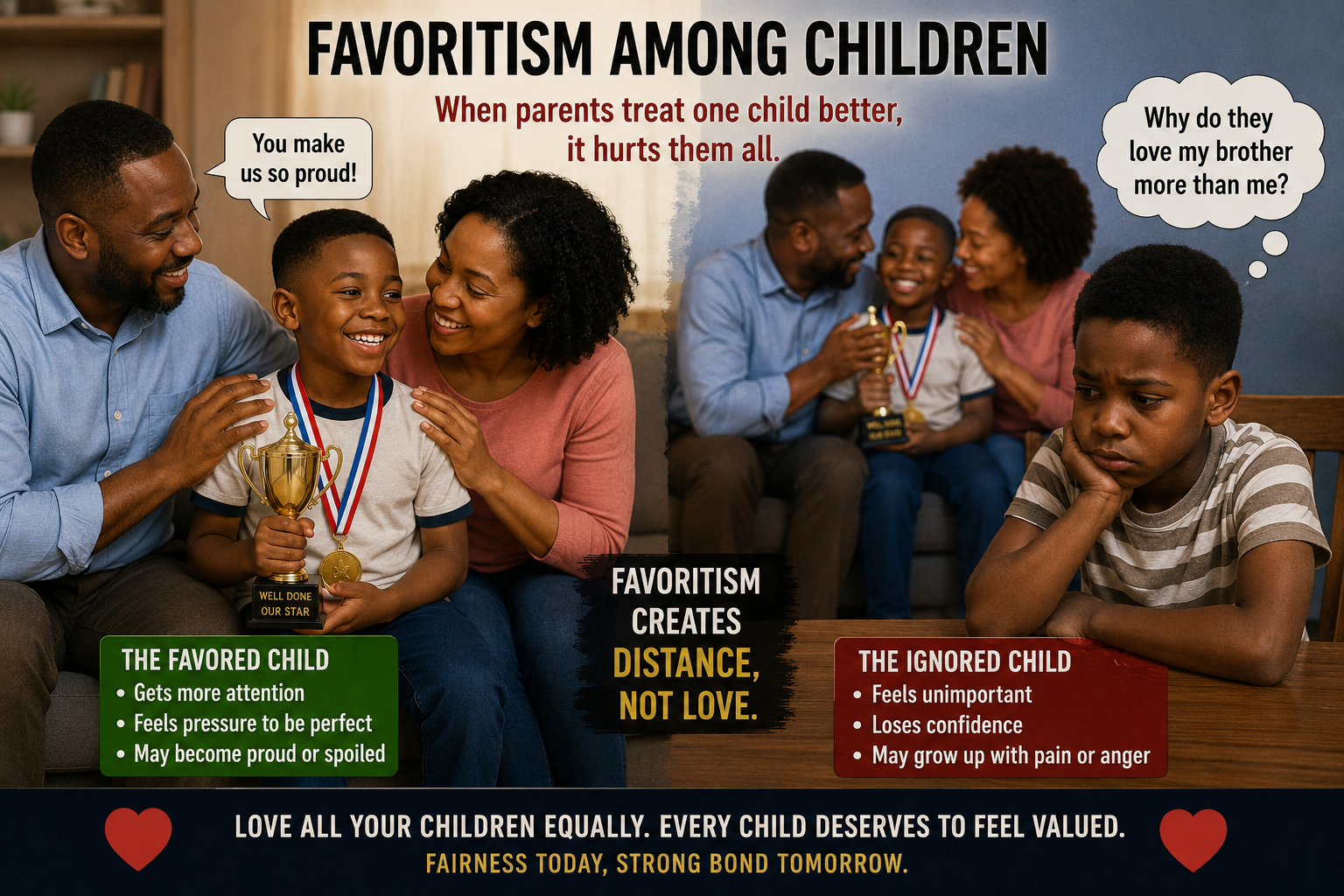
Favoritism among children is when a parent or caregiver consistently gives one child more attention, affection, praise, privileges, or support than their siblings. Whether intentional or not, favoritism can have lasting effects on every child in the family.

Some common effects include:

Sibling rivalry and increased conflict.
Low self-esteem in children who feel less loved or valued.
Jealousy and resentment toward parents and siblings.
Pressure on the favored child, who may feel they must always meet expectations.
Long-term family division, with strained relationships that can continue into adulthood.

To avoid favoritism, parents can:

Show love and affection to each child in ways that fit their individual needs.
Spend one-on-one time with each child.
Be fair and consistent with rules, discipline, and rewards.
Celebrate each child’s unique strengths instead of making comparisons.
Listen to each child and make them feel heard and valued.

Favoritism does not mean treating every child exactly the same, because children have different personalities and needs. It means ensuring that each child feels equally loved, respected, and important within the family.

FOLLOW US ON:

FACEBOOK

TWITTER

PINTEREST

TIKTOK

YOUTUBE

LINKEDIN

INSTAGRAM

See also  Justice Akinwunmi Rhodes-Vivour: A Legacy Carved in Law and Integrity
Continue Reading
Click to comment

Leave a Reply

Your email address will not be published. Required fields are marked *

Lifestyle

Fake love that appears like true love

Published

on

“Fake love that appears like true love” describes a relationship where someone outwardly shows affection, care, and commitment, but their feelings or intentions are not genuine. It can be difficult to recognize because it often imitates the behaviors of sincere love.

Common signs may include:

Affection that depends on what they can gain.
Inconsistent words and actions.
Manipulation, dishonesty, or hidden motives.
Lack of support during difficult times.
Little respect for your feelings or boundaries.

By contrast, genuine love is characterized by honesty, consistency, respect, trust, and a willingness to care for the other person’s well-being even when it requires sacrifice.

A simple way to express the idea is:

“Fake love wears the mask of true love, but time eventually reveals the difference.”

FOLLOW US ON:

FACEBOOK

TWITTER

PINTEREST

TIKTOK

YOUTUBE

LINKEDIN

INSTAGRAM

See also  Makinde, Ladoja fault Fayose over alleged dethronement plot
Continue Reading

Lifestyle

Rebellion among couples

Published

on

Rebellion among couples refers to a situation where one or both partners consistently resist, reject, or challenge each other’s authority, agreements, responsibilities, or efforts to maintain the relationship. It often appears as persistent defiance rather than healthy disagreement.

Common signs include:

Constant arguments and refusal to compromise.
Disrespectful communication or contempt.
Ignoring agreed responsibilities.
Deliberately doing the opposite of what was mutually agreed.
Power struggles instead of teamwork.
Emotional withdrawal or silent treatment.

Possible causes include:

Poor communication.
Unresolved resentment.
Lack of trust.
Pride or unwillingness to apologize.
Financial stress or outside influences.
Different expectations about marriage or partnership.

The effects can include:

Loss of intimacy and affection.
Frequent conflict and emotional exhaustion.
Negative impact on children if they are involved.
Separation or divorce if the issues remain unresolved.

Rebellion in a relationship is different from expressing opinions or setting healthy boundaries. Couples can disagree respectfully while still working together toward mutual understanding and respect.

FOLLOW US ON:

FACEBOOK

TWITTER

PINTEREST

TIKTOK

YOUTUBE

LINKEDIN

INSTAGRAM

See also  Alhaji Usman Faruk: First Military Governor of North-Western State
Continue Reading

Lifestyle

Bad parenting, how does it affect the children

Published

on

Bad parenting can have lasting effects on a child’s emotional, social, and physical development. The impact depends on the severity, consistency, and whether the child has other supportive adults in their life.

Some common effects include:

Low self-esteem: Children who are constantly criticized, ignored, or compared to others may grow up feeling they are not good enough.

Mental health problems: Poor parenting can increase the risk of anxiety, depression, chronic stress, and emotional insecurity.

Behavioral issues: Some children become aggressive, defiant, or engage in risky behaviors, while others become withdrawn and overly fearful.

Difficulty trusting others: Children who experience neglect, inconsistency, or abuse may struggle to build healthy relationships later in life.

Poor emotional regulation: They may have trouble managing anger, sadness, or frustration because they were not taught healthy coping skills.

Academic difficulties: Stress at home can make it harder to concentrate, learn, and perform well in school.

Higher risk of substance abuse: Some people turn to alcohol or drugs as a way to cope with emotional pain.

Repeating unhealthy patterns: Without support or intervention, some adults may unintentionally repeat the parenting styles they experienced as children.

It’s important to remember that bad parenting does not determine a child’s future. Many children become healthy, successful adults because of protective factors such as supportive relatives, teachers, mentors, counseling, positive friendships, and their own resilience.

Healthy parenting generally includes:

Showing love and affection consistently.
Setting clear, fair boundaries.
Listening and communicating respectfully.
Providing safety and stability.
Encouraging learning and independence.
Correcting behavior without humiliation or abuse.

See also  150 Merry Christmas Messages, Wishes To Send To Family, Friends

Even when parenting has been poor, positive relationships, therapy, and a supportive environment can help children recover and thrive.

FOLLOW US ON:

FACEBOOK

TWITTER

PINTEREST

TIKTOK

YOUTUBE

LINKEDIN

INSTAGRAM

Continue Reading

Trending