Connect with us

Lifestyle

Catholic bishops’ inconvenient truth

Published

on

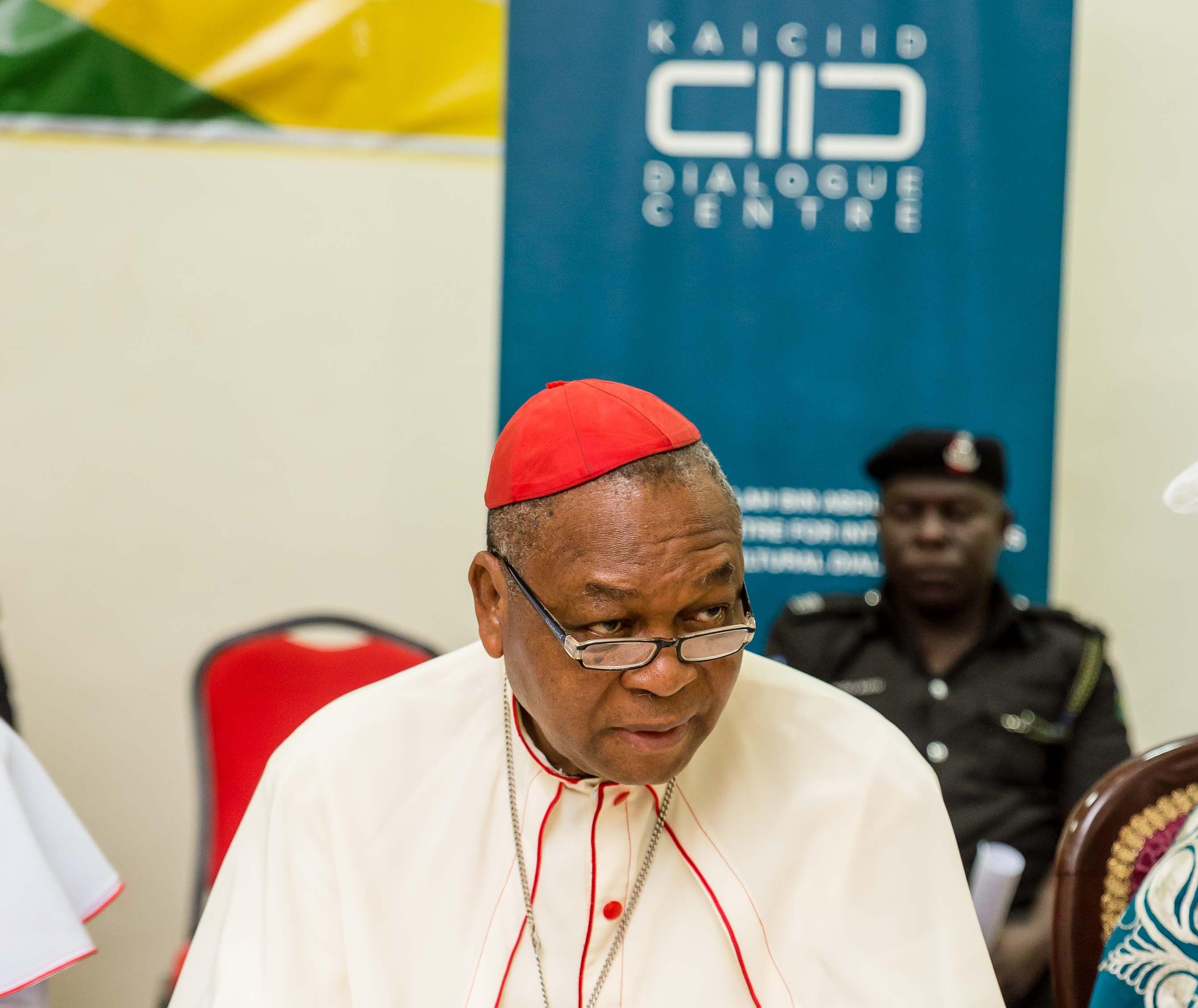
Politics and religion often conflate into a toxic brew. So, it is with the storm over John Onaiyekan’s comments after the recent meeting between President Bola Tinubu and the Catholic Bishops’ Conference of Nigeria. As the waves billow and swell, the encounter opens a window into the tremors in government rather than the cardinal’s intentions.

Instead of treating the bishops’ observations as sincere moral feedback from a respected institution, some of the administration’s vocal defenders responded with personal attacks, accusing the cardinal of partisanship and abuse of clerical privilege.

That reaction was unfortunate and avoidable.

No elected government claiming democratic credentials should treat independent criticism as hostility.

Yet the ferocious responses from the Minister of the FCT, Nyesom Wike; the President’s Special Adviser on Policy Communication, Daniel Bwala; and the SSA on Media, Temitope Ajayi, suggested Onaiyekan had committed a grave offence by saying the bishops told the President Nigeria was “bleeding,” that poverty was worsening, and many were struggling under economic reforms.

The cardinal’s fault was not fabricating facts but speaking publicly about an uncomfortable conversation.

He said the President disagreed, insisting the economy was improving and reforms were laying the foundation for recovery.

The bishops, he said, neither expected agreement nor sought to embarrass the President; they were discharging a moral duty to tell him what many Nigerians could not.

That should have ended the matter. Instead, critics turned a healthy exchange into a public quarrel. Bwala questioned the cardinal’s neutrality, alleging the church supported Peter Obi in 2023.

Ajayi dismissed the bishops as offering only one perspective. Wike argued that having taken sides in a past election disqualified the cardinal from impartiality and faulted the bishops for questioning INEC’s neutrality ahead of 2027 without stronger proof.

These points merit consideration. Religious leaders, like journalists and civil society actors, should aim for fairness as credibility rests on intellectual honesty. Achievements by government should be acknowledged. But fairness works both ways.

The administration’s defenders owe Nigerians an honest engagement with the bishops’ substance rather than attempts to discredit the messengers.

Who the cardinal voted for is irrelevant to whether millions of Nigerians are suffering. Hunger and inflation do not check party membership before striking families.

See also  Tunde Kelani reveals why he is still passionate about filmmaking

One of the weakest responses to public criticism is to attack motives while avoiding the issues raised. That strategy failed to convince many Nigerians. Therefore, it is no surprise that support for Onaiyekan flowed from across civic space.

The Northern Youth Council said he reflected lived realities; the Middle Belt Forum called the attacks unfair; the Catholic Laity Council defended the church’s pastoral duty to speak for the vulnerable.

Former governor and minister Rotimi Amaechi, himself a Catholic, reminded the Presidency that bishops have every right to criticise governments and urged responses based on evidence, not indignation.

Even Orji Kalu, APC senator and former Abia State governor, threatened to resign from the party if the bishops were insulted, noting their similar interventions across Africa.

The public backlash appears to have prompted moderation. Secretary to the Government of the Federation, George Akume, reaffirmed the administration’s respect for the Catholic Church and promised deeper consultations.

That is the mature response expected of a confident government, and it should have been the first instinct.

The episode exposes a deeper problem.

With the 2027 elections on the horizon, there is a growing tendency in official circles to interpret every criticism through a partisan lens.

Independent institutions that refuse to sing from the government’s hymn book risk being branded hostile. Such defensiveness serves neither democracy nor good governance.

Onaiyekan’s sharper point was that too many people around the President paint an overly rosy picture of the country. Whether entirely fair, the observation highlights a real danger that administrations insulated by courtiers and loyalists risk mistaking praise for patriotism.

Presidents need more than briefings, official statistics and flattering presentations. They need uncomfortable truths from independent voices including economists, labour unions, journalists, business leaders, traditional rulers and religious organisations.

Governments that refuse to listen lose touch with the people they govern. That is why criticism is not the enemy of reform; silence is.

The Tinubu administration can rightly argue it inherited an economy in deep distress and that difficult choices were necessary. Removing the petrol subsidy and liberalising the foreign exchange market were politically costly but, many economists agree, economically inevitable.

See also  Brigadier Babafemi Ogundipe, the mostly unseen 'Vice President' to Aguiyi-Ironsi

The government has expanded fiscal space for states, created NELFUND, launched youth initiatives, and helped end the destructive cycle of prolonged ASUU strikes. These are notable achievements and deserve acknowledgement.

But governments are judged by citizens’ lived realities, not only by economic theory or improving macro indicators.

Foreign reserves have strengthened to $52 billion from about $3 billion, fiscal revenues rose to all-time highs, and the naira exchange rate has stabilised compared with the immediate post-reform shock.

Yet these gains have not delivered meaningful relief for the average Nigerian. Inflation remains punishing at over 15 per cent and above 37 per cent in at least 10 states; food and transport costs are soaring; healthcare and medication are costly; electricity tariffs and rent have escalated; small businesses struggle with high energy costs and expensive credit.

For too many families, over 70 per cent of income is spent on feeding alone. Multidimensional poverty affects 63 per cent of Nigerians, per the World Bank.

The bishops sought to communicate that reality. It cannot be dismissed by citing encouraging macro trends.

The reforms are also incomplete. A parallel foreign-exchange market persists, reflecting distortions and weak confidence.

Oil production remains below projections. Domestic refiners complain of inadequate crude supply even as the government extends Project Gazelle with a new $4.5 billion refinancing, raising concerns about future crude commitments while local refining capacity is planned to double.

External debt keeps rising, increasing exchange-rate exposure and debt-service obligations, which already consume half of revenues.

Terrorism, banditry and kidnapping continue to terrorise large swathes of the country, driving farmers from fertile lands and worsening food inflation.

Official and independent reports indicate that more than 628,000 people have been killed and over 2.2 million abducted since 2023, according to a BusinessDay report in June.

These are measurable national realities, not opposition talking points. Governments need independent voices to speak honestly about them.  No pushback can erase the fact that Nigeria is bleeding.

The Catholic Church has a long history of such moral witness. During military rule, bishops such as Olubunmi Okogie, an Emeritus Cardinal, condemned authoritarianism, corruption and human-rights abuses.

See also  No Wife Should Secretly Deny Her Husband the Opportunity to Become a Father

Under democratic governments, the church continued to criticise administrations across the political spectrum over insecurity, governance failures and human suffering. Its loyalty has been to moral principles, not to any party.

Tinubu should not regard himself as uniquely persecuted, nor should his supporters mistake clerical witness for partisan politics.

Religious leaders are, firstly, citizens. They bury terrorism victims, counsel unemployed graduates, comfort widows and feed hungry families. If such leaders cannot speak about poverty, insecurity and governance, democracy becomes a farce.

Political parties are also inconsistent. Many who now defend petrol subsidy removal opposed it when it was proposed under President Goodluck Jonathan. Those who benefited from the freedom to criticise must not deny others the same liberty when roles reverse.

One of the most perilous governance tendencies is believing that criticism weakens government. On the contrary, governments make worse mistakes when they become prisoners of official optimism.

They need independent feedback to test whether policies yield intended outcomes. Economic models and official reports are necessary but insufficient; they must be complemented by honest input from labour, business, academia, the media, civil society and faith leaders. Without it, governments risk governing statistical abstractions rather than human realities.

It is encouraging that the administration now appears to be recalibrating. Akume’s pledge of deeper engagement deserves commendation.

Consultation, not confrontation, marks mature democratic leadership. The Presidency gains nothing by quarrelling with institutions focused on the country’s welfare.

Tinubu has often said he welcomes constructive criticism. He insisted that he sought the job and should not be pitied. This episode is a chance to prove it.

Labelling respected clerics as partisan for voicing uncomfortable truths suggests the administration may lack confidence in the transformative power of its own reforms. That is diminishing.

Nigeria’s problems are too serious for official defensiveness. Reform is a journey requiring constant feedback. The bishops fulfilled their civic and moral duty. The Presidency must perform its constitutional role by listening, not by silencing dissent.

Source: punchng.com

FOLLOW US ON:

FACEBOOK

TWITTER

PINTEREST

TIKTOK

YOUTUBE

LINKEDIN

INSTAGRAM

Continue Reading
Click to comment

Leave a Reply

Your email address will not be published. Required fields are marked *

Lifestyle

Growing Old Does Not Automatically Make You Wise: Even Fools Grow Old

Published

on

Age is inevitable, but wisdom is a choice. Having grey hair, wrinkles, and decades of experience does not automatically make someone intelligent, mature, or worthy of admiration. Sometimes, the oldest people in the room are still the ones who have learned the least from life.**

There is an uncomfortable truth that many people do not want to hear: growing old does not necessarily mean growing wise. Time adds years to our lives, but it does not automatically add understanding, intelligence, humility, or good judgment.

Society has created an unwritten rule that older people must always be respected, listened to, and treated as authorities simply because they have lived longer. While respecting older people is important, we must stop pretending that age alone is proof of wisdom.

Some people have spent 60, 70, or even 80 years on this earth without making meaningful progress in their thinking. They have watched generations come and go, experienced different stages of life, witnessed countless mistakes, and yet continue repeating the same foolish behaviours.

They have grey hair but still harbour jealousy. They have wrinkles but lack compassion. They have decades of experience but refuse to accept correction. They demand respect while showing little respect for others.

**What exactly is the achievement in growing old if you have refused to grow mentally?**

## Age Is Not a Certificate of Wisdom

One of the biggest mistakes people make is assuming that someone who is older must automatically know better.

Unfortunately, that is not always true.

See also  Reverend Canon Josiah Jesse Ransome-Kuti: The Singing Minister Who Gave Nigeria Its First Recorded Gospel Album

There are elderly people who are wise, humble, generous, patient, and knowledgeable. Their life experiences have taught them valuable lessons, and their behaviour reflects those lessons.

But there are also elderly people who remain arrogant, manipulative, dishonest, intolerant, and stubborn. They use their age as a weapon to silence younger people and prevent anyone from questioning their behaviour.

They believe that because they were born earlier, their opinions must be superior.

But wisdom does not work that way.

A younger person who learns from mistakes, listens to advice, treats people fairly, and thinks critically may demonstrate greater wisdom than someone who has lived twice as long but refuses to learn anything.

## Some People Grow Older Without Growing Better

Age should bring reflection. It should teach people patience, understanding, emotional maturity, and the importance of treating others with dignity.

However, some people become older without becoming better human beings.

They remain trapped in outdated beliefs, unnecessary pride, bitterness, and the mentality that they are always right.

They cannot apologise because they believe apologising makes them weak. They cannot accept correction because they consider disagreement disrespectful. They cannot admit their mistakes because their ego has become bigger than their wisdom.

Instead of becoming examples for younger generations, they become warnings about the dangers of allowing pride and ignorance to control one’s life.

**Living for many years is not the same as learning from those years.**

## Respect Should Come With Character, Not Just Age

This does not mean younger people should disrespect older people. Respect, courtesy, and appreciation for life experience remain important values.

See also  Patrice Lumumba: The Flame That Could Not Be Extinguished

However, respect should not be confused with blind obedience.

Being older does not give anyone permission to insult others, intimidate younger generations, promote harmful behaviour, or demand unquestionable authority.

True elders are not remembered merely for how long they lived. They are remembered for the lessons they taught, the lives they influenced, the wisdom they demonstrated, and the positive examples they left behind.

A person who has lived for 80 years but has never learned humility may have more birthdays than someone who is 30, but that does not automatically make them wiser.

## The Brutal Truth: Even Fools Grow Old!

Everybody who lives long enough will eventually grow old. But not everybody will develop wisdom.

Some people accumulate years without accumulating knowledge. Others accumulate experiences without understanding the lessons those experiences were supposed to teach.

The difference between getting older and becoming wiser is the willingness to learn, reflect, accept correction, and change.

Do not be impressed by grey hair alone. Look at someone’s character, behaviour, judgment, and the lessons their life demonstrates.

Because, at the end of the day, **age is a gift of time, but wisdom is the reward of learning.**

Even fools grow old!

## What Do You Think?

Should older people automatically receive respect simply because of their age, or should respect be earned through good character, behaviour, and wisdom?

Can a 30-year-old genuinely be wiser than someone who is 70?

Is society sometimes too quick to excuse bad behaviour simply because the person involved is elderly?

Share your honest opinion. This is a conversation worth having.

See also  ARE AFRICAN PARENTS RAISING CHILDREN WHO CAN SPEAK ENGLISH BUT CANNOT SPEAK THEIR OWN LANGUAGE?

**Newsbreak365 – Bringing you the conversations that matter.**


Continue Reading

Lifestyle

Empty Drums Make the Loudest Noise: Why People With Nothing to Offer Often Make the Most Noise

Published

on

Some people have mastered the art of making noise without having anything meaningful to show for it. They brag about imaginary achievements, make promises they cannot fulfil, criticise everyone around them, and behave as though they are more important than everybody else. But when reality demands evidence, their true worth becomes exposed.**

There is an old saying that never loses its relevance: *Empty drums make the loudest noise.*

Interestingly, this proverb describes a certain category of people whose greatest achievement appears to be talking about themselves.

They want everybody to know how wealthy they are, how influential they have become, how many connections they have, and how much they can accomplish. Yet, when someone genuinely needs their assistance, their confidence suddenly disappears.

They make big promises but deliver little. They advertise their generosity but rarely demonstrate it. They talk about success but have very little substance behind their words.

**The tragedy is that they mistake making noise for making progress.**

## They Talk Big, But Their Actions Tell a Different Story

Some people can spend hours explaining how powerful, successful, intelligent, and connected they are.

They will tell you about the people they know, the opportunities they control, and the things they supposedly own.

But ask them to demonstrate even a fraction of what they claim, and suddenly, excuses begin to appear.

Their mouths are full of promises, but their hands are empty.

They want applause for things they have not accomplished and recognition for achievements that exist only in their conversations.

See also  ARE AFRICAN PARENTS RAISING CHILDREN WHO CAN SPEAK ENGLISH BUT CANNOT SPEAK THEIR OWN LANGUAGE?

## They Criticise Everyone Because They Have Nothing Better to Show

One disturbing characteristic of empty barrels is their obsession with other people’s lives.

They have an opinion about everybody’s mistakes, failures, relationships, financial situation, and personal decisions.

They are quick to expose another person’s weaknesses but completely blind to their own shortcomings.

They spend so much time discussing other people’s progress that they forget to work on their own.

Instead of building something meaningful, they dedicate their energy to pulling others down.

## Real Value Does Not Need Constant Advertisement

There is a difference between someone who genuinely has substance and someone who desperately wants to appear important.

People with genuine achievements do not need to turn every conversation into an opportunity to impress others.

They understand that character, integrity, consistency, generosity, and results speak louder than endless self-praise.

Real success is not measured by how loudly someone announces it. It is measured by what they have actually accomplished and the positive difference they make.

**A person who constantly announces their greatness may be trying too hard to convince others of something they have not even convinced themselves of.**

## Stop Being Impressed by Noise

Not everybody who speaks confidently knows what they are talking about.

Not everybody who promises assistance has the intention or ability to help.

Not everybody who dresses like a millionaire has the character of a successful person.

And not everybody who constantly talks about their achievements has anything substantial to show.

Learn to judge people by their actions, not their advertisements.

See also  Patrice Lumumba: The Flame That Could Not Be Extinguished

Do not confuse arrogance with confidence, noise with intelligence, or empty promises with genuine commitment.

Sometimes, the loudest person in the room has the least to offer.

## Final Thoughts: Less Noise, More Substance!

Life is too short to spend it competing over who can talk the loudest.

Instead of constantly telling people how great you are, build something that speaks for itself.

Instead of making promises, deliver results.

Instead of criticising everybody, work on improving yourself.

And instead of demanding respect, develop the character that deserves it.

**Remember: An empty drum can attract attention with its noise, but attention is not the same as value.**

**THE BIG QUESTION:** Are the loudest people really the most successful, or are some simply using noise to hide their lack of substance?

What is your experience? Have you encountered people who talk big but deliver absolutely nothing? Share your thoughts in the comments.

—

*Newsbreak365 — Bringing You Stories, Opinions and Perspectives That Matter.*


Continue Reading

Lifestyle

When Help Becomes a Weapon: The People Who Remind You of Their Kindness Just to Make You Feel Worthless

Published

on

Not everyone who helps you genuinely wants to see you succeed. Some people offer assistance today so they can use it as a weapon against your dignity tomorrow.**

There is a particular kind of humiliation that comes from receiving help from someone who never allows you to forget it.

They give you money, buy you food, pay your bills or support you during difficult moments. At first, you see their actions as kindness. You appreciate their generosity and remain grateful for everything they have done.

But as time passes, something changes.

Every conversation becomes an opportunity to remind you of their sacrifices. Every disagreement becomes a reason to bring up the money they gave you. Every gathering becomes an opportunity to announce to other people how much they have done for you.

Suddenly, your personal struggles become public entertainment.

**Is that generosity, or is it a calculated attempt to control another human being?**

## When generosity becomes public humiliation

Some people cannot help you privately. They want an audience.

They want your family, friends, neighbours and even strangers to know that they once rescued you from a difficult situation.

They repeatedly announce:

– “I was the one feeding you when nobody cared.”
– “I gave you money when you had nothing.”
– “Without me, you wouldn’t have survived.”
– “Look at everything I have done for you!”

Their intention appears to be more than reminding you of their kindness. They want to establish a position of superiority over you.

They want everyone to see themselves as the generous benefactor and you as the helpless individual who cannot survive independently.

See also  Your Success Is Their Nightmare, While Your Downfall Makes Them Happy: The Painful Reality of Hidden Jealousy

Unfortunately, some people measure their importance by how dependent they can make others feel.

## They don’t want you to forget your struggles

The most disturbing part is that some people seem uncomfortable when the person they once helped begins to stand on their own feet.

Instead of celebrating your progress, they remind you of your past.

You could get a better job, start a business, become financially independent or improve your circumstances, but they still want to introduce you as the person they once helped.

Why?

Because your independence threatens the position of superiority they have built around your dependence.

They may have helped you when you were struggling, but that does not give them permanent ownership of your life.

**Helping someone should never become a lifetime licence to humiliate them.**

## Gratitude should not mean surrendering your dignity

Let’s make something clear: Being grateful is important.

If someone genuinely supports you during difficult times, appreciating that person is the right thing to do.

However, gratitude and humiliation are two different things.

You can appreciate someone’s generosity without accepting public embarrassment. You can acknowledge their sacrifices without allowing them to control your decisions. You can remember their kindness without being reminded of it every week.

A good deed should not become a chain around another person’s neck.

True generosity does not need constant public announcements to prove its value.

## The painful truth: Some people want appreciation, others want control

There is a difference between someone who helps because they genuinely care and someone who helps because they want to feel superior.

See also  No Wife Should Secretly Deny Her Husband the Opportunity to Become a Father

The first person celebrates your independence.

The second person constantly reminds you that you once needed them.

The first person wants to see you rise.

The second person may prefer that you remain beneath them so they can continue feeling important.

And perhaps the greatest lesson is this: Never allow someone’s financial assistance to convince you that your dignity has no value.

You may have needed help yesterday, but that does not mean you are destined to remain dependent tomorrow.

**Remember: You can owe someone gratitude without owing them your freedom, your silence or your self-respect.**

## The Big Question: Is It Really Kindness?

If someone gives you money, feeds you, pays your bills and supports you during difficult times, but constantly uses those actions to embarrass you before other people, should you still consider that person genuinely generous?

Or does helping someone become meaningless when it is repeatedly used to destroy their confidence and dignity?

Perhaps it is time we had an honest conversation about the difference between genuine kindness and generosity used as a tool for control.

**What do you think?**

1. Should people who help others be allowed to remind them publicly of everything they have done?
2. Is it better to struggle alone than depend on someone who constantly humiliates you?
3. Do some people genuinely help others, or do they sometimes help just to feel superior?

Share your opinion. This conversation deserves an honest debate.

—

**Newsbreak365 Editorial | Human Behaviour, Relationships and Society**


Continue Reading

Trending