Connect with us

Lifestyle

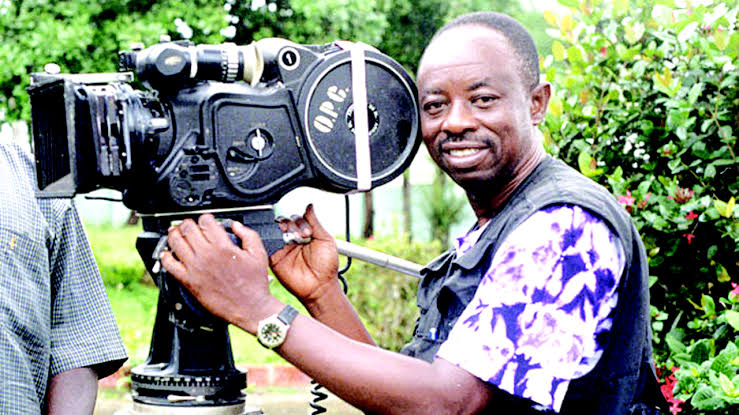
Tunde Kelani reveals why he is still passionate about filmmaking

Published

on

Veteran filmmaker and cinematographer, Tunde Kelani, discusses with VERA ALKALI about his career and current trends in the industry

You have had an extraordinary journey in the film industry. Can you take us through the highest and lowest moments of your career?

You cannot just say the highest moments because that is a jump. I joined the industry at an early age. I had uncles who were already in the industry, but I also grew up in a community in Abeokuta (Ogun State) where I was exposed to different forms of culture and oral traditions.

As soon as I could read and write in Yoruba, I took off from there. Abeokuta is a meeting point of culture, and my experience started from there. I could read to my grandfather, and we learnt English alongside Yoruba. I was able to compare what I learnt from social studies with what I learnt through Yoruba culture.

That was how I started. Later, I went into photography and eventually moved into motion pictures. I was employed by Western United Television, where I was trained primarily as a film cameraman.

I later attended the London Film School for the artistic and technical aspects of filmmaking. When I returned, I worked in television for one or two years before becoming an independent filmmaker.

From that point, I began to see films by people such as Professor Wole Soyinka, Bandesola Oru, Rasheed Onikoyi and Hubert Ogunde. I had known some of these people and had seen their works on the big screen.

Before then, I was already a film enthusiast. I practically saw all the films that came into Lagos and were shown in some of the theatres at the time.

On the high side, I think I chose the medium of cinema particularly to promote, preserve and document the rich Yoruba culture.

I have benefited from global cinema, including Hollywood, Japanese, Indian, Italian and European cinema, but people often ask me, “What is your style?” I tell them my style is unique. Having benefited from global cinema, I am still impressed by the Yoruba acting tradition.

I have seen people such as Kola Ogunmola and Oyin Adejobi. Those were my coaches. I also had many mentors, and that became my take-off point.

You mentioned being influenced by Hollywood, Japanese, Italian and other cinemas. What cultural differences or shocks did you experience in filmmaking and cinematography?

I think global cinema is about identity. You just know it. When you see an Indian film, you know it is Indian. When you see a Japanese film, you know it is Japanese. When you see a South Korean film, you know it is South Korean.

When you see me as a Yoruba man with my abetiaja cap on, you know that is our signature.

You have worked as a cinematographer, director and producer. Which aspect of filmmaking would you say is your favourite?

I trained for two years at the London Film School. The course specialised in the Diploma of Art and Technical Filmmaking.

Primarily, I am a storyteller. I share my experiences, our culture and our history, but I use cinema as my vehicle for dissemination.

See also  Ojukwu’s Historic Return: 18 June 1982

You are a Yoruba man and have made films that strongly reflect Yoruba culture. What does it mean to you to convey your messages in Yoruba and preserve the culture through film?

That is my whole being. It is my essence. It is my culture and language.

I am an advocate for indigenous cultural expression, and I believe Nigeria should be united in diversity.

Our films are not displaying enough of that diversity. We have more than 300 languages, but we hardly see movies depicting these different cultures and languages in Nigeria.

As someone who is committed to indigenous storytelling, how do you decide which stories are worth telling?

My works are classified. Most of them are adaptations from literature. ‘Oleku’ and some of my works were written by authors such as Femi Osofisan and others.

Most of the films I make are adapted from texts. So, I work more from text to screen because of my background. I have read works by many of these authors.

Some are classified as ‘conscience drama’ because they are films that explore socio-political themes. ‘Saworoide’, ‘Arugba’ and ‘Campus Queen’ are examples of socio-political films.

What attracted you to bringing literature to the screen?

I was born in Lagos, but my father decided that I should be brought up in Abeokuta. I was taken to the family compound. I missed my mother, but I had a lot of people around me catering for me.

However, I felt lonely. As soon as I could read and write, I found reading to be a comfort, and a form of escape At that point, literature got stuck with me, and I learnt how to use it.

It is difficult for filmmakers to pick a favourite among their works, but if you had to choose one, which would it be?

All my works give me satisfaction and recognition. They also came with equal amounts of ups and downs because making a successful film is very challenging.

But my latest film, ‘Cordelia’, is my favourite.

Can you take us through the making of Cordelia?

‘Cordelia’ is adapted from Femi Osofisan’s novel of the same title, and I had kept the project for years.

In fact, I was going to make it before ‘Maami’ (which was released in 2012). When I got to Femi Osofisan and we discussed it, he wondered why I was interested in it. He went in and brought ‘Maami, but I insisted that I wanted ‘Cordelia’ at the time.

About three or four years ago, I received visitors from the University of Delaware in the United States. The music department wanted a sort of cultural fusion. They said that if we made the soundtrack for the film, they would orchestrate it in the United States.

I was interested. They were asking for an old film from me, but I said, ‘No, we would do a new film.’

I told them about ‘Cordelia’ and explained that it was the new film we wanted to make because the story could inspire a solid musical score. It is so dramatic that it can inspire a strong musical composition.

See also  Nigercem: Nigeria’s First Indigenous Cement Company (PHOTOS)

When you compare filmmaking today with what obtained in your early days, which era do you feel more connected to?

It does not matter because I have worked with all the new technologies of making motion pictures.

Recently, I completed an experiment in a small studio which I call “Studio Lab”, where I combined all the known technologies of making motion pictures, including physical sets, green screen, traditional props and everything else.

I have also added digital cinema cameras and artificial intelligence. So, it combines all of them.

What is your view on artificial intelligence and its growing role in filmmaking?

Artificial intelligence is everything, but just like when computers came and they added sound cards and graphics cards, I knew it was going to come into motion picture production.

I started early. It is the same thing with any technology that comes along. I embrace it.

We should embrace technology, but it should not replace our culture or our language. We should be in control and not let it tell our stories for us.

How do you blend artificial intelligence with Yoruba culture and other indigenous cultures?

Artificial intelligence technology is already a tool. Most of the time, if we are making a movie, our script is written in English. Later, we indicate the dialogue in Yoruba.

Filmmaking is a collaborative medium. You can have 150 people working on a film, and most of them may not be Yoruba.

You document, organise the group and use everything that technology provides. The technology is the tool, but the product becomes whatever you want it to be.

There has been an emergence of more Nigerian movies in cinemas. Do you think contemporary directors and producers are doing enough to preserve Nigerian cultures?

We have gatekeepers; I mean those people who fund movies. They are not necessarily interested in cultural preservation. They want to invest in a business, recoup their money and make a profit.

So, it is business. You can make a movie that they do not think will sell well, and that becomes a challenge.

The world is rapidly changing, and people’s tastes are changing as well.

I consider myself a “techie”. Even with all my experience with technology, I am still surprised by how many things you can do with a smartphone. Today, I lectured with my smartphone.

That is what technology is all about. We have witnessed similar things with the advent of video games and mobile phones, and now we are talking about artificial intelligence. These are all tools.

You recently received an award from the Nigerian Academy of Letters. Did you expect this kind of recognition when you were starting out?

I never really set out with recognition in mind. I was simply passionate about what I was doing. From photography to cinematography, advertising, music and everything else I got involved in, I was driven by the desire to create and communicate.

See also  Don’t derail Awujale selection, council warns ruling houses

I had stories I wanted to share with people, and that was what occupied my mind. I wanted to use whatever medium was available to me to tell those stories and connect with people. I was more concerned about the work itself and how best I could express what I had in mind than about whether anybody would recognise or reward me for it.

So, awards were never the motivation. They are certainly appreciated, and I am grateful whenever my work is recognised, but when I was starting out, I was not thinking about receiving awards many years later. I was simply following my passion, learning along the way and trying to tell stories that I believed were worth telling.

If you are passionate about what you do and remain committed to it, recognition may come, but it should not be the reason you do the work.

Many young filmmakers and creatives look up to you. What is your advice to them?

Number one, it is about passion.

You have to be passionate about what you are doing. If you are not passionate about it, it becomes very difficult to sustain yourself, especially in a creative field where you will face many challenges, disappointments and moments when things may not go the way you want.

In fact, my case is different. I am not supposed to be known because I am the person behind the camera. I am not a star. My job has always been to help tell the story and make sure that the story gets across to the audience in the best possible way. I have always been comfortable being behind the camera and allowing the work to speak for me.

For young filmmakers, I would say they should not be in a hurry to become famous. They should concentrate on learning their craft, understanding the medium and developing their own voice. You must be willing to learn continuously because filmmaking is changing all the time. The technology changes, the platforms change and the way people consume stories changes, but the fundamental need to tell good stories remains.

They should also understand that there are many different roles in filmmaking. You do not necessarily have to be the person in front of the camera. You can be a cinematographer, editor, writer, sound designer, production designer, director or work in any of the other areas that make filmmaking possible. What matters is that you find the area where your passion lies and develop yourself in it.

For me, the most important thing is to remain committed to the work. Fame and recognition may come, but they should be secondary. If you have passion, discipline and a story to tell, keep working at it. Eventually, the quality of your work will speak for you.

Source: punchng.com

FOLLOW US ON:

FACEBOOK

TWITTER

PINTEREST

TIKTOK

YOUTUBE

LINKEDIN

INSTAGRAM

Continue Reading
Click to comment

Leave a Reply

Your email address will not be published. Required fields are marked *

Lifestyle

LIFE IS SWEET, BUT NOTHING LASTS FOREVER: WHAT ARE WE REALLY FIGHTING FOR?

Published

on

One day, someone will pronounce your name for the last time. The house you struggled to build will belong to someone else. The money you sacrificed your peace to acquire will eventually be spent by other people. And the world you thought could never exist without you will continue moving after you are gone.**

So, what exactly are we fighting for?

Life is beautiful, but it is temporary. This is one of the greatest lessons humanity must learn. Yet, many people spend their entire lives chasing wealth, power, fame, and recognition as if they will remain on earth forever.

In Yoruba wisdom, the expression *“Àṣán ohun ni adùn ayé, ohun gbogbo máa dé òpin”* reminds us that the pleasures of life are temporary and that everything eventually comes to an end.

## The Endless Pursuit of Wealth and Power

There is nothing wrong with working hard, building a successful business, owning a house, or providing a better future for your children. In fact, financial stability can bring security, dignity, and opportunities.

The problem begins when the pursuit of wealth becomes more important than the people around us.

Some people destroy family relationships over inheritance. Friends become enemies because of money. Neighbours fight over small pieces of land. People who once supported one another begin to compete endlessly over who is richer, more successful, or more powerful.

But have we stopped to ask ourselves whether these battles are truly worth the price we pay?

What is the value of a mansion if the person living inside it has no peace? What is the value of millions in the bank if the pursuit of that money destroys every meaningful relationship? And what is the purpose of power if it is used to humiliate people who have less?

See also  Why I Sold Limousine Car Someone Gifted Me – Pastor Adeboye

## One Day, Everything Will Change

Life has a way of reminding us that no position is permanent.

The person who is celebrated today may be forgotten tomorrow. The individual who enjoys enormous wealth may face unexpected difficulties. The powerful leader will eventually leave office, and another person will take their place.

Even the strongest among us cannot control every chapter of life.

That reality should not make us hopeless. Instead, it should encourage us to live with humility, gratitude, and compassion.

We should remember that the security, opportunities, and privileges we enjoy today are not guaranteed forever.

## What Will You Leave Behind?

When people remember your life, what will they say about you?

Will they remember you as someone who helped others when they were struggling? Will your children remember the love and wisdom you gave them? Will your community remember your contribution?

Or will your entire legacy be measured by the money you accumulated and the possessions you left behind?

Material wealth can improve lives, but character determines how we use it. A person’s influence is not measured only by what they own, but also by how they treat others.

Sometimes, a small act of kindness leaves a deeper mark than an expensive gift. Sometimes, a sincere apology saves a relationship that money could never repair.

## Live Well, but Remember That Life Is Temporary

The lesson is not to abandon ambition or stop pursuing success. It is to pursue those things without losing your humanity.

Build your house, but build relationships too. Make money, but do not make money your god. Protect your interests, but do not allow greed to consume you. Teach your children how to succeed, but also teach them compassion, honesty, and respect.

See also  Godwin O. Ajala: The Nigerian Lawyer and Hero of 9/11

Spend time with the people you love. Appreciate your parents while they are alive. Give your children memories worth keeping. Help someone who cannot repay you. And learn to enjoy the simple blessings that are often overlooked in the race for material success.

**Life is sweet, but nothing lasts forever. Everything has an end.**

Perhaps the real measure of a successful life is not simply how much we acquire before we leave this world, but how wisely we live and how positively we affect the lives of others.

### NEWSBREAK365 ASKS:

If we all know that we will eventually leave everything behind, **why do people allow money, power, pride, jealousy, and property to destroy their peace and relationships?**

Is the problem human nature, the pressure of society, or our desire to prove that we are better than others?

Share your opinion in the comments. Your perspective could make someone think differently about life.

*NewsBreak365 — News, People, Culture, Insights.*

#NewsBreak365 #LifeLessons #YorubaWisdom #LifeIsTemporary #Humanity #WisdomOfLife

FOLLOW US ON:

FACEBOOK

TWITTER

PINTEREST

TIKTOK

YOUTUBE

LINKEDIN

INSTAGRAM

Continue Reading

Lifestyle

Family confirms death of gospel singer Toluwanisings

Published

on

The family of Nigerian gospel singer, Olayemi Bolaji, popularly known as Toluwanisings, has announced his death.

The announcement, posted on the singer’s TikTok account on Wednesday, noted that he died in the early hours of October 14, 2026.

The statement read, “With deep sorrow, the family announces the passing of Minister Olayemi Bayonile Bolaji, Toluwani Gospel Music Ministry (TOGOMM), who passed away in the early hours of 14 October 2026.

“A dearly loved husband, family member, and gospel minister.

“Please keep his wife, family, and loved ones in your prayers during this difficult time.”

The statement also noted that funeral arrangements would be announced by the family in due course.

The singer’s death has sparked concerns, with fans and colleagues expressing grief on social media.

The Convener of the Coalition of Public Interest Lawyers and Advocates, Pelumi Olajengbesi, expressed distress over the development in a post on Instagram, pleading for God’s mercy.

Sharing a picture of the singer, Olajengbesi wrote, “My God! What a life! No, Lord! We plead for Your mercy upon Toluwanisings.

“I am deeply troubled by the deaths of young men and women. This is not God’s plan for us.

“We say no to untimely death.”

An X user, Ennybets, also shared an account of the incident on Wednesday.

He stated that he was at a hospital when the singer was brought in.

He wrote, “Brought my wife to the hospital for antenatal, and some car rushed in here bringing a popular gospel man.

“Come and see how BBO and the rest are crying so bad, I pray he survives this though.”

See also  Alhaja Batile Alake: Pioneer of Waka Music in Nigeria

In a follow-up post, Ennybets expressed grief over the singer’s passing, saying he witnessed members of his band crying at the hospital.

He wrote, “I cried about this man’s passing. The fact that I was seeing over 10 grown men who are his band members, crying heavily in front of me is giving me trauma.”

Reacting to the news, gospel artiste Mega99 described the late singer as a rare talent.

He wrote, “A rare gem with a unique voice is gone. This life.”

The cause of his death remained unknown as of the time this report was filed.

Source: punchng.com

FOLLOW US ON:
FACEBOOK

WHATSAPP CHANNEL

TWITTER

PINTEREST

TIKTOK

YOUTUBE

LINKEDIN

INSTAGRAM

Continue Reading

Lifestyle

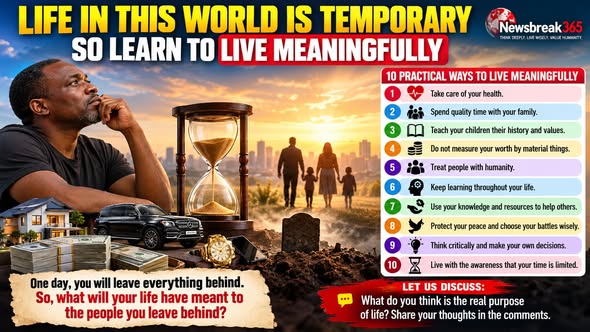
LIFE IS TEMPORARY — SO LEARN TO LIVE MEANINGFULLY BEFORE YOUR TIME RUNS OUT.

Published

on

One day, you will leave everything behind. Your money, house, cars, fame, position, and possessions will remain in this world. The important question is: what will your life have meant to the people you leave behind?**

We spend years chasing wealth, competing with others, fighting over religion, politics, ethnicity, and social status. We sometimes sacrifice our health, peace of mind, family relationships, and happiness just to acquire things we cannot take with us when we die.

Yet, life continues to remind us that nobody stays here forever.

The rich will die. The poor will die. The powerful will die. The unknown will die. No amount of money can make human life permanent.

Does this mean life is meaningless? Not necessarily. **Perhaps the fact that life is temporary is precisely why we should be more careful about how we spend it.**

If we have limited time in this world, how can we live meaningfully?

### 10 PRACTICAL WAYS TO LIVE A MEANINGFUL LIFE

**1. Put your health before unnecessary competition.**

Do not destroy your body trying to impress people. Eat wisely, exercise regularly, get enough sleep, manage stress, and seek medical attention when necessary. Wealth means little if you neglect the body that allows you to enjoy life.

**2. Spend quality time with your family.**

Your children need more than money, clothes, and expensive gifts. They need your attention, guidance, affection, and wisdom. Call your parents if they are alive. Check on your siblings. Make time for the people who genuinely care about you.

See also  PHOTOS: List of Nigeria’s Naval Chiefs Since Independence to the Present Day

**3. Teach your children their history and values.**

Tell them where they come from, the stories of their ancestors, their language, their culture, and the lessons of previous generations. Teach them critical thinking, honesty, responsibility, and respect for others. Do not leave their entire education about life to social media.

**4. Stop measuring your worth by material possessions.**

You do not have to own the biggest house, drive the most expensive car, or wear designer clothes to have value. Build financial stability, but do not make material wealth the only measure of your success.

**5. Treat people with humanity.**

Be kind to people who cannot reward you. Respect workers, the elderly, children, and those who have less than you. A person’s dignity should not depend on their bank balance, religion, tribe, nationality, or social position.

**6. Keep learning until the end of your life.**

Read books, learn new skills, ask questions, and challenge your assumptions. Do not allow age, tradition, or fear to prevent you from discovering better ways to live. An educated mind is better equipped to make informed decisions.

**7. Use your knowledge and resources to help others.**

Share useful information, mentor a young person, support someone who is struggling, volunteer, or help a neighbour in need. You do not have to be rich to make a positive difference. Sometimes, a little assistance can change someone’s entire day.

**8. Protect your peace and choose your battles wisely.**

Not every insult deserves a response. Not every disagreement requires a fight. Learn to walk away from destructive relationships, unnecessary arguments, and endless competition. Your peace of mind is worth protecting.

See also  Ojukwu’s Historic Return: 18 June 1982

**9. Think critically and make your own decisions.**

Do not blindly accept everything you hear from politicians, religious leaders, traditional authorities, celebrities, or social media influencers. Ask questions, examine evidence, and be willing to change your mind when you discover better information.

**10. Live with the awareness that your time is limited.**

Do not postpone every important thing until tomorrow. Apologise when you are wrong. Express love while you can. Pursue worthwhile goals. Repair relationships where possible. Write down the lessons you have learned and pass them on to the next generation.

Remember, living meaningfully does not mean abandoning ambition, money, religion, or personal success. It means putting these things into perspective and refusing to let them consume your entire existence.

You can build wealth without becoming arrogant. You can practise religion without hating people who believe differently. You can be successful without exploiting others. You can enjoy life without forgetting your responsibilities.

**THE REAL QUESTION IS NOT JUST HOW LONG YOU LIVE, BUT HOW YOU CHOOSE TO LIVE WHILE YOU ARE ALIVE.**

### A CHALLENGE FOR EVERYONE READING THIS

Starting today, choose three practical actions:

– Do one thing to improve your health.
– Do one thing to strengthen your family or help another person.
– Do one thing to increase your knowledge or become a better human being.

Repeat these actions consistently, and let your life reflect the values you claim to believe in.

💭 **LET US DEBATE: If life is temporary and everything we own must eventually be left behind, what should be the most important purpose of human existence — wealth, family, happiness, knowledge, service to humanity, or something else?**

See also  Why I Sold Limousine Car Someone Gifted Me – Pastor Adeboye

Write your honest opinion in the comments. You may help someone see life from a different perspective.

Share this message with someone who needs a reminder about what truly matters.

**NEWSBREAK365 — THINK DEEPLY. LIVE WISELY. VALUE HUMANITY.**

#MeaningOfLife #LifeLessons #PersonalGrowth #FamilyValues #Humanity #HealthyLiving #Newsbreak365

FOLLOW US ON:

FACEBOOK

TWITTER

PINTEREST

TIKTOK

YOUTUBE

LINKEDIN

INSTAGRAM

Continue Reading

Trending