Connect with us

Business

FG, states, councils share record N3tn in July

Published

on

The Federal Government, 36 states and 774 local government councils shared a record N3.007tn from the Federation Account in July 2026, the highest monthly FAAC allocation ever recorded, as stronger statutory revenue pushed the amount available for distribution above the N3tn mark for the first time.

The statutory collections rose by N658.09bn, driven by improved receipts from petroleum and non-oil taxes. The disbursement was approved at the August 2026 meeting of the Federation Account Allocation Committee held in Owerri, Imo State.

The PUNCH reports that the N3.007tn distributed in July is the highest monthly FAAC allocation recorded in 2026 and the largest allocation in the reviewed FAAC records from 2019 to July 2026.

A statement issued on Tuesday by the Director of Press and Public Relations in the Office of the Accountant-General of the Federation, Bawa Mokwa, said the gross statutory revenue rose to N4.359tn in July from N3.700tn recorded in June.

The increase represented N658.087bn, or 17.8 per cent, signalling stronger collections across several oil and non-oil revenue sources. However, gross Value Added Tax revenue declined marginally to N793.968bn in July from N799.746bn in the preceding month, representing a decrease of N5.778bn, or 0.7 per cent.

The statement read, “In its regular monthly business, FAAC approved the disbursement of a total of N3.007tn to the Federal Government, the 36 state governments and the 774 Local Government Councils as revenue for July 2026.

“The month’s figures point to a strengthening underlying revenue base. Gross statutory revenue rose to N4.359tn in July 2026, up N658.087bn, a 17.8 per cent increase, from N3.700tn in June 2026, reflecting improved collection performance across oil and non-oil statutory sources. Gross VAT revenue held broadly steady at N793.968bn, a marginal decline of N5.778bn (0.7 per cent) from N799.746bn in June, suggesting consumption-tax receipts remain resilient month-on-month.”

See also  Marketers fear scarcity as cooking gas hits N1,500/kg

The communiqué showed that Petroleum Profit Tax, Hydrocarbon Tax, Companies Income Tax, Capital Gains Tax, Stamp Duty Tax, petroleum royalties, mineral royalties, excise duty and gas flaring penalties recorded increases during the month.

The gains, however, were partly offset by declines in VAT, import duty, CET levies, rental of gas flaring fees and miscellaneous oil revenue. “The committee will continue to monitor as it works with revenue-generating agencies to close collection gaps and improve remittance discipline,” Bawa stated.

The development comes amid a sustained rise in revenues accruing to the Federation Account following major fiscal reforms, including the removal of petrol subsidy, foreign exchange reforms and efforts to widen the tax base.

Beyond the monthly allocation, the Owerri meeting also shifted attention to a broader question confronting the country’s three tiers of government: whether rising federation allocations would translate into stronger state economies, improved infrastructure and better social services.

The FAAC meeting, which was held on the sidelines of the National Council of Federation and Economic Development, brought together finance commissioners and accountants-general to discuss the fiscal health of the federation and ways of converting recent revenue growth into long-term economic strength.

Bawa said government officials were urged to focus on six key areas described as vital to fiscal fitness, including improving the quality of internally generated revenue, strengthening and commercialising public assets, expanding economic activity, attracting private capital, investing in human capital and improving transparency in public finance.

States were also encouraged to use the period of stronger revenue to build comprehensive asset registers, verify payrolls and ensure the timely publication of audited accounts.

See also  CBN delists non-compliant BDCs

“The FAAC convened its August 2026 meeting in Owerri, the Imo State capital, on the margins of the ongoing National Council of Federation and Economic Development, pairing the Committee’s routine monthly business with a broader push to strengthen fiscal fundamentals across Nigeria’s federating units.

“The FAAC session discussed the state of the economy, fiscal governance, and federal and subnational fiscal fitness. The session set out the scale of the recent revenue windfall and called for deliberate reform to convert it into durable fiscal strength rather than a temporary gain. The meeting noted that gross FAAC have risen significantly over the past three years, driven by subsidy removal, exchange-rate unification and tax reform,” the statement added.

The meeting further highlighted changes introduced under the Nigeria Tax Act 2025, which took effect from January 1, 2026, and altered the distribution of VAT revenue among the tiers of government.

Under the new framework, the states’ share of VAT revenue increased from 50 per cent to 55 per cent, while the Federal Government’s share declined from 15 per cent to 10 per cent.

The new arrangement also provides that 30 per cent of the states’ VAT pool should be distributed according to the place of consumption rather than the location of a company’s registered headquarters.

The change is expected to create a stronger link between economic activity within a state and the revenue it receives from the Federation Account, potentially increasing competition among subnational governments to attract businesses and expand their economies.

The committee also reaffirmed its commitment to the full and timely remittance of collectible revenues by Ministries, Departments and Agencies into the Federation Account.

See also  African airlines reject API, PNR charges

It stressed the need to diversify government revenues beyond crude oil and said solid minerals and other non-oil royalty streams would remain areas of focus as the federation seeks to build a more resilient revenue base.

The committee noted that sustaining the strong statutory revenue recorded in July would depend on improved collection and remittance discipline by revenue-generating agencies.

It added that the challenge for governments was no longer merely to share rising revenues but to ensure that the additional funds were converted into productive investments capable of strengthening public finances and improving living standards.

The meeting therefore urged the Federal Government and the states to use the current period of revenue growth to institutionalise reforms that would make federation allocations more predictable while building stronger foundations for long-term economic development.

“The committee noted that sustaining the statutory revenue gains recorded in July 2026 will depend on continued discipline in collection and remittance across Ministries, Departments and Agencies, and reiterated its support for reforms aimed at improving the predictability and growth of allocations to all three tiers of government,” the statement concluded.

The PUNCH reports that FAAC distributed N1.96tn in January, N1.89tn in February, N2.04tn in March, N2.25tn in April, N2.30tn in May and N2.55tn in June.

The total amount distributed between January and June 2026 stood at N12.99tn. With the latest July allocation of N3.007tn, the Federal Government, 36 state governments and 774 local government councils have collectively received N15.997tn from FAAC so far in 2026.

Source: punchng.com

FOLLOW US ON:

FACEBOOK

TWITTER

PINTEREST

TIKTOK

YOUTUBE

LINKEDIN

INSTAGRAM

Continue Reading
Click to comment

Leave a Reply

Your email address will not be published. Required fields are marked *

Business

DisCos earn N603bn as power offtake drops

Published

on

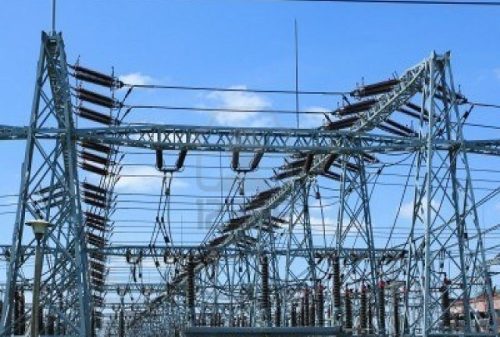
Electricity distribution companies collected N603.64bn from customers in the second quarter of 2026, despite a decline in the volume of electricity they received from the power market.

The figure was contained in the Nigerian Electricity Regulatory Commission’s second-quarter 2026 report, which showed that the average energy offtake by the DisCos at their trading points fell to 3,197.03 megawatt-hours per hour in the quarter.

The Q2 figure represented a 112.45MWh/h, or 3.40 per cent, decline from the 3,309.48MWh/h average recorded in the first quarter. Despite the decline in offtake, the DisCos recorded an overall offtake performance of 94.07 per cent during the quarter, against available partially contracted capacity of 3,398.41MWh/h.

According to the report, the DisCos received a total of 6,982.32 gigawatt-hours of electricity during the quarter but billed customers for only 5,812.31GWh. It stated, “This translates to an overall energy accounting efficiency of 83.24 per cent and represents a 0.24pp decrease compared to 2026/Q1 (83.48 per cent).”

The report further revealed that the naira value of electricity off-taken by the DisCos stood at N946.57bn, while the total value of energy billed to customers was N744.67bn.

This translated to a billing efficiency of 78.67 per cent, representing a decline of 0.57 percentage points from the 79.24 per cent recorded in the first quarter. At the collection stage, the DisCos recovered N603.64bn from the N744.67bn billed to customers, translating to a collection efficiency of 81.06 per cent.

The report said this represented an improvement of 2.11 percentage points from the 78.95 per cent recorded in Q1. However, the difference between the amount billed and the amount collected stood at N141.03bn during the quarter.

See also  CAC processes 10,000 daily registrations after AI rollout

The report also disclosed that the weighted average Aggregate Technical, Commercial and Collection losses across the 11 DisCos stood at 36.23 per cent in Q2.

It stated, “The ATC&C loss of 36.23 per cent is 19.31pp higher than the 2026 MYTO target (16.92 per cent) and translates to a cumulative revenue loss of N129.07 billion across all DisCos.”

The 36.23 per cent loss, however, represented a 1.21 percentage-point improvement from the 37.44 per cent recorded in Q1.

The report noted that all the DisCos failed to meet their ATC&C targets during the quarter, with “Kaduna DisCo recording the worst underperformance relative to the target (Actual – 67.70 per cent vs target – 18.18 per cent),” it stated.

On market obligations, the report said the cumulative upstream invoice payable by the DisCos stood at N410.38bn in Q2.

The amount comprised N326.46bn for generation costs from the Nigerian Bulk Electricity Trading Company and N83.92bn for transmission and administrative services provided by the market operator.

The DisCos collectively remitted N385.44bn, comprising N306.62bn to NBET and N78.82bn to the market operator, leaving an outstanding balance of N24.94bn. This represented a market remittance performance of 93.92 per cent, slightly lower than the 94.08 per cent recorded in Q1.

The report added that the Federal Government had taken responsibility for about 50 per cent, or N321.26bn, of the total generation costs through subsidies arising from the freezing of end-use customer tariffs at the rates applicable in July 2024.

Meanwhile, three international bilateral customers purchasing electricity from grid-connected generating companies paid $8.67m against an $18.84m invoice issued by the market operator during the quarter.

See also  CBN delists non-compliant BDCs

This represented a remittance rate of 46.02 per cent. Domestic bilateral customers, on the other hand, paid N6.91bn against an invoice of N7.55bn, representing a remittance rate of 91.54 per cent.

Source: punchng.com

FOLLOW US ON:

FACEBOOK

TWITTER

PINTEREST

TIKTOK

YOUTUBE

LINKEDIN

INSTAGRAM

Continue Reading

Business

Personal loans rise to N2tn as Nigerians borrow more

Published

on

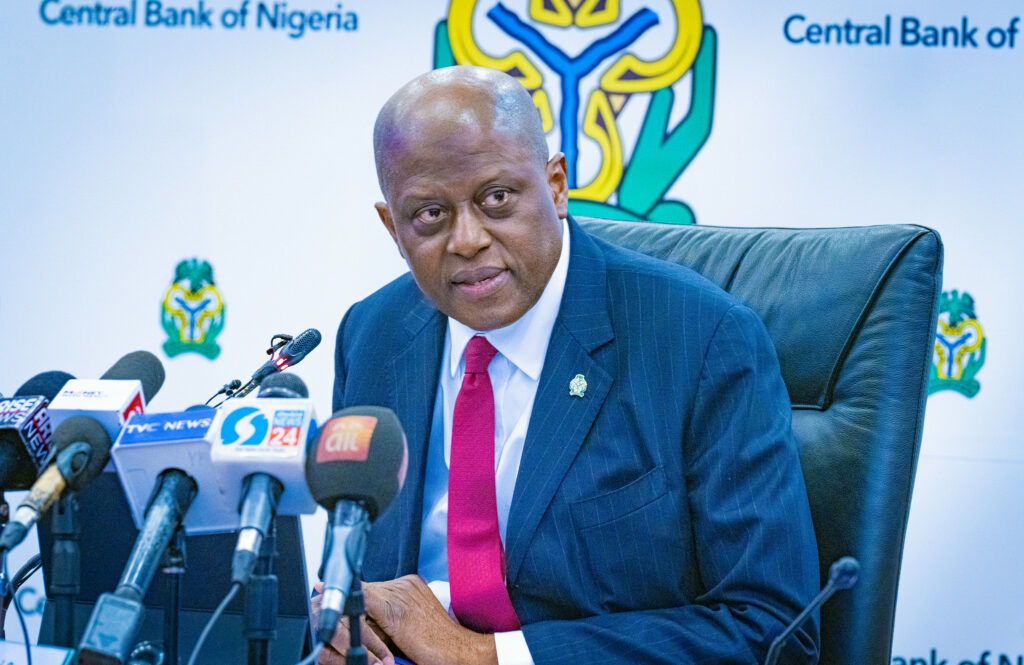
Personal loans obtained by Nigerians rose to an estimated N2.06tn in May 2026, as consumer credit continued to expand amid persistent cost pressures and weak consumer spending, according to the latest Economic Report of the Central Bank of Nigeria.

The figure, calculated from data contained in the CBN’s May 2026 Economic Report, represents about 64.78 per cent of the N3.18tn total consumer credit outstanding during the month. The report covers developments in the real, fiscal, financial and external sectors of the economy.

The apex bank said consumer credit increased by 1.60 per cent from N3.13tn in April to N3.18tn in May, indicating that Nigerians borrowed an additional N50bn within one month.

It said, “Consumer credit outstanding increased by 1.60 per cent to N3.18tn from N3.13tn in the preceding month, driven by growth in personal and retail loans, which rose by 1.98 and 0.90 per cent, respectively.”

The CBN added, “Personal loans remained the dominant component of consumer credit, accounting for 64.78 per cent, while retail loans constituted 35.22 per cent.”

Based on the proportions reported by the apex bank, personal loans stood at approximately N2.06tn at the end of May, while retail loans amounted to about N1.12tn.

The 1.98 per cent month-on-month increase in personal loans suggests that the balance rose by roughly N40bn during the period. Retail loans, which include credit tied more directly to the purchase of goods and services, recorded a slower increase of 0.90 per cent.

The figures show that personal borrowing remained the main driver of Nigeria’s consumer-credit market, accounting for nearly two-thirds of outstanding credit.

See also  Forum dismisses claims of N210tn missing in NNPC accounts

The increase came against a challenging operating environment for households and businesses. The CBN reported that economic activity remained weak in May, with its composite Purchasing Managers’ Index at 49.60 points, slightly higher than 49.40 points in April but still below the 50-point threshold separating expansion from contraction.

According to the bank, the contraction reflected subdued demand, declining new orders and elevated production costs. It also identified weak consumer spending and higher energy-related costs as pressures on the industry and services sectors.

Inflation also remained elevated during the period. Headline inflation increased to 15.93 per cent in May from 15.69 per cent in April, which the CBN attributed to persistent cost pressures and higher energy prices. However, month-on-month inflation slowed to 1.75 per cent from 2.13 per cent.

The combination of rising consumer credit and weak consumer spending suggests that households were increasingly accessing credit at a time when living and operating costs remained under pressure.

A recent report Enhancing Financial Inclusion & Advancement noted that four in every 10 Nigerians borrowing from formal financial institutions now take loans mainly for consumption and coping needs, as rising financial pressures increasingly push credit away from productive activities.

The 2026 Access to Financial Services in Nigeria Survey revealed that 40.8 per cent of formal borrowers used loans for coping and consumption, up sharply from 31.7 per cent in 2023.

The 9.1 percentage-point increase made coping and consumption the largest purpose of formal credit, overtaking productive enterprise borrowing, which fell from 40.2 per cent to 34.3 per cent during the same period.

See also  IMPI projects Nigeria’s GDP to hit 5.5%

Borrowing for household assets also declined from 25.2 per cent to 23.4 per cent. The report warned, “Coping/consumption purposes rose from 31.7 per cent to 40.8 per cent; productive purpose fell from 40.2 per cent to 34.3 per cent. We need to ensure that credit builds productive capacity and does not produce distress.”

Formal credit use increased from six per cent of adults in 2023 to 10 per cent in 2026, with about 11.9 million Nigerians borrowing from regulated providers. When informal sources were included, 36 per cent of adults had access to some form of credit.

Credit use among informally employed Nigerians tripled from five per cent to 15 per cent, while borrowing among people aged 18 to 35 rose from four per cent to 10 per cent. Business owners recorded an increase from four per cent to 10 per cent, while farmers rose from two per cent to six per cent.

However, the report found significant distress among borrowers. About 45.8 per cent of formal-credit users reported some or serious repayment stress, while 83.8 per cent experienced ongoing financial stress.

Source: punchng.com

FOLLOW US ON:

FACEBOOK

TWITTER

PINTEREST

TIKTOK

YOUTUBE

LINKEDIN

INSTAGRAM

Continue Reading

Business

NAFDAC seizes N300m banned drinks in Lagos

Published

on

The National Agency for Food and Drug Administration and Control has seized alcoholic beverages worth an estimated N300m packaged in sachets and PET bottles below 200ml during enforcement operations in Lagos State.

NAFDAC disclosed this in a statement shared on its Facebook page on Sunday, adding that some distributors and retailers involved in the sale of the prohibited products were arrested.

The agency said the enforcement operations were carried out at Ile-Epo Market, Ojuwoye Market in Mushin and Oke-Arin Market on Lagos Island.

“Officials evacuated several cartons of alcoholic beverages packaged in sachets and PET bottles below 200ml from these locations.

“Distributors and retailers were arrested during operations at Ile-Epo Market, while raids were also conducted at Ojuwoye Market, Mushin, and Oke-Arin Market, Lagos Island,” the statement said.

NAFDAC said investigations revealed that some distributors and retailers were hoarding the prohibited products amid increased demand and rising prices.

The agency said the enforcement was part of efforts to ensure compliance with the ban on the sale and distribution of alcoholic beverages packaged in sachets and PET bottles below 200ml.

It warned distributors, retailers and other operators against selling, distributing or hoarding the prohibited products.

“NAFDAC emphasises that the ban remains in force and warns distributors, retailers and other operators against the sale, distribution or hoarding of the prohibited products.

“The value of the seized products is estimated at N300m,” it stated.

PUNCH Metro reported on August 25 that NAFDAC ordered manufacturers of banned alcoholic beverages packaged in sachets and polyethylene terephthalate bottles below 200ml to recall the products nationwide or risk closure of their facilities.

See also  Forum dismisses claims of N210tn missing in NNPC accounts

NAFDAC had also vowed to fully enforce the Federal Government-approved prohibition of alcoholic beverages packaged in sachets and PET or plastic bottles below 200ml, warning that the ban was irrevocable.

The agency had stated that the years of grace given to manufacturers by the Federal Government to stop producing the products had expired.

Source: punchng.com

FOLLOW US ON:

FACEBOOK

TWITTER

PINTEREST

TIKTOK

YOUTUBE

LINKEDIN

INSTAGRAM

Continue Reading

Trending