Connect with us

Politics

Jonathan decries govs ‘show of force’ on Off-cycle polls

Published

on

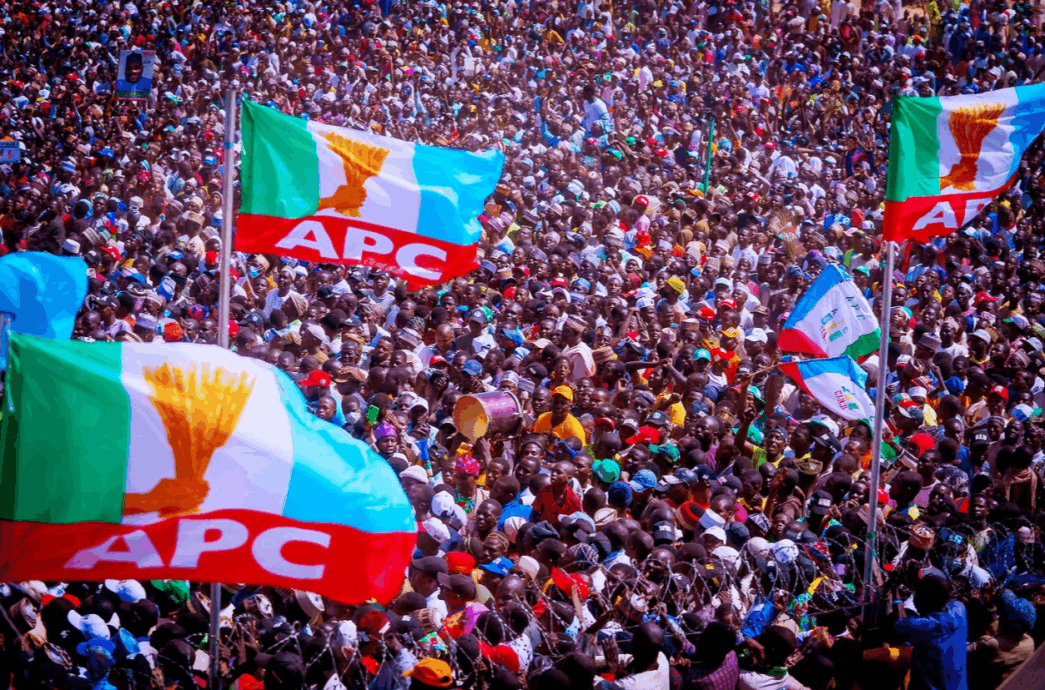
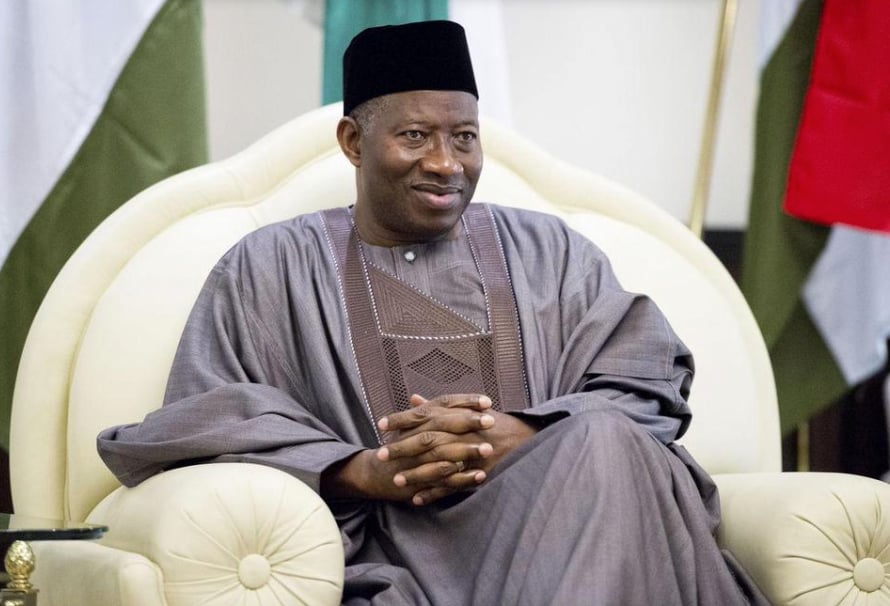
Former President Goodluck Jonathan, the Defence Minister, Gen Christopher Musa (retd.), and senior lawyers have called for reforms to Nigeria’s approach to election security, particularly in the massive deployment of security personnel and political mobilisation witnessed during off-cycle elections.

Their separate positions followed the August 15 Osun State governorship election, where over 15,000 police personnel were deployed ahead of the poll amid the presence of several governors, political leaders and other senior government officials.

Jonathan, in a statement titled, ‘Osun and the Need to Set New Boundaries for Political Conduct in Off-Cycle Elections,’ commended the Independent National Electoral Commission, security agencies, political parties and Osun voters for the peaceful conduct of the election.

However, he raised concerns over what he described as a growing and “unwholesome” practice in which serving governors, senior political officeholders, party leaders and other influential government functionaries converge on states holding elections with large numbers of aides and security personnel.

Jonathan said, “The growing practice whereby serving governors, senior political officeholders, party leaders and other influential government functionaries, accompanied by large numbers of aides and heavy security details from outside a state, converge on states where elections are being conducted raises an issue that demands national attention.”

He said the conduct witnessed around the recent elections in Osun, Ekiti and Ondo states was unusual and “is not a practice that should become normal in a democratic society.”

The former President recalled that similar situations arose during the 2013 Anambra and 2014 Ekiti governorship elections when he was President.

“Upon being briefed, I ordered party leaders and senior government officials to leave the states immediately,” Jonathan said.

While acknowledging the right of political parties to campaign and mobilise supporters, he warned that excessive mobilisation by serving governors and senior public officials could create an atmosphere of intimidation.

“However, there is a point at which political mobilisation, particularly when it involves the overwhelming presence of serving governors, senior public officials and powerful political actors from across the country on election day, can create an atmosphere of apprehension, intimidation, bullying and undue pressure,” he said.

Jonathan questioned whether the practice was consistent with democratic competition, warning that elections should not become contests in which victory was pursued “at all costs.”

He further warned that if politicians from opposing parties began matching one another with governmental influence and security-backed mobilisation, the consequences could be damaging.

“Such a development would not strengthen our democracy. It would deepen political tensions and could make elections increasingly resemble battles for political survival rather than peaceful contests for the mandate of the people,” he said.

See also  2027: Akeredolu’s Widow Declares Support For Peter Obi

Musa, on his part, said election security should not be treated as an election-day operation.

Speaking in Abuja on Tuesday through his aide on policy and strategy, Maj Gen Olufemi Akinjobi (retd.), Musa said security agencies must abandon reactive approaches and adopt intelligence-led planning months before elections.

“The lesson is clear: successful election security is not achieved through last-minute deployments. It is achieved through months of planning, intelligence-led operations, inter-agency coordination, effective communication and continuous assessment of emerging threats,” he said.

He added, “Security should never be viewed as an event. It is a process that begins long before campaigns commence and continues long after the final vote has been counted.”

Musa said the changing nature of threats meant election security could no longer be limited to the physical protection of polling units.

“Today’s threats rarely announce themselves with uniforms or conventional weapons. They emerge through cyberspace, spread through manipulated information, exploit economic hardship, inflame ethnic and religious divisions, and undermine confidence in public institutions,” he said.

The minister identified strategic intelligence, cybersecurity, civil-military coordination, unified strategic communication, a responsible information environment and citizen engagement as key pillars of election security.

Also speaking, former Zamfara State Governor, Abdul’Aziz Yari, warned politicians against using insecurity as a political tool.

“Let us encourage all political parties to understand that insecurity is not something to be traded with for the purpose of winning the hearts of citizens,” Yari said.

He argued that security was a collective responsibility involving politicians, government officials, security agencies and citizens.

“Security is not the responsibility of the security agencies alone. It is not simply about security architecture. Politicians, elites and ordinary people on the streets are all part of the solution,” he said.

On the growing security deployment during off-cycle elections, Chief Mike Ahamba (SAN) and Sampson Erugo (SAN) advocated reforms that could reduce the need for such deployments.

Ahamba said Nigeria should consider a comprehensive constitutional review rather than continue making piecemeal amendments after every election.

“I believe that the time has come for us to call a constituent assembly. We can’t keep nibbling at this constitution. We don’t know where we are again,” he said.

The senior lawyer argued that Nigeria’s electoral problem was not necessarily the laws themselves but their implementation.

See also  2026: I’m cruising to victory, Adeleke boasts

“The problem is not the document. The parchment. The problem is the selfishness of those who are running it, that’s all,” Ahamba said.

He added, “Every election, a new law. Every election, a new Act is brought forward. So is it the law that is the problem or the managers or the old law? I think it’s the managers of the law,” he said.

Ahamba said any amendment should instead focus on disciplining officials who failed to perform their duties properly, “not to change the law to accommodate another change and another change.”

Erugo, however, strongly supported the conduct of elections on the same day, saying the arrangement would reduce the security burden and political interference associated with staggered polls.

He said if the legislature ensured that all elections were held on one day, “that would indeed reduce this incidence of our use of security to intimidate opponents.”

Erugo also criticised the movement of governors between states during elections.

“You see governors from every corner of Nigeria going to another state, in an attempt to interfere with the electoral process, which is not fair. It’s not good for democracy,” he said.

He urged the National Assembly to amend the Electoral Act to allow elections to be held simultaneously, arguing that the current practice of holding presidential elections weeks before governorship polls created room for political interference.

“If you ask me, Nigerians should call on the National Assembly to quickly amend this Electoral Act so that all the elections will be held in one day,” Erugo said.

He added that simultaneous elections would force political actors to remain in their respective states and reduce opportunities for interference.

However, a Senior Advocate of Nigeria, Mofesomo Tayo-Oyetibo, offered a different perspective, arguing that there was nothing inherently wrong with heavy security deployment during off-cycle elections, provided the agencies remained neutral.

Tayo-Oyetibo said the concentration of political actors, security agencies and electoral resources in a single state was a peculiar feature of off-cycle polls, adding that the state had a responsibility to protect voters, electoral officials and election materials.

“There is nothing inherently wrong with deploying adequate security personnel to an election. The state has a responsibility to protect voters, electoral officials and materials,” he said.

He, however, stressed that the deployment must be proportionate and not used to intimidate voters or create an impression that state coercive powers were available to a particular political interest.

See also  PHOTOS: South East Group Offers To Buy N200m APC Presidential Form For Tinubu In 2027

“The more important questions are whether the deployment is proportionate and, above all, whether the security agencies maintain strict neutrality,” he said.

The senior lawyer also said the presence of governors belonging to the All Progressives Congress or any other party at an election was not, by itself, unlawful.

According to him, political parties were entitled to mobilise their leaders to support candidates, but the situation became problematic when public office, resources or the security architecture of the state were deployed to give partisan advantage.

Tayo-Oyetibo also cautioned against assuming that the concentration of political and security presence would necessarily determine the outcome of an off-cycle election.

He cited the Osun poll, where the opposition party, despite controlling no other state, defeated the ruling party’s candidate amid intense political mobilisation.

“This demonstrates that the mere concentration of political and security presence around an off-cycle election does not necessarily determine its outcome,” he said.

On calls for all governorship elections to return to the general election cycle, Tayo-Oyetibo said this could not be achieved under the present constitutional arrangement.

He explained that governors’ tenure was constitutionally guaranteed, while the election of a successor was tied to the expiration of the incumbent’s tenure.

According to him, off-cycle elections in some states were largely consequences of earlier judicial decisions arising from disputed elections, which resulted in governors assuming office on different dates.

“Those states are therefore, in practical constitutional terms, permanently off-cycle under the present arrangement,” he said.

Tayo-Oyetibo said INEC could not simply realign election dates through an amendment to the Electoral Act because doing so would require either shortening or extending a governor’s constitutionally guaranteed tenure.

“Either course would violate the Constitution unless the Constitution itself is amended to permit the realignment,” he said.

He acknowledged that a constitutional amendment could provide a transitional mechanism for returning all governorship elections to a common cycle but said he was not convinced that such a reform was necessary.

“The more important objective should therefore not be uniformity of election dates for its own sake,” he said.

According to him, the priority should be ensuring that INEC and security agencies act independently and impartially, public resources are not deployed for partisan purposes, and all political parties and voters participate on an equal footing.

Source: punchng.com

FOLLOW US ON:

FACEBOOK

TWITTER

PINTEREST

TIKTOK

YOUTUBE

LINKEDIN

INSTAGRAM

Continue Reading
Click to comment

Leave a Reply

Your email address will not be published. Required fields are marked *

Politics

Adeleke gets certificate, unveils N500m victims’ fund after Osun poll

Published

on

Osun State Governor, Ademola Adeleke, on Wednesday received his certificate of return from the Independent National Electoral Commission and announced plans to establish a N500m election violence victims endowment fund.

The certificate was presented to him by the Independent National Electoral Commission National Commissioner representing the South-West, Prof Kunle Ajayi, at an event attended by political associates of the governor and members of his cabinet.

The PUNCH reports that Adeleke was declared winner of the governorship election by the State Returning Officer of INEC, Prof Joshua Ogunwole, on Sunday.

Adeleke polled 511,067 votes to defeat the All Progressives Congress candidate, Bola Oyebamiji, who scored 444,815 votes.

Speaking during the ceremony, Adeleke lauded the roles played by different segments of the state in his victory at the poll.

He said, “This certificate does not belong to Ademola Adeleke alone. It belongs to the people of Osun State: our workers, market men and women, youths, traditional and religious leaders, and every citizen who participated in this democratic process.

“I am deeply humbled by the confidence you have renewed in me.”

Speaking on those injured and killed in the build-up to the election, the governor said a verification and relief committee, to be chaired by the Speaker of the state House of Assembly, Adewale Egbedun, would administer the fund and oversee the transparent identification of victims and equitable distribution of support.

“But even in victory, we must be sober in reflection. Citizens were injured, properties and livelihoods were destroyed and, most painfully, precious lives were lost.

“It is deeply painful that any family should have to bury a loved one because of politics. No election, political office or ambition is worth the life of a single citizen.

“We remember Ezekiel Olapade, Aderogba Ajayi, Remi Abass, Kolade Eluyera, and every other victim of electoral violence.

“Regardless of political affiliation, they were first our brothers, sisters and fellow citizens. To their families, your pain is our pain, and your loved ones will never be reduced to mere statistics,” the governor added.

See also  Read how ADC presidential candidate may emerge

He said his family, through the Springtime Development Foundation, would provide full scholarships up to university level for the children and dependants of those who lost their lives.

“The Osun State Government will also establish a N500m election violence victims endowment fund to support verified victims and affected families.

“A verification and relief committee, chaired by the Speaker of the Osun State House of Assembly, Rt Hon Adewale Olumide Egbedun, will oversee the transparent identification of victims and equitable distribution of support.

“This is not a political intervention. It is a humanitarian responsibility.

“No eligible victim will be excluded because of political affiliation, religion, ethnicity, gender or social status. In grief, there is no political party. In our common humanity, we are one people,” he said.

Gunshots at Ataoja palace

Meanwhile, gunshots rang out near the palace of the Ataoja of Osogbo for about 15 minutes on Wednesday following an attack on the governor’s convoy during a visit to the monarch.

The nephew of the governor and Afrobeats star, David Adeleke, popularly known as Davido, however, said the incident had nothing to do with him or his uncle.

The incident occurred between 3:50 pm and 4:10 pm, shortly after Adeleke had left the hall where the Ataoja hosted him.

The governor, in a large motorcade of about 20 vehicles, had arrived at the palace at about 3:15 pm after leaving the Osun State headquarters of INEC, where he received his certificate of return.

An eyewitness, who craved anonymity for security reasons, told The PUNCH during a telephone interview that Adeleke and his team were received in the palace hall by Oba Oyetunji, where the governor reportedly presented his certificate of return to the monarch.

The source confirmed that Adeleke and his team had left the palace before the ensuing gunshots.

See also  Atiku Signs $1.2 Million Lobbying Deal With U.S Firm For 2027

“He was already in the bus that brought him and his close aides to the palace when we started hearing heavy gunshots.

“The shooting lasted about 12 to 15 minutes before the governor’s convoy eventually left the palace,” the source said.

A trader near the palace, identified simply as Munirat, said the attackers might have learnt of the governor’s visit to the monarch.

When contacted, the Commissioner for Information and Public Enlightenment, Kolapo Alimi, confirmed the attack.

“They are hoodlums, and the governor’s security repelled them. They attacked the governor’s convoy in Ataoja’s palace. No casualty,” Alimi said.

As of 4:45 pm when our correspondent left the scene, many business owners had hurriedly closed their shops to avoid being caught in the attack.

Making a clarification in a post on his official X account on Wednesday, Davido said the attack occurred outside the palace of the Ataoja of Osogbo and had nothing to do with him or his uncle.

“It was a fight outside the palace that had nothing to do with us,” the singer wrote.

Police confirm one dead

The state police command, however, confirmed one resident, Tajudeen Yusuf, was shot dead during the ensuing melee, as it commenced a probe into the incident.

Giving updates on the incident in a statement obtained in Osogbo on Wednesday, the state Police Public Relations Officer, Abiodun Ojelabi, said one Adebayo Taoreed, popularly known as “Small Rugged,” an ex-convict, a suspected thug and a member of eye confraternity allegedly attempted to gain access to the Afrobeats star, Davido who had accompanied the governor to the palace, but was resisted by members of his security team.

Ojelabi said, “On Wednesday, 19th August 2026, at about 1600hrs, the command received information that one Tajudeen Yusuf, male, aged 60 years, of Oke-Ayepe area, Osogbo, was shot by suspected hoodlums at Itaolokan area of Osogbo.

“Preliminary investigation revealed that earlier in the day, His Excellency, the Executive Governor of Osun State, Senator Ademola Adeleke, accompanied by his nephew, David Adeleke, popularly known as Davido, paid a courtesy visit to the Ataoja of Osogbo, Oba Jimoh Olanipekun, at the palace.

See also  Six legal hurdles before INEC ahead of 2027 elections

“Immediately after the visit, one Adebayo Taoreed, popularly known as ‘Small Rugged’, an ex-convict, a suspected notorious thug and a member of the Eye confraternity, allegedly attempted to gain access to Davido but was resisted by members of his security Team.

“The ensuing confrontation reportedly attracted other suspected gang members in the vicinity, who temporarily blocked the entrance to the palace and obstructed the movement. The convoy eventually left the area safely.

“Shortly afterwards, the suspected gang members reportedly departed the vicinity; however, on their way, they allegedly shot Tajudeen Yusuf at Itaolokan area of Osogbo.”

He further said that upon receiving the information, the police immediately mobilised a patrol team to the scene, where the victim was found lying in a pool of blood,  adding that he was promptly rushed to the University Teaching Hospital, Osogbo, for medical attention, where he was pronounced dead by the doctors on duty.

He said the command has commenced a full-scale investigation into the incident and intensified efforts to identify, apprehend and bring the fleeing suspects to justice.

Reacting through the statement, the Commissioner of Police (Election), Osun State Command, Mr Samuel Etaifo, condemned the killing and assured members of the public that the command would deploy all available resources to apprehend those responsible.

“The command therefore urges anyone with useful information that could assist the investigation to promptly approach the nearest police station or contact the command through its official channels. Members of the public are also advised to remain calm and refrain from taking the law into their own hands,” the statement further read.

Source: punchng.com

FOLLOW US ON:

FACEBOOK

TWITTER

PINTEREST

TIKTOK

YOUTUBE

LINKEDIN

INSTAGRAM

Continue Reading

Politics

N571bn campaign spending limit for presidential, gov candidates ahead of 2027 poll

Published

on

No fewer than 146 candidates currently in the race for the 2027 presidential and governorship elections could collectively spend up to N571bn under the campaign expenditure limits prescribed by the Electoral Act 2026.

The figure comprises 19 presidential candidates, each with a campaign spending ceiling of N10bn, and 127 governorship candidates, each allowed to spend a maximum of N3bn under Section 92 of the new Electoral Act.

The 19 presidential candidates alone have a combined spending ceiling of N190bn, while the 127 governorship candidates could collectively spend up to N381bn.

The combined ceiling for the two categories therefore stands at N571bn, although the amount represents the maximum permissible expenditure and not money guaranteed to, or actually received by the candidates.

The development comes as the Independent National Electoral Commission published the personal particulars and credentials of the 19 presidential candidates and their running mates ahead of the 2027 poll, paving the way for the commencement of the presidential campaign on Wednesday, August 19, 2026.

According to the election tracker NGelections.com, 127 candidates across 28 states will be running for governor in 2027. Of the number, 122 have been nominated, four have declared, and one is still being monitored.

A check on the INEC website showed that the commission had yet to publish the total number of 2027 governorship candidates, with its official 2027 election page stating under the list of candidates that “This will be available soon.”

INEC has confirmed that governorship elections will be held in 28 states in 2027, with Anambra, Bayelsa, Edo, Ekiti, Imo, Kogi, Ondo and Osun excluded because they are on the off-cycle schedule.

The commission had fixed January 16, 2027, for the presidential and National Assembly elections, while the governorship and State House of Assembly elections are scheduled for February 6, 2027.

New spending limits

Section 92 of the Electoral Act 2026 substantially raises the amount candidates are permitted to spend on election campaigns compared with the previous statutory limits.

Under the new law, a presidential candidate may spend up to N10bn, while a governorship candidate is limited to N3bn.

For the National Assembly, the ceiling is N500m for a senatorial candidate and N250m for a House of Representatives candidate.

A candidate seeking election to a State House of Assembly may spend up to N100m, the same ceiling prescribed for an Area Council chairmanship candidate, while the maximum campaign expenditure for an Area Council councillorship election is N10m.

The law also places a ceiling on individual contributions to candidates, providing that no individual donor may contribute more than N500m to a single candidate.

Section 92 further provides sanctions for candidates who knowingly exceed the prescribed limits.

Such a candidate faces a fine equivalent to one per cent of the permitted expenditure limit, or imprisonment for up to 12 months, or both.

The provision makes compliance with the new spending thresholds a statutory obligation rather than a voluntary guideline.

The PUNCH could not confirm if INEC has successfully prosecuted and secured a conviction against a Nigerian politician specifically for exceeding the statutory election/campaign spending limit.

Also, there is no reported case of a politician or party being prosecuted for exceeding campaign-spending limits.

When asked how INEC would enforce the spending limits, the INEC National Commissioner and Chairman Information/Voter Education Committee, Mohammed Haruna, simply stated, ‘’It’s the Commission’s statutory responsibility to monitor the campaign finance of all political parties.’’

See also  2026: I’m cruising to victory, Adeleke boasts

The anti-graft agencies are expected to collaborate with the INEC in monitoring and enforcing the spending limits.

The restriction on individual donations means that while a presidential candidate can spend as much as N10bn, a single donor cannot contribute more than N500m.

Similarly, a governorship candidate’s N3bn spending ceiling is six times the maximum individual donation.

Presidential race

The presidential race features incumbent President Bola Tinubu of the All Progressives Congress; former Vice-President Atiku Abubakar of the African Democratic Congress; and former Anambra State Governor Peter Obi of the Nigeria Democratic Congress, among 16 other candidates.

INEC’s published list includes 19 presidential candidates and their running mates, with the commission making their personal information and credentials available for public scrutiny in accordance with the Electoral Act.

The field also includes PDP candidate Sandy Onor, African Action Congress candidate Omoyele Sowore, Peoples Redemption Party candidate Donald Duke, Social Democratic Party candidate Adewole Adebayo and Allied Peoples Movement candidate Seyi Makinde.

Other candidates are from the National Democratic Party, Young Progressives Party, Action Alliance, Boot Party, Democratic Liberty Alliance, Zenith Labour Party, Labour Party, National Rescue Movement, Action Democratic Party, New Nigeria Peoples Party and Action Peoples Party.

With each presidential candidate permitted to spend up to N10bn, the 19-man field represents a theoretical campaign expenditure ceiling of N190bn.

127 governorship candidates

At the state level, the number of candidates is considerably higher. The latest election data currently tracks 127 governorship candidates from 18 political parties across the 28 states scheduled to hold governorship elections in 2027.

The APC and PDP have the largest number of candidates, with 28 each, followed by the ADC with 21, Labour Party with 16 and NDC with nine.

The SDP has six candidates, while APM, PRP and Accord have three each. Other parties have a smaller number of candidates.

At N3bn per candidate, the 127 governorship candidates have a collective statutory spending ceiling of N381bn. When added to the N190bn available to the 19 presidential candidates, the potential maximum expenditure rises to N571bn.

The figure should not, however, be interpreted as an indication that N571bn will actually be spent during the campaigns. It represents the aggregate amount that the candidates could lawfully spend if each candidate reached the maximum permitted under Section 92.

CSOs raise concerns

Civil society organisations warned that the effectiveness of the new campaign spending limits will depend largely on enforcement, monitoring and the willingness of political actors to obey the law.

The Executive Director of the Civil Society Legislative Advocacy Centre, Auwal Musa Rafsanjani, said the major challenge was not the existence of spending limits, but the ability and willingness of electoral authorities and political parties to enforce them.

He stated, “The law is very clear; political parties or candidates are not expected to go beyond certain thresholds. But looking at the amount and looking at the capacity to impose this, it is very doubtful because the people that will help support and host this are not likely to comply with this.

See also  Read how ADC presidential candidate may emerge

“If the ruling party members will not comply with this, then it becomes difficult for INEC to take appropriate action against other political parties. So it is important that all the ruling party and opposition political parties, and other stakeholders, sit down and have a good understanding of what is feasible, what is possible, and that everyone should abide by that.”

Rafsanjani urged the media and civil society to expose candidates and political parties that violate campaign finance regulations, arguing that INEC could not achieve compliance alone.

On his part, the Executive Director of the Centre for Anti-Corruption and Open Leadership, Debo Adeniran, said monitoring campaign expenditure would require cooperation between INEC, the media, civil society organisations and anti-corruption agencies.

“If INEC wants to monitor, they will need the help of the rest of us. Those of you in the media and those of us in civil society have roles to play. We are supposed to document what constitutes adverts, what constitutes procurements for each of the candidates.

“Media houses should set up teams that will monitor adverts both in the print and electronic media, as well as social media. All of these have costs that are verifiable. Billboard costs can be monitored. Television adverts can be monitored. Newspaper adverts can be monitored. Social media can also be monitored.”

Adeniran also pointed out that financial transactions, campaign staff payments, billboards, posters, campaign venues and other major expenditure could be monitored through existing financial and technological systems.

He advocated lower spending limits and tougher sanctions, including possible deregistration of parties and disqualification of candidates who violate the rules.

“It will give a level playing field if the limit of how far you can go in your campaign spending is imposed on all the candidates and their political parties, with a threat that whoever violates such rules and regulations will be deregistered,” he said.

The Country Director, ActionAid Nigeria, Andrew Mamedu, affirmed that campaign spending limits were necessary to prevent wealthy candidates from effectively buying political positions.

He said, “Campaign limits and campaign funding are needed for several reasons. The major reason is to ensure that candidates do not just come and buy positions, and spend so much resources to the detriment of other candidates that might not have similar resources.”

Mamedu said the major challenge remained how campaign spending would be measured, noting that INEC lacked the capacity to adequately track expenditure.

He called for legal reforms, stronger sanctions and a dedicated mechanism for tracking political party finances.

The country director said sanctions should be strong enough to serve as a deterrent, including banning politicians or political parties that breach spending limits from contesting elections for at least two electoral cycles.

Mamedu also warned that excessive campaign spending could deepen corruption because wealthy politicians and their financiers could expect contracts and other benefits in return for their support.

He said the huge resources deployed during campaigns could give an incumbent an unfair advantage over other contestants, while also discouraging people without substantial financial backing from seeking elective office.

See also  Nobody can capture South East with defections - Peter Obi

NBC warns media

The campaign finance debate comes as the National Broadcasting Commission warned broadcasters, online publishers, bloggers and other participants in Nigeria’s information ecosystem against using their platforms to spread misinformation, hate speech, inflammatory material and other content capable of undermining peaceful elections.

The warning followed the commencement of political campaigns for the 2027 presidential and National Assembly elections on Wednesday.

In a statement released by Moses Jolayemi, Technical Adviser to the NBC Director-General, Charles Ebuebu, the commission said the commencement of campaigns placed an even greater responsibility on information disseminators to uphold accuracy, fairness, professionalism and responsibility.

The NBC directed broadcasters to ensure fair, balanced and equitable political coverage and warned against using their platforms to promote or suppress particular political parties, candidates or political viewpoints.

It also cautioned against presenting unverified political claims, allegations, statistics or assertions as facts.

According to the statement, ‘’Allegations involving corruption, criminality, electoral manipulation, misconduct and other issues capable of damaging the reputation of individuals or institutions must be subjected to appropriate editorial verification before being broadcast. The right of reply must be respected where a person or organisation has been genuinely misrepresented.’’

The NBC further cautioned presenters, anchors, reporters, producers and hosts of political programmes against allowing personal political views to be presented as facts.

The NBC warned presenters, anchors, reporters, producers and hosts against presenting personal political views as facts, intimidating guests, suppressing opposing viewpoints or manipulating discussions in favour of particular political interests.

It said responsibility for what goes on air remains with the broadcaster, including material introduced by guests, callers and panellists during live or interactive programmes.

The commission also directed broadcasters to maintain accurate records showing the dates, programmes and duration of political airtime allocated to parties and candidates.

It stressed that political advertising must remain clearly distinguishable from news, editorial content, analysis and independent programming and must comply with the Nigeria Broadcasting Code.

Of particular concern to the commission was the use of broadcast, digital and social media platforms to spread inflammatory and divisive political content.

The NBC warned against content capable of inciting violence, promoting hatred, threatening public order or deepening ethnic, religious, regional or political divisions.

It also cautioned broadcasters and other information disseminators against spreading election results or projections from unofficial sources.

The commission said collated figures from polling stations, exit polls and other unofficial sources must not be used to project or speculate on which candidate was leading or likely to win.

Election results and declarations of winners, it stressed, should only be broadcast as announced by the duly authorised electoral officer.

The NBC said its monitoring of political broadcasts would be intensified throughout the electioneering period, covering paid political advertisements, news bulletins, current affairs programmes, debates, phone-ins, interviews, commentaries, sponsored programmes, live broadcasts and other political content.

It also urged online publishers, bloggers, social media commentators and other content creators to exercise the highest degree of responsibility in the interest of national peace and democratic stability.

Source: punchng.com

FOLLOW US ON:

FACEBOOK

TWITTER

PINTEREST

TIKTOK

YOUTUBE

LINKEDIN

INSTAGRAM

Continue Reading

Politics

I would have helped Tinubu win Osun – Wike

Published

on

The Minister of the Federal Capital Territory, Nyesom Wike, has said he could have helped President Bola Tinubu secure victory for the All Progressives Congress in the August 15 governorship election in Osun State if the President had wanted to win the poll “at all costs.”

Wike, who remains a member of the Peoples Democratic Party, said Tinubu deliberately allowed the election to take place without deploying the influence of the Federal Government to sway the outcome in favour of the APC.

The FCT minister spoke on Tuesday while inspecting flood-prone areas in Maitama, Abuja.

He said he would have supported the President if he had decided to use his political influence to ensure an APC victory.

“If the President had wanted to win the Osun State election at all costs, I would have been there, and we would have won it, and there’s nothing the governor can do,” Wike said.

Governor Ademola Adeleke, who contested the election on the platform of the Accord, was declared the winner after securing victory in 19 of the 30 local government areas in the state.

Adeleke of the Accord won the election with 511,067 votes, defeating his closest challenger, Bola Oyebamiji of the APC, who secured 444,815 votes and Najeem Salaam of the ADC, who polled 17,180 votes.

Wike, speaking on the outcome of the election, said it demonstrated that the Federal Government did not deploy its influence to manipulate the election in favour of the ruling party.

“There was no federal might used in Osun. When you see the force and might of the Federal Government, you will know,” he said.

See also  2026: I’m cruising to victory, Adeleke boasts

The minister also suggested that Adeleke could have been a member of the APC if certain political circumstances had turned out differently.

“Ordinarily, Adeleke would have been with the APC if things had worked out well,” he said.

Wike, a former Rivers State governor who has continued to support Tinubu despite his membership of the opposition PDP, also predicted that the President would face a less difficult contest in the 2027 presidential election.

“The 2027 elections will be the easier one for the President compared to 2023,” he said.

He attributed his prediction to what he described as the weakened state of the opposition parties.

“This time around, the opposition has been crippled, homeless, no feather,” Wike added.

Source: punchng.com

FOLLOW US ON:

FACEBOOK

TWITTER

PINTEREST

TIKTOK

YOUTUBE

LINKEDIN

INSTAGRAM

Continue Reading

Trending