Connect with us

Politics

Presidential election: Tinubu, Obi, others sign peace pact as 2027 campaign begins today

Published

on

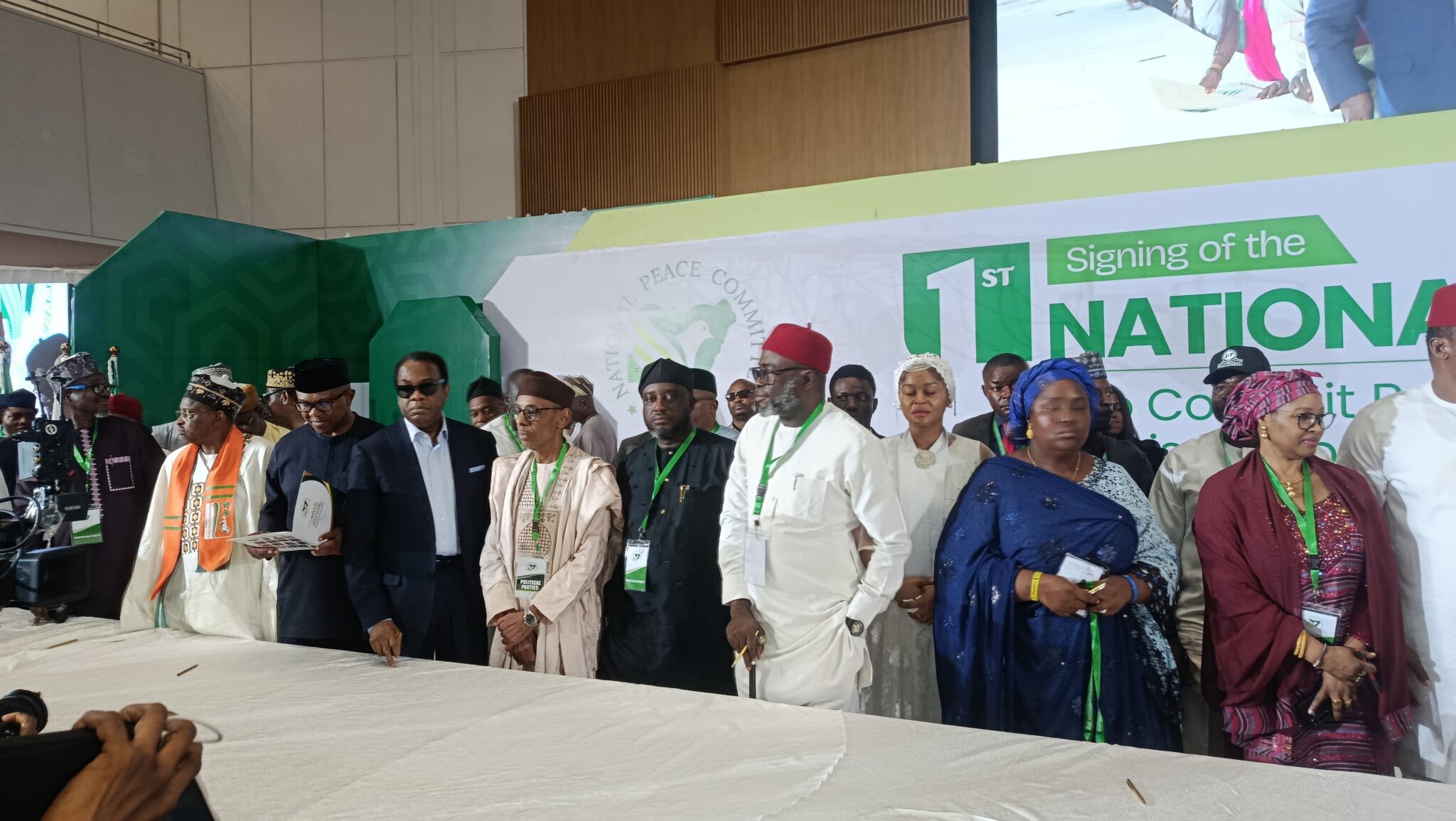
Political parties and presidential and National Assembly candidates on Tuesday signed the first National Peace Accord on issue-based campaigns ahead of the 2027 general elections, pledging to shun violence, hate speech, misinformation, personal attacks and other conduct capable of undermining the electoral process.

The accord was signed in Abuja at a ceremony organised by the National Peace Committee in partnership with The Kukah Centre, barely 24 hours before the statutory commencement of public campaigns and rallies for the elections.

The event brought together the Chairman of the Independent National Electoral Commission, Prof Joash Amupitan; political party leaders; presidential candidates; National Assembly candidates; the Inspector-General of Police, Olatunji Disu, and representatives of the diplomatic community, among other stakeholders.

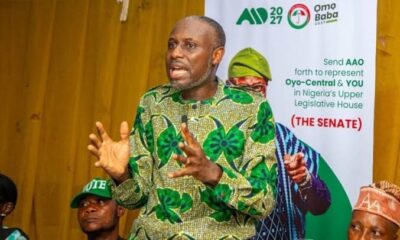
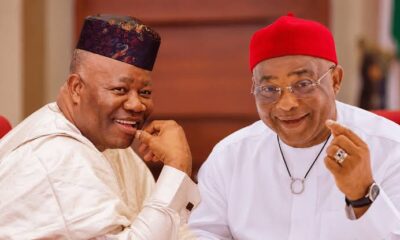
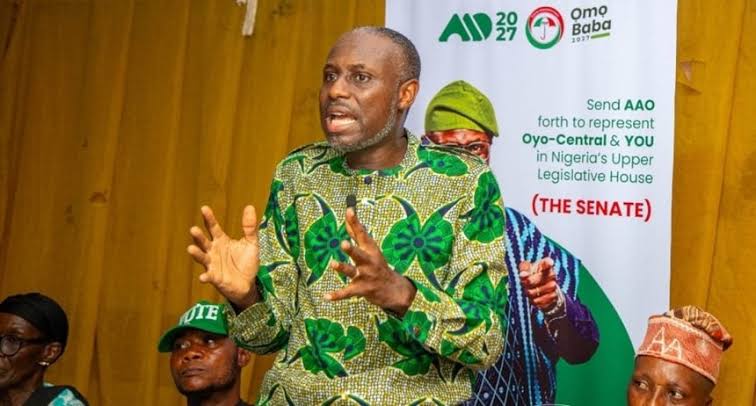
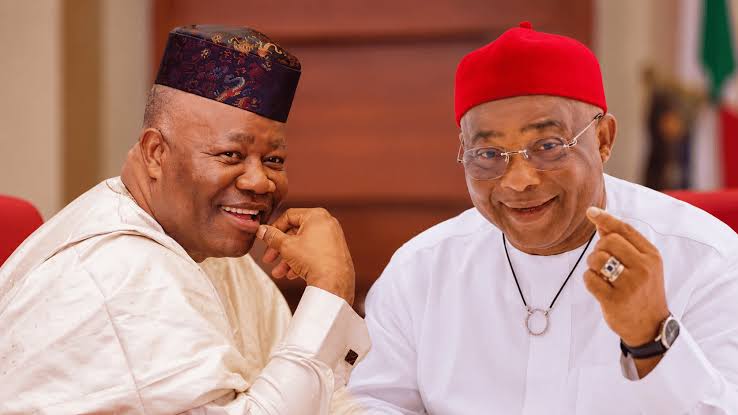
Those who signed the accord included President Bola Tinubu, represented by the Secretary to the Government of the Federation, Senator George Akume; the Nigeria Democratic Congress presidential candidate, Peter Obi; the Social Democratic Party candidate, Adewole Adebayo and his African Action Congress counterpart,  Omoyele Sowore.

Other participants were the National Chairman of the All Progressives Congress, Prof Nentawe Yilwatda; the presidential candidates of the Peoples Redemption Party, and Labour Party, Donald Duke, Chibuzor Okereke, the Deputy President of the Senate, Barau Jibrin; the PRP National Chairman, Hakeem Baba-Ahmed; federal and state lawmakers, party leaders and other candidates.

The event also featured goodwill messages from diplomatic representatives, including the European Union Ambassador to Nigeria, Gautier Mignot, and the Ambassador of Switzerland to Nigeria, Patrick Egloff.

However, some major political actors, including former Vice-President Atiku Abubakar and Oyo State Governor Seyi Makinde, were absent from the ceremony. Atiku is the presidential candidate of the African Democratic Congress, while Makinde is the presidential candidate of the Allied Peoples’ Movement.

The Chairman of the National Peace Committee, former Head of State, General Abdulsalami Abubakar (retd.), was represented by a former Chief of Defence Staff, General Martin Agwai (retd.).

The ceremony was held against the backdrop of growing political activities ahead of the 2027 elections, with the economy, insecurity, unemployment, poverty, infrastructure deficits and the credibility of the electoral process expected to dominate the campaigns.

According to INEC’s revised timetable, the presidential and National Assembly elections will hold on January 16, 2027, while the governorship and State House of Assembly elections are scheduled for February 6, 2027.

Speaking through Akume, President Tinubu urged political parties and candidates to place national interest above personal and partisan ambitions, warning that the struggle for political power must not become a do-or-die affair.

He also cautioned political actors against exploiting ethnic and religious sentiments to mobilise voters, insisting that the 2027 campaign should be based on competing ideas, policies and programmes.

“Signing this peace accord is a solemn pledge to the Nigerian people that we, as leaders, will put the nation’s interests above personal or partisan ambitions,” Tinubu said.

The President acknowledged that political campaigns naturally generate disagreements and intense competition, but insisted that such disagreements should not threaten national unity.

“It is natural during campaigns to disagree as opponents and advocate competing governing missions for our country. We may exchange occasional political jabs, but as members of the same household, the same national family, we must never resort to divisive and primordial sentiments of ethnicity or religion as tools for seeking power,” he stated.

Tinubu urged the candidates to concentrate on the issues affecting Nigerians and offer competing solutions to the country’s challenges.

“Let us campaign on superior ideas. Let us debate issues and promote the best policies to expand opportunities for our people,” he admonished his opponents.

The President said the APC remained committed to the provisions of the accord and would reject violence, hate speech, misinformation, incitement and digital manipulation.

“Our party rejects violence, hate speech, the spread of misinformation, including through artificial intelligence, and all forms of incitement, especially via social media.

“We are committed to peaceful, transparent elections that will strengthen political stability, social harmony, economic progress, and our nation’s prosperity. I encourage other political parties and political actors to do the same.’’

See also  Emir Sanusi begins classes as 200-level Law student in Kano, see pictures

Tinubu also commended the National Peace Committee for sustaining its interventions in the electoral process since 2014, noting that the initiative had helped bring political actors together to publicly commit themselves to peaceful elections.

He said Nigeria had also recorded improvements in election management, particularly through the adoption of technology by INEC.

The President cited the Permanent Voter Cards, the Bimodal Voter Accreditation System and electronic accreditation processes as measures that had strengthened confidence in the electoral system.

He also referred to recent off-cycle governorship elections in Anambra, Ekiti and Osun States as evidence of improvements in electoral administration and voter participation.

Campaigns not wars

The INEC chairman, Amupitan, described the signing ceremony as more than a symbolic gathering, saying it was an opportunity for political actors to define the ethical boundaries of the 2027 contest before the campaigns officially commenced.

He said the timing of the accord was significant because Wednesday (today), marks the statutory commencement of public campaigns and rallies for the elections.

“Tomorrow, Wednesday, August 19, 2026, marks the statutory commencement of public campaigns and rallies for the 2027 general election.

“Before the first campaign flag is unfurled, before the first rally is staged, and before political rhetoric fills our public space, it is necessary that those who seek to lead this nation first gather to establish the ethical boundaries of their contest,” Amupitan said.

According to him, Nigerians were expecting political parties and candidates to use the campaign period to discuss the challenges confronting the country rather than engage in personal attacks and inflammatory rhetoric.

The INEC chairman said information gathered by the National Peace Committee’s Election Security Information Hub had shown an “alarming resurgence” of hate speech, toxic polarisation, coordinated misinformation and personality-driven political discourse.

He said the trend was particularly disturbing as Nigeria approached what was expected to be one of the most fiercely contested elections since the return to democratic rule in 1999.

Amupitan challenged the candidates to make the economy, national security, infrastructure, healthcare, education and social inclusion central to their campaigns.

He likened elections to a competition for public office rather than warfare.

“Electoral contests in a constitutional democracy are not total wars; they are competitive job interviews before the electorate. Nigerians do not want insults; they want solutions,” he said.

The INEC chairman also warned political parties and their supporters against premature declarations of victory and the circulation of unverified information on social media.

He said the growing use of artificial intelligence and digital platforms had created new challenges for electoral management, particularly through disinformation and foreign information manipulation and interference.

Amupitan challenged presidential candidates, party leaders and campaign organisations to ensure that their supporters and online teams complied with the spirit and provisions of the accord.

“Leadership attained at the expense of public peace, institutional integrity, or human life is a hollow victory,” he warned.

The INEC chairman assured political parties that the commission had no preferred candidate and would provide a level playing field for all contestants.

“For the Commission, our moral authority to demand decorum from political actors rests squarely on our own administrative and technological preparedness,” he said.

Amupitan disclosed that INEC was preparing to deploy approximately 1.4 million ad hoc personnel for the 2027 general elections across more than 176,000 polling units nationwide.

He said the commission was drawing lessons from recent off-cycle elections, including the governorship elections in Anambra, Ekiti and Osun states as well as the Federal Capital Territory Area Council election, to improve its preparations for 2027.

The INEC chairman, however, stressed that technology and administrative preparedness alone could not guarantee peaceful elections, insisting that the conduct of political parties, candidates and their supporters remained critical.

“We provide the pitch and the refereeing, but the quality of the game depends on the players,” he said.

He called on the political class to recognise that the credibility of the 2027 elections would depend not only on INEC’s conduct but also on the willingness of the candidates to accept democratic rules and respect the institutions responsible for administering the polls.

See also  Appeal Court reverses order deregistering ADC, four others

Abubakar said the National Peace Committee had facilitated 30 peace accords since 2015, comprising five national-level accords and 25 subnational agreements.

He added that the committee had also established faith-based peace structures in 23 states to complement its national peace-building efforts.

According to him, the issue-based peace accord was conceived in response to the increasing tendency of political campaigns to rely on sentiments, personal attacks and character assassination rather than manifestoes, policies and programmes.

Abubakar  further noted that the accord was intended to encourage candidates and political parties to compete on ideas, debate opposing views respectfully, organise supporters peacefully, protect voters, respect electoral institutions and reject hate speech and misinformation.

He lamented the declining quality of political discourse in the country.

“Over the years, political campaigns and rallies have neglected the significance of party manifestos and programmes, and created a platform for political parties to resort to name-calling, personal insults, and character assassination,” he said.

He explained that the provisions of the accord were anchored on the Constitution, the Electoral Act and other relevant laws, stressing that the agreement was therefore more than a political declaration.

The former head of state also disclosed that the National Peace Committee had established the Election Security Information Hub to monitor electoral offences and security developments and provide early warning and evidence-based analysis to stakeholders.

He urged parties, candidates, campaign councils and spokespersons to use the campaign period to address issues of concern to Nigerians and avoid inflammatory statements.

Obi observed that politicians should not need a peace accord before conducting themselves responsibly.

The former Anambra State governor argued that anyone seeking high public office should demonstrate exemplary conduct even before being elected.

“We don’t even need to sign this. We’re seeking an office where we should be exemplary. You can’t answer ‘His Excellency’ without being an excellent person,” Obi said.

Asked whether he still had faith in the peace accord in view of reports of violence during the recent Osun governorship election, Obi said his participation was driven by his desire to change the system from within.

“Because I want to change the process, I have to go through it, so I have to believe in it,” he said.

Obi said the central issue was not what the agreement was called but whether candidates would allow their personal conduct to reflect the offices they sought.

“Whatever it is, whether we call it a justice accord or a peace accord, the personal conduct of the candidate must reflect the office he is seeking. His behaviour, his person, any day, any time, must reflect that office,” he added.

He urged the candidates to make their campaigns responsive to the problems confronting Nigerians.

“We must, for the sake of this country, ensure that our conduct reflects the office we’re seeking, our behaviour, and that we do the right things and campaign on issues that Nigerians are going through today,” Obi said.

Reacting to the deaths recorded during the recent Osun governorship election, Obi called for remembrance and accountability rather than political point-scoring.

“Let us not forget those who died in ensuring that the election in Osun was achieved the way it went. We should visit them.

“We should condole with their families, and we should remain prayerful and conduct ourselves in a way that, in our democracy, nobody needs to die for an election. It shouldn’t be. It is painful, and I wish it never happened again.”

Asked what concerned him most about the 2027 election, Obi said his primary worry was the integrity of the vote.

“I don’t have any fear, except to say that, please, for the sake of the children of Nigeria, can we have an election where people’s votes will count?” he asked.

On what sanction should be imposed on candidates or parties that violate the peace accord, Obi said the electorate should have the final say.

“The punishment is that Nigerians should not vote for them,” he said.

See also  NDC pegs presidential form at N60m, primaries hold May 29

Sowore dismisses accord

The AAC candidate Sowore dismissed the peace accord as a ritual with little practical value.

Sowore said his participation should not be interpreted as an endorsement of the effectiveness of the process, arguing that previous accords had not prevented violence.

“I don’t have faith in it. I’m bringing faith to the system. Those are two different things,” he said.

He questioned the characterisation of the recent Osun governorship election as peaceful, alleging that about 50 people died in connection with the poll.

“How can you say, in good conscience, that an election that led to the death of 50 citizens of any country is a peaceful election?” Sowore asked.

He added, “We are here in an election that involves less than two million people in Osun State. Fifty people had to die as a result of that, and you are calling it a peaceful election.”

Sowore also criticised INEC’s handling of the electronic transmission and uploading of results from the Osun election.

“As we speak, INEC is yet to complete the upload of all the election results three days after,” he alleged. ‘’If we are going to have free and fair elections, you can’t have it halfway. You have to upload all the polling units into your portal timeously. It must be completed before you announce election results.”

The AAC candidate argued that the experience of Osun showed that signing a peace pact without effective sanctions could amount to little more than a ceremony.

“The people who signed the peace accord in Osun State killed 50 people after they signed the peace accord. So, if you meant anything at all, why would you sign the peace accord and then go and carry a gun after that and kill 50 people?

“What will you be expecting after signing today’s peace accord? We conclude the ritual and move on to campaigning,” Sowore said.

He described the accord as “a ritual of sorts” and an opportunity for Nigerians to see the candidates and assess their disposition towards peaceful elections.

Sowore called for what he described as a “justice accord”, which would provide enforceable consequences for candidates or political actors who breached the peace agreement.

He questioned why the deaths allegedly recorded during the Osun election had not generated stronger political accountability.

“I don’t know why nobody is talking about these 50 people that died in Osun State. It’s like we have just sacrificed them to the gods of politics, and we should all go home,” he said.

Sowore also criticised Osun State Governor Ademola Adeleke’s endorsement of Tinubu following his re-election, particularly the explanation that the endorsement was based on ethnic identity.

He nevertheless commended voters in Osun for turning out despite the violence, describing an estimated 40 per cent turnout as evidence of civic consciousness.

Police pledge neutrality

IG Disu, represented by the Deputy Inspector-General of Police in charge of Operations, Umar Shehu, pledged that the police would provide security for voters, candidates and other participants throughout the electoral process.

Shehu said the police were not interested in which candidate or political party won the election but in ensuring that eligible Nigerians exercise their franchise without intimidation.

“The Nigeria Police is not interested in who wins or loses but is interested and committed to a peaceful election where Nigerians of eligible age will exercise their franchise without fear,” he said.

The police leadership urged political parties and their supporters to cooperate with security agencies and avoid actions that could trigger violence before, during and after the elections.

IPAC urges restraint

The Chairman of the Inter-Party Advisory Council, Yusuf Dantalle, also appealed to political parties, candidates, campaign councils and spokespersons to respect the terms of the accord.

He urged political actors to avoid fake news, personal attacks, and insults, and instead promote tolerance, civility, and constructive political debate.

Source: punchng.com

FOLLOW US ON:

FACEBOOK

TWITTER

PINTEREST

TIKTOK

YOUTUBE

LINKEDIN

INSTAGRAM

Continue Reading
Click to comment

Leave a Reply

Your email address will not be published. Required fields are marked *

Politics

I would have helped Tinubu win Osun – Wike

Published

on

The Minister of the Federal Capital Territory, Nyesom Wike, has said he could have helped President Bola Tinubu secure victory for the All Progressives Congress in the August 15 governorship election in Osun State if the President had wanted to win the poll “at all costs.”

Wike, who remains a member of the Peoples Democratic Party, said Tinubu deliberately allowed the election to take place without deploying the influence of the Federal Government to sway the outcome in favour of the APC.

The FCT minister spoke on Tuesday while inspecting flood-prone areas in Maitama, Abuja.

He said he would have supported the President if he had decided to use his political influence to ensure an APC victory.

“If the President had wanted to win the Osun State election at all costs, I would have been there, and we would have won it, and there’s nothing the governor can do,” Wike said.

Governor Ademola Adeleke, who contested the election on the platform of the Accord, was declared the winner after securing victory in 19 of the 30 local government areas in the state.

Adeleke of the Accord won the election with 511,067 votes, defeating his closest challenger, Bola Oyebamiji of the APC, who secured 444,815 votes and Najeem Salaam of the ADC, who polled 17,180 votes.

Wike, speaking on the outcome of the election, said it demonstrated that the Federal Government did not deploy its influence to manipulate the election in favour of the ruling party.

“There was no federal might used in Osun. When you see the force and might of the Federal Government, you will know,” he said.

See also  Shettima, govs for APC mega rally for Oyebanji’s Ekiti reelection — Council

The minister also suggested that Adeleke could have been a member of the APC if certain political circumstances had turned out differently.

“Ordinarily, Adeleke would have been with the APC if things had worked out well,” he said.

Wike, a former Rivers State governor who has continued to support Tinubu despite his membership of the opposition PDP, also predicted that the President would face a less difficult contest in the 2027 presidential election.

“The 2027 elections will be the easier one for the President compared to 2023,” he said.

He attributed his prediction to what he described as the weakened state of the opposition parties.

“This time around, the opposition has been crippled, homeless, no feather,” Wike added.

Source: punchng.com

FOLLOW US ON:

FACEBOOK

TWITTER

PINTEREST

TIKTOK

YOUTUBE

LINKEDIN

INSTAGRAM

Continue Reading

Politics

Oyebamiji mum on Adeleke’s congratulatory call, decries attack on supporters

Published

on

The All Progressives Congress candidate in the Osun State governorship election, Bola Oyebamiji, has yet to respond to Governor Ademola Adeleke’s call for him to congratulate him on his re-election, despite calls from prominent political figures and groups for him to acknowledge the victory.

President Bola Tinubu, the Nigeria Governors’ Forum, several APC governors and other party leaders have since congratulated Adeleke on his victory.

On Monday, the Senate Leader, Opeyemi Bamidele, also urged Oyebamiji to congratulate Adeleke, following the governor’s victory in Saturday’s election.

In a statement made available on Tuesday, the APC candidate, instead, appreciated the party loyalists and supporters and urged security agencies to intervene and halt alleged attacks on members and supporters of the party.

Oyebamiji, in a statement obtained by The PUNCH in Osogbo on Tuesday, noted a growing trend of hostility and violence against members and supporters of the APC.

He, however, commended the members for their steadfastness, commitment, sacrifice, and tireless efforts throughout the governorship election.

“Dear supporters, members and leaders of the All Progressives Congress (APC) in Osun State, I commend you all for your steadfastness, commitment, sacrifice, and tireless efforts throughout the just-concluded governorship election.

“Your unwavering support for my candidacy and your belief in the prosperity agenda we presented to the people of Osun are experiences I will forever cherish.

“Although we had hoped for a different outcome in the election, in the meantime, we respect the position of the electoral umpire, and I totally support the decision of our party in its ongoing review of the outcome of the election.

See also  INEC Official Faints In Anambra Community

“Consequently, I appreciate the many people who believed in and supported the alternative vision we articulated. I am deeply grateful to every voter who placed his or her trust in our vision.

To the volunteers who gave their time and energy, and to our committed party members and leaders across the state who turned out to energise our campaign, I appreciate you all,” Oyebamiji said.

He called on his supporters to continue adding value, saying the causes championed by him are still alive.

He promised to continue to work for effective, inclusive and rapid development of Osun, urging all those who stood by the party and campaign to keep working for the APC.

Oyebamiji further said, “As events unfold, I urge all of you to remain calm and peaceful as you go about your daily activities in the post-election period.

“At the same time, I wish to alert the state government and security agents to the growing trend of hostility and violence against our members and supporters.

“The violent attacks on our members witnessed in the build-up to the election have taken another dimension in the last 24 hours.

“Consequently, I urge the Nigeria Police Force and other security agencies to intervene and arrest this ugly trend without delay.”

The PUNCH reports that the incumbent Osun State Governor, Ademola Adeleke, was returned elected by the State Returning Officer of the Independent National Electoral Commission on Sunday, Prof Joshua Ogunwole.

Adeleke won the governorship poll with a total of 511,067, to defeat Oyebamiji, who polled 444,815 votes.

See also  Christianity facing existential threat in Nigeria, Trump insists

Source: punchng.com

FOLLOW US ON:

FACEBOOK

TWITTER

PINTEREST

TIKTOK

YOUTUBE

LINKEDIN

INSTAGRAM

Continue Reading

Politics

Jonathan decries govs ‘show of force’ on Off-cycle polls

Published

on

Former President Goodluck Jonathan, the Defence Minister, Gen Christopher Musa (retd.), and senior lawyers have called for reforms to Nigeria’s approach to election security, particularly in the massive deployment of security personnel and political mobilisation witnessed during off-cycle elections.

Their separate positions followed the August 15 Osun State governorship election, where over 15,000 police personnel were deployed ahead of the poll amid the presence of several governors, political leaders and other senior government officials.

Jonathan, in a statement titled, ‘Osun and the Need to Set New Boundaries for Political Conduct in Off-Cycle Elections,’ commended the Independent National Electoral Commission, security agencies, political parties and Osun voters for the peaceful conduct of the election.

However, he raised concerns over what he described as a growing and “unwholesome” practice in which serving governors, senior political officeholders, party leaders and other influential government functionaries converge on states holding elections with large numbers of aides and security personnel.

Jonathan said, “The growing practice whereby serving governors, senior political officeholders, party leaders and other influential government functionaries, accompanied by large numbers of aides and heavy security details from outside a state, converge on states where elections are being conducted raises an issue that demands national attention.”

He said the conduct witnessed around the recent elections in Osun, Ekiti and Ondo states was unusual and “is not a practice that should become normal in a democratic society.”

The former President recalled that similar situations arose during the 2013 Anambra and 2014 Ekiti governorship elections when he was President.

“Upon being briefed, I ordered party leaders and senior government officials to leave the states immediately,” Jonathan said.

While acknowledging the right of political parties to campaign and mobilise supporters, he warned that excessive mobilisation by serving governors and senior public officials could create an atmosphere of intimidation.

“However, there is a point at which political mobilisation, particularly when it involves the overwhelming presence of serving governors, senior public officials and powerful political actors from across the country on election day, can create an atmosphere of apprehension, intimidation, bullying and undue pressure,” he said.

Jonathan questioned whether the practice was consistent with democratic competition, warning that elections should not become contests in which victory was pursued “at all costs.”

He further warned that if politicians from opposing parties began matching one another with governmental influence and security-backed mobilisation, the consequences could be damaging.

“Such a development would not strengthen our democracy. It would deepen political tensions and could make elections increasingly resemble battles for political survival rather than peaceful contests for the mandate of the people,” he said.

See also  Appeal Court reverses order deregistering ADC, four others

Musa, on his part, said election security should not be treated as an election-day operation.

Speaking in Abuja on Tuesday through his aide on policy and strategy, Maj Gen Olufemi Akinjobi (retd.), Musa said security agencies must abandon reactive approaches and adopt intelligence-led planning months before elections.

“The lesson is clear: successful election security is not achieved through last-minute deployments. It is achieved through months of planning, intelligence-led operations, inter-agency coordination, effective communication and continuous assessment of emerging threats,” he said.

He added, “Security should never be viewed as an event. It is a process that begins long before campaigns commence and continues long after the final vote has been counted.”

Musa said the changing nature of threats meant election security could no longer be limited to the physical protection of polling units.

“Today’s threats rarely announce themselves with uniforms or conventional weapons. They emerge through cyberspace, spread through manipulated information, exploit economic hardship, inflame ethnic and religious divisions, and undermine confidence in public institutions,” he said.

The minister identified strategic intelligence, cybersecurity, civil-military coordination, unified strategic communication, a responsible information environment and citizen engagement as key pillars of election security.

Also speaking, former Zamfara State Governor, Abdul’Aziz Yari, warned politicians against using insecurity as a political tool.

“Let us encourage all political parties to understand that insecurity is not something to be traded with for the purpose of winning the hearts of citizens,” Yari said.

He argued that security was a collective responsibility involving politicians, government officials, security agencies and citizens.

“Security is not the responsibility of the security agencies alone. It is not simply about security architecture. Politicians, elites and ordinary people on the streets are all part of the solution,” he said.

On the growing security deployment during off-cycle elections, Chief Mike Ahamba (SAN) and Sampson Erugo (SAN) advocated reforms that could reduce the need for such deployments.

Ahamba said Nigeria should consider a comprehensive constitutional review rather than continue making piecemeal amendments after every election.

“I believe that the time has come for us to call a constituent assembly. We can’t keep nibbling at this constitution. We don’t know where we are again,” he said.

The senior lawyer argued that Nigeria’s electoral problem was not necessarily the laws themselves but their implementation.

See also  ‘I Am Under Attack’ – Kemi Badenoch Laments Racist Abuse, Hostility

“The problem is not the document. The parchment. The problem is the selfishness of those who are running it, that’s all,” Ahamba said.

He added, “Every election, a new law. Every election, a new Act is brought forward. So is it the law that is the problem or the managers or the old law? I think it’s the managers of the law,” he said.

Ahamba said any amendment should instead focus on disciplining officials who failed to perform their duties properly, “not to change the law to accommodate another change and another change.”

Erugo, however, strongly supported the conduct of elections on the same day, saying the arrangement would reduce the security burden and political interference associated with staggered polls.

He said if the legislature ensured that all elections were held on one day, “that would indeed reduce this incidence of our use of security to intimidate opponents.”

Erugo also criticised the movement of governors between states during elections.

“You see governors from every corner of Nigeria going to another state, in an attempt to interfere with the electoral process, which is not fair. It’s not good for democracy,” he said.

He urged the National Assembly to amend the Electoral Act to allow elections to be held simultaneously, arguing that the current practice of holding presidential elections weeks before governorship polls created room for political interference.

“If you ask me, Nigerians should call on the National Assembly to quickly amend this Electoral Act so that all the elections will be held in one day,” Erugo said.

He added that simultaneous elections would force political actors to remain in their respective states and reduce opportunities for interference.

However, a Senior Advocate of Nigeria, Mofesomo Tayo-Oyetibo, offered a different perspective, arguing that there was nothing inherently wrong with heavy security deployment during off-cycle elections, provided the agencies remained neutral.

Tayo-Oyetibo said the concentration of political actors, security agencies and electoral resources in a single state was a peculiar feature of off-cycle polls, adding that the state had a responsibility to protect voters, electoral officials and election materials.

“There is nothing inherently wrong with deploying adequate security personnel to an election. The state has a responsibility to protect voters, electoral officials and materials,” he said.

He, however, stressed that the deployment must be proportionate and not used to intimidate voters or create an impression that state coercive powers were available to a particular political interest.

See also  Christianity facing existential threat in Nigeria, Trump insists

“The more important questions are whether the deployment is proportionate and, above all, whether the security agencies maintain strict neutrality,” he said.

The senior lawyer also said the presence of governors belonging to the All Progressives Congress or any other party at an election was not, by itself, unlawful.

According to him, political parties were entitled to mobilise their leaders to support candidates, but the situation became problematic when public office, resources or the security architecture of the state were deployed to give partisan advantage.

Tayo-Oyetibo also cautioned against assuming that the concentration of political and security presence would necessarily determine the outcome of an off-cycle election.

He cited the Osun poll, where the opposition party, despite controlling no other state, defeated the ruling party’s candidate amid intense political mobilisation.

“This demonstrates that the mere concentration of political and security presence around an off-cycle election does not necessarily determine its outcome,” he said.

On calls for all governorship elections to return to the general election cycle, Tayo-Oyetibo said this could not be achieved under the present constitutional arrangement.

He explained that governors’ tenure was constitutionally guaranteed, while the election of a successor was tied to the expiration of the incumbent’s tenure.

According to him, off-cycle elections in some states were largely consequences of earlier judicial decisions arising from disputed elections, which resulted in governors assuming office on different dates.

“Those states are therefore, in practical constitutional terms, permanently off-cycle under the present arrangement,” he said.

Tayo-Oyetibo said INEC could not simply realign election dates through an amendment to the Electoral Act because doing so would require either shortening or extending a governor’s constitutionally guaranteed tenure.

“Either course would violate the Constitution unless the Constitution itself is amended to permit the realignment,” he said.

He acknowledged that a constitutional amendment could provide a transitional mechanism for returning all governorship elections to a common cycle but said he was not convinced that such a reform was necessary.

“The more important objective should therefore not be uniformity of election dates for its own sake,” he said.

According to him, the priority should be ensuring that INEC and security agencies act independently and impartially, public resources are not deployed for partisan purposes, and all political parties and voters participate on an equal footing.

Source: punchng.com

FOLLOW US ON:

FACEBOOK

TWITTER

PINTEREST

TIKTOK

YOUTUBE

LINKEDIN

INSTAGRAM

Continue Reading

Trending