Connect with us

News

Subsidy Removal: Nigerians Are Not Better Off – Atiku Fires Back At Tinubu

Published

on

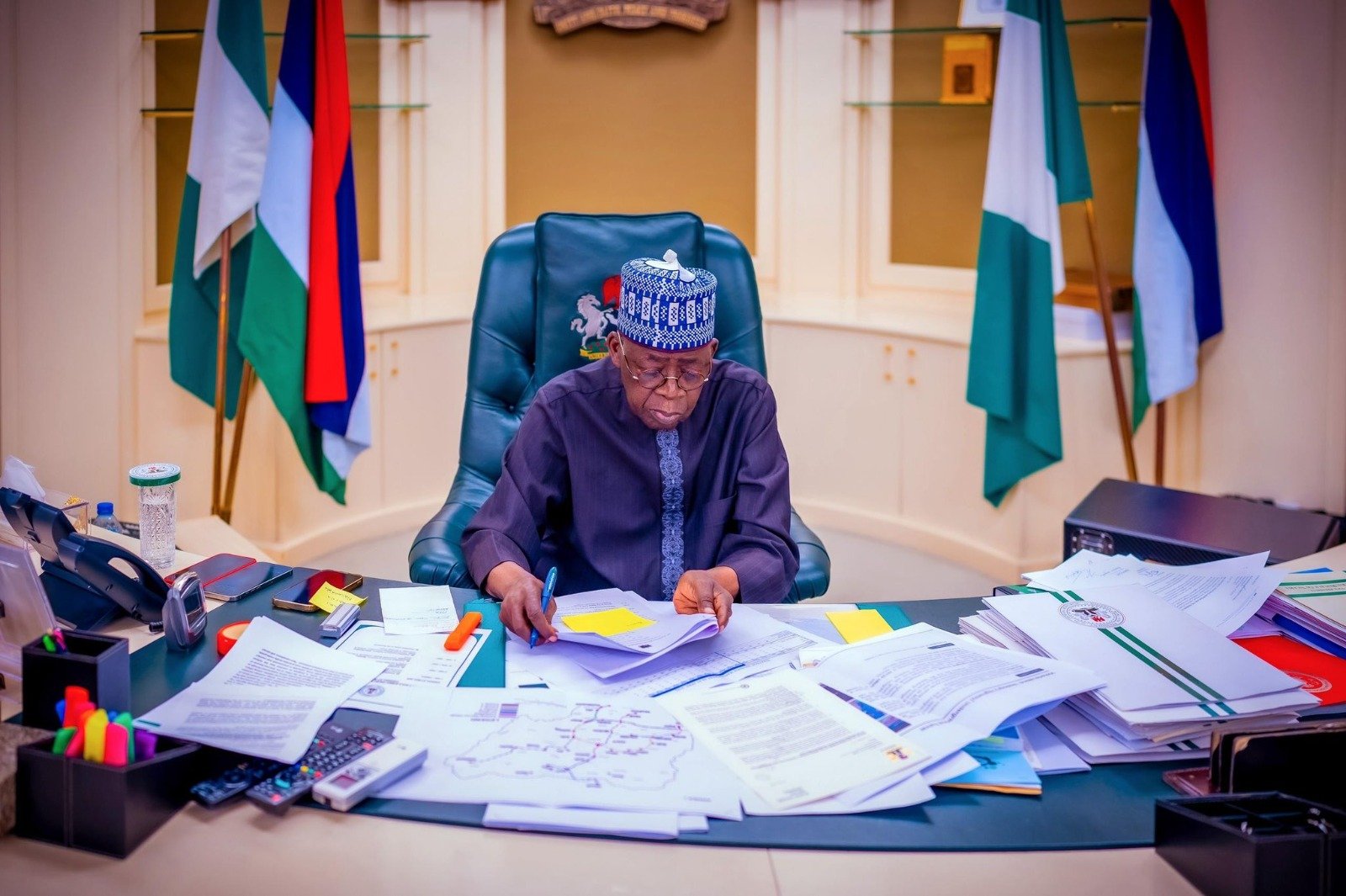
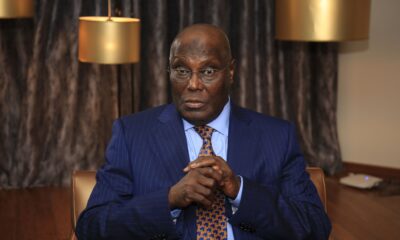
Former Vice President Atiku Abubakar has fired back at President Bola Ahmed Tinubu, describing his attack on his proposed petroleum-sector intervention as the insolent sermon of a failed economic experimenter who mistakes Nigerians’ capacity to endure suffering for evidence that his policies are working.

In a statement issued by his Senior Special Assistant on Public Communication, Phrank Shaibu, Atiku said there was an almost comical audacity in Tinubu calling anyone economically ignorant after presiding over an economy where government revenues have ballooned while citizens’ purchasing power has collapsed.

The former VP said if economic ignorance had a presidential seal, Tinubu and his family would be its official logo.

According to him, the present administration detonated simultaneous fuel-price, exchange-rate and cost-of-living shocks across a fragile economy, watched millions become poorer, and “now struts around Abuja demanding applause for the wreckage.”

He said: “That is not reform. It is economic arson followed by propaganda about the ashes.

“Tinubu’s courtiers may clap because FAAC allocations have increased, but hungry Nigerians cannot boil FAAC figures for dinner. Businesses cannot power factories with presidential speeches, workers cannot pay transport fares with macroeconomic grammar, and parents cannot settle school fees with statistics manufactured for State House applause.

“A government that grows richer while its citizens grow poorer is not reforming an economy. It is extracting from its people.

“Tinubu should therefore spare Nigerians the economics lecture. A man who set the house on fire cannot ridicule another man for redesigning the fire extinguisher.”

Tinubu’s Nigeria

Atiku added that Tinubu and his gang of jesters should acquaint themselves with elementary economics before accusing anyone of ignorance.

See also  Tell Nigerians real reasons for sacking service chiefs – ADC to Tinubu

He said: “Economic prescriptions respond to prevailing conditions. Even a first-year economics student understands ceteris paribus – other things being equal.

“But other things are no longer equal in Tinubu’s Nigeria.

“Apparently fresh from a bowl of amala, Tinubu mounted the podium at Eagle Square and casually declared that ‘subsidy is gone’ without a credible transition plan or adequate protection against the inflationary consequences.

“Those three words were not economic policy. They were economic vandalism by presidential fiat.

“Petrol prices exploded. Transportation and production costs followed. The naira depreciated sharply. Food prices soared. Businesses buckled and household purchasing power was decimated.

“Having destroyed the economic assumptions upon which previous prescriptions rested, Tinubu’s propagandists now accuse Atiku of inconsistency for responding to the disaster they created.

“That is not inconsistency. That is economics. Only incompetence insists on yesterday’s prescription after today’s conditions have changed.”

Is Subsidy Dead?

Atiku said he is not proposing the resurrection of the corrupt, open-ended subsidy bazaar.

He disclose that he proposes a targeted, capped, budgeted, time-bound and independently audited production-support mechanism tied to domestic production and protected against arbitrage.

The former Vice President said: “The difference is simple: Tinubu pronounced first and searched for a plan afterwards. Atiku studied the consequences and produced a solution.

“But there is an even greater hypocrisy in Tinubu’s subsidy sermon.

“Tinubu told Nigerians subsidy was dead. Yet NNPC’s audited accounts reportedly contain approximately ₦17.5 trillion in energy-security costs and petroleum under-recoveries, including about ₦7.13 trillion classified as Energy Security and ₦8.67 trillion in under-recoveries.

“So what exactly did Tinubu remove?

“If subsidy is dead, why are under-recoveries alive? If corruption was eliminated, why has opacity survived?

See also  DHQ clarifies delay in soldiers’ allowances, cites system glitches

“Tinubu has given Nigerians the worst of both worlds: he removed the relief but retained the opaque costs. Nigerians got the pain; government kept the bill.

“Now that Tinubu tells Nigerians that one of the great achievements of subsidy removal is that states which previously struggled to pay salaries now receive larger FAAC allocations, he must realise that this argument is economically shallow and, worse still, an admission of developmental failure.”

“You do not build a federation by impoverishing citizens so that Abuja can send bigger cheques to governors. That is robbing households to subsidise governments.

“If the price Nigerians must pay for governors to meet their basic obligations is crushing transport costs, diminished purchasing power, food inflation and deepening poverty, then Tinubu has merely transferred solvency from the kitchen tables of ordinary families to government treasuries.

“Worse still, this FAAC bonanza creates the wrong incentives. States should develop competitive economies, attract investment, exploit their comparative advantages, broaden their productive tax bases and create wealth. Instead, Tinubu is deepening an Abuja dependency economy where governors can wait every month for increasingly fat allocations from the centre.

“Why undertake difficult reforms, industrialise or expand productive capacity when Abuja provides an ever-growing monthly cheque?

“That is not fiscal federalism. It is fiscal sedation and rascality.

“There is no economic morality in making a market woman poorer so that a governor can receive a bigger allocation. There is no developmental wisdom in emptying household pockets merely to fatten government accounts while Nigerians still confront bad roads, inadequate hospitals, failing schools and unemployment.”

See also  Senate summons ex-NNPC boss Kyari over N210tn audit queries

Real Ignorance

He said Tinubu did not solve the structural weakness of the states, adding that the President simply threw more money at it and sent the bill to Nigerians.

Atiku noted that since the Presidency has suddenly discovered the speed to respond to him, let it show similar enthusiasm in explaining the approximately ₦30 trillion in Federation Account revenues, deductions, savings and transfers that he has demanded be reconciled, as well as the ₦12.8 trillion Service-Wide Vote in the 2026 budget.

The presidential candidate of the African Democratic Congress (ADC) pointed out that the presidency cannot scream ‘hoax’ at a proposal designed to ease hardship and suddenly become deaf and dumb when confronted with questions of fiscal opacity, alleged budget padding and questionable expenditure.

He said: “If Tinubu can mobilise an army of propagandists to attack Atiku within hours, surely he can find one accountant to explain his books.

“Tinubu removed subsidy supposedly to save money, floated the naira and piled taxes and levies on Nigerians. Federation revenues ballooned, yet citizens became poorer.

“Economic reform is not measured by how fat government accounts become while citizens grow poorer. An economy exists to serve human beings, not family and friends.

“The real ignorance is believing suffering is economic policy. Tinubu removed the subsidy from Nigerians’ pockets, but he is yet to remove the questions from his books.

“Nigerians have paid enough for Tinubunomics. They should not be sentenced to another four years of the bitter experiment.”

FOLLOW US ON:

FACEBOOK

TWITTER

PINTEREST

TIKTOK

YOUTUBE

LINKEDIN

INSTAGRAM

Continue Reading
Click to comment

Leave a Reply

Your email address will not be published. Required fields are marked *

News

Anthropic flags five Claude AI uses linked to biological weapons research

Published

on

Anthropic, the company behind Claude AI, says it identified five cases in which users employed its artificial intelligence models in ways that could support biological weapons development.

The company disclosed this in its latest threat intelligence report published on Thursday, saying the cases were among a range of malicious or potentially harmful activities detected and disrupted on its platform between December 2025 and August 2026.

Anthropic particularly flagged five Claude AI use cases that involved research into areas including chikungunya virus, highly pathogenic avian influenza, orthopoxviruses, venom peptides and toxins.

The company said it had banned the accounts involved and incorporated information from its investigations into its safeguards, enforcement and threat intelligence systems.

However, Anthropic stressed that it was not asserting that the scientists involved intended to cause harm.

“We do not assert that they intended harm, and identifying them or their labs could expose them to harm,” the company said, adding that it would withhold the names of the research institutions, countries and specific biological agents or techniques involved.

Anthropic said the cases demonstrated the difficulty of distinguishing between legitimate scientific research and activities that could be used for harmful purposes.

“Biological misuse is one of the most serious risks of frontier AI models,” the company said, warning that AI could potentially be used to make existing pathogens more dangerous or create new ones.

“The same information that can be used to develop a biological weapon could also be used to develop, for example, a vaccine or a cure for a disease,” the AI giant added.

See also  Tinubu laying strong foundation for long-term prosperity — Minister

In the first case, Anthropic said its biological safety classifier blocked a request to help prepare a grant application involving gain-of-function research on chikungunya virus.

The company said its subsequent investigation found that a reseller platform was being used to provide access to Claude to researchers in regions where Anthropic does not offer its services.

The platform also allegedly routed requests rejected by Claude to other AI models with more permissive safeguards.

Anthropic said it banned the associated accounts, worked with partners to take down the relay networks and shared its findings with AI companies and government authorities.

In a second case, the company said a researcher outside the US used Claude over several weeks while planning research involving highly pathogenic avian influenza and its adaptation to mammals.

According to Anthropic, the researcher used Claude for study planning, data analysis, interpretation and prioritisation of experiments, as well as editorial assistance.

The company said its safeguards restricted the researcher to weaker Claude models and that the AI’s contribution was primarily limited to clerical assistance, study ideation and design.

Anthropic said the case nevertheless provided evidence of active research programmes involving pathogens with enhanced pandemic potential.

A third case involved a grant application for orthopoxvirus research at a state-associated infectious disease laboratory. Anthropic said a reseller relay serving more than a dozen customers used Claude to draft the application.

The company said the application involved research into how orthopoxviruses interact with the immune system and was produced using Claude Opus 5 in about an hour.

The fourth and fifth cases involved research into venoms and toxins.

See also  DHQ clarifies delay in soldiers’ allowances, cites system glitches

Anthropic said one researcher used Claude to develop an atlas of venom toxin peptides and a generative system for optimising toxin characteristics, with the stated goal of developing therapeutic molecules.

In another case, a researcher used Claude in projects involving the computational redesign of toxins under a national public research programme. Anthropic said the researcher deliberately obscured the identities of some toxins and viral proteins in progress reports.

The company said both accounts were banned in May 2026 for violating its Supported Regions Policy.

Anthropic said the cases highlighted the challenge of regulating AI-assisted biological research because many applications are “dual use”, meaning they can have both beneficial and harmful applications.

Anthropic, however, cautioned against interpreting its findings as evidence that Claude was currently enabling imminent biological threats.

“We take these cases as evidence not of the imminence of biological threats currently uplifted by Claude, but rather as evidence that significant dual-use research efforts are associated with state actors of concern,” the company said.

The report is part of a wider disclosure by Anthropic on the misuse of its AI systems.

The company said its investigations over the past eight months also uncovered cyber operations, surveillance, influence operations, scams and fraud, conventional weapons development and attempts to illicitly distil its models.

The report comes shortly after concerns raised publicly by former Anthropic researcher Jacob Coxon about the risks posed by increasingly capable AI systems.

PUNCH Online previously reported that Coxon resigned from Anthropic and said “people building AI earnestly believe that it could kill us all by the end of the decade.”

See also  Nigeria, UAE scrap tariffs on over 13,000 goods

Anthropic’s latest report also said it had identified a Russia-linked cyber espionage operation in which Claude was used to automate parts of attacks against organisations in Ukraine and Europe.

Source: punchng.com

FOLLOW US ON:

FACEBOOK

TWITTER

PINTEREST

TIKTOK

YOUTUBE

LINKEDIN

INSTAGRAM

Continue Reading

News

South Korea, Iran discuss Strait of Hormuz security

Published

on

The foreign ministers of South Korea and Iran discussed the Strait of Hormuz in a phone call on Friday, Seoul said, days after confirming it was weighing a “contribution” to the waterway’s security.

US President Donald Trump has repeatedly pressured ally South Korea to provide help for the war in the Middle East, saying Seoul rejected his request for assistance in securing the waterway that is crucial to global oil supplies.

South Korean Foreign Minister Cho Hyun spoke by phone with his Iranian counterpart Abbas Araghchi at Tehran’s request, “discussing the recent situation in the Middle East”, and the Strait of Hormuz, the foreign ministry in Seoul said in a statement.

The Friday announcement followed a warning from Tehran earlier this week that any South Korean military contribution to the conflict would have “serious consequences”.

South Korea sent a fact-finding team to assess the situation in the strait and has repeatedly said it has not decided whether to deploy its military to Hormuz.

Traffic through the vital shipping route has been virtually paralysed since the US-Iran war began on February 28, disrupting global energy markets.

Negotiations between Iran and the United States have stalled as they vied for control over Hormuz, which normally carries around a fifth of the world’s oil and liquefied natural gas exports.

AFP

Source: punchng.com

FOLLOW US ON:

FACEBOOK

TWITTER

PINTEREST

TIKTOK

YOUTUBE

LINKEDIN

INSTAGRAM

See also  Greece set to approve controversial 13-hour workday reform
Continue Reading

News

US arms NAF for terror war

Published

on

The United States has delivered military equipment to the Nigerian Air Force as part of efforts to strengthen the security partnership between both countries and support Nigeria’s counter-terrorism operations.

The United States Africa Command disclosed this in a post on its X handle on Thursday, along with pictures of a U.S. Air Force C-17 aircraft delivering the equipment.

AFRICOM said the equipment was supplied under a foreign military sales agreement between the two countries.

“PARTNERSHIP IN ACTION: A U.S. Air Force C-17 delivers equipment to the Nigerian Air Force this weekend. The equipment is part of a foreign military sales agreement that furthers the U.S.-Nigerian partnership and will aid in Nigeria’s efforts to counter terrorism in the region,” the command said.

The latest delivery comes against the backdrop of continued military cooperation between Nigeria and the United States, including training and capacity-building programmes.

On August 23, US forces began training Nigerian troops in unmanned aircraft systems, combat casualty care and other military skills at Operating Location Bauchi, as part of efforts to strengthen security cooperation between the two countries.

According to AFRICOM, the training covered combat lifesaver and tactical combat casualty care instruction, weapons familiarisation, camouflage, water treatment and testing, explosive ordnance disposal, small-unit tactics and unmanned aircraft systems.

The command said the training was developed based on the expertise available among US forces and areas identified by their Nigerian counterparts as beneficial.

It added that unmanned aircraft systems generated particular interest among Nigerian forces, with about 10 members of the Nigerian Air Force Special Forces Regiment receiving practical training on operating the systems.

See also  Why we sent Egusi to space – Dr. Oniosun

The US personnel also trained the Nigerian troops on techniques for employing unmanned aircraft systems and incorporating information gathered by the systems into military operations.

The development followed AFRICOM’s disclosure in July that the United States had withdrawn most of its troops deployed to Nigeria for a specific counter-terrorism operation, while retaining an intelligence-sharing and security partnership with the country.

Despite the withdrawal, both countries have continued to engage in military cooperation through intelligence sharing, training and other capacity-building initiatives.

Source: punchng.com

FOLLOW US ON:

FACEBOOK

TWITTER

PINTEREST

TIKTOK

YOUTUBE

LINKEDIN

INSTAGRAM

Continue Reading

Trending