Lifestyle
PHOTOS: Superstitious Beliefs: How Do They Affect Your Life?

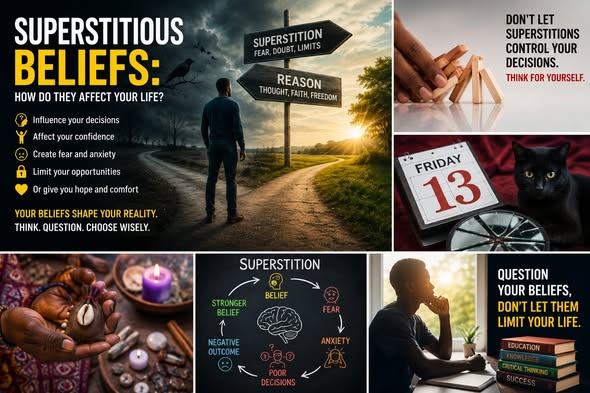
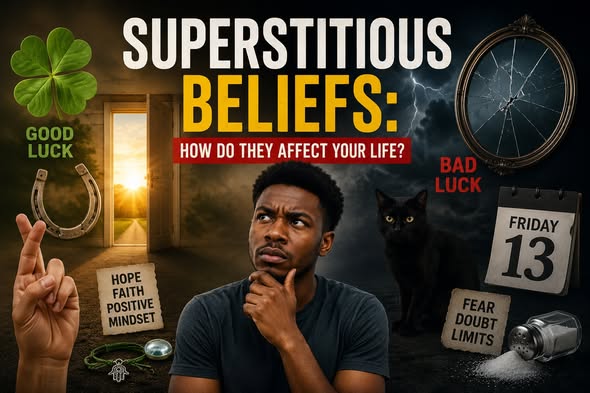
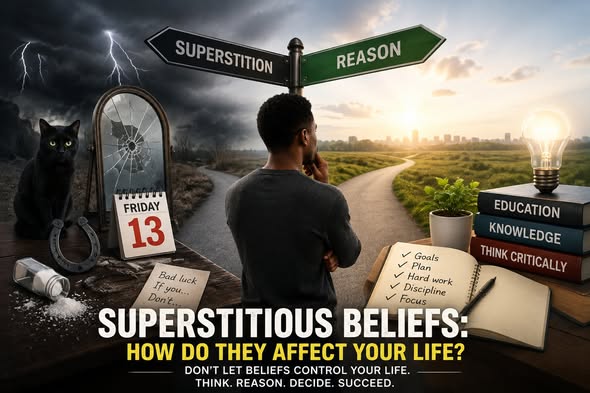
Superstitious beliefs are part of everyday life in many societies. People may avoid certain activities on particular days, believe that some objects bring good or bad luck, or interpret unusual events as signs of what is about to happen.
Some people follow these beliefs seriously, while others say they do not believe in them but still find themselves observing certain traditions “just in case.”
But how much influence do these beliefs really have on our lives?
What are superstitious beliefs?
Superstitions are beliefs that connect particular actions, objects, numbers or events with good or bad luck, even when there is no reliable scientific evidence showing that the connection exists.
For example, someone may believe that a particular number is unlucky, that breaking a mirror brings bad luck, or that a particular ritual can prevent something bad from happening.
Psychologists have suggested that superstition can partly arise from the human tendency to look for patterns and connections between events. Our brains naturally try to identify relationships between things, sometimes finding a cause-and-effect connection where one may not actually exist.
Why do people believe in superstitions?
One important reason is uncertainty.
When people don’t know what will happen, having a ritual or belief can make them feel that they have some control over the situation. Research has described superstition as a possible way of coping with uncertainty and anxiety, although relying on it can also interfere with ordinary decision-making.
Imagine someone preparing for an important examination. They may have a particular pen they consider “lucky” and insist on using it every time they take an exam.
The pen itself does not determine whether they pass or fail. But the person’s belief in it may make them feel calmer and more confident.
That raises an interesting question:
Is the belief helping the person—or is the person becoming dependent on the belief?
Superstition can influence decision-making
This is where superstition can become more serious.
If someone believes that an event is a sign of what will happen in the future, they may make important decisions based on that belief rather than evidence.
Studies have found that superstitious beliefs can influence decision-making, particularly when people are dealing with uncertainty or risk.
For example, someone might refuse a business opportunity because they believe a particular event is a bad omen. Another person might spend money on a supposed lucky object because they believe it will bring financial success.
The danger is not simply believing in a superstition. The bigger problem is allowing the belief to control important decisions.
Superstitions can affect confidence
Beliefs can influence how people feel and behave.
If someone repeatedly tells themselves that they are going to experience bad luck, they may become anxious and pay greater attention to negative events.
That can create a cycle:
Belief → fear → anxiety → poor decisions → negative outcome → stronger belief.
For instance, if someone believes that seeing a particular animal means something bad will happen, they may become worried after seeing it. Their anxiety could then make them distracted or less confident, potentially contributing to mistakes.
The person may subsequently conclude that the superstition was correct.
Psychologists describe related processes in which expectations can influence behaviour and make an expected outcome appear more likely.
But are all superstitions harmful?
No.
Not every superstition has a serious negative effect.
Some beliefs are simply cultural traditions. People may participate in them because they are part of their family’s history, community or culture.
A person can enjoy a cultural tradition without allowing it to control their life.
The important distinction is between:
“This is a tradition I enjoy.”
and:
“I cannot make an important decision unless I follow this belief.”
The second situation can become problematic.
Superstition and African society
Across Africa, many traditional beliefs have been passed from one generation to another.
Some are connected to cultural customs, while others involve interpretations of dreams, unusual occurrences, animals, particular days, numbers or events.
It is important to approach these subjects with respect because cultural beliefs can have deep meaning for communities.
At the same time, respecting a tradition does not mean that every claim associated with it should automatically be accepted as fact.
A healthy society should be able to preserve valuable cultural traditions while also encouraging critical thinking, education and evidence-based decision-making.
When superstition becomes dangerous
Superstition becomes particularly concerning when it causes people to:
Avoid necessary medical treatment.
Lose significant amounts of money.
Make major financial decisions without evidence.
Live in constant fear.
Blame innocent people for misfortune.
Discriminate against others.
Allow beliefs to prevent education or personal development.
Make important life decisions entirely on the basis of omens.
Research on superstitious thinking has found associations with judgment and decision-making, which is why examining these beliefs critically can be valuable.
The question we should ask ourselves
We don’t necessarily have to fight every superstition.
Instead, we should ask:
Does this belief improve my life, or does it control my life?
If a tradition brings cultural connection, enjoyment or harmless comfort, a person may choose to keep it.
But if a belief prevents someone from pursuing an opportunity, seeking appropriate help, making rational decisions or living without fear, it may be time to reconsider it.
Final thought
Superstitions have existed for centuries, and they are unlikely to disappear completely. Human beings naturally look for patterns and explanations, particularly when faced with uncertainty.
The goal should not necessarily be to ridicule people for what they believe.
The better goal is to think critically, examine our assumptions and make important decisions based on reliable information rather than fear.
After all, a belief should be something you can question—not something that controls your life.
FOLLOW US ON:





WHO REALLY BENEFITS WHEN A FAMILY FALLS APART?

SOME FAMILIES ARE NOT DESTROYED BY POVERTY OR ENEMIES — THEY ARE DESTROYED BY THE VERY PEOPLE WHO SHARE THE SAME BLOOD!

SOME FAMILIES ARE NOT POOR BECAUSE THEY LACK MONEY — THEY ARE POOR BECAUSE JEALOUSY, GREED, AND HATRED HAVE DESTROYED THEIR UNITY!

‘Sleeping Prince’ of Saudi Arabia dies after 20 years in coma

2027: Atiku delays ADC membership card collection amid rumoured Jonathan comeback

How A Class Of 24 Students Produced 2 Presidents, 4 Governors, 2 Ministers, 4 Emirs, 3 Justices, 4 Ambassadors and Other Influential Leaders

🔥 “I NO DEY GIVE SHI SHI” ERA DON PASS? WOMAN RAISES ALARM OVER PETER OBI’S ₦10 MILLION DONATION! 🇳🇬

YORUBA NATION: KWARA STATE IS MORE THAN ILORIN! 🇳🇬 | LIST OF YORUBA OBA, TOWNS & TRADITIONAL TITLES

Sardauna Assures Ansarul: “No One Will Be Left Behind” | Senator We Need #IwajuLaNlo
-

 Lifestyle14 hours ago
BE CAREFUL! YOUR CHILDREN MAY GROW UP TO BECOME THE VERY PERSON YOU PRETEND TO BE IN FRONT OF THEM!
-
News16 hours ago
Ebola scare: Lagos intensifies surveillance, upgrades isolation centre
-
News20 hours ago
‘I want to leave Aso Rock in 2031 to a Nigeria I can enjoy’ — Remi Tinubu
-
Crime19 hours ago
US department of justice charges 2 former FBI officials with lying to congress about Hunter Biden’s laptop
-
Politics20 hours ago
Supporting Tinubu’s re-election could pave way for Igbo presidency – Gov Soludo
-
Politics19 hours ago
Tinubu doesn’t deserve second term — Kwankwaso
-
Education17 hours ago
So-Safe Corps busts students’ hideout, intercepts seven during school hours
-
News19 hours ago
Govt that can’t protect, provide jobs for Nigerians is irresponsible – Kwankwaso tackles FG