Connect with us

Lifestyle

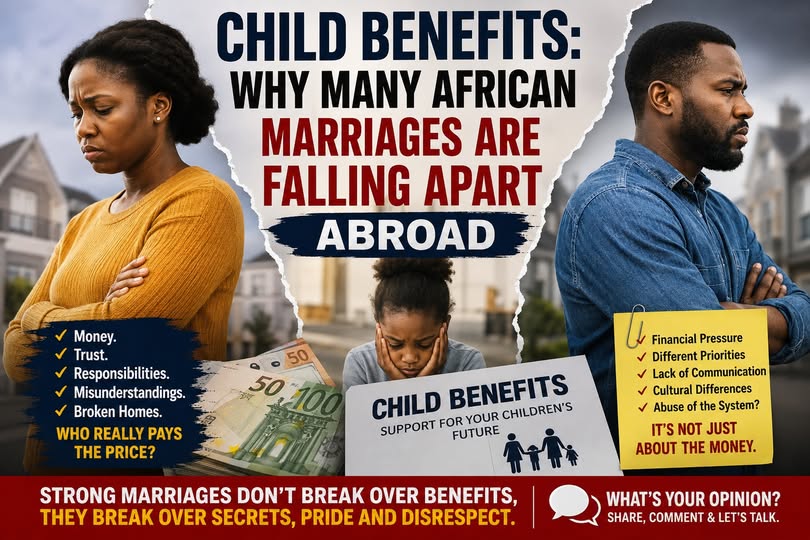
Child Benefits: Why Many African Marriages Are Falling Apart Abroad

Published

on

For many African families who move abroad, the dream is simple: find better opportunities, build a stable home, educate the children, support relatives back home, and create a better future for the next generation.

But behind the beautiful pictures of life abroad, some families are experiencing a painful reality that is rarely discussed openly.

Some marriages that survived poverty, long-distance relationships, family pressure, and difficult living conditions back home are struggling after migration.

In some cases, money and social benefits intended to support children have unexpectedly become part of the conflict.

This is not to say that child benefits cause divorce. They do not. Child benefits are designed to help families meet the costs of raising children. The deeper problems often involve mistrust, financial disagreements, unequal responsibilities, cultural differences, relationship breakdown, and misunderstandings about the welfare system.

However, when money enters an already troubled relationship, it can expose problems that were previously hidden.

When the dream of a better life becomes a family battle

For many African couples, moving abroad represents a major sacrifice.

One partner may travel first, secure accommodation, find employment, obtain legal residence, and eventually bring the spouse and children.

The family may arrive expecting life to become easier.

Instead, they discover rent, energy bills, childcare expenses, transportation costs, taxes, insurance, school-related expenses, and other financial responsibilities.

Then there may be child-related payments or allowances available to families.

And this is where disagreements can begin.

Questions that might never have been asked back home suddenly become extremely important:

Who receives the money?

Who controls it?

Should it go into the family account?

Should it be spent directly on the children?

Should one parent be allowed to save it?

Should some of it be sent to relatives in Africa?

What happens if the couple separates?

These questions may appear simple, but they can become explosive inside a troubled marriage.

“The money is for the children” — but who controls it?

One of the biggest sources of conflict can be the question of financial control.

A parent may believe that child-related benefits should be managed by the person who takes care of the children every day.

The other parent may argue that because they work and pay most household expenses, the money should be part of the family’s overall budget.

Neither position automatically makes someone a bad parent.

The problem begins when the issue becomes a battle for control rather than a discussion about the children’s needs.

A couple can start fighting over relatively small amounts of money until the disagreement becomes symbolic.

It may no longer be about the benefit itself.

It becomes:

“You don’t trust me.”

“You don’t respect me.”

“You are hiding money from me.”

“You only care about yourself.”

“You don’t contribute enough.”

“You are using the children against me.”

Once conversations reach this stage, the marriage may already have deeper problems.

Financial independence can change a relationship

Migration can dramatically change the economic relationship between husband and wife.

In some African marriages, one spouse may traditionally have been the main financial provider.

After moving abroad, however, the other spouse may become financially independent through employment, government-supported childcare arrangements, benefits, education, or other opportunities.

This can be positive.

Financial independence can empower people and reduce unhealthy dependence.

But it can also create tension where couples have never discussed how their roles should change.

A husband may feel that his authority is being challenged.

A wife may feel that she no longer needs to tolerate behavior she tolerated when she was financially dependent.

The disagreement may then become bigger than money.

It may become a disagreement about power, respect, freedom and control.

Some couples arrive abroad with unresolved problems

Another uncomfortable truth is that migration does not automatically fix a broken relationship.

Sometimes couples believe that moving abroad will solve everything.

They think:

“Once we get to Europe, things will become better.”

But a new country cannot automatically repair communication problems, infidelity, domestic conflict, resentment, jealousy, or emotional disconnection.

See also  PHOTOS: The Food Can’t Waste, Come With Your Coolers – Hilda Baci Begs Lagosians To Eat Jollof Rice After Breaking Record

In fact, migration can make those problems more visible.

A couple who barely communicated in Nigeria, Ghana, Cameroon, Kenya, Uganda, Sierra Leone, Liberia or elsewhere may communicate even less effectively when faced with the pressures of life abroad.

The environment has changed.

The problems have not.

The pressure of sending money home

For many African migrants, supporting relatives back home remains an important responsibility.

Parents may need help.

Siblings may request financial assistance.

Extended family members may expect regular contributions.

There may be school fees, medical bills, house projects, funerals, weddings and other family obligations.

But the spouse living abroad may see things differently.

One partner may say:

“My family needs help.”

The other may respond:

“Our children need help too.”

This can become a major source of marital conflict.

Imagine a family struggling to pay rent while one spouse is sending money abroad every month.

The other spouse may feel betrayed.

The spouse sending the money may feel that their partner does not understand their responsibility toward their parents and siblings.

Again, the child benefit may become part of the argument.

One person may say:

“You received money for the children and sent part of it home.”

The other may respond:

“I am the one taking care of the children every day.”

What started as a financial disagreement can quickly become a marital crisis.

Children can become the centre of the conflict

Perhaps the most painful part is when children become involved in their parents’ financial battles.

Children should not be forced to choose between their parents.

They should not hear:

“Your mother took your money.”

or

“Your father doesn’t care about you.”

They should not become messengers between parents.

They should not be used as weapons during separation.

A child-related payment exists to support the welfare of the child. It should never become a tool for humiliating, threatening or manipulating the other parent.

When parents fight over money in front of children, the emotional consequences can last much longer than the financial disagreement.

“My wife changed after coming to Europe”

This is a statement sometimes heard in African communities abroad.

A husband may complain:

“She was different when we were in Africa.”

But what does “changed” actually mean?

Perhaps she became more independent.

Perhaps she found employment.

Perhaps she learned about her legal rights.

Perhaps she developed new friendships.

Perhaps she became more confident.

Perhaps she simply stopped accepting certain things she previously tolerated.

The same can happen to men.

A woman may say:

“My husband changed after coming abroad.”

Perhaps he became more financially independent.

Perhaps he developed a new social circle.

Perhaps he began spending more time outside the home.

Perhaps he became exposed to a different lifestyle.

Migration can change people.

The challenge for couples is learning how to grow together instead of growing apart.

Welfare systems are not necessarily the enemy

It is important to make one thing clear:

Social welfare systems are not designed to destroy African marriages.

Child benefits and family support programmes exist in many countries because raising children is expensive.

They can help families pay for necessities and reduce financial pressure.

The problem is not necessarily the existence of these programmes.

The problem can be how couples understand and manage money within their relationship.

If a marriage is healthy, transparent and cooperative, financial assistance can become an opportunity to strengthen the family.

If a marriage is already full of mistrust and resentment, even a relatively small payment can become another battlefield.

What happens when couples separate?

When a marriage breaks down, financial arrangements can become even more complicated.

The couple may disagree about where the children should live.

They may disagree about who provides daily care.

They may disagree about expenses.

They may disagree about child-related payments.

They may accuse each other of withholding money.

They may involve relatives.

They may involve lawyers or social services.

And eventually, what began as a private family disagreement can become a formal dispute.

See also  Actor Charlie Sheen opens up about sexual encounters with men for the first time

This is why couples should understand the laws and benefit rules of the country where they live rather than relying on information from friends, WhatsApp groups, or community gossip.

Rules differ from one country to another.

What applies in Belgium may not apply in Germany.

What applies in Germany may not apply in the United Kingdom.

What applies in France may not apply in the Netherlands.

People should obtain accurate information from the relevant authorities.

The danger of comparing African marriages with Western marriages

Another mistake is assuming that every African marriage abroad must follow exactly the same cultural expectations that existed back home.

Migration creates a new environment.

A spouse may encounter ideas about marriage, parenting, gender roles, privacy, personal finances and individual rights that differ significantly from what they grew up with.

That does not mean African culture is wrong.

It also does not mean everything in Western culture is automatically better.

It means couples need to have honest conversations about which values they want their household to follow.

A marriage cannot survive permanently on assumptions.

Couples must communicate.

When one spouse becomes dependent on benefits

There can also be situations where one spouse becomes heavily dependent on government support while the other works long hours.

This can create resentment.

The working spouse may feel:

“I am carrying the whole family.”

The spouse staying at home may respond:

“I am looking after the children and managing the household.”

Both contributions may be real.

The problem arises when neither person appreciates the contribution of the other.

Raising children is work.

Paid employment is work.

Household management is work.

A successful marriage requires both partners to recognize that family responsibilities cannot always be measured simply by who brings home a salary.

Transparency can prevent many financial conflicts

One of the simplest ways couples can reduce financial arguments is through transparency.

Partners should know:

What income is coming into the household
What major expenses exist
What debts need to be paid
What money is being saved
What money is being sent to relatives
What the children’s needs are
What government support the family receives
What the family’s financial goals are

This does not mean every couple must have exactly the same bank account arrangements.

Different families can organize their finances differently.

But secrecy is dangerous.

When one spouse discovers that the other has been hiding money, opening secret accounts, sending large amounts abroad or making major financial decisions without consultation, trust can collapse.

African men and women must have difficult conversations

Before marriage, couples should talk about money.

After marriage, they should continue talking about money.

After migration, they should talk about money again.

And after having children, they should revisit the conversation.

Questions should include:

How will we manage our household income?

How much should we save?

How much can we send to relatives?

Who pays which bills?

How will we manage child-related support?

What happens if one person loses their job?

What are our long-term goals?

How will we handle disagreements?

These conversations may not be romantic.

But they can save marriages.

Don’t let social media define your marriage

Social media has also created another problem.

People see photographs of other African families abroad showing beautiful houses, expensive cars, holidays and happy marriages.

They may think:

“Everybody is doing better than us.”

But social media rarely shows the arguments behind closed doors.

It does not show unpaid bills.

It does not show loneliness.

It does not show immigration stress.

It does not show marital counseling.

It does not show separation.

It does not show parents crying because they cannot see their children.

Do not compare your real marriage to somebody else’s edited online life.

When money becomes more important than the marriage

A marriage becomes vulnerable when money becomes the measure of love.

A husband may believe:

“If I pay all the bills, my wife must obey me.”

A wife may believe:

See also  Makoko demolition: When economic interest overrides humanity

“Because I receive money for the children, I don’t need to explain anything to my husband.”

Both attitudes can create problems.

Marriage requires more than financial contributions.

It requires communication, respect, responsibility, trust, forgiveness and cooperation.

Money can support a family.

Money cannot create love.

And money cannot repair a relationship that both partners have stopped investing in.

The real question is not “Who gets the child benefit?”

The deeper question is:

“How can we make sure our children are properly cared for while maintaining a healthy relationship between their parents?”

That should be the focus.

Instead of asking:

“Who owns the money?”

Couples should ask:

“What do our children need?”

Instead of:

“How much can I keep?”

Ask:

“How can we build a stable future for this family?”

Instead of:

“Your money versus my money,”

ask:

“What financial system works fairly for everyone in this household?”

What African couples abroad can do

If you are an African couple living abroad, consider these practical steps:

1. Have regular financial meetings

Sit down together and review household income, expenses, savings and children’s needs.

2. Keep financial records

Know what comes into the household and what goes out.

3. Agree on support for relatives

Helping family members is admirable, but it should not destroy your own household.

4. Keep children out of adult conflicts

Never make children responsible for resolving parental disagreements.

5. Learn the local rules

Do not rely entirely on community rumors about benefits, taxes, residence or family law.

6. Seek help early

Marriage counseling, family mediation or professional advice can sometimes prevent a disagreement from becoming a separation.

7. Respect each other’s contributions

A salary is not the only contribution to a family.

8. Avoid secret financial decisions

Financial secrecy can destroy trust.

9. Build shared goals

Saving for a home, educating children, starting a business or preparing for retirement can give couples a common purpose.

10. Remember why you migrated

The purpose of migration should not become simply earning money.

For many families, the ultimate goal was to build a better life together.

The uncomfortable truth

Sometimes the child benefit is not the real problem.

The real problem is the marriage.

The money simply reveals what was already there.

If there is trust, communication and mutual respect, financial support can help a family survive difficult times.

If there is jealousy, secrecy, resentment, manipulation and poor communication, almost anything can become a source of conflict.

Today it may be child benefits.

Tomorrow it may be a bank account.

Next week it may be rent.

Then it may be a car.

Eventually, the couple may realize that they are no longer fighting about money.

They are fighting about the relationship itself.

Before the marriage falls apart

African families abroad should not wait until divorce papers arrive before taking their relationship seriously.

Talk.

Listen.

Budget together.

Respect one another.

Protect the children.

Understand the law.

Seek help when necessary.

And remember that independence should not mean isolation, while family responsibility should not mean control.

The goal should not be to determine which spouse “wins.”

The goal should be to build a family where the children are protected, both parents are respected, and financial assistance is used responsibly for the family’s welfare.

Child benefits can help families.

But no government payment can replace communication, trust and responsibility inside a marriage.

And if a marriage collapses because of money, the money was probably only part of the story.

The bigger question is: what happened to the trust between the two people who once decided to build a life together?

What do you think?

Do child benefits and financial independence make some African marriages abroad more difficult, or are these simply symptoms of deeper marital problems?

Should couples combine child-related benefits with household income, or should the parent caring directly for the children control the money?

Share your opinion respectfully in the comments.

FOLLOW US ON:

FACEBOOK

TWITTER

PINTEREST

TIKTOK

YOUTUBE

LINKEDIN

INSTAGRAM

Continue Reading
Click to comment

Leave a Reply

Your email address will not be published. Required fields are marked *

Lifestyle

THE DISTURBING OBSESSION WITH ARTIFICIAL BEAUTY: BREAST ENLARGEMENT, BUTT ENHANCEMENT, SKIN BLEACHING AND BODY TATTOOS — HAVE WE LOST OUR NATURAL IDENTITY?

Published

on

Has the modern obsession with physical appearance gone too far? From breast enlargement and butt enhancement to skin bleaching and excessive body modifications, society is increasingly caught in a troubling battle with natural beauty.**

There was a time when people were encouraged to appreciate their natural appearance. Today, however, the definition of beauty seems to be changing at an alarming pace. Bigger breasts, bigger buttocks, lighter skin, artificial curves and elaborate body modifications have become increasingly visible in popular culture.

The uncomfortable question is: **Are people genuinely expressing themselves, or has society created a generation that feels ashamed of looking natural?**

## THE NEVER-ENDING RACE FOR BIGGER BREASTS AND BUTTOCKS

One of the most controversial developments in modern beauty culture is the growing desire for breast enlargement and butt enhancement.

For some individuals, cosmetic surgery is a personal decision that improves their confidence. However, the increasing pressure to achieve exaggerated body proportions raises serious questions about the influence of social media, celebrity culture and unrealistic beauty standards.

Some people undergo multiple procedures in pursuit of a particular appearance. Unfortunately, cosmetic procedures can carry significant medical risks, including complications that may be life-threatening.

When does the desire to look attractive become an obsession that puts personal health at risk?

## SKIN BLEACHING: WHY IS NATURAL SKIN COLOUR NO LONGER ENOUGH?

Perhaps one of the most troubling beauty trends is skin bleaching.

Why should anyone feel that their natural skin colour is something that needs to be corrected?

Across different societies, lighter skin is sometimes associated with attractiveness, social status and acceptance. These harmful perceptions can create pressure, particularly among young people, to abandon their natural complexion.

See also  PHOTOS: The Food Can’t Waste, Come With Your Coolers – Hilda Baci Begs Lagosians To Eat Jollof Rice After Breaking Record

The consequences can go beyond appearance. Some skin-lightening products contain dangerous ingredients, including mercury or potent corticosteroids, which can cause serious health problems.

**Imagine being so uncomfortable with the skin you were born with that you are willing to risk your health just to become several shades lighter.**

Who benefits from this insecurity?

## BODY TATTOOS: SELF-EXPRESSION OR AN EXCESSIVE OBSESSION?

Body tattoos have become an increasingly popular form of personal expression.

For some people, tattoos represent memories, culture, identity, art or deeply personal experiences. There is nothing inherently wrong with that.

However, questions arise when body modification becomes an endless pursuit, with people repeatedly altering their appearance without considering the long-term consequences.

Personal expression should come with personal responsibility.

## SOCIAL MEDIA IS REDEFINING BEAUTY

Instagram, TikTok and celebrity culture have created an environment where physical appearance can seem more valuable than character.

Filters, cosmetic enhancements, edited photographs and unrealistic body proportions have influenced how people judge themselves and others.

The danger is that people begin comparing their ordinary lives and natural bodies with carefully manufactured images.

Instead of developing confidence, they develop new insecurities.

Instead of appreciating what makes them unique, they start chasing somebody else’s appearance.

And the beauty industry continues to benefit from the belief that people are never attractive enough.

## HAVE WE BECOME ASHAMED OF OUR NATURAL SELVES?

This is not an argument against personal freedom, fashion, cosmetic surgery or individual choices. Everyone has the right to make decisions about their own body.

But personal freedom should not prevent society from having an honest conversation about insecurity, dangerous beauty standards and the pressure to change one’s appearance.

See also  Tension in Osun council as Ataoja, Oluwo battle for seniority

Natural beauty should never be treated as a disadvantage.

Dark skin is beautiful. Natural body shapes are beautiful. Ageing is natural. Individual differences are part of what makes human beings unique.

Perhaps the real problem is not that people want to look beautiful. It is that society has created an endless list of things people supposedly need to change before they can feel beautiful.

## THE BIG QUESTION: WHERE DO WE DRAW THE LINE?

Are we witnessing a new era of personal freedom and self-expression, or are we gradually becoming prisoners of artificial beauty standards?

How much should someone alter their natural appearance in the name of beauty?

And why has appreciating our natural features become such a difficult message to promote?

**The truth may be uncomfortable, but it deserves to be discussed.**

### JOIN THE CONVERSATION

1. Has society become dangerously obsessed with artificial beauty?
2. What drives the increasing demand for breast and butt enlargement?
3. Why do some people feel pressured to bleach their natural skin colour?
4. Are excessive body modifications becoming a cause for concern?
5. Is social media destroying people’s confidence in their natural appearance?

**Drop your honest opinion in the comments. Is this modern beauty, personal freedom or a disturbing obsession with changing what nature gave us?**

*Newsbreak365 — Bringing the conversations society is afraid to have.*

FOLLOW US ON:

FACEBOOK

WHATSAPP CHANNEL

TWITTER

PINTEREST

TIKTOK

YOUTUBE

LINKEDIN

INSTAGRAM

Continue Reading

Lifestyle

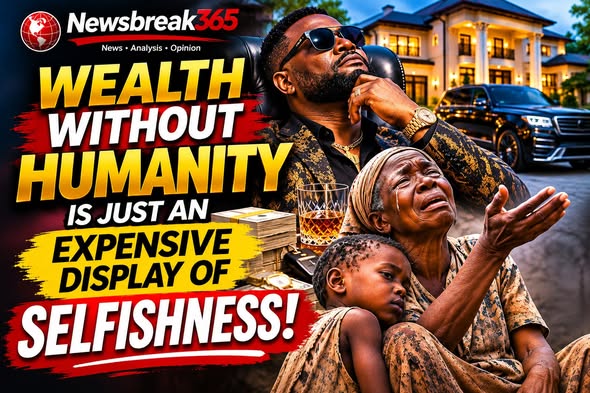
WEALTH WITHOUT HUMANITY: WHEN BEING RICH BECOMES AN EXPENSIVE DISPLAY OF SELFISHNESS

Published

on

Money can buy mansions, luxury cars, designer clothes and expensive lifestyles. But when wealth destroys compassion, what exactly is there to celebrate?**

In today’s society, one disturbing reality is becoming increasingly difficult to ignore: we have created a culture where people are celebrated more for what they possess than for who they are.

The size of someone’s mansion, the brand of their car, the designer clothes they wear and the amount of money they spend have become powerful measurements of social importance. Meanwhile, kindness, generosity, integrity and compassion are increasingly pushed into the background.

But here is an uncomfortable question: **What is the true value of wealth when the person possessing it has no compassion for others?**

## When money becomes more important than humanity

There is something deeply disturbing about a society that can celebrate someone spending millions on a lavish party but considers helping a struggling family an unnecessary burden.

Some wealthy individuals will spend enormous amounts of money trying to impress strangers, yet hesitate to assist someone genuinely in need.

They will buy another luxury vehicle while ignoring the suffering happening just outside their gates. They will throw extravagant celebrations, invite influential people and display their riches on social media, but struggle to show ordinary human kindness.

Of course, nobody should be forced to give away their wealth. People have the right to enjoy the rewards of their hard work. Being wealthy is not a crime, and enjoying luxury is not automatically selfish.

The problem begins when personal comfort becomes more important than human dignity, and when wealth produces arrogance instead of responsibility.

See also  Makoko demolition: When economic interest overrides humanity

## We have started worshipping money instead of character

Perhaps one of the biggest problems in modern society is how easily we confuse financial success with human greatness.

Someone can be extremely wealthy and still be dishonest, arrogant, insensitive and cruel. Yet society may continue to celebrate that individual simply because of their financial status.

People who own expensive properties are treated like celebrities, while hardworking people struggling to survive are sometimes treated as though they have failed in life.

What kind of values are we teaching the next generation?

Are we raising children to become good human beings, or are we raising them to believe that becoming rich is more important than becoming responsible, compassionate and decent?

When children grow up watching society worship money without questioning character, we should not be surprised when material possessions become their ultimate definition of success.

## Your bank account cannot measure your humanity

True success should not be measured exclusively by how much money someone accumulates.

It should also be measured by how they treat people who cannot offer them anything in return.

Can you respect someone who cannot help you financially? Can you show kindness without expecting publicity? Can you recognise the dignity of someone who has nothing to offer you?

These are questions that reveal character far more than expensive watches, luxury homes and impressive bank balances.

A person who uses modest resources to support struggling people may demonstrate greater humanity than someone with enormous wealth who lives entirely for personal gratification.

See also  Charly Boy celebrates daughter’s engagement to female partner

**Being rich is an economic achievement. Being humane is a character achievement. They are not the same thing.**

## One day, the display will end

There is a reality that money cannot negotiate with: time.

The cars will eventually change owners. The mansions will pass into other hands. Expensive clothes will become outdated, and the attention that once surrounded someone’s wealth will eventually disappear.

What remains is the impact that person made on other people’s lives.

People may forget the car you drove, the expensive restaurants you visited and the amount of money you spent on celebrations.

But they are less likely to forget how you treated them when they were struggling.

You may impress thousands of people with your wealth, but genuine kindness can earn you something money cannot purchase: sincere respect.

## Society must stop confusing luxury with greatness

This is not an attack on wealthy people. There are generous, compassionate and responsible wealthy individuals who use their resources to create opportunities, support communities and improve lives.

They deserve recognition.

But we must stop treating wealth as automatic evidence of good character.

A society that celebrates financial success while ignoring moral failure risks producing generations that know how to make money but have forgotten how to care about other human beings.

We need to change what we admire.

Celebrate people who create opportunities, support the vulnerable, treat workers with dignity, stand up for justice and use their influence responsibly.

Let wealth be a tool for progress, not a weapon for arrogance.

**The ultimate tragedy is not being poor while others are rich. It is becoming so obsessed with being rich that you lose the ability to recognise another person’s suffering.**

See also  Actor Charlie Sheen opens up about sexual encounters with men for the first time

—

## THE BIG QUESTION: IS WEALTH STILL SUCCESS WHEN HUMANITY IS MISSING?

Can someone genuinely be called successful if they have everything money can buy but lack compassion, kindness and concern for others?

Should society continue celebrating people simply because they are wealthy, or should character and positive contributions to humanity matter more?

Perhaps it is time to stop asking only, “How much money does this person have?” and start asking, “What kind of human being is this person?”

**Because wealth without humanity is not greatness. It is simply an expensive display of selfishness.**

*What is your opinion? Join the debate and share your perspective.*

FOLLOW US ON:

FACEBOOK

WHATSAPP CHANNEL

TWITTER

PINTEREST

TIKTOK

YOUTUBE

LINKEDIN

INSTAGRAM
Continue Reading

Lifestyle

YOU ARE RICH, BUT YOUR FAMILY AND COMMUNITY ARE SUFFERING: WHAT IS THE REAL VALUE OF YOUR WEALTH?

Published

on

Having millions in your bank account means very little if you have lost the ability to show compassion to people who genuinely need your help.**

In a society where wealth is increasingly celebrated as the ultimate symbol of success, an uncomfortable question deserves to be asked: What is the real value of being wealthy when the people around you are struggling to survive?

You drive expensive cars, own luxurious properties, wear designer clothes, travel to exotic destinations and spend enormous amounts of money maintaining an image of success. Your social media pages are filled with pictures of luxury, expensive celebrations and extravagant lifestyles.

But behind that beautiful display of wealth, there may be a painful reality.

Your elderly parents may be struggling. Your siblings may be unable to pay their children’s school fees. A relative may be battling a medical emergency. Children in your community may be dropping out of school because their families cannot afford basic educational expenses.

Yet, despite having the financial capacity to make a difference, you choose to look away.

## WHEN WEALTH BECOMES MORE IMPORTANT THAN HUMANITY

One of the disturbing realities of modern society is how some people allow financial success to change their attitude towards others.

Before becoming wealthy, they understood the pain of poverty. They knew what it meant to struggle, borrow money and depend on the kindness of others.

But after acquiring wealth, some begin to behave as though they have forgotten where they came from.

Suddenly, struggling relatives become irresponsible. Poor friends become liabilities. People asking for assistance are labelled opportunists.

See also  Massive Crowd Welcomes Sunday Igboho to Olowo’s Palace in Ondo State | Traditional Royal Reception

They have money for expensive parties, luxury holidays, unnecessary shopping and public displays of generosity, but helping someone in genuine need becomes an unbearable financial responsibility.

Is this really what success should look like?

## YOU CAN BE WEALTHY WITHOUT BECOMING EVERYBODY’S BANK

To be fair, nobody is suggesting that wealthy individuals should become the financial responsibility of their entire extended family.

Not every request for financial assistance is genuine. Some people take advantage of kindness, refuse to work towards improving their circumstances and expect others to solve every problem.

Wealthy people also have personal responsibilities, financial commitments, businesses, children and future plans to protect.

However, there is a significant difference between setting healthy financial boundaries and deliberately turning your back on people who genuinely need help.

You do not have to give away your entire fortune to demonstrate compassion.

Sometimes, paying a child’s school fees, helping someone access medical treatment, providing food for a struggling household or supporting a young person with vocational training can change an entire life.

The problem is not that wealthy people cannot help everybody. The problem is when some people have the ability to help somebody but choose to help nobody.

## WHAT EXACTLY ARE YOU CELEBRATING?

There is something deeply questionable about celebrating extraordinary financial success while remaining completely indifferent to the suffering around you.

What is the purpose of accumulating wealth if it only serves to make your lifestyle more comfortable while you ignore every opportunity to improve another person’s life?

What is the value of building mansions when your elderly parents cannot afford basic necessities?

See also  Tension in Osun council as Ataoja, Oluwo battle for seniority

What is the achievement in buying another luxury vehicle when a struggling relative cannot afford life-saving medical treatment?

And what does it say about your character when you spend millions entertaining strangers but cannot offer reasonable assistance to someone genuinely struggling within your own family?

These are uncomfortable questions, but they deserve honest answers.

## WEALTH SHOULD NOT DESTROY YOUR SENSE OF HUMANITY

Money can provide comfort, security, opportunities and freedom. It can transform families and communities when used responsibly.

A wealthy individual who invests in education, supports struggling families, creates employment and contributes to community development leaves a legacy that goes beyond material possessions.

But wealth without compassion can create a dangerous illusion: the belief that financial superiority makes someone more important than everyone else.

Your bank balance does not determine your humanity. Your expensive lifestyle does not automatically make you successful as a human being.

One day, the cars will become old, the houses will change ownership, the expensive clothes will wear out and the money you worked so hard to accumulate will eventually be left behind.

What will people remember about you?

Will they remember someone who accumulated wealth and displayed it proudly, or someone whose success brought hope and opportunities to others?

## THE BIG QUESTION: IS WEALTH A PERSONAL PRIVILEGE OR A SOCIAL RESPONSIBILITY?

This debate deserves more attention, especially in communities where poverty, unemployment, educational inequality and inadequate access to healthcare remain serious challenges.

Should wealthy people feel morally responsible for helping struggling members of their families and communities?

Or should people have the absolute freedom to enjoy their wealth without being judged for refusing to assist others?

See also  1990 Nigerian coup attempt : A photo captures the 1990 coup plotters during their trial

Where should the boundary between personal financial freedom and social responsibility be drawn?

Perhaps the real measure of wealth is not simply how much money you accumulate, but how wisely you use the opportunities that money gives you.

**You do not have to make everybody rich. But if you have the power to make someone’s difficult life a little easier, why choose to make no difference at all?**

**WHAT IS YOUR POSITION?**

Is a wealthy person who refuses to help struggling family members and neighbours selfish, or does nobody have the right to demand assistance simply because someone else is rich?

Share your opinion in the comment section. We want to hear both sides of this debate.

*Newsbreak365 — Beyond the Headlines.*

FOLLOW US ON:

FACEBOOK

WHATSAPP CHANNEL

TWITTER

PINTEREST

TIKTOK

YOUTUBE

LINKEDIN

INSTAGRAM

Continue Reading

Trending