Connect with us

Lifestyle

Makoko demolition: When economic interest overrides humanity

Published

on

When American missionary and science teacher, Jack Kyle, arrived in the mega slum of Makoko, Lagos in August 2023, I doubt if he ever thought that one day, his love for slum dwellers and the underserved would never find expression in the area, at least not among the tough-skinned ones living on the dirty lagoon at the backyard of the Ebute Meta area of the mega city. Sixty-year-old Kyle, who left his family of five children and lovely wife in Manhattan, Kansas, United States, didn’t settle in Makoko because of his love for the ghetto, but to be able to add positive values to the lives of these strange fellows in their ‘natural habitat’.

Apart from building a ‘house’ that cost about $4,000 in the community for himself and other volunteers, the American missionary, who defied the opposition of family members back home to embark on this treacherous journey, ensured that, from rainwater, he was able to provide clean water for some residents using solar power. He equally had plans for aquaculture and sewage-to-menthane gas, among other utilities, ignored by the relevant authorities.

At a time in the past, I wondered if the throng of willing donors never had any other locations, orphanages and struggling public schools, apart from this waterfront ghetto, where their supports are much needed both in Lagos and beyond. The little contributions of Kyle and several other Nigerians – individuals and organisations – in helping the slum dwellers in Makoko have sadly gone down the lagoon, where the residents and landlords once had their log houses.

Some years back, a few heads of a few organisations truly took the support of their organisations outside Lagos in order to reach out, no matter how little. A financial institution with its headquarters in Lagos ‘adopted’ a private school in Abuja where the organisation pumped in money like water from a big tap. It wasn’t until the school was involved in a big crisis that the undiscerning minds among us knew that the school actually belonged to the Oga Patapata of the organisation which had adopted the school. A few years later, the chairman of the board took a loan of N120bn to buy a Disco that the Goodluck Jonathan government put on sale, and of course, refused to pay back. And you think such an organisation wouldn’t go under?

See also  Flora Azikiwe: Nigeria’s First First Lady and Pillar of Early Nationhood

Do you equally want me to tell you about the ‘adoption’ of the private school of the late wife of a living former military president, where the Niger State Government paid the salaries and other expenses of the private institution for years before such brazen impunity was discovered? Could it be because the founder of the school had died? Nigerians love to help in wonderful ways, you know! Let’s go back to Makoko for now, please.

Ever since I noticed this curious settlement from the vantage view of the Third Mainland Bridge, I never ceased to wonder if real humans actually lived in those shanties until it became clear that all manners of fishermen – Ijaws, Beninese, Ghanaians, and their families – had their abode in the Makoko floating slum. You will be dead wrong if you believe the massive ghetto housed fishermen alone. There were schools, a big orphanage, churches, and others, mostly established by private individuals, charitable groups, corporate entities and organisations.

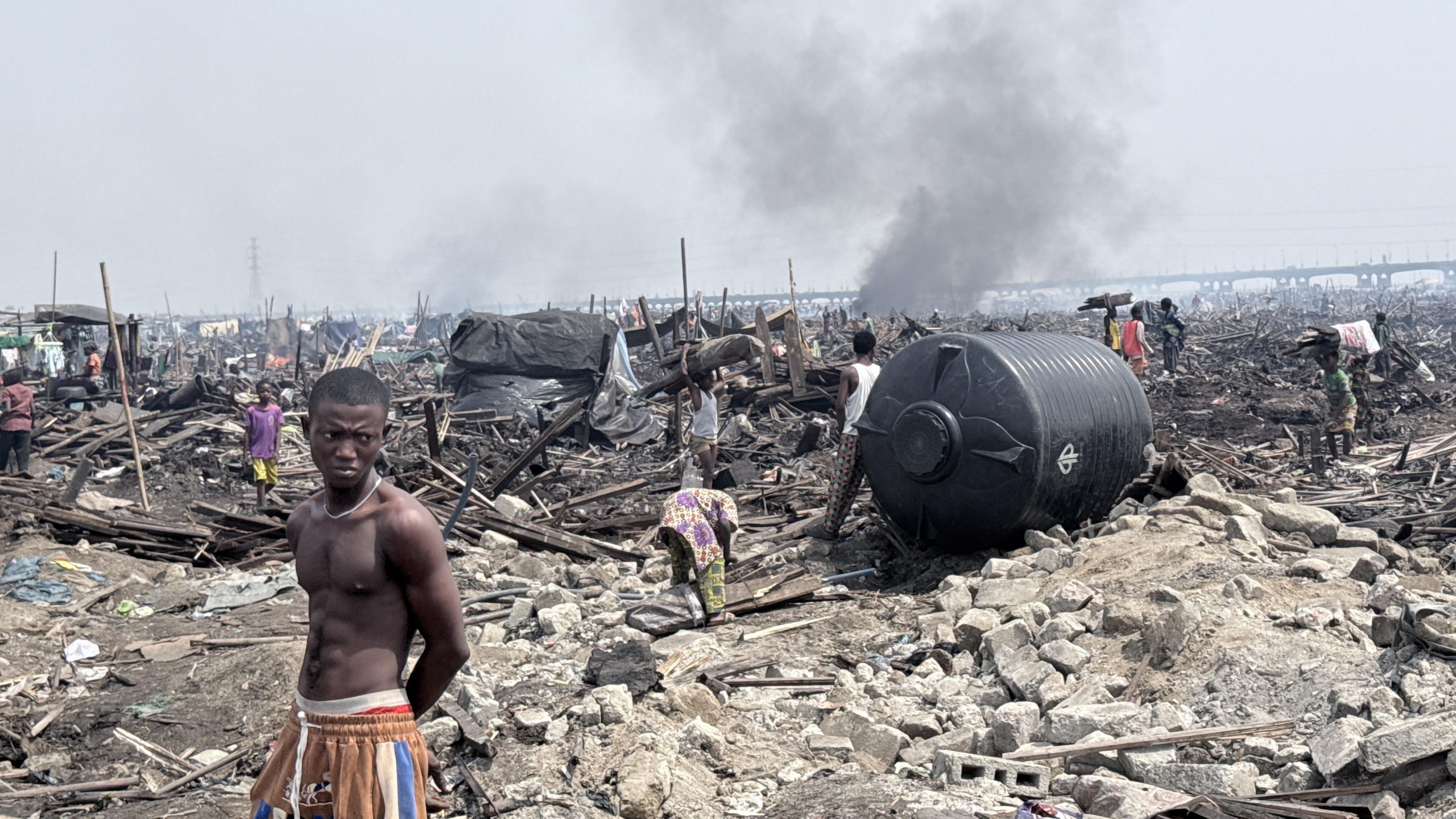
While the location was conducive for the occupation of the residents and providing contents for local and visiting bloggers, it had long been an eyesore. So, the end of this kingdom, if it hadn’t been foretold by some of our self-styled prophets, had been long in coming. The inevitable end came in January courtesy of its demolition by the Lagos State Government, which is not in any way new to demolitions and land reclamation by the way.

In some other parts of the world, pets (and other animals) almost have the same right to life and decent living as their human owners. Imagine driving on a highway (not Nigerian highway o), and you are warned of ‘deer crossing, apply caution’! God helps you if you are unfortunate enough to run into any deer. Imprisonment or deportation beckons or both, depending on your immigration status. In broad daylight, some squirrels deliberately torment your imagination as they playfully jump from one tree branch to another and sometimes take over a small field by your residence. May God deliver you from those deadly thoughts you are entertaining at the moment – in case you are thinking of breaching their ‘animal’ rights.

In our dear country, however, the case is different for a simple reason. We tend to act before we think about the consequences, no matter how fatal the outcome may be. Some of the reactions the Makoko demolition has attracted may sound political, especially from those who seek to reap political capital from this and other sad episodes. The underbelly of this demolition is that we have collectively lost our sense of humanity, not that we have ever prioritised our lives and our living at any time before now.

See also  FULL LIST: 68th Grammy Award Nominations

It may interest you to know that Makoko isn’t the first slum to be demolished with the same sense of insensitive logic. During the military era, the Maroko slum (now Lekki) was levelled on the orders of then-Col. Raji Rasaki, the military administrator, who acted with ruthless alacrity in 1990. In July 2012, thousands of residents were displaced when a part of the Makoko ghetto was turned upside down. In March 2016, no fewer than 3,000 were sacked in Mosafejo, Ajegunle, allegedly on short notice.

Otodo Gbame, a Lekki waterfront ghetto, suffered the same fate between November 2016 and April 2017, where 30,000 were said to have been evicted, and the shanties housing them were demolished. There were claims that no fewer than 11 lives were lost. Ilubinrin, a neighbourhood of Obalende/Osborne, Ikoyi, wasn’t spared the same year from the reclamation of more land. Ilaje Otumara fell in March 2025, while the Itesiwaju Ajumoni in Oworonshoki followed suit in October, drawing a massive outcry and protests.

Uncle, are you saying the government should have left those squalid settlements to thrive side-by-side with our much-desired megacity, especially when the Makoko slum, which is the focus here, is expectedly illegal in every sense? Not at all! I was taught as far back as my secondary school days that the government holds power in trust for the people, and the same government has a responsibility to protect and provide social services for the people who put them in power.

It then presupposes that the government of the day must ensure that, apart from ensuring that it protects its citizens from any harm under whatever circumstances, adds value to their living standards and must equally incorporate their interests into governance. With the manner in which the Lagos State Government has dispatched these illegal slum residents of Makoko, I bet my social studies teachers might need to revisit their notes or question their own teachers if they are still alive to take their angry questions.

See also  Ikogosi Warm/Cold spring in Ekiti State

I happen to be one of the apolitical Nigerians who have a lot of good words for the Lagos State Government in terms of its forward-looking development strides, no-delay project execution and its consistent security arrangements that have ensured that the state can live in relative peace, especially when compared to other states. But may I ask when it becomes a fashion for a supposedly progressive and responsive government to throw out people and their families into the lagoon, demolish their shelters and their minimal facilities provided by private individuals and groups without any safety valve?

I’m sure you may like to ask why the government should help these distressed families to settle down, even in temporary camps, till they find their feet again. They are human beings created in the image of God as those in power. They are citizens of this great nation (I know some of them are from Ghana, Togo and the Benin Republic) who deserve to be protected and have a right to decent living so that they can put the pieces of their lives together. There are children in ghetto schools and orphanages who also aspire to rise in life and deliver their families from the slum and the stranglehold of poverty. In what ways are their interests protected or considered in these mindless demolitions?

You may equally like to find out how the few lucky ones displaced by previous demolitions have fared in their much-trumpeted new settlements in Jakande (Ajah) and Ikorodu, which are pitiably drops in the ocean? It is no longer news that the state government is pressed for land in all areas, having to contend with the lagoon, the ocean and Ogun State on all sides. These boundaries should not be an excuse to allow economic and political banditry to override our sense of humanity, as if blood does not flow in the veins of our leaders. So, happy land reclamation in pursuit of our megacity!

Continue Reading
Click to comment

Leave a Reply

Your email address will not be published. Required fields are marked *

Lifestyle

53,000 dead, 50m sick yearly from unsafe food — FG

Published

on

The Federal Government on Monday raised fresh concerns over the growing burden of foodborne diseases in Nigeria, revealing that unsafe food causes more than 53,000 deaths and nearly 50 million illnesses annually across the country.

Minister of State for Health and Social Welfare, Dr Iziaq Salako, disclosed this in Abuja during a ministerial press briefing to commemorate the 2026 World Food Safety Day, themed “From Burden to Solutions – Safe Food Everywhere.”

Salako described food safety as a critical national development and health security issue, warning that the true cost of unsafe food extended beyond sickness and death to the loss of human capital, particularly among children.

According to him, Nigeria loses an estimated 4.26 million years of healthy life annually to foodborne diseases through illness, disability and premature death.

“Nigeria records nearly 50 million foodborne illnesses every year, and unsafe food causes more than 53,000 deaths annually in our country.

“Together, these illnesses and deaths result in a staggering 4.26 million years of healthy life lost to illness, disability or early death,” the minister said.

He noted that children under five account for more than 80 per cent of the country’s foodborne disease burden.

“Most of this burden falls heavily on children under five, who account for more than 80 per cent of all foodborne disease burden in Nigeria.

“The true cost of unsafe food in Nigeria is not only measured in sickness and death, but also in the lost cognitive, physical and developmental potential of our children,” Salako added.

The minister’s remarks came on the heels of newly released estimates by the World Health Organisation showing that unsafe food causes about 866 million illnesses and 1.5 million deaths globally each year, with Africa bearing the highest per-capita burden.

According to Salako, diarrhoeal diseases remained the leading cause of foodborne illnesses in Nigeria, with more than 40 million cases linked to pathogens such as Salmonella, Escherichia coli, Campylobacter, Shigella and rotavirus.

“Over 40 million diarrhoeal illnesses in Nigeria are linked to foodborne pathogens. These infections continue to be a major cause of hospitalisation, malnutrition and mortality among our youngest citizens,” he said.

He also warned of increasing exposure to chemical contaminants.

“Chemical hazards are also emerging as a serious concern, with lead exposure responsible for tens of thousands of healthy lives lost through contaminated grains, spices and water sources. These numbers underscore the urgency of strengthening food safety systems across the entire value chain,” he stated.

See also  Singer Niniola loses husband

Despite the challenges, Salako said Nigeria had made notable progress in building a stronger food safety system.

He said the country’s 2023 Joint External Evaluation recorded measurable improvements across all food safety indicators, while Nigeria’s 2025 State Party Annual Report score surpassed the World Health Organisation target for low- and middle-income countries.

“Nigeria is now one of the leading countries in the region in establishing functional systems for detecting, reporting and responding to foodborne disease events,” he said.

The minister, however, stressed that the latest figures should serve as a wake-up call.

“The new WHO estimates are a call to action. We must intensify surveillance for heavy metals and chemical contaminants. We must improve food safety practices in traditional and informal markets where most Nigerians buy their food.

“We must strengthen hygiene, water and sanitation infrastructure and ensure food business operators comply with national standards,” he said.

Salako also linked food safety to the country’s growing burden of non-communicable diseases, including hypertension, stroke, diabetes and obesity.

“Food safety is not only about preventing infections; it is also about ensuring that the food we eat does not contribute to the growing burden of non-communicable diseases,” he said.

He disclosed that Nigeria had developed National Guidelines for Sodium Reduction, while the National Agency for Food and Drug Administration and Control had finalised draft sodium reduction regulations aimed at reducing salt levels in processed foods.

According to him, the country was also implementing industrial trans-fat elimination regulations and strengthening efforts to improve the sugar-sweetened beverage tax and front-of-pack food labelling systems to encourage healthier food choices.

Salako urged food manufacturers, regulators, researchers and consumers to support efforts aimed at ensuring safer and healthier food for Nigerians.

“Food safety is everyone’s business. It saves lives, strengthens our economy and protects our children. These numbers show that food safety is not optional; it is a national health security priority,” he said.

The Director-General of NAFDAC, Prof Mojisola Adeyeye, said strengthening food safety systems remained critical to reducing the country’s burden of foodborne diseases.

Represented at the event by the Director of Food Safety and Applied Nutrition Directorate, Eva Edwards, Adeyeye described food safety as a public health, socioeconomic and development imperative.

See also  PHOTOS: List Of Presidents Of Nigeria (1963-Present)

“The theme for the 2026 World Food Safety Day, ‘From Burden to Solutions – Safe Food Everywhere,’ reminds us that food safety is not merely a technical issue; it is a public health, socioeconomic and development imperative. Behind every statistic on foodborne disease is a child, a family, a community or a business affected by preventable illness and loss,” she said.

The NAFDAC boss said the agency remained committed to reducing foodborne diseases through stronger regulation, surveillance and stakeholder engagement.

“At NAFDAC, we remain firmly committed to contributing to reducing the burden of foodborne disease through science-based regulation, effective surveillance, strengthened food control systems and robust stakeholder engagement,” she said.

She added, “Our efforts continue to focus on ensuring that foods manufactured, imported, exported, distributed, advertised, sold and consumed in Nigeria meet acceptable standards of safety and quality.”

Adeyeye stressed that safe food was central to achieving the country’s nutrition and health goals.

“We recognise World Food Safety Day as an added opportunity to situate food safety as a significant issue of public health concern, especially in the light of safe, wholesome food being important for boosting immunity and improving the body’s natural defence in fighting diseases.

“Where food is unsafe, our nutritional goals cannot be achieved,” she said.

The NAFDAC Director-General further noted that addressing food safety challenges would require stronger collaboration among government agencies, industry players, researchers, development partners and consumers.

“The challenge before us is significant, but so too is our collective capacity to address it through evidence-based policies, effective regulation, responsible industry practices and sustained public awareness,” she said.

Adeyeye reaffirmed the agency’s commitment to strengthening food safety systems nationwide.

“At NAFDAC, we remain resolute in our unwavering commitment to playing our role in strengthening the national food safety system, upholding standards and regulations, and promoting best practices within industry and across society to assure a safe food supply,” Adeyeye said.

Meanwhile, the Corporate Accountability and Public Participation Africa called for stronger regulatory measures to address the growing burden of diet-related diseases in Nigeria.

In a statement issued on Monday to commemorate the 2026 World Food Safety Day, CAPPA warned that millions of Nigerians were increasingly exposed to health risks associated with excessive consumption of sugar, salt, unhealthy fats and ultra-processed foods.

The organisation argued that food safety should extend beyond concerns about contamination and foodborne diseases to include protection against products that contribute to non-communicable diseases.

See also  Professor Kenneth Onwuka Dike (1917–1983): Nigeria’s First Professor of History (PHOTOS)

CAPPA Executive Director, Oluwafemi Akinbode, said, “Food safety is not only about preventing food poisoning. It is also about ensuring that the foods and drinks available to Nigerians do not slowly undermine their health and well-being.”

He warned that weak regulatory safeguards and aggressive marketing of unhealthy products were contributing to rising cases of hypertension, diabetes, obesity, stroke, kidney disease and certain cancers.

According to him, diet-related diseases were placing a growing burden on families, the healthcare system and the economy.

“Public health policies must be guided by science and the public interest, not by industries whose profitability depends on unhealthy consumption patterns,” Akinbode stated.

CAPPA welcomed the recent passage by the Senate of a bill seeking to strengthen Nigeria’s Sugar-Sweetened Beverage Tax regime, describing it as a critical intervention in efforts to reduce excessive sugar consumption and curb non-communicable diseases.

The organisation also urged the Federal Government to adopt national sodium reduction targets, implement Front-of-Pack Warning Labelling on packaged foods and beverages, and strengthen restrictions on the marketing of unhealthy foods to children.

“Truly, safe food should not only be free from contamination but should also protect consumers from preventable diseases and support long-term wellbeing,” he added.

World Food Safety Day is observed annually to raise awareness and inspire action to prevent, detect and manage food-related risks. The 2026 edition marks the eighth global observance of the event.

While food safety discussions have traditionally focused on microbial contamination and foodborne disease outbreaks, public health experts are increasingly drawing attention to the role of unhealthy diets in driving non-communicable diseases such as hypertension, diabetes, obesity, cardiovascular diseases and certain cancers.

In Nigeria, authorities have intensified efforts to strengthen food safety governance through the National Food Safety Management Committee, the National Integrated Guidelines for Foodborne Disease Surveillance and Response, sodium reduction initiatives, industrial trans-fat elimination regulations and improved food surveillance systems.

However, health advocates continue to push for stronger nutrition-focused policies, including enhanced sugar-sweetened beverage taxes, front-of-pack warning labels and tighter restrictions on the marketing of unhealthy foods to children.

punch.ng

FOLLOW US ON:

FACEBOOK

TWITTER

PINTEREST

TIKTOK

YOUTUBE

LINKEDIN

INSTAGRAM

Continue Reading

Lifestyle

PHOTOS: William Kumuyi Celebrates His 85th Birthday Today

Published

on

Birthday: William Kumuyi Turns 85 Today!

Happy 85th birthday to Deeper Life Pastor, William Kumuyi.

We thank God for your life of unwavering dedication to Christ, sound biblical teaching, and faithful leadership.

Your impact on countless lives across generations remains a testimony to God’s grace and faithfulness.

May the Lord continue to strengthen you, grant you good health, renewed vigor, and greater fruitfulness in His service.

Wishing you a joyful and blessed birthday celebration.

Happy Birthday, Sir!

FOLLOW US ON:

FACEBOOK

TWITTER

PINTEREST

TIKTOK

YOUTUBE

LINKEDIN

INSTAGRAM

See also  Babatunde Omidina “Baba Suwe”: Life, Legacy and Struggles of a Comedy Legend
Continue Reading

Lifestyle

How rescued orphaned elephant highlights Nigeria’s conservation fight

Published

on

As dawn breaks over Okomu National Park in Ovia South-West Local Government Area of Edo State, an exhausted wildlife caretaker prepares milk formula for Agbaibor, a month-old orphaned forest elephant rescued after wandering out of the rainforest alone.

“The baby elephant has to take two litres of this per meal,” said Joshua Aribasoye, one of those responsible for feeding and monitoring the calf around the clock in a makeshift pen at a ranger outpost inside the park in southern Edo.

Forest elephants, smaller and more elusive than their savannah cousins, are endangered and their population has collapsed in recent decades largely because of habitat loss and poaching.

Agbaibor—named after the ranger who helped rescue him—was found near a palm oil plantation bordering the protected forest late last year after being separated from the herd.

Rangers and conservationists tried to reunite the calf with its family by taking it back into the forest, but it soon wandered out again.

Fearing it would die alone or be attacked, park authorities and conservation group African Nature Investors (ANI) launched an emergency effort to nurse the animal, flying in elephant rehabilitation specialists from Zambia and assigning caretakers to raise him.

It has become a costly operation. ANI spends between four and five million naira (about 3,600) a month on his care, including 77 kilograms of milk powder, alongside oats and nutritional supplements.

Conservationists expect the rehabilitation process to take another three to five years. They are building a new enclosure deeper inside the park, within elephant habitat, where the calf will gradually be exposed to the sounds and movements of wild herds before an eventual reintroduction.

See also  Bianca Ojukwu Blasts Critics Who Attacked Her For Attending UK Royal Banquet

“The calf will be cared for there… until it is integrated into a group,” said ANI project manager Peter Abanyam.

200 remain

The International Union for Conservation of Nature (IUCN) lists forest elephants as critically endangered, with conservationists estimating only around 200 remain in the country.

Roughly 40 are believed to live in and around Okomu—one of Nigeria’s last remaining rainforest ecosystems, covering about 24,000 hectares.

“Okomu is critical for conservation in Nigeria,” said Abanyam.

“In a small ecosystem like this, housing 40 elephants is a huge number, and it needs to be protected at all costs.”

But pressure on the forest is intensifying.

Logging, poaching, farming and expanding human settlements have fragmented large parts of the reserve, shrinking elephant corridors and increasing contact between wildlife and nearby communities.

Godstime Christopher, 26, once helped transport illegally logged timber out of the forest before being recruited as a ranger by ANI.

Today, he works with the organisation’s biomonitoring team, using camera traps to track elephant movements and identify poachers.

“When I became a ranger, I thought I would use that to exploit logging,” he admitted. “But the training changed our mentality.”

‘Preserve what we have’

Conservation groups say engaging local communities is essential if endangered wildlife is to survive in one of Africa’s fastest-growing countries, where economic hardship often drives people deeper into protected forests in search of land, timber or bushmeat.

While the ranger programme appears to have helped drive down poaching in the area, hunting for other species still disturbs the elephants and degrades their habitat, Christopher warned.

See also  Professor Kenneth Onwuka Dike (1917–1983): Nigeria’s First Professor of History (PHOTOS)

Back at the rehabilitation centre, Agbaibor splashes in the mud, nudges his handler for attention and drinks from oversized bottles of milk formula.

For Aribasoye, the demanding work has become deeply personal.

“We are supposed to be like a mother to him,” he said.

“Seeing him eating and playing is part of the joy… because I know we are working to preserve what we have left.”

AFP

punch.ng

FOLLOW US ON:

FACEBOOK

TWITTER

PINTEREST

TIKTOK

YOUTUBE

LINKEDIN

INSTAGRAM

Continue Reading

Trending