Connect with us

Crime

Olukoyede revealed EFCC recovers N1.23tn, $684m, secures 10,872 convictions

Published

on

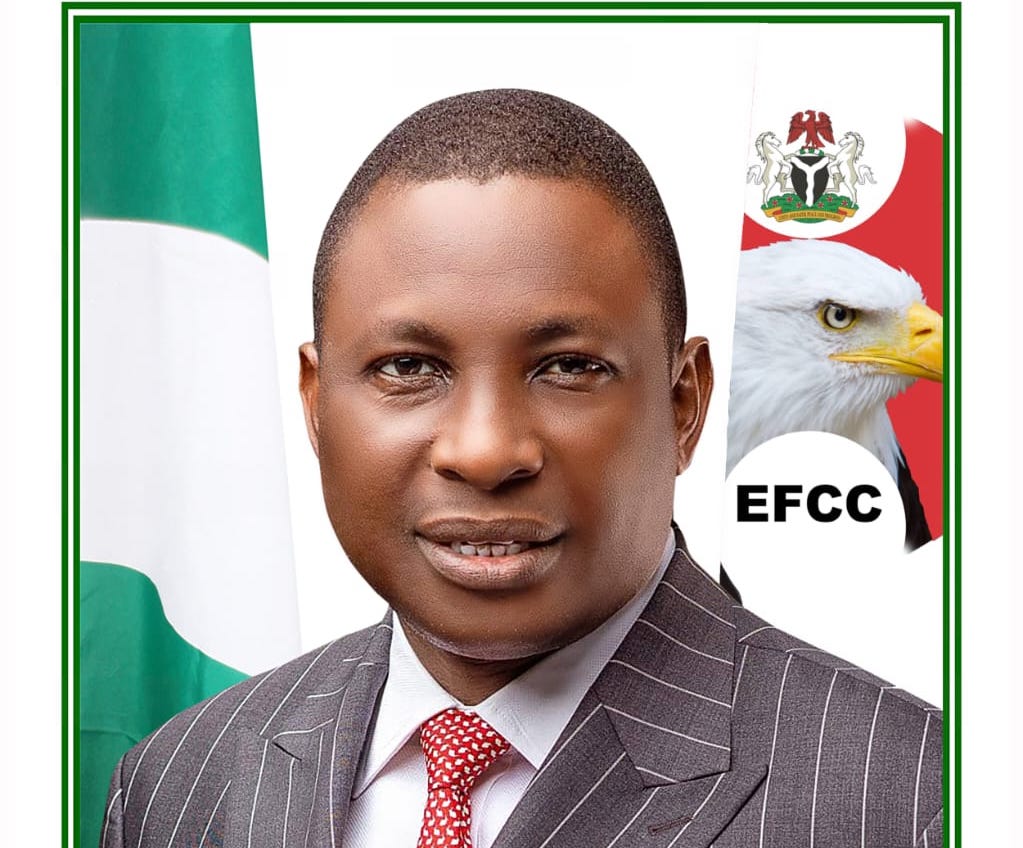
The Economic and Financial Crimes Commission recovered N1.23tn, $684.47m and other foreign currencies in proceeds of crime and secured 10,872 convictions in the first 34 months of Ola Olukoyede’s tenure as chairman.

Olukoyede disclosed this on Monday while presenting his three-year stewardship report at the EFCC headquarters in Abuja.

He said the commission received 49,673 petitions between October 2023 and July 2026, investigated 39,615 cases and filed 14,476 cases in court, resulting in 10,872 convictions.

According to him, the figures represented a 75.1 per cent conviction-to-filing ratio.

The EFCC chairman added that the commission secured 1,370 convictions from 1,889 filings in the first half of 2026 alone.

He said the results reflected a prosecutorial strategy focused on investigation, evidence gathering and courtroom outcomes.

Olukoyede said the commission had remained focused on ensuring that its anti-corruption mandate translated into tangible economic value for Nigerians.

“Our approach has been anchored on properly focusing our mandate in the overall interest of Nigerians, using the anti-graft war to stimulate economic growth, strengthen the rule of law, improve transactional credibility, enhance Nigeria’s image and attract foreign direct investment,” he said.

Giving a breakdown of the recoveries, Olukoyede said the commission recovered N1,233,612,040,411.11, $684,478,457.32, £373,905.78 and €9,343,803.66 between October 1, 2023 and June 30, 2026.

He said about N397.26bn, representing 33 per cent of the naira recovery, constituted direct recoveries for the Federal Government, while N836.34bn, representing 67 per cent, comprised indirect recoveries made on behalf of ministries, departments and agencies, state revenue services, companies, individuals and foreign victims.

He said the figures showed that two out of every three naira recovered by the commission were recovered for beneficiaries other than the Federal Government.

“Recovery is only meaningful when the value is ultimately returned to the public interest or rightful beneficiaries,” Olukoyede said.

He disclosed that N661.32bn and $492.37m had been released to beneficiaries during the period under review.

The naira releases included N325.35bn paid directly to individuals and corporate bodies, while N335.97bn was released to ministries, departments and agencies, the Nigerian Revenue Service, state internal revenue services and other public institutions, companies and individuals.

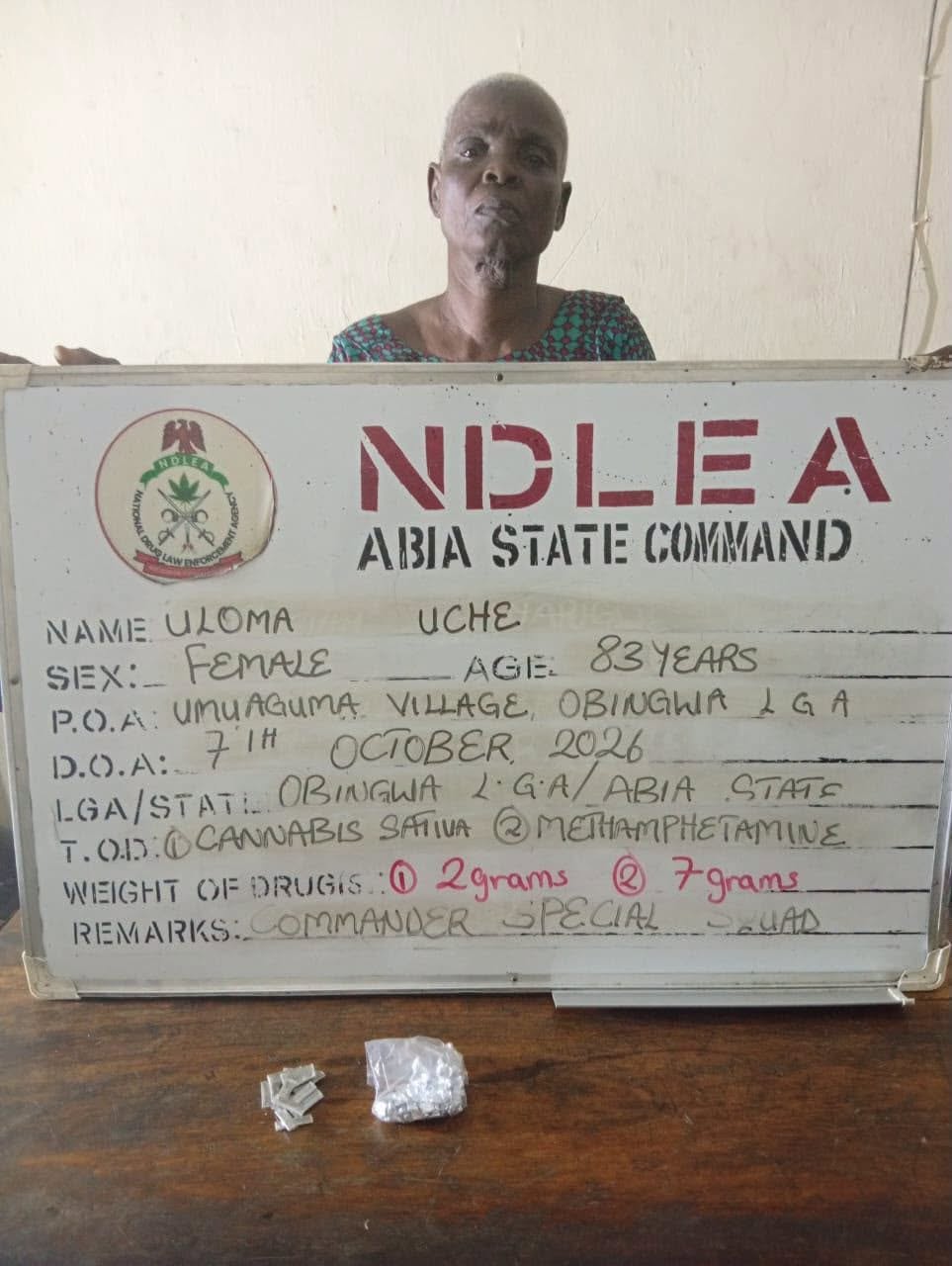
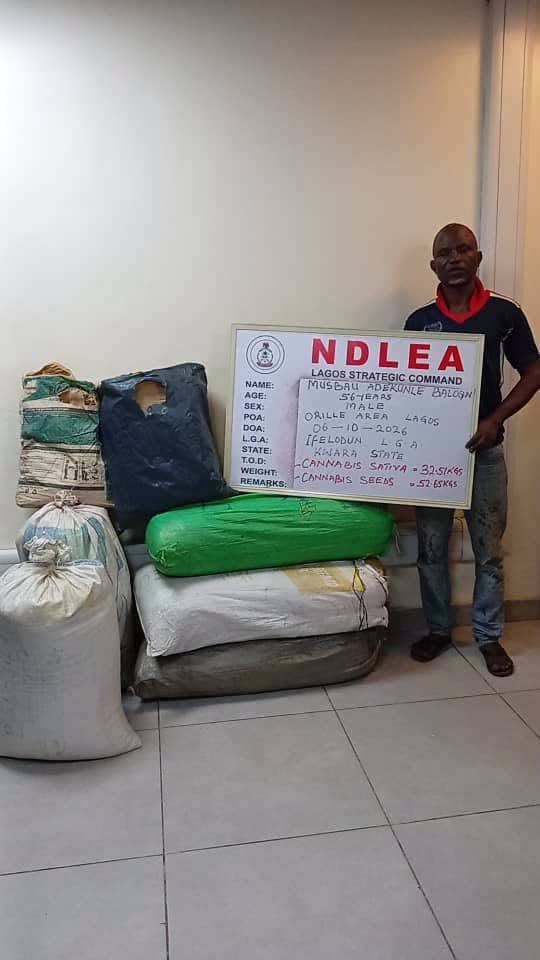
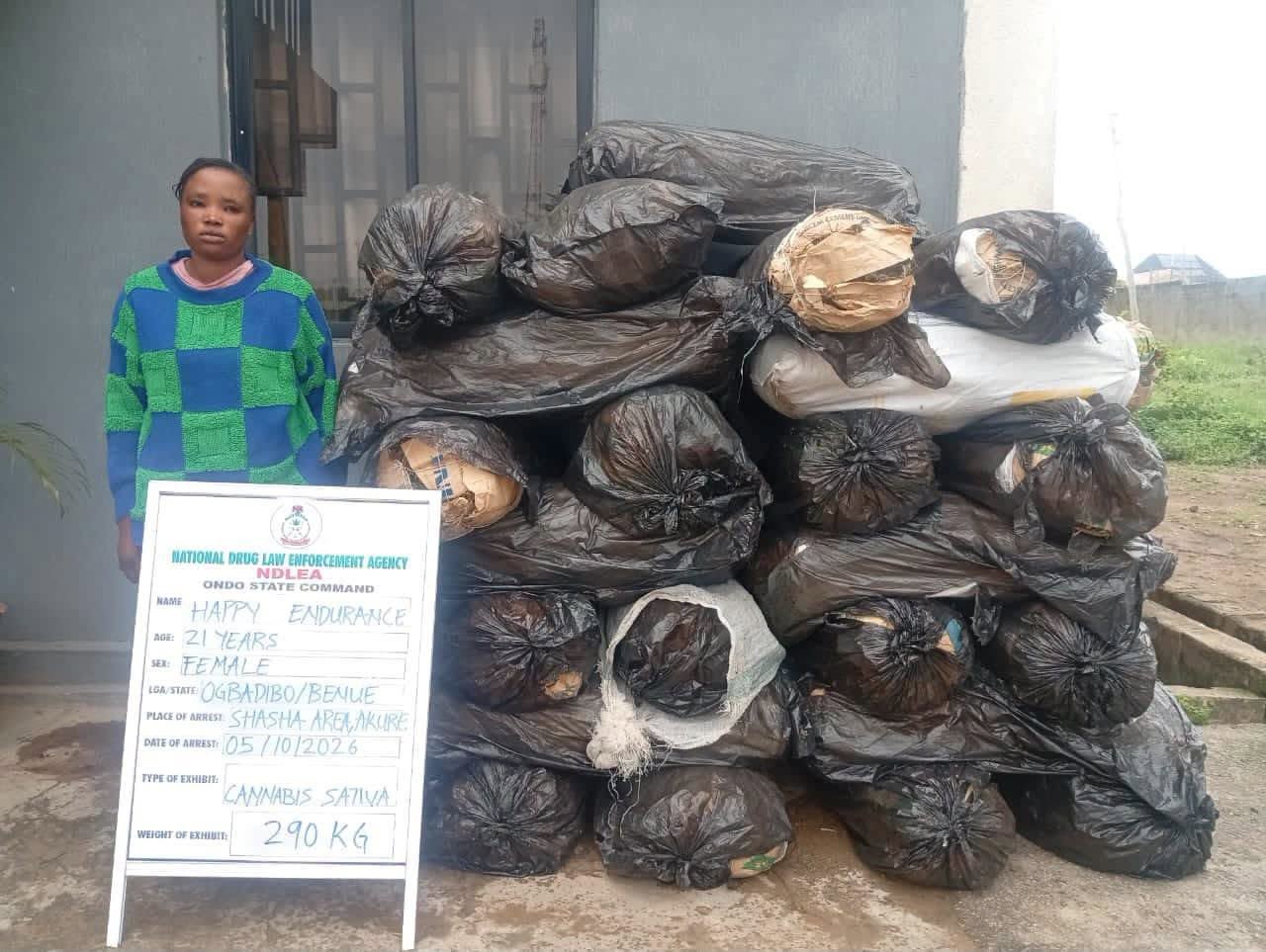
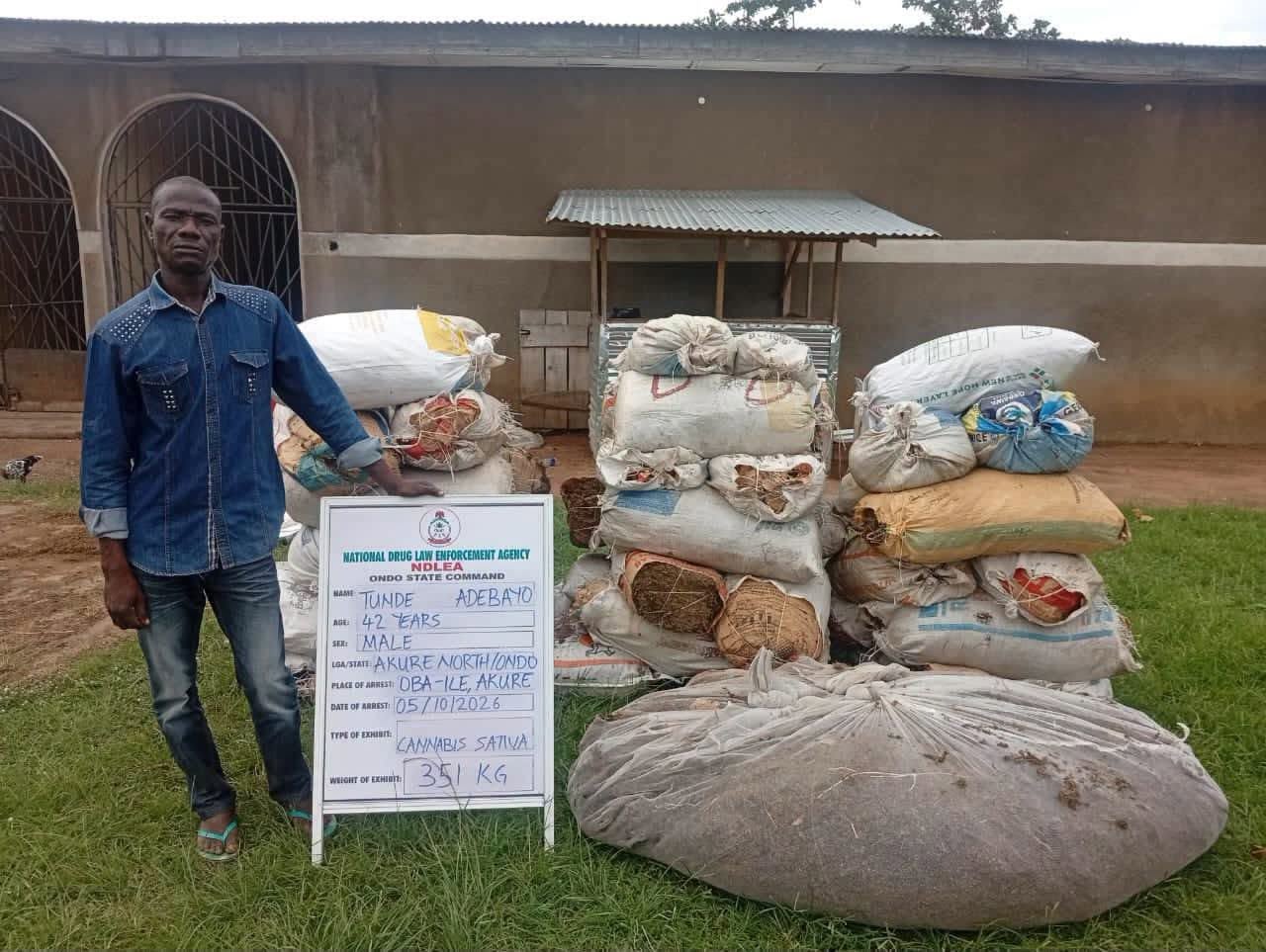
See also  PHOTOS: NDLEA Seizes Over 7.6 Million Tramadol Pills, 76 Tonnes Of Cannabis In Nationwide Raids

Olukoyede said the commission was working towards making restitution faster, more transparent and more efficient.

The EFCC chairman also disclosed that more than 40 personnel of the commission had been dismissed over corruption and financial malpractice during his tenure.

He said more than five of the affected officers were currently being prosecuted.

Olukoyede said the commission could not effectively fight corruption while tolerating corrupt practices within its own ranks.

“You can’t be fighting corruption when your hands are soiled with corrupt practices,” he said.

He disclosed that the commission had renamed its former Internal Affairs Department as the Department of Ethics and Integrity as part of measures to strengthen internal accountability.

Olukoyede also said the EFCC had introduced policies on gifts and hospitality, conflict of interest and exhibit-room security.

On the changing nature of financial crimes, the EFCC chairman said the commission recorded 46,288 offences across nine major crime typologies between 2024 and 2026 year-to-date.

He said advance fee fraud and cybercrime accounted for nearly two-thirds of the recorded offences.

Olukoyede added that recorded offences increased by 24.1 per cent between 2024 and 2025, with significant increases in procurement fraud, bank fraud, cybercrime and economic-governance offences.

“The trend demonstrates that the EFCC’s responsibility extends beyond the prosecution of high-profile corruption cases,” he said.

According to him, the commission was increasingly focused on protecting ordinary citizens, businesses and institutions from fraud, cyber-enabled crimes and other forms of economic exploitation.

Olukoyede said the commission had intensified enforcement against money laundering, unlicensed bureaux de change, illegal mining, virtual assets and terrorist financing.

He said 920 specialised cases resulted in 212 convictions, while several other investigations and prosecutions remained active.

The commission also recorded 234 cases involving bureaux de change and secured 73 convictions during the period.

Olukoyede said enforcement against unlicensed BDC operations complemented regulatory reforms by the Central Bank of Nigeria and was aimed at promoting a more formal and transparent retail foreign-exchange market.

He said the objective was also to close channels vulnerable to illicit finance, speculation and round-tripping.

See also  Nigerian man and six Thai nationals arrested for romance scam in Thailand

The EFCC chairman reaffirmed the commission’s commitment to investigating and prosecuting high-profile Nigerians regardless of their political positions, public status or influence.

He cited the recent convictions of former Minister of Power, Saleh Mamman, Robert Orya and Chukwunyere Nwabuoku as examples of the commission’s determination to pursue cases without discrimination.

“No office, title or social status should place anyone beyond the reach of the law,” Olukoyede said.

He maintained that the EFCC would investigate cases professionally, prosecute them based on evidence and allow the courts to determine the guilt or innocence of accused persons.

Olukoyede said the EFCC’s enforcement activities also generated approximately N288.1bn in federal and state tax recoveries during the period.

Of the amount, N173.2bn represented federal tax recoveries, while N114.9bn was attributed to state internal revenue services.

He stressed that the recoveries represented enforcement of existing tax obligations rather than the introduction of new taxes.

According to him, about N257.2bn in naira recoveries were also recorded for federal ministries, departments and agencies.

Olukoyede said the figures demonstrated how anti-corruption enforcement could strengthen government revenue without necessarily imposing additional burdens on taxpayers.

The EFCC chairman highlighted the social and economic impact of recovered proceeds of crime, citing the conversion of NOK University in Kachia, Kaduna State, into the Federal University of Applied Sciences, Kachia.

He said the institution, recovered through the commission’s asset-forfeiture process, had 1,909 students matriculating in December 2025.

Olukoyede said the Federal Government also allocated N50bn each from EFCC recoveries to the Nigerian Education Loan Fund and the Nigerian Consumer Credit Corporation in 2024, with additional N50bn allocations to each institution approved in 2026.

He said the use of recovered criminal proceeds for education and household credit represented a shift from viewing anti-corruption merely as punishment to seeing it as a mechanism for restoring stolen value and supporting national development.

Beyond cash recoveries, Olukoyede said the EFCC secured forfeiture orders covering 10,053 tangible assets between October 2023 and July 2026.

The assets included 8,198 electronic items, 1,177 real estate properties, 370 automobiles and 251 plots of land.

Other forfeited assets included schools, factories, hotels, shops, oil rigs, barges, machinery and aircraft, while 102 tonnes of solid minerals were also forfeited.

See also  Court sentences three to life imprisonment over Oyo school abduction

He said proceeds from the disposal of assets under final forfeiture orders amounted to about N12.07bn and were paid into the Federal Government’s coffers.

Olukoyede linked the commission’s sustained enforcement activities to Nigeria’s broader efforts to strengthen its anti-money laundering and counter-financing of terrorism framework.

He described Nigeria’s removal from the Financial Action Task Force Grey List in October 2025 as a national achievement.

The EFCC chairman said the commission’s casework and enforcement activities contributed to the collective national effort that strengthened Nigeria’s compliance framework.

He also attributed many of the commission’s achievements to increased collaboration with domestic and international law-enforcement agencies, regulators and other institutions.

He listed the United States Federal Bureau of Investigation, United Kingdom National Crime Agency, Royal Canadian Mounted Police and INTERPOL among the international partners working with the EFCC.

Olukoyede said about 60 per cent of the commission’s processes and operations had been digitalised as part of its reform programme.

He said the EFCC had introduced new guidelines on arrest and bail, reviewed its sting operations and established specialised units, including the Department of Fraud Risk Assessment and Control and Cybercrime Rapid Response Centre.

The commission, he added, had inaugurated its Enugu and Ilorin directorates and established new directorates in Ekiti, Anambra and Katsina states.

Olukoyede said the EFCC’s success should not be measured merely by the number of arrests made or funds recovered.

He said the commission’s responsibility was to transform intelligence into prevention, petitions into investigations, investigations into prosecutions, prosecutions into convictions and recoveries into restitution.

“The ultimate objective is to turn enforcement into measurable national value,” he said.

The EFCC chairman pledged that the commission would continue to intensify its fight against corruption and economic crimes while maintaining respect for due process and focusing on outcomes that deliver measurable value to Nigerians.

Source: punchng.com

FOLLOW US ON:

FACEBOOK

TWITTER

PINTEREST

TIKTOK

YOUTUBE

LINKEDIN

INSTAGRAM

Continue Reading
Click to comment

Leave a Reply

Your email address will not be published. Required fields are marked *

Crime

Ex- LA gang leader found guilty of Tupac’s murder

Published

on

A former Los Angeles gang member, Duane “Keffe D” Davis, was found guilty on Monday by a Las Vegas court of the 1996 murder of chart-topping rapper Tupac Shakur.

Thirty years after the rap legend’s death, the jury found Davis, 63, guilty of murder after just a few hours of deliberation.

Duane Davis (C) and his attorney Michael Sanft are led back to a courtroom to hear his sentencing date after a jury found Davis guilty in the 1996 killing of rapper Tupac Shakur, at Clark County District Court at the Regional Justice Centre in Las Vegas, Nevada, on August 31, 2026. Duane Davis, a former Los Angeles gang member, was found guilty on August 31 by a Las Vegas court of the 1996 murder of rapper Tupac Shakur. Thirty years after the rap legend’s death at a Las Vegas casino, the jury found Davis, 63, guilty of murder after just a few hours of deliberation.

“Count one, murder with use of a deadly weapon, guilty of first-degree murder with use of a deadly weapon,” the foreperson of the jury announced to the court.

Davis, who faces possible life in prison without parole, addressed Judge Carli Kierny after the verdict was announced and stated his intention to appeal.

The one-time leader of the South Side Compton Crips was accused of ordering the September 7, 1996 killing of the hip-hop artist after his own nephew had been beaten by members of Shakur’s entourage at a Las Vegas casino.

“Duane Davis, in the culture of gangs, could not let that stand,” prosecutor Binu Palal said during closing arguments. “So what did he do? He acquired a firearm, got his group together, and went hunting for Mr Shakur.”

Shakur, who was in Las Vegas for a Mike Tyson heavyweight fight, was shot about two hours after the casino confrontation by a gunman in a white Cadillac that pulled up at a red light alongside the BMW in which the rapper was riding in the front passenger seat.

According to prosecutors, Davis handed the gun to someone sitting in the back seat of the Cadillac and ordered that person to shoot Shakur, who died six days later.

See also  Court sentences three to life imprisonment over Oyo school abduction

Davis is the only person who was in the Cadillac that evening who is still alive.

The driver of the BMW, Death Row Records co-founder Marion “Suge” Knight, was wounded.

The killing of Shakur, also known as 2Pac, has been one of America’s most celebrated cold cases, prompting endless debate among music fans over who did it and why.

Davis, whose Crips were one of a patchwork of rival gangs that ran parts of Los Angeles in the 1990s, is the only person to have been charged in connection with the shooting of Shakur.

Sentencing is scheduled for October 13.

Confession

The investigation into Shakur’s murder sputtered for decades because of a lack of evidence, but the case was revived when Davis’s memoirs were published in 2019.

Davis has repeatedly boasted over the years of involvement in Shakur’s murder — in interviews with law enforcement and media and ultimately in his autobiography, “Compton Street Legend.”

He has since backtracked and pleaded not guilty to the murder charge.

Palal, the prosecutor, played clips from Davis’s various alleged confessions as part of his closing arguments.

Michael Sanft, Davis’s defense attorney, characterized his client’s confessions as fiction and lies partly designed to promote his book.

“You’re reading a book that is fiction and not fact,” Sanft told the jury. “But the state wants you to believe that this is somehow a confession, that he was there and present at the time of the shooting.”

Sanft said there was no evidence implicating Davis in Shakur’s murder other than his own statements.

See also  Police arrest 18-year-old attempting to collect N20m ransom in Lagos

In the run-up to the trial, Davis’s lawyers tried in vain to keep the book from being introduced as evidence, along with remarks he made in an interview with police in 2008.

Shakur, who was 25 when he died, was a key figure in a hip-hop rivalry pitting the US East Coast against the West Coast.

Known for hits like “California Love” and “All Eyez on Me,” Shakur — the son of a Black Panther — was raised in Harlem and Baltimore, but quickly became the epitome of California hip hop when he signed with Los Angeles-based Death Row Records.

AFP

Source: punchng.com

FOLLOW US ON:

FACEBOOK

TWITTER

PINTEREST

TIKTOK

YOUTUBE

LINKEDIN

INSTAGRAM

Continue Reading

Crime

EFCC reveals how public funds are moved from LG account into crypto wallets

Published

on

The Economic and Financial Crimes Commission has disclosed how public funds were moved from a local government account to a private company before being transferred into cryptocurrency wallets.

The EFCC Chairman, Ola Olukoyede, disclosed on Monday while addressing media executives and journalists in Abuja, stressing that the commission could not ignore the suspicious movement of public funds.

Olukoyede, however, did not disclose the local government, company or state involved in the transaction.

He said the commission’s Fraud Risk Assessment and Control Department had detected the suspicious transactions and intervened by freezing the funds for 72 hours to establish their destination and purpose.

Olukoyede, however, expressed his displeasure over people who called for his head as a result of the action taken by his agency.

He said, “When we see money moving suspiciously, we move in and freeze it in the interim. I know some of you are calling for my head. The account was frozen for 72 hours. Okay, come and show where this money is going? Why are you moving money? We saw money being moved from the local government account to a company. Apart from that phase, we discovered that the money has gone into cryptocurrency wallets.

“Is that the road to build? Is that the power to generate cryptocurrency wallets for your people? Are you asking me to close my eyes and not do something like that? Then you don’t need me in this office.”

The EFCC boss said the development underscored the need for law enforcement agencies to shift from waiting for public funds to be stolen before taking action to preventing suspicious transactions from being completed.

See also  Nigerian man and six Thai nationals arrested for romance scam in Thailand

“Why must we be waiting for money to be stolen? Why can’t we change the narrative? And that’s the main thing we need to bring to the office,” he said.

The disclosure comes against the backdrop of an outcry earlier in the month after the EFCC froze an account belonging to the Osun State Government, days before the August 15 governorship election.

However, Olukoyede did not link the transaction he cited to Osun State or any other particular state.

Olukoyede also said cybercrime had evolved beyond the traditional perception of “Yahoo Yahoo,” noting that some young people were being used as fronts by public officials to move allegedly stolen funds through cryptocurrency wallets.

He said, “We have gotten to a stage in Nigeria now that public officials steal money and they put it in cryptocurrency wallets.

“Most of the directors we are investigating now, you can’t trace tangible assets to them. They steal this money, give it to students, give it to young people. They open cryptocurrency wallets all over the world. They plunder the money there within 24 hours.

“The money moves abroad. They buy a house anywhere in the world, buy luxury items. Those are the recent trends.”

The EFCC boss also disclosed that the commission had developed the capacity to trace cryptocurrency wallets, particularly those linked to virtual asset platforms registered in Nigeria.

According to him, about 40 virtual asset platforms had been licensed, following regulatory measures introduced to strengthen oversight of the sector.

“Now we also have the capacity to trace cryptocurrency wallets now, at least with those that are registered in Nigeria, and we are doing that,” he said.

See also  Police arrest four for forgery, breach of peace in Ogun

Reeling out the achievements of the commission in the last three years, Olukoyede said the commission had also recovered virtual assets in connection with the CBEX fraud, but identified the management of confiscated cryptocurrency as a challenge that had previously created accountability concerns.

“When you recover virtual assets, where do you put them? No accountability. That’s why we can’t continue like this,” he said.

He disclosed that the Federal Government had consequently approved the establishment of a national confiscation wallet where virtual assets recovered by law enforcement agencies would be kept.

“Today, now we have a national confiscation wallet. So if I confiscate virtual assets now, it’s a national wallet that we put into those,” he said.

Olukoyede further warned that the increasing use of cryptocurrency to move illicit funds required stronger technological capacity among financial and law enforcement institutions.

He said, “When we are talking about cybercrime, please cooperate with us, understand the scope. Not just Yahoo. Some of the people you are calling Yahoo, see your young children; they are stealing on behalf of London, on behalf of public servants.”

Olukoyede said the commission’s anti-corruption activities had also contributed significantly to revenue mobilisation, with federal and state tax recoveries amounting to approximately N288.1bn during the period under review.

He said the figure comprised about N173.2bn in federal tax recoveries and N114.9bn attributed to State Internal Revenue Services.

Oluyede also said more than 40 of its personnel were dismissed for alleged corruption and financial malpractice in the past two and a half to three years.

See also  PHOTOS: Troops intercept large cache of ammunition and explosive components on Kaduna -Jos Highway, arrest suspects

He added that some of the dismissed officials were already facing prosecution, while case files involving others were being prepared for prosecution.

Source: punchng.com

FOLLOW US ON:
FACEBOOK

TWITTER

PINTEREST

TIKTOK

YOUTUBE

LINKEDIN

INSTAGRAM

Continue Reading

Crime

Woman arrested for smuggling drugs into Ogun prison for son on death row

Published

on

The Ogun State Command of the Nigerian Correctional Service has arrested a woman, Mrs Iyabo Sowunmi, for allegedly attempting to smuggle suspected illicit drugs into the Medium Security Custodial Centre, Ibara, Abeokuta, for her son, Dare Sowunmi, who is said to be on death row at the facility.

The spokesperson for the Nigerian Correctional Service, Ogun State Command, Olayinka Odukoya, disclosed this in a statement on Monday.

Odukoya said Sowunmi was arrested at about 1:33 pm on Friday, August 28, 2026, during a routine screening at the facility’s main entrance.

He said the substance, suspected to be “Colos”, a psychoactive synthetic drug, was concealed in a sachet of a popular beverage powder and was allegedly intended for the inmate.

He explained, “At approximately 1:33 PM on Friday, August 28, 2026, routine screening procedures at the facility’s main entry point led to the detection of suspicious substances, believed to be the psychoactive synthetic drug commonly known as ‘Colos,’ concealed within a sachet of a popular beverage powder.

“The suspect was attempting to deliver the package to an inmate, Dare Sowunmi, who is currently on death row. Following the interception, officers immediately detained Mrs Sowunmi. In accordance with inter-agency operational protocols, she has been handed over to the National Drug Law Enforcement Agency for comprehensive investigation and prosecution.”

Reacting to the incident, the Controller of Corrections, Ogun State Command, Abioye Adesina, commended the security personnel for their vigilance and adherence to security protocols.

Adesina said, “Our custodial facilities exist to ensure public safety, reformation, and rehabilitation. We maintain an absolute zero-tolerance policy for drug trafficking or any illegal acts designed to compromise security.

See also  PHOTOS: Dozens of men arrested and paraded by police for holding 'g@y s£x party' in Indonesia

“Attempts to introduce contraband into our facilities will be met with swift legal action.”

The command urged members of the public to respect the integrity of custodial institutions, warning that anyone seeking to undermine security would face the full weight of the law.

Source: punchng.com

FOLLOW US ON:
FACEBOOK

TWITTER

PINTEREST

TIKTOK

YOUTUBE

LINKEDIN

INSTAGRAM

Continue Reading

Trending