Connect with us

Business

Dangote reveals ADNOC, govts, other investors interested in refinery

Published

on

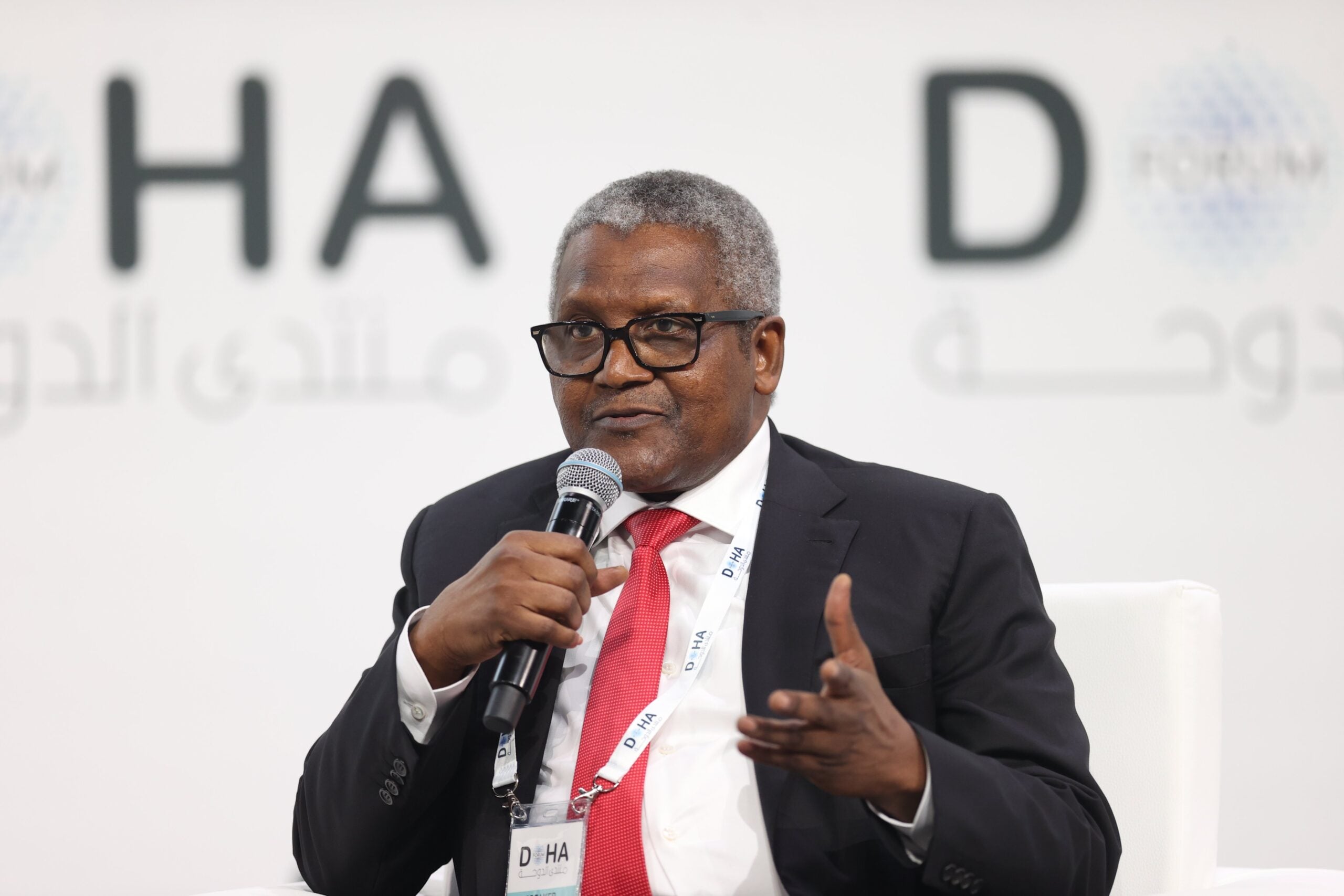
The Chief Executive Officer, Dangote Group, Aliko Dangote has confirmed that Abu Dhabi National Oil Company and other strategic investors are interested in taking stakes in the Dangote Petroleum Refinery, but declined to disclose details of the potential investments because of non-disclosure agreements.

Dangote spoke with journalists in Lagos on Monday after a signing event connected to the refinery’s planned share offering, where he was asked to confirm reports that ADNOC was seeking a stake in the facility.

He said the refinery’s share offering was not “prompted by the current Middle East crisis or other temporary market conditions, insisting that its financial projections were based on normal market conditions.”

Asked specifically whether ADNOC was joining as an investor and whether other strategic investors were also seeking stakes, Dangote said the company had “agreements with several parties but could not disclose details.”

“I don’t want to—you know, there is what you call an NDA, you know, non-disclosure agreement. So, we have agreements with other people; it’s not only ADNOC, other people too. They are very, very interested.

“There are other governments too; they have invested and they are also investing more money, you know,” he said.

Dangote said the level of interest in the refinery had surprised the company, citing demand recorded during an earlier offer to private investors.

“So, the investment really, like what I said, it is actually shocking to us how people are very, very interested in investing in this, you know, refinery.

“And it has shown: when we wanted to sell only $1 billion worth of shares to our private investors, and you know, we got 3.7 times the demand!

“What was paid into our accounts was 3.7 billion instead of 1 billion, and we had to be forced to take $2.5 billion, and we returned 1.2 billion out there,” he noted.

He said the demand could be even stronger when the current offer is opened to investors.

Dangote stated, “So, even this one, I’m sure if we are to open for two days and close, the number of shares we want to sell will be all sold out.”

See also  Finnish court jails Simon Ekpa six years for terrorism offences

Responding to a question about whether the refinery’s current profitability would be sustained after temporary geopolitical disruptions ease, Dangote said the company’s calculations were based on normal market conditions.

“Okay, well, the refinery, based on the numbers that, you know, we have that have actually come into the market, okay, this IPO we started long time, so it did not start because of the war in the Middle East, no.

“Our own basis of calculation is based on normal days. When I say normal days, before the Middle Eastern crisis. What money can we make when we refine oil? And that is why we actually now sat down and we did our numbers, and we see that, no, it’s good for us to invite other people,” he declared.

Dangote said the company did not intend to build its business model around temporary crises.

The businessman noted, “Of course, Middle Eastern crisis, the crisis of Ukraine-Russia, it’s not going to go on forever; it will stop one day.

“So, you cannot base your business based on that. You know, we don’t base our business based on crisis. No, we base the businesses based on a normal trend. Okay, we don’t go and base it. Whatever that we have over and above, that is icing on the cake. That’s what we are checking.”

He said the refinery was intended as a long-term investment.

“So, we didn’t really say, “Oh no, no, there is a crisis,” because if you base it on that, what about tomorrow when they settle all these issues? Then it means that we are not going to be able to satisfy our own shareholders.

“This is a lifetime investment. This refinery is not about 10 years, 20, 30, or 50 years; it will actually outlive the whole of us here.

“It should be running for the next 50, 60, 70 years, and I don’t believe if there’s any one of us here that will live in the next 70 years,” he concluded.

IPO not for fund raising

Chief Executive Officer, Dangote Group, Aliko Dangote is not aimed at raising funds but at giving more Africans an opportunity to own a stake in the business.

See also  India, others reject Tinubu’s envoys, see why

Dangote also explained the rationale behind opening ownership to investors across Africa and beyond.

He said the refinery had a strong free cash flow and that the company had already raised substantial funds through bonds and private placements.

Dangote said the company was targeting 10 million shareholders from across Africa and other parts of the world.

“We are not, you know—I’ve said that in my speech—it’s not really about raising funds. We have a very good free cash flow in the company, and we have raised quite a lot of money.

“We’ve done bonds, we’ve done private placement, and the cash generation in the refinery business today is very good.

“So, it’s not about raising money. It’s about getting our own, you know, Africans generally to be part and parcel of this, you know, refinery. It’s not what is even happening today; it’s what will happen in the next three years. This will be the biggest company in Africa, and I think every African should have a stake in it.

“It doesn’t matter; if you can afford ten shares, you buy ten. If you can afford one million, you can buy one million. But we want to get as many Africans as possible,” the billionaire businessman stated.

Dangote said the company could have offered a larger portion of the refinery if its objective was solely to raise funds.

“So, that’s what it is. So, it’s not really about raising money. We are not saying that, no, if we want to raise money, we know how to raise. And that’s why we have a limit. If not, we would have actually offered 20% of the company.

“It’s about getting people all involved. We are targeting 10 million shareholders from all over Africa and maybe other parts of the world,” he clarified.

10m Nigerian, African shareholders

Explaining the rationale for opening ownership to ordinary Nigerians and other Africans, Dangote said the initiative was also about creating a legacy and spreading the benefits of the businesses beyond their founders.

Dangote stated, “Well, the reason behind that is actually for us, major part of our own job is not about really even making money; it’s about legacy. It’s about trying to say, “Okay, fine. How do we actually make sure that we send down the prosperity down there?”

See also  Nigeria, UAE scrap tariffs on over 13,000 goods

“Where now, yes, maybe you are a salary earner, and you want to make sure that you have investment to secure the future of your children, school fees, or whatever. We are saying that, yes, come. I believe you have seen what we have done; we have demonstrated. And we have the best brains, so we are doing what is great. We are running businesses that are very, very profitable. And when you now actually join us in this trajectory, you are not going to be left behind.”

Dangote said he wanted the investment to create wealth for shareholders in a way similar to the growth experienced by early investors in major global companies.

“I want it to be like the likes of this Amazon and co., where somebody will buy a share worth $10,000, after a couple of years, it’s going to be worth millions. That’s how you create a lot of millionaires by them not running their own businesses, by them investing in what we have created.

“And it’s not only the refinery; we have the fertilizer—we are creating big corporations where we don’t want to be the only people enjoying. We want to spread this enjoyment to the rest of Africans,” Dangote explained.

He also said the initiative would provide opportunities for African entrepreneurs to invest in businesses involved in industrialising the continent.

“Secondly, we are also trying to make sure to make African entrepreneurs, like what I said in my speech, to be able to come and join us in this journey, where now they come and invest. We have a lot of things that we are doing. But most of our raw materials, they’ve been taken abroad for processing.

“We want to process; we want to industrialize Africa, and by industrializing Africa, it must be done by we, the Africans, not by any other party,” he concluded.

Source: punchng.com

FOLLOW US ON:

FACEBOOK

TWITTER

PINTEREST

TIKTOK

YOUTUBE

LINKEDIN

INSTAGRAM

Continue Reading
Click to comment

Leave a Reply

Your email address will not be published. Required fields are marked *

Business

Nigeria, Indonesia trade tops $3bn annually — envoy reveals

Published

on

Nigeria and Indonesia’s bilateral trade has consistently exceeded $3bn annually, the Indonesian Ambassador to Nigeria, Bambang Suharto, has said.

The ambassador said the trade relationship had positioned Nigeria as one of Indonesia’s foremost trading partners in Africa, while calling for greater economic cooperation between both countries.

“Our bilateral trade has consistently surpassed USD 3 billion annually, cementing Nigeria’s position as one of Indonesia’s foremost trading partners in Africa,” he said.

Suharto said Nigeria supplied an essential source of energy contributing to Indonesia’s energy security.

“Nigeria supplies the essential source of energy that contributes to Indonesia’s energy security, while Indonesian products have become household staples for Nigerian consumers and businesses,” Suharto said.

He said some Indonesian products had also become established in Nigeria through local production and Nigerian workers, describing the development as evidence of the value of economic partnerships beyond the exchange of goods.

He added, “Yet, there remains considerable room to grow. Together, Indonesia and Nigeria represent a vibrant market of more than 550 million people, defined by young populations, dynamic businesses, and substantial natural and human resources.”

According to him, the combined economic potential provided a foundation for expanding trade, investment, technological exchange and employment opportunities.

Suharto said Indonesian companies operating in Nigeria were contributing to the bilateral relationship through investment, job creation and corporate social responsibility initiatives.

“Our ultimate ambition is not simply to trade more, but to cultivate a resilient partnership in which businesses on both sides thrive, local industries develop, and our people directly reap the benefits of the opportunities we create together,” he said.

He said Indonesia also attached importance to educational and cultural exchanges with Nigeria, noting that its scholarship programmes had enabled Nigerian students to study in Indonesia and establish lasting relationships.

See also  Petrol imports surged by 207% in June — NMDPRA report

In his remarks, the Permanent Secretary, Ministry of Foreign Affairs, Ambassador Dunoma Umar Ahmed, said Nigeria and Indonesia had considerable scope to deepen their economic partnership.

Ahmed said Nigeria was particularly interested in Indonesia’s experience in industrialisation, manufacturing, digital transformation, infrastructure development, agriculture, maritime development and the expansion of small and medium-sized enterprises.

“Nigeria is particularly interested in expanding cooperation that can support the development of local productive capacity, strengthen value chains, promote technology transfer, and attract sustainable investment,” he said.

The permanent secretary urged greater interaction between the private sectors, chambers of commerce, financial institutions and business communities of both countries.

He identified agriculture and agro-processing, manufacturing, energy, infrastructure, pharmaceuticals, the digital economy and creative industries as areas with significant potential for increased trade and investment.

Ahmed also called for efforts to address practical constraints to bilateral commerce, including market access, business information connectivity and the facilitation of contracts between businesses in both countries.

“Nigeria is particularly interested in expanding cooperation that can support the development of local productive capacity, strengthen value chains, promote technology transfer, and attract sustainable investment.

“Our two countries should therefore continue to encourage greater interaction between our private sectors, chambers of commerce, financial institutions, and business communities. There is significant potential for increased trade and investment in areas including agriculture and agro-processing, manufacturing, energy, infrastructure, pharmaceuticals, the digital economy, and the creative industries,” Dunoma said.

Source: punchng.com

FOLLOW US ON:
FACEBOOK

TWITTER

PINTEREST

TIKTOK

YOUTUBE

LINKEDIN

INSTAGRAM

Continue Reading

Business

Airlines face disruptions as fuel costs soar

Published

on

Recent disruptions that stranded passengers, particularly in Abuja, have been linked to debts airline operators owe fuel marketers, even as operators lament the rising cost of Jet A1 aviation fuel.

Passengers who bought Air Peace tickets last Friday spent the night at the Abuja airport following flight cancellations and delays.

The PUNCH learnt that on Friday alone, Lagos, Maiduguri and Asaba-bound passengers remained at the Nnamdi Azikiwe International Airport as the airline delayed boarding for several hours and cancelled a number of flights.

Passengers who spoke with our correspondent claimed that the airline had failed to provide reasons for the disruptions.

Our correspondent gathered that Lagos-bound passengers scheduled to take off from Abuja at about 4:00 pm, as well as another set scheduled to depart earlier, remained at the airport until late that night.

While Lagos-bound passengers left the same night, Asaba- and Maiduguri-bound passengers spent the night at the airport, leading to a series of protests within the aerodrome.

Meanwhile, an airport source who refused to give her name for fear of reprimand had told our correspondent at the time that the passengers might still be airlifted before midnight to avoid disruptions to Sunday’s operations.

The source said, “Truly, many passengers sat helplessly at the airport. I learnt from the workers that it was a fuel-related issue, but only the airline can really explain what happened.”

When contacted, the spokesperson for the Nigeria Civil Aviation Authority, Michael Achimugu, told our correspondent that he gathered that the airline had been speaking with the passengers as events unfolded. He confirmed that issues relating to a lack of fuel had grounded the airline’s aircraft.

Achimugu did not, however, provide further information on why the airline was experiencing a shortage of fuel.

See also  Labour rejects N100,000 minimum wage proposal; see the amount NLC proposed

Achimugu said, “Yes, my CPOs have reported to me that the airline has been unable to fly the passengers because of fuel-related issues. I also learnt they have been updating the passengers, but you know when passengers get angry, they may not even listen to whatever information they are being provided with.”

When asked what exactly the issue was, he said, “What my CPOs told me is what I have told you. When we have more information, we will let you know.”

Efforts to speak with the airline’s spokesperson, Efe Osifo-Whiskey, were unsuccessful. He neither picked up his calls nor responded to text messages seeking clarification at the time.

Also, in a statement by the airline, Air Peace said the delay was caused by the unavailability of Jet A1 aviation fuel. Air Peace added that the fuel shortage also affected other airlines.

The Air Peace statement read partly, “The initial delays to our Abuja operations were occasioned by the unavailability of Jet A1 aviation fuel, which affected Air Peace and other airlines operating from the Abuja airport. Upon the availability of fuel, our affected flights commenced operations accordingly.

“However, our Abuja-Maiduguri service could not subsequently operate as planned because the tower in Maiduguri, which had given an extension for our flight to come in, later came back, as at the time of our calling for boarding, to state that the airport had become VFR and would no longer fly beyond sunset.”

While apologising to passengers, Air Peace added, “Throughout the disruption, passengers were duly informed of the delays and provided with refreshments. Following the cancellation, affected Maiduguri passengers were also provided with hotel accommodation, with arrangements made to operate the flight the following day.

See also  We Were Afraid Social Media Would Completely Kick Us Out Of Business – Jide Kosoko

“We sincerely regret the inconvenience caused to our esteemed passengers and appreciate their patience and understanding. At Air Peace, the safety and wellbeing of our passengers remain paramount, and we will continue to prioritise these considerations in all our operations.”

However, sources among marketers said the product was available, although at a higher price. One of the sources told our correspondent that, “Airlines may have faced disruptions because a number of them were not supplied the product because they have refused to clear outstanding. They are owing in the millions.

“The truth is some are owing, and they won’t expect continuous delivery while they are yet to pay what they are owing.”

An airline source who also refused to give his name told our correspondent that a litre of Jet A1 currently sells for about N2,130 in Lagos and Abuja, while the price ranges between N2,180 and N2,230 per litre at airports outside the two major aviation hubs, depending on the location.

The source said although aviation fuel was available, the major challenge confronting airlines was the high cost of procuring the product, which he said had continued to drive up their operating expenses.

He added that the situation was particularly difficult for indigenous carriers because most of their revenues were generated in naira, while a substantial portion of their operating costs was either dollar-denominated or linked to foreign exchange.

According to the source, the high cost of operations has left several indigenous airlines struggling to remain in business, with some having to source funds from other areas to meet their aviation fuel obligations.

He called on the government to intervene in the situation to prevent total collapse of the operating carriers.

See also  Nigeria, UAE scrap tariffs on over 13,000 goods

Also, the Managing Director of Aero Contractors, Ado Sanusi, confirmed that the product is available in the country, dismissing the allegation of its scarcity. He, however, agreed that the cost of the product remained a major concern for operators.

Sanusi, who spoke against the backdrop of concerns over Jet A1 availability, said the emergence of the Dangote refinery has helped in making the product available. According to him, Jet A1 currently sells for about N2,000 per litre in Lagos, while the price is slightly higher outside Lagos by approximately N100 per litre.

He said: “I am not aware of the scarcity of aviation fuel in Nigeria. With the Dangote refinery, how can we experience scarcity of the product locally? The only problem is that it is expensive to purchase. Presently, the product goes for N2,000 per litre in Lagos, while it is slightly more expensive outside Lagos with about N100 difference.”

Sanusi also clarified that Aero Contractors was not indebted to aviation fuel marketers, saying the airline had a policy of settling its fuel bills as soon as they were presented.

“I can’t comment on any other airline’s debts, but one thing is sure: at Aero Contractors, we are not indebted to fuel marketers. We pay all our bills as and when due. For clarity’s sake, what I am saying is that once the bill is submitted to us, we settle it immediately at Aero Contractors. That’s the way we work here,” he said.

Source: punchng.com

FOLLOW US ON:

FACEBOOK

TWITTER

PINTEREST

TIKTOK

YOUTUBE

LINKEDIN

INSTAGRAM

Continue Reading

Business

Thales to develop Nigeria’s new satellite

Published

on

Thales Alenia Space has signed a contract with the Federal Government-owned NIGCOMSAT Ltd to build NigComSat-2A, a new geostationary telecommunications satellite that will boost digital connectivity across Africa.

In a release on Wednesday, the firm said it signed the deal in Cannes, France, on September 14,  2026.

It noted that the French-Italian joint venture, owned 67 per cent by Thales and 33 per cent by Leonardo, will develop the satellite to deliver high-quality television broadcasting, reliable broadband internet and modern digital services including voice calls and streaming.

According to the release, NigComSat-2A, with a launch mass of nearly four tonnes, will cover West and Central Africa through to Southern Africa.

It is designed to improve access in underserved and remote communities where terrestrial networks remain limited. Its expected in-orbit service life exceeds 15 years and will be based on Thales Alenia Space’s Spacebus B2 platform.

NigComSat’s Managing Director and Chief Executive Officer, Nkechi Egerton-Idehen, described the contract as a major step forward for Nigeria.

“The signing of this contract represents a bold step in Nigeria’s journey toward digital transformation,” she said.

“NigComSat-2A will not only strengthen our nation’s satellite communications capacity but also expand access to reliable broadband and digital services for millions of Africans, especially in underserved and remote communities. This project underscores NIGCOMSAT’s commitment to driving connectivity, fostering innovation, and enabling economic growth across the continent. We are proud to partner with Thales Alenia Space in delivering a satellite that will empower Africa’s digital future.”

Also, the President and Chief Executive Officer of Thales Alenia Space, Hervé Derrey, welcomed the partnership, saying, “I would like to thank NIGCOMSAT for placing their trust in our company.

See also  No pact with Atiku, Obi, Jonathan in 2027 says ADC faction

“NigComSat-2A geostationary satellite will enable NIGCOMSAT to strengthen its competitive position by delivering reliable, high-quality services that meet the growing demand for connectivity and digital content worldwide. This announcement also underscores the success of our Spacebus B2 product line, renowned for its reliability, robustness and time-to-market efficiency.”

NIGCOMSAT Ltd, established on  April 4, 2006, under the Federal Ministry of Communications, Innovation and Digital Economy, owns and operates Nigeria’s geostationary communications satellites. Its current satellite, NigComSat-1R, launched in December 2011, was the first of its kind in Sub-Saharan Africa.

The new satellite is expected to support Africa’s expanding digital economy by providing greater flexibility and resilience in communications infrastructure, particularly in areas where ground-based networks are difficult to deploy.

Officials said it would contribute to digital inclusion, economic opportunity and wider access to information across the continent.

Source: punchng.com

FOLLOW US ON:
FACEBOOK

TWITTER

PINTEREST

TIKTOK

YOUTUBE

LINKEDIN

INSTAGRAM

Continue Reading

Trending