Connect with us

Lifestyle

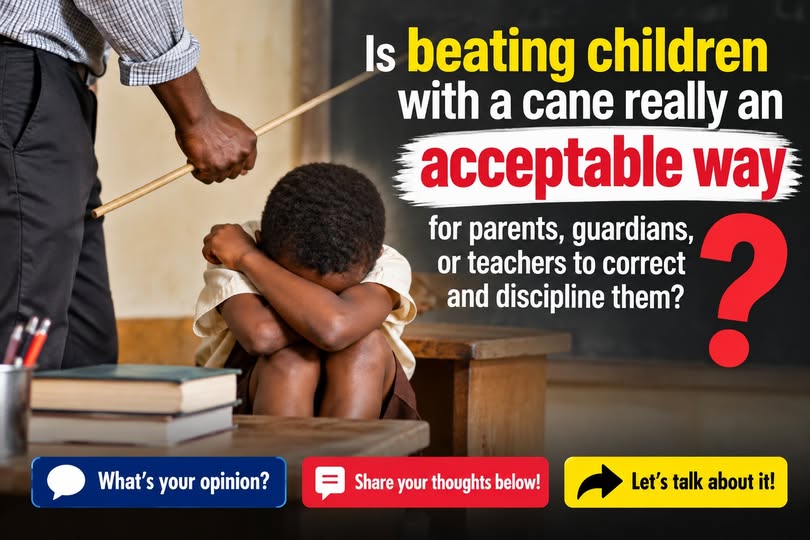
Is It Appropriate for Parents, Guardians, or Teachers to Beat Children With a Cane as Discipline?

Published

on

The use of caning as a method of disciplining children has long been a subject of debate. While some people believe physical punishment teaches respect and obedience, others argue that children can be corrected effectively without hitting them. So, where should society draw the line?

For generations, many parents and teachers have regarded the cane as a traditional tool of discipline. A child who misbehaved at home or school could be punished physically, often with the belief that the experience would prevent the behaviour from happening again.

But times are changing, and an important question deserves serious consideration:

Is beating a child really the best way to teach discipline?

Why Some Parents and Teachers Support Caning

Those who support physical punishment often argue that it can make children understand the seriousness of their actions.

Some adults also point to their own childhood experiences, saying:

“I was beaten when I was growing up, and I turned out fine.”

For them, caning is not necessarily about hatred or cruelty. They see it as a form of correction intended to establish boundaries, respect and obedience.

In some families and schools, physical discipline has also become part of a long-standing tradition that adults believe helped previous generations develop discipline.

But Does Fear Equal Discipline?

Critics of caning argue that there is a major difference between disciplining a child and making a child afraid of punishment.

A child may stop a particular behaviour because they fear being beaten, but that does not necessarily mean they understand why the behaviour was wrong.

There is also concern that repeated physical punishment could create resentment, encourage children to hide their mistakes and damage trust between children and the adults responsible for them.

See also  PHOTOS: First Lady, Remi Tinubu, showcases vegetables she harvested from Aso Villa Garden

The bigger question is therefore not simply whether a child obeys after being punished.

The question is whether the child is actually learning.

What About Teachers?

The debate becomes even more complicated when teachers are involved.

Parents send their children to school expecting teachers to educate, guide and protect them. But should a teacher also have the authority to physically punish a child?

Supporters may argue that teachers need effective ways to control disruptive behaviour in the classroom.

Opponents may argue that teachers can use other methods, including clear rules, loss of privileges, parental involvement, counselling, restorative conversations and other appropriate consequences.

There is also a concern about where the boundary lies between legitimate discipline and excessive punishment.

Discipline Does Not Have to Mean Violence

Discipline is important. Children need boundaries, rules and consequences.

But discipline can take many forms.

Parents and teachers can explain why a behaviour is unacceptable, establish clear expectations, impose reasonable consequences, encourage accountability and give children opportunities to correct their mistakes.

The goal should not simply be to make a child afraid of punishment.

The goal should be to help the child develop self-control and understand responsibility.

The Question Parents Must Ask

Before reaching for a cane, perhaps every adult responsible for a child should ask:

“Am I correcting this child so they can learn, or am I simply reacting because I am angry?”

That question can change the entire approach to discipline.

Children certainly need correction when they misbehave. But how adults correct them can have an important influence on how they understand authority, responsibility, conflict and relationships.

See also  PHOTOS: Meet The Only 'Presidential' Child Born Inside Aso Rock

So, Is Caning Appropriate?

There is no universal agreement on this question. Cultural attitudes, family traditions, school policies and laws differ across societies.

However, one thing should remain clear: discipline should never become an excuse for cruelty, humiliation or injury.

Whether someone supports or opposes caning, the conversation deserves to go beyond the simple argument that “we were beaten and survived.”

The real question is:

What method of discipline gives children the best chance of becoming responsible, respectful and emotionally healthy adults?

What Do You Think?

Should parents and guardians be allowed to cane children as a form of discipline?

Should teachers be permitted to physically punish students?

Or should schools and families completely move away from physical punishment and focus on other forms of discipline?

Share your opinion in the comments.

FOLLOW US ON:

FACEBOOK

TWITTER

PINTEREST

TIKTOK

YOUTUBE

LINKEDIN

INSTAGRAM

Continue Reading
Click to comment

Leave a Reply

Your email address will not be published. Required fields are marked *

Lifestyle

🔥 HERE’S A HARD TRUTH: SHARING YOUR BLOOD DOES NOT GUARANTEE THAT SOMEONE WILL STAND BY YOU.

Published

on

You can share the same parents, surname, ancestry, royal lineage, or family history—and still discover that support does not always come from those closest to you.

When life is comfortable, family bonds can feel unbreakable. But when hardship arrives, actions often speak louder than family titles or bloodlines.

Sometimes, a person with no blood connection to you will offer the encouragement, sacrifice, or assistance that you desperately needed.

That does not make family meaningless. It simply reminds us that true loyalty is demonstrated through actions, not claimed through relationships.

💬 Be honest: If a non-relative consistently stands by you while your relatives do not, what does “family” really mean?

NEWSBREAK365 — Stories that make you think.

#Newsbreak365 #Family #Loyalty #Bloodline #Royalty #LifeLessons #Relationships #FoodForThought

FOLLOW US ON:

FACEBOOK

TWITTER

PINTEREST

TIKTOK

YOUTUBE

LINKEDIN

INSTAGRAM

See also  See what made Imisi win Big Brother Naija
Continue Reading

Lifestyle

EVERY STRUGGLE IN LIFE EVENTUALLY ENDS SIX FEET UNDER

Published

on

We spend our lives chasing money, wealth, power, status and material possessions—sometimes forgetting that life itself is temporary.

One day, the struggle will end.

💰 The money will remain.
🚘 The cars will remain.
🏠 The houses will remain.
👑 The power and titles will remain behind.
⚰️ But every human being eventually faces the same final destination.

The real question is not how much you accumulated, but what kind of life you lived and what you left behind.

Build your future. Work hard. Make money. But don’t forget to live, love, help others and make your life meaningful.

⏳ You are here for a limited time. What legacy will you leave behind?

👇 If money, power and possessions cannot follow you into the grave, what should people value most in life?

#Newsbreak365 #LifeLessons #RealityOfLife #LifeAndDeath #Wisdom #Legacy #Money #Wealth #Success #Motivation #ThinkAboutIt #RealNewsRealPeopleRealAfrica

FOLLOW US ON:

FACEBOOK

TWITTER

PINTEREST

TIKTOK

YOUTUBE

LINKEDIN

INSTAGRAM

See also  Emotional abuse from parent to their children,how does it affect their life ?
Continue Reading

Lifestyle

HARSH TRUTH: YOUR PAST CAN BECOME YOUR PRISON!

Published

on

Some people are not being held back by their enemies.
They are being held back by memories they refuse to let go of.

You keep talking about what happened years ago.
You keep blaming the people who hurt you.
You keep thinking about the opportunities you lost.
You keep wishing you could change yesterday.

But while you are busy looking backward, time is moving forward without you. ⏳

Nobody can go back and rewrite the past.

But you can wake up TODAY and decide:

❌ I will stop living in regret.
❌ I will stop allowing yesterday to control today.
❌ I will stop waiting for the past to change.

✅ I will learn from it.
✅ I will grow from it.
✅ I will move forward.

The past is a chapter. It is NOT the whole book.

🚨 If you continue to dwell in the past, you may remain stuck while the world keeps moving forward.

Your next chapter is waiting.

BE HONEST: Are you moving forward, or are you still living in your past? 👇🔥

#NewsBreak365 #TruthOfLife #Motivation #LifeLessons #KeepMovingForward #PersonalGrowth #SuccessMindset #Inspiration #Mindset #NeverGiveUp

FOLLOW US ON:

FACEBOOK

TWITTER

PINTEREST

TIKTOK

YOUTUBE

LINKEDIN

INSTAGRAM

See also  Abdulsalami reveals why he told Obasanjo not to contest 1999 presidency
Continue Reading

Trending