Connect with us

Business

Dangote, regulator clash in court due to Refinery access; read details

Published

on

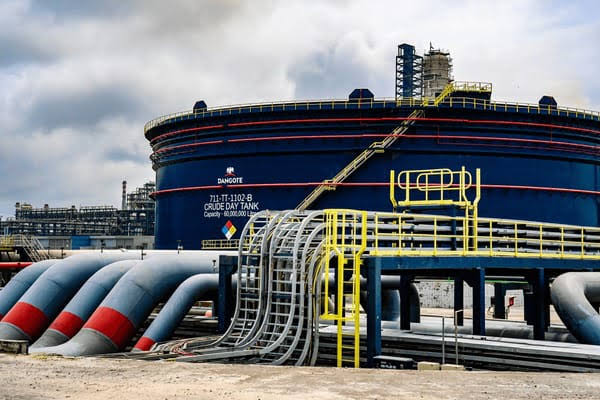
The Nigerian Midstream and Downstream Petroleum Regulatory Authority and the Dangote Petroleum Refinery have clashed in court over allegations surrounding the quality and distribution of propane, with the dispute centring on the regulator’s directive to suspend propane loading and truck-out operations at the refinery.

The face-off came to a head at the Federal High Court in Lagos on Wednesday, where NMDPRA urged the court to discharge an interim order restraining it from enforcing the suspension, while Dangote accused the regulator of abusing its powers.

The court had on August 31 restrained NMDPRA, its officers, agents and representatives from entering, sealing, shutting down, restricting access to, obstructing, suspending, disrupting, inspecting, supervising or sanctioning the refinery’s operations pending the hearing and determination of the substantive application.

NMDPRA, through its counsel, Matthew Burkaa, told the court that the interim order had been obtained through alleged misrepresentation and suppression of material facts.

The regulator also challenged the jurisdiction of Justice Akintayo Aluko to grant the order, arguing that the refinery had not filed the required motion on notice when its ex-parte application was heard.

According to the regulator, its decision to suspend propane loading and truck-out operations followed findings of alleged diversion of propane-laden trucks to unknown and unlicensed customers and the alleged illegal blending of propane at some LPG plants.

NMDPRA said its investigation began after laboratory tests conducted on LPG samples from three plants – Selai, Tewa and Ameego Pago – allegedly showed propane content above 50 per cent.

It said industry requirements stipulated that propane should constitute no more than 20 per cent of an LPG blend, while butane should account for about 80 per cent.

The regulator said representatives of the three plants were invited to discuss the findings and identified Sublime Oil and Gas Limited, an off-taker from Dangote Refinery, as their source of propane.

See also  Remi Tinubu defends her akara/roasted corn business idea, says petty traders given N50, 000 empowerment appreciate it

NMDPRA said this prompted a wider reconciliation and material-balance exercise involving propane-producing facilities and LPG-blending plants. It further alleged that its officials were denied access when they attempted to inspect propane-loading operations and records at Dangote Refinery on August 24.

The regulator subsequently issued a notice of potential non-compliance and directed the refinery to suspend propane loading and truck-out pending the outcome of its investigation and the implementation of additional safety measures.

According to NMDPRA, an examination of the refinery’s truck-out manifests revealed significant discrepancies. It alleged that Sublime Oil and Gas lifted 25 trucks of propane on August 20 and 22 for delivery to Navgas/Agasco, but Navgas confirmed receiving only six.

The regulator therefore said the remaining 19 trucks were unaccounted for. NMDPRA also alleged that records from Delta State showed that another off-taker loaded 52 trucks between May and August 2026 for delivery to Navgas, but Navgas reportedly confirmed that none of the consignments were received.

It argued that the alleged diversion of propane to unauthorised and unlicensed customers raised serious public health and safety concerns, particularly because the product was allegedly being used for LPG blending outside approved standards.

The regulator further claimed that propane produced by Dangote and other gas-processing facilities had a vapour pressure of about 13 bar, compared with the maximum seven-bar pressure required for the standard propane-butane LPG mixture.

It argued that the higher-pressure propane could pose an explosion risk at LPG refilling plants not designed to handle such pressure.

However, Dangote Group’s spokesman, Anthony Chiejina, rejected the regulator’s position, arguing that NMDPRA officials had inspected and certified the propane before it left the refinery.

See also  Nigeria pledges to strengthen bilateral cooperation with India

Chiejina said, “We have NMDPRA staff there in the refinery. They inspected and certified the product as okay. Then, a company came to pick up the product with its truck, not Dangote’s truck. You later arrested the truck somewhere else and said it was conveying adulterated or blended propane. How does that concern us after you tested and certified our product okay?”

He added, “You went to the plant to seal it and later left the plant. For me, that is an absolute abuse of power by NMDPRA. And that is just a diabolical sense of control. It makes no sense. That’s what led to the court action.”

Chiejina further challenged the regulator to produce its records, saying, “They have a hidden transcript. Assuming you entered our refinery and discovered that what we have there is blended, that’s a different thing. You have earlier certified the product.”

He also questioned Dangote Refinery’s responsibility for the movements of products after they had been purchased and transported by independent off-takers.

“Let them go and check their records. And the owner of the truck has left with his truck. Where he goes with his truck – is it my business? He does what he likes with his products,” he said.

At Wednesday’s proceedings, counsel for Dangote Refinery, Wale Akoni, SAN, drew the court’s attention to NMDPRA’s counter-affidavit filed in response to the refinery’s motion on notice.

Akoni, however, requested a brief adjournment to enable him to respond, saying he had only been served with the counter-affidavit in court on Wednesday.

Burkaa did not oppose the request but emphasised the urgency of the matter because of the safety concerns raised by the regulator.

See also  Debt dispute: Drama as Max Air pilot refuses to fly

Justice Aluko, however, said he could not fix a fresh date because he was sitting as a vacation judge and the court’s annual vacation would end on Friday.

“My jurisdiction ends on Friday as far as the vacation matter is concerned. Therefore, the Admin Judge will, in his wisdom, decide where the case file should go,” the judge said.

“So, it’s not even proper for me to give you a date now. The case file should be sent back to the court registry for the admin judge to, in his wisdom, set a date.”

The judge thereafter extended the interim order restraining NMDPRA from interfering with the refinery’s operations pending the hearing and determination of the substantive application.

Justice Aluko held, “I find it proper to extend the interim order made on the 31st day of August 2026. It shall continue to subsist and shall be in force till the hearing and determination of the motion on notice, or until the court gives further directive.”

He subsequently directed that the case file be returned to the registry for assignment to the regular court by the administrative judge. “The case file is hereby remitted to the registry for assignment to the regular court by the Honourable Administrative Judge,” the judge held.

The court’s interim order therefore remains in force while the substantive dispute over NMDPRA’s regulatory action, the quality and handling of propane, and the alleged diversion of trucks awaits determination. The earlier court order had specifically restrained the regulator from shutting down or otherwise disrupting the refinery’s operations.

Source: punchng.com

FOLLOW US ON:

FACEBOOK

TWITTER

PINTEREST

TIKTOK

YOUTUBE

LINKEDIN

INSTAGRAM

Continue Reading
Click to comment

Leave a Reply

Your email address will not be published. Required fields are marked *

Business

Nigeria, Indonesia trade tops $3bn annually — envoy reveals

Published

on

Nigeria and Indonesia’s bilateral trade has consistently exceeded $3bn annually, the Indonesian Ambassador to Nigeria, Bambang Suharto, has said.

The ambassador said the trade relationship had positioned Nigeria as one of Indonesia’s foremost trading partners in Africa, while calling for greater economic cooperation between both countries.

“Our bilateral trade has consistently surpassed USD 3 billion annually, cementing Nigeria’s position as one of Indonesia’s foremost trading partners in Africa,” he said.

Suharto said Nigeria supplied an essential source of energy contributing to Indonesia’s energy security.

“Nigeria supplies the essential source of energy that contributes to Indonesia’s energy security, while Indonesian products have become household staples for Nigerian consumers and businesses,” Suharto said.

He said some Indonesian products had also become established in Nigeria through local production and Nigerian workers, describing the development as evidence of the value of economic partnerships beyond the exchange of goods.

He added, “Yet, there remains considerable room to grow. Together, Indonesia and Nigeria represent a vibrant market of more than 550 million people, defined by young populations, dynamic businesses, and substantial natural and human resources.”

According to him, the combined economic potential provided a foundation for expanding trade, investment, technological exchange and employment opportunities.

Suharto said Indonesian companies operating in Nigeria were contributing to the bilateral relationship through investment, job creation and corporate social responsibility initiatives.

“Our ultimate ambition is not simply to trade more, but to cultivate a resilient partnership in which businesses on both sides thrive, local industries develop, and our people directly reap the benefits of the opportunities we create together,” he said.

He said Indonesia also attached importance to educational and cultural exchanges with Nigeria, noting that its scholarship programmes had enabled Nigerian students to study in Indonesia and establish lasting relationships.

See also  Nigeria’s petrol exports surge sixfold, near N1tn

In his remarks, the Permanent Secretary, Ministry of Foreign Affairs, Ambassador Dunoma Umar Ahmed, said Nigeria and Indonesia had considerable scope to deepen their economic partnership.

Ahmed said Nigeria was particularly interested in Indonesia’s experience in industrialisation, manufacturing, digital transformation, infrastructure development, agriculture, maritime development and the expansion of small and medium-sized enterprises.

“Nigeria is particularly interested in expanding cooperation that can support the development of local productive capacity, strengthen value chains, promote technology transfer, and attract sustainable investment,” he said.

The permanent secretary urged greater interaction between the private sectors, chambers of commerce, financial institutions and business communities of both countries.

He identified agriculture and agro-processing, manufacturing, energy, infrastructure, pharmaceuticals, the digital economy and creative industries as areas with significant potential for increased trade and investment.

Ahmed also called for efforts to address practical constraints to bilateral commerce, including market access, business information connectivity and the facilitation of contracts between businesses in both countries.

“Nigeria is particularly interested in expanding cooperation that can support the development of local productive capacity, strengthen value chains, promote technology transfer, and attract sustainable investment.

“Our two countries should therefore continue to encourage greater interaction between our private sectors, chambers of commerce, financial institutions, and business communities. There is significant potential for increased trade and investment in areas including agriculture and agro-processing, manufacturing, energy, infrastructure, pharmaceuticals, the digital economy, and the creative industries,” Dunoma said.

Source: punchng.com

FOLLOW US ON:

FACEBOOK

TWITTER

PINTEREST

TIKTOK

YOUTUBE

LINKEDIN

INSTAGRAM

Continue Reading

Business

Airlines face disruptions as fuel costs soar

Published

on

Recent disruptions that stranded passengers, particularly in Abuja, have been linked to debts airline operators owe fuel marketers, even as operators lament the rising cost of Jet A1 aviation fuel.

Passengers who bought Air Peace tickets last Friday spent the night at the Abuja airport following flight cancellations and delays.

The PUNCH learnt that on Friday alone, Lagos, Maiduguri and Asaba-bound passengers remained at the Nnamdi Azikiwe International Airport as the airline delayed boarding for several hours and cancelled a number of flights.

Passengers who spoke with our correspondent claimed that the airline had failed to provide reasons for the disruptions.

Our correspondent gathered that Lagos-bound passengers scheduled to take off from Abuja at about 4:00 pm, as well as another set scheduled to depart earlier, remained at the airport until late that night.

While Lagos-bound passengers left the same night, Asaba- and Maiduguri-bound passengers spent the night at the airport, leading to a series of protests within the aerodrome.

Meanwhile, an airport source who refused to give her name for fear of reprimand had told our correspondent at the time that the passengers might still be airlifted before midnight to avoid disruptions to Sunday’s operations.

The source said, “Truly, many passengers sat helplessly at the airport. I learnt from the workers that it was a fuel-related issue, but only the airline can really explain what happened.”

When contacted, the spokesperson for the Nigeria Civil Aviation Authority, Michael Achimugu, told our correspondent that he gathered that the airline had been speaking with the passengers as events unfolded. He confirmed that issues relating to a lack of fuel had grounded the airline’s aircraft.

Achimugu did not, however, provide further information on why the airline was experiencing a shortage of fuel.

See also  Nigeria pledges to strengthen bilateral cooperation with India

Achimugu said, “Yes, my CPOs have reported to me that the airline has been unable to fly the passengers because of fuel-related issues. I also learnt they have been updating the passengers, but you know when passengers get angry, they may not even listen to whatever information they are being provided with.”

When asked what exactly the issue was, he said, “What my CPOs told me is what I have told you. When we have more information, we will let you know.”

Efforts to speak with the airline’s spokesperson, Efe Osifo-Whiskey, were unsuccessful. He neither picked up his calls nor responded to text messages seeking clarification at the time.

Also, in a statement by the airline, Air Peace said the delay was caused by the unavailability of Jet A1 aviation fuel. Air Peace added that the fuel shortage also affected other airlines.

The Air Peace statement read partly, “The initial delays to our Abuja operations were occasioned by the unavailability of Jet A1 aviation fuel, which affected Air Peace and other airlines operating from the Abuja airport. Upon the availability of fuel, our affected flights commenced operations accordingly.

“However, our Abuja-Maiduguri service could not subsequently operate as planned because the tower in Maiduguri, which had given an extension for our flight to come in, later came back, as at the time of our calling for boarding, to state that the airport had become VFR and would no longer fly beyond sunset.”

While apologising to passengers, Air Peace added, “Throughout the disruption, passengers were duly informed of the delays and provided with refreshments. Following the cancellation, affected Maiduguri passengers were also provided with hotel accommodation, with arrangements made to operate the flight the following day.

See also  Report reveals that Dangote sourced 22% of June crude from overseas, 78% from indigenous producers

“We sincerely regret the inconvenience caused to our esteemed passengers and appreciate their patience and understanding. At Air Peace, the safety and wellbeing of our passengers remain paramount, and we will continue to prioritise these considerations in all our operations.”

However, sources among marketers said the product was available, although at a higher price. One of the sources told our correspondent that, “Airlines may have faced disruptions because a number of them were not supplied the product because they have refused to clear outstanding. They are owing in the millions.

“The truth is some are owing, and they won’t expect continuous delivery while they are yet to pay what they are owing.”

An airline source who also refused to give his name told our correspondent that a litre of Jet A1 currently sells for about N2,130 in Lagos and Abuja, while the price ranges between N2,180 and N2,230 per litre at airports outside the two major aviation hubs, depending on the location.

The source said although aviation fuel was available, the major challenge confronting airlines was the high cost of procuring the product, which he said had continued to drive up their operating expenses.

He added that the situation was particularly difficult for indigenous carriers because most of their revenues were generated in naira, while a substantial portion of their operating costs was either dollar-denominated or linked to foreign exchange.

According to the source, the high cost of operations has left several indigenous airlines struggling to remain in business, with some having to source funds from other areas to meet their aviation fuel obligations.

He called on the government to intervene in the situation to prevent total collapse of the operating carriers.

See also  World Bank loans drive Tinubu’s social spending agenda

Also, the Managing Director of Aero Contractors, Ado Sanusi, confirmed that the product is available in the country, dismissing the allegation of its scarcity. He, however, agreed that the cost of the product remained a major concern for operators.

Sanusi, who spoke against the backdrop of concerns over Jet A1 availability, said the emergence of the Dangote refinery has helped in making the product available. According to him, Jet A1 currently sells for about N2,000 per litre in Lagos, while the price is slightly higher outside Lagos by approximately N100 per litre.

He said: “I am not aware of the scarcity of aviation fuel in Nigeria. With the Dangote refinery, how can we experience scarcity of the product locally? The only problem is that it is expensive to purchase. Presently, the product goes for N2,000 per litre in Lagos, while it is slightly more expensive outside Lagos with about N100 difference.”

Sanusi also clarified that Aero Contractors was not indebted to aviation fuel marketers, saying the airline had a policy of settling its fuel bills as soon as they were presented.

“I can’t comment on any other airline’s debts, but one thing is sure: at Aero Contractors, we are not indebted to fuel marketers. We pay all our bills as and when due. For clarity’s sake, what I am saying is that once the bill is submitted to us, we settle it immediately at Aero Contractors. That’s the way we work here,” he said.

Source: punchng.com

FOLLOW US ON:

FACEBOOK

TWITTER

PINTEREST

TIKTOK

YOUTUBE

LINKEDIN

INSTAGRAM

Continue Reading

Business

Thales to develop Nigeria’s new satellite

Published

on

Thales Alenia Space has signed a contract with the Federal Government-owned NIGCOMSAT Ltd to build NigComSat-2A, a new geostationary telecommunications satellite that will boost digital connectivity across Africa.

In a release on Wednesday, the firm said it signed the deal in Cannes, France, on September 14,  2026.

It noted that the French-Italian joint venture, owned 67 per cent by Thales and 33 per cent by Leonardo, will develop the satellite to deliver high-quality television broadcasting, reliable broadband internet and modern digital services including voice calls and streaming.

According to the release, NigComSat-2A, with a launch mass of nearly four tonnes, will cover West and Central Africa through to Southern Africa.

It is designed to improve access in underserved and remote communities where terrestrial networks remain limited. Its expected in-orbit service life exceeds 15 years and will be based on Thales Alenia Space’s Spacebus B2 platform.

NigComSat’s Managing Director and Chief Executive Officer, Nkechi Egerton-Idehen, described the contract as a major step forward for Nigeria.

“The signing of this contract represents a bold step in Nigeria’s journey toward digital transformation,” she said.

“NigComSat-2A will not only strengthen our nation’s satellite communications capacity but also expand access to reliable broadband and digital services for millions of Africans, especially in underserved and remote communities. This project underscores NIGCOMSAT’s commitment to driving connectivity, fostering innovation, and enabling economic growth across the continent. We are proud to partner with Thales Alenia Space in delivering a satellite that will empower Africa’s digital future.”

Also, the President and Chief Executive Officer of Thales Alenia Space, Hervé Derrey, welcomed the partnership, saying, “I would like to thank NIGCOMSAT for placing their trust in our company.

See also  N20,000 monthly transfers can cut poverty, says W’Bank

“NigComSat-2A geostationary satellite will enable NIGCOMSAT to strengthen its competitive position by delivering reliable, high-quality services that meet the growing demand for connectivity and digital content worldwide. This announcement also underscores the success of our Spacebus B2 product line, renowned for its reliability, robustness and time-to-market efficiency.”

NIGCOMSAT Ltd, established on  April 4, 2006, under the Federal Ministry of Communications, Innovation and Digital Economy, owns and operates Nigeria’s geostationary communications satellites. Its current satellite, NigComSat-1R, launched in December 2011, was the first of its kind in Sub-Saharan Africa.

The new satellite is expected to support Africa’s expanding digital economy by providing greater flexibility and resilience in communications infrastructure, particularly in areas where ground-based networks are difficult to deploy.

Officials said it would contribute to digital inclusion, economic opportunity and wider access to information across the continent.

Source: punchng.com

FOLLOW US ON:

FACEBOOK

TWITTER

PINTEREST

TIKTOK

YOUTUBE

LINKEDIN

INSTAGRAM

Continue Reading

Trending