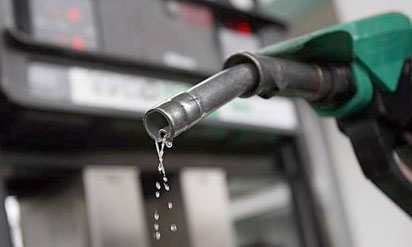
The pump price of Premium Motor Spirit, popularly known as petrol, has continued to rise across states, with the product selling for as much as N1,500 per litre in Kano, Yobe, Sokoto, Borno, Taraba and Zamfara, while prices have also risen sharply in other parts of the country.
This came as the Nigeria Labour Congress called on the Federal Government to urgently introduce measures to cushion the impact of the rising price of petrol, including the payment of reasonable wage awards to workers and the sale of crude oil to local refineries in naira.
The NLC, in a statement signed by its President, Joe Ajaero, on Wednesday, said petrol now sells for about N1,430 per litre in major cities, with prices reportedly higher in less accessible locations.
The labour centre warned that the rising cost of petrol would further worsen the economic hardship facing Nigerians, noting that increases in transportation costs typically trigger higher prices of food, rent, school fees and other essential goods and services.
Also, fuel marketers joined the NLC to call on the Federal Government to intervene in the petrol market, warning that prices could rise to N2,000 per litre if international crude oil prices continue to increase, while stakeholders urged the government to curb Dangote Petroleum Refinery’s growing influence over the market.
Prices across states
The cost of the commodity has continued to rise nationwide, selling for as high as N1,500 in many states. In Yobe State, residents reported that petrol was selling for between N1,500 and N1,520 per litre at some filling stations in Damaturu, the state capital.
A Damaturu resident, Hassan Auwalu, said he currently purchases petrol for N1,500 per litre. “I am currently purchasing petrol at N1,500 per litre. This is unprecedented, and the increase is making things more difficult for ordinary residents,” Auwalu said.
Similarly, a tricycle rider in the state capital, Musa Ibrahim, said he buys the commodity for about N1,500 per litre at some Nigerian National Petroleum Company filling stations.
Also speaking, a civil servant, Lawan Garba, said some filling stations were selling petrol at an even higher price. “I am buying petrol at N1,520 per litre in some petrol stations,” Garba said.
In Kano State, petrol was selling for between N1,460 and N1,500 per litre at most filling stations in the metropolis. The increase has forced some vehicle owners to park their vehicles, while commercial tricycle operators, popularly known as “yan’ adaidaita sahu”, have also increased their fares by about 50 per cent, depending on the distance.
The operators who used to charge N200 for a short distance now collect N300, while they charge between N500 and N700 for longer distances.
In Sokoto State, petrol prices rose to between N1,465 and N1,500 per litre in the metropolis. Checks by our correspondent showed that the product had risen from the previous price of N1,365 per litre.
At some filling stations, including AA Rano, Shafa and Total, petrol was sold for N1,465 per litre, while major marketers sold it for between N1,470 and N1,500 per litre.
In Borno State, a litre of petrol was selling for N1,500 at filling stations in Maiduguri, the state capital. A motorist, Ishaku Curutsi, confirmed to our correspondent that he bought petrol from Matrix filling station for N1,500 per litre on Wednesday. “I bought it this morning, and a litre at Matrix cost 1,500,” he said.
In Taraba State, the price of petrol had risen to N1,500 per litre, with motorists and commuters reporting prices of between N1,500 and N1,700 per litre at some filling stations. The development is expected to further increase the cost of transportation and movement of goods within the state.
In Zamfara State, a litre of petrol was selling for N1,500 in Gusau, the state capital, and its environs. A visit to filling stations showed that motorists were purchasing the commodity for between N1,450 and N1,500 per litre, against the former price of N1,350.
At Danmarina filling station, motorists were seen purchasing the commodity amid complaints about the increase. One of the motorists, who gave his name as Musa Idris, said the current price was putting pressure on consumers.
Findings by The PUNCH also showed that petrol prices had risen in Kaduna, Benue, Kogi, Plateau, Bauchi, Adamawa, Imo, Rivers, Abia, Delta, Bayelsa, Ekiti, Edo and Kwara states.
In Kaduna, the pump price of petrol rose to as much as N1,450 per litre at some filling stations in the metropolis and its environs.
A correspondent who monitored the development on Tuesday observed that the product was sold for N1,450 per litre at some filling stations operated by AA Rano and Shema. However, motorists buying from NNPC Mega filling stations paid N1,439 per litre.
At the NNPC Mega filling station along Aliyu Makama Road, Barnawa, our correspondent, who purchased petrol worth N10,000, got approximately 6.9 litres.
The development has sparked concern among motorists, with some saying the rising cost of petrol was putting additional pressure on household and transportation expenses.
A civil servant, Madam Cecilia Njoku, said she had resorted to leaving her car at home because of the cost of fuelling it. She said, “The situation is terrible. I had to drop my car at home because I can no longer afford petrol.”
In Benue State, petrol was selling for between N1,430 and N1,470 per litre in filling stations in Makurdi. Our correspondent, who visited some of the filling stations along Ankpa Quarter, including Enyo and Prime Power, found that the product sold for N1,450 and N1,470 per litre, respectively.
A female attendant at Prime Power filling station, who simply identified herself as Debby, lamented low patronage. She said, “The high price of fuel is affecting sales; most of our customers now are commercial motorcyclists. Ask yourself how many litres of fuel they buy in a day?”
Consequently, transport fares appeared to be increasing, as a distance that used to attract N400 had risen to N600.
In Dutse, Jigawa State, petrol was selling at most filling stations for between N1,460 and N1,480 per litre, depending on the station and its location within the metropolis. At roadside black-market points, however, a litre of petrol was sold for N2,000 and above, depending on availability and bargaining.
In Lokoja, Kogi State, retailers adjusted pump prices following the announcement of price adjustments by Dangote last Friday. At a Mobil filling station along IBB Road near Obasanjo Square, Kpata, a litre of petrol sold for N1,450. The same price was recorded at NNPC, Kpata Market Road.
However, at the NNPC filling station along Lokoja-Abuja Express Road, a litre sold for N1,400, while at MRS, owned by Dangote Group, it sold for N1,410.
In Jos, Plateau State, petrol sold for between N1,450 and N1,470 per litre across major filling stations in the metropolis. At AP Filling Station in Bukuru, the product sold for N1,470 per litre, while it was dispensed at N1,460 at F.O. Eze Oil and Gas along Rukuba Road and N1,450 at the Polo NNPC station.
For many workers commuting daily from satellite communities such as Tina Junction, Bukuru and Rukuba to Terminus Market, the increase has significantly raised transportation costs.
In Bauchi State, petrol was selling for N1,460 per litre in the metropolis, while motorists and other consumers at filling stations on the outskirts were buying the product for N1,470 per litre. The checks showed that the price difference between outlets within the metropolis and those on the outskirts stood at N10 per litre.
In Adamawa State, petrol prices ranged from N1,400 to N1,470 per litre in Yola. At Fatinha filling station along Airport Road, the pump price was N1,465, while at MRS filling station opposite Bajure Junction, it was N1,400.
At Optima Energy along Yola-Girei Road, the pump price was N1,470, while NUT filling station sold at N1,455. At NNPC along the same road, the price was N1,436. In Mubi, the commercial centre of Adamawa State bordering the Republic of Cameroon, petrol prices ranged from N1,700 to N1,850 per litre.
In Rivers State, filling stations in Port Harcourt and its environs were selling petrol for N1,400 per litre. Checks by our reporter showed that on Wednesday, petrol sold for N1,400 at Eternal Filling Stations and Whiz Filling Station.
However, at the NNPC filling station in Rumuodomaya near Port Harcourt, petrol sold for N1,385.
In Abia State, petrol sold for between N1,350 and N1,440 per litre. On Sunday, it was N1,310 per litre in Aba and N1,350 in Umuahia. However, by Wednesday, prices varied from one filling station to another.
A fuel station owner in Umuahia who spoke on condition of anonymity explained, “That was how we bought it: at high cost”. Transporters who reacted to the development lamented that “it is no longer business as usual”, pointing out that transferring the high cost to commuters was a moral burden to them.
In Delta State, most filling stations in the twin metropolitan cities of Warri and Effurun had pegged the price of petrol at N1,350 per litre. Many commercial tricycle operators were resorting to the black market, where they procured petrol at N1,300 per litre.
A private car owner, Samson Oghenero, told our correspondent that he had decided to park his vehicle for a while, resorting to boarding commercial buses to his office as a result of the high cost of fuel.
In Asaba, Delta State, the pump price of petrol was between N1,400 and N1,410 per litre at filling stations. Checks by our correspondent on Wednesday showed that most of the stations visited sold PMS at N1,400 per litre, while TotalEnergies filling station along Summit Road sold the product at N1,410 per litre.
In Yenagoa, Bayelsa State, the pump price of petrol had risen to about N1,400 per litre at several filling stations. A visit to various filling stations across the metropolis on Wednesday showed that motorists and other consumers were purchasing petrol at about N1,400 per litre.
The development has continued to put pressure on motorists and residents who rely heavily on petrol for transportation, power generation and other daily activities. At some of the filling stations visited, motorists were seen queuing to purchase the product, while others moved from one station to another in search of cheaper petrol and shorter queues.
In Ado Ekiti, Ekiti State, a litre of petrol sold for between N1,380 and N1,450 on Wednesday. At the AP filling station on New Iyin Road, a litre of petrol was sold for N1,390, while it was N1,400 at Matrix, Adebayo, Ado Ekiti.
At Royal petrol station at Egbewa Junction, a litre of petrol went for N1,395, while the same quantity went for N1,450 at J.J. Roberts petrol station on Ilawe Road. A litre was also sold at N1,393 at AP filling station along Basiri-Nova Road.
In Edo State, the majority of filling stations in Benin sold a litre for between N1,420 and N1,425, while one station on Ekhewuan Road sold for N1,395.
In Auchi, Edo North, several stations sold the product for between N1,410 and N1,415, while some other areas in Edo North had stations selling at N1,420.
In Edo Central, most filling stations sold for between N1,410 and N1,420, especially in Ekpoma, Irrua and Uromi, while some stations in remote locations sold for N1,422.
In Ilorin, Kwara State, petrol was sold between N1,379 and N1,405 per litre at filling stations.
A survey conducted across filling stations in areas including Post Office, Maraba, Sobi, Tanke, Unity, Taiwo and Akerebiata revealed varying pump prices among major petroleum marketers in the state.
Abramik sold petrol at N1,379 per litre, while MRS dispensed the product at N1,380 per litre. NIPCO sold petrol at N1,390 per litre, while Bovas and Shafa Petroleum retailed the product at N1,400 per litre each.
TotalEnergies recorded the highest price among the stations surveyed, selling petrol at N1,405 per litre, indicating a N26 difference between the lowest and highest prices observed across the locations.
NLC’s demands
In its statement, titled “Save the Situation Now,” the NLC said the latest increase came at a time when government pressure on oil marketers to reduce pump prices in response to lower international crude prices was beginning to produce results.
According to the NLC, the latest surge has been linked to the resurgence of conflict in the Gulf, but Nigeria’s status as an oil-producing country means it should be able to provide some protection against international oil market shocks.
It said, “As a nation, and as a people endowed with enormous fossil resources, we are deserving of a certain level of protection or buffer against the gales from the Gulf, and indeed, other gales.”
The NLC urged the Federal Government to immediately introduce measures to shield households and businesses from the impact of the higher fuel prices.
It specifically called for reasonable wage awards for workers, sufficient crude oil sales in naira to local refineries and an expansion of the country’s national petroleum storage capacity to strengthen energy security and prepare for emergencies.
The labour union said the measures would not only ease the burden on Nigerians but also create jobs, generate economic value and help address emerging security challenges.
It also argued that government intervention, including subsidies, should not be ruled out in an emergency.
“There is nothing wrong with the government subsidising the needs of citizens, especially in emergency situations like this,” Ajaero said, adding that oil-producing countries were introducing different forms of intervention or palliatives to protect their citizens from the effects of the current global energy crisis.
The NLC further said the Federal Government had benefited from higher international crude prices, claiming that crude was currently selling about $35 to $40 per barrel above the benchmark used in the national budget.
It argued that the additional revenue should be regarded as a windfall that could provide fiscal space for interventions aimed at protecting citizens from the rising cost of living.
The union also raised concerns over the reported importation of crude by some local refineries, describing the development as contrary to the objective of developing domestic refining capacity.
“On a long-term basis, we are equally concerned that local refineries are importing crude. This is unreasonable and unacceptable and defeats the logic and purpose of local capacity,” the statement said.
The latest petrol price increase comes amid Nigeria’s broader transition to a deregulated downstream petroleum sector following the removal of the petrol subsidy in May 2023.
The policy has exposed domestic fuel prices more directly to changes in crude oil prices, foreign exchange costs, logistics and other market factors. The government and oil-sector regulators have subsequently introduced measures aimed at increasing domestic refining and reducing Nigeria’s dependence on imported petroleum products.
The commissioning and ramp-up of large-scale private refining capacity, alongside the rehabilitation of government-owned refineries, have also been central to the Federal Government’s strategy for improving domestic fuel supply and reducing exposure to international market volatility.
However, fluctuations in crude prices, exchange rates and supply-chain costs continue to influence pump prices and transportation expenses, with implications for household purchasing power and inflation.
The NLC said the government needed to act quickly rather than allow the burden to fall entirely on workers and other citizens.
Ajaero said the Federal Government, which he noted was seeking re-election in the coming months, “cannot afford to stand and watch marketers inflict suffering on the citizenry in the name of deregulation.”
“Labour has an obligation to speak out or act accordingly,” he added.
Marketers speak
Fuel marketers joined the NLC to call on the Federal Government to intervene in the petrol market, warning that prices could rise to N2,000 per litre if international crude oil prices continue to increase, while stakeholders urged the government to curb Dangote Petroleum Refinery’s growing influence over the market.
The calls followed the latest increase in the gantry price of Premium Motor Spirit, popularly known as petrol, by the Dangote refinery. The refinery increased the price from N1,265 to N1,350 per litre, effective Saturday, September 12, representing an N85, or 6.7 per cent, increase.
In a memo to customers, the refinery announced the revised prices, stating, “Dear valued customer, please find below the revised DPRP PMS gantry and coastal price, which is effective 12th September 2026.”
The refinery also increased its coastal price by N113,987, or 6.8 per cent, to N1,783,530 from N1,669,543. Customers with existing loading arrangements were directed to return their Automated Truck Certificates for repricing.
The latest adjustment is the fourth upward review of the Dangote refinery’s petrol gantry price since August 21. Dangote had increased the price from N1,165 to N1,185 per litre on August 21 before raising it to N1,200 on August 26.
It subsequently increased the price to N1,265 on August 29 and has now added another N85 per litre, taking the gantry price to N1,350 in three weeks. The successive increases have raised the refinery’s petrol price by N185 per litre, or about 15.9 per cent, in 22 days.
Checks by our correspondent showed that the Dangote-backed MRS filling station in Alapere, Lagos, changed its price from N1,310 to N1,395. The price was N1,385 at the Mobil filling station on the same axis.
The Matrix filling station at Kara, Ogun State, sold petrol at N1,360 per litre, while Nigerian National Petroleum Company retail stations in Ibafo dispensed the product at N1,380 a litre.
The Publicity Secretary of the Independent Petroleum Marketers Association of Nigeria, Chinedu Ukadike, said rising international crude oil prices would continue to push up the prices of petroleum products unless the government intervened.
Ukadike said, “Petrol prices will continue to go up if the crude oil price continues to rise. So we are crying for the intervention of the presidential committee on crude oil. Let them see what can be done for Nigerians to alleviate this incessant increase, because rising oil prices are definitely going to continue to increase the price of petroleum products.”
Ukadike urged the government to consider supplying crude to domestic refineries at a price that is slightly different from the international market, while also reviewing some of the statutory charges associated with shipping and product distribution.
According to him, the government could reduce the impact of rising crude prices on consumers by removing or reducing some taxes and fees imposed on petroleum products by agencies such as the Nigerian Midstream and Downstream Petroleum Regulatory Authority, the Nigerian Maritime Administration and Safety Agency and others.
“What they will do is to look for a price that is slightly different from the international market and look at other fees associated with the distribution of petroleum products, like some of the NIMASA fees and others. They should try to see whether there will be a zero tax on some of these government taxes on shipping from NMDPRA and the rest of them. All these things will cushion the effect of the price of petroleum products at the pumps. This will also help us,” he stated.
The IPMAN spokesperson also called for increased and sustained crude oil supply to Dangote and other domestic refineries, proposing a system under which refineries could receive enough crude to meet between 60 and 90 days of their requirements to avoid being affected by global price fluctuations.
He said such an arrangement could enable refiners to operate with greater certainty over feedstock costs and reduce the immediate effect of fluctuations in international crude prices on locally refined products.
“They (the government) should also ensure the supply of crude oil at a very large quantity for Dangote for a sufficient period of 60 to 90 days, with a reservoir. That will make the product stable.
“This issue of steady supply based on the price of crude oil in the international market will definitely destabilise the economy and dwindle the stability of the naira, because so many naira will be chasing few goods,” Ukadike added.
He acknowledged the Federal Government’s position against a return to fuel price control but argued that a crude supply arrangement for domestic refineries could provide a measure of stability without necessarily fixing the retail price of petrol.
The Minister of Finance, Taiwo Oyedele, had earlier ruled out any form of subsidy or price control in the petroleum sector.
However, Ukadike stated, “It is true he said that, but this is also eating the economy. They may say it’s a fuel subsidy, but if we can have what is called a kind of national reserve that has a locked-up price for 90 days of sufficiency, this will not include the current price of crude oil in the international market, but it will help the economy. It will be a locked-up price. This is my own idea.”
He explained that Nigeria could establish crude reserves for domestic refining, with sufficient volumes supplied at an agreed price over a period ranging from three months to six months.
According to him, the arrangement would enable refineries to continue producing petroleum products without immediately passing every movement in international crude prices to Nigerian consumers.
“We can supply crude oil to the tune of 90 days’ sufficiency. With that, the refinery will be refining at a stable crude oil rate. It will not be affected by the international market. I’m not saying that they shouldn’t sell to the international market at the global rate, but they should give the domestic refineries enough to ensure that there is more storage so that the price can be stagnant for some time,” he stated.
Ukadike argued that Nigeria, as an oil-producing country, should consider developing a pricing arrangement for crude supplied to its domestic refineries that would provide greater stability than the prevailing international market.
“If you look at the Platts, the Platts rates go up and down, but when we supply at a rate that will be locked in, no matter what is happening in the international market, it will not affect us. So, it means we can design our own price, and it will be stable for at least a 90-day period, up to about six months.
“Crude oil will be selling at a locked-in price; it won’t be affected by the international market,” he said. Ukadike warned that petrol prices could rise as high as N2,000 per litre if crude oil prices continued to increase, particularly if the naira also weakened against the dollar.
“Crude oil will continue to go up because of this Iran, United States, and Israeli war. It means petrol can jump to N2,000 anytime. Once the price of crude oil goes up, petrol will go up. And now that petrol is going up because crude oil is rising, you will also see that the dollar rate might not be stable. It might go up, and once it goes up, it becomes two factors that are affecting domestic supply of petroleum products,” he added.
The IPMAN spokesman identified international crude oil prices and the exchange rate as the two major pressures facing domestic fuel supply. “The first factor is the price of crude oil in the international market; the second is the dollar rate. And Nigeria isn’t doing anything to ensure that the dollar rate comes down,” Ukadike noted.
He added that a stronger naira could reduce the impact of high international crude prices on the cost of petroleum products, even if crude prices remained above $100 per barrel.
“If the dollar rate comes down, it will be a plus; even if crude is being priced at $107, and the dollar rate here in Nigeria is maybe N1,000/dollar, it will also be nice for us. So we should try as much as possible to ensure that the dollar comes down,” he stated.
The increase has renewed concerns among marketers and consumers over the likely effect of rising international crude prices on petrol prices, particularly as changes in crude costs increasingly affect locally refined and imported petroleum products.
The National Assistant General Secretary of the NLC, Chris Onyeka, said the government should either break up Dangote’s alleged monopoly or revive the country’s public refineries to increase the supply of locally refined petroleum products.
“The danger of a monopolist is that he controls the market. He controls production and controls consumption. He controls supply and controls the market,” Onyeka said.
The latest price adjustment adds to concerns over petrol pricing in Nigeria, where the removal of the subsidy in 2023 exposed pump prices to fluctuations in crude oil prices, foreign exchange rates and other market costs.
The union accused Dangote of increasing the prices of its products when crude oil prices rise, or the naira depreciates, while allegedly failing to reduce prices when those conditions reverse.
“Dangote has shown it over and over. He is quick to increase the price of products when foreign exchange, when the naira depreciates, he increases the price of his products,” he said. “When there is an increase in crude, he increases. But when it is the other way, he doesn’t. He doesn’t. So, it tells you that it’s all about profit margin.”
The labour leader argued that the government had contributed to the concentration of market power by supporting the construction of Dangote Refinery while allowing state-owned refineries to remain largely unavailable for domestic supply.
“You handed over a whole sector, a strategic sector of the Nigerian economy, the petroleum sector, to an individual,” Onyeka said, adding that the government had provided financial support and other assistance to the project.
He called for the rehabilitation of public refineries, saying the availability of alternative sources of refined products would help introduce competition and protect consumers.
“It is either we lay hold on Dangote, because our money is there, whether we like it or not, and break it up into segments so that it will no longer be a monopoly. Or we immediately get all our public refineries working to put products into the market,” Onyeka said.
Nigeria’s dependence on imported refined petroleum products has historically been linked to the poor performance of its state-owned refineries, despite the country’s status as a major crude oil producer. The Dangote Refinery, which began operations in 2024, was built to process crude oil on a large scale and reduce the country’s reliance on imported fuels.
The refinery has since become an important supplier in Nigeria’s downstream petroleum market. Its price adjustments have therefore become significant for marketers, distributors and motorists, although the gantry price is not necessarily the final price paid by consumers at filling stations.
Onyeka, however, said the refinery’s growing importance should not be allowed to translate into excessive control over the domestic market.
“Why is it that even as we speak today, importers can still import products from outside Nigeria and still make a profit by selling it here?” he asked.
“If importers of petroleum products can go to Europe, go to Asia, and import this product, pay freight, pay all the logistics, pay duty and everything, then still sell it and make profit, then there are a lot of stories.”
The NLC official also accused the government of deliberately allowing public refineries to deteriorate in a manner that benefited private interests, although no evidence was provided in the interview to substantiate the allegation.
Onyeka said the union had previously warned against the privatisation of strategic public assets, citing its opposition to the electricity distribution sector’s privatisation.
“When we talked about the electricity privatisation, as it is today, everywhere, ‘Oh, electricity, people went to DISCOs, they want to do this, they want to do that.’ At the end of the day, what we said is what is happening,” he noted.
The labour leader urged Nigerians to demand greater accountability from the government and said the country needed a petroleum pricing system that prioritised public welfare.
“The stranglehold of Dangote upon our lives must be removed, and removed rapidly,” Onyeka said. “Government should not abandon Nigerians.”
A resident of Abeokuta in Ogun State, identified as Olamide, appealed to the Federal Government and the Dangote refinery, saying, “Please help us beg the Federal Government and Dangote about the hike in fuel price. We are begging them not to squeeze us, the poor masses, with a higher cost of living.”
Recall that petrol was N175 before President Bola Tinubu removed fuel subsidies on May 29, 2023.
Former Vice President Atiku Abubakar, who is the presidential candidate of the African Democratic Congress for the 2027 election, vowed that he would return fuel subsidies if elected.
Ukadike maintained that a sustained increase in crude prices and a possible weakening of the naira could further compound the current hardship.
With the Dangote refinery now a major supplier of petrol to the domestic market, further increases in crude prices could place additional pressure on depot and retail prices, while a weaker naira could further increase the cost of crude and petroleum products.
Source: punchng.com
FOLLOW US ON: