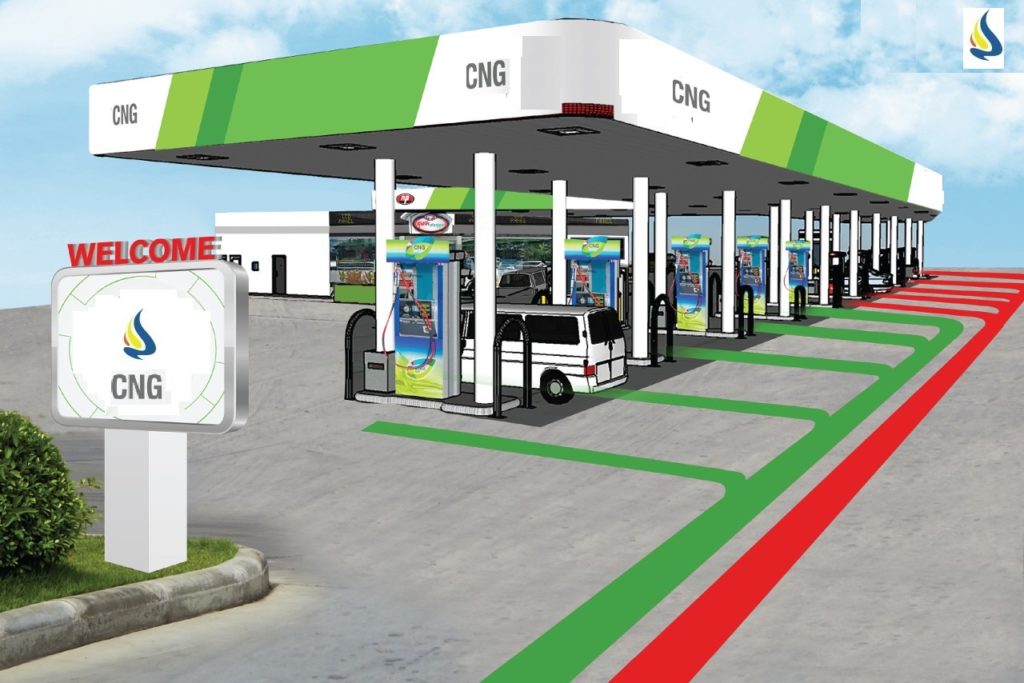
As the Federal Government moves to deliver measurable reductions in transportation costs from October 1, states are adopting different approaches to the Compressed Natural Gas initiative, with some already operating subsidised transport services while commercial operators in several others complain about inadequate refuelling infrastructure, high conversion costs and long queues at existing stations.
The uneven rollout has raised questions about the ability of transport operators and state governments to deliver cheaper fares across the country within the timeline set by President Bola Tinubu.
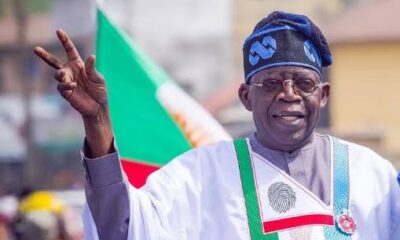
The President, after meeting the 36 state governors on August 27, announced an implementation committee for the National Affordable CNG Transit Programme under the Nigeria Governors’ Forum, chaired by Governor AbdulRahman AbdulRazaq.
In an update on Saturday, Tinubu urged states to work with transport unions and commercial operators, support vehicle conversion and fleet deployment, and ensure that savings from cheaper energy were passed on to commuters through lower fares. The Presidency said more than 120,000 vehicles had been converted, with over 400 certified conversion centres and more than 90 CNG refuelling stations across the country.
But while the Federal Government says the infrastructure is expanding, transport operators in some states say the available facilities remain inadequate to support widespread conversion.
The challenge is particularly evident in areas where motorists already using CNG spend several hours waiting to refuel.
CNG queues
In Lagos, CNG queues have continued to be reported at some filling stations, including the NIPCO facility at Ibafo along the Lagos-Ibadan Expressway. At about 9:30 pm during one such visit, buses, cars and trucks were seen waiting to buy CNG, with the queue extending towards the highway.
A commercial driver, Saheed, said the scarcity of stations was forcing operators to spend hours waiting for the product.
“We have been here since 7:30 pm. My bus is just getting close to the pump. The reason for this queue is because we have a few CNG stations along this axis. Some have left to go and buy petrol, but N1,400 is too much for a commercial driver. That’s why you see my buses here,” he said.
A commuter who expressed frustration with the queues said the delays were discouraging some passengers from using CNG-powered buses. “This is why I don’t like boarding CNG buses. Aside from asking to disembark from the bus, they will also delay your journey by staying in the queue,” the commuter said.
Similar queues have been reported around Mowe and Ibafo, as well as at NNPC Ilasamaja and NIPCO Mobil on Ajegunle Road. For some commercial operators, the problem is not only the availability of CNG but also the cost of converting their vehicles.
A commercial driver, Musa Kazeem, said he had considered converting his vehicle but was discouraged by the cost and the prospect of spending hours at refuelling stations.
“I planned to convert my vehicle last month, but they told me to look for N800,000 or N1m, depending on the size of the cylinders I want. Where will I get that? Another issue is, after doing the conversion, I will have to stay in a long queue for hours to buy the product. It now looks as if the CNG stations inherited the petrol queues we used to have before the Dangote refinery became operational,” he said.
Another concern among some motorists and passengers is safety. A middle-aged man, Oladeinde Lekan, said he remained worried about the possibility of CNG-related accidents despite government assurances about safety.
The shortage of stations has also attracted concern from transport industry leaders.
NARTO speaks
The National Association of Road Transport Owners National President, Yusuf Othman, said the queues were costing operators valuable time.
“The queues in CNG stations are really costing us time, because time is money. And this is because of the non-availability of refilling stations. The stations are not many; therefore, because of those long queues, we lose a lot of time and money,” he said.
Othman, however, said more stations were being developed and that increased infrastructure would gradually reduce the queues.
“There are a lot of CNG stations coming up. The government is intervening through the Midstream and Downstream Gas Infrastructure Fund. That will go a long way in having many stations, and with those many stations, of course, all those queues will reduce. You know, a lot of people are just keying into CNG. They are not used to it, but it’s gradual,” he said.
He added that despite the difficulties associated with the rollout, CNG remained cheaper than petrol.
“As it is now, CNG is the way to go. It’s clean energy, and it’s cheaper. The only problem is the queue, and when we have more stations, transporters will have no choice. Usually, people are susceptible to change. They don’t accept change easily. But then, this is a change that is coming with gains; because we are going to save a lot of money in the purchase of CNG as against petrol or diesel,” Othman said.
Situation across states
The situation in the various states shows the contrast between existing subsidised transport schemes and the slower adoption of CNG by private commercial operators.
In Plateau State, the government said it was already providing one of the cheapest city transport services in the country through its social intervention programme.
The Commissioner for Transport, Davou Jatau, said the government bus service charged N200 for journeys covering between 18km and 20km within Jos.
“Within a short time, we have a transportation system within the city centre that compares to no other state in Nigeria in terms of rating and affordability. You can quote me anywhere; there is no state in Nigeria that charges only N200 for between 18km and 20km distance coverage,” he said.
He said the programme was not designed to make a profit. “Since the removal of fuel subsidy, a journey from Zawan Junction in Jos to a place like Terminus cost between N1,000 and N1,400 in a taxi, but you have a government bus that picks you up for just N200. On a return trip, that is just N400,” Jatau said.
He added that the savings made by commuters could provide additional disposable income for households. However, the Chairman of NTA Park, Jos, Alhaji Ibrahim Maikudi, said the Federal Government’s CNG programme had not translated into tangible benefits for transport operators in Plateau.
“They once approached us, took our plate numbers and everything, but nothing has happened. In Plateau State, for instance, there is no station where you have a CNG vehicle that you go and buy CNG in the Plateau completely,” he said.
Maikudi said some CNG buses supplied to the state were parked because there was no station where they could refuel. He also argued that the government’s subsidised buses had limited coverage, with the service concentrated around Jos-Bukuru.
In Kaduna State, however, the CNG programme has already become part of the state’s mass transit system. The state government said its free CNG bus service had been operating since July 2025, after the inauguration of 100 CNG buses.
The Commissioner for Information and Culture, Malam Ahmad Mayaki, said the buses operated on eight routes with about 200 bus stops. “Kaduna is the only state offering free services in the whole of Nigeria. Other states offer different forms of subsidised costs; some offer 50 per cent, while others offer certain percentages.
“Even the FCT, where the Federal Government is partnering with the NURTW, is not offering it free. Kaduna is the only state providing free services to students, civil servants, traders, artisans and the entire citizens of the state,” he said.
Mayaki said the state government had directed that the service continue indefinitely. “The government has directed that these free services should continue indefinitely. There is no window, and there is no stopping; it is indefinite,” he said.
But in Gombe State, a transport operator said the infrastructure remained inadequate, particularly for long-distance journeys. “Gombe now has CNG, which is good for town services, but for long-distance transportation, we don’t have enough infrastructure,” the operator said.
He explained that gaps in refuelling facilities could make long-distance journeys difficult for CNG-powered vehicles. “If you want to travel to Abuja and return the following morning, you could spend six, seven or even eight hours in a queue waiting to refuel. So, up to now, we need more infrastructure before CNG becomes more feasible,” he said.
According to him, plans were being made to establish about 30 CNG substations across Gombe State, potentially providing one at each local government headquarters.
He also identified conversion costs as another major barrier. “You know the economic situation in Northern Nigeria. How many people can afford between N750,000 and N800,000 to convert their vehicles to CNG?” he asked.
The Managing Director of Gombe State Transport Service, Dr Sani Sabo, agreed that the initiative could reduce transportation costs but said infrastructure expansion would take time.
“The policy itself is very good. We have done the analysis, and it can reduce the cost of transportation and fuel. However, it will take time for the infrastructure to cover the necessary locations,” he said.
In Jigawa State, commercial drivers and transport owners said the Federal Government’s target would be difficult to achieve without stations and conversion centres.
An official of the National Association of Transport Owners, Muhd Mudi, said, “The government is just making promises in Abuja. Where are the CNG stations in Jigawa? Where do you want us to get gas? This policy cannot work without stations and conversion centres.”
He also questioned how transport fares could be reduced if operators continued to face high costs for fuel, spare parts and vehicle maintenance.
Zamfara State faces a similar infrastructure gap, with motorists saying the state is yet to get a CNG station. Commercial driver Aminu Suleiman said the programme could ease the hardship caused by rising petrol prices but expressed concern about the delay.
“This is a welcome development as it will ease the hardship experienced in the country because of fuel price increase,” he said. “I hope it is not a fake promise because we have been hearing about the CNG but we, the people of Zamfara State, have never seen it.”
The Zamfara State Government said plans were underway to establish CNG facilities in Gusau and other parts of the state.
In Kwara, the level of vehicle conversion also remains low. The Chairman of the Road Transport Employers Association of Nigeria in the state, Abdulrasheed Onikijipa, said only about 100 commercial vehicles belonging to union members had been converted.
“The CNG vehicles that have been converted so far among our members in Kwara State are around 100. The reason is that the vehicle owners are running from it because they don’t have belief in it,” he said. “Most of them complain that it damages their vehicles. That is why they don’t key into it as expected.”
Onikijipa also said transport unions had not been adequately consulted. “There has been no consultation from the government, especially at the state level, with our unions. We are just seeing it on the pages of the newspaper,” he said.
Kwara has two major CNG refuelling stations in Ilorin. A CNG-powered commercial tricycle operator, Abdulmalik Idris, said he had not experienced long queues because relatively few vehicles were using the fuel.
In Borno State, transport operators said safety concerns and the cost of gas were discouraging some vehicle owners from embracing CNG. A member of the National Union of Road Transport Workers identified as Sani said some drivers were still worried about possible vehicle explosions.
“We have been sensitised about it (CNG conversion), but to be sincere, a good number of us are still scared that it could lead to car explosions,” he said.
Another executive of the association said rising gas prices were also affecting the willingness of operators to convert their vehicles.
However, Maiduguri already has hundreds of government-owned electric vehicles conveying passengers at fares of between N50 and N100, with charging facilities available within the metropolis.
In Benue, the government said it was preparing the ground for CNG adoption through a three-day awareness campaign. The Commissioner for Transport and Energy, Dr Joseph Ter, said he had converted his official vehicle to CNG to demonstrate support for the programme.
“As soon as we finish the awareness, we are going to swing into action with the conversion. I have already converted my own vehicle to show leadership by example,” he said.
Nasarawa State said it was planning to establish CNG bi-fuel conversion centres in each of its three senatorial zones. The Senior Special Assistant to Governor Abdullahi Sule on Public Affairs, Peter Ahemba, said 50 auto-technicians had been trained on CNG conversion.
“The Nasarawa State government is committed to building conversion centres so that the trained auto-technicians will not only be able to make their own impacts but train other people there. Based on the current needs of our people, we are going to establish these centres, one each in the three senatorial zones,” he said.
Edo State is also preparing to deploy more CNG buses, with the Commissioner for Information and Strategy, Kassim Afegbua, saying more than 50 52-seater buses would be launched in October.
“We are also launching our own CNG next month with over 50 52-seater CNG buses. It will be distributed according to commuter strength across the three senatorial districts. Once the passengers have the option of cheaper rates from the CNG, other transporters will be forced to reduce their fares,” he said.
A transport union official in the state, however, said commercial operators continued to face high maintenance costs and queues at CNG stations.
“Those buses that also run on gas have to queue for hours or days to buy the product. Those are the factors leading to high fares, and hopefully the government can address them,” the official said.
Kano State said it was ready to collaborate with the Federal Government on CNG-powered mass transit. The Commissioner for Transport, Alhaji Haruna Isah Dederi, said the state would make CNG buses available for interstate and urban mass transit.
“The Kano State government in collaboration with the Federal Government is vigorously pursuing the programme with a view to reducing transport fares,” he said.
The state has also procured 500 electric tricycles and introduced plans for a Rapid Bus Transit programme aimed at reducing fares within the metropolitan area.
In Bayelsa, transport operators said they were willing to adopt CNG but wanted the government to address the cost of conversion and availability of stations.
Ebi Patrick said, “We are interested in the CNG programme because fuel is one of the biggest challenges facing transport operators. But converting a vehicle is not something every driver can afford immediately.”
Another operator, Akpagra Michael, said CNG could lower fares if it remained affordable and readily available.
“If CNG is genuinely cheaper than petrol and it is readily available, there is no reason why transport fares should not come down. But the government must also consider other expenses such as spare parts, maintenance, vehicle financing and levies,” he said.
In Ogun State, the government said it was engaging stakeholders on the implementation of the CNG initiative while also working on electric vehicles.
The Special Adviser to Governor Dapo Abiodun on Information and Strategy, Kayode Akinmade, said the state was working with relevant stakeholders to establish a framework for cleaner and more affordable transportation.
In Rivers State, the government said it would return palliative buses to the roads from October, with additional buses expected to transport civil servants and other commuters free of charge.
The Permanent Secretary, Rivers State Ministry of Transport, Dr Vera Ndidi Sam-Dike, said the buses had previously operated on routes across the state but were suspended as a result of renovation at the state secretariat.
“However, from October we should have the buses back on the road. In fact, we will bring out more buses, those ones that take civil servants. Then, apart from civil servants, there were some of the buses that were carrying commuters free of charge.
“They will be on the road as well from next month. In fact, we will bring out all the buses. These buses will be playing several routes across the state. We are sure it will go a long way to help both civil servants and the rest of our people,” she said.
The state, however, had yet to fully implement the CNG initiative.
Infrastructural investment
Beyond the states, the Federal Government has continued to invest in CNG infrastructure. In May, President Tinubu commissioned four CNG projects supported by the Midstream and Downstream Gas Infrastructure Fund in Lagos, Abuja and Owerri.
The government has also introduced financing arrangements aimed at helping motorists and commercial operators spread the cost of vehicle conversion rather than paying the full amount upfront.
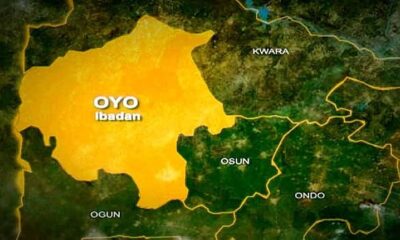
The President has pointed to examples from states where CNG and alternative-energy transport have already reduced fares. According to the State House, Borno has CNG and electric transport services charging between N50 and N100 on routes where commercial operators charge N300 to N600, while CNG buses in Oyo initially reduced the Lagos-Ibadan fare from about N8,000 to N3,200. Adamawa recorded fare reductions of up to 50 per cent, while Enugu reduced the Enugu-Nsukka fare from N2,500 to N1,500.
The figures demonstrate the potential of cheaper energy to reduce transport costs, but the reports from commercial operators across the country show that lower fuel prices alone may not immediately translate into lower fares.
For operators, the cost of vehicle conversion, access to refuelling stations, queues, spare parts, maintenance, financing and road conditions all influence the cost of running commercial vehicles.
The challenge, therefore, is moving beyond isolated examples of subsidised transport to a sufficiently broad CNG network that can support commercial operators on urban and inter-state routes.
For commuters, the difference is already visible in places where governments have deployed subsidised buses, but in states without sufficient CNG infrastructure, petrol remains the dominant fuel for commercial transportation.
With October 1 approaching, the rollout is consequently entering a critical phase. The Federal Government says the infrastructure is expanding and has urged states to accelerate implementation, while transport operators are demanding that stations and conversion facilities be made available before they can be expected to pass CNG savings on to passengers.
As Othman put it, “The only problem is the queue.” But across many states, the reports suggest that the challenge is broader: getting enough vehicles converted, ensuring reliable access to CNG, and making sure the savings eventually reach commuters through lower fares.
Source: punchng.com
FOLLOW US ON: