Connect with us

Business

Petrol war: Importers outpace domestic refineries with 62% supply in 2025

Published

on

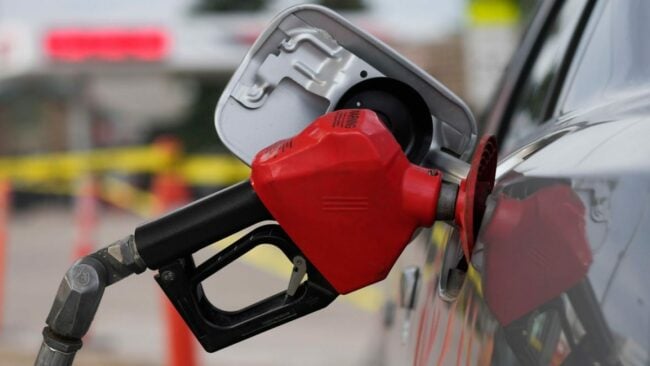
Petrol importation remained the dominant source of fuel consumed in Nigeria in 2025, accounting for 62.47 per cent of the country’s total Premium Motor Spirit consumption.

This trend persisted despite the commencement of operations, steady ramp-up in production and distribution of petrol by domestic refineries, notably the Dangote Petroleum Refinery, alongside state-owned refineries and several modular facilities, as revealed in the latest midstream and downstream sector factsheet released by the Nigerian Midstream and Downstream Petroleum Regulatory Authority.

According to the newly released NMDPRA factsheet on the state of the midstream and downstream petroleum sector, as analysed by our correspondent on Sunday, total national petrol consumption by Nigerians stood at approximately 18.97 billion litres in 2025, with oil marketing companies accounting for 11.85 billion litres through imports, highlighting the market’s continued dependence on foreign supply.

This means that nearly two-thirds of petrol consumed by Nigerians in 2025 was sourced from imports, while domestic refineries contributed about 7.54 billion litres, representing 37.53 per cent of total consumption, the regulator stated.

These totals were derived by applying the daily average consumption to the number of days in each month. The data, which are based on volumes trucked into the domestic market, underscore Nigeria’s continued dependence on fuel imports, even as the Dangote refinery, currently the country’s only operational large-scale refinery, ramped up supply during the year.

Meanwhile, the volume of petrol imports is expected to decline significantly in 2026 if the Federal Government proceeds with the planned implementation of a 15 per cent import tariff on Premium Motor Spirit, slated to take effect in the first quarter of 2025, in line with a policy memo approved by President Bola Tinubu.

For decades, Nigeria, Africa’s largest crude oil producer, relied almost entirely on imported petrol following the prolonged underperformance of its state-owned refineries in Port Harcourt, Warri, and Kaduna. This dependence deepened after the refineries became largely dormant, forcing the country to meet domestic demand through imports financed with scarce foreign exchange and, for years, supported by a costly petrol subsidy regime.

The structure of the market began to shift in late 2024 with the commencement of operations at the 650,000-barrel-per-day Dangote Petroleum Refinery, widely regarded as a potential turning point for Nigeria’s downstream sector. The refinery, alongside smaller modular refineries and limited output from state-owned facilities, was expected to significantly cut import volumes, improve energy security, and stabilise fuel supply across the country.

However, regulatory data from the regulatory Authority show that while domestic refining and distribution improved steadily in 2025, imports remained dominant. The NMDPRA attributes this to factors including the gradual ramp-up of refining operations, crude supply arrangements, logistics constraints, and demand fluctuations following the full deregulation of petrol pricing.

2025 represents the first full year of large-scale domestic Premium Motor Spirit supply, limiting year-on-year comparisons, particularly as the Dangote Petroleum Refinery only commenced petrol distribution in the final quarter of 2024.

Regulatory data showed that between October and December 2024, total petrol consumption stood at 4.77 billion litres, out of which imports accounted for 3.61 billion litres, while domestic refineries supplied about 1.17 billion litres.

Against this backdrop, the latest midstream and downstream factsheet provides one of the clearest regulatory snapshots yet of Nigeria’s petrol market in a post-subsidy environment, highlighting both the gains made in domestic supply and the structural challenges that continue to sustain the country’s reliance on imported fuel.

A breakdown of the factsheet showed that Dangote refinery accounted for virtually all domestic PMS supply in 2025, supplying an average of between 17 million and 32 million litres per day, depending on the month, and a total of 7.534.9 billion litres for the entire year.

Based on its supply framework with the regulator and the Federal Government, the Dangote Petroleum Refinery was expected to deliver about 600 million litres of petrol monthly, translating to an annual benchmark of 7.2 billion litres.

However, NMDPRA data showed that the refinery supplied 7.54 billion litres in 2025, representing a shortfall of about 336 million litres, or roughly 4.7 per cent below the annual target, despite improved output towards the end of the year.

In December 2025, domestic supply rose sharply to 32 million litres per day, the highest monthly average for the year, while total domestic deliveries reached 992 million litres, signalling gradual stabilisation of operations.

The factsheet showed that total petrol consumption fluctuated significantly throughout the year, rising from 1.60 billion litres in January to 1.97 billion litres in December, reflecting seasonal demand, logistics dynamics, and pricing conditions.

A month-on-month breakdown showed that Nigeria’s petrol consumption showed wide fluctuations throughout 2025, rising from 1.60 billion litres in January to 1.97 billion litres in December, representing an overall increase of about 23.7 per cent over the year.

Total consumption declined sharply by 11.6 per cent, from 1.60 billion litres in January to 1.41 billion litres in February, before rebounding by 11.8 per cent in March to 1.58 billion litres. Demand rose further in April to 1.66 billion litres, a 5.0 per cent increase, and peaked in May at 1.69 billion litres, up 1.8 per cent.

See also  Minority caucus, House clash over tax law probe

This was followed by a steep 14.6 per cent drop in June to 1.44 billion litres. Consumption recovered modestly in July (1.46 billion litres, up 1.6 per cent) and August (1.50 billion litres, up 2.5 per cent), before falling to its lowest level of the year in September at 1.31 billion litres, a 12.4 per cent decline.

Demand then surged by 33.8 per cent in October to 1.76 billion litres, dipped by 9.7 per cent in November to 1.59 billion litres, and climbed strongly by 24.4 per cent in December to 1.97 billion litres, the highest monthly level recorded in 2025.

Petrol imports by oil marketing companies and the Nigerian National Petroleum Company Limited tracked these consumption movements and remained the dominant source of supply throughout the year.

Imports rose from 765.7 million litres in January to 770 million litres in February, an increase of 0.6 per cent, before jumping by 15.5 per cent in March to 889.7 million litres. Volumes dipped slightly by 3.2 per cent in April to 861 million litres, but surged sharply in May to 1.20 billion litres, representing a 39 per cent increase and accounting for about 71 per cent of total consumption for the month.

Imports declined by 18.3 per cent in June to 978 million litres, rose again by 14.4 per cent in July to 1.12 billion litres, and fell by 26.9 per cent in August to 818.4 million litres. September imports dropped further by 16.3 per cent to 685.1 million litres, before climbing by 30.8 per cent in October to 895.9 million litres.

November recorded a sharp spike to 1.56 billion litres, a 74.4 per cent increase, making imports equivalent to almost 98 per cent of total consumption that month. Imports eased in December to 1.31 billion litres, down 16.3 per cent, but still represented about two-thirds of monthly demand.

Similarly, domestic refinery supply, largely from the Dangote Petroleum Refinery, showed a gradual but uneven improvement over the year. Supply rose from 592.1 million litres in January to 694.4 million litres in February, an increase of 17.3 per cent, and edged up further to 709.9 million litres in March, up 2.2 per cent. Output declined in April by 9.1 per cent to 645 million litres, and fell further in May by 11.1 per cent to 573.5 million litres.

The downward trend continued in June and July, with supply dropping to 543 million litres (down 5.3 per cent) and 511.5 million litres (down 5.8 per cent), respectively. Domestic supply rebounded in August by 20.0 per cent to 613.8 million litres, dipped slightly in September by 11.1 per cent to 545.6 million litres, and eased further in October to 530.1 million litres, down 2.8 per cent.

Output improved again in November to 585 million litres, a 10.4 per cent increase, before surging sharply in December to 992 million litres, representing a 69.6 per cent month-on-month rise and the strongest domestic supply performance of the year.

A further breakdown showed that in January, imports accounted for about 48 per cent of daily petrol consumption, while domestic refineries supplied around 37 per cent. Import dependence widened significantly in May, with marketers meeting about 71 per cent of daily demand, while domestic refineries contributed just 34 per cent. However, by December, domestic supply rose to about 50 per cent of daily consumption, narrowing the gap with imports, which accounted for roughly 66 per cent, reflecting the highest level of domestic participation recorded in 2025.

Imports consistently exceeded domestic supply in most months. In May, for instance, marketers imported 1.20 billion litres, representing about 71 per cent of total consumption for that month, while domestic refineries supplied just 573.5 million litres.

In contrast, December recorded the narrowest gap, with imports of 1.31 billion litres against the domestic supply of 992 million litres, as Dangote ramped up output and daily consumption rose to 63.7 million litres.

A further breakdown of the data showed that in January 2025, Nigeria recorded a daily average petrol consumption of 51.5 million litres, translating to 1.60 billion litres for the month. Of this volume, petrol importing marketers supplied an average of 24.7 million litres per day, amounting to 765.7 million litres. In comparison, domestic refineries delivered an average of 19.1 million litres daily, or 592.1 million litres in total.

In February, daily average consumption moderated to 50.4 million litres, with total monthly demand of 1.41 billion litres. Imports accounted for an average of 27.5 million litres per day, or 770 million litres, while domestic refineries supplied 24.8 million litres daily, amounting to 694.4 million litres.

For March, average daily consumption rose slightly to 50.9 million litres, bringing total demand to 1.58 billion litres. Petrol imports averaged 28.7 million litres per day, totalling 889.7 million litres, while domestic refineries supplied 22.9 million litres daily, or 709.9 million litres for the month.

See also  2027 Elections - Jonathan splits South-South PDP

In April, consumption increased further to a daily average of 55.2 million litres, with total demand of 1.66 billion litres. Importers supplied 28.7 million litres per day, amounting to 861 million litres, while domestic refinery output averaged 21.5 million litres daily, totalling 645 million litres.

Data for May showed average daily consumption of 54.4 million litres, translating to 1.69 billion litres for the month. Imports rose sharply to an average of 38.6 million litres per day, or 1.20 billion litres, while domestic refinery supply declined to 18.5 million litres daily, amounting to 573.5 million litres.

In June, daily average consumption fell to 48.0 million litres, with total demand of 1.44 billion litres. Petrol imports averaged 32.6 million litres per day, totalling 978 million litres, while domestic refineries supplied 18.1 million litres daily, or 543 million litres.

For July, average daily consumption declined slightly to 47.2 million litres, bringing monthly demand to 1.46 billion litres. Importers supplied 36.1 million litres per day, amounting to 1.12 billion litres, while domestic refineries delivered 16.5 million litres daily, totalling 511.5 million litres.

In August, daily consumption improved to 48.4 million litres, with a total demand of 1.50 billion litres. Imports averaged 26.4 million litres per day, or 818.4 million litres, while domestic refineries supplied 19.8 million litres daily, amounting to 613.8 million litres.

September recorded the lowest consumption levels of the year, with daily average demand at 43.8 million litres and total consumption of 1.31 billion litres. Import volumes averaged 22.1 million litres per day, totalling 685.1 million litres, while domestic refinery supply stood at 17.6 million litres daily, or 545.6 million litres.

In October, consumption rebounded sharply to a daily average of 56.7 million litres, translating to 1.76 billion litres for the month. Imports averaged 28.9 million litres per day, amounting to 895.9 million litres, while domestic refineries supplied 17.1 million litres daily, totalling 545.6 million litres.

For November, average daily consumption eased to 52.9 million litres, with total demand of 1.59 billion litres. Importing marketers supplied an average of 52.1 million litres per day, totalling 1.56 billion litres, while domestic refinery output averaged 19.5 million litres daily, amounting to 585 million litres.

In December, petrol consumption surged to its highest level of the year, averaging 63.7 million litres per day and reaching 1.97 billion litres in total. Imports accounted for an average of 42.2 million litres per day, or 1.31 billion litres, while domestic refineries recorded their strongest performance of the year, supplying an average of 32.0 million litres daily, totalling 992 million litres.

Since the Dangote Petroleum Refinery began phased commercial operations in late 2024, its officials and some industry stakeholders have repeatedly asserted that the facility has the capacity to satisfy Nigeria’s petrol needs and reduce, if not eliminate, the need for imports.

Built with an ambitious 650,000‑barrel‑per‑day capacity, the plant has been positioned by its backers as a potential game‑changer for Nigeria’s downstream petroleum sector

In a statement outlining the refinery’s production profile, Anthony Chiejina, Group Chief Branding and Communications Officer of Dangote Industries Limited, said the plant was already producing above current national demand. He stated:

“Our refinery is currently loading over 45 million litres of PMS and 25 million litres of diesel daily, which exceeds Nigeria’s demand.”

Chiejina added that the refinery’s output was supporting nationwide supply stability and reducing dependency on imported products, with improved local production helping to moderate foreign exchange outflows and strengthen the naira.

Recently, the National Publicity Secretary of the Independent Petroleum Marketers Association of Nigeria, Chinedu Ukadike, revealed that marketers had been sourcing all their petrol supplies from Dangote and that “nobody is importing now,” even during high‑demand periods such as the Christmas season. He said:

“Well, since Dangote has reduced his price, and we have not complained of a shortage of products. There is no importation. So all the supplies we are getting now are from Dangote.”

Also, in earlier remarks reported in 2025, the Dangote group chairman, Aliko Dangote, asserted that the refinery had sufficient refined products in storage to meet domestic needs, saying:

“Right now, we have more than half a billion litres in storage. The refinery is producing enough refined products, gasoline, diesel, and kerosene to meet all of Nigeria’s needs.”

However, these claims remain contested. While some marketers and refinery officials describe importation as unnecessary under current supply arrangements, others note that domestic refining capacity has not yet consistently matched national consumption, and that imports continue to play a role in bridging supply gaps.

Commenting in an earlier report, renowned energy economist Professor Wumi Iledare, noted that Nigeria’s reliance on imported petrol has declined but has not been eliminated. He also warned against claims that fuel importation has ended following increased domestic supply from the Dangote Petroleum Refinery.

In a personal note titled “Dangote Refinery, Petrol Imports, and Market Reality,” Iledare said recent assertions that Nigeria no longer imports petrol reflect “understandable optimism” but overstate the economic reality of the downstream oil market.

See also  N20bn Sukuk: TAJBank records 185.5% oversubscription

“Recent claims that petrol importation into Nigeria has ended because Dangote Refinery now meets domestic demand reflect understandable optimism, but they overstate economic reality.

Dangote Refinery has significantly improved domestic supply conditions and reduced Nigeria’s marginal reliance on imported petrol. However, neither Dangote Refinery nor petroleum marketers determine national supply outcomes,” he said.

Iledare, who also serves as Executive Director of the Emmanuel Egbogah Foundation, Abuja, acknowledged that the Dangote Refinery has significantly improved domestic supply conditions and reduced Nigeria’s marginal dependence on imported petrol.

However, he stressed that neither the refinery nor the petroleum marketers determines national supply outcomes. According to him, Nigeria’s downstream petrol market operates within an oligopolistic, import-parity–anchored framework, where prices and supply stability are shaped by the option to import, rather than the physical presence of imported cargoes.

“Nigeria’s downstream petrol market operates within an oligopolistic, import-parity–anchored framework, where prices and supply stability are disciplined by the option to import, not merely the act of importing.

Even when no petrol cargoes are landing, the credible threat of imports remains the market anchor. Importation also continues to serve as a risk-management tool for stock security, demand surges, logistics disruptions, and refinery operational risks,” Iledare said, adding that importation continues to function as a risk-management tool for stock security, demand surges, logistics disruptions, and refinery operational risks.

The energy economist further noted that the Petroleum Industry Act entrenches liberalisation and competition in the downstream sector, leaving no room for discretionary declarations that petrol imports have ended.

“The PIA does not permit discretionary declarations that imports have ended. Sustainable price stability and energy security arise from market discipline, infrastructure efficiency, foreign exchange liquidity, and regulatory credibility, not announcements,” he said.

Iledare argued that the appropriate policy narrative should focus on reduced marginal import dependence, rather than import elimination, warning that imprecise language could undermine policy credibility.

“The correct policy framing, therefore, is reduced marginal import dependence, not import elimination. Precision in language matters because credibility in energy policy is built on economic fundamentals, not celebratory headlines,” he added.

In his expert opinion, the Chief Executive Officer of petroleumprice.ng, Jeremiah Olatide, said the new data indicates that Nigeria’s domestic refining capacity has grown significantly over the past three years, rising from less than five per cent in 2022 to about 40 per cent in 2025.

Olatide, who disclosed this in a telephone conversation on Sunday, described the development as a major milestone in the country’s long-standing quest to reduce dependence on imported petroleum products.

“In 2022, local refining was less than five per cent. But three years later, it has increased to around 40 per cent according to NMDPRA. I think that is good, significant, and a big milestone,” Olatide said.

He explained that while the progress was commendable, Nigeria must push further to achieve meaningful macroeconomic stability. According to him, domestic refining must account for at least 70 per cent of national fuel consumption, with imports limited to 30 per cent.

“Local refining needs to be 70 per cent while import takes 30 per cent. That is the point where this would have direct influence on our economy, create more jobs, stabilise our naira, and deliver other benefits,” he stated.

Olatide noted that 2025 marked a turning point for the sector, largely driven by improved refinery performance and policy shifts aimed at boosting local supply.

He expressed optimism that subsequent industry reports would reflect further improvements. “By and large, I think in the year 2025, we have had a massive improvement and surge in local refining. Hopefully, subsequent reports will go up from the local refining angle, because that is what we need for economic stability,” he added.

He also identified crude oil availability as a critical constraint, particularly for the Dangote Refinery, which plays a dominant role in Nigeria’s refining landscape. Olatide said increasing crude allocation to the refinery could significantly reduce fuel imports.

“I hope in the new year, Dangote would have further access to crude, up from 30 to 40 per cent. More access to crude will really help, and then importation will reduce. The reason importation is still competing is largely because of pricing,” he explained.

Despite the positive outlook, Olatide raised concerns over conflicting production figures being reported by industry stakeholders. He pointed to recent claims by the new Chief Executive Officer of Dangote Refinery, David Bird, who said the refinery was loading about 1,000 trucks daily, equivalent to roughly 50 million litres of petroleum products.

“If you put those figures together, it suggests Dangote alone is doing about 60 to 70 per cent of our daily consumption,” Olatide said.

However, he noted that official figures from the NMDPRA paint a different picture. “NMDPRA is saying local refineries, including Dangote, are doing between 37 and 40 per cent. So clearly, there are conflicts in the reporting.”


Continue Reading
Click to comment

Leave a Reply

Your email address will not be published. Required fields are marked *

Business

FG rallies private sector to bridge broadband gap

Published

on

The Federal Government on Wednesday called on private-sector players to partner with it to close Nigeria’s last-mile broadband gap, saying that massive public investment in digital infrastructure must now be matched by device affordability, service innovation, and targeted connectivity for critical institutions.

The Minister of Communications, Innovation and Digital Economy, Dr Bosun Tijani, made the call while speaking with journalists on the sidelines of the Flagship Nigeria: Electrification + Connectivity Convening held in Abuja.

Tijani said Nigeria was currently leading Africa in deep digital infrastructure investments, stressing that improved access to quality internet would become visible over the next year as projects begin to come on stream.

“As a government, we’re very aware of our responsibility and the need to deepen access,” he said. “There is no country in Africa today that is investing in deepening its digital infrastructure as deeply as Nigeria is doing.”

According to him, Nigeria is the only African country investing in a 90,000-kilometre fibre-optic network project led by the World Bank, while also committing resources to two new communications satellites.

He added, “We’re the only country in Africa that is currently doing that, but also investing in two communication satellites. The only country that is also investing in an additional 3,700 towers for rural areas, which means we can now bring online about 20 million Nigerians that are currently unconnected at all.”

The minister recalled that when the present administration assumed office, the telecommunications sector was under strain.

He said the decision to allow a modest tariff increase had restored profitability and unlocked fresh capital inflows.

“When the telecommunication sector was struggling when we came in, we allowed for tariffs to go up a bit, which means they are now profitable. And on their own, we’ve seen that they’ve invested over $1bn into our economy as well,” he stated.

Tijani noted that infrastructure quality directly determines service quality, arguing that years of underinvestment had constrained broadband expansion.

“In the next couple of years or months, you will start to see improved access because the quality of access is dependent on the quality and investment in infrastructure, which, as a country, we’ve not done in many years in digital infrastructure. You’re about to see that change. In about a year, you start to see great changes because these infrastructures will start to come alive,” he said.

See also  ‘Price Of 5kg Cooking Gas Increased To ₦8,324’

Beyond infrastructure, the minister emphasised that connectivity without skills would limit impact.

He said the ministry had separated digital skills for technology professionals from basic digital literacy for everyday users.

He referenced the ongoing Three Million Technical Talent programme, which aims to train three million young Nigerians in advanced digital skills.

“This is a project that we started in 2023 that has trained over 150,000 people already. But we’re not stopping there,” he added.

For ordinary Nigerians, including traders and market women, Tijani said the government was preparing to launch a nationwide digital literacy programme delivered via mobile phones and local languages.

He disclosed that the initiative would leverage a government-backed large language model designed to understand and communicate in Nigerian languages.

On questions linking digital infrastructure to electronic transmission of election results, the minister declined to comment directly on electoral matters, insisting that his mandate was infrastructure development.

“Our role as a ministry, I will not speak to the elections, but my role is to deepen digital infrastructure. And we’ve been very clear about the fact that this is what the President has asked us to do,” he said.

He stressed that all ongoing projects had presidential backing and were aligned with the administration’s ambition to grow the economy to $1tn.

Every one of our digital infrastructure projects is a project that the President has approved. The President has a thorough understanding of the role of the digital economy in driving this agenda of the $1tn economy. And without our investment, the President knows that we can’t get there,” Tijani stated.

Speaking on the purpose of the convening, Tijani said that even with expanded fibre and satellite capacity, affordability and institutional connectivity remained major hurdles.

“If the internet is now ubiquitous and affordable, can every Nigerian also afford the right mobile phones, tablets, or laptops that they need to enjoy the internet? It’s not something you enjoy without those things,” he said.

He said bridging the last mile would require collaboration with private-sector players to connect schools, hospitals, security agencies, and other public institutions.

See also  2027 Elections - Jonathan splits South-South PDP

“How do we ensure that when we invest in the infrastructure, it gets into schools, not only universities, but also secondary schools across the country? That’s the last mile work that we need the private sector to do,” he noted.

He added that internet service providers must also design tailored packages for critical sectors.

“How do we ensure that we can support ISPs to make sure they have the right bundles and packages for hospitals, for police stations? These are things that we have to work with the private sector to achieve,” he said.

On the planned satellites, Tijani said Nigeria had been a regional pioneer since it first procured a communications satellite under former President Olusegun Obasanjo, noting that no other West African country currently operates one.

However, he acknowledged that the existing satellite had aged and required replacement.

“Our satellite is now old, and we need to procure new ones. President Bola Tinubu has approved that we should procure new ones. Satellite is one of the ways in which you can connect difficult-to-reach locations and rural areas. Also, the security agencies use our communications satellite deeply as well. So if we don’t have modern ones that can support all these efforts, it weakens our digital economy,” Tijani explained.

Providing timelines, the minister said the deployment of the fibre project was targeted for the second or third quarter of the year, while the new satellite was expected to become operational next year.

“We’re always very clear through our strategic blueprints that a fibre project, for instance, will get to the point where we’re deploying either by Q2 to Q3 this year, which is what we’re still working towards. That project is moving forward. We’ve been able to secure the bulk part of the funding,” he said.

“The satellite in itself, we expect, should come alive. We’ve now been able to select the companies that will provide it. We expect that it should be coming alive sometime next year.”

Also speaking, the Chief Executive Officer of the Partnership for Digital Access in Africa, Ibrahima Guimba-Saidou, said the convening aligns with Africa’s broader ambition to connect one billion people to the internet by 2030.

See also  Pressure mounts on Bayelsa gov over choice of deputy

He commended Nigeria for what he described as a clear policy direction and significant investments in connectivity infrastructure, digital devices and skills development.

However, he warned that electricity remains a fundamental gap in the continent’s push for meaningful digital inclusion.

Guimba-Saidou explained that the organisation’s Mission 300 initiative is designed to expand electricity access in underserved and remote communities, enabling schools, health centres, markets and households to take full advantage of digital services.

“This is about making connectivity relevant to the people who need it the most, not just those in major cities,” he said, urging deeper collaboration between government and private sector players to narrow the digital divide in a faster and more sustainable manner.

In his remarks, the World Bank Country Director for Nigeria, Mathew Verghis, noted that while Nigeria faces some of the most significant electricity access and backbone infrastructure shortfalls globally, it also possesses vast growth prospects anchored on its large and youthful population.

He stressed that digital inclusion rests on three interdependent pillars: reliable electricity, broadband infrastructure and affordable devices.

According to him, progress in one area without the others would limit impact.

He called for better coordination in the planning, construction and financing of power and fibre networks, arguing that integrated investment would lower costs and accelerate universal access.

Verghis added that the World Bank remains prepared to work with federal and state governments, alongside private sector stakeholders, to translate the vision of combined power and broadband expansion into tangible benefits for millions of Nigerians.

The PUNCH earlier in December 2025 reported that the federal government plans to bankroll the construction of 3,700 telecom towers in rural areas, a move aimed at connecting millions of citizens who currently lack reliable mobile and internet services.

Telecom operators often avoid sparsely populated rural areas due to low profit potential, focusing instead on urban centres where investment can be recouped.

The government’s intervention will extend mobile and internet services to over 23 million Nigerians who presently lack access.

punch.ng

FOLLOW US ON:

FACEBOOK

TWITTER

PINTEREST

TIKTOK

YOUTUBE

LINKEDIN

TUMBLR

INSTAGRAM

Continue Reading

Business

No directive to suspend sachet alcohol ban, says NAFDAC

Published

on

The National Agency for Food and Drug Administration and Control has refuted a media report alleging that the Federal Government directed it to suspend enforcement actions on the regulation of sachet alcohol and 200ml PET bottle alcoholic products.

In a statement on Wednesday, the agency described the publication as false and misleading, stressing that it had not received any official communication from the Federal Government ordering a halt to its regulatory activities.

A news report on Wednesday, in a statement issued in Abuja by the Special Adviser on Public Affairs to the Secretary to the Government of the Federation, Terrence Kuanum, claimed that the Federal Government had directed NAFDAC to suspend all enforcement actions relating to the proposed ban on sachet alcohol and 200ml PET bottle alcoholic products.

However, Director-General, Prof. Mojisola Adeyeye, said the agency operated strictly within its statutory mandate and in line with duly communicated Federal Government policies.

“The said publication is false, misleading, and does not reflect any official communication received by the Agency from the Federal Government.

“At no time has the Agency received any formal directive ordering the suspension of its regulatory or enforcement activities in respect of sachet alcohol products,” Adeyeye said.

She reiterated that NAFDAC remains committed to safeguarding public health, ensuring regulatory compliance, and carrying out its responsibilities transparently and in accordance with established laws and due process.

“Any decision affecting national regulatory actions will be communicated through official government channels,” she added.

Adeyeye urged members of the public, industry stakeholders, and the media to disregard the report and rely only on verified information issued through the agency’s official platforms and authorised government communication channels.

See also  Fuel war brews as Dangote presses Tinubu to ban imports

The agency also cautioned against the dissemination of unverified information capable of causing unnecessary public anxiety, economic uncertainty, or misinterpretation of government policy.

NAFDAC stated that it remains steadfast in its commitment to public health, economic stability, and the national interest.

The regulation of sachet alcohol and small-volume alcoholic beverages has been a subject of national debate in recent years, particularly over concerns about underage access, substance abuse, and public health risks

Continue Reading

Business

States pay N455bn to service foreign loans

Published

on

States paid N455.38bn in foreign debt service in 2025, up from N362.08bn in 2024, according to Federation Accounts Allocation Committee figures released by the National Bureau of Statistics and obtained and analysed by The PUNCH.

The year-on-year comparison indicates that subnational governments’ foreign debt deductions rose by N93.30bn, representing a 25.77 per cent increase in 2025 over the prior year.

In plain terms, states collectively lost a larger share of their FAAC inflows to external loan repayments and related obligations in 2025 than in 2024, tightening the fiscal space available for salaries, capital projects, and routine governance.

The monthly pattern in 2025 also shows step-downs rather than a smooth curve. Total foreign debt service across the 36 states stood at N40.09bn in January, before easing to N39.10bn in February, a month-on-month drop of N994.96m, or 2.48 per cent.

From March through July, the national total held steady at N39.10bn each month, suggesting a stretch of largely fixed, predictable deductions. The next big shift came in August, when total deductions fell again to N36.14bn, down N2.95bn or 7.56 per cent from July.

The lower level then persisted through September, October, November, and December, each at N36.14bn. That step pattern contrasts with 2024, when the totals swung more sharply early in the year before settling into long flat runs.

States’ foreign debt service was N9.88bn in January 2024, then jumped to N24.53bn in February and peaked at N40.41bn in March. The total then dropped to N21.70bn in April and stayed flat at that level through May, June, and July.

A second step-up arrived in August 2024, when deductions rose to N40.09bn, and that figure held through the last five months of the year.

Against that backdrop, 2025 looked like a year of smaller but still significant recalibration, with two key reductions and long stretches of stable deductions.

Foreign debt service in the FAAC context refers to deductions made at source from allocations to meet states’ external loan repayment obligations. It is part of the “first line charge” culture that protects creditors and ensures repayments are prioritised, but it also means states have less discretionary cash to deploy, particularly in months where federation revenue is under pressure.

See also  N20bn Sukuk: TAJBank records 185.5% oversubscription

A closer look at the states with the largest foreign debt service burdens in 2025 shows a strong concentration. The top 10 states alone accounted for about 68.57 per cent of total foreign debt service in the year, showing how external debt repayment exposure is heavily skewed toward a handful of large borrowers.

Lagos topped the table, with N92.80bn deducted in 2025, up from N72.32bn in 2024. That was an increase of N20.49bn or 28.33 per cent, meaning roughly one-fifth of the entire national total for 2025 came from Lagos alone, at 20.38 per cent of all state foreign debt service.

Rivers followed, recording N48.58bn in 2025 against N23.13bn in 2024. The year-on-year jump of N25.45bn represented a steep 110.02 per cent increase, making Rivers one of the most notable movers in the data.

Kaduna ranked third at N47.93bn in 2025, compared with N45.59bn in 2024. Its foreign debt service rose by N2.34bn, a more modest 5.13 per cent increase, but the absolute figure remained high enough to keep Kaduna among the biggest contributors nationally.

In fourth place was Ogun, with deductions totalling N25.20bn in 2025, up from N11.99bn in 2024. That translated into a N13.21bn increase or 110.22 per cent, effectively meaning Ogun’s foreign debt service more than doubled year-on-year.

Cross River ranked fifth with N21.01bn in 2025, up from N17.10bn in 2024. The N3.91bn increase represented 22.86 per cent, keeping Cross River among the higher external repayment states.

Oyo ranked sixth, posting N20.17bn in 2025, up from N17.85bn in 2024. Its foreign debt service rose by N2.32bn, a 12.98 per cent increase. Edo came seventh with N18.70bn in 2025, compared with N16.73bn in 2024. The state recorded a N1.97bn rise, translating to 11.78 per cent.

Bauchi ranked eighth at N16.85bn in 2025, up from N13.75bn in 2024. That is an increase of N3.10bn, representing 22.58 per cent. Kano placed ninth, with N10.63bn in 2025 compared with N8.53bn in 2024. The difference of N2.10bn represented 24.67 per cent growth.

Rounding out the top 10 was Ebonyi, where foreign debt service rose to N10.37bn in 2025 from N6.77bn in 2024. The increase of N3.60bn was 53.09 per cent, placing Ebonyi among the fastest growers in the top bracket.

See also  ‘Price Of 5kg Cooking Gas Increased To ₦8,324’

Beyond the top 10, the pattern across the remaining states still points to broad-based pressure. Several states posted multi-billion-naira annual totals even outside the leading group, reflecting how external debt servicing has become a routine and material component of FAAC deductions for many governments.

When the figures are viewed through the geopolitical lens, the concentration remains clear. The South-West recorded the highest foreign debt service in 2025 at N162.77bn, accounting for 35.74 per cent of the national total. This zone’s dominance was driven largely by Lagos, alongside sizeable deductions in Ogun, Oyo, Osun, Ondo, and Ekiti.

The South-South ranked second, with N100.37bn, or 22.04 per cent of total foreign debt service, in 2025. The zone’s total was supported by significant deductions in Rivers, Edo, Cross River, Delta, Akwa Ibom, and Bayelsa, showing that the external debt repayment burden is not limited to one or two standout states.

The North-West came third at N81.97bn, representing 18.00 per cent of the national total. Kaduna’s high deductions played a major role, complemented by Kano, Katsina, Kebbi, Jigawa, Sokoto, and Zamfara.

Outside the top three, the North East recorded N42.42bn, or 9.32 per cent, reflecting sizable deductions in states such as Bauchi, Adamawa, Borno, Gombe, Taraba, and Yobe. The South-East posted N40.20bn, about 8.83 per cent, excluding Edo, but the region’s total was anchored by states such as Imo, Enugu, Abia, Anambra, and Ebonyi.

The North Central recorded the lowest among the six zones at N27.65bn or 6.07 per cent, covering Benue, Kogi, Kwara, Nasarawa, Niger, and Plateau.

In a recent statement, the acting Director of Communication and Stakeholders Management at the Nigeria Extractive Industries Transparency Initiative, Mrs Obiageli Onuorah, noted that states face financial strain due to debt repayments, despite record-high disbursements from the Federation Accounts Allocation Committee.

According to the statement, a NEITI report showed that several states with high debt burdens also ranked lower in FAAC allocations, raising concerns about their fiscal sustainability and their ability to fund critical projects.

“The report noted that many states with high debt ratios were in the lower half of the FAAC allocation rankings but ranked higher for debt deductions, raising concerns about their debt-to-revenue ratios and overall fiscal health,” the statement read.

See also  Fuel war brews as Dangote presses Tinubu to ban imports

Also, economists have warned that without a significant increase in revenue generation, the rising debt service burden could crowd out spending on essential services and infrastructure.

The Director and Chief Economist at Proshare Nigeria LLC, Teslim Shitta-Bey, earlier warned that the rising debt burden on Nigeria’s subnational governments could challenge their fiscal stability in the coming years.

He stressed that most state governments, along with the Federal Government, had failed to manage their balance sheets effectively. Speaking to The PUNCH, Shitta-Bey said, “The challenge here is that most of the governments, including the Federal Government, are unable to manage their balance sheets properly. While borrowing might seem like an easy way to run operations, it is not necessarily the right approach.”

According to Shitta-Bey, borrowing should not be the default solution for governments. “Governments could consider longer-term debt structures that resemble equity, which might actually be more beneficial in the long run,” he explained.

He also called for a comprehensive register of national assets to help states raise capital. He used the example of the National Stadium, which had not been used for major activities for a while.

Shitta-Bey lamented the underuse of state revenue bonds, which were originally designed to generate revenue. “States need to focus on raising revenue bonds instead of general obligation bonds,” he said.

A macroeconomic analyst, Dayo Adenubi, also emphasised the need for states to take more targeted steps toward boosting internally generated revenue as they grapple with rising debt obligations and constrained federal transfers.

According to Adenubi, one key strategy is to raise consumption levels in order to increase Value Added Tax collections. He also stressed the importance of improving tax collection within state corridors, especially by enforcing taxes such as property taxes and transport-related levies, while ensuring that governments deliver on the social contract to maintain citizen trust and compliance.

punch.ng

FOLLOW US ON:

FACEBOOK

TWITTER

PINTEREST

TIKTOK

YOUTUBE

LINKEDIN

TUMBLR

INSTAGRAM

Continue Reading

Trending