Connect with us

News

FG moves to bridge civil-military aviation safety dichotomy after Igbokoda tragedy

Published

on

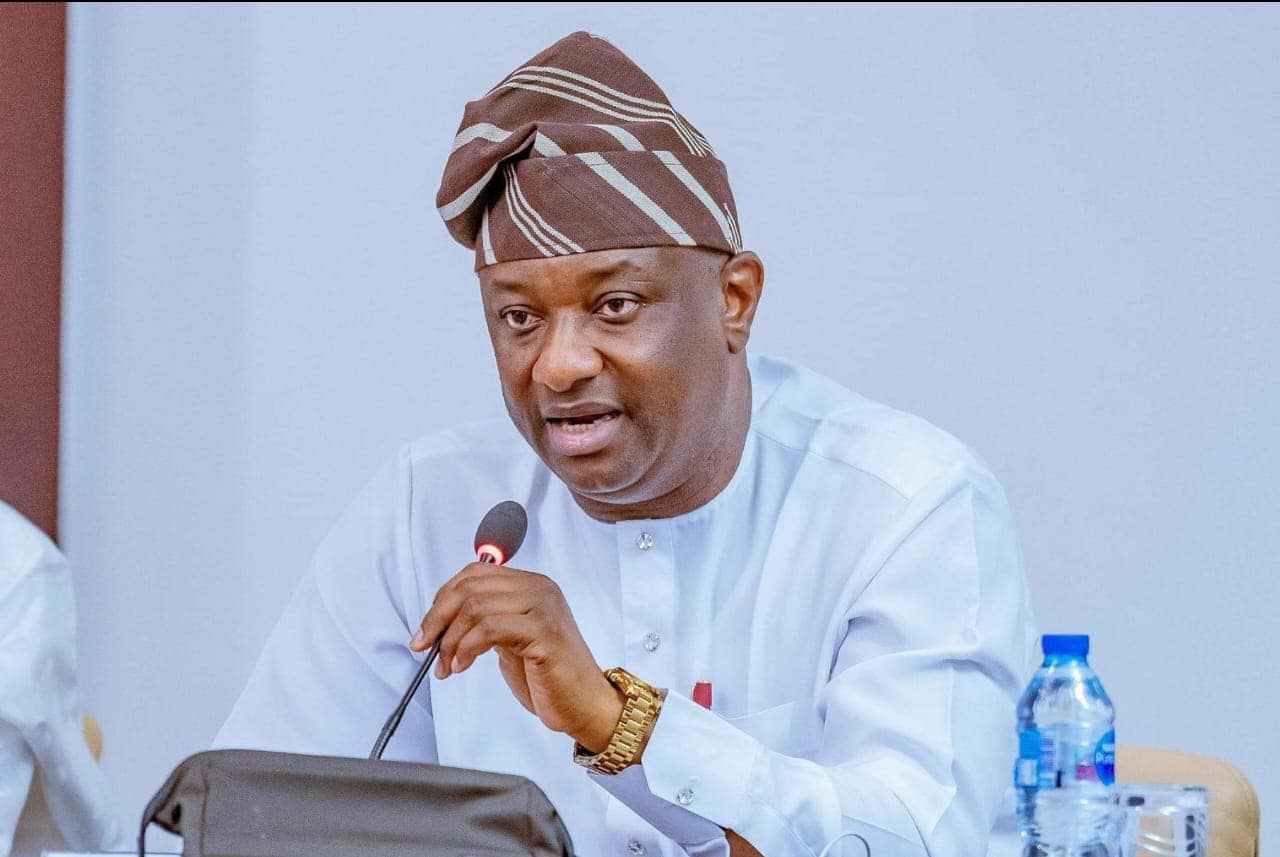
THE strict dichotomy between civil and military aviation has been narrowed, with the Minister of Aviation and Aerospace Development, Festus Keyamo, and the Chief of Air Staff, Air Marshal Sunday Kelvin Aneke, agreeing to deepen collaboration between the Civil Aviation Authority (NCAA) and the Nigerian Air Force (NAF) on  aviation safety, airworthiness, certification, training and capacity building.

The agreement was reached, on Wednesday, when the minister paid a condolence visit to the Chief of Air Staff, following the tragic Nigerian Air Force aircraft incident at Igbokoda, in Ondo State.

The minister, after signing the condolence register, held a meeting with the NAF boss, after which both leaders addressed the media and announced a new framework for closer cooperation between civil and military aviation authorities.

Keyamo expressed sympathy to the NAF, describing the incident as a national tragedy, while commending the gallantry and sacrifices of the men and women of the Air Force.

“We value the Air Force. We value the efforts of the gallant men and women of the Air Force and what they do for the country,” the minister said.

He stressed that tragedies within the aviation sector do not distinguish between military and civilian operators, noting that both sectors ultimately serve the same country and protect the same citizens.

He said the incident has further strengthened the need for greater cooperation and the sharing of expertise between the two sides.

“It is one country, one people. When disaster happens, it affects everybody. There were civilians in that air crash and when there’s an air crash in the civil aviation too, there can be military personnel. And so, it is important that we cooperate in the area of safety,” Keyamo said.

The minister noted that the NAF already relies on civil aviation infrastructure, particularly air traffic control, and said the existing relationship should now be expanded into a more structured partnership.

He disclosed that he had contacted the Director-General of the NCAA and facilitated direct communication between the NCAA leadership and the Chief of Air Staff.

“We have decided that we will cooperate in terms of capacity building,” he said.

Keyamo announced that a joint committee involving the NCAA and the NAF would be established to facilitate collaboration in airworthiness, certification, training and other aviation safety measures, while respecting the statutory mandates of both institutions.

He further assured the Chief of Air Staff that personnel of the NAF would be given access to relevant training opportunities undertaken by the civil aviation authorities.

See also  CJN bans Nigerian lawyers from using ‘Barrister’ title with immediate effect

The minister also acknowledged that the NAF possesses specialised expertise that would be beneficial to the civil aviation sector, describing the proposed relationship as a mutually beneficial exchange of knowledge and experience.

Responding, the Chief of Air Staff, Air Marshal Aneke, thanked the minister for the condolence visit and for his continued support for the Air Force.

He described the minister’s gesture as a demonstration of the strong relationship that has developed between the civil and military aviation sectors under his leadership.

The Chief of Air Staff disclosed that both institutions had commenced discussions on a framework that would enable personnel from the civil aviation sector to contribute to the Air Force’s safety environment, particularly in the areas of airworthiness and certification, while Air Force personnel would also contribute their expertise to the civil aviation sector where required.

Navy deploys sonar to locate aircraft

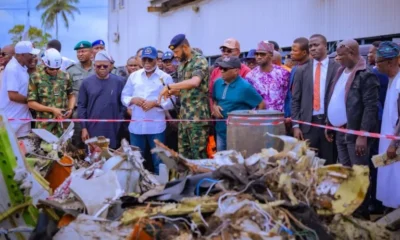
The Nigerian Navy has deployed specialised underwater sonar equipment to locate the crashed Air Force ATR-42 aircraft submerged in the swampy area of Igbokoda.

The deployment followed an on-the-spot assessment of the crash site by the Flag Officer Commanding, Western Naval Command, Rear Admiral Abubakar Abdullahi Mustapha, and the Air Officer Commanding, Logistics Command, Nigerian Air Force, Air Vice Marshal Abubakar Abdul Suleh, on Tuesday.

Speaking during the assessment, Rear Admiral Mustapha said the Chief of Defence Staff, General Olufemi Oluyede, and the Service Chiefs appreciated the Ondo State government, host communities, emergency agencies and other stakeholders for their support since the incident occurred.

He urged all those involved in the operation to remain calm and continue to cooperate with the agencies handling the recovery effort.

The FOC also commended Governor Lucky Aiyedatiwa, as well as Hi-Tech and AUC Construction companies, for providing mechanised equipment to support the recovery operation.

As part of the renewed efforts, the Nigerian Navy Hydrographic Department, deployed by the Chief of the Naval Staff, Vice Admiral Idi Abbas, commenced an underwater survey using state-of-the-art side-scan sonar equipment to obtain a clearer picture of the swamp and determine the exact position of the submerged aircraft.

The sonar survey is expected to guide divers and other technical personnel in locating the aircraft and planning its recovery, including the deployment of swamp buggies for excavation in the difficult terrain.

Rear Admiral Mustapha, accompanied by selected stakeholders, travelled by boat to the crash site after receiving briefings at the Forward Operating Base, Igbokoda, where he also interacted with the technical crew at the swamp buggy launching point.

See also  Nigeria tightens surveillance as Ebola kills 80 in Congo

Aiyedatiwa orders sustained search

Governor Lucky Aiyedatiwa, on Wednesday, ordered the sustained search for the victims and wreckage of the aircraft, saying every effort must be made to recover those involved in the tragedy.

Aiyedatiwa who gave this directive during his visit to the crash site, received a briefing on the ongoing search and recovery operation by personnel of the Nigerian Navy, Air Force, National Emergency Management Agency (NEMA), State Emergency Management Agency (SEMA) and local divers.

The governor said the government had responded to the difficult terrain by deploying two amphibious machines, popularly known as swamp buggies, to create wider access to the crash location and facilitate the movement of larger boats and rescue equipment.

He said the machines were also being used to excavate the swamp in the search for the main wreckage of the aircraft, which was yet to be located as of the time of his visit.

He said divers from the Navy and local communities were continuing the search in deeper sections of the swamp, noting that the difficult terrain and soft nature of the area had made the recovery operation particularly challenging.

Aiyedatiwa described the incident as a “national tragedy,” saying there had been no survivor found from the aircraft.

He said parts of bodies, clothing and jackets belonging to Air Force personnel, as well as fragments of the aircraft, had been recovered and preserved for further investigation.

The governor also disclosed that aviation fuel was flowing into the surrounding water, causing pollution in the area, while efforts continued to locate the submerged aircraft.

He said the nature of the terrain suggested that the aircraft could have sunk deeply into the mud, making it difficult for rescuers to locate the main wreckage, adding that government’s intervention was aimed at improving access to the site and supporting the federal agencies leading the recovery operation.

The governor also said the aircraft could have caused a greater disaster had the pilot not succeeded in manoeuvring it away from the community.

According to him, residents who witnessed the incident reported that the aircraft appeared to be descending with what sounded like an engine problem and was heading towards the community before the pilot manoeuvred it away.

He said the aircraft eventually crashed about 200 metres from the community and went into the swamp.

See also  Tinubu approved lifetime salary for retiring senior officers – Interior minister

Aiyedatiwa expressed gratitude that the crash did not occur within the populated area, saying such an occurrence could have resulted in greater loss of lives and property.

Earlier, the Commander, Nigerian Navy Forward Operating Base, Igbokoda, Captain Andy Alemongwa, briefed the governor on the progress of the operation as Navy personnel and local divers continued the search for the missing victims and the main wreckage.

NDLEA condoles NAF

The National Drug Law Enforcement Agency (NDLEA) has expressed deep sorrow over the tragic aircraft crash.

In a letter of condolence addressed to the Chief of Air Staff, Air Marshal Sunday Kelvin Aneke, Chairman and Chief Executive Officer of the NDLEA, Brigadier-General Mohamed Marwa (retd), conveyed the agency’s sympathies to the Air Force leadership, officers, men and women and the families of the fallen heroes.

Marwa described the news of the crash as devastating, noting that it was received with profound grief.

Obi visits NAF facility, signs condolence register

Presidential candidate of the Nigeria Democratic Congress (NDC), Peter Obi, visited the Nigerian Air Force facility, in Abuja, to formally sign the condolence register, following the recent aircraft crash.

Obi, who disclosed this in a Facebook post, on Tuesday, said the visit provided him an opportunity to reflect on the sacrifices made by personnel of the Nigerian Air Force and other security agencies in the line of duty.

The former Anambra State governor expressed condolences to the Nigerian Air Force as well as the families, colleagues and loved ones of those who lost their lives in the crash.

“Further to my message yesterday [Tuesday], I visited the Nigerian Air Force facility in Abuja today [Wednesday] to formally sign the condolence register following the unfortunate aircraft crash,” Obi said.

He described members of the Armed Forces and other security agencies as courageous Nigerians who routinely risk their lives to defend the country and protect citizens.

According to him, their service and sacrifices must never be taken for granted. “The visit gave me another opportunity to reflect on the sacrifices made daily by the men and women of our Armed Forces and other security agencies in the line of duty.

“These courageous Nigerians put their lives on the line to defend our nation and protect our people. We must never take their service and sacrifice for granted,” he said.

Source: tribuneonlineng.com

FOLLOW US ON:

FACEBOOK

TWITTER

PINTEREST

TIKTOK

YOUTUBE

LINKEDIN

INSTAGRAM

Continue Reading
Click to comment

Leave a Reply

Your email address will not be published. Required fields are marked *

News

Trump rules out new Iran attack before US midterm elections

Published

on

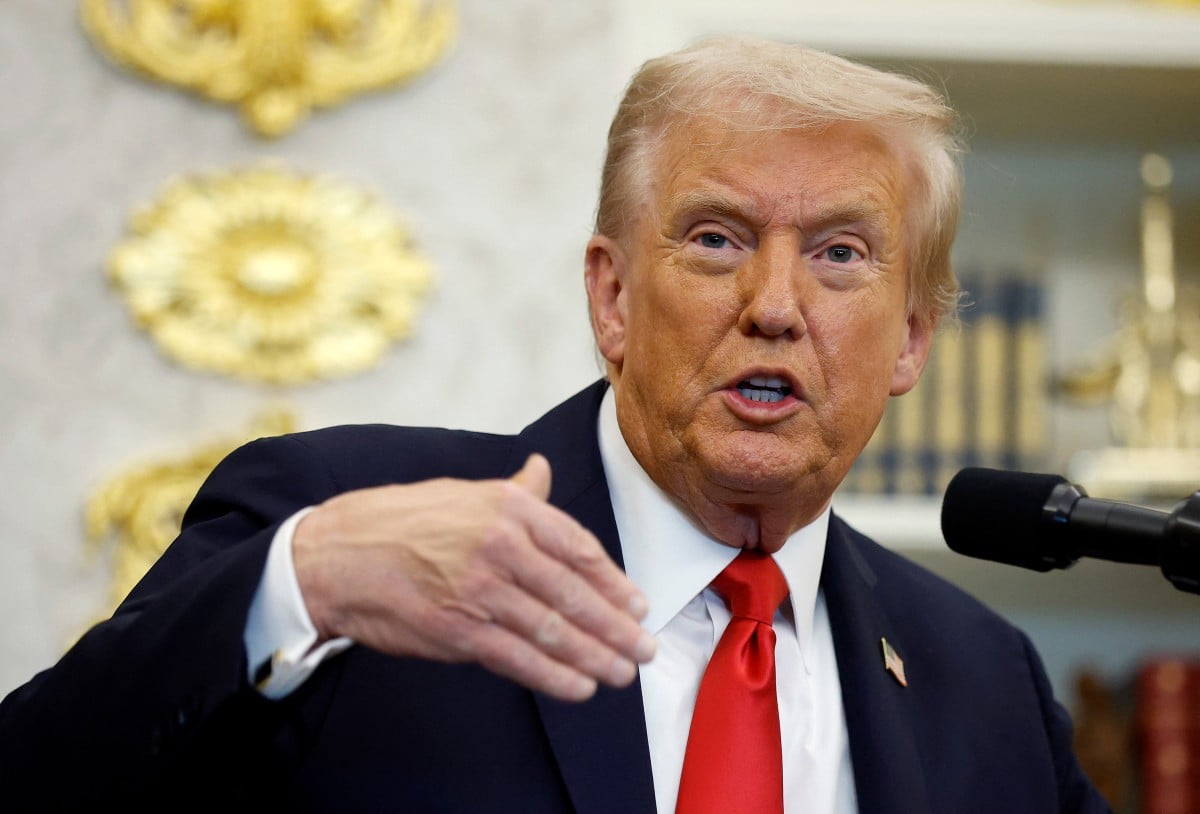
President Donald Trump ruled out Thursday attacking Iran before the US midterms on November 3, saying Washington was holding “productive discussions” with Tehran.

Trump’s announcement on his Truth Social platform followed a surge in oil prices driven by media reports suggesting potential new US strikes prior to the elections.

“I want to make it clear to everybody that, while Iran is in very bad condition, both economically and militarily, and while the Blockade will remain in full force and effect…we will not be attacking Iran at any time prior to the Midterm Elections,” he wrote.

“We are having productive discussions with the Islamic Republic of Iran,” he added.

The Atlantic magazine reported on Wednesday that the White House had asked the Pentagon to develop options to strike Iranian targets that could be used before the midterms.

The New York Times said Thursday the plans were being developed despite Trump’s “ambivalence.”

The surge in crude oil prices has also been fueled by persistent tensions in the Strait of Hormuz — a strategic chokepoint for the global oil trade — as well as hostilities between Yemen’s Iran-backed Houthis and Saudi Arabia.

Polls suggest American voters are strongly dissatisfied with fuel prices, which have soared since US-Israeli strikes against Iran on February 28 triggered the conflict.

Brent North Sea crude, the international benchmark, rallied to as high as $105.88 a barrel on Thursday before retreating to $104.28.

– Putin vows to help –

Russian President Vladimir Putin promised Thursday to “do everything” to help end the Middle East war when he met Iranian counterpart Masoud Pezeshkian for talks ahead of a regional summit, Russian media reported.

See also  FG deploys mining marshals for intelligence gathering, compliance monitoring

“We are ready to do everything that is in our power to contribute to the settlement of this situation,” Putin said after arriving in Turkmenistan for a summit of the Commonwealth of Independent States (CIS) that starts Friday in the Caspian Sea resort of Avaza.

He added that Iran had made “real efforts to end the war,” according to Russian news agencies.

Russia and Iran have reinforced diplomatic and military links since Russia launched its offensive in Ukraine in February 2022, becoming increasingly reliant on each other.

Trump has repeatedly insisted in recent weeks that the United States has effectively won the Iran war, despite ongoing unrest and a recent security threat that forced the withdrawal of American bombers from a base in England.

Iran’s President Masoud Pezeshkian insisted Tehran was “engaged in dialogue, but every time we negotiate with the United States, they attack again”, Iranian state media quoted him as saying at the talks with Putin.

Pezeshkian said the Islamic republic wanted to see a “final framework” to end the war.

But he accused the United States of “trying to impose its policies and views on all countries”.

“If the United States insists on pursuing a unilateral approach, a resolution will not be possible,” he said, according to state media.

– Approaching election –

The midterm elections will shape the final two years of Trump’s presidential term as his Republican Party risks losing its current grip on Congress.

Although Trump is not on the ballot, he is holding numerous rallies in an attempt to limit the damage or even turn the political tide.

See also  Why Military Operations Alone Won’t End Boko Haram – Bishop Kukah

Trump has warned he faces a possible third impeachment if Democrats retake the House of Representatives, and the White House is preparing for a slew of investigations into corruption and abuse of power.

The US president also sought to calm a furor on Thursday over his comments at a rally earlier this week that Iran could “take out” the cities of Los Angeles and San Diego.

The 80-year-old blamed the “fake and artificial news” for misinterpreting the remarks, which Democrats pounced on.

“In actuality, what I was talking about was that a temporary increase in the price of Gasoline is a small price to pay for Iran not having a Nuclear Weapon and, if you want to see a big price, can you imagine what it would be like if they bombed San Diego and/or Los Angeles?” Trump said on Truth Social.

AFP

Source: punchng.com

FOLLOW US ON:

FACEBOOK

TWITTER

PINTEREST

TIKTOK

YOUTUBE

LINKEDIN

INSTAGRAM

Continue Reading

News

INEC displays voter register, begins PVC distribution ahead of 2027 elections

Published

on

The Independent National Electoral Commission has commenced the display of the preliminary register of voters and distribution of Permanent Voter Cards across states as part of preparations for the 2027 general elections.

The seven-day exercise, which begins on Friday and runs through October 15, will allow registered voters to verify their details, raise claims and objections, and collect PVCs from the first phase of the Continuous Voter Registration conducted between August and December 2025.

In Plateau and Sokoto states, the respective Resident Electoral Commissioners announced that the exercise would take place at Registration Area centres, with PVC collection continuing at INEC offices at the local government level after the display period.

In a statement by the Plateau REC, Prof. Sam Egwu, made available to journalists in Jos on Thursday, the commission said the exercise was pursuant to Section 19(1) of the Electoral Act 2026, which mandates it to display the voter register not less than 90 days before the general elections.

He said, “The Independent National Electoral Commission, Plateau State, wishes to inform the good people of Plateau State that the commission will commence display of the Preliminary Register of Voters, attend to the hearing of claims and objections as well as collection of Permanent Voters Cards (PVCs) simultaneously in all the 207 Registration Areas in the state, from the 9th to 15th of October 2026 (7 days and weekends inclusive). Time is 9 am -3 pm daily.”

The statement asked all registered voters to take advantage of the opportunity to check their details.

See also  Tinubu approved lifetime salary for retiring senior officers – Interior minister

“All registered voters are encouraged to take advantage of this opportunity to carefully check information they provided, such as their names, photographs, date of birth, polling units and other relevant registration details to make necessary claims and objections within this stipulated period as an accurate voter register is important for free and credible elections,” the REC said.

He further disclosed that PVCs from the first phase of the CVR exercise conducted from August 18, 2025 to December 10, 2025, would be available for collection during the exercise.

In Sokoto, the REC, Umar Garba, while briefing journalists on the commission’s preparations for the 2027 general elections, said the exercise was part of INEC’s activities ahead of the 2027 elections.

Garba, who was at the Nigeria Union of Journalists Press Centre, said the commission was committed to ensuring that eligible voters were given the opportunity to verify their registration details and collect their PVCs.

“The Independent National Electoral Commission will commence the display of the preliminary register of voters for claims and objections, as well as the distribution of Permanent Voter Cards from the 9th to the 15th of October 2026,” Garba said.

He said PVCs relating to lost or damaged cards, transfers, updates and registrations conducted during the second and third phases of the CVR were not yet ready for collection.

Garba said the commission would announce when the affected PVCs became available.

He added that after the exercise at the Registration Area level ended on October 15, distribution would continue at INEC offices in the 23 local government areas of the state.

See also  Herbert Macaulay, 174 others get Tinubu’s presidential pardon

“This will enable eligible voters who could not collect their cards at the Registration Area level to do so,” he said.

On security, Garba said INEC had continued to take the advice of security agencies into consideration throughout the voter registration process.

“Throughout the registration of voters held recently, the commission took the advice of security agencies very seriously. This contributed to a safe process without any casualties,” he said.

He assured eligible voters that INEC would work to ensure that PVCs were distributed across the state.

On internally displaced persons, Garba said the commission was engaging security agencies to establish the number of IDPs in Sokoto and determine how they could participate in the 2027 elections.

“The commission is always talking with security agencies to ascertain the number of IDPs in the state. We are working to ensure that they vote once they are in official and recognised camps,” he said.

The REC also said INEC would release the total number of registered voters in Sokoto State at the appropriate time.

Source: punchng.com

FOLLOW US ON:

FACEBOOK

TWITTER

PINTEREST

TIKTOK

YOUTUBE

LINKEDIN

INSTAGRAM

Continue Reading

News

Gates Foundation director reveals that AI tools will help detect pregnancy complications early, read how

Published

on

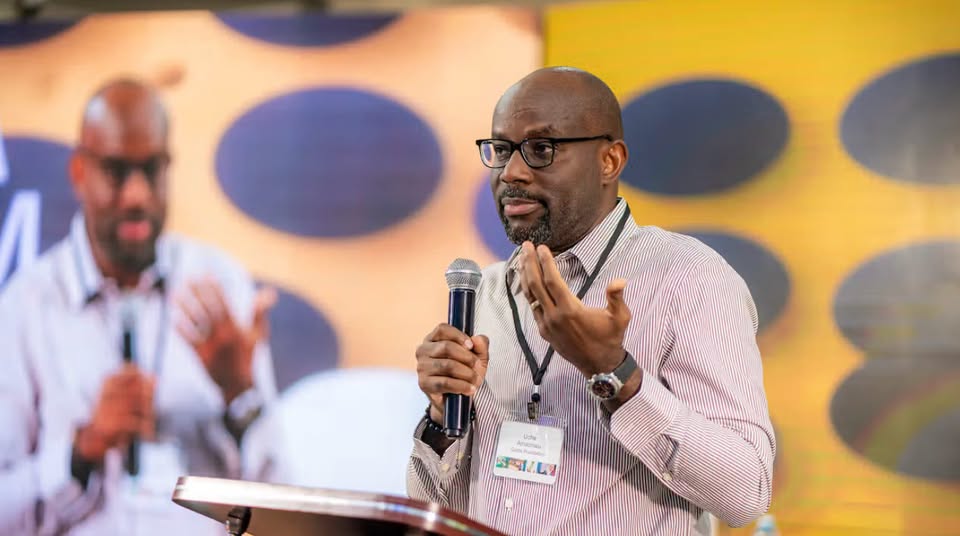
Gates Foundation Nigeria Country Director, Uche Amaonwu, speaks with ANGELA ONWUZOO about how the partnership between the foundation and MTN Group Foundation will use AI and digital tools to benefit 500,000 women, 5,000 health workers and 500 primary healthcare facilities in Nigeria

Nigeria has rolled out several interventions to reduce maternal deaths, yet the burden remains high. What gaps does the Foundation’s investment in AI-enabled tools and digital health seek to close?

It’s about using AI to improve access to care. Preventing maternal deaths is not necessarily complicated because we know what needs to be done. Pregnant women need to attend antenatal clinics, where health workers can identify potential complications. They also need skilled birth attendants to manage deliveries properly. Appropriate treatment is provided when complications are detected early. These interventions are well established. The problem, however, is that pregnant women and health workers themselves may not always have access to the information and tools they need when they need them. The partnership wants to bridge the gap by using digital tools to improve access to timely, reliable health information and support. For instance, many births still take place at home, sometimes without the presence of a skilled birth attendant. A woman with access to a digital device could ask basic questions about symptoms she is experiencing, such as pain or other discomfort, and receive guidance on what to do. This is important at night, when accessing a health facility or speaking to a health worker may be difficult. AI could help bridge that gap by providing trusted information, asking follow-up questions to better understand the symptoms, and helping the woman recognise when she needs urgent medical attention.

For example, if she reports bleeding, the tool could help assess the seriousness of the situation and advise her to seek immediate medical care when necessary. Not every pregnant woman has a health worker readily available at home, but many have access to a mobile phone. Through this partnership, we are also making provisions to ensure that mothers who do not have phones can access affordable devices and data connectivity so that they can use the technology. For healthcare providers, the challenge is sometimes the pressure of managing many patients and the need for additional support when making decisions about a patient’s care. A health worker may attend to a pregnant woman and need guidance on how best to manage her symptoms or determine whether she requires further treatment.

With technology and AI becoming more accessible, the question is how we can harness them to improve communication, provide timely guidance and strengthen the quality of care women receive throughout pregnancy and childbirth.

What does the Gates Foundation partnership with MTN offer that existing maternal and digital health interventions in Nigeria do not?

The partnership focuses on three things, all of which come back to access. First, can we get devices into the hands of people? Second, can we provide connectivity on those devices? Third, can we install an application that allows women to interact with it in their native languages, describing how they feel and receiving relevant responses? That is the level of access and trust we want to establish. MTN’s contribution is particularly important because it has the largest network distribution in Nigeria and across Africa. Even in communities where there may be no health facility, someone may have a device with internet connectivity and be able to access essential health information.

We also need applications that provide accurate and reliable health advice. We are working with other partners who can develop these applications to ensure that women have access to the information they need. We need to create a platform through which women can access reliable maternal health information, particularly in their own languages.

For pregnant women, what will actually change?

Imagine a pregnant woman in a rural area who develops a symptom and goes to a health facility, only to find that it is closed. Instead of travelling to another facility just to get basic guidance, she could access information in her local language by speaking to her phone. The phone could then guide her on what to do immediately while she makes arrangements to get to a hospital. That could make a real difference for her. Without access to reliable information, she might become worried, resort to self-medication, or seek advice from someone else. With the phone, however, she could receive appropriate information to help her understand what to do next.

See also  Herbert Macaulay, 174 others get Tinubu’s presidential pardon

Now, consider the community health worker. Remember that one part of this intervention will serve women directly, while the other will support healthcare workers, including midwives. If a midwife identifies potentially dangerous symptoms in a pregnant woman, she could quickly seek guidance through the AI-enabled tool. With internet connectivity, she could also consult relevant information or contact other healthcare professionals to confirm what she is observing and determine the appropriate next steps.

So, the partnership is designed to support both the mother in her time of need and the healthcare worker who needs timely guidance to make informed decisions. If these interventions work as intended, women will be better supported, and caregivers will have quicker access to the information they need.

How will the platform work, from accessing information to detecting complications and securing timely care?

All the components are designed to work together. Women will be able to access information in their local languages, while frontline health workers will have connected devices to support their decision-making when examining pregnant women. Imagine a situation where a health worker identifies a potential complication. If she has a connected device, and her primary healthcare centre and the referral hospital at the local government headquarters are also connected, information can be shared quickly across the healthcare system.

The health worker could alert the referral hospital about the woman’s condition, communicate her symptoms, and request that the hospital prepare for her arrival. This would allow the receiving facility to get ready to provide the necessary care before the woman arrives. The system will enable health workers to communicate what they observe, engage other healthcare professionals, and coordinate the next steps in a patient’s care. As I said, pregnancy is a situation where early detection and prompt referral can significantly improve a woman’s chances of survival when complications arise.

Ordinarily, a health worker may have to find a way to transport the woman to a hospital, explain her condition to the receiving team, and ensure the necessary arrangements are made. In some cases, an ambulance may need to be contacted. We will also evaluate the pilot to determine whether it delivers the intended results.

We need to establish whether women can access the information, whether health workers can detect complications earlier, whether the intervention improves the time it takes to get women to hospitals, and whether it enables receiving facilities to prepare better for their arrival. We are starting with a pilot because this concerns women’s lives and health. We need to establish that the solution works effectively and safely before taking it to scale. We are very excited to test it and see what the results show.

The initiative comes with a $25m investment from 2026 to 2030. How much is each partner contributing?

The investment is split equally between the two partners. The Gates Foundation is contributing $12.5m, and MTN is contributing the other $12.5m. Beyond the financial contributions, what is important is understanding what the funds will be used for. As I mentioned earlier, MTN will focus on ensuring that women have access to affordable devices and the connectivity needed to use them.

This includes working with partners to make affordable phones available and ensuring that the devices are connected and deployed where they are needed. That is an area in which MTN has significant expertise, given its extensive telecommunications network and reach across Nigeria, including communities where access to healthcare facilities is limited.

See also  We are stabilising Nigeria, Tinubu tells Catholic Bishops

On our side, we will focus on ensuring that the applications developed for these devices provide accurate, reliable, and responsible medical information. We want to work with competent people in the health sector to ensure that the applications are properly designed and that the advice they provide is medically sound.

We also want to ensure that the applications can communicate effectively in local languages. For example, we need language models that can understand and respond in Nigerian Pidgin, Hausa, Igbo and Yoruba.

These models must be rigorously tested and continuously improved because even within languages such as Igbo and Yoruba, there are different dialects. If an AI tool misunderstands a woman’s description of her symptoms because of differences in pronunciation or dialect, it could have serious consequences.

That is why we must be rigorous in developing and testing these tools. Healthcare professionals will also be involved in assessing the technology to ensure that it works as intended and provides appropriate guidance. It requires considerable time and attention.

MTN is also contributing by covering the connectivity costs, including providing zero-rated data for the application. This means women will be able to use the application without their usage consuming their regular mobile data allowance.

Will women incur any additional costs to use this technology?

No. Under this partnership, we are deliberately making the service free to women. We intend to provide the phones at no cost and ensure that the data connectivity needed to run the platform is also free. We are working to make affordable devices available so that women can access the service without having to bear these costs. However, an important question is what happens after the partnership ends. How do we ensure that the intervention can be sustained? This is why we want to embed the lessons from the initiative into government programmes and broader digital health infrastructure. If you have been following the government’s strategy, you will know that there are efforts to mobilise funding for digital connectivity programmes aimed at expanding broadband access across Nigeria. The idea is to extend connectivity to public facilities, particularly primary healthcare centres in rural areas where maternal healthcare needs are significant. That way, healthcare facilities can have reliable internet access and use digital health tools more effectively.

This partnership provides an opportunity to demonstrate what is possible and generate practical lessons that can inform these wider programmes. As the government develops its digital connectivity plans, we can share evidence from the pilot on what works, what needs improvement and what should be prioritised when extending broadband access to healthcare facilities.

We must also consider the availability of devices. There are efforts to expand access to digital devices, including through initiatives involving the Nigerian Communications Commission. If these programmes are implemented, they could help make devices available to more healthcare facilities.

Ultimately, the pilot will help demonstrate what is needed to make digital maternal healthcare work in Nigeria. The intention is not for the Gates Foundation and MTN to sustain the intervention indefinitely, but to test the approach, generate evidence and inform programmes that the government and private sector can adopt and expand.

The partnership aims to reach 500,000 women, 5,000 health workers, and 500 healthcare facilities by 2030. How confident are you that these targets are achievable?

I am fairly confident. This is just the beginning. Nigeria has about 40,000 primary healthcare centres, so reaching 500 facilities represents a relatively small proportion of the total. We are not trying to tackle the entire system at once. If we remain disciplined and focused, I believe we can reach our target. Another reason for our confidence is that the Federal Ministry of Health and Social Welfare has a programme, the Maternal Mortality Reduction Innovation Initiative, where they identified 172 local government areas that collectively account for 60 per cent of maternal deaths. It has also identified healthcare facilities in these areas that are strategically located to serve the population.

See also  CJN bans Nigerian lawyers from using ‘Barrister’ title with immediate effect

How will you ensure that vulnerable women in rural and underserved communities, with limited literacy, poor connectivity, or no smartphones, can use and benefit from the platform?

There are already initiatives aimed at addressing some of these challenges. For instance, the Nigerian Communications Commission is promoting digital literacy and mobile phone literacy, including efforts to encourage mobile phone providers to train users on how to operate their devices. You might be surprised to find that even in my village, almost everyone has a phone. It might be a basic smartphone, but people are finding ways to use their devices. I believe that private-sector providers can play an important role in this initiative. Since expanding device usage is part of their business, they have an incentive to help people understand how their phones work and provide the necessary training. For the women participating in this initiative, the aim is to ensure that they receive these benefits without having to pay for the devices or the connectivity. The training and other support they need to use the technology will also be incorporated into the programme, with the costs covered by the $25m investment.

A wrong AI-generated health recommendation could have life-threatening consequences. What safeguards are in place to prevent unsafe or inaccurate advice from reaching pregnant women and health workers?

That is a very important question. The first thing to understand is that under this partnership, as with any other application that uses AI, the technology is intended to serve as an adviser, not as a substitute for clinical judgment. The healthcare worker must remain the person responsible for deciding what should happen.

It is similar to a doctor consulting a textbook for guidance. The doctor still has to interpret the information in the context of the patient’s condition and make a decision based on what they observe. AI should not be placed in a position where it makes clinical decisions on behalf of healthcare professionals. The same principle applies to pregnant women.

Secondly, the application must be developed using reliable clinical guidelines. Qualified medical professionals will be involved in developing and reviewing the application to ensure that the guidance it provides is medically sound and based on established clinical evidence.

Language is another critical issue because it is a potential source of errors. If the underlying information is not communicated accurately in a woman’s language, there could be serious consequences. That is why we need to ensure that the technology can understand and respond appropriately in local languages and their different dialects. Significant progress has been made in developing language models in recent years, but we still need to address gaps in their ability to understand some local dialects. As part of this partnership, we will assess the available language models to determine which perform best and work to improve their accuracy and reliability.

What commitments do you expect from the federal and state governments?

The first thing I want to emphasise is alignment. We need the people implementing this partnership to work with the government, which is responsible for the lives of Nigerians, to make it succeed. We want to work with those implementing the MAMII programme because this partnership can strengthen it. We need to work together. On the digital side, as connectivity infrastructure is rolled out, we must ensure that rural communities, where people stand to benefit most from the technology, are not left behind. We must prioritise equitable access. To me, alignment and equitable distribution are critical.

Source: punchng.com

FOLLOW US ON:

FACEBOOK

TWITTER

PINTEREST

TIKTOK

YOUTUBE

LINKEDIN

INSTAGRAM

Continue Reading

Trending