Connect with us

Lifestyle

Nigeria’s fight against heart disease, stroke needs more than medicine — NSP president

Published

on

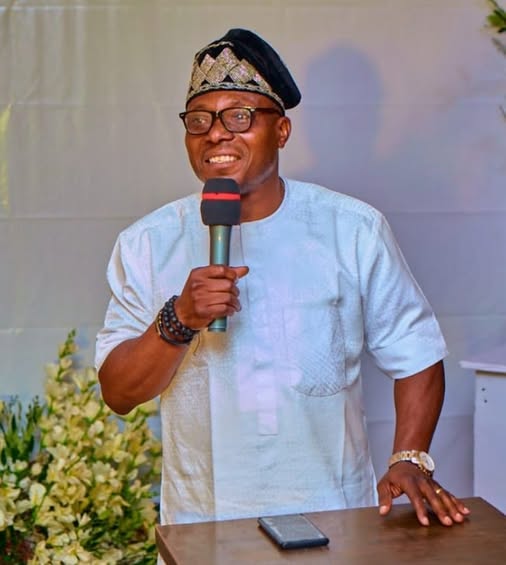
The president of the Nigeria Society of Physiotherapy, Dr. Oyinlola Felix Odusanya, speaking on the 2026 World Physiotherapy Day, talked about rising cardiovascular disease, exercise, medical rehabilitation gaps, and the need for a national medical rehabilitation policy, in this interview with Sade Oguntola.

How significant is the role of physical activity in preventing and managing cardiovascular diseases and stroke?

The theme for this year’s World Physiotherapy Day focuses on physical activity in the prevention, management, and rehabilitation of cardiovascular diseases and stroke. Studies have shown that physical activity helps reduce the risk of cardiovascular diseases, including stroke. Stroke is one of the commonest cardiovascular conditions we see around here, and its impact on our communities is huge.

For a stroke patient, the medical aspect of treatment has to be established first. The person may be on antihypertensive drugs or may have diabetes or high lipid levels. These risk factors may have been present before the stroke occurred.

Once the patient is stabilised, physiotherapy becomes important in restoring the person to useful function and helping them return to the family and community.

Stroke can leave a person unable to move, involving paralysis on one side of the body. Physiotherapists are movement experts, so our focus is to help the person function again—to use the hand, stand, walk, and, as much as possible, return to activities of daily living.  If a stroke affects the head of a family, for instance, it can have a major impact on the entire household. We therefore play a major role in restoring people to independent function.

How many Nigerian hospitals currently have cardiac rehabilitation units run by physiotherapists?

At the moment, we do not have specific data to ascertain the number of cardiac rehabilitation centres in Nigeria. Cardiac rehabilitation itself is a broad term involving a multidisciplinary team combining exercise, education, lifestyle modification, risk-factor management, and psychological support. We have tertiary health institutions/teaching hospitals across Nigeria where specialist care is being offered, but only a few have dedicated cardiac rehabilitation programmes. For example, the University College Hospital, Ibadan, recently has a stroke unit dedicated to the multidisciplinary management of acute stroke cases, which is one of the commonest cardiovascular conditions we see till the point of community reintegration, and physiotherapy plays a very vital role in this.

However, there is no available national data to establish the number of cardiac rehabilitation centresacross Nigeria. In the absence of this, I will rather say a few cardiac rehabilitation services are available in Nigeria, but access remains far below what is required for a country with a growing cardiovascular disease burden. Inadequate resources and personnel, transportation costs, and limited expertise are important barriers. These lead to poor functional rehabilitation and make it more difficult for stroke survivors and other patients with cardiovascular diseases to reintegrate into society.

Why is rehabilitation still so limited in Nigeria?

Generally, Nigeria does not yet have what we can call a rehabilitation policy. Because there is no rehabilitation policy, issues relating to rehabilitation, especially medical rehabilitation, are not properly budgeted for or planned for. There are also limited training opportunities. That is a major concern.

The most important thing is for us to have a rehabilitation policy, which the Federal Government is beginning to look at. Once we have such a policy, we can properly plan for rehabilitation, create the institutions required, and address these gaps. There is no doubt that many patients need these services, but because the services are not sufficiently available, many of them are unable to access them.

What engagement is the Nigerian Society of Physiotherapy having with the health authorities to make physiotherapy part of the healthcare package for cardiovascular diseases?

We have engaged with the National Health Insurance Authority. Recently, if you look at one of the documents and the cost structure they brought out, you will see that physiotherapy features strongly in it.

There is also the WHO Rehabilitation 2030 Agenda. The purpose is for governments and health systems around the world to ensure that physiotherapy and other medical rehabilitation professions exist at every level of healthcare. As we speak, they are not available at every level.

Physiotherapy and medical rehabilitation are essential components of universal health coverage. That is why the conversation now includes creating a rehabilitation policy.

When you create a rehabilitation policy, you create the division that caters for it. That is where you create a budget and opportunities for training.

See also  Mohammed Babangida: Businessman and Son of Nigeria’s Former Military Leader

As we begin to have specialised training, we will also have experts required in different areas, including cardiopulmonary physiotherapy, orthopaedics, and paediatrics.

These are some of the conversations taking place with the Ministry of Health. Tentatively, we are hoping that the policy will be taken to the National Council on Health in November, at least for the first passage of the policy and strategic planning.

What is the recommended dose of exercise for preventing cardiovascular disease?

The truth is that exercise is medicine, and we should approach it from that perspective. Unfortunately, in Nigeria, we have not yet developed an exercise lifestyle. It is for everyone, not only people living with cardiovascular disease.

The WHO recommends an average of 150 minutes of moderate-intensity exercise daily. Exercise can be classified into low, moderate, and high intensity, depending on how rigorous it is. For someone with cardiovascular risk, I would advise aerobic exercise. Examples include walking and dancing, which are relatively inexpensive and accessible.

Walking, dancing, and cycling are good forms of aerobic exercise. You can aim for about 150 minutes per week, spread over five days or done on alternate days. However, exercise must be prescribed for each individual because we are not all the same.

Exercise prescription is based on your health status, age, and other factors that determine what the person is fit or able to do. On average, walking is a simple exercise I would recommend for anybody who can tolerate it. Walk to places where you can rather than always take a car or motorcycle.

Resistance exercises are also important. These include strengthening exercises or weightlifting. Weightlifting is not only for men who want to build muscle. It can also be beneficial for people with cardiovascular diseases because the effect is retained over time. Resistance exercises can be performed two to three times per week, including through body-weight exercises such as squats, lunges, and push-ups.

Flexibility exercises are also important because stretching helps maintain muscle length and can help prevent injuries. For elderly people and those with neurological disabilities, balance exercises are particularly important.

Swimming is another good form of exercise because it combines flexibility, aerobic, and resistance exercise. The buoyancy of the water enhances performance.

Dancing is also a very good form of exercise, particularly in Africa, where it forms part of our lifestyle. The important thing is that it should be intentional, structured, and consistent. It is not enough to dance at a party today and then do nothing for the next month. Exercise should be regular and appropriately prescribed.

Is being physically active at work enough?

Not necessarily. Some people believe that because they work rigorously or are physically active at work, they are getting enough exercise. That is not necessarily correct. That may simply be activity associated with daily living. This forms a baseline at which your heart functions. If you want exercise that is targeted towards your health, it has to be intentional, measured, and structured at a targeted heart rate.

There are many misconceptions that exercise is dangerous for people with high blood pressure or heart disease. How do you address this?

Physiotherapists screen, assess, prescribe, and monitor exercise. That is why you cannot simply tell a patient to go and exercise. Before telling anybody to exercise, you first screen them. There are conditions under which we do not want someone to exercise. For example, if someone has unstable angina, that is, severe chest pain that is not being managed, they are not a candidate for exercise until the condition is addressed.

The same applies to severe, uncontrolled hypertension. You should not exercise until the condition is controlled. Even patients who are admitted to the hospital have a level of exercise they may be able to perform, but it has to be monitored.

If you have cardiovascular disease or another condition you are managing, you should see an expert before beginning an exercise programme.

You should not simply walk into a gym and start lifting weights because somebody else is doing it. We are not all the same. The key word is uncontrolled. Exercise can be dangerous for someone with uncontrolled high blood pressure if they exercise without proper assessment and supervision.

 What is the Nigerian Society of Physiotherapy doing to promote community-based physical activity programmes?

See also  We don’t want to see you in Edo, gov’s aide warns Davido

Community-based physical activity needs to be looked at from two perspectives. First, the private sector and partners who can make services available to communities. The second is a structured and organised community-based arrangement instituted by the government.

Some government secondary and tertiary hospitals, for example, have community physiotherapists who provide services to certain communities. However, these services are not structured or widely available because the government does not yet have a policy specifically addressing community-based physiotherapy or rehabilitation.

NGOs have also been providing community-based rehabilitation in some areas, while independent institutions and teaching hospitals with the capacity have also been doing the same.

But for these services to be available to everybody in the community, government intervention has to be part of the process. There must be government planning and funding, alongside support from partners. For now, these services are not widely available because they are not sufficiently structured and there are limited partners and funding.

However, annually in celebration of our World Physiotherapy Day, every 8th of September, the Nigeria Society of Physiotherapy, through its various state chapters and hospital units, always organises a community outreach programme nationwide. Yet, there is a need for a community-based rehabilitation government policy for adequate coverage.

Where can people get exercise prescribed according to their age and health condition?

For people with clinical conditions, you need to see a physiotherapist to have your exercises prescribed. An apparently healthy person—someone who has not been diagnosed with a health condition—may be able to exercise with an instructor in a gym.

But for people with cardiovascular disease or another condition they are managing, exercise should be prescribed. Having a disease does not mean you cannot move or exercise. It means the exercise needs to be supervised and appropriately prescribed.

Does this also apply to elderly people?

Yes, particularly elderly people with one or more comorbidities. There is a sub-specialisation known as geriatric physiotherapy. Elderly people may have balance issues and musculoskeletal problems such as arthritis limiting exercise performance.

These factors and every other comorbidity have to be considered in prescribing an exercise programme that is suitable and safe. Safety is key.

What about people who do not want to go to gyms, including for religious or other reasons? And what about exercises such as Tai Chi that people see on social media?

COVID-19 opened our eyes to how we can access health care without necessarily visiting a hospital. There are now many applications developed for tele-rehabilitation that provide demonstrations and guidance even for home-based exercises. But before doing any form of exercise, it is important to know your capacity and your health status.

Ideally, at the beginning, you should see a professional who can tell you which application or movements are appropriate for you.

Walking is a basic exercise that is cheap and easy and can be performed at your own pace. It can also be controlled easily. For elderly people, I encourage walking at their pace, noting how far they are able to go and gradually progressing. Those who require more specialised exercise can visit a physiotherapist. Safety is key.

What are the red flags people should watch out for while exercising?

If you experience sudden shortness of breath or sudden pain in your chest, you should stop exercising. If you suddenly feel dizzy, as though the surroundings are turning, you should stop exercising. If you suddenly feel unusually tired or weak, you should also stop. These are important warning signs.

What is the NSP doing to ensure that stroke survivors in rural and remote communities are not left behind?

We have specific programmes for communities, including activities carried out during World Physiotherapy Day. More broadly, we continue to engage government and advocate for these services to be made available at all levels of care. The number of people who need such services is increasing.

One of the major challenges in Nigeria is that the health system was initially built with a strong focus on infectious diseases. As we move towards dealing more with non-communicable diseases, government needs to put the appropriate structures in place.

What exactly should the government put in place?

The first thing is a rehabilitation policy. It is when there is a rehabilitation policy that you can have a rehabilitation division or department that starts planning. You must plan for personnel, institutions, training, and facilities located in areas where members of the community can easily access them. For those who need a referral, there must also be a system that ensures referral centres are not too far away. That is what we need to put in place so that people can access rehabilitation services.

See also  See 10 popular movies that will make you miss Pete Edochie

Q: Many Nigerians still think physiotherapy is only for bone fractures or stroke. Is the profession changing that narrative?

A: Physiotherapy is not just about bones. Physiotherapy is about movement. We are movement experts and exercise experts. Our focus is not just fractures. We manage various health and disease conditions without medication; using physical means and exercise is just one such method. We have various specialisaton in physiotherapy: orthopedics or musculoskeletal, neurophysiotherapy and mental health, women’s health, cardiopulmonary, geriatric, pediatrics, sports, oncology and palliative care, and community physiotherapy.

The goal is to restore independence after a disease—to enable people to move, walk, and participate in activities of daily living.

Health is not simply about taking medication. If someone is still unable to move after a disease, treatment is not complete. When disease strikes, there can be disability and weakness. A person may spend a long time in bed during an admission. Part of completing the treatment process is getting that person moving again and helping them participate in the activities they used to do before the illness.

Physiotherapists play a major role in restoring that movement and function. Physiotherapy is therefore not just about bones. It is about ensuring that people remain physically active and are able to contribute to their environment, their children, and their families.

Q: Should exercise be incorporated into health insurance as a way of reducing the burden of cardiovascular disease and healthcare costs?

A: The evidence would have to be properly analysed and presented. It is something that can form part of the discussion around rehabilitation policy because rehabilitation policy also needs to be matched with insurance.

As we look at reducing healthcare spending, some people take antihypertensive medication every day, while others take medication for diabetes every month.

When people are assessed at the onset, exercise may form part of their management in appropriate cases. During that period, their health parameters would need to be monitored regularly. There are situations where exercise may help delay the point at which drug intervention becomes necessary.

Q: Will the Nigeria Society of Physiotherapy advocate for exercise to be incorporated into health insurance?

A: That is part of the advocacy we do every year. We would want to see it pushed. However, there is still the challenge of health insurance coverage. Many people access healthcare out of pocket.

One way to start is to encourage more people to enroll in health insurance. Once coverage increases, more hospitals may be willing to accept health insurance, particularly if financing and capitation improve.

The Nigerian government needs to look at consolidating health insurance in a way that accommodates people of different social statuses, including market women and farmers in rural communities.

Q: Finally, what is your message to Nigerians about movement, heart disease, and stroke?

A: You should not wait until you have a heart attack or a stroke before you start moving. We should move before that happens because the body is designed to move. The heart is a muscle, and it needs to be exercised.

Take the stairs instead of the elevator or lift. Walk to places you can instead of using a car or motorcycle. I also want to appeal to the government to make our roads more accessible for physical activity.

In the process of modernising our roads, we are taking over the walkways. We no longer have sufficient walkways for people to walk on.

The prevalence of motorcycles also makes it difficult for elderly people who normally engage in routine morning exercise. They can be put at risk, and there have been situations where people exercising have been hit by motorcycles.

Urbanisation is therefore eroding some of the opportunities for physical activity. As we urbanise and improve our infrastructure, we should be intentional about making our environment conducive to physical activity so that the people who use these facilities can live longer and enjoy them.

Source: tribuneonlineng.com

FOLLOW US ON:

FACEBOOK

TWITTER

PINTEREST

TIKTOK

YOUTUBE

LINKEDIN

INSTAGRAM

Continue Reading
Click to comment

Leave a Reply

Your email address will not be published. Required fields are marked *

Lifestyle

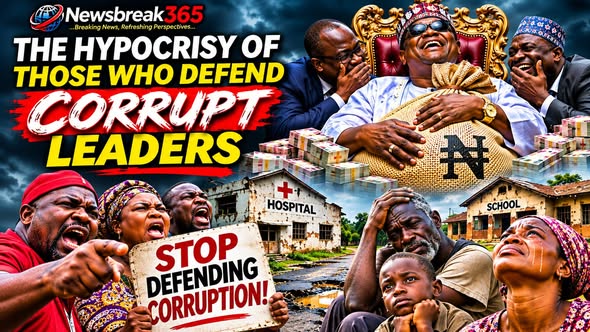
THE HYPOCRISY OF THOSE WHO DEFEND CORRUPT LEADERS: WHEN POLITICAL LOYALTY BECOMES MORE IMPORTANT THAN NATIONAL SURVIVAL

Published

on

A nation does not suffer from corrupt leadership alone; it also suffers from citizens who knowingly defend corruption, manufacture excuses for dishonesty and attack anyone brave enough to demand accountability.**

There is a disturbing sickness spreading through societies where political loyalty has become more important than honesty, justice and the collective well-being of the people. It is the dangerous culture of defending corrupt leaders simply because they belong to one’s political party, ethnic group, religious circle or personal network.

Today, some people have abandoned their conscience at the altar of political loyalty. They see wrongdoing but refuse to acknowledge it. They witness public resources being mismanaged, institutions collapsing and ordinary citizens struggling to survive, yet they will passionately defend those responsible for the suffering.

The question is: **At what point did defending a politician become more important than defending the future of an entire nation?**

## When Corruption Becomes Acceptable Because It Comes From Your Favourite Leader

One of the greatest enemies of good governance is selective outrage.

When an opposing politician is accused of corruption, supporters demand investigations, punishment and accountability. But when their preferred politician faces similar allegations, the same people suddenly become lawyers, public relations officers and professional excuse manufacturers.

Yesterday, they condemned corruption. Today, they are explaining why corruption is acceptable when committed by their political hero.

What changed? Did corruption suddenly become legitimate, or did their personal interests become more important than their principles?

This double standard is not political loyalty. It is hypocrisy.

## The Citizen Who Defends Corruption Is Part of the Problem

Let us confront an uncomfortable truth: corrupt leaders do not operate in isolation. They often survive because people create an environment where questioning them becomes unacceptable.

See also  We don’t want to see you in Edo, gov’s aide warns Davido

Some supporters attack journalists, silence critics, spread propaganda and insult citizens who demand transparency. They defend the indefensible while pretending to be patriotic.

They forget that public money belongs to the people, not to politicians. Government positions are responsibilities, not personal inheritance. Political office is a public trust, not a licence to enrich oneself.

When citizens abandon accountability, leaders become increasingly comfortable with impunity.

**A society that rewards dishonesty should not be surprised when dishonesty becomes its national culture.**

## Your Politician Will Not Pay the Price for Your Blind Loyalty

Here is another uncomfortable reality: the politicians you defend may never experience the suffering you endure.

They may have access to quality hospitals, private schools, secure neighbourhoods, expensive vehicles and comfortable lifestyles. Meanwhile, ordinary citizens struggle with unemployment, insecurity, poor infrastructure, rising living costs and failing public services.

When their children need education, they can afford the best institutions. When they need medical attention, they can seek treatment wherever they choose.

But what happens to the children of ordinary citizens?

Who speaks for the struggling families? Who answers for the abandoned hospitals? Who takes responsibility for the unemployed graduates?

And yet, some citizens will fight their fellow citizens on behalf of politicians who may not even know they exist.

**You are fighting your neighbour to protect a politician who will never fight for you.**

## Tribalism, Religion and Party Politics: The Weapons Used to Protect Failure

One of the most dangerous strategies used to escape accountability is turning legitimate criticism into an ethnic, religious or political battle.

Instead of answering questions about public performance, some supporters accuse critics of hating their tribe, religion or political party.

See also  DJ Cuppy leaks funny email from her dad requesting five Bitcoin

This is a deliberate distraction from the real issues.

Corruption has no tribe. Poverty has no political party. Bad hospitals do not discriminate between religions. Unemployment does not ask which candidate you voted for.

A failed public institution affects everyone.

If a leader is performing well, defend the achievements with evidence. If a leader is failing, demand improvement. If credible evidence of corruption emerges, demand a fair and transparent investigation.

Patriotism should never require citizens to abandon their intelligence.

## The Future of the Next Generation Is at Stake

Perhaps the most painful consequence of defending corrupt leadership is the damage inflicted on future generations.

Children are growing up in societies where dishonesty is sometimes rewarded, accountability is treated as an insult and political connections appear more valuable than competence.

What kind of future are we preparing for them?

Are we teaching the next generation that integrity matters, or are we teaching them that success means having the right connections and defending the right powerful people?

A nation cannot build a prosperous future on a foundation of dishonesty, excuses and blind loyalty.

The children of today will inherit the institutions, opportunities and consequences of the decisions made by today’s leaders and citizens.

## Stop Worshipping Politicians. Start Demanding Accountability.

Politicians are not gods. They are public servants entrusted with responsibilities on behalf of the people.

They should be questioned, scrutinised and held accountable regardless of their political affiliation.

You can support a political party without defending every action of its members. You can appreciate a leader’s achievements while criticising their failures. You can disagree with the opposition without becoming blind to wrongdoing within your own camp.

That is what responsible citizenship looks like.

See also  Read shocking story about Delta community where residents drink from human waste-polluted river

The greatest demonstration of loyalty to a country is not defending every politician who claims to represent you. It is demanding that everyone entrusted with public responsibility acts in the interest of the people.

## FINAL THOUGHT: WHO IS REALLY DESTROYING THE NATION?

Corrupt leaders deserve accountability, but citizens who knowingly protect corruption must also examine their conscience.

The tragedy is not simply that dishonest politicians exist. It is that some ordinary people have become their most aggressive defenders, sacrificing truth, justice and national interest for temporary political satisfaction.

When your favourite politician is wrong, say so.

When public money is misused, demand answers.

When institutions fail, demand reform.

When credible allegations emerge, demand impartial investigations.

Never allow political loyalty to turn you into an enemy of your own future.

**A politician may win an election, but that does not give them ownership of your conscience.**

**Remember: A nation is not destroyed only by those who steal public resources. It is also weakened by those who see the theft, know the truth and choose to defend it.**

—

### THE BIG QUESTION: LET’S DEBATE!

If a politician from your preferred political party is caught engaging in corruption, will you condemn that politician or defend them because they belong to your side?

Is blind political loyalty one of the biggest obstacles to good governance?

Share your opinion. We need an honest national conversation, not another competition over who can defend their favourite politician the loudest.

**Your country deserves your conscience, not your blind loyalty.**

*#PoliticalHypocrisy #EndCorruption #Accountability #GoodGovernance #PoliticalLeadership #NationalDevelopment #Newsbreak365*

FOLLOW US ON:

FACEBOOK

WHATSAPP CHANNEL

TWITTER

PINTEREST

TIKTOK

YOUTUBE

LINKEDIN

INSTAGRAM

Continue Reading

Lifestyle

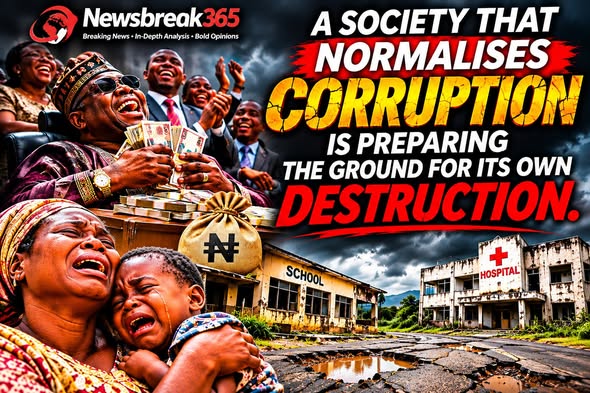
A SOCIETY THAT NORMALISES CORRUPTION IS DIGGING ITS OWN GRAVE – THE DANGEROUS PRICE OF SILENCE AND HYPOCRISY

Published

on

When corruption becomes acceptable, dishonesty becomes a virtue, criminals become heroes, and the destruction of an entire nation becomes only a matter of time.**

There is something deeply disturbing about a society where corruption is no longer considered shameful but is increasingly defended, celebrated, and rewarded.

Imagine a country where public officials steal money meant for hospitals, schools, roads, electricity, and other essential services, yet receive applause from the very people suffering from their actions.

Imagine a society where politicians who betray public trust are defended simply because they belong to a particular political party, ethnic group, religion, or region.

Even more disturbing is the mentality of citizens who condemn corruption when their opponents are involved but suddenly become silent when their political favourites are accused of the same wrongdoing.

**This is not loyalty. This is collective hypocrisy, and it is destroying the foundation of society.**

## WHEN CORRUPTION BECOMES A CULTURE, EVERYBODY PAYS THE PRICE

A nation does not collapse in a single day. Its destruction begins when people gradually lose their sense of right and wrong.

It begins when stealing public money is dismissed as normal politics.

It continues when dishonest leaders are celebrated as successful individuals.

It becomes more dangerous when young people begin to believe that hard work, education, honesty, and integrity are useless because connections, manipulation, and corruption offer faster routes to wealth.

What kind of future are we preparing for the next generation when dishonesty is rewarded while integrity is ridiculed?

A society that rewards corruption is effectively teaching its children that character does not matter, accountability is optional, and success is measured by how much wealth someone accumulates, regardless of how it was acquired.

See also  Read shocking story about Delta community where residents drink from human waste-polluted river

## THE HYPOCRISY OF THOSE WHO DEFEND CORRUPT LEADERS

One of the greatest enemies of accountability is blind loyalty.

Some people are quick to demand justice when corruption involves political opponents, but they suddenly develop selective blindness when allegations involve their preferred leaders.

They will defend the indefensible, attack anyone demanding accountability, and manufacture excuses for behaviour they would otherwise condemn.

But here is an uncomfortable reality:

**The hospital you cannot afford to access, the road that destroys your vehicle, the school that fails your children, and the opportunities your young people cannot find may all be connected to the consequences of corruption and poor governance.**

Corruption does not recognise political loyalty. Its consequences eventually reach ordinary citizens, including those who defended the people responsible.

You may defend a corrupt politician today, but you cannot guarantee that tomorrow your family will not become a victim of the broken system.

## THE RICH GET RICHER WHILE ORDINARY CITIZENS STRUGGLE

While a privileged few enjoy luxury, countless ordinary citizens struggle to afford food, decent accommodation, education, healthcare, and basic necessities.

Young graduates search endlessly for employment. Families struggle with rising living costs. Patients face inadequate healthcare facilities. Public infrastructure deteriorates.

Yet, the celebration of questionable wealth continues.

We must begin asking serious questions about a society that admires wealth without questioning integrity, celebrates political influence without demanding responsibility, and mistakes public office for a personal investment opportunity.

Having money does not automatically make someone successful. Holding political power does not make someone a great leader. And defending someone does not make their actions right.

See also  We don’t want to see you in Edo, gov’s aide warns Davido

**A society that worships wealth but ignores the suffering behind its accumulation has lost its moral compass.**

## SILENCE IS ALSO PART OF THE PROBLEM

Corruption survives not only because dishonest individuals participate in it but also because others choose to tolerate it.

Silence, indifference, tribal divisions, political manipulation, and blind loyalty create an environment where corruption can flourish.

Citizens must understand that demanding accountability is not an act of hatred. Questioning leaders is not betrayal. Criticising government policies is not disloyalty to one’s country.

In fact, refusing to question those in power is one of the most dangerous decisions a society can make.

No leader should be above accountability. No political party should be above scrutiny. No individual should be celebrated simply because they possess wealth or influence.

## A NATION CANNOT BUILD A FUTURE ON THE FOUNDATION OF CORRUPTION

The consequences of corruption extend far beyond stolen money.

It destroys public confidence, weakens institutions, discourages investment, deepens inequality, damages opportunities, and robs future generations of hope.

The greatest tragedy is that those who suffer the most are often ordinary citizens who have little or no influence over the decisions that shape their lives.

A nation cannot achieve sustainable development when honesty is punished, accountability is discouraged, and public resources are treated as private property.

If we genuinely want a better society, we must stop celebrating corruption, stop defending wrongdoing because of political affiliations, and start demanding integrity from everyone entrusted with public responsibility.

**The question is no longer whether corruption is destroying society. The real question is how long society will continue protecting the very people and practices responsible for its destruction.**

See also  Mohammed Babangida: Businessman and Son of Nigeria’s Former Military Leader

## THE BIG QUESTION: ARE WE FIGHTING CORRUPTION OR PROTECTING OUR FAVOURITE CORRUPT PEOPLE?

Let us be brutally honest.

If a politician steals public money but belongs to your preferred political party, will you condemn the wrongdoing or defend the individual?

If someone from your ethnic group abuses public office, will you demand accountability or remain silent?

If a wealthy individual cannot explain the source of their fortune, will you question it or celebrate their lifestyle?

These are uncomfortable questions, but every society must confront them.

**A society that normalises corruption is not simply tolerating dishonesty. It is preparing the ground for its own destruction.**

The future of any nation depends not only on the quality of its leaders but also on the courage of its citizens to reject wrongdoing, demand accountability, and defend the common good.

The time has come to stop worshipping individuals and start defending principles.

**Because when corruption becomes normal, destruction becomes inevitable unless society finds the courage to change.**

—

**JOIN THE CONVERSATION**

Do you believe corrupt leaders continue to thrive because citizens are too politically, ethnically, or religiously divided to hold them accountable?

Or are ordinary people equally responsible for the destruction of their society because they continue celebrating questionable wealth and defending wrongdoing?

Share your thoughts. The conversation may be uncomfortable, but silence will not solve the problem.

*Newsbreak365 – Challenging Narratives, Exposing Issues, and Encouraging Accountability.*

#StopCorruption #GoodGovernance #Accountability #PoliticalHypocrisy #NationalDevelopment #Justice #Newsbreak365

FOLLOW US ON:

FACEBOOK

WHATSAPP CHANNEL

TWITTER

PINTEREST

TIKTOK

YOUTUBE

LINKEDIN

INSTAGRAM

Continue Reading

Lifestyle

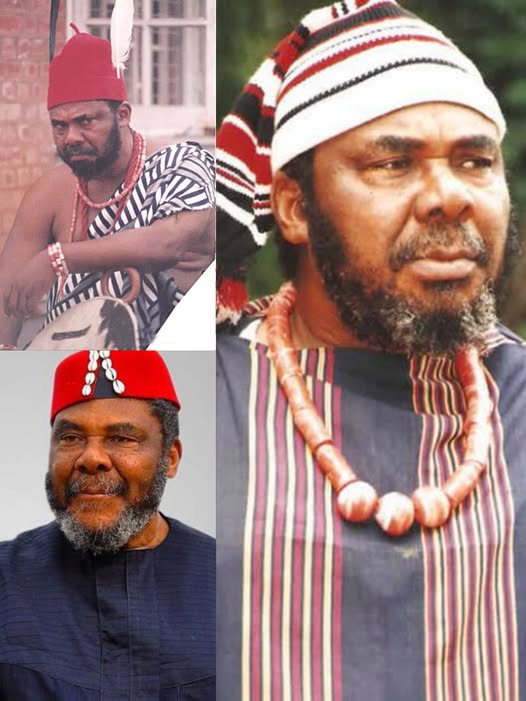
See 10 popular movies that will make you miss Pete Edochie

Published

on

For decades, veteran Nollywood actor Pete Edochie has remained one of the most recognisable faces in Nigerian cinema. His commanding voice, powerful delivery and ability to bring traditional rulers, wealthy patriarchs and influential elders to life have earned him a special place in the hearts of movie lovers.

From his iconic portrayal of Okonkwo in Things Fall Apart to his memorable appearance in Genevieve Nnaji’s Lionheart, Edochie has featured in several productions that continue to attract attention.

Here are 10 popular movies that remind viewers of the actor’s remarkable talent and screen presence.

1. Things Fall Apart (1987)

Edochie’s portrayal of Okonkwo in the Nigerian Television Authority’s adaptation of Chinua Achebe’s classic novel remains one of the defining performances of his career. His interpretation of the proud, fearless and troubled warrior helped bring the literary character to life and established him as a household name.

2. Igodo (1999)

In this classic adventure film, Edochie played an influential elder in a community facing a deadly curse. The story follows seven warriors on a dangerous mission to find a mystical weapon that could save their kingdom. His commanding presence added weight to the production.

3. Rituals (1997)

The film explored the dark side of the pursuit of wealth and political power. Edochie played Don Pedro, a member of a secret society, in a story that examined the consequences of greed, ambition and the abuse of power.

4. Billionaire’s Club (2003)

Edochie featured as Billion, a wealthy businessman involved in a secret society that uses occult practices to pursue wealth and influence. His performance reinforced his reputation for portraying powerful and influential characters.

See also  I’d rather chew grass than bite Portable — Charles Okocha

5. Lionheart (2018)

In Genevieve Nnaji’s directorial debut, Edochie played Chief Ernest Obiagu, a respected businessman and owner of Lionheart Transport Company. The film follows his daughter, Adaeze, as she takes charge of the family business when her father falls ill. It offered audiences a glimpse of Edochie in a contemporary family and business drama.

6. Across the Niger (2004)

This drama is among the titles associated with Edochie’s extensive film career. It remains one of the productions viewers can revisit when exploring the veteran actor’s body of work.

7. Narrow Escape (1999)

Edochie featured in this Nollywood production as Odumodu. The film is among his earlier works, reflecting the period when he became a familiar face in the industry’s home-video era.

8. Idemili (2014)

In this production, Edochie played an Igwe, a traditional ruler. The role drew on the authoritative and regal screen presence that has become a familiar feature of many of his performances.

9. Foreigner’s God (2019)

Edochie appeared as a storyteller in this production, which explores a colonial-era encounter between a foreign documentary photographer and a community in Igbo land. The film offered him a different role from the traditional ruler and wealthy patriarch characters for which he is widely known.

10. Unroyal (2020)

In Unroyal, Edochie played the King of Kings. The film added to his collection of productions featuring royal characters and demonstrated his continued presence in Nollywood.

Whether playing a traditional ruler, a wealthy businessman, a strict patriarch or a troubled character, Pete Edochie has consistently brought a distinctive presence to the screen. These films offer movie lovers an opportunity to revisit some of the performances that have helped make him one of Nollywood’s enduring acting figures.

See also  Mohammed Babangida: Businessman and Son of Nigeria’s Former Military Leader

Source: tribuneonlineng.com

FOLLOW US ON:

FACEBOOK

WHATSAPP CHANNEL

TWITTER

PINTEREST

TIKTOK

YOUTUBE

LINKEDIN

INSTAGRAM

Continue Reading

Trending