Connect with us

Lifestyle

Rapper Diddy hospitalised after head injury in prison — Report reveals

Published

on

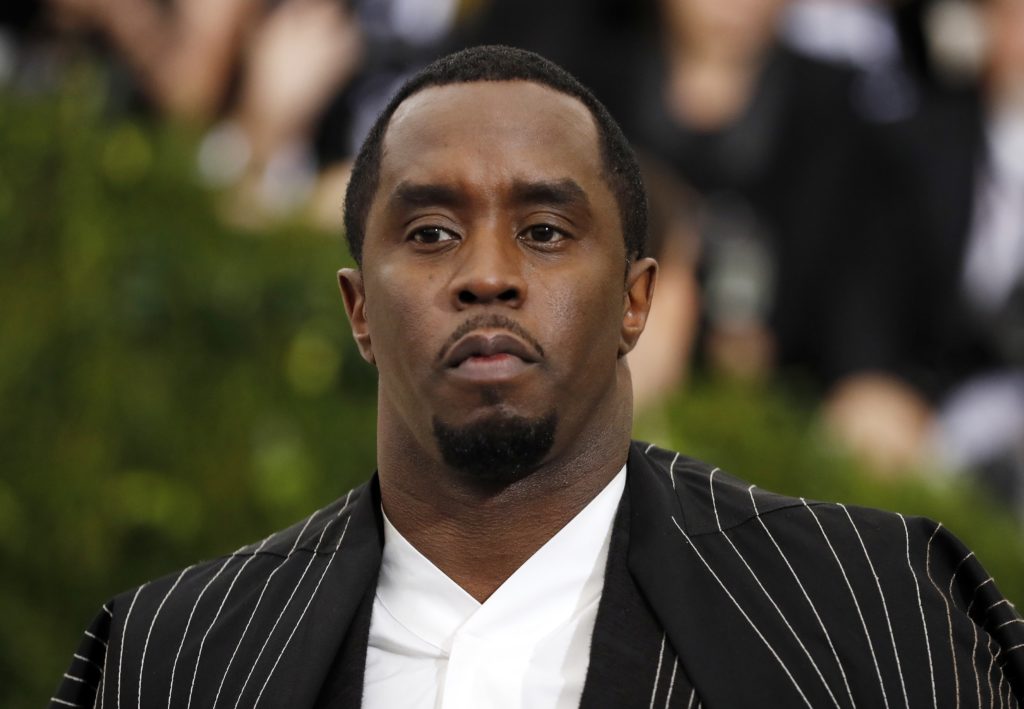
American rapper and music mogul, Sean “Diddy” Combs, has reportedly been hospitalised after sustaining a head injury while serving his prison sentence in New Jersey, United States.

The 56-year-old was taken to a hospital on Saturday, October 10, and received treatment for what was described as a non-life-threatening injury, according to the Los Angeles Times, which reported the development on Monday.

The report, citing TMZ, said Combs was conscious and speaking before his hospitalisation.

Circumstances surrounding the injury have not been officially established publicly, PUNCH Online reports on Tuesday.

A representative for Combs told the Los Angeles Times in a statement, “We are aware of the reports concerning Sean Combs and are working to confirm the circumstances.

“Sean’s health and well-being are our immediate concern, and we appreciate everyone who has reached out.”

A spokesperson for the Federal Correctional Institution Fort Dix, where Combs is serving his sentence, did not comment on the reported hospitalisation, the newspaper said.

The development comes days after Combs’ reported prison privileges attracted renewed media attention, including allegations that he received special meals and massages and had access to prohibited devices.

In a report published on October 2, the Los Angeles Times said NBC News had cited four anonymous inmates who alleged that Combs paid fellow prisoners to cook and clean for him and obtained access to a contraband mobile phone and an illegal stash of alcohol.

Combs’ representative disputed the media attention surrounding his prison conditions, telling NBC News, “The continued scrutiny of every mundane detail of Sean Combs’s life in prison has reached the point where the media characterizes ordinary prison life as news.”

See also  PHOTOS: The History of Colonial Masters in Nigeria

The representative added, “The only real news is that Sean continues to serve his sentence while awaiting the court’s decision on his appeal.”

The reports about his prison conditions were followed by a change to his projected release date.

According to the Los Angeles Times, the date was moved from January 21, 2028, to March 2, 2028, based on the Federal Bureau of Prisons’ inmate database.

Combs is serving a 50-month federal prison sentence after a jury convicted him in July 2025 on two counts of transportation to engage in prostitution.

He was acquitted of racketeering conspiracy and sex trafficking charges.

The verdict followed a high-profile trial in New York that featured testimony concerning sexual encounters involving Combs, his former girlfriend Casandra Ventura, also known as Cassie, and male sex workers.

Combs’ legal team has appealed his conviction and sentence. The appeal remained unresolved in the latest reports.

The reported hospitalisation adds another development to the legal and prison-related troubles facing the Bad Boy Records founder, whose career in music and business once made him one of the most prominent figures in American hip-hop.

Source: punchng.com

FOLLOW US ON:

FACEBOOK

TWITTER

PINTEREST

TIKTOK

YOUTUBE

LINKEDIN

INSTAGRAM

Continue Reading
Click to comment

Leave a Reply

Your email address will not be published. Required fields are marked *

Lifestyle

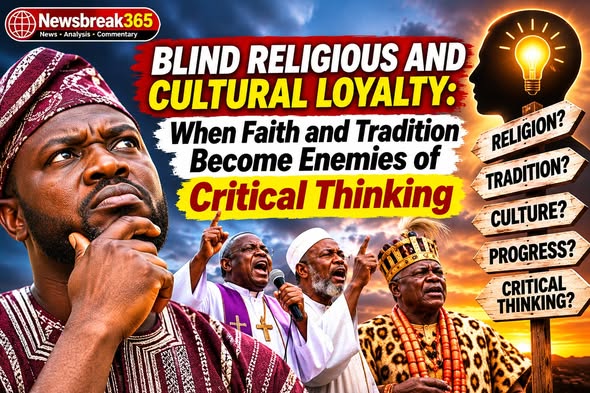
BLIND RELIGIOUS AND CULTURAL LOYALTY: WHEN FAITH AND TRADITION BECOME ENEMIES OF CRITICAL THINKING

Published

on

A society that cannot question its beliefs, challenge harmful traditions or hold its leaders accountable risks becoming a prisoner of its own inheritance.**

One of the biggest obstacles to meaningful social development is the refusal to question ideas simply because they are deeply rooted in religion, culture or ancestral traditions.

Across many African societies, religion and culture play significant roles in shaping people’s identities, values and everyday decisions. They provide a sense of belonging, community and moral guidance. However, problems arise when loyalty to these institutions becomes stronger than the commitment to truth, justice, human dignity and critical thinking.

**When questioning becomes an offence**

Consider a society where questioning a religious leader is interpreted as an attack on God, where challenging a cultural practice is considered disrespect for ancestors, and where demanding evidence is dismissed as a lack of faith.

How can such a society encourage independent thinking?

Some people defend religious leaders even when their actions contradict the very principles they preach. Others defend harmful cultural practices simply because previous generations accepted them.

The uncomfortable truth is that something does not automatically become right because it is old, popular, religiously defended or culturally accepted.

Tradition deserves examination, not automatic obedience.

**Our ancestors were human beings, not perfect authorities.**

Our ancestors made important contributions to civilisation, but they also lived with the limitations, knowledge and circumstances of their time. Every generation has a responsibility to examine inherited practices and determine which ones deserve preservation and which ones require change.

The same principle applies to religion. Religious leaders are human beings and should be accountable for their actions. Faith should not become a licence for manipulation, exploitation or unquestionable authority.

See also  Chief Nathaniel Folarin Coker (1923–2020): A Legacy of Service and Culture

Respect and accountability can exist together.

**Africa needs critical thinkers, not blind followers.**

Africa’s development requires more than religious declarations, cultural celebrations and emotional loyalty to traditional institutions.

It requires people who can ask difficult questions, examine evidence, challenge injustice, embrace education and demand accountability from those in positions of influence.

A society cannot build a strong future by treating every inherited idea as untouchable.

We must learn to separate cultural identity from harmful cultural practices, and personal faith from blind loyalty to religious authorities.

This is not an argument against religion or African culture. It is an argument against allowing any institution, belief or tradition to escape reasonable examination.

**The real question is not whether we should respect our heritage. The question is whether we have the courage to improve it.**

### THE BIG QUESTION

Can Africa achieve meaningful intellectual and social progress while millions of people continue to defend religious beliefs and cultural traditions without questioning their consequences?

Or has blind loyalty become one of the biggest enemies of critical thinking?

Perhaps it is time we stopped asking only what our ancestors believed and started asking whether those beliefs still serve humanity.

**Respect your heritage. Question your beliefs. Challenge injustice. Never surrender your ability to think.**

#Newsbreak365 #CriticalThinking #AfricanDevelopment #ReligionAndCulture #BlindLoyalty #SocialDevelopment #HumanProgress

FOLLOW US ON:

FACEBOOK

WHATSAPP CHANNEL

TWITTER

PINTEREST

TIKTOK

YOUTUBE

LINKEDIN

INSTAGRAM

Continue Reading

Lifestyle

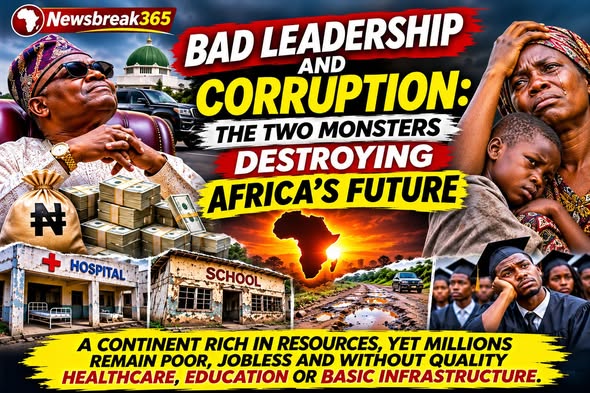
BAD LEADERSHIP AND CORRUPTION: THE TWO MONSTERS DESTROYING AFRICA’S FUTURE

Published

on

Africa is blessed with enormous natural resources, talented people and tremendous economic potential. Yet millions continue to struggle with poverty, unemployment, poor healthcare, inadequate education and failing infrastructure. What is going wrong?

Africa’s problem is not simply a lack of resources. One of its greatest challenges is the persistent combination of bad leadership, corruption, weak institutions and a lack of accountability.

For decades, citizens across the continent have listened to political promises of economic transformation, better roads, quality education, affordable healthcare and employment opportunities. Politicians campaign with attractive slogans, emotional speeches and grand development plans.

But after elections, the excitement often disappears, while ordinary citizens continue struggling with the same problems.

**THE POLITICS OF PROMISES, THE BUSINESS OF POWER**

In many African countries, public office has become associated with political privilege, personal enrichment and the accumulation of wealth rather than public service.

When public resources are mismanaged, the consequences extend far beyond government offices.

A hospital without adequate medical equipment can put lives at risk. A poorly funded school can limit the future of an entire generation. Bad roads can destroy businesses, increase transportation costs and make everyday life more difficult.

Meanwhile, unemployment leaves millions of young people frustrated, disappointed and uncertain about their future.

These are not merely economic statistics. They represent human lives, abandoned dreams and opportunities that may never return.

**CORRUPTION DOES NOT ONLY STEAL MONEY; IT STEALS THE FUTURE.**

Every public resource diverted from its intended purpose represents a lost opportunity to build a better society.

See also  Mary Slessor at Ikotobong Court, Calabar, circa 1910s.

Money meant for schools should improve education. Money allocated to hospitals should strengthen healthcare. Public infrastructure budgets should deliver infrastructure that citizens can actually use.

When corruption becomes normalised, development becomes a political slogan rather than a practical reality.

**THE MOST DANGEROUS PROBLEM: CITIZENS DEFENDING BAD LEADERSHIP**

Perhaps one of the most disturbing aspects of African politics is the willingness of some citizens to defend politicians simply because they share the same tribe, religion, political affiliation or regional identity.

A corrupt politician does not become innocent because he comes from your hometown.

An incompetent leader does not become competent because he belongs to your religion.

And stealing public resources does not become acceptable because the person responsible supports your political party.

When citizens defend wrongdoing instead of demanding accountability, they become part of the environment that allows bad governance to survive.

Political loyalty should never be more important than national development.

**AFRICA NEEDS A NEW GENERATION OF POLITICAL THINKING**

The continent does not need leaders who are simply good at making speeches. It needs leaders who understand economic development, respect public institutions, protect public resources and accept responsibility for their decisions.

It also needs citizens who understand that democracy does not end after casting a ballot.

Citizens must demand transparency, question government decisions, scrutinise public spending and hold elected officials accountable.

Development requires more than political promises. It requires competent leadership, strong institutions, independent accountability mechanisms, responsible citizenship and a commitment to the public interest.

**THE FUTURE OF AFRICA CANNOT BE BUILT ON EXCUSES.**

Foreign exploitation, historical injustices and global economic inequalities are important parts of Africa’s development challenges. However, African governments must also take responsibility for the decisions they make and the resources they control.

See also  Chief Nathaniel Folarin Coker (1923–2020): A Legacy of Service and Culture

Blaming outsiders while ignoring corruption and incompetence at home will not solve the problems facing ordinary citizens.

Africa deserves better.

Its children deserve better schools. Its citizens deserve functioning hospitals. Its young people deserve opportunities. Its workers deserve an economy that rewards their efforts.

And its taxpayers deserve leaders who understand that public money is not personal wealth.

**FINAL QUESTION:**

If a politician from your tribe, religion or political party is caught engaging in corruption, will you condemn the wrongdoing or defend the politician because of his identity?

Until citizens learn to put accountability above political loyalty, bad leadership will continue finding comfortable places to hide.

**Africa does not lack potential. What it urgently needs is leadership that turns that potential into prosperity.**

FOLLOW US ON:

FACEBOOK

WHATSAPP CHANNEL

TWITTER

PINTEREST

TIKTOK

YOUTUBE

LINKEDIN

INSTAGRAM


Continue Reading

Lifestyle

Ex-Miss Taraba Comfort Williams dies

Published

on

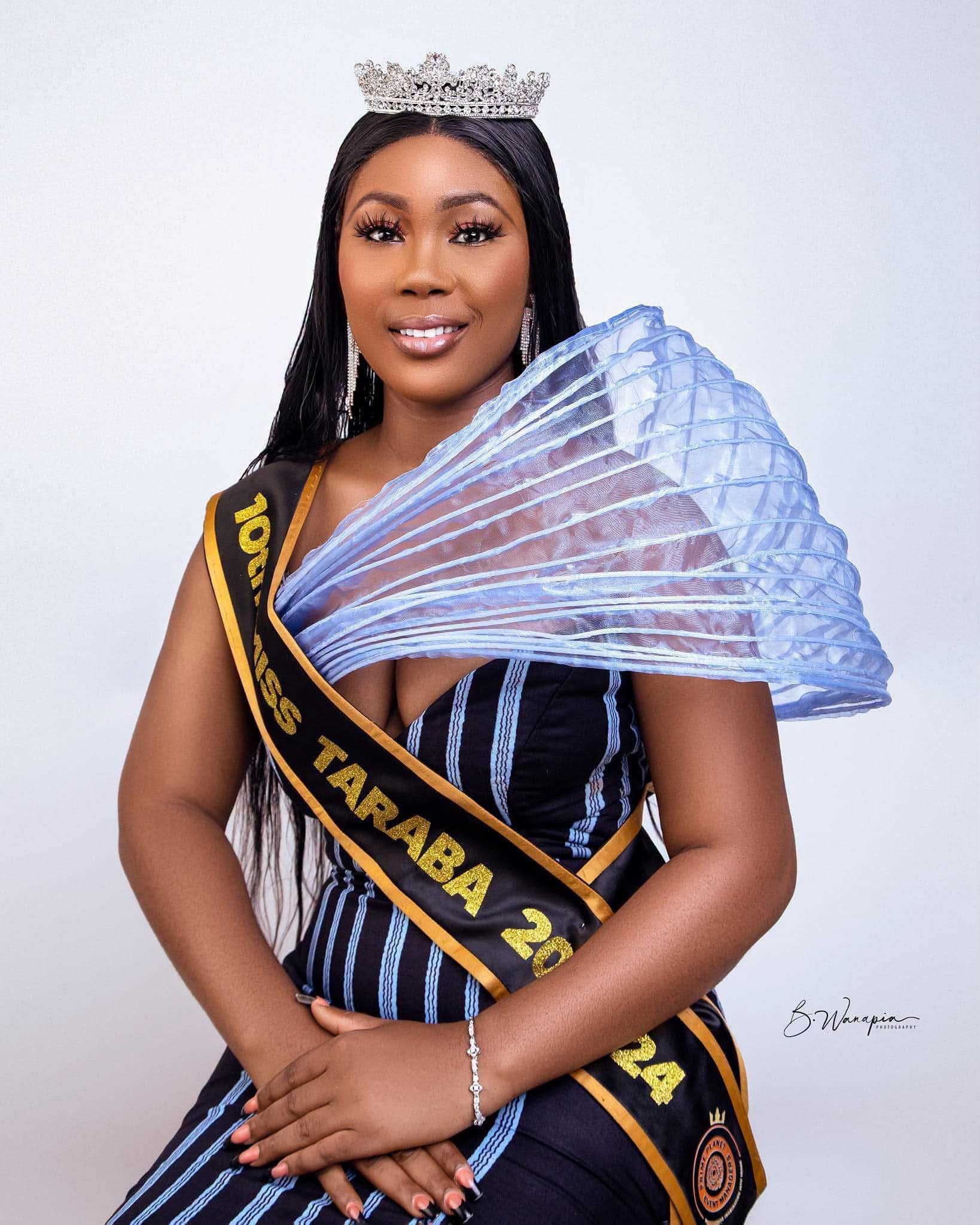
Former Miss Taraba, Comfort Williams, has died, the management of Prime Planet Event Managers has announced.

The organisation, which organises the Mr and Miss Taraba pageant, disclosed her death in a condolence statement published on Monday, describing her as a former beauty queen and its Assistant Managing Director.

“This heartbreaking loss has left us deeply devastated. She was not just a member of our organisation but an important part of the Prime Planet family whose presence, contributions, and memories will forever remain in our hearts,” the statement read.

The condolence statement was shared on Facebook by the CEO of Prime Planet Event Managers, Disebe Donga, on Monday.

Williams, who was crowned the 10th Miss Taraba in 2023, was appointed Assistant Managing Director in January 2026 when Prime Planet announced a new seven-member leadership team known as Team 7.

In the announcement, the organisation named Tabitha Adda as Managing Director, Williams as Assistant Managing Director and Leah Lot Mangbon as Head of Contestants.

Williams was the 10th Miss Taraba titleholder.

In October 2024, she joined other Taraba pageant winners on a visit to Senator Manu Haruna at the National Assembly in Abuja.

Prime Planet Event Managers, which organises the Mr and Miss Taraba pageant, described Williams as an important member of its team and extended its condolences to her family, friends and loved ones.

“You will forever remain a part of the Prime Planet family. You will be deeply missed, but never forgotten,” it said.

The organisation did not disclose the circumstances surrounding her death.

See also  Mary Slessor at Ikotobong Court, Calabar, circa 1910s.

Source: punchng.com

FOLLOW US ON:
FACEBOOK

WHATSAPP CHANNEL

TWITTER

PINTEREST

TIKTOK

YOUTUBE

LINKEDIN

INSTAGRAM

Continue Reading

Trending