News
PHOTOS: Pope Leo discharged from hospital after lung cancer surgery


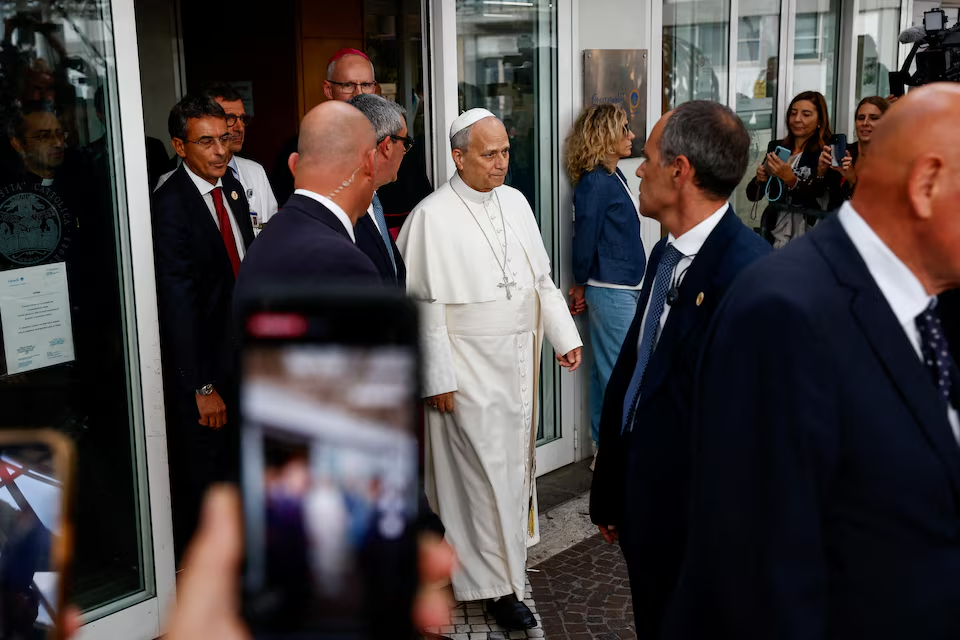
Pope Leo XIV was discharged from hospital on Saturday, four days after undergoing surgery to remove the lower lobe of his right lung following a diagnosis of lung cancer.
Reuters reported that the 71-year-old pontiff left Rome’s Gemelli Hospital on Saturday afternoon and returned to the Vatican after doctors confirmed that his condition allowed him to leave hospital.

Pope Leo discharged from hospital after lung cancer surgery | Reuters
The Pope walked unaided to his waiting car and briefly spoke to well-wishers outside the hospital, according to Reuters.
His discharge followed blood tests and chest imaging carried out earlier on Saturday. Doctors said the surgery was successful and had been completed without complications.
The operation took place on Tuesday after doctors identified a suspected cancerous nodule in his right lung. The procedure involved removing the lower lobe of the lung, and the diagnosis was confirmed as lung adenocarcinoma, the most common form of lung cancer, Reuters reported.
Pope Leo discharged from hospital after lung cancer surgery | Reuters
Meanwhile, the Vatican announced also on Saturday that the “Pope would lead the traditional Angelus prayer on Sunday from the window of the papal apartment overlooking St Peter’s Square.”
It would be his first public engagement since the surgery.
Doctors have not disclosed the size of the tumour or whether the cancer had spread to nearby lymph nodes, Reuters reported. Those details are relevant to determining the prognosis.
Leo, elected in May 2025, is the first American to lead the Roman Catholic Church.
FOLLOW US ON:

The President of the Institution of Safety Professionals of Nigeria, Timothy Iwuagwu, has called for mandatory inspection and certification of tanker trucks before they are cleared from ports, citing concerns about truck design, mechanical defects and safety compliance.
He also urged Nigerians to stay away from fallen fuel tankers and avoid scooping spilled petroleum products, warning that exposure to highly flammable materials could result in fatal explosions.
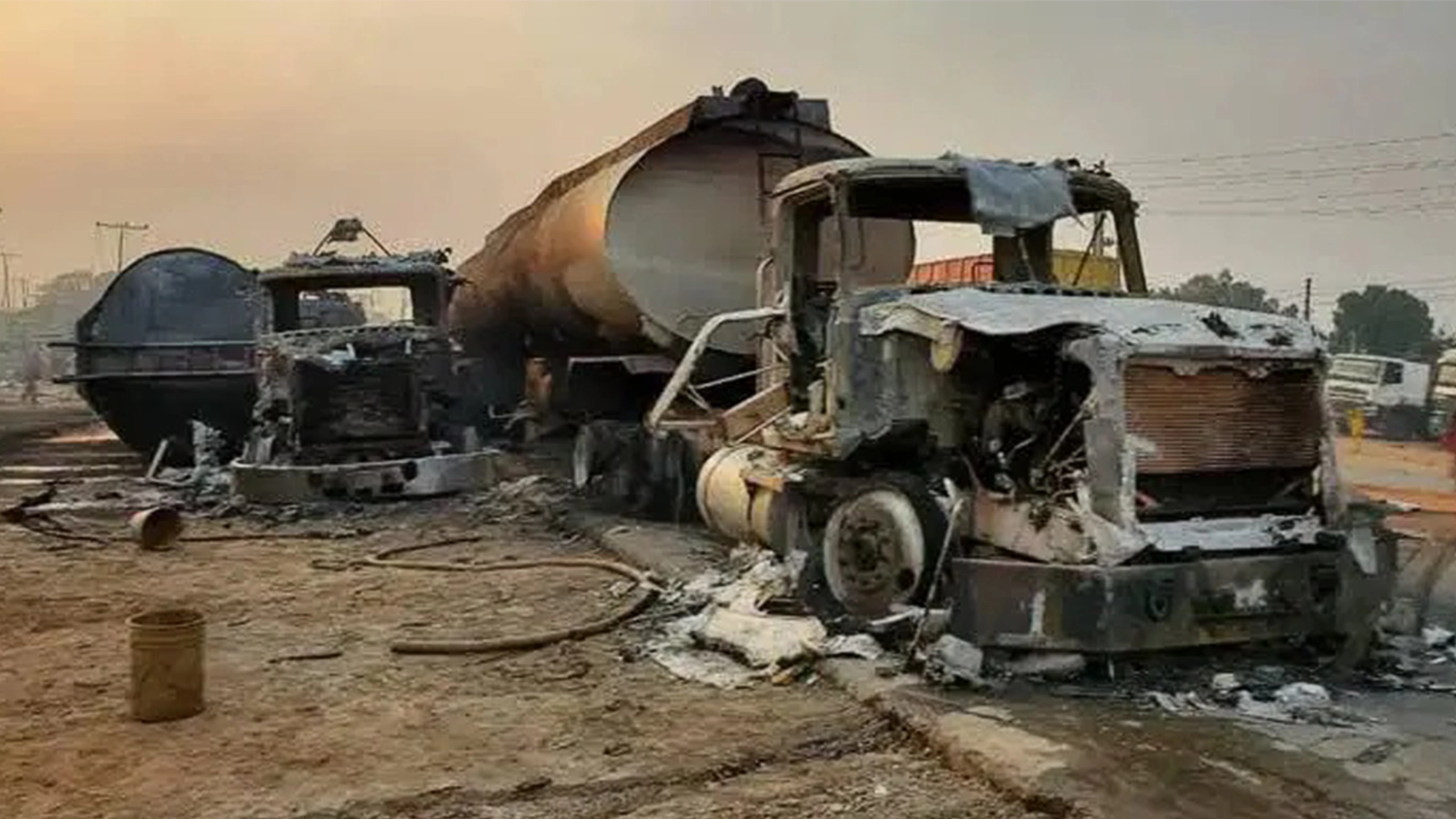
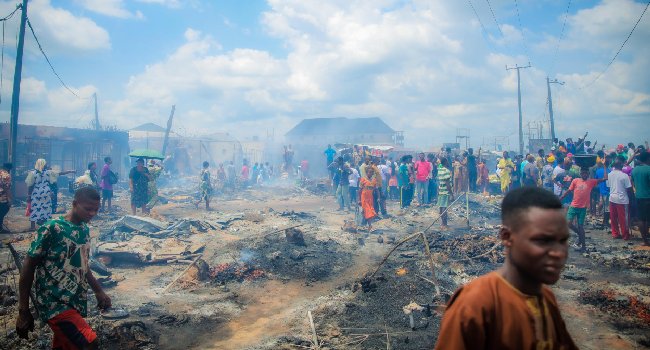
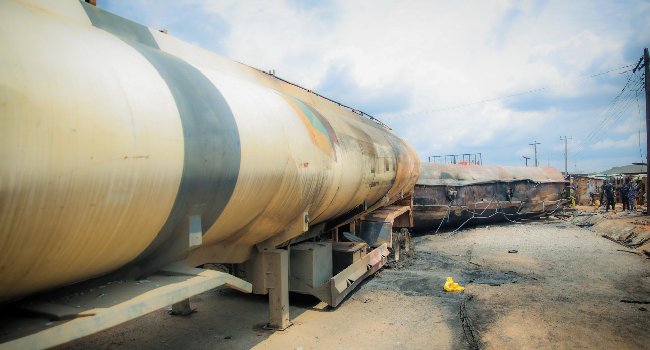
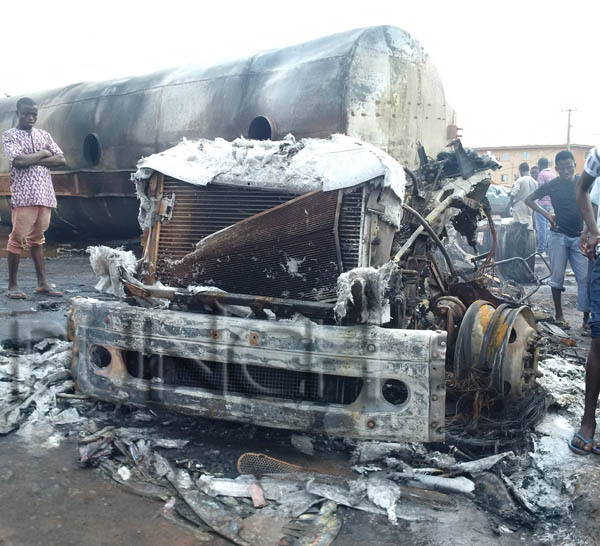
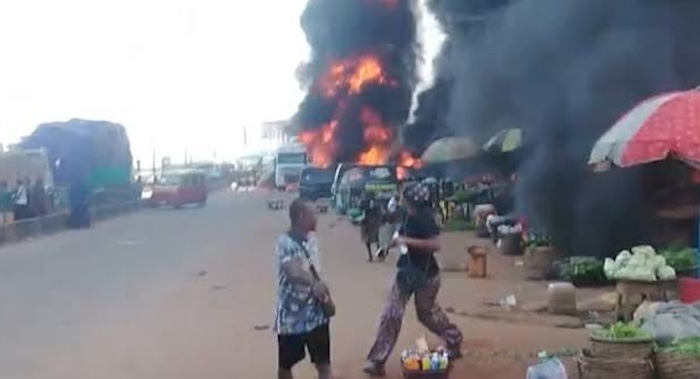
His warning comes after a tanker explosion at Oluku Market in Benin City, Edo State, left several injured and destroyed properties, including two buses, an Audi saloon car, a truck and parts of the market.
Iwuagwu revealed, “Whenever a tanker truck that is laden with volatile organic material falls, the first thing, the first reaction by people within that environment, is to keep away. Keep away from that; they are not to go closer to it.
“And we have seen situations where people are going close and they want to take from this spilled material without giving cognizance to its high-risk nature. Exposure to such could be very, very dangerous and sometimes fatal.
“So, the first thing to tell people is: keep away, keep away! And if possible, cordon that environment so that people cannot come close to it. Where it is an organic, volatile, flammable material like the premium motor spirit, we expect that the people who are around should know that an explosion could occur by just even an electrostatic source or a spark.”
Iwuagwu warned that approaching fallen tankers to scoop spilled petroleum products was particularly dangerous, urging authorities to prevent people from accessing accident scenes.
“And we have a whole lot of things happening around there. So, the first thing is, stop the people from getting close to that place. So, the issue of people going to scoop the material that has spilled is the most foolhardy of all decisions.”
He attributed tanker accidents to poor safety compliance, faulty truck design and construction, inadequate inspection, poor road conditions and defects in vehicle components, including tyres, suspension and steering systems.
“The root causes can be traced to the design, because safety and security issues must be addressed from the design and construction stages of infrastructure, equipment, and components. But I think the issue is about safety compliance.
“The design of a truck, whether it is imported from Europe or the United States or anywhere, it must be inspected. A lot of companies are even reluctant to allow safety professionals to look into some of these conveyances.
“If you look at the truck, as soon as it fell, it spilled its content. It shouldn’t be so. It is designed in such a way that the content will remain intact. So, that, I will say, is the first stage in a root cause analysis. Beyond that, we look at the nature of our roads.
“So, we look at the suspension system and the steering system. Because you are talking of vehicular equipment that is moving, it has tires that are in contact with the road surface, and this tire is just the first stage of the suspension system.
“It is supposed to help in absorbing shock and cushioning the effect of such shock on the entire truck and the head that is pulling it along. So, that is the next point to look at. If the tires are having uneven pressures, then there will be imbalance,” he stated.
On ways to prevent tanker accidents, Iwuagwu called for stricter regulatory oversight, mandatory safety inspections and certification of imported tanker trucks before customs clearance.
He stressed that vehicle inspection officers and road safety officials should pay attention to the mechanical integrity and roadworthiness of trucks, rather than focusing only on documentation.
The safety expert disclosed, “These trucks must be inspected and certified safe enough before the custom can give or get it cleared from the port from wherever it came in.
“And we look at this: up till now, we have not seriously addressed this issue of trucks of different configurations and designs coming into the country.
“And the vehicle inspection officers, the road safety officers, they have a lot of work to do. Because a vehicle that is moving on the road—there could be other problems.”
Iwuagwu also advocated the use of rail infrastructure to transport petroleum products across the country, saying it would reduce the number of fuel tankers on highways and minimise the risks associated with transporting highly flammable materials by road.
“The best way to move these things is by rail. It’s by rail. The pipeline is a good method, is the newest of the transportation systems or modes.
“Now, we move them by train, they don’t have to interface with the human environment.
“Because if you are moving these things, you must ask yourself: is there any insurance cover?
“These things are high-risk material, highly volatile, and when they leak, the vapor can attract flame from far away and bring it to the source where the leakage started. So, the railway should be the means,” he concluded.
FOLLOW US ON:
News
“Pride Is in His Blood!” — Actor Kola Olaiya Fires Back at Actor Pete Edochie Over Nollywood Seniority




PHOTOS: Expert raises fuel tanker safety concerns following explosion at Edo market

PHOTOS: NDLEA intercepts Saudi-bound cannabis in palm oil keg, ₦6.98bn tramadol

PHOTOS: Pope Leo discharged from hospital after lung cancer surgery

‘Sleeping Prince’ of Saudi Arabia dies after 20 years in coma

2027: Atiku delays ADC membership card collection amid rumoured Jonathan comeback

How A Class Of 24 Students Produced 2 Presidents, 4 Governors, 2 Ministers, 4 Emirs, 3 Justices, 4 Ambassadors and Other Influential Leaders


-

 News23 hours ago
Ofala Festival: Igwe Achebe Applauds Globacom’s Enduring Cultural Partnership (PHOTOS)
-
Crime20 hours ago
Canada Moves to Deport Nigerian Migrant Rights Activist Olukunle Adetunji Over Illegal Re-entry
-
News22 hours ago
Nigerian doctors react after TVC reporter berated healthcare workers over singer Toluwanising’s demise
-
Crime22 hours ago
PHOTOS: Enugu Community Banished Father, Daughter After Alleged Incestuous Pregnancy Scandal
-
News20 hours ago
ToluwaniSings Died of Spiritual Attack Through a Microphone on a Church Altar — Prophet Settle
-
News20 hours ago
“Pride Is in His Blood!” — Actor Kola Olaiya Fires Back at Actor Pete Edochie Over Nollywood Seniority
-
News21 hours ago
PHOTOS: Diesel Tanker Collides With 4 Vehicles Along Ibadan Expressway
-
News21 hours ago
PHOTOS: Looting, Pillaging and Attacks on Police: Protests Turn Violent Across France as Tens of Thousands Take to the Streets