Connect with us

News

Trump threats: Violent extremists, not religion, behind Nigeria’s crisis – Soyinka

Published

on

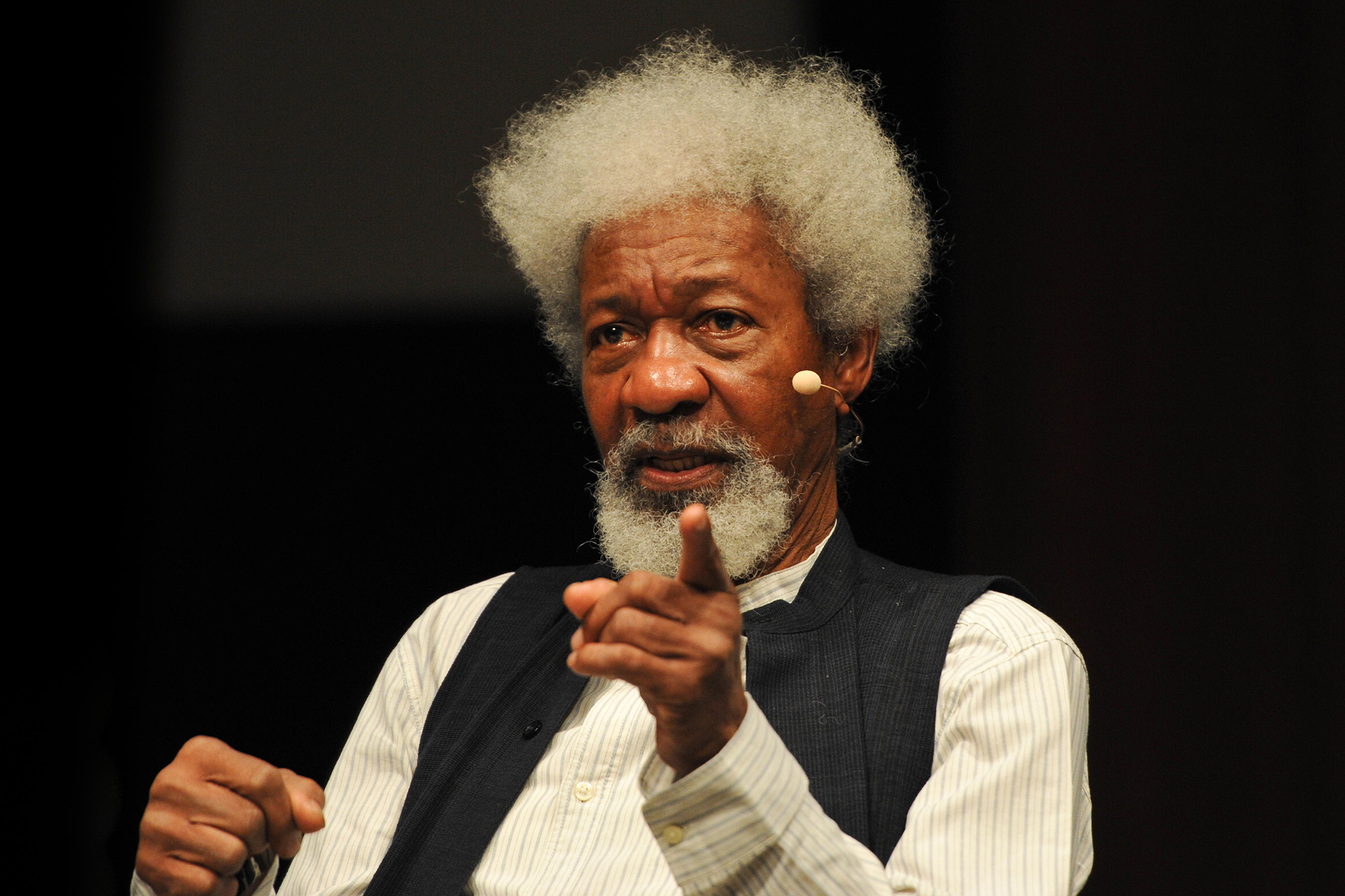
Nobel laureate, Prof. Wole Soyinka, has said Nigeria’s persistent security challenges are not rooted in religion but in the activities of violent extremists who have exploited faith for political and economic power.

Soyinka made the remarks while reacting to recent statements made by the United States President Donald Trump, who threatened military action against terror groups in Nigeria over the alleged mass killing of Christians.

In late October, Trump said he had ordered the U.S. Department of War to “prepare for possible action” in Nigeria over the alleged killing of Christians.

Soyinka, in an interview published by Democracy Day and seen by our correspondent on Monday, warned against framing Nigeria’s crises along religious lines, stressing that the issue lies instead with extremists who distort religion to justify violence and intolerance.

“We must separate the problems which Nigeria has had for decades from President Trump’s recent response,” he said, when asked for his reaction to Trump’s statement.

The literary icon explained that religious differences in Nigeria had long existed but had only escalated when certain individuals with ulterior motives mixed them with politics.

“The Christian-Islam or Islam versus the rest or even Christianity versus the rest—that kind of dichotomy has existed for quite a few decades. It escalated, (and) it can truly (be) horrendous in any aspect since politics got mixed up with religious differences. In other words, when religious differences began to be invoked as a means of political power, and even social and economic power,” Soyinka said.

He lamented a situation where religious extremists kill someone for alleged blasphemy and go scot-free.

He recalled the lynching of a student accused of blasphemy against the Prophet Muhammad, noting that her killers went unpunished despite being caught on video bragging about their actions.

In 2022, a female student of the Shehu Shagari College of Education, Sokoto State, Deborah Yakubu, was killed by some extremist Muslim students over alleged blasphemy.

See also  ‘I Underwent Throat Surgery Days After Interview With Mehdi Hasan’ – Daniel Bwala

The 200-level student was set ablaze on May 12, 2022, after she reportedly advised her classmates against posting religious content on their department’s WhatsApp group, which was created for academic purposes.

In 2023, the police said the prime suspects in the act were at large.

Referring to the incident, Soyinka said, “It is those kinds of incidents which escalate, in popular perception, that there is a brutal war going on between Christians and Muslims.”

Soyinka emphasised that Nigeria’s challenge is not Islam or Christianity, but the extremist groups who commit atrocities in the name of religion.

“Whereas in truth, we are dealing with extremists. We are dealing with political Islamists known sometimes as ISWAP across West Africa or Boko Haram within Nigeria.

“These are the real enemies of society, not Islam as such, not the followers or the Muslims as such, it’s the political Islamists, extremists, the psychopaths,” Soyinka said.

The Nobel laureate also criticised the slow response of Nigeria’s political leaders to the menace of terrorism and religious extremism, saying a lack of decisive leadership has allowed fundamentalism to thrive.

“Then you have frankly, let’s be honest, some very lackadaisical leaders (who are) in the direction of curtailing, just curbing this monstrous fundamentalism,” he stated.

Similarly, the Sultan of Sokoto, Alhaji Muhammad Sa’ad Abubakar, declared that insurgents and bandits recognise neither tribe nor religion, urging Nigerians to unite in combating the menace threatening peace across the country.

Speaking on Monday at the opening of the Arewa Media Practitioners Security Summit in Birnin Kebbi, the Sultan said, “Some people talk about Christian genocide in the North, but they forget that these criminals kill Muslims and Christians alike. Bandits know no tribe or religion — they kill everyone.”

See also  Why we halted tinted glass permit enforcement – IGP Egbetokun

The respected monarch warned against politicising insecurity or giving it ethnic colouration, stressing that only collective action can end the scourge.

Declaring the summit open, Kebbi State Governor, Nasir Idris, insisted that no part of the state is under the control of bandits or insurgents.

“There is no inch of Kebbi land under bandit occupation,” Idris said. “Our security forces have made it impossible for terrorists to take control of any town, village or local government area in the state. They only strike and retreat into neighbouring states like Zamfara.”

The governor commended President Bola Ahmed Tinubu for his moral and financial support in the fight against insecurity, saying the support has boosted the morale of security personnel nationwide.

In his keynote address, former Chief of Army Staff, Lt. Gen. Abdulrahman Dambazau (retd.), identified poverty, weak education, and lack of affordable healthcare as root causes of insecurity in northern Nigeria.

“Our leaders must go beyond summits and begin to implement practical solutions. Unless we tackle the social and economic factors driving insecurity, the problem will persist,” Dambazau said.

He also criticised the recent United States designation of Nigeria as a “country of concern,” describing it as misleading.

“Nigeria is not a country of concern, but of particular interest to the West because the North holds vast untapped mineral deposits they are eyeing,” he added.

The Arewa Media Practitioners Forum convened the summit to stimulate dialogue and chart sustainable strategies for addressing insecurity across northern Nigeria.

Also, an Egba High Chief and entrepreneur, Chief Oluyinka Kufile, on Monday, sought to allay Nigerians’ fears over the Trump’s threat to deploy military force against Nigeria, describing the development as “a storm in a teacup” that would soon fizzle out.

Kufile, Chairman of the Planning Committee for the 20th coronation anniversary of the Alake and Paramount Ruler of Egbaland, Oba Adedotun Gbadebo, made the remarks during a press conference at the Ake Palace, Abeokuta, where he unveiled activities marking the monarch’s two decades on the throne.

See also  FG moves to bridge civil-military aviation safety dichotomy after Igbokoda tragedy

He said,“There is no need for panic. Nigeria and the United States have enjoyed a long and fruitful relationship.

“Whatever concerns may have been raised are minor and will soon be resolved. It’s just a storm in the teacup that will clear off shortly.”

Kufile added that Oba Gbadebo’s 20-year reign has been defined by peace, dialogue, and development — values that align with Nigeria’s ongoing diplomatic engagement with the global community, including the US. He described the monarch as a bridge-builder whose leadership has promoted unity and goodwill beyond Egbaland.

“The Alake of Egbaland has been on the throne for 20 years and he’s still going strong. His success comes from his unwavering commitment to the Egba nation and his people.

“Baba believes in working hard, staying active, and engaging with his people — qualities that have earned him their respect and admiration. That is why Egbaland has decided to roll out the drums and celebrate 20 years of purposeful leadership by our quintessential royal father, Oba Adedotun Aremu Gbadebo’,” he noted.

Kufile announced that the week-long anniversary celebration will run from Friday, November 14 to Wednesday, November 19, 2025, featuring thanksgiving services, cultural performances, medical outreach, empowerment initiatives, and a grand civic reception in honour of the monarch.

Oba Gbadebo, a retired army colonel, ascended the throne as the 10th Alake of Egbaland on November 19, 2005 during the administration of former governor Gbenga Daniel.

Continue Reading
Click to comment

Leave a Reply

Your email address will not be published. Required fields are marked *

News

SEE FULL LIST: NJC recommends 28 candidates for judicial appointments

Published

on

The National Judicial Council (NJC) has recommended 28 candidates for appointment as judicial officers across six states, including 24 candidates for various State High Courts.

The recommendations cover the High Courts of Kano, Ebonyi, Edo, Adamawa and Ogun states, the Plateau State Sharia Court of Appeal, Adamawa State Sharia Court of Appeal and Adamawa State Customary Court of Appeal.

The Council announced the recommendations in a statement issued on Wednesday by its Deputy Director of Information, Kemi Babalola-Ogedengbe.

It said the decisions were taken at its 112th meeting held on November 3, 2026, under the chairmanship of the Chief Justice of Nigeria, Justice Kudirat Motonmori Olatokunbo Kekere-Ekun.

According to the Council, one candidate was recommended as Grand Kadi of the Plateau State Sharia Court of Appeal, while another was recommended as Kadi of the Adamawa State Sharia Court of Appeal.

Two others were recommended as judges of the Adamawa State Customary Court of Appeal.

The appointment includes “24 High Court candidates and four candidates for the Sharia and Customary Courts of Appeal.”

The full list of the 28 recommended candidates is as follows:

PLATEAU STATE SHARIA COURT OF APPEAL (GRAND KADI)

1. Tijjani Jibrin Zololo

KANO STATE HIGH COURT

2. Nafisah Yusuf Hassan
3. Halima Yahuza Ahmad
4. Abdullahi Abdulsalam Bature
5. Musa Ibrahim Umar

EBONYI STATE HIGH COURT

6. Dickson Edmund Amaga

EDO STATE HIGH COURT

7. Benson Osagie Osawaru
8. Taiye Osayanmon Omoruyi
9. Dorothy Ibhade Adamaigbo
10. Festus Osagie Usiobaifo
11. Pius Idemudia Oiwoh
12. Majebi Samuel Amune
13. Emike Jessica Imuekemhe

See also  VIDEO: Police identify officer in viral video saying Obi can never be President

ADAMAWA STATE HIGH COURT

14. Aminu Sa’ad
15. Ibrahim Ulenda Musa
16. Sadiq Giwa
17. Musa Bala Mijinyawa
18. Japhet Ibrahim
19. Aliyu Bakari
20. Yakubu Ahmadu

OGUN STATE HIGH COURT

21. Olakulehin Luqman Abiola Oke
22. Adebimpe Folusho Obienu
23. Fatimat Adeola Daudu
24. Rafiat Bolanle Kadiri
25. Oludotun Olaniyi Osho

ADAMAWA STATE SHARIA COURT OF APPEAL (KADI)

26. Abubakar Ishaku

ADAMAWA STATE CUSTOMARY COURT OF APPEAL

27. Elshama Gwama Dimas
28. David Benjamin Pembi

The NJC said all the recommended candidates were expected to be sworn in by their respective state governors without delay.

Source: punchng.com

FOLLOW US ON:

FACEBOOK

WHATSAPP CHANNEL

TWITTER

PINTEREST

TIKTOK

YOUTUBE

LINKEDIN

INSTAGRAM

Continue Reading

News

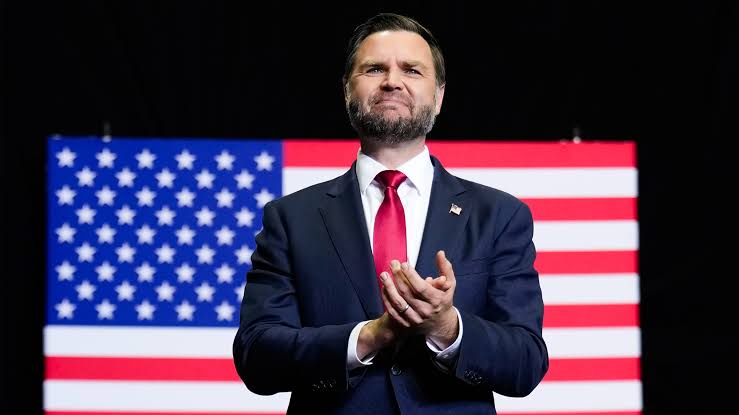
JD Vance reveals Iran war cost Republicans midterm elections, read details

Published

on

United States Vice President JD Vance has blamed the Iran war for the Republican Party’s poor performance in the 2026 midterm elections, saying many supporters of President Donald Trump switched allegiance to Democrats over dissatisfaction with the conflict.

Vance said this in a post on his X handle on Wednesday, arguing that the party’s defeat was not primarily caused by poor voter turnout but by the defection of voters who supported the Trump-Vance ticket in 2024.

He said data analysis conducted by his team before the elections had shown that Republican supporters were turning out in significant numbers, despite opinion polls predicting a major Democratic victory.

“One of the things the data analysts on our side obsessed over was ‘composition’—whether the electorate looked close enough to 2024 for Republicans to win,” he said.

Vance explained that although turnout was encouraging in several states, a member of his data team had warned him that many Republican voters were angry and might not vote for the party.

“Well, that looks prophetic now. Our voters did show up. In Florida, for example, the electorate was nine points more Republican than Democrat, just a couple points worse than 2024,” he said.

“But the main problem is not turnout. The main problem is that many people who voted for Trump/Vance in 2024 voted for Democrats in 2026.”

The Vice President acknowledged that the party might have failed to communicate its economic policies effectively, particularly on the cost of living and inflation.

However, he said the major reasons voters abandoned the Republicans were concerns about the war, economic hardship, America’s foreign policy priorities and its relationship with Israel.

See also  FG receives Benin bronzes repatriated from US

According to Vance, a pollster who accurately predicted the election outcome identified four major demands among former Republican supporters who switched to the Democrats.

The demands were to end the war, prioritise the cost of living and inflation, put America first and change the country’s relationship with Israel.

“The reason we lost is the war. The president himself said so last night,” Vance stated.

He also defended television personality Rachel Campos-Duffy, saying her earlier call for a diplomatic resolution to the conflict had proved politically sound.

Vance warned against attempts by Republican establishment figures to attribute the party’s electoral setback to other issues, particularly immigration policy.

He said he was open to reviewing immigration enforcement strategies, including targeting businesses that employ undocumented workers, but rejected calls for amnesty.

“Anyone pushing amnesty is lying to you,” he said.

The Vice President challenged those who believed the war was worth the political cost to defend that position openly, noting that the defeat could cost Republicans control of the Senate for the next six years.

“If you’d like to argue it was worth it, that losing the Senate for the next six years was worth it, then do so. Argue it was a worthwhile cost to pay,” he said.

“Agree or disagree, that’s at least honest.”

Despite the setback, Vance expressed optimism about the country’s future, urging disappointed Republican supporters to channel their anger into rebuilding the party and electing candidates who share their political views.

“Let’s take that anger and get back to the work of saving our country,” he added.

See also  FG to decriminalise attempted suicide in December

Source: punchng.com

FOLLOW US ON:

FACEBOOK

WHATSAPP CHANNEL

TWITTER

PINTEREST

TIKTOK

YOUTUBE

LINKEDIN

INSTAGRAM

Continue Reading

News

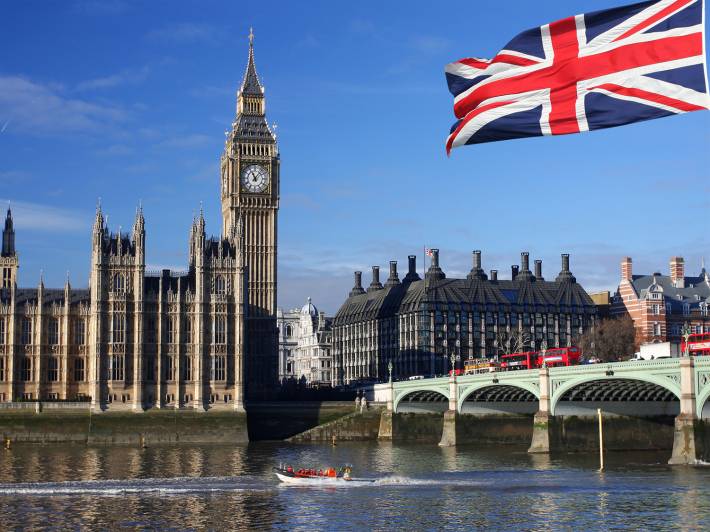
UK to strengthen immigration enforcement with facial recognition

Published

on

The United Kingdom government plans to expand live facial recognition technology to strengthen immigration enforcement and identify individuals who have violated immigration rules.

The initiative, being developed by the Home Office, could see facial recognition cameras deployed at transport hubs and public events to help immigration officers identify people who have overstayed their visas, entered the country unlawfully or breached their immigration conditions.

According to policy documents published in October and sighted by PUNCH Online on Thursday, the proposed expansion could extend the technology’s use to general immigration enforcement, including civil immigration violations that do not necessarily involve criminal offences.

The development comes as Home Secretary Shabana Mahmood seeks to intensify immigration enforcement through increased funding, additional personnel and expanded deportation operations.

The Home Office said the technology would help officers identify individuals subject to removal proceedings and those attempting to re-enter the UK unlawfully.

The policy documents also suggest that facial recognition could reduce the need for repeated enforcement visits to residential properties and workplaces.

Authorities have already conducted three trials of the technology at Holyhead port in north Wales between November 2025 and February 2026. The trials focused on identifying individuals travelling from Ireland who were subject to deportation orders or wanted over immigration-related criminal offences.

The programme has now entered its formal delivery phase, with officials considering wider deployments at transport hubs and large public gatherings.

A Home Office spokesperson confirmed that further trials were being considered while the government examined the potential benefits and implications of the technology.

See also  FG to decriminalise attempted suicide in December

U K Home Secretary, Shabana Mahmood, said: “Facial recognition technology has been the biggest breakthrough for catching criminals since DNA matching, already helping police take thousands of dangerous criminals off our streets.

“The benefits are clear, but we must ensure that its use is fair, safe and proportionate.

“It is right we put in place clear laws to ensure that the use of this technology is watertight, so the public can have confidence that these tools, which are vital to our safety, are used responsibly too.”

However, the proposed expansion has raised concerns among civil liberties organisations and migrant rights advocates over privacy, surveillance and the possibility of inaccurate identification.

The Joint Council for the Welfare of Immigrants described the development as a significant escalation of immigration enforcement powers, while the Open Rights Group questioned the transparency of the plans, public consent and the absence of comprehensive legislation governing facial recognition.

Critics have also warned that the technology could disproportionately affect people of colour because of concerns about identification accuracy.

Meanwhile, Biometrics and Surveillance Camera Commissioner William Webster has questioned whether existing regulatory arrangements are sufficient to oversee the expanding use of facial recognition across government agencies.

Under the proposed policy, individuals under 18 will not be included on facial recognition watchlists.

Source: punchng.com

FOLLOW US ON:

FACEBOOK

WHATSAPP CHANNEL

TWITTER

PINTEREST

TIKTOK

YOUTUBE

LINKEDIN

INSTAGRAM

Continue Reading

Trending