Connect with us

Lifestyle

Bad News Spreads Like Wildfire: Why Are People More Interested in Other People’s Misfortunes Than Their Success?

Published

on

From shocking rumours and public scandals to personal failures and disgrace, negative stories often attract more attention than positive achievements. Why does bad news travel so quickly while good news struggles to receive recognition?**

There is something deeply troubling about human behaviour: bad news seems to have wings, while good news sometimes struggles to walk.

A rumour about someone’s marriage, a scandal involving a public figure, a business failure, a family disagreement or someone’s personal misfortune can spread through an entire community before the people involved even have the opportunity to explain themselves.

One person hears it, another adds a little more drama, and before long, the original story has been transformed into something completely different.

But let someone build a successful business, buy a house, secure a promotion, graduate from university or achieve something extraordinary, and the reaction can be surprisingly different.

The same people who were eager to spread negative stories may suddenly become silent.

**Why is someone’s downfall more entertaining to some people than another person’s breakthrough?**

## The Addiction to Gossip and Other People’s Misfortunes

Gossip has become a powerful social currency. In some communities, knowing the latest scandal makes people feel important. Being the first to reveal someone’s private business can make an individual feel influential.

Unfortunately, not everyone spreading information is interested in establishing the truth.

Some people exaggerate stories, others deliberately twist facts, while some simply repeat whatever they hear without considering the damage their words could cause.

A person’s reputation can be destroyed by a story that has never been properly investigated.

See also  Queen Amina of Zazzau: The Warrior Queen Who Ruled the Sahel

And when the truth finally emerges, the correction rarely travels as far as the original accusation.

## Why Do People Struggle to Celebrate Other People’s Success?

Success can sometimes expose jealousy, insecurity and unhealthy competition.

When someone rises above their previous circumstances, not everybody will celebrate that progress.

Some may question how the person made their money. Others may dismiss their achievements, search for mistakes in their past or invent reasons why they do not deserve their success.

Instead of asking how they can learn from that person’s journey, they become more interested in finding something negative to say.

This is one of the unfortunate realities of social relationships: not everyone who smiles when you are struggling will be equally happy when you succeed.

## Social Media Has Turned Negativity into Entertainment

Social media has made information travel faster than ever before.

A controversial video, shocking allegation or embarrassing incident can attract thousands of reactions within hours.

Algorithms often amplify content that generates strong engagement, including anger, outrage and controversy.

Meanwhile, stories about kindness, community development, educational achievements and personal victories may receive considerably less attention.

The result is an environment where controversy can become more profitable than constructive conversation.

People are increasingly encouraged to react before thinking, share before verifying and condemn before understanding.

## The Damage Caused by Spreading Bad News

The consequences are not always harmless.

A false rumour can destroy friendships, damage marriages, ruin business relationships and permanently affect someone’s reputation.

Families can become divided. Communities can become suspicious of one another. People can lose opportunities because of accusations that were never proven.

See also  THE EVIL THAT MEN DO LIVES WITH AND AFTER THEM

And sometimes, those responsible for spreading the information move on to the next scandal without ever considering the damage they have caused.

We must begin to understand that sharing information is not always an innocent activity. Sometimes, it is participation in somebody else’s suffering.

## What Kind of Society Are We Building?

A healthy society should be interested in truth, progress, education, innovation, kindness and achievement.

We should be just as eager to share stories about people creating employment, helping the less privileged, building successful businesses, supporting their communities and overcoming difficult circumstances.

There is nothing wrong with discussing genuine wrongdoing or holding people accountable. However, accountability is different from malicious gossip, character assassination and celebrating another person’s suffering.

We must learn to distinguish between public interest and the desire to entertain ourselves with other people’s problems.

## The Final Question: Why Do We Celebrate Failure More Than Success?

Perhaps the biggest problem is not simply that bad news spreads quickly. It is that too many people have become comfortable participating in the spread of negativity.

Before forwarding a rumour, ask whether it is true.

Before laughing at someone’s downfall, remember that life can change unexpectedly.

Before dismissing someone’s achievement, consider the sacrifices behind it.

And before spreading another person’s disgrace, ask yourself whether you would appreciate the same treatment.

**A society that gives more attention to scandals than achievements, more publicity to rumours than truth, and more applause to failure than progress must seriously examine its values.**

The world does not need more people spreading misery. It needs more people celebrating genuine progress and standing up for the truth.

See also  Colonial Administrative Blocks in Benin City 1905: A Glimpse into Nigeria’s Colonial Past

—

### LET’S HEAR YOUR VOICE

Why do you think bad news spreads faster than good news?

1. Are people naturally attracted to gossip and controversy?
2. Is jealousy responsible for the reluctance to celebrate other people’s success?
3. Have social media platforms made society more interested in negativity?
4. Or is the problem a reflection of our declining values and moral standards?

**Join the conversation. Your opinion matters.**

*Newsbreak365 — Bringing Society, People and Issues into Focus.*

FOLLOW US ON:

FACEBOOK

WHATSAPP CHANNEL

TWITTER

PINTEREST

TIKTOK

YOUTUBE

LINKEDIN

INSTAGRAM

Continue Reading
Click to comment

Leave a Reply

Your email address will not be published. Required fields are marked *

Lifestyle

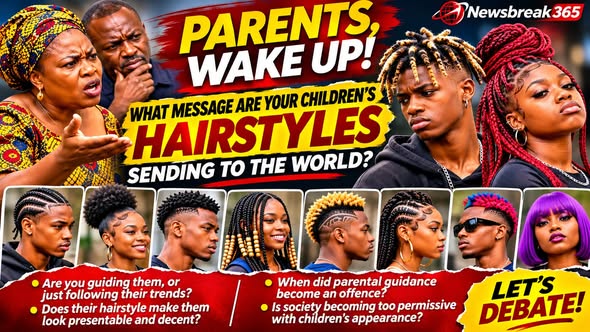
PARENTS, WAKE UP! WHAT MESSAGE ARE YOUR CHILDREN’S HAIRSTYLES SENDING TO THE WORLD

Published

on

Are today’s parents losing control over how their children dress, groom themselves and present their appearance? Or has society simply become too sensitive to correct young people?**

This is a conversation every responsible parent should be willing to have.

Walk through schools, shopping centres and public spaces today, and you will notice how dramatically youth hairstyles have changed. From brightly coloured dreadlocks and unusual haircuts to heavily styled braids, extreme designs, dramatic extensions and unconventional hairstyles, young people are increasingly embracing fashion trends that attract attention.

But here is the uncomfortable question: **Are parents paying attention to the kind of appearance their children are developing, or are they simply allowing social media and peer pressure to make those decisions?**

There is nothing wrong with looking fashionable, embracing creativity or expressing personal identity. However, there is a difference between looking fashionable and understanding how to maintain a neat, appropriate and presentable appearance.

Unfortunately, some parents are so afraid of disagreeing with their children that they have abandoned their responsibility to guide them.

When did parental guidance become an offence?

When did correcting a child’s appearance become an act of oppression?

And when did following every fashion trend become more important than learning self-discipline, personal grooming and appropriate presentation?

**PARENTS, YOUR RESPONSIBILITY DOES NOT END WITH PROVIDING FOOD, CLOTHING AND SCHOOL FEES.**

You must also teach your children how to make sensible decisions, respect themselves and understand that not every popular trend deserves to be followed.

Children need guidance, not unlimited permission. They need parents who can explain the importance of personal presentation without humiliating them or destroying their confidence.

See also  Newlywed pastor steps back from ministry after apologising over past affairs

At the same time, parents must understand that a person’s character cannot be judged by hairstyle alone. Neatness, good behaviour, responsibility and respect matter far more than fashion choices.

The real issue is not whether children should look like their parents’ generation. It is whether parents are actively teaching them the importance of grooming, good judgement and responsibility.

**THE BIG QUESTION FOR PARENTS AND SOCIETY**

Should parents have the final say over the hairstyles of their teenage sons and daughters?

Should children be free to choose any hairstyle they want, even when their parents strongly disagree?

Or are some parents allowing modern fashion trends to replace proper parental guidance?

This debate deserves honest answers, not emotional arguments.

**What do you think? Are today’s parents becoming too permissive, or should children have complete freedom over their hairstyles?**

Share your opinion. Your answer might challenge another parent’s way of thinking.

FOLLOW US ON:

FACEBOOK

WHATSAPP CHANNEL

TWITTER

PINTEREST

TIKTOK

YOUTUBE

LINKEDIN

INSTAGRAM

Continue Reading

Lifestyle

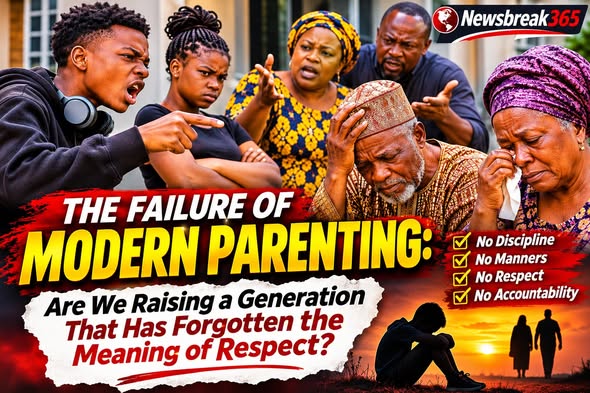
THE FAILURE OF MODERN PARENTING: ARE WE RAISING A GENERATION THAT HAS FORGOTTEN THE MEANING OF RESPECT

Published

on

When children lose their manners, disrespect their elders, reject discipline, and behave without accountability, parents must ask themselves a difficult question: Where did we go wrong?**

One of the most worrying developments in today’s society is the apparent decline in parental discipline, moral upbringing, and respect for elders among some young people.

Sadly, some parents are becoming more interested in defending their children’s unacceptable behaviour than correcting it. A child insults an elderly person, speaks rudely to adults, behaves arrogantly, or shows complete disregard for basic manners, and instead of receiving correction, the child receives protection from the very people responsible for teaching them right from wrong.

Is this the future we want for our society?

## Providing for children is not the same as raising them properly

Many parents believe that their responsibilities end with providing food, clothing, school fees, smartphones, expensive gadgets, and comfortable living conditions.

But parenting goes far beyond material provision.

A child needs more than an education to succeed in life. Children must also learn honesty, humility, self-control, patience, respect, responsibility, and consideration for other people.

You can send a child to the most expensive school in the world, but if that child has no respect for others, lacks discipline, and cannot behave properly in society, then something important is missing from their upbringing.

Academic qualifications cannot replace good character.

## When parents defend bad behaviour, they become part of the problem

Perhaps one of the biggest mistakes some parents make today is refusing to accept that their children can be wrong.

See also  Queen Amina of Zazzau: The Warrior Queen Who Ruled the Sahel

Instead of correcting disrespectful behaviour, they make excuses. Instead of teaching accountability, they blame teachers, neighbours, relatives, and society.

Some parents even become hostile towards anyone who attempts to correct their children.

What message does this send to the child?

It teaches them that they can behave however they want without consequences, provided their parents are willing to defend them.

A parent who constantly protects a child from correction may unknowingly be preparing that child for much bigger problems in adulthood.

Children need love, but love without guidance, boundaries, and accountability is not responsible parenting.

## Respecting elders should not become an outdated tradition

There was a time when children were taught to greet elders properly, speak politely, listen when adults were speaking, and understand the importance of good manners.

Today, these values appear to be receiving less attention in some homes.

Of course, respect must be mutual. Being older does not give anyone the right to abuse, intimidate, or mistreat younger people.

However, mutual respect should never become an excuse for children to insult, humiliate, or deliberately disrespect others.

Teaching children to respect people is not weakness. It is an essential part of preparing them for responsible adulthood.

## Society will eventually pay the price for irresponsible parenting

The children being raised today will become tomorrow’s parents, leaders, employers, professionals, and decision-makers.

If they grow up without discipline, accountability, compassion, and respect for others, what kind of society should we expect them to build?

We cannot continuously complain about disrespectful behaviour in society while ignoring the importance of moral education at home.

See also  ONE DAY, WORMS WILL NOT CARE HOW MUCH MONEY YOU HAD, AND THE GRAVE WILL NOT CARE HOW POWERFUL YOU WERE!

Parents must understand that raising children is not a competition to see who can provide the most expensive lifestyle. It is a responsibility to raise decent human beings who understand the difference between right and wrong.

## THE BIG QUESTION: ARE WE RAISING CHILDREN OR CREATING TOMORROW’S PROBLEMS?

Parents must stop confusing material provision with proper upbringing.

Buy your children the best clothes, give them quality education, provide comfortable homes, and support their dreams. But never forget to teach them discipline, humility, good manners, honesty, and respect.

A child who has everything materially but lacks good character has not received everything they need from their parents.

The uncomfortable truth is that society cannot successfully repair what irresponsible parenting continues to destroy.

The responsibility begins at home.

**WHAT IS YOUR OPINION?**

Are parents becoming too protective of their children, even when those children display unacceptable behaviour? Or is society itself contributing to the decline in discipline and respect among young people?

Let’s have an honest discussion.

*Newsbreak365 – Speaking Up on Issues That Matter.*

FOLLOW US ON:

FACEBOOK

WHATSAPP CHANNEL

TWITTER

PINTEREST

TIKTOK

YOUTUBE

LINKEDIN

INSTAGRAM

Continue Reading

Lifestyle

THE HYPOCRISY OF THOSE WHO DEFEND CORRUPT LEADERS: WHEN POLITICAL LOYALTY BECOMES MORE IMPORTANT THAN NATIONAL SURVIVAL

Published

on

A nation does not suffer from corrupt leadership alone; it also suffers from citizens who knowingly defend corruption, manufacture excuses for dishonesty and attack anyone brave enough to demand accountability.**

There is a disturbing sickness spreading through societies where political loyalty has become more important than honesty, justice and the collective well-being of the people. It is the dangerous culture of defending corrupt leaders simply because they belong to one’s political party, ethnic group, religious circle or personal network.

Today, some people have abandoned their conscience at the altar of political loyalty. They see wrongdoing but refuse to acknowledge it. They witness public resources being mismanaged, institutions collapsing and ordinary citizens struggling to survive, yet they will passionately defend those responsible for the suffering.

The question is: **At what point did defending a politician become more important than defending the future of an entire nation?**

## When Corruption Becomes Acceptable Because It Comes From Your Favourite Leader

One of the greatest enemies of good governance is selective outrage.

When an opposing politician is accused of corruption, supporters demand investigations, punishment and accountability. But when their preferred politician faces similar allegations, the same people suddenly become lawyers, public relations officers and professional excuse manufacturers.

Yesterday, they condemned corruption. Today, they are explaining why corruption is acceptable when committed by their political hero.

What changed? Did corruption suddenly become legitimate, or did their personal interests become more important than their principles?

This double standard is not political loyalty. It is hypocrisy.

## The Citizen Who Defends Corruption Is Part of the Problem

Let us confront an uncomfortable truth: corrupt leaders do not operate in isolation. They often survive because people create an environment where questioning them becomes unacceptable.

See also  Queen Amina of Zazzau: The Warrior Queen Who Ruled the Sahel

Some supporters attack journalists, silence critics, spread propaganda and insult citizens who demand transparency. They defend the indefensible while pretending to be patriotic.

They forget that public money belongs to the people, not to politicians. Government positions are responsibilities, not personal inheritance. Political office is a public trust, not a licence to enrich oneself.

When citizens abandon accountability, leaders become increasingly comfortable with impunity.

**A society that rewards dishonesty should not be surprised when dishonesty becomes its national culture.**

## Your Politician Will Not Pay the Price for Your Blind Loyalty

Here is another uncomfortable reality: the politicians you defend may never experience the suffering you endure.

They may have access to quality hospitals, private schools, secure neighbourhoods, expensive vehicles and comfortable lifestyles. Meanwhile, ordinary citizens struggle with unemployment, insecurity, poor infrastructure, rising living costs and failing public services.

When their children need education, they can afford the best institutions. When they need medical attention, they can seek treatment wherever they choose.

But what happens to the children of ordinary citizens?

Who speaks for the struggling families? Who answers for the abandoned hospitals? Who takes responsibility for the unemployed graduates?

And yet, some citizens will fight their fellow citizens on behalf of politicians who may not even know they exist.

**You are fighting your neighbour to protect a politician who will never fight for you.**

## Tribalism, Religion and Party Politics: The Weapons Used to Protect Failure

One of the most dangerous strategies used to escape accountability is turning legitimate criticism into an ethnic, religious or political battle.

Instead of answering questions about public performance, some supporters accuse critics of hating their tribe, religion or political party.

See also  THE EVIL THAT MEN DO LIVES WITH AND AFTER THEM

This is a deliberate distraction from the real issues.

Corruption has no tribe. Poverty has no political party. Bad hospitals do not discriminate between religions. Unemployment does not ask which candidate you voted for.

A failed public institution affects everyone.

If a leader is performing well, defend the achievements with evidence. If a leader is failing, demand improvement. If credible evidence of corruption emerges, demand a fair and transparent investigation.

Patriotism should never require citizens to abandon their intelligence.

## The Future of the Next Generation Is at Stake

Perhaps the most painful consequence of defending corrupt leadership is the damage inflicted on future generations.

Children are growing up in societies where dishonesty is sometimes rewarded, accountability is treated as an insult and political connections appear more valuable than competence.

What kind of future are we preparing for them?

Are we teaching the next generation that integrity matters, or are we teaching them that success means having the right connections and defending the right powerful people?

A nation cannot build a prosperous future on a foundation of dishonesty, excuses and blind loyalty.

The children of today will inherit the institutions, opportunities and consequences of the decisions made by today’s leaders and citizens.

## Stop Worshipping Politicians. Start Demanding Accountability.

Politicians are not gods. They are public servants entrusted with responsibilities on behalf of the people.

They should be questioned, scrutinised and held accountable regardless of their political affiliation.

You can support a political party without defending every action of its members. You can appreciate a leader’s achievements while criticising their failures. You can disagree with the opposition without becoming blind to wrongdoing within your own camp.

That is what responsible citizenship looks like.

See also  People Who Abandon Their Heritage Do So At Their Own Peril – Gani Adams Warns

The greatest demonstration of loyalty to a country is not defending every politician who claims to represent you. It is demanding that everyone entrusted with public responsibility acts in the interest of the people.

## FINAL THOUGHT: WHO IS REALLY DESTROYING THE NATION?

Corrupt leaders deserve accountability, but citizens who knowingly protect corruption must also examine their conscience.

The tragedy is not simply that dishonest politicians exist. It is that some ordinary people have become their most aggressive defenders, sacrificing truth, justice and national interest for temporary political satisfaction.

When your favourite politician is wrong, say so.

When public money is misused, demand answers.

When institutions fail, demand reform.

When credible allegations emerge, demand impartial investigations.

Never allow political loyalty to turn you into an enemy of your own future.

**A politician may win an election, but that does not give them ownership of your conscience.**

**Remember: A nation is not destroyed only by those who steal public resources. It is also weakened by those who see the theft, know the truth and choose to defend it.**

—

### THE BIG QUESTION: LET’S DEBATE!

If a politician from your preferred political party is caught engaging in corruption, will you condemn that politician or defend them because they belong to your side?

Is blind political loyalty one of the biggest obstacles to good governance?

Share your opinion. We need an honest national conversation, not another competition over who can defend their favourite politician the loudest.

**Your country deserves your conscience, not your blind loyalty.**

*#PoliticalHypocrisy #EndCorruption #Accountability #GoodGovernance #PoliticalLeadership #NationalDevelopment #Newsbreak365*

FOLLOW US ON:

FACEBOOK

WHATSAPP CHANNEL

TWITTER

PINTEREST

TIKTOK

YOUTUBE

LINKEDIN

INSTAGRAM

Continue Reading

Trending