Connect with us

News

Sunday Igboho demands FG action as gunmen kill farmers in hometown

Published

on

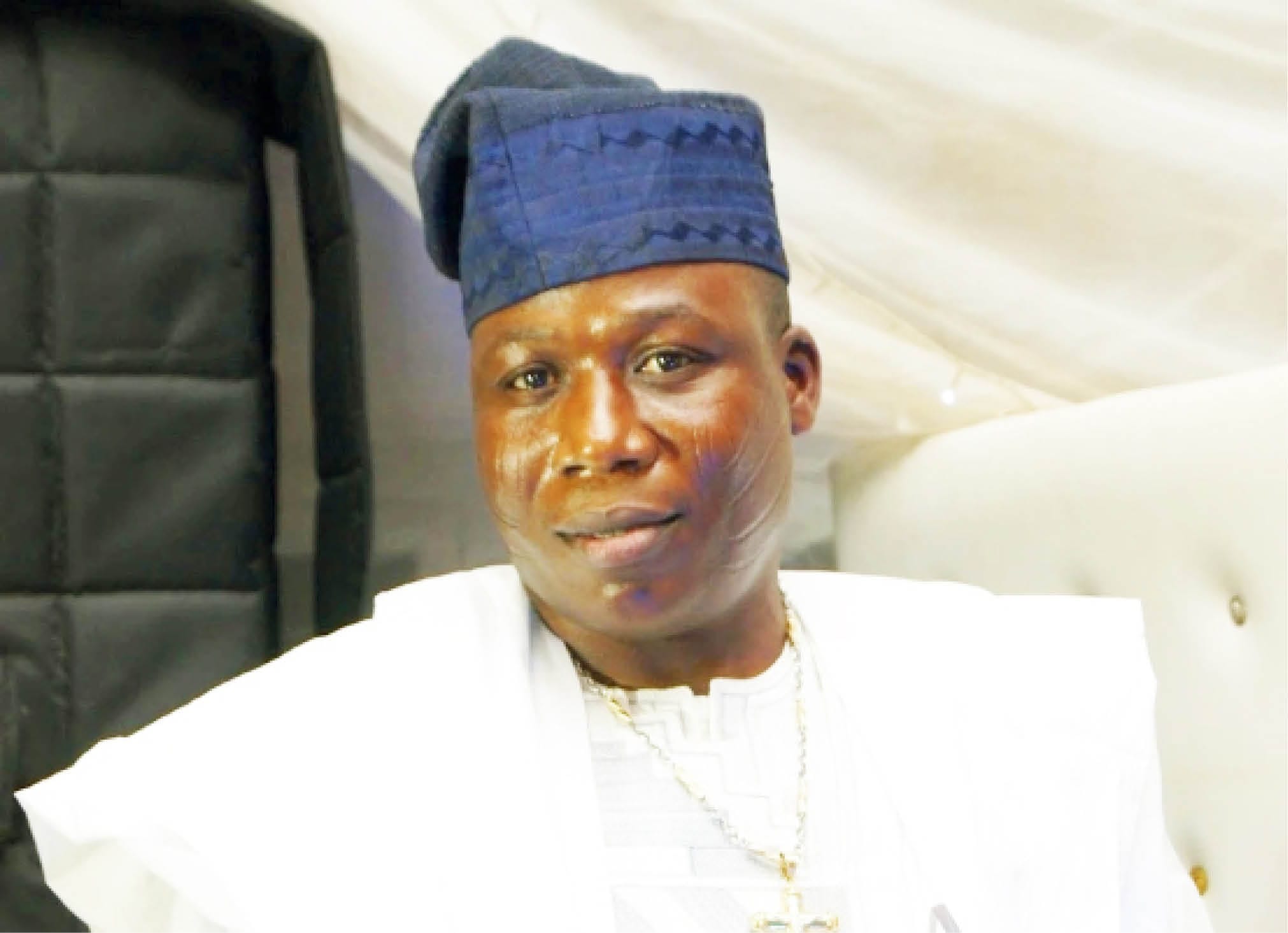
Yoruba nation activist, Sunday Adeyemo, popularly known as Sunday Igboho, on Monday raised the alarm over the killing of three farmers during a fresh attack by  gunmen in Igboho, his hometown in Orelope Local Government Area of Oyo State.

Adeyemo, in a statement issued in Ibadan, called on President Bola Tinubu and the Federal Government to urgently address the growing insecurity in rural communities across Oyo State and other parts of the South-West to avert further violence and chaos.

According to a statement authorised by Adeyemo, the victims were identified as Aderoju Mukaila, Olawuwo Saka and Ojeniyi Ojebayo.

“Though the victims were rushed to a hospital after the attack, they later succumbed to their injuries despite efforts by medical personnel to save their lives,” the statement said.

Igboho lamented what he described as the government’s failure to respond decisively to repeated warnings about rising insecurity in the area.

“On Sunday, three innocent people were killed in my town, Igboho. This is exactly what I have been warning the government about for years. Nothing has changed, and our people continue to suffer attacks while those responsible roam freely,” he said.

He urged the Federal Government and security agencies to intensify efforts to protect lives and property in the Oke-Ogun axis, noting that insecurity had become a daily reality for residents of Igboho and surrounding communities.

“I have consistently raised concerns about the activities of gunmen, bandits and hoodlums who have infiltrated rural settlements and forests in the South-West, as well as parts of Kwara and Kogi states,” Adeyemo added.

See also  Inside dilapidated Ogun hospital where patients supply own beds

He said the latest attack underscored the need for President Tinubu’s administration to deploy effective security measures to curb what he described as the deadly activities of criminals wreaking havoc in the region.

“Victims of these attacks and their relatives are now in a state of despair. Their patience has reached its elastic limit. The Federal Government and relevant security agencies must take decisive action before residents are forced to take the law into their own hands in self-defence,” he warned.

Adeyemo also called for the immediate arrest and prosecution of those responsible for attacks on farmers and rural dwellers in South-West communities, urging security agencies to leverage actionable intelligence to prevent further violence.

Meanwhile, The PUNCH reports that parts of northern Nigeria have recorded a surge in terrorist and bandit attacks, resulting in killings and kidnappings. Recent incidents in Kwara and Kogi states, which share borders with the South-West, have heightened regional anxiety and prompted governors in the zone to convene an emergency security meeting.

Continue Reading
Click to comment

Leave a Reply

Your email address will not be published. Required fields are marked *

News

BREAKING: Gospel singer Bunmi Akinnanu ‘Omije Ojumi’ dies

Published

on

Popular Nigerian gospel singer Bunmi Akinnanu, widely known for her hit song “Omije Ojumi,” has died.

Her death was announced on Tuesday evening by a close source to the singer.

As of the time of filing this report, the family has yet to issue an official statement, with further details expected to be communicated later.

The singer’s passing comes months after she publicly appealed for prayers and divine healing while battling a serious leg ailment.

Recall that in late 2025, a video of Akinnanu surfaced online from a church service at G.F. David Ministries in Ibadan, Oyo State, where she was seen seated with her leg stretched out while prayers were offered for her recovery. The footage sparked widespread concern after it revealed the severity of her health condition.

During the service, the cleric leading the prayers disclosed that the singer had been experiencing persistent bleeding in her leg, prompting intense prayers for healing.

The video quickly went viral, with fans and well-wishers across the country organizing prayer sessions and flooding social media with messages of support.

The exact medical nature of her condition was never officially disclosed.

Bunmi Akinnanu began her music journey at the age of 10 and later left a career in banking to pursue gospel music full-time.

She rose to prominence with “Omije Ojumi,” a song that resonated deeply with many Nigerians, and went on to release several other gospel tracks that made her position as a respected voice in the industry.

FOLLOW US ON:

FACEBOOK

TWITTER

PINTEREST

TIKTOK

YOUTUBE

LINKEDIN

TUMBLR

INSTAGRAM

See also  Attempted Coup in Benin Republic as military attacks President Talon’s residence, seizes national TV
Continue Reading

News

Nigeria, UAE scrap tariffs on over 13,000 goods

Published

on

The Federal Government has announced that Nigeria has eliminated tariffs on 6,243 products imported from the United Arab Emirates, and the UAE has removed tariffs on 7,315 products imported from Nigeria, as part of a new trade pact aimed at expanding market access for Nigerian goods, businesses, and professionals.

The Federal Ministry of Industry, Trade, and Investment disclosed this on Tuesday via a document on the Nigeria–UAE Comprehensive Economic Partnership Agreement signed in January 2026.

According to the ministry, the agreement will “expand market access opportunities for Nigerian products, businesses, and professionals into the UAE while facilitating investment flows,” marking a major step in Nigeria’s non-oil export drive and economic diversification agenda.

For trade in goods, the ministry said Nigeria has committed to eliminating tariffs on 6,243 products imported from the UAE. The UAE also committed to eliminating tariffs on 7,315 products imported from Nigeria.

Under the agreement, Nigeria will immediately remove tariffs on 3,949 products, representing 63.3 per cent of the total, while phasing out tariffs on 2,294 products over five years. Nigeria excluded 123 products from tariff liberalisation.

On its part, the UAE will immediately eliminate tariffs on 2,805 products, representing 38.3 per cent of the total, remove tariffs on 1,468 products within three years, and on 3,042 products within five years. The UAE excluded or prohibited 593 products.

The two countries signed the CEPA on January 13, 2026, following negotiations led by Minister of Industry, Trade and Investment Dr Jumoke Oduwole with support from the Federal Ministry of Justice and the Nigeria Customs Service.

See also  IG appoints Abimbola Adebisi as new Lagos police spokesperson

Oduwole and the UAE Minister of Foreign Trade, Dr Thani bin Ahmed Al Zeyoudi, signed the agreement in the presence of the President of the Federal Republic of Nigeria, Bola Tinubu, and the President of the UAE, Sheikh Mohamed bin Zayed Al Nahyan.

The ministry described the pact as “a pragmatic and comprehensive agreement expected to deliver significant economic and strategic benefits,” including expanded trade opportunities, improved market access for exports, increased flows of high-quality investment and job creation, particularly for young Nigerians.

Meanwhile, the Federal Government noted that the tariff elimination would open the UAE market to a wide range of Nigerian agricultural, primary, industrial, and manufactured goods.

Under agricultural and primary products, the UAE will immediately remove tariffs on fish and seafood, cereals and milling products, oil seeds, live animals and meat products, fruits and nuts, raw hides and skins, cotton and vegetable textile fibres, and other animal products.

Tariffs on cocoa and cocoa preparations, coffee, tea & spices, mineral fuels, wood and wood articles, precious stones and metals, and animal and vegetable fats and oils will be removed over three to five years.

For industrial and manufactured goods, the UAE will immediately remove tariffs on pharmaceutical products, organic and inorganic chemicals, paper and paperboard, printed books, and newspapers. It will also phase out tariffs on machinery, vehicles, electrical equipment, apparel, furniture, footwear, ceramics, and glass over three to five years.

However, the UAE will maintain import prohibitions on 35 products, including pork and pork products, narcotic substances, used tyres, and asbestos-containing products.

See also  Attempted Coup in Benin Republic as military attacks President Talon’s residence, seizes national TV

On the Nigerian side, the agreement provides market access for UAE industrial and consumer goods. Nigeria will immediately remove tariffs on mineral fuels, machinery, vehicles, electrical equipment, iron and steel, plastics and related articles, while phasing out tariffs on fish, fruits, vegetables, and apparel over five years.

The ministry noted that Nigeria excluded 123 products from tariff elimination, including meat and dairy products, certain vegetables, vegetable oils, cocoa preparations, cereal and flour products, tomato paste, alcoholic beverages, soaps and detergents, and some cotton yarns and fabrics.

“Nigeria’s Import Prohibition List remains in effect as a separate measure,” the statement added.

Beyond goods, the ministry said the CEPA would also deepen services trade and investment flows. Nigeria’s commitments cover 99 specific services across 10 sectors, while the UAE’s commitments cover 108 services across 11 sectors.

“Nigerian business visitors can enter the UAE to explore trade and investment opportunities in the sectors covered under this agreement,” the ministry said, adding that Nigerians could also “establish corporate entities to operate in the UAE.”

The Federal Government added that it secured the agreement to enable Nigerian businesses “to move with confidence, seize opportunities in the UAE, and benefit from robust protections,” noting that the pact would accelerate non-oil exports and support the Federal Government’s Renewed Hope Agenda.

It added that the agreement would also address impediments to foreign direct investment from the UAE into Nigeria and reinforce Nigeria’s position as “the preferred destination for international investors and the gateway into the markets of the ECOWAS sub-region and the African Continental Free Trade Area.”

See also  DSS explains why Sultan was arrested in Kaduna

The government explained that the CEPA aligns with Nigeria’s obligations under the World Trade Organisation, the AfCFTA, and the Economic Community of West African States, and does not prejudice Nigeria’s commitments under existing regional and continental trade frameworks.

Following the signing, the government has pledged to work with relevant ministries, departments, and agencies, including the Nigeria Customs Service, the Nigerian Export Promotion Council, and the Nigerian Investment Promotion Commission, to implement the agreement and facilitate increased trade and investment flows between the countries.

It advised exporters and investors to seek further information on product coverage, services, rules of origin, and export procedures from the Federal Ministry of Industry, Trade, and Investment, and other relevant agencies.

punch.ng

FOLLOW US ON:

FACEBOOK

TWITTER

PINTEREST

TIKTOK

YOUTUBE

LINKEDIN

TUMBLR

INSTAGRAM

Continue Reading

News

Federal roads spending soars 489% to N3.23tn

Published

on

The Federal Government has proposed spending N3.23tn on the construction and rehabilitation of federal roads in the 2026 budget, marking a sharp increase in capital allocation to the transport sector as it intensifies efforts to complete long-delayed highways and repair critical corridors nationwide.

The proposed spending represents an increase of about 489 per cent in two years compared to N548.56bn allocated to road projects in the 2024 budget, highlighting a significant shift in fiscal priority towards road infrastructure.

Budgetary documents further show that the Ministry of Works received N1.013tn for the construction and rehabilitation of 468 federal roads in the 2025 budget, up from the 2024 allocation.

The proposed 2026 figure more than triples the 2025 provision, underscoring the government’s renewed commitment to accelerate the delivery of inherited projects and flagship highway developments nationwide.

The government has repeatedly said improved road infrastructure is critical to lowering transport costs, boosting trade, and supporting economic growth, amid rising concerns over the state of key federal highways.

A review of the proposed 2026 budget estimates presented to the National Assembly by President Bola Tinubu and released by the Budget Office revealed that the government has proposed to spend N1.39tn on the construction and provision of roads and N285.62bn on rehabilitation and repair works in the 2026 fiscal year, according to details of the Ministry of Works’ capital budget proposal.

In addition, N1.56tn has been earmarked for the construction and provision of infrastructure. The ministry also has a total capital budget envelope spending of N3.24tn.

See also  Alleged N5bn fraud: Ex-minister Stella Oduah arraigned, barred from foreign trips

Recall that the current administration has intensified efforts to complete 2,604 road projects inherited from previous governments.

Under road construction and reconstruction in the proposed 2026 budget, the government allocated N7.7bn for the reconstruction of the Abuja–Lokoja Road (Sections I and II: Zuba–Abaji), while N4.9bn was allocated for the completion of outstanding dualised sections of the same corridor, covering a remaining length of 86.6 kilometres.

Also on the Abuja–Lokoja axis, N4.2bn was proposed for the reconstruction of the Koton-Karfi–Abaji Road, Abuja-bound, in Kogi State.

Major funding was also proposed for the Kano–Maiduguri Road, with N13.3bn allocated for Section I (Kano–Wudil–Shuarin), N4.2bn for Section IV (Potiskum–Damaturu, including rehabilitation of failed portions), and N7bn for Section V (Damaturu–Maiduguri). In addition, N7.01bn was proposed for the reconstruction of Section III of the Mubi–Maiduguri Road, covering Madagali to Bama through Pulka and Gwoza.

The budget further earmarked N52.5bn for Phase II of the Kano–Katsina Road dualisation, stretching from KM 74+100 to KM 152+655, while N23.8bn was allocated for Phase I, running from Dawanau Roundabout in Kano to the Katsina State border.

Another N6.31bn was proposed for the dualisation and reconstruction of the Kano–Kwanar–Danja–Hadejia Road (Section II). On the Lokoja–Benin Road, the proposal includes N14m each for Phase I sections covering Obajana–Okene, Okene–Auchi, Auchi–Ehor, and Ehor–Benin City, while N14m was also allocated to rehabilitation works along the same corridor.

In the South-East and South-South, N11.9bn was proposed for the rehabilitation of Section III of the Enugu–Port Harcourt Road (Enugu–Lokpanta), while N7.7bn was allocated for Section IV (Aba–Port Harcourt).

See also  Mohbad’s father demands prosecution of daughter in law, auxiliary nurse, others

An additional N6.3bn was earmarked for the rehabilitation and reconstruction of Section II of the Enugu–Port Harcourt dual carriageway, covering Umuahia Tower to Aba Township Rail/Road Bridge.

The budget also provides N14m for the reconstruction of Section II of the Benin–Sapele–Warri Road, N12.6bn for the reconstruction of the Ikorodu–Itoikin Road in Lagos, and N5.6bn for the rehabilitation of the Asaba–Agbor dual carriageway in Delta State. Emergency repair works on the Eko Bridge in Lagos were allocated N7bn, while N70m was set aside for the completion of Phase II of the Utor Bridge project in Delta State.

Rehabilitation works feature prominently across states, including N700m each for the Potiskum–Fika–Bajoga–Gombe Road, New Bussa–Kaima Road, Jega–Kwanar Sanagi–Kebbe–Gummi Road, Share–Pategi Road, Ibadan–Oyo Dual Carriageway, Ohan and Moro bridges on Ilorin–Igbeti Road, Kabba–Ayere–Isua–Ipele Road, Uturu–Isuikwuato–Akara Road, and multiple federal roads in Anambra, Jigawa, Ogun, Oyo, Ekiti, Yobe, and Cross River states.

Other notable allocations include N14bn for the construction and rehabilitation of the Wusasa–Jos–Turunku–Mararaban Jos Road in Kaduna, N4.21bn for the Agaie–Katcha–Barro Road in Niger State, N10.5bn for the rehabilitation of the Katsina Ala–Takum Road, and N7.7bn each for the construction of Oju–Adum–Okuku Road in Benue State and the reconstruction of the Ijebu-Igbo–Ita Egba–Owonowen Road linking Ogun and Oyo states.

Beyond individual contracts, the ministry proposed  N120bn as additional funding for ongoing projects in the South-South, N160bn for the South-West, N100bn each for the South-East, North-East, and North-Central, and N120bn for the North-West.

A further N600bn was earmarked for new road projects across the six geopolitical zones, while N100bn was set aside as a contingency fund.

See also  Inside dilapidated Ogun hospital where patients supply own beds

The proposal also reflects significant external financing commitments, with N367.9bn allocated for multilateral and bilateral tied loans for the Lafia Bypass and the dualisation of the 9th Mile–Otukpo–Makurdi Road, alongside N157bn in counterpart funding for the China Harbour Markurdi–9th Mile project.

Smaller allocations include N3.5m for Servicom and hypersensitivity programmes and N2.1m for coding and engraving of ministry equipment.

Altogether, the 2026 Works budget outlines one of the most expansive road investment programmes in recent years, spanning reconstruction, rehabilitation, dualisation, emergency repairs, and new projects nationwide, even as execution capacity and funding releases remain critical to delivery.

The proposed road spending represents one of the largest single-sector allocations in the capital budget, reflecting the government’s emphasis on road infrastructure as a driver of economic growth, trade facilitation, and national integration.

However, effective project execution, timely releases, and contractor performance will be crucial if the ambitious road budget is to translate into completed highways rather than an expanding stock of abandoned projects.

The 2026 budget proposal is expected to undergo legislative scrutiny in the coming weeks, with lawmakers likely to interrogate project prioritisation, regional balance, and the capacity of the ministry to deliver on its expanded road works programme.

punch.ng

FOLLOW US ON:

FACEBOOK

TWITTER

PINTEREST

TIKTOK

YOUTUBE

LINKEDIN

TUMBLR

INSTAGRAM

Continue Reading

Trending