Connect with us

Business

New tax regime: What’s true, what’s not

Published

on

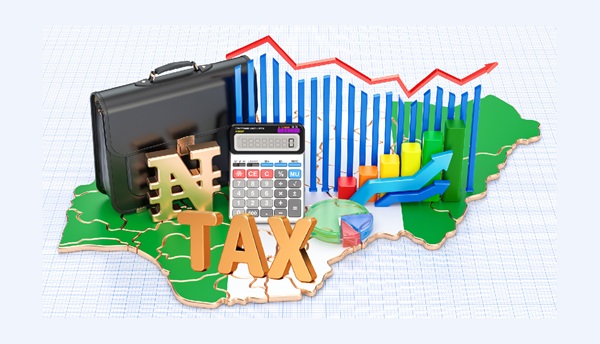
NIGERIA’S fiscal landscape underwent a seismic shift on June 26, 2025, when President Bola Tinubu signed four landmark Tax Reform Bills into law: the Nigeria Tax Act, Nigeria Tax Administration Act, Nigeria Revenue Service (Establishment) Act, and Joint Revenue Board (Establishment) Act.

Effective 1 January 2026, these laws consolidate more than 70 fragmented taxes into a unified, progressive system administered primarily by the rebranded Nigeria Revenue Service (formerly the FIRS).

The rationale is to simplify compliance, widen the tax base, curb evasion, and boost revenue for development without overburdening the vulnerable.

Yet social media buzz has bred misconceptions, from “all bank transfers are taxed” to “accounts will be confiscated,” which has created panic among some Nigerians, with some already rushing to withdraw their money from banks.

The PUNCH Editorial Board will attempt to cut through the noise, breaking down the impacts on individuals and companies, filing processes, penalties, and why taxes matter.

These laws address Nigeria’s over-reliance on oil, which accounts for 70 per cent of revenue despite volatile prices, according to the NBS data (2024).

By streamlining taxes, eliminating overlaps like the Tertiary Education Tax and IT Levy (now folded into a 4.0 per cent Development Levy), and introducing digital asset taxation, the reforms aim to raise non-oil revenue to 40 per cent of GDP by 2030, per Finance Ministry projections.

Globally, countries depend on taxes to fund services and infrastructure, but Nigeria has relied largely on rent.

For example, Norway, despite its oil wealth, has a top income tax rate of 47 per cent and channels 20-25 per cent of GDP from taxes (not oil alone) into a sovereign fund now worth $1.6 trillion, funding healthcare, education, and infrastructure.

In contrast, Nigeria, with a tax-to-GDP ratio of 13.5 per cent, borrowed N11 trillion in 2025 per DMO, and still failed to implement the capital components of the budget due to revenue shortfalls, mainly oil.

Therefore, Nigeria needs effective taxation to build roads, hospitals, and schools, making tax payment a civic duty, not a burden.

See also  Nigerians Will Soon Be Able To Buy Dangote Refinery Shares Soon – Dangote Announces

Under the new tax regime, salaried workers, traders, and professionals will be subject to Personal Income Tax that is now progressive. Individuals earning N800,000 or less annually (about N66,000 monthly) are fully exempt, no tax owed.

Above that, rates climb from 15 per cent on N800,001-N3,000,000 to 25 per cent on income over N50 million. This means that those earning the minimum wage of N70,000 or N840,000 per annum will pay 15 per cent tax on N40,000 or N6,000. Someone earning N100 million will pay roughly N24 million.

Taxable income now includes salaries, rents, digital gains from cryptocurrency trading, and interest, which has been broadened to include FX gains and bond premiums.

The previous Consolidated Relief Allowance has been abolished; taxpayers can claim 20 per cent of annual rent paid, capped at N500,000, provided that proof is adduced. Other non-taxable deductions cover pensions, life insurance, and straight-line capital allowances.

Contrary to social media misinterpretations, not all bank transfers are taxed; only unexplained inflows are counted as income after exemptions. It will be helpful if certain inflows, such as gifts or loans, are tagged as such and reported as non-taxable.

Tax ID (TIN) is mandatory as of 2026 for new bank accounts, insurance, or stock trades, linking finance to compliance, but not confiscation.

Businesses now see a tiered Companies Income Tax structure. Small firms with a turnover of less than N100 million annually and assets of less than N250 million will pay zero CIT; they are fully exempt.

Medium-sized firms with a turnover of between N100 million and N1 billion face a 15-20 per cent tax rate, while large companies with a turnover of over N1 billion will pay a 30 per cent tax. Agricultural startups get a five-year holiday.

For individuals, gains from asset disposals (including digital/virtual assets) now form part of their total income and are taxed at the applicable progressive PIT rates, rather than a separate flat rate.

See also  Tinubu nominates Bernard Doro as minister

However, share sales in Nigerian companies are exempt if proceeds are less than N150 million annually and gains fall below N10 million, or if proceeds are reinvested locally.

The Nigeria Tax Act 2025 introduces a new 4.0 per cent unified Development Levy on the assessable profits of medium and large companies, effective 1 January. The levy unifies and replaces several existing federal levies, such as the Tertiary Education Tax, NITDA Levy, NASENI Levy, and Police Trust Fund Levy, for simplified compliance.

VAT stays at 7.5 per cent, with essentials such as food, medication, education, and transport now zero-rated. Significantly, businesses can recover input VAT on services and fixed assets, which was previously impossible.

One aspect that also requires clarity is Stamp duty, payable on a wide range of documents executed in Nigeria, such as land and tenancy agreements, deeds of assignment, loan and contract agreements, and share transfers and certificates of occupancy.

This is important as unstamped documents are generally inadmissible as evidence in Nigerian civil court proceedings.

Under the new tax laws (Nigeria Tax Act), the former N50 Electronic Money Transfer Levy has been formally classified as stamp duty, and the sender bears the cost rather than the receiver for transactions of N10,000 and above.

Salary payments and intra-bank transfers between accounts held by the same customer (matching names and BVN/NIN) are exempt from stamp duty.

The new tax laws also prescribe that everyone, exempt or not, must file their tax returns annually with a March 31 deadline for companies, while individuals must file by June 30 via NRS portals.

Taxpayers can self-assess by computing income, subtracting reliefs/exemptions, applying rates, paying, and then filing with audited accounts (for businesses) or income statements. Zero returns for exempt folks prove compliance, but TIN registration is required for tax payment.

What is clear, however, is that NRS has a total view of all banking transactions but cannot legally confiscate bank accounts or impose blanket taxes on deposits.

See also  US crude shipments to Nigeria surge 101% – Report

It is the duty of account holders to report and categorise inflows and claim exemption while filing returns. However, NTAA allows third-party debt recovery only after due process, notices, objections, and appeals.

While cryptocurrency profits are taxed as gains, further valuation guidelines are expected, given the volatile nature of such assets.

The new tax laws impose stricter penalties for non-compliance, which you ignore at your peril.

For example, late filing attracts a N100,000 fine plus N50,000/month of continuous default.

Non-payment of tax attracts a 10 per cent penalty plus interest at CBN’s MPR (currently 27.0 per cent).

Outright tax evasion will be met with criminal charges and or asset seizure post-audit. The NRS can share data across agencies for joint audits to close evasion loopholes.

Despite the six-month time lag between the time the laws were signed and implementation, confusion reigns on X, Facebook and WhatsApp groups, fuelled by fearmongering.

Some trader groups have been meeting, spreading utter falsehoods about the implications of the tax laws, largely due to inadequate sensitisation.

Taiwo Oyedele, Chairman of the Tax Reform Committee, has done most of the talking, but the Ministry of Finance, NRS, Ministry of Information and the National Orientation Agency must do more to educate Nigerians on the new law for complete buy-in and voluntary compliance.

Town halls, radio jingles in pidgin and local languages, NRS apps with simulators, and partnerships with labour unions, market associations, and even religious organisations can help. True, the Tax Ombudsmen can protect rights, but without education, compliance will suffer.

In sum, these reforms lighten the load for the poor and small firms while fairly tapping the wealthy.

Tax payment is not just the citizens’ civic duty; it confers ownership of the government on the people, spurring demands for better accountability from leaders.


Continue Reading
Click to comment

Leave a Reply

Your email address will not be published. Required fields are marked *

Business

Whatsapp to begin charging businesses per message from October 1

Published

on

Meta, the parent company of WhatsApp, will begin charging businesses for certain messages sent through the WhatsApp Business Platform from October 1, 2026.

This was disclosed in a WhatsApp Business Platform pricing update in July 2026.

The new charges will be applied to companies using the official WhatsApp Business Platform, formerly known as the WhatsApp Business API, to manage customer conversations at scale.

Banks, fintechs, e-commerce companies, telecoms operators, logistics firms and large retailers that rely on the platform for customer service and transactional communication are among those that could be affected.

However, the development will not affect ordinary WhatsApp users or most small businesses using the standard WhatsApp Business app on their phones.

Under the current system, when a customer sends a message to a business, a 24-hour customer service window opens. During that period, businesses can respond with free-form service messages and certain utility messages without paying Meta.

However, from October 1, Meta will begin charging businesses on a per-message basis for service messages sent during the customer service window.

Meta, in its developer documentation, said, “Effective October 1, 2026, Meta will charge on a per-message basis for all service messages, consistent with how Meta charges for template messages. These messages have not been charged since November 1, 2024.”

The company added, “Effective October 1, 2026, Meta will charge on a per-message basis for utility messages sent in response to users (within an open 24-hour customer service window). These messages have not been charged since July 1, 2025.”

Utility messages include communications such as payment confirmations, order updates and delivery notifications.

See also  Togo, Niger, Benin owe Nigeria N25bn for electricity – NERC

Meta also warned businesses and Solution Providers about the need to add a payment method ahead of the new charges.

It said, “For any Solution Provider or directly-integrated businesses that does not have a payment method on file by September 30, 2026, Meta will stop delivering service messages as of when they become charged on October 1, 2026.”

For Nigerian businesses, a chargeable utility or service message is expected to cost about $0.0101 per message, equivalent to roughly ₦14 based on an exchange rate of about ₦1,340 to the dollar.

Marketing messages are considerably more expensive, at about $0.062 per message, or approximately ₦84 at the same exchange rate.

The charges are Meta’s fees and do not necessarily represent the total amount a business will pay. Companies using Business Solution Providers or third-party platforms to access the WhatsApp Business Platform may incur additional provider charges.

FOLLOW US ON:

FACEBOOK

TWITTER

PINTEREST

TIKTOK

YOUTUBE

LINKEDIN

INSTAGRAM

Continue Reading

Business

FG reaffirms partnership with Taraba to unlock economic potential

Published

on

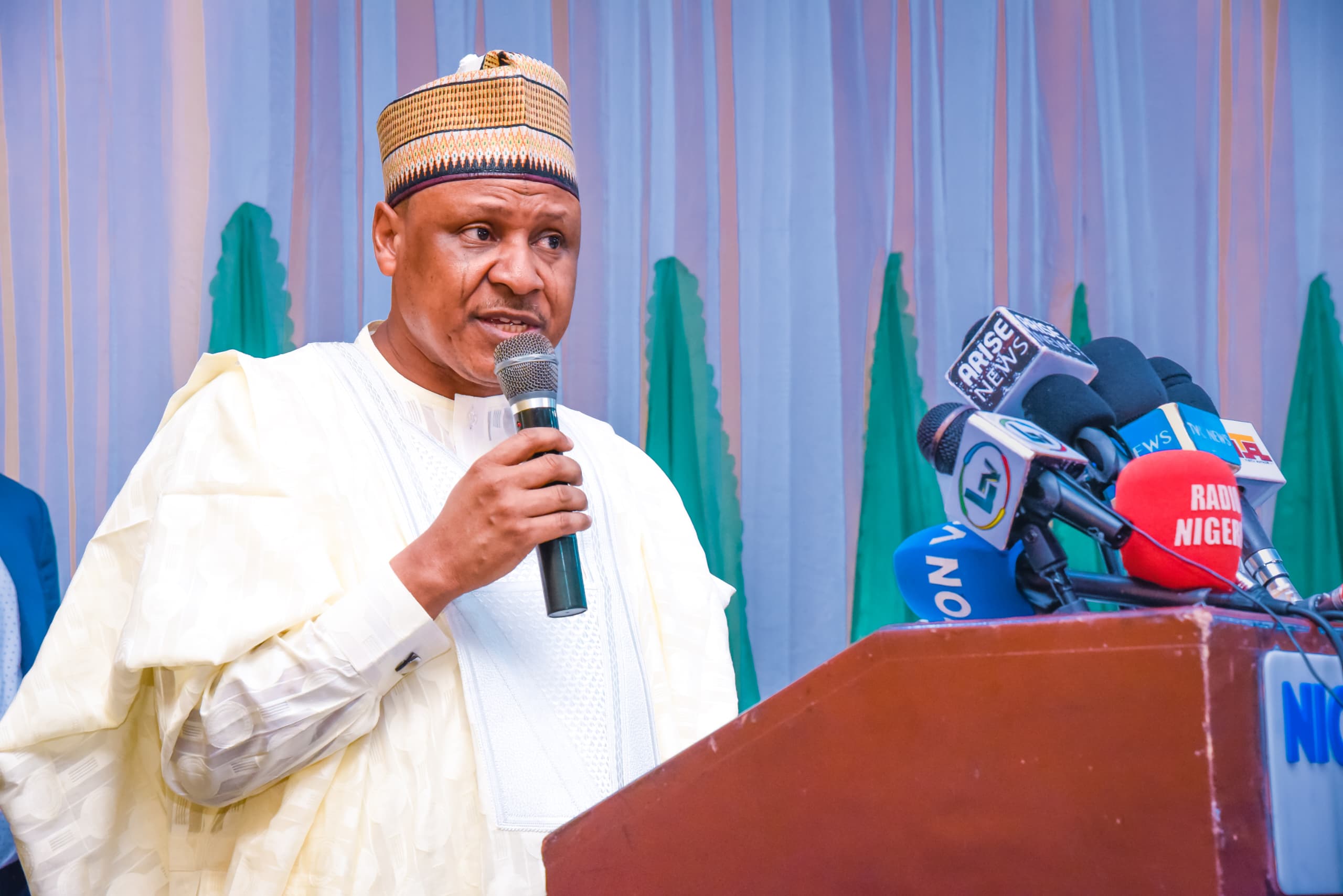
The Federal Government has reaffirmed its commitment to working with the Taraba State Government to unlock the state’s vast potential in agriculture, energy, tourism, infrastructure and mineral resources.

The Minister of Information and National Orientation, Mohammed Idris, stated this on Thursday in Jalingo at the Gala night to mark the Taraba State’s 35th anniversary and the official unveiling of the Taraba Regional Development Master Plan.

He described the newly unveiled Taraba Regional Development Master Plan as an important blueprint for sustainable growth.

Idris, who conveyed the greetings of President Bola Tinubu and the Federal Executive Council to the government and people of Taraba State, said the state’s 35th anniversary offered an opportunity not only to celebrate its progress since creation in 1991, but also to define a clear pathway for its future.

He commended Governor Agbu Kefas of Taraba for adopting a long-term development framework, saying the success of the Master Plan would ultimately depend on sustained implementation and its impact on the lives of citizens.

“The success of this Master Plan will not be measured by the ceremony at which it is unveiled, but by the roads built, businesses created, jobs generated, communities connected and lives improved,” the minister said.

Idris described Taraba as one of Nigeria’s most promising economic frontiers, with enormous opportunities in agriculture and agro-processing, livestock, hydropower, tourism, manufacturing and mineral development.

He praised the Kefas Administration for its investments in education, healthcare, infrastructure, security and economic development, particularly its policy of free and compulsory primary and secondary education.

He said the evidence was in the provision of more than N1.8 billion in 2026 to cover NECO, BECE and NABTEB examination registration for public-school students.

See also  Lagos bans movement of goods on public buses

The minister also highlighted the approximately 268 million dollars financing agreements signed between Taraba State and the ECOWAS Bank for Investment and Development for an integrated industrial park, 10,000 hectares of irrigated rice production and processing, and a 50-megawatt solar power plant in Jalingo.

He said the investments represented the kind of initiatives required to convert the state’s natural advantages into production, value addition, employment and sustainable economic growth.

Idris said Tinubu’s administration was complementing the state’s development drive through major federal infrastructure projects.

“These include the Gembu–Mbamnga–Yang (Lip) Road, the Bali–Serti–Gashaka–Gembu Road, interventions on the Jalingo–Mutum Biyu–Tella–Wukari corridor, as well as further work on the Mayo Selbe–Gembu, Mutum Biyu–Garba Chede and Jalingo–Numan roads.

“These are more than roads. They are investments in connectivity, trade, tourism, agriculture, security and the movement of people and goods,” he said.

The minister also reaffirmed the federal government’s commitment to harnessing Taraba’s agricultural, energy and mineral potential, including the strategic Mambilla Hydroelectric Power Project.

On security, Idris said the federal government was advancing reforms toward the establishment of State Police to bring policing closer to communities while ensuring professionalism, accountability and safeguards against abuse.

He said such a framework could be particularly beneficial to Taraba because of its vast terrain and dispersed border communities, where local knowledge, intelligence gathering and rapid response were critical to effective policing.

The minister also cited the establishment of the Nigerian Army’s 10 Division, headquartered in Jalingo, with operational responsibility for Taraba and Adamawa States, as evidence of the federal government’s commitment to strengthening security in the region.

“Security and development must go together. People cannot invest, farmers cannot move their produce, tourists cannot visit and businesses cannot grow where communities feel unsafe,” Idris said.

See also  NAFDAC bans sachet and small-bottle alcohol in Nigeria

He said the federal government’s economic reforms were designed to create a stronger fiscal foundation for development, noting that the removal of petrol subsidy had mobilised N15.8 trillion in additional resources for the Federation between June 2023 and December 2025.

According to him, approximately N5.4 trillion accrued to the federal government while about N10.4 trillion went to states and local governments, providing additional resources for infrastructure, education, healthcare, security and human capital development.

Idris said the federal government remained opposed to a return to the previous subsidy regime, stressing that the priority was to consolidate the gains of reform, protect vulnerable Nigerians and ensure that additional public resources translated into tangible improvements in citizens’ lives.

He emphasised that development must ultimately be people-centred, creating opportunities for young people, expanding women’s economic participation, supporting farmers and small businesses, and connecting communities to markets and public services.

The minister also pledged stronger collaboration between the Federal Ministry of Information and National Orientation and the Taraba State Ministry of Information and Re-Orientation to ensure citizens understand and embrace the objectives of the Master Plan.

“The vision contained in this Master Plan must go beyond government offices. It must reach the farmer, the entrepreneur, the student, the trader and communities across Taraba.

“This is because a plan for Taraba must ultimately be a plan owned by the people of Taraba,” he said.

Idris congratulated Kefas, the government, and the people of Taraba State on the state’s 35th anniversary, describing the occasion as both a celebration of Taraba’s history and a renewed commitment to its future.

See also  Tinubu nominates Bernard Doro as minister

“35 years of history. A new blueprint for the future. And a renewed commitment to building the Taraba we want and the Nigeria we deserve,” the minister said.

In his remarks, Kefas also called for continuity in governance, acknowledging the contributions of former military administrators and elected governors to Taraba State’s development.

He said his administration was committed to building on previous achievements, correcting what needed to be corrected, completing worthy projects and opening new frontiers for future generations.

He stressed that the development of Taraba must remain bigger than any government, political party, ethnic group or individual, urging former leaders to continue contributing their experience and institutional knowledge to the peace, unity and prosperity of the state.

“Government must be a continuum. Development must be cumulative. Taraba is bigger than any government, any administration, any political party, any ethnic group, or any individual,” Kefas said.

He added that the ultimate credit for development belongs to the people of Taraba State.

Present at the event were the former Governor of Taraba State, Rev. Jolly Nyame; Secretary to the Government of Taraba State, Chief G.T. Kataps; Director-General of the Nigerian Television Authority, Salihu Dembos; and  Director-General of the Federal Radio Corporation of Nigeria, Dr Mohammed Bulama.

Others were the Managing Director of the Nigerian Ports Authority, Dr Abubakar Dantsoho; as well as other distinguished government officials, traditional leaders, members of the diplomatic and business communities, and other dignitaries.

NAN

Source: punchng.com

FOLLOW US ON:

FACEBOOK

TWITTER

PINTEREST

TIKTOK

YOUTUBE

LINKEDIN

INSTAGRAM

Continue Reading

Business

CBN cuts T-bill rate amid N3.63tn demand

Published

on

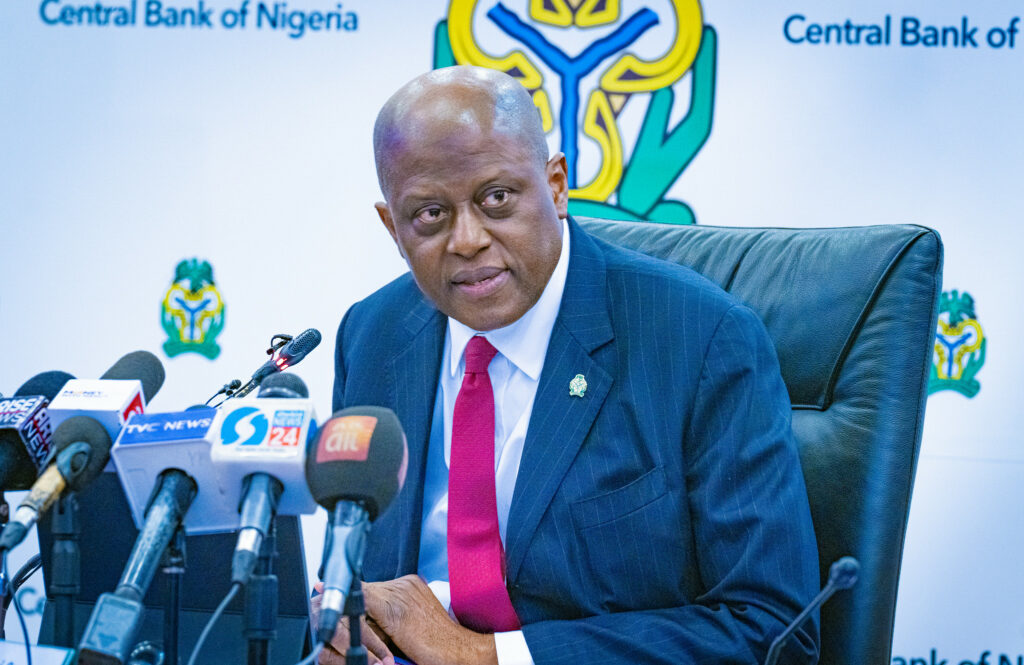
Investors are increasingly positioning for longer-term returns in Nigeria’s fixed-income market, with the latest treasury bills auction showing an overwhelming preference for the one-year government security.

At the Central Bank of Nigeria’s (CBN) primary market auction on Wednesday, investors submitted N3.63tn for the 364-day T-bill, representing 95.9 per cent of the N3.79tn total bids received across the three maturities.

The demand came despite the CBN lowering the stop rate on the one-year instrument by 44 basis points to 17.15 per cent, from 17.59 per cent at the previous auction.

The auction results point to a significant shift in investor appetite towards longer-dated government securities, even as demand for shorter-tenor instruments remained subdued.

The CBN had offered N700bn across the three maturities, comprising N100bn each for the 91-day and 182-day bills and N500bn for the 364-day bill.

However, total subscriptions reached approximately N3.79tn, more than five times the amount offered.

The PUNCH that the 364-day instrument was the clear outlier at the auction, receiving bids equivalent to 7.26 times the amount offered.

The CBN ultimately allotted N638.19bn, exceeding the N500bn offer by N138.19bn. Despite the additional allotment, only about 17.6 per cent of total bids submitted for the instrument were accepted.

Investors quoted yields between 16.00 per cent and 19.05 per cent, but the CBN settled at 17.15 per cent, suggesting that the level of demand allowed the regulator to reject more expensive bids.

The development is significant because the CBN achieved a lower borrowing rate even after receiving exceptionally strong demand for the security.

See also  Tinubu nominates Bernard Doro as minister

The contrast was stark at the shorter end of the curve. The 91-day bill attracted N103.32bn in subscriptions against N100bn offered. The CBN allotted N89.10bn at an unchanged stop rate of 16.30 per cent.

The 182-day bill performed even more weakly, attracting only N52.93bn against N100bn on offer. The CBN allotted N35.59bn, while the stop rate remained at 16.50 per cent.

Secondary-market yields for the three instruments stood above their respective auction stop rates, at 17.45 per cent for the 91-day bill, 17.05 per cent for the 182-day bill and 17.24 per cent for the 364-day bill.

According to a financial sector analyst, Jimbe Asalor, the concentration of bids in the one-year instrument suggests investors may be placing greater value on locking in relatively attractive yields over a longer period rather than repeatedly rolling over shorter-term securities.

He noted that the latest auction also demonstrates “the CBN’s ability to borrow more cheaply when demand is concentrated around a particular maturity.”

He added that by accepting N638.19bn on the 364-day bill at 17.15 per cent, the CBN borrowed above its initial offer while simultaneously cutting the rate by 44 basis points.

“The nine-basis-point difference between the auction stop rate and the 17.24 per cent secondary-market yield also indicates that the one-year segment is now trading relatively close to market expectations.”

A Lagos-based consultant economist, Chukwunonso Iheoma, said if the preference for longer-dated treasury bills persists, the development could provide further support for a gradual decline in government borrowing costs while strengthening expectations of eventual interest-rate cuts.

See also  World Bank to stop lending to China by 2031; read why

Source: punchng.com

FOLLOW US ON:

FACEBOOK

TWITTER

PINTEREST

TIKTOK

YOUTUBE

LINKEDIN

INSTAGRAM

Continue Reading

Trending