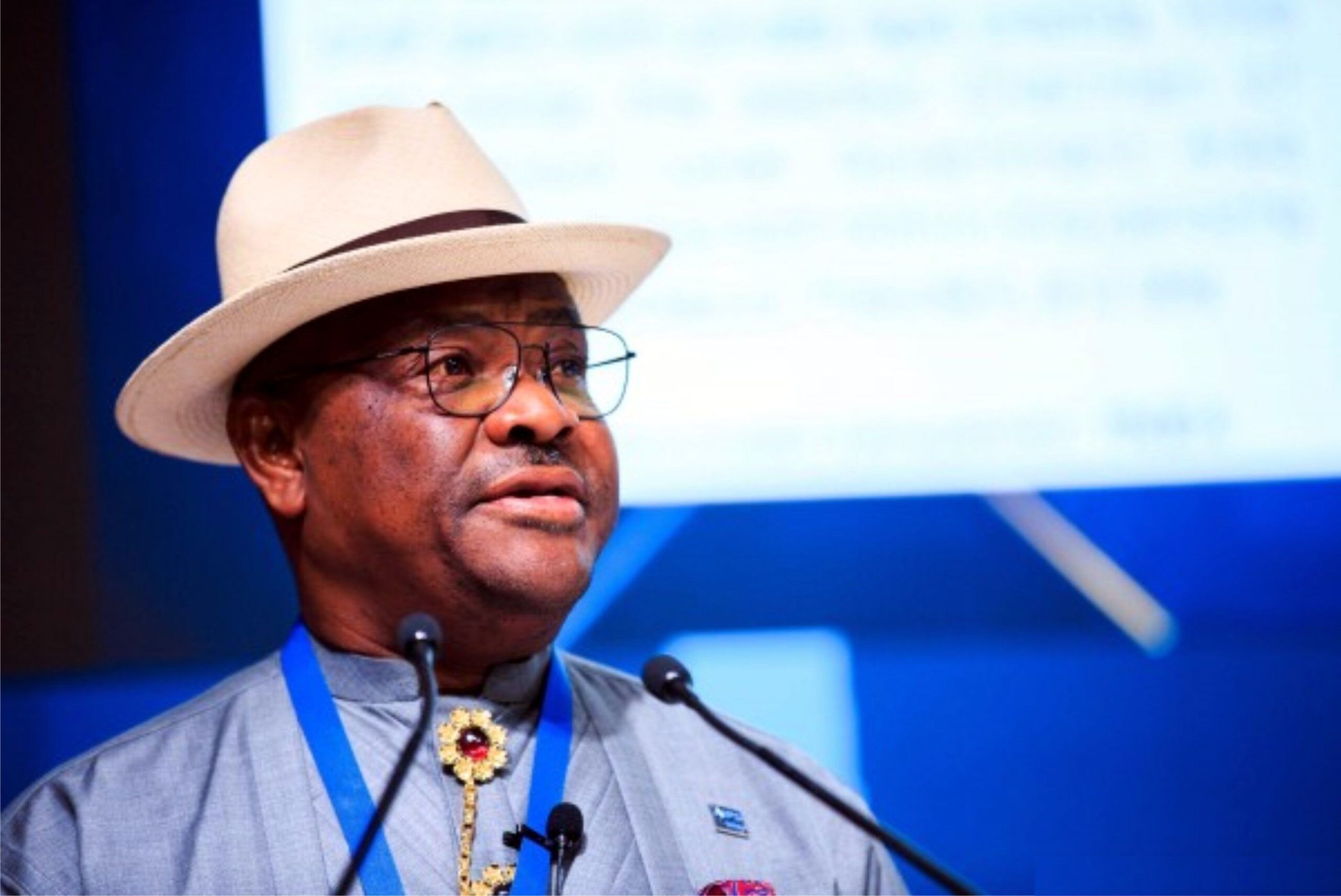
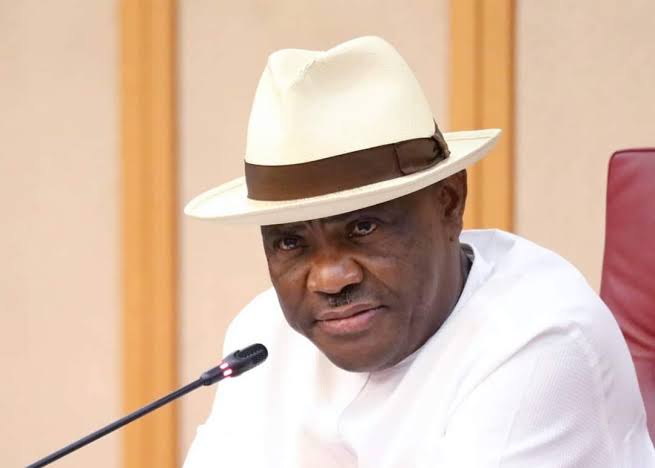
Leaders of the All Progressives Congress, including some aggrieved governors, are considering their options ahead of the 2027 presidential election, with some party stakeholders reportedly weighing support for alternative presidential candidates amid concerns over the political activities of the Minister of the Federal Capital Territory, Nyesom Wike.
Sources within the APC, who spoke on condition of anonymity because they were not authorised to comment on the matter, said many party leaders, including some governors, regarded Wike as a potential threat to President Bola Tinubu’s 2027 re-election bid.
Meanwhile, the Peoples Democratic Party National Publicity Secretary, Jungudo Mohammed, in an exclusive interview with our correspondent, urged Wike to support the party’s presidential candidate, Senator Sandy Onor, instead of backing Tinubu, saying his support would help bring the President’s administration to an end.
Reacting, the Tanimu Turaki (SAN)-led Interim National Working Committee’s Publicity Secretary, Ini Ememobong, criticised the ongoing political realignments involving the Wike-backed PDP group, describing those involved as “pretenders.”
Another party source said the APC National Working Committee was awaiting President Tinubu’s position before deciding on its next course of action.
However, political analyst and former President of the Nigerian Political Science Association, Prof. Hassan Saliu, and former APC Organising Secretary, Eze Duru, said President Tinubu needed the support of Wike and state governors to reconcile the various interests within the party ahead of the 2027 general elections.
They added that the ruling party had also depended on support from politicians and groups outside the APC.
The Minister of the Federal Capital Territory and PDP leader serving in the APC-led Federal Government, Wike has been promoting the Rainbow Coalition in Rivers State in support of President Tinubu ahead of the 2027 elections.
Wike, who has clashed with some APC governors, recently alleged during a media chat that Kwara State Governor AbdulRahman AbdulRazaq and Imo State Governor Hope Uzodimma were responsible for some of the political challenges he was facing.
He linked the governors’ opposition to the expanding influence of the Rainbow Coalition, which he said was providing a platform for politicians seeking to challenge APC candidates in governorship and senatorial elections.
Responding to the development, Uzodimma, who chairs the APC Progressive Governors’ Forum, said after the forum’s meeting last week that APC governors would not back any alliance or political arrangement capable of undermining Tinubu’s re-election or weakening the party ahead of the 2027 elections.
Uzodimma said the governors were committed to campaigning exclusively for APC candidates across all levels of government.
Wike, however, maintained his support for the Rainbow Coalition, arguing that the alliance was intended to back Tinubu’s presidential ambition while supporting the PDP in other electoral contests against the APC.
He insisted that supporting Tinubu for the presidency did not amount to endorsing APC candidates in the states, stressing that he remained entitled to support candidates of his choice.
The source said Wike’s continued media attacks and political activities against some APC governors were causing concern among leaders of the ruling party, with some governors and other stakeholders now considering alternative political options.
He stated, “As a member of the APC and somebody who understands how the governors work and what they have been doing, I know that the governors are not happy, especially the governors of Ogun, Kwara and Imo states. Other members of the party, including critical party leaders, are also not happy about the Wike matter. The way he goes around talking about people, party leaders and governors as if they have no influence or cannot have any impact on the 2027 election is quite discouraging.
“Many of them are looking at alternatives. The governors, including some critical party leaders, are considering the fact that Wike has claimed that he has the power to deliver the President, even more than the number of governors supporting the President.
“If Wike continues along that line, many of them are already considering the option of supporting other candidates against Bola Ahmed Tinubu. Other options are also available to them because they are unhappy about being disrespected and belittled by a minister serving in an APC-led Federal Government, despite being a member of the PDP. They are also concerned that the President is yet to make any remark or issue a directive on the matter.”
Another source said the governors and APC leaders were expecting President Tinubu to intervene and resolve the matter before it escalated further.
The source stated, “What I know is that APC leaders and other critical stakeholders consider Wike a threat to President Bola Tinubu’s re-election. This is because Wike had quite a lot of enemies before now because of this kind of politics, and he is transferring some of those enemies to the President. Even party members who ordinarily support the President are beginning to think otherwise because of their opposition to Wike.
“Wike has continued to go on television and other media platforms to criticise the governors and portray them as though they have no influence, followers or supporters capable of affecting the outcome of a presidential election. This is seriously becoming unbecoming, and many party leaders are not happy about it.
“Some of them are looking up to the President to act speedily and nip the matter in the bud. If it is not addressed, some of them may simply watch from afar as the election unfolds, and that could have serious implications for the President in 2027.”
Reacting, the PDP National Publicity Secretary, Jungudo Mohammed, said the party hoped Wike would support its presidential candidate, Senator Sandy Onor, to bring an end to what he described as the political noise surrounding the 2027 election and the administration of President Tinubu.
Mohammed stated, “The Minister of the Federal Capital Territory is truly a political phenomenon. If there is any way we can persuade the minister to rescind his decision not to support our presidential candidate, Senator Onor, we would be glad to do so. However, we are only respecting his constitutional rights.
“If his romance with the President is constituting a double blockade for the PDP, the APC governors would not come out to call for an emergency meeting, have sleepless nights and express concern about a minister’s support for candidates in the PDP if they were not worried about the situation. So, we respect his decision. We also respect the fact that the party itself agreed that he should work for the President.
“We are not uncomfortable with the situation, although we wish he would come and give us his full support. If he does that, it will make it easier for us to defeat President Ahmed Tinubu. His lack of support, as it is now, will no doubt affect our chances. But that is not to say that we do not have what it takes to surmount the challenges and defeat President Ahmed Tinubu.
“We are in the election to win. We will roll out our campaign across the nooks and crannies of the country to ensure that Nigerians support our candidate.”
On his part, Ememobong described the Wike-backed faction of the PDP and the APC as “pretenders.”
He stated, “I am a Christian, and I believe in standing by the truth. These people are pretenders—the APC and the Wike group are pretenders. They do not mean well for Nigerians. We are happy to see their house in disarray. It is a fact that all of them are in the same boat, doing exactly the same thing. It is something they think they can use to deceive Nigerians.
“It is a fact that they are taking Nigerians for granted under their so-called Rainbow Coalition. These people are not principled. They flourish in confusion. But we can assure Nigerians that, as an opposition party, we stand for the ideals of opposition politics, and that is what we are going to uphold. If we choose to play the ostrich and take a gamble, then we will kill the essence of opposition politics.”
Efforts by our correspondent to obtain a reaction from the APC National Publicity Secretary, Felix Morka, were unsuccessful, as he did not respond to calls. However, a senior party source, who spoke on condition of anonymity, said the party was awaiting President Tinubu’s directive before deciding on its next course of action.
The source stated, “For now, the party cannot do much about the matter. It is only the President who can intervene. The President will have to reach out and intervene between the governors and the minister. The last time APC NWC leaders tried to intervene in the Rivers State affair and Wike, it boomeranged. This time around, they are all waiting for the President’s directive and body language.
“Once that happens, the NWC will know the next line of action and proceed accordingly. That is why, for now, it is difficult for anyone to come out openly to condemn, back, support or speak extensively about the matter.”
Former APC Organising Secretary, Eze Duru, in an exclusive interview with our correspondent, said President Tinubu had a clear political strategy, which he had been revealing selectively based on what he considered necessary.
He noted that the support of governors and other political actors would be important ahead of the 2027 elections.
Duru stated, “It is very clear that President Tinubu has a strategy mapped out for himself, and he has revealed that strategy on a need-to-know basis. What he considers necessary to disclose is what he believes will work for him.
“In reality, although it has not been officially described as a government of national unity, this administration has recognised the need to receive support from people who do not belong to the APC. These include members of other political parties, whether the PDP, Labour Party, APGA or, in the case of Osun State, the Accord Party.
“That has been the structure of the government from the beginning. People of different political persuasions who supported the government in the 2023 election were brought into the administration and, in some cases, given appointments. As we approach another election, that is also on the agenda. That involves the entire rank and file of the APC, as well as other supporters of the President.
“We have always known that Mr Wike has committed himself to supporting the President, and we will require all such support. Governors are expected to work with the President, particularly where they share the objective of ensuring his electoral success. The same applies to other interest groups that are not members of the APC but want the President to win the election. So, the President understands the game and will work to unite all of them to work for his victory, and not for anyone else.”
On his part, a former President of the Nigerian Political Science Association, Professor Hassan Saliu, said the President needed to carefully manage his relationship with Wike and the governors.
Saliu said politicians who felt excluded from their parties could seek alternative platforms, stressing that APC leaders should avoid internal disputes, ensure fairer processes and prevent disagreements from weakening support for Tinubu ahead of the 2027 elections.
He stated, “The political situation has not given the party a clean slate, so the party needs to earn the confidence of the electorate. In that case, it would be unfortunate to dispense with Wike at this point in time. That is not to say Wike does not have his successes. But given his position in the APC, which is now alienating some supporters of the President, the matter needs to be handled with care.
“Go around the states controlled by the APC and, without manipulation or anything else, some of the governors may struggle to emerge victorious and deliver their states to the President. That is the concern. I am not sure the President will support Wike against his governors. He needs all of them, and he appears to be trying to bring everybody into the fold. He has not discarded the governors.
“However, I suspect that security reports may have informed the President that some governors can deliver their states while others may not. However, he won’t let any of them go or feel rejected or unwanted. I expect the President to use his influence to manage the situation carefully and unite all of them for his victory.”
Source: punchng.com
FOLLOW US ON:
FACEBOOK
TWITTER
PINTEREST
TIKTOK
YOUTUBE
LINKEDIN
INSTAGRAM