Connect with us

Business

Dangote, marketers cut petrol prices as crude falls

Published

on

The Dangote Petroleum Refinery and other petroleum marketers have reduced the prices of Premium Motor Spirit (petrol) across major depots in Lagos, Port Harcourt, Calabar and Warri, following a decline in international crude oil prices.

The reductions were recorded in the latest depot price report published by Petroleumprice.ng, with the biggest adjustments seen in Lagos, where several operators cut their petrol prices by between N20 and N24 per litre.

The reductions came as Brent crude traded below $100 per barrel, while the United States benchmark, West Texas Intermediate, also declined to $91.17 per barrel.

In Lagos, the Dangote Refinery reduced its PMS price from N1,350 to N1,325 per litre, representing a N25 reduction. Ascon, Integrated, Pinnacle and Sahara also cut their prices by N24, with their products now selling between N1,326 and N1,327 per litre.

MRS reduced its petrol price by N20 to N1,332 per litre, while Wosbab recorded a current price of N1,330.

The latest reductions followed a mixed movement in the international crude market.

According to Oilprice.com, Brent crude fell to $99.77 per barrel, while WTI dropped by $1.20, or 1.30 per cent, to $91.17 per barrel. Recall that Brent hit $109 last week.

However, Murban crude moved in the opposite direction, gaining $4.18, or 3.80 per cent, to $114.20 per barrel.

The movement in crude prices is significant for Nigeria’s downstream petroleum market because international oil prices influence the cost of imported refined products and the pricing of locally refined petroleum products.

The softer Brent and WTI prices provided room for downward adjustments in depot prices.

See also  FG to end regulated gas pricing in 2028

The decline in petrol prices was also recorded outside Lagos. In Port Harcourt, Masters reduced its PMS price by N2 to N1,328 per litre, while Stockgap recorded a N7 reduction to N1,323. Bulk Strategic and Sigmund listed petrol at N1,328, while Matrix retained its price at N1,330.

In Calabar, Mainland recorded the lowest petrol price among the locations covered, reducing its rate by N7 to N1,320 per litre.

Alkanes cut its price by N2 to N1,325, while Matrix maintained N1,330. Sobaz, however, increased its price marginally by N1 to N1,328. In Warri, mixed movements were also recorded, although most of the changes were downward.

Keonamex reduced its PMS price by N3 to N1,327, while Nepal and Prudent cut their prices by N1 and N2, respectively, to N1,329 and N1,328. Matrix and Optima, however, increased their petrol prices by N3 and N1, respectively, taking them to N1,330 and N1,328.

On the automotive gas oil market, commonly known as diesel, prices also declined in some locations. In Lagos, Chipet reduced its AGO price by N15 to N1,815 per litre, while Ascon, Duport and Integrated each cut their prices by N5 to the same level.

Ibachem, Ibeto, Dangote, Obat and Pinnacle offered diesel prices at between N1,815 and N1,860 per litre. Port Harcourt recorded a sharper movement in diesel prices, with Masters reducing its AGO price by N35 to N1,900 per litre.

In Warri, Matrix cut its AGO price by N50 to N2,000 per litre, while Prudent and Rain Oil reduced theirs by N10 to N1,940.

See also  Unfrozen Iran funds to go into US-run escrow account – Trump

The latest depot price movements come amid continued volatility in the international oil market, with crude benchmarks responding differently to developments affecting global supply and demand.

Natural gas prices also moved higher, gaining 2.96 per cent to $2.92, according to the market data.

The latest PMS adjustments suggest that the recent decline in crude prices is beginning to filter into the domestic wholesale market, although the extent of further reductions will depend on movements in crude prices, foreign exchange and the cost of refined petroleum products.

The lower depot prices could also influence retail petrol prices as marketers replenish their stocks at the reduced rates, although pump prices vary according to location, transportation costs and individual marketers’ margins. Petrol now trades between N1,370 and N1,450, depending on the location.


Source: punchng.com

FOLLOW US ON:

FACEBOOK

TWITTER

PINTEREST

TIKTOK

YOUTUBE

LINKEDIN

INSTAGRAM

Continue Reading
Click to comment

Leave a Reply

Your email address will not be published. Required fields are marked *

Business

Otti woos US investors to Abia

Published

on

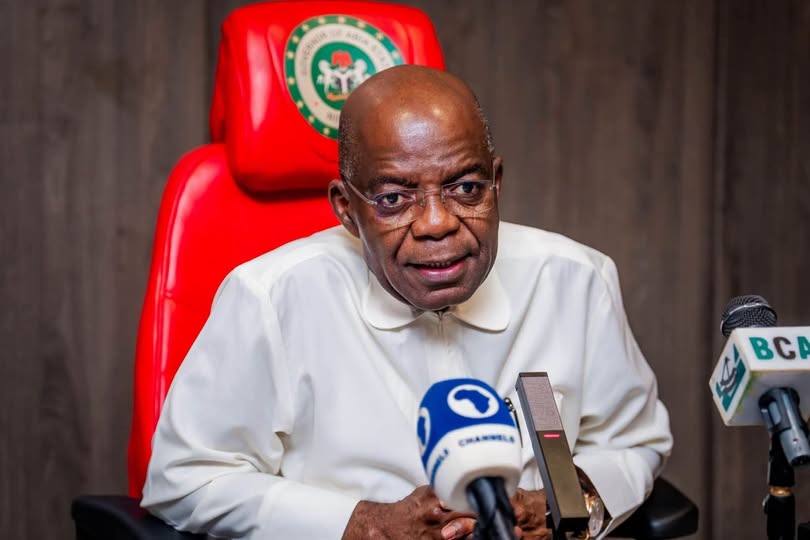
Governor Alex Otti of Abia State has concluded plans to bring investors, business leaders, policymakers, development partners, diplomatic representatives and entrepreneurs to the state to explore investment opportunities and strengthen commercial relations between Africa and the United States.

In a statement he signed and issued to newsmen on Sunday, the Chief of Staff to the Governor, Pastor Caleb Ajagba, disclosed that the Abia State Government had unveiled plans to attract American and other international investors to the state through the 2026 edition of the African Diaspora Conference and Expo, AFRICANDO, scheduled for this month.

Ajagba said, “AFRICANDO is a platform for translating international economic engagement into concrete investments and commercial partnerships. The state government is working with the organisers to ensure that the conference goes beyond speeches and networking to facilitate transactions, business agreements and sustainable investment.”

According to him, the 2026 edition, with the theme, “Deepening U.S.–Africa Commercial Ties in the Era of AfCFTA,” would connect investment opportunities in Abia and other African markets with American capital, technology, expertise and international distribution networks.

He added, “The African Continental Free Trade Area, AfCFTA, presents opportunities for African businesses to expand beyond their domestic markets, while international partnerships could help them improve production capacity and competitiveness.

“Abia is strategically positioned to benefit from the initiative because of its manufacturing and entrepreneurial base, particularly in Aba, which is known for indigenous manufacturing, commerce and craftsmanship.”

Ajagba added that Otti’s administration “is investing in infrastructure, strengthening public institutions and improving the business environment to position the state as a destination for private investment.”

See also  Alaafin to install Seyi Tinubu as ‘Okanlomo of Yorubaland’ Saturday

He explained that international delegates and prospective investors would be encouraged not only to attend conference sessions but also to visit strategic economic locations, manufacturing clusters, enterprises and government-backed projects to assess investment opportunities firsthand.

He said the approach was intended to give participants a practical understanding of the state’s economic potential and create opportunities for direct engagement with local businesses and relevant government agencies.

“AFRICANDO 2026 is not exclusively an Abia event. It is an international economic platform being hosted in Abia State,” he continued.

He listed agriculture and agro-processing, manufacturing, consumer goods, energy, financial services, healthcare, transportation and logistics, science and technology, artificial intelligence and emerging technologies among the sectors expected to receive attention.

A major feature of the conference, he said, would be a structured Deal Room and Investment Marketplace, where investment-ready projects from Abia and participating businesses would be presented to prospective investors.

Source: punchng.com

FOLLOW US ON:

FACEBOOK

WHATSAPP CHANNEL

TWITTER

PINTEREST

TIKTOK

YOUTUBE

LINKEDIN

INSTAGRAM

Continue Reading

Business

Personal loans hit new high N1.99tn

Published

on

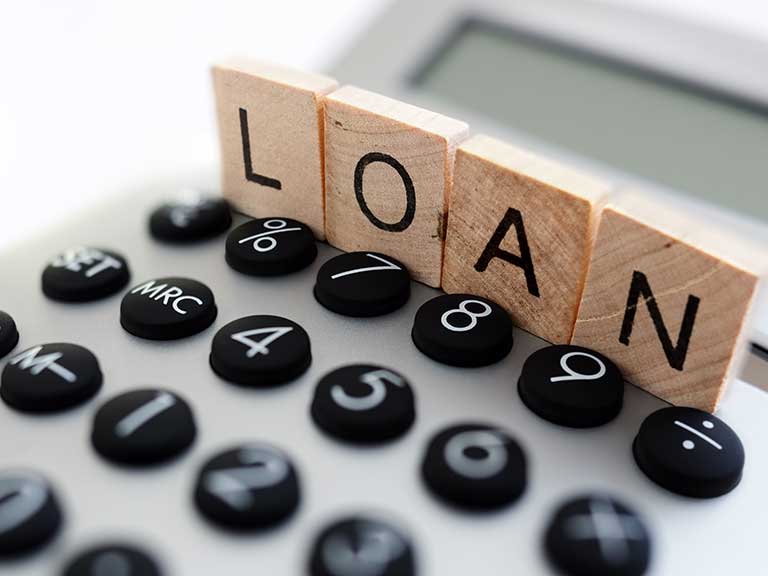
Nigerians’ outstanding personal loans increased by an estimated N58.5bn in the second quarter of 2026, reaching N1.99tn at the end of June, as households faced persistent inflationary pressures and high borrowing costs.

An analysis by The PUNCH of the Central Bank of Nigeria’s Second Quarter 2026 Economic Report showed that personal loans rose by 3.03 per cent from approximately N1.93tn recorded at the end of March.

The development came as total consumer credit increased by 3.26 per cent to N3.17tn from N3.07tn in the preceding quarter, representing an increase of about N100bn within three months.

The CBN stated, “Consumer credit outstanding increased by 3.26 per cent to N3.17tn, from N3.07tn in the preceding quarter. The increase reflected growth in both retail and personal loans, which rose by 4.10 per cent and 3.03 per cent, respectively.”

According to the report, personal loans accounted for 62.87 per cent of total consumer credit, while retail loans constituted the remaining 37.13 per cent.

This means that nearly N63 out of every N100 owed by consumers to financial institutions was classified as personal borrowing, highlighting its dominance in the consumer credit market.

Retail loans also increased by approximately N46.5bn to N1.18tn at the end of June, compared with an estimated N1.13tn in March, representing quarterly growth of 4.10 per cent.

Although retail loans recorded a faster percentage increase, personal loans contributed more to the outstanding stock of consumer credit.

The increase in personal borrowing occurred amid renewed inflationary pressures, which continued to affect household purchasing power.

See also  Read how power struggles threaten Ondo APC’s unity ahead of primaries

The CBN reported that headline inflation rose to 15.91 per cent in June 2026 from 15.38 per cent in March, reflecting increases in the prices of essential goods and services.

The report attributed the development largely to higher energy and commodity prices associated with geopolitical tensions in the Middle East, which increased production and transportation costs.

These conditions placed additional pressure on household expenditure, particularly for consumers whose incomes had not increased sufficiently to offset rising prices.

However, the report did not establish whether the increase in personal loans was driven primarily by household financial difficulties, consumption needs or improved access to credit.

The growth in consumer borrowing also occurred despite elevated lending rates in the banking sector.


According to the CBN, the average prime lending rate declined marginally to 19.01 per cent in Q2 from 19.37 per cent in the preceding quarter.

In contrast, the maximum lending rate increased slightly to 34.37 per cent from 34.34 per cent, indicating that borrowing remained expensive for some categories of bank customers.

Although these rates reflect broader banking sector lending conditions rather than specific personal loan charges, they provide an indication of the financing environment confronting borrowers.

A recent report ‘Enhancing Financial Inclusion & Advancement’ noted that four in every 10 Nigerians borrowing from formal financial institutions now take loans mainly for consumption and coping needs, as rising financial pressures increasingly push credit away from productive activities.

The ‘2026 Access to Financial Services in Nigeria Survey’ revealed that 40.8 per cent of formal borrowers used loans for coping and consumption, up sharply from 31.7 per cent in 2023.

See also  N5.6tn debt: Energy crisis looms as gas firms cut supply

The 9.1 percentage-point increase made coping and consumption the largest purpose of formal credit, overtaking productive enterprise borrowing, which fell from 40.2 per cent to 34.3 per cent during the same period.

Borrowing for household assets also declined from 25.2 per cent to 23.4 per cent. The report warned, “Coping/consumption purposes rose from 31.7 per cent to 40.8 per cent; productive purpose fell from 40.2 per cent to 34.3 per cent. We need to ensure that credit builds productive capacity and does not produce distress.”

Formal credit use increased from six per cent of adults in 2023 to 10 per cent in 2026, with about 11.9 million Nigerians borrowing from regulated providers. When informal sources were included, 36 per cent of adults had access to some form of credit.

Credit use among informally employed Nigerians tripled from five per cent to 15 per cent, while borrowing among people aged 18 to 35 rose from four per cent to 10 per cent. Business owners recorded an increase from four per cent to 10 per cent, while farmers rose from two per cent to six per cent.

Source: punchng.com

FOLLOW US ON:

FACEBOOK

WHATSAPP CHANNEL

TWITTER

PINTEREST

TIKTOK

YOUTUBE

LINKEDIN

INSTAGRAM

Continue Reading

Business

FG saves N3.56tn despite borrowing, read full details

Published

on

The Federal Government and other tiers of government set aside a combined N3.56tn as savings from Federation Account revenue between January and September 2026, despite the Federal Government’s increasing reliance on borrowing to finance its budget deficit.

The amount represents a 95 per cent increase from the N1.83tn recorded in the corresponding period of 2025, raising questions about the country’s fiscal priorities amid mounting public debt and rising debt-servicing obligations.

A report by Agora Policy, titled Ten Insights from FAAC Disbursements for January-September 2026, analysed by The PUNCH on Friday, showed that savings and interventions accounted for N8.34tn of deductions from Federation Account revenue during the nine-month period.

The report put deductions for interventions at N4.78tn, making it the largest category, while savings accounted for N3.56tn. Together, the two categories represented 75.1 per cent of total deductions, compared with 39.9 per cent in the corresponding period of 2025.

The report read, “Interventions accounted for the largest deduction, at N4.78tn, followed by savings at N3.56tn. In nine months, refunds amounted to N1.21tn and collection costs to N1.09tn. Transfers, at N469.06bn, were the smallest category.”

The sharp increase in savings came against the backdrop of the Federal Government’s expanded borrowing plan for 2026. The government raised its borrowing target by N11.31tn to N29.20tn from the earlier N17.89tn projection, while the budget deficit stood at N31.46tn.

Under the 2026 budget, total expenditure is projected at N68.32tn against expected revenue of N36.87tn, leaving a substantial financing gap to be covered largely through borrowing.

See also  Speak out against terrorism, banditry, Tinubu urges clerics

The Agora report, however, showed that total deductions from Federation Account revenue declined slightly by 3.5 per cent, from N11.50tn in the first nine months of 2025 to N11.10tn in the same period of 2026.

Their share of gross revenue also fell from 41.1 per cent to 35.3 per cent, allowing distributable revenue before augmentation to rise by 23.8 per cent to N20.36tn.

Gross Federation Account revenue increased by 12.6 per cent, from N27.95tn to N31.46tn, during the period.

According to the report, the N3.91tn increase in distributable revenue exceeded the N3.51tn growth in gross receipts because deductions declined by approximately N400bn.

It stated, “The modest fall in total deductions conceals a substantial change in their composition. Refunds fell by approximately N3.99tn, moving from the largest deduction category to the third-largest.

“Meanwhile, interventions and savings increased by approximately N3.75tn, from N4.59tn to N8.34tn. Together, interventions and savings accounted for 75.1 per cent of deductions in nine months in 2026, compared with 39.9 per cent in the corresponding period in 2025.”

A further breakdown showed refunds declined by 77 per cent, from N5.20tn in the first nine months of 2025 to N1.21tn in 2026.

Collection costs increased by four per cent to N1.09tn, while transfers fell by 29 per cent to N469.06bn.

The increase in savings and interventions raises questions about the relationship between the resources being set aside from Federation Account revenue and the government’s continued borrowing to finance expenditure.

However, the deductions cover the Federation Account and should not be interpreted as savings retained solely by the Federal Government. The revenue is shared among the Federal Government, states and local governments under the existing allocation arrangements.

See also  FG to end regulated gas pricing in 2028

The Federal Government has defended its borrowing strategy, arguing that increased expenditure pressures have outpaced additional non-borrowed resources and that borrowing is necessary to finance infrastructure and other development priorities.

In its fiscal defence, the government has also pointed to rising personnel costs, debt-service obligations, electricity support and infrastructure commitments as major pressures on public finances.

A statement by the Presidency on its infrastructure investment strategy said borrowing was being redirected towards productive assets rather than short-term consumption. It also acknowledged the pressure of debt service, which stood at about 65 per cent of revenue in the first half of 2026.

Source: punchng.com

FOLLOW US ON:

FACEBOOK

WHATSAPP CHANNEL

TWITTER

PINTEREST

TIKTOK

YOUTUBE

LINKEDIN

INSTAGRAM

Continue Reading

Trending