Connect with us

Business

NNPC boosts Dangote refinery crude supply to seven cargoes – Sources

Published

on

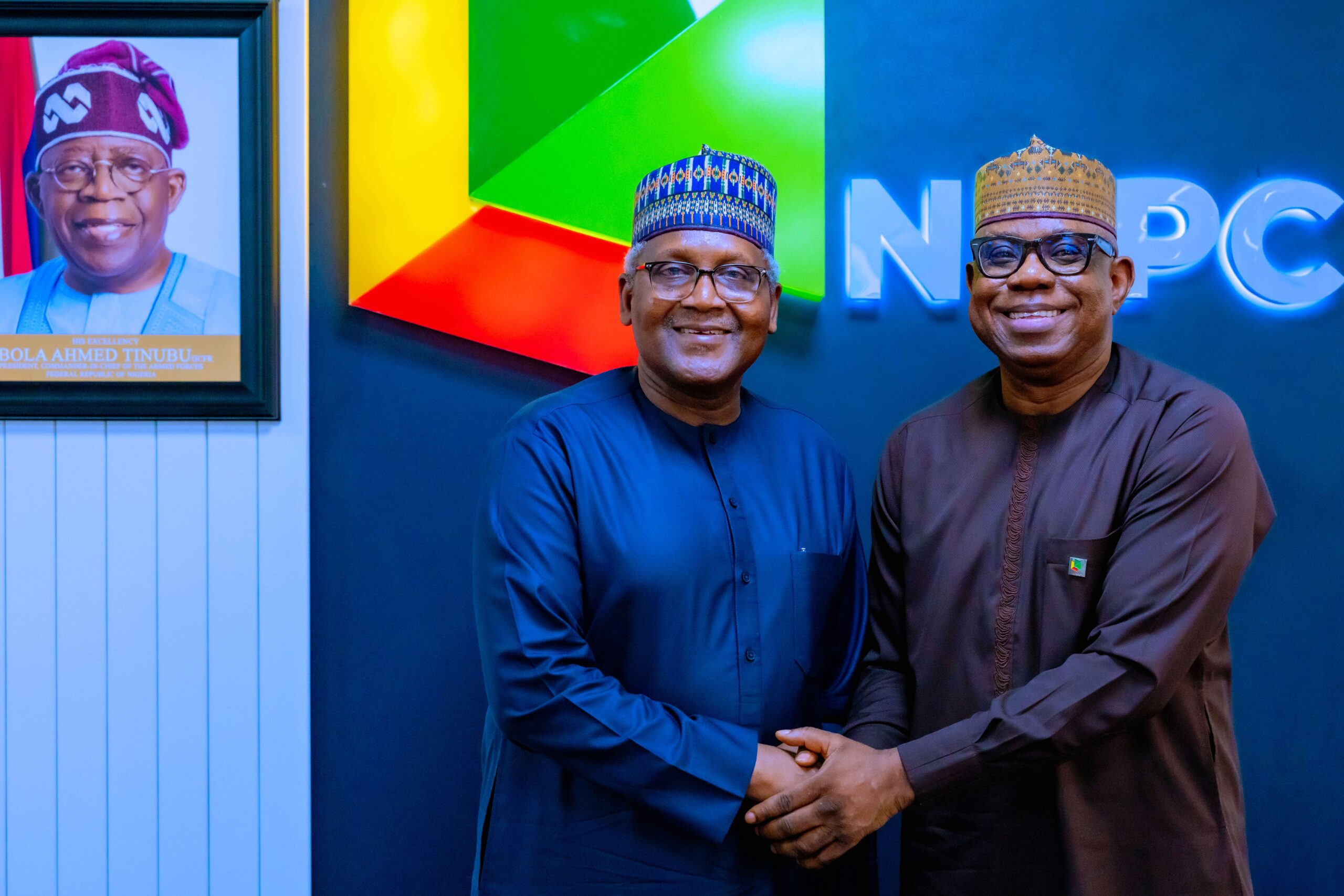
The Nigerian National Petroleum Company Limited (NNPC) has increased crude oil supply to the Dangote Petroleum Refinery and Petrochemicals, allocating seven cargoes for May loading in a move aimed at boosting domestic fuel production.

Two trader sources told Reuters on Tuesday that the latest allocation marks an increase from the five cargoes the refinery had been receiving in previous months. However, this means the refinery will continue to receive five cargoes in April.

The development comes amid mounting pressure on fuel supply and rising petrol prices across Nigeria, as the refinery struggles to secure sufficient crude locally.

The report read, “The Nigerian National Petroleum Company is allocating seven crude cargoes for May loading to Nigeria’s Dangote refinery, up from the five it received in previous months, two trade sources told Reuters.

“Fuel prices in Nigeria have reached record highs, and Dangote has previously said the company could source only about five crude cargoes a month locally, far short of the 13–15 it requires, forcing it to import the rest at prices dictated by the impact of war in the Middle East.”

Officials of the national oil company and the refinery did not respond to requests for comments as of the time of filing this report.

The development aligns with earlier reports by The PUNCH that the Federal Government, through the NNPC, was working to increase crude supply to the Dangote refinery under ongoing arrangements aimed at strengthening local refining capacity.

Multiple industry sources and officials from both NNPC and the Dangote refinery told our correspondent exclusively in early March that the national oil company is leveraging its global crude trading network to source third-party supply for the Dangote refinery at competitive international market rates.

See also  We’re ready for court cases on fuel imports – Dangote

“Leveraging our global crude trading network, we are sourcing third-party crude for the refinery at prices that are competitive with prevailing international market rates,” a senior official at NNPC, who spoke in confidence due to a lack of authorisation to speak on the matter, said.

The official further explained, “As the national oil company entrusted with safeguarding Nigeria’s energy security, NNPC Limited remains fully committed to supporting domestic refining, including the Dangote Petroleum Refinery. Within the framework of our existing agreements, we continue to facilitate crude supply to DRP in the face of temporary availability constraints.”

Despite the increase, the 650,000-barrels-per-day refinery still faces a significant shortfall in crude supply. The facility requires between 13 and 15 cargoes monthly to operate at optimal capacity, but has continued to receive far less from domestic sources.

This has forced the refinery to rely on imported crude, exposing it to volatile global prices driven by geopolitical tensions, particularly conflicts in the Middle East. The refinery had earlier warned that limited domestic supply was constraining its operations and increasing costs.

Nigeria’s fuel prices have climbed to record levels in recent months, driven by supply constraints and high import costs. Although the Dangote refinery has ramped up petrol supply to the domestic market, it is currently meeting just over two-thirds of the country’s estimated daily demand of 60 million litres.

In response to rising costs, the refinery recently increased petrol depot prices by about 13 per cent, further adding to price pressures in the downstream sector.

The decision by NNPC to increase crude allocations to the refinery could have implications for Nigeria’s crude export volumes. With global supply already tight due to disruptions linked to tensions in the Middle East, any diversion of crude to domestic refining may reduce volumes available for export.

See also  Wage arrears: Labour issues Friday ultimatum to FG

This could force international buyers to seek alternative sources, potentially affecting Nigeria’s position in the global crude market.

The refinery, which commenced operations in 2024, is expected to significantly reduce Nigeria’s dependence on imported petroleum products.

However, challenges around crude supply, pricing, and logistics have continued to shape its operations. Increasing domestic crude allocation remains critical to achieving energy security, stabilising fuel prices, and reducing pressure on foreign exchange.

They, however, note that sustained supply at required volumes will be key to unlocking the refinery’s full potential and delivering long-term benefits to the Nigerian economy.

punch.ng

FOLLOW US ON:

FACEBOOK

TWITTER

PINTEREST

TIKTOK

YOUTUBE

LINKEDIN

Continue Reading
Click to comment

Leave a Reply

Your email address will not be published. Required fields are marked *

Business

Four Nigerians among Forbes Africa’s 15 icons for 2026, see full list

Published

on

Four Nigerians, Aliko Dangote, Ngozi Okonjo-Iweala, Mo Abudu and Burna Boy, have been named among 15 personalities featured on Forbes Africa’s inaugural Icons list for 2026.

PUNCH Online on Saturday reported that the list, published in the magazine’s October-November anniversary edition, recognises individuals whose ideas, innovations and voices have influenced Africa’s past, present and future.

The selection marks the 15th anniversary of Forbes Africa, which said it chose personalities whose work had made a lasting impact beyond their industries and national borders.

The four Nigerians represent business, international economic leadership, media and music.

Dangote, president of Dangote Group, is recognised for his role in African industry and private enterprise.

Dangote

Okonjo-Iweala, director-general of the World Trade Organization and a former Nigerian finance minister, represents Africa’s presence in international economic leadership.

Iweala

Abudu, founder and chief executive of EbonyLife Group, is recognised for her contribution to African media and entertainment, while Burna Boy, whose real name is Damini Ebunoluwa Ogulu, represents the international reach of Nigerian music.

Mo Abudu

The other personalities on the list are South African businessman Adrian Gore, CAF president and businessman Patrice Motsepe, Zimbabwean entrepreneur Strive Masiyiwa and former Liberian President Ellen Johnson Sirleaf.

Also featured are Nobel Prize-winning novelist Abdulrazak Gurnah, Ethiopian athletics legend Haile Gebrselassie, former Ivorian footballer Didier Drogba, South African businessman Johann Rupert, Kenyan-Mexican actor Lupita Nyong’o, South African comedian Trevor Noah and Beninese musician Angélique Kidjo.

The 15 personalities represent sectors including business, public service, literature, sport, music and entertainment.

According to Forbes Africa’s methodology, the selection was based on factors including global recognition, legacy, measurable economic, social or cultural influence, and contributions to Africa’s growth narrative over the years.

See also  Malabu Oil & Gas Sues CAC Over Deregistration Of Firm

The magazine said its editorial team consulted established figures, experts and professionals in the respective industries to gather insights on the honourees’ impact and legacy.

The list is presented in no particular order, the release noted.

Full list of Forbes Africa Icons 2026

– Mo Abudu — Nigerian-British media entrepreneur and founder-chief executive of EbonyLife Group.

– Ngozi Okonjo-Iweala — Nigerian economist and director-general of the World Trade Organization.

– Adrian Gore — South African businessman and founder-chief executive of Discovery Group.

Gore

– Patrice Motsepe — South African businessman and president of the Confederation of African Football.

Motsepe

– Strive Masiyiwa — Zimbabwean entrepreneur and founder and executive chairman of Econet Global and Cassava Technologies.

Masiwiya

– Ellen Johnson Sirleaf — Former president of Liberia.

Sirleaf

– Aliko Dangote — Nigerian industrialist and president of Dangote Group.

– Burna Boy — Nigerian singer and songwriter.

Burna Boy

– Abdulrazak Gurnah — Zanzibar-born novelist and Nobel laureate in Literature.

Gurnah

– Haile Gebrselassie — Ethiopian athletics legend and businessman.

Gebrselassie

– Didier Drogba — Former Ivorian footballer.

Drogba

– Johann Rupert — South African businessman and chairman of Compagnie Financière Richemont.

Rupert

– Lupita Nyong’o — Kenyan-Mexican actor.

Nyong’o

– Trevor Noah — South African comedian, writer, producer and former host of The Daily Show.

Noah

– Angélique Kidjo — Beninese musician and actor.

Kidjo

Forbes Africa said the list celebrates individuals whose contributions have helped shape the continent’s development and standing on the global stage.

Source: punchng.com

FOLLOW US ON:

FACEBOOK

TWITTER

PINTEREST

TIKTOK

YOUTUBE

LINKEDIN

INSTAGRAM

Continue Reading

Business

Lagos e-hailing drivers begin indefinite strike over fares

Published

on

E-hailing drivers in Lagos State have begun an indefinite strike over concerns about fare structures, commissions, deductions and welfare.

The drivers, under the Amalgamated Union of App-Based Transporters of Nigeria, announced the industrial action in a notice seen by PUNCH Metro on Saturday, saying it would commence on Monday and continue until further notice or satisfactory progress was made in addressing their grievances.

AUATON, an affiliate of the Nigeria Labour Congress, said the strike followed persistent concerns over operational policies, drivers’ welfare, safety, security and the sustainability of their operations.

“Despite repeated efforts by drivers and stakeholders to draw attention to these concerns, many of the issues remain unresolved,” the union said.

It added that the decision to embark on the strike was informed by the need to address challenges affecting drivers’ earnings and working conditions.

To cushion the impact of the industrial action, AUATON appealed to fleet owners and managers to grant temporary relief from daily remittance obligations and related operational targets for the duration of the strike.

“During the industrial action, drivers will not be generating their normal revenue from which daily remittance obligations ordinarily arise.

“We, therefore, appeal to fleet partners to refrain from imposing penalties, sanctions or adverse measures solely on the basis of a driver’s participation in the action, as drivers are not expected to operate during this period,” the notice read.

The union said its task force would be deployed across all local government areas in Lagos State to monitor compliance with the strike.

It warned that drivers found operating in violation of its directives could face sanctions under its internal disciplinary measures.

See also  Obi, Kwankwaso lead NDC’s battle against deregistration

AUATON, however, urged fleet owners, managers and affected drivers to maintain open communication and resolve operational concerns through constructive engagement during the strike.

Highlighting the potential benefits of addressing its demands, the union said improved earnings, welfare and operating conditions could help boost driver retention, reduce turnover and improve commitment among drivers.

“Meaningful improvements in driver earnings, welfare and operating conditions may contribute to improved driver retention and reduced turnover, better driver commitment and engagement, more sustainable vehicle utilisation and reduced operational disputes between drivers and fleet partners,” it said.

The union added that better earnings could also improve vehicle maintenance and promote stability in the app-based transportation sector.

It stressed that its objective was not to disrupt businesses unnecessarily but to advocate better operating conditions for drivers and other stakeholders.

The notice was signed by the Lagos State Chairman of AUATON, Jaiyesimi Olalabi Azeez, popularly known as Makavelli, who appealed to fleet partners for understanding and cooperation.

The union reiterated its commitment to peaceful engagement and constructive dialogue with fleet owners, managers and other stakeholders to find lasting solutions to the issues prompting the industrial action.

Source: punchng.com

FOLLOW US ON:

FACEBOOK

TWITTER

PINTEREST

TIKTOK

YOUTUBE

LINKEDIN

INSTAGRAM

Continue Reading

Business

Tinubu reveals that World Bank report affirms reform gains

Published

on

President Bola Tinubu on Sunday welcomed the World Bank’s latest Nigeria Development Update, saying its findings, including that the poverty rate has stabilised for the first time since 2019, confirm that his economic reforms are working.

In a statement on Sunday by his Special Adviser on Information and Strategy, Bayo Onanuga, the President said the October 2026 edition of the report, titled ‘Beyond the Federal Purse: How Higher Revenues Reshaped State Priorities,’ showed that the reforms were delivering results and putting the economy on a firmer footing for sustained growth.

He noted the bank’s expectation that poverty will decline gradually as gross domestic product grows faster than the population.

According to the report, the economy grew 4.2 per cent in the first half of 2026, up from 3.9 per cent in the first half of 2025, despite the impact of the conflict in the Middle East.

The bank projected growth to average at least 4.4 per cent between 2026 and 2028.

On prices, it said inflation fell from 27.6 per cent in January 2025 to 15.2 per cent in December 2025.

Higher global fuel prices linked to the Middle East conflict have since slowed the decline, but the bank said it expects inflation to ease to about 12 per cent by 2028.

The report also said the current account surplus rose to $12bn, or 7.0 per cent of GDP, in the first half of 2026, from $8.6bn a year earlier.

Gross external reserves increased from $45.5bn at the end of 2025 to $53.8bn at the end of August 2026.

See also  Defying court order may invalidate your election, INEC chair warns ADC

The bank credited the reforms since 2023 with raising federation revenues by 69 per cent in real terms between 2023 and 2025, with states the largest beneficiaries.

It said states used the extra resources to increase capital spending by 151 per cent in real terms over the same period, most of it going to roads and other transport, agriculture, energy and housing.

Twenty-nine of 33 states shifted spending towards economic infrastructure, while real social spending per person rose in all but one state, the report said.

It also found that internally generated revenue grew in real terms in 31 of 35 states; 21 states reduced their debt-to-GDP ratio between 2021 and 2025; and Nigeria’s overall public debt is expected to fall from 40.0 per cent of GDP in 2025 to 38.1 per cent in 2026.

Tinubu said the findings confirmed that “the difficult but necessary decisions to remove the petrol subsidy, unify the foreign exchange market and strengthen fiscal discipline have raised revenues, stabilised the economy and created fiscal space for every tier of government to invest in its people.”

“The dividends of reform are becoming visible,” he said, adding, “But more work remains to ensure they fully translate into better living standards for every household, starting with lower food prices and decent jobs for our young people.”

He said his administration would “stay the course of reform and redouble its focus on inclusive growth under the Renewed Hope Agenda.”

Tinubu promised to keep expanding targeted cash transfers, which he said had already reached more than 10 million households.

See also  Wage arrears: Labour issues Friday ultimatum to FG

He also pledged to accelerate the rollout of Compressed Natural Gas, raise agricultural productivity, and improve access to affordable healthcare and quality education “so that the prosperity being created is shared by all.

President Tinubu urged state governments to use their higher revenues “more prudently” and to prioritise projects that improve living standards and the health and education of residents.

He commended the Economic Management Team, led by the Minister of Finance and Coordinating Minister of the Economy, as well as state governors and other stakeholders, for their cooperation in implementing the reforms.

He said, “I assure Nigerians that the best is yet to come under the Renewed Hope Agenda 2.0, which will accelerate the delivery of shared prosperity for all Nigerians.

Source: punchng.com

FOLLOW US ON:

FACEBOOK

TWITTER

PINTEREST

TIKTOK

YOUTUBE

LINKEDIN

INSTAGRAM

Continue Reading

Trending