Connect with us

News

Doctors begin strike today, see why

Published

on

The strike declared by the Nigerian Association of Resident Doctors, scheduled to begin today, April 7, 2026, is already threatening to disrupt services across federal and state-owned hospitals nationwide.

Resident doctors in Nigeria have spent a cumulative 51 days on strike since the administration of President Bola Tinubu began, a development that raises fresh concerns over the government’s ability to sustain agreements with health workers.

The figure, which includes two major strikes and a warning action between 2023 and 2025, comes as doctors once again announced plans to down tools starting from today over unpaid allowances and policy reversals.

The PUNCH reports that the immediate trigger for the new strike is the Federal Government’s reported decision to halt the implementation of the revised Professional Allowance Table, a key component of an agreement reached after the 2025 strike.

In its latest statement, NARD described the move as “unfortunate” and accused the government of pushing doctors into another avoidable industrial action.

The association said its National Executive Council resolved to embark on a “total and comprehensive strike” following deliberations over the policy shift.

NARD is demanding an immediate reversal of the decision to stop the allowance table; payment of promotion and salary arrears; settlement of 19 months’ outstanding allowance arrears, and release of the 2026 Medical Residency Training Fund.

At the centre of the dispute is the Professional Allowance Table, which standardises payments such as call duty, shift allowances, and other work-related incentives.

An analysis of strikes by resident doctors since May 2023 shows a pattern of recurring disputes.

See also  Court defers Nnamdi Kanu’s transfer appeal, rejects brother’s representation

In August 2023, the association embarked on a strike totalling 17 days.

The 2023 strike was primarily driven by welfare concerns and the worsening economic conditions facing doctors in Nigeria.

Following the removal of fuel subsidy on May 29, 2023, by the President, the cost of living rose sharply across the country. However, resident doctors said their salaries were not reviewed to reflect the new reality, making it increasingly difficult for them to meet basic needs.

In addition to salary concerns, the doctors complained about poor welfare, including inadequate and sometimes delayed allowances.

They also raised issues around insufficient funding for training and other professional needs, which they said affected both their performance and career progression.

Another major factor was the growing shortage of medical personnel due to the mass migration of Nigerian doctors abroad in search of better opportunities.

This trend significantly increased the workload on those who remained in the country, leading to stress, burnout, and declining morale within the health sector.

The strike, which began on July 26, 2023, was also linked to broader concerns about poor working conditions, including inadequate hospital infrastructure and the government’s failure to fully implement previous agreements reached with the association.

After about 17 days of industrial action, the strike was suspended on August 12, 2023, following negotiations between NARD and the Federal Government.

The doctors embarked on a warning strike, which lasted five days in September 2025. This was followed by a full-blown strike in November 2025. The strike lasted for 29 days.

The roots of the current crisis lie in the 2025 agreement between NARD and the Federal Government, which followed a prolonged strike.

See also  Nigerian passport climbs global ranking, slips in visa-free access

That agreement introduced the revised allowance structure aimed at improving doctors’ welfare, including enhanced payments for call duty, shifts, and rural postings.

Implementation was initially scheduled for January 2026 and later shifted to February. However, doctors said the process had been inconsistent and was discontinued.

As of the time of filing this report, the Ministry of Health and Social Welfare has not made an official statement concerning the planned strike by NARD.

Speaking with our correspondent on Monday, the Secretary General of NARD, Dr Shuaibu Ibrahim, noted that the association would consider the suspension of the strike should the government announce a decision to reverse its decision.

“When many people say we should start the strike immediately, we said no, this is a public holiday, let us give time for them to reverse the instruction, and once they give that reverse instruction, whether they communicate to us or they do not communicate to us, we will know.”

Ibrahim also noted that the situation was not only particular to resident doctors alone, but also to other categories of healthcare workers in the sector.

The Senior Special Adviser to the Minister of Health, Chinedu Moghalu, did not respond to inquiries sent to him as of the time of filing this report.

Meanwhile, the Abia State chapter of NARD has said it will align itself with the decision of its national directive to embark on strike from Tuesday.

According to the state president, Dr Godwin Alaede, after its congress in Umuahia on Monday, the branch said, “We are 100 per cent prepared to embark on the indefinite strike by midnight.

See also  Alia submits list of eight commissioner-nominees to Benue Assembly

Dr Alaede said when doctors are well remunerated, they will work well.

He said the doctors were sensitive to the plight of patients, adding, “We regret any inconveniences it (the strike) will cause to anyone who may be affected.”

He, however, assured that medical consultants and the nurses would fill the gap.

He noted that NARD in the state would hold another congress on Tuesday to review any agreement that may come out of the national level meeting with the Federal Government on Monday.


Continue Reading
Click to comment

Leave a Reply

Your email address will not be published. Required fields are marked *

News

Tinubu demands two permanent seats, veto powers for Africa at the UN Security Council

Published

on

President Bola Tinubu has demanded at least two permanent seats for Africa on the United Nations Security Council, with veto powers, saying the current structure no longer reflects the distribution of global power.

Tinubu made the demand on Thursday in his address to the General Debate of the 81st Session of the United Nations General Assembly in New York.

The President’s address, delivered by Vice President Kashim Shettima, also called for five non-permanent seats for Africa on the Security Council.

He said the reform of the global body must begin with restructuring the Security Council, arguing that Africa could not continue to contribute to the council’s agenda without having permanent representation.

“The reform of this institution must begin with the reconstitution of the Security Council, for the world of 2026 cannot remain captive to the distribution of power in 1945. Africa cannot continue to fill the Council’s agenda while remaining absent from its permanent membership. Nigeria demands, in accordance with the Ezulwini Consensus and the Sirte Declaration, at least two permanent seats for Africa, with all the rights and responsibilities of permanent membership, including the veto for as long as it exists, and five non-permanent seats in total. The authority to speak for humanity carries an obligation to represent it.”

Tinubu said Nigeria was prepared to take on greater responsibility in international peace and security, citing the country’s contributions to peacekeeping and mediation efforts across Africa.

He listed Nigeria’s involvement in Liberia, Sierra Leone, Darfur, Mali and The Gambia, adding that the country continued to advance mediation, democratic governance, counter-terrorism and maritime security through ECOWAS, the African Union and Gulf of Guinea partnerships.

On climate change, the President rejected what he described as a false choice between development and climate action, saying developing countries needed support to industrialise while reducing emissions.

“We reject the false choice between development and climate action. Developing countries must industrialise, eradicate poverty and expand energy access through low-carbon pathways supported by technology transfer, capacity building and climate finance.

See also  "You’ll see things happen"- Trump threatens Putin on Ukraine war again

“Africa contributes less than four per cent of greenhouse gas emissions, yet bears disproportionate consequences. Nigeria remains committed to the Paris Agreement and an equitable energy transition that reflects historical responsibility and capacity while protecting people’s right to development.”

Tinubu said Nigeria’s Energy Transition Plan was targeting net-zero emissions by 2060 while expanding access to affordable and reliable energy.

He said the plan combined renewable energy, clean cooking and gas as a transitional fuel with climate-smart agriculture and nature-based solutions.

The President also called for international climate finance to be based on equity and shared responsibility.

“Finance must be governed by equity and shared responsibility rather than charity, with international commitments translated into accessible, predictable and adequately funded mechanisms enabling developing countries to pursue climate action without compromising development objectives.”

On artificial intelligence, Tinubu called for responsible deployment of the technology, saying it could be used either for destructive purposes or to improve lives.

“We refuse to surrender our technological future to paranoia. An invention can be destructive or beneficial, depending on the purposes it serves and the judgement of those who use it. A knife can take a life in the hands of an assailant and save one in the hands of a surgeon. We can deploy artificial intelligence to wage war or use it to transform healthcare, education, agriculture, governance and economic productivity.

“Much of the anxiety surrounding AI reflects the distrust we have allowed to grow among us.”

He said Nigeria was investing in digital public infrastructure, broadband connectivity, innovation ecosystems, research institutions and technology entrepreneurship.

Tinubu invited international partners to collaborate with Nigerian youths in directing AI towards development.

“We invite the world to work with our inventive, resourceful and enterprising young people to direct AI towards humanity’s advancement rather than its destruction.”

The President also called for reforms to the international financial system, saying inadequate financing remained one of the biggest obstacles to sustainable development.

See also  Jonathan considers comeback for 2027 as court hears eligibility suit today

“Nigeria therefore calls for reform of the international financial architecture, wider access to concessional financing and debt sustainability frameworks that recognise developmental needs.”

He said Nigeria also supported innovative financing through private capital, blended finance, South-South cooperation and strategic partnerships for sustainable development, climate adaptation and resilient infrastructure.

Tinubu highlighted the African Continental Free Trade Area as an opportunity to strengthen regional value chains, increase intra-African trade and promote industrialisation.

He said Africa must move beyond exporting raw materials and focus on value addition, manufacturing, technological innovation and knowledge-driven growth.

“Our abundant natural resources must become engines of shared prosperity rather than sources of perpetual dependency.”

On security, the President said Nigeria’s experience fighting Boko Haram, ISWAP and other armed groups had shown that military victories alone could not guarantee lasting peace.

“Nigeria’s prolonged struggle against Boko Haram, ISWAP and other armed groups has taught us that military victories require enduring foundations in education, economic opportunity, accountable governance and communities whose rights and dignity are protected. Development cannot take root where violence repeatedly uproots livelihoods, and peace cannot endure where injustice and exclusion replenish the ranks of those who threaten it.”

Tinubu called for greater international cooperation against terrorism, organised crime, cyberattacks and illicit finance.

He also expressed concern about the continuing conflicts in Sudan and other war-torn countries, calling for urgent diplomacy and protection of civilians.

“All parties must uphold international humanitarian and human rights law, protect civilians and facilitate humanitarian access. Negotiated settlements must respect sovereignty and territorial integrity.”

The President said Nigeria remained committed to peaceful dispute settlement under the UN Charter and urged the strengthening of peacekeeping, peacebuilding, mediation and institution-building.

“We place our faith in diplomacy because military victories alone cannot secure lasting peace.”

Tinubu further called for greater recognition of Africa’s contribution to global development, describing the continent as a potential major driver of global growth.

“Developing countries must be recognised as indispensable partners whose contributions to global solutions and shared prosperity extend far beyond their need for assistance.”

See also  Argentine president slams UN as ‘useless’ over Falklands dispute

He said the UN must evolve to reflect the aspirations of present and future generations, warning that institutions that failed to adapt risked losing their relevance.

Tinubu said Nigeria would continue to support cooperation, dialogue and partnership among nations.

“Nigeria pledges to choose cooperation over confrontation, dialogue over division, hope over fear and partnership over isolation.”

Concluding the address, the President said a reformed UN remained necessary to achieve global peace and sustainable development.

“A reformed, inclusive and effective United Nations is indispensable to the peaceful, just and sustainable world that future generations deserve. Whatever our differences, we must remember that humanity is our oldest citizenship, and peace is the inheritance we owe every child.”

The demand came against the backdrop of renewed calls for reform of the UN Security Council, with UN Secretary-General António Guterres saying Africa’s continued absence from permanent membership was “unjust and indefensible”. Guterres, speaking as world leaders gathered in New York for the 81st session of the UN General Assembly, said the council must be reformed to reflect the present-day global order.

He said, “We must reform the Council so that it reflects today’s world with the legitimacy and effectiveness that today’s challenges demand.”

The 15-member council currently has five permanent members China, France, Russia, the United Kingdom and the United States all of which have veto powers. The African Union has been seeking at least two permanent seats with full privileges, including veto power if the veto is retained, as well as five non-permanent seats.

Guterres has repeatedly backed reforms of global institutions to reflect present-day geopolitical realities. In February, he told African leaders that the absence of permanent African seats on the council was “indefensible”, arguing that the UN system must reflect today’s realities rather than that of 1945.

Source: punchng.com

FOLLOW US ON:

FACEBOOK

TWITTER

PINTEREST

TIKTOK

YOUTUBE

LINKEDIN

INSTAGRAM

Continue Reading

News

Implement Ogun disability law, PWDs beg Abiodun

Published

on

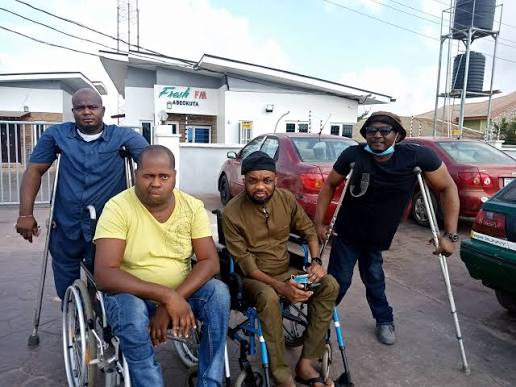
The Joint National Association of Persons with Disabilities and the Spinal Cord Injuries Association of Nigeria have called on the Ogun State Government to fully implement the state’s Disability Law, nearly nine years after it was signed into law.

The groups made the demand at a joint press briefing held on Wednesday at the NUJ Hall, Iwe Iroyin House, Oke-Ilewo, Abeokuta, urging Governor Dapo Abiodun to provide the political direction required to conclude the implementation process before the expiration of his tenure in eight months.

The Ogun State Disability Law was signed by the former governor, Senator Ibikunle Amosun, on December 27, 2017.

The groups, however, said the law had yet to be fully operationalised, leaving persons with disabilities waiting for the legal framework to translate into functioning institutions, enforceable protections and accessible public systems.

The National President of SCIAN, Abdulwahab Matepo, and the Chairman of JONAPWD, Ogun State chapter, Ayo Awobona, made the call during the joint briefing.

They said, “A law passed to protect the rights of persons with disabilities must not remain a law on paper. It must become a law in action.”

According to the groups, the disability community had engaged the state government and other stakeholders through meetings, consultations, letters, courtesy visits and media advocacy since 2025 in an effort to resolve issues surrounding the implementation of the law, without any success recorded.

They stressed that their campaign was not intended to confront the state government but to ensure that commitments were translated into concrete action.

See also  Canada’s Ontario opens new permanent residence programme for foreign workers

The groups said discussions about possible amendments to the law should not be allowed to indefinitely delay its implementation.

They advocated the operationalisation of the existing law in accordance with applicable legal procedures while any necessary amendments were pursued through the appropriate legislative process.

They said this would enable the government and the disability community to address implementation and possible improvements to the legal framework simultaneously.

The organisations said non-implementation had practical consequences for persons with disabilities, particularly in education, healthcare, transportation, employment, economic participation and political engagement.

They also called for accessible public institutions and mechanisms through which the rights of persons with disabilities could be protected and government obligations monitored.

The groups said the World Health Organisation estimated that about 16 per cent of the global population experienced significant disability.

They added that a 2025 JONAPWD “Assumptive Data of Persons with Disabilities in Nigeria” estimated that 1,032,221 persons were living with disabilities in Ogun State, based on a 15 per cent benchmark applied to the National Population Commission’s 2025 population projection.

Matepo said, “JONAPWD and SCIAN recognise government as an essential partner in achieving disability inclusion. We are therefore not presenting ourselves as opponents of government.

“We are presenting ourselves as partners seeking accountability and implementation. We remain ready to provide technical input, participate in consultations, review proposed amendments, mobilise the disability community and work constructively with government.

“But partnership must produce results. The disability community has demonstrated patience. We have written letters. We have attended meetings. We have made courtesy visits.

See also  Nigeria, Britain set for fresh security alliance

“We have engaged legal experts. We have engaged government officials. We have undertaken public awareness activities. We have participated in consultations. And we have continued to pursue dialogue. The next step should now be action.”

He added, “We respectfully call on His Excellency, Prince Dapo Abiodun, CON, to provide the necessary political direction to ensure that the process of implementing the Ogun State Disability Law is concluded before the expiration of his term in office.

“JONAPWD has already formally appealed to the Governor to intervene and direct the relevant authorities to conclude the necessary processes and commence implementation. We therefore ask that this matter receive the necessary attention at the highest level of the state government.”

Source: punchng.com

FOLLOW US ON:

FACEBOOK

TWITTER

PINTEREST

TIKTOK

YOUTUBE

LINKEDIN

INSTAGRAM

Continue Reading

News

Argentine president slams UN as ‘useless’ over Falklands dispute

Published

on

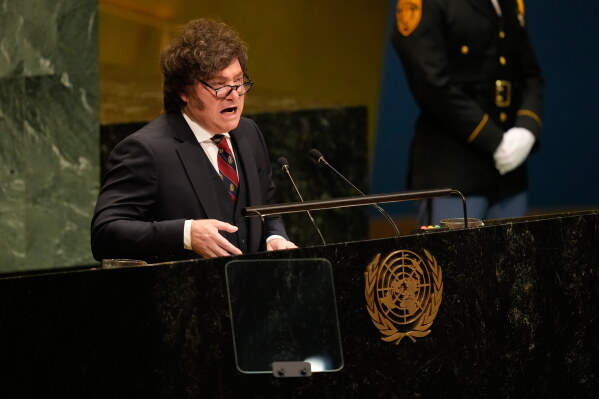
Argentine President Javier Milei attacked the United Nations in a speech to the world body on Wednesday, calling it a “useless organisation” filled with “arrogant parasites.”

Milei, one of US President Donald Trump’s closest Latin American allies, has repeatedly used the UN platform to criticise global governance and its “woke” agenda.

He accused the United Nations on Wednesday of having failed in its duty to guarantee collective security and human rights, saying it had instead allowed “chaos, violence and international terrorism” to flourish.

The UN, he said, “has become a useless organisation, serving only to feed a caste of fatally arrogant parasites disguised as well-intentioned bureaucrats.”

He accused the organisation of “looking the other way” on Argentina’s claim to the Falkland Islands, a British overseas territory which Argentines refer to as Las Malvinas and claim as part of their land.

Argentina has accused Britain of flouting a UN resolution ordering both parties to desist from unilateral action in the islands, over which the two countries fought a war in 1982.

“Those who follow the rules receive no reward for doing so, while those who break them face no repercussions whatsoever,” Milei said.

Underscoring Milei’s close ties with Trump, Argentina and the United States on Wednesday announced a joint initiative to improve the Latin American nation’s infrastructure and connect it with “vital economic sectors to major Atlantic ports and Western markets.”

The so-called Andes-Atlantic Corridor aims to facilitate investment in transport, digital infrastructure, minerals and energy, including Vaca Muerta, a massive hydrocarbon deposit in southern Argentina, a joint statement said.

See also  Argentine president slams UN as ‘useless’ over Falklands dispute

Last Saturday, PUNCH Online reported that the United Kingdom backed businesses and individuals operating in the Falkland Islands after an Argentine federal judge ordered British and Israeli companies to halt development of an oil project near the disputed territory.

The UK Minister for Overseas Territories, Uma Kumaran, said the government stood behind businesses and individuals supplying goods and services to the Falkland Islands, including those in the hydrocarbons sector.

AFP

Source: punchng.com

FOLLOW US ON:

FACEBOOK

TWITTER

PINTEREST

TIKTOK

YOUTUBE

LINKEDIN

INSTAGRAM

Continue Reading

Trending