Connect with us

Politics

Jonathan considers comeback for 2027 as court hears eligibility suit today

Published

on

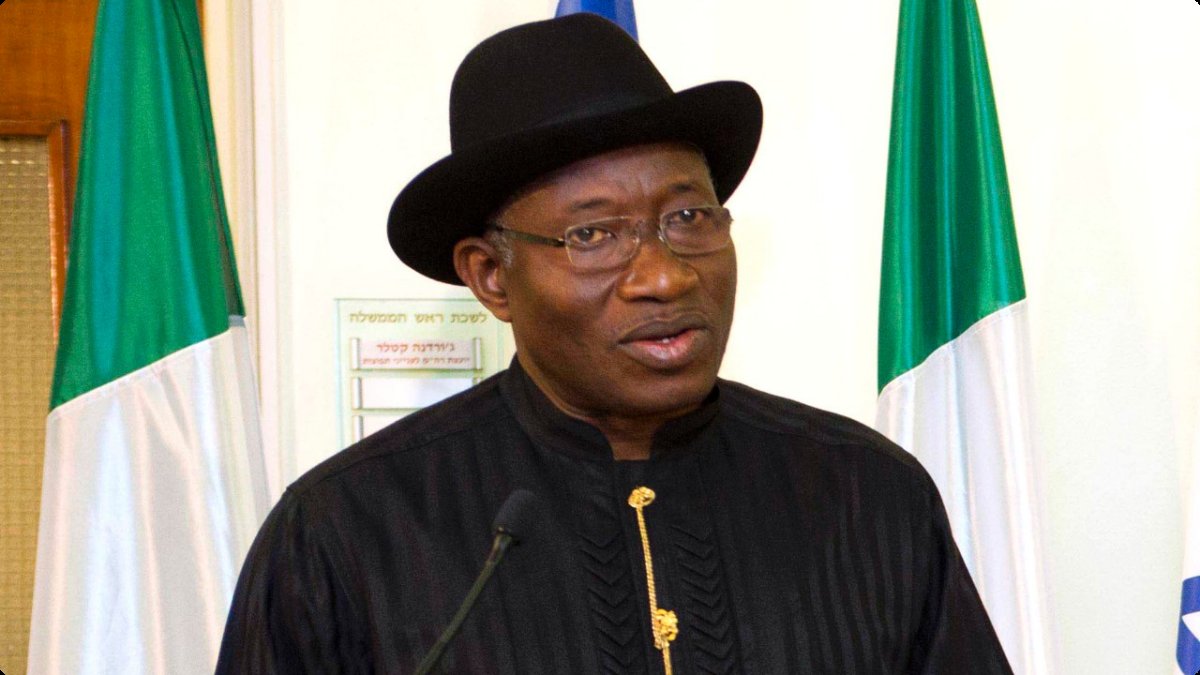
Former President Goodluck Jonathan has said he will consult widely before making a decision on calls urging him to contest the 2027 presidential election, stressing that the race for Nigeria’s highest office “is not a computer game.”

Jonathan spoke on Thursday while receiving youth groups who visited his office in Abuja to press him to join the race, saying he had taken note of their appeal but would not rush into a political decision without wide consultations.

His remarks come as the Federal High Court in Abuja is set to hear a suit today (Friday) seeking to bar him from contesting the 2027 presidential election on the grounds that he has allegedly exceeded the constitutional limit for holding the office of President.

The suit, filed by a lawyer, Johnmary Jideobi, is asking the court to declare Jonathan ineligible to run again and to restrain the Independent National Electoral Commission from accepting or publishing his name as a candidate in the forthcoming election.

Speaking on Thursday while receiving some youth groups who visited him at his office in Abuja to press him to return to the presidential race, the former President said he would consult widely before taking any decision, stressing that leadership required careful consideration.

“You are asking me to come and contest the next election. The presidential race is not a computer game. But I’ve heard you, and I’ll consult widely,” he said.

He commended the youth for showing interest in the country, describing patriotism as essential to nation-building.

“If you have no interest in the country, you will not bother to be here,” he added.

Jonathan also urged young Nigerians to promote peace and credible elections, warning that the absence of transparent electoral processes discouraged competent citizens from participating in politics.

“The key thing we need in this country is peace, so you continue to advocate for that. And you continue to advocate for peaceful and credible elections in the country.

“Because if we don’t have peaceful and credible elections, most good citizens will not want to bother to get involved in politics.”

See also  Wait till 2031, Akume admonishes northern politicians

The former President lamented Nigeria’s low voter turnout, saying the country recorded one of the poorest participation rates during elections despite having a large voting population.

“I’ve observed elections in about 14 or more African countries and even Southeast Asia. Nigeria has the lowest turnout in every election cycle.

“I think INEC needs to do something about it. They need to start getting consultants to look at it. And what is the cause? As young people, you must be involved in the electoral process,” he stated.

Jonathan challenged the youth to participate actively in the electoral process by obtaining voter cards and voting during elections.

“If I ask how many of you have your voter’s card now, probably 50 per cent of you don’t have your voter’s card. And you’re asking me to go and contest the election. So you must participate in the electoral process,” he said.

He also lamented the perception of Nigerians abroad, attributing it partly to leadership failures over the years.

Jonathan, however, reiterated that he had only listened to the appeal and would continue consultations before making any political decision ahead of 2027.

“I will consult. I cannot just wake up and say I want to be the president of Nigeria again. But I am telling you that I will consult. If there is a need to, I will wait,” Jonathan stated.

Meanwhile, the Federal High Court in Abuja will hear the suit, marked FHC/ABJ/CS/2102/2025, asking the court to declare Jonathan constitutionally ineligible to seek the presidency again.

Justice Peter Lifu, on April 28, ordered that hearing notices be issued and served on the defendants after they failed to file responses to the suit.

Jonathan is listed as the first defendant in the matter, while INEC and the Attorney-General of the Federation are joined as second and third defendants, respectively.

The plaintiff is seeking an order restraining Jonathan from presenting himself to any political party as a candidate for the 2027 presidential election.

He also prayed the court to stop INEC from accepting or publishing Jonathan’s name as a presidential candidate for the poll.

See also  Bayelsa assembly confirms Peter Akpe as deputy gov

In the originating summons, the plaintiff asked the court to determine “whether in view of the combined provisions of sections 1(1), (2) and (3) and 137(3) of the 1999 Constitution, the 1st defendant is eligible, under any circumstances whatsoever, to contest for the office of the president of the Federal Republic of Nigeria.”

Jideobi argued that Jonathan had already exhausted the constitutional limit of two terms, having completed the tenure of late President Umaru Yar’Adua before serving another full term after winning the 2011 presidential election.

In an affidavit deposed to by Emmanuel Agida in support of the suit, the plaintiff stated that Jonathan was sworn in as president on May 6, 2010, following Yar’Adua’s death on May 5, 2010.

The affidavit added that reports suggesting Jonathan may contest the 2027 election informed the decision to approach the court.

“That the plaintiff believes that the 1st defendant, having completed the unexpired term of late President Yar’Adua and subsequently served a full term after the 2011 election, has exhausted the constitutional limit of two tenures as president,” the affidavit partly read.

The plaintiff further argued that if Jonathan contests and wins the 2027 election, he would be taking the presidential oath of office for the third time, contrary to the provisions of the Constitution.

Agida said the suit was filed “in the public interest, in the defence of the rule of law and accentuation of the supremacy of the Constitution, and to preserve the integrity of the Nigerian constitutional order.”

No pact with Jonathan – NDC

The Nigeria Democratic Congress has, however, dismissed speculations that it has entered into a pact with Jonathan ahead of the 2027 presidential election.

The party insisted that consultations on its presidential ticket are still ongoing.

The party said it was keeping its doors open to high-profile politicians across party lines, including former governors, ex-ministers and serving lawmakers interested in joining its platform ahead of the next general election.

See also  Satguru Maharaj Ji promises to help free Nnamdi Kanu if Biafra can do the following...

Speaking in Abuja on Thursday, the Deputy National Spokesman of the NDC, Abdulmumin Abdulsalam, said the party had not zoned its presidential ticket and had yet to take any decision regarding a possible Jonathan candidacy.

According to him, the NDC remained committed to broad consultations and consensus-building as it positions itself as an emerging force in the country’s political landscape.

“The NDC is a party that believes in merging ideas and consultations across boards. I can categorically tell you that we have not zoned the presidential ticket. Consultations are still ongoing since politics is a dynamic game,” he said.

Abdulsalam added that the party was already attracting interest from influential political figures, including members of the ruling party.

“As I speak to you, we are still expecting high-profile personalities, including former governors, ex-ministers, serving and former lawmakers, even from the ruling party.

“The NDC is the beautiful bride that everybody wants to have right now,” he stated.

Reacting to reports that the NDC could be considering Jonathan as its presidential flagbearer, Abdulsalam described the claims as mere speculation.

“This is another rumour making the rounds that former President Jonathan wants to pitch his tent in our party. There is no concrete move like that in the hierarchy of our party, and such a decision has not been taken,” he said.

He, however, noted that the former President remained constitutionally qualified to seek office on any political platform if he so desired.

“But I can tell you that everything is still possible in the case of former President Jonathan.

“He is a Nigerian who is eminently qualified to fly the flag of the party on any platform of his choice. But as of today, we have no pact with him,” Abdulsalam added.

punch.ng

FOLLOW US ON:

FACEBOOK

TWITTER

PINTEREST

TIKTOK

YOUTUBE

LINKEDIN

INSTAGRAM

Continue Reading
Click to comment

Leave a Reply

Your email address will not be published. Required fields are marked *

Politics

El-Rufai’s son leads fresh Reps defections to NDC, ADC

Published

on

The gale of defections sweeping through the House of Representatives gathered momentum on Thursday as more lawmakers dumped their parties for the Nigeria Democratic Congress (NDC) and the African Democratic Congress (ADC).

The latest defections come barely days after 17 members of the House moved to the NDC, signalling what many observers see as an aggressive effort by opposition forces to build a broad coalition capable of challenging President Bola Tinubu and the ruling All Progressives Congress in the next election cycle.

At plenary on Thursday, presided over by Speaker, Tajudeen Abbas, five lawmakers formally announced their decisions to switch political parties, citing internal crises, leadership disputes and ideological disagreements within their former parties.

Those who defected were Muhammed El-Rufai, son of former Kaduna State Governor, Mallam Nasir El-Rufai, from the APC to the NDC; Joshua Obika, representing Abaji/Gwagwalada/Kuje/Kwali Federal Constituency of the Federal Capital Territory, from the APC to the NDC and Abdulhakeem Kamilu, member representing the Wudil/Garko Federal Constituency of Kano State, from the ADC to the NDC.

Also, Suleiman Richifa and Umar Ajilo, both from Kaduna State, dumped the Peoples Democratic Party for the ADC.

The younger El-Rufai, who represents Kaduna North Federal Constituency, had faced months of speculation over his political future following growing tensions between his father and the President Bola Tinubu administration.

Though he had maintained a low profile in recent months, his decision to join the NDC is widely seen as a significant political statement, especially given the strained relationship between the former governor and the Federal Government.

See also  #OccupyINEC: Atiku, Obi, Kwankwaso, others join ADC rally over INEC decisions

Nasir El-Rufai, once a key figure in the APC and a strong ally of President Tinubu during the 2023 election campaign, has in recent months become increasingly critical of the ruling party and the direction of the Federal Government.

The former governor’s failed ministerial nomination in 2023 marked the beginning of a visible crack between him and the presidency.

Since then, he has repeatedly accused the APC leadership of abandoning internal democracy and sidelining key stakeholders within the party.

Obika, who represents the Abaji/Gwagwalada/Kuje/Kwali Federal Constituency of the FCT, marked his third political movement in less than two years with the latest defection.

The lawmaker was elected into the House in 2023 on the platform of the Labour Party before joining the APC in March 2026 and now the NDC.

Announcing his latest defection on Thursday, Obika aligned himself with the growing opposition bloc rallying around the NDC.

Kamilu from Kano State resigned from the ADC, citing what he described as an “internal leadership crisis” within the party.

He had only recently moved to the ADC from the New Nigeria People’s Party, the platform on which he was elected in 2023.

Richifa and Ajilo blamed their decision to dump the PDP on what they described as the prolonged crisis rocking the party “from the state to the national level.”

Thursday’s defections further altered the balance of forces in the House and reinforced expectations that more lawmakers may switch allegiances in the coming months as consultations and coalition talks intensify ahead of the next election season.

See also  PGF denies report of Uzodimma ’s removal as chairman

punch.ng

FOLLOW US ON:

FACEBOOK

TWITTER

PINTEREST

TIKTOK

YOUTUBE

LINKEDIN

INSTAGRAM

Continue Reading

Politics

PGF denies report of Uzodimma ’s removal as chairman

Published

on

The Progressive Governors Forum has denied reports claiming that Imo State Governor, Senator Hope Uzodimma, was removed as chairman of the forum.

In a statement issued on Thursday by the Director General of the forum, Folorunso Aluko, the PGF described the report as “false and misleading.”

“The attention of the Progressive Governors Forum has been drawn to a false and misleading report circulating in some media platforms alleging the removal of its Chairman, His Excellency, Senator Hope Uzodimma, CON,” the statement read.

The forum stated that no meeting was held where such a decision was taken, insisting that Uzodimma remains the chairman of the body.

“For the avoidance of doubt, the Progressive Governors Forum states categorically that the report is entirely false, baseless, and without an iota of truth,” the statement added.

The PGF further said its secretariat had no knowledge of any resolution removing the Imo governor from office.

“The PGF secretariat has no record of, and is not aware of, any resolution removing the Chairman. His Excellency, Senator Hope Uzodimma, CON, remains the Chairman of the Progressive Governors Forum,” it stated.

The forum also maintained that it remains united and focused on its responsibilities, urging members of the public and the media to disregard the report.

punch.ng

FOLLOW US ON:
FACEBOOK

TWITTER

PINTEREST

TIKTOK

YOUTUBE

LINKEDIN

INSTAGRAM

See also  Dropping Shettima won’t stop Tinubu’s 2027 victory — APC N’Central Forum chair
Continue Reading

Politics

APC consensus push faces resistance in states ahead of primary elections

Published

on

The All Progressives Congress (APC) is facing growing internal tensions across several states as its consensus arrangement ahead of the 2027 general elections continues to generate resistance, competing interests, and political realignments within the party structure.

Findings by The PUNCH show that in some states, including Katsina, Borno, and Jigawa, party stakeholders have adopted the consensus option as a strategy to reduce intra-party conflict and promote unity ahead of the elections.

However, as gathered by our correspondent, in other states such as Ondo, Benue, Oyo and others, the party is heading for competitive primaries across key constituencies as aspirants insist on open contests to determine candidates.

Meanwhile, states like Yobe, Ogun, Sokoto, Plateau, Kwara and others are witnessing growing pushback, with several aspirants rejecting consensus arrangements and demanding a more transparent and competitive selection process.

Meanwhile, Vice President Kashim Shettima, on Thursday, submitted the completed expression of interest and nomination forms of Bola Tinubu to the national leadership of the APC in Abuja.

The submission, held at the Shettima Hall of the Bola Tinubu International Conference Centre, attracted top government officials and party stakeholders.

Speaking at the event, Shettima urged Nigerians across political, religious, and ethnic lines to support Tinubu’s 2027 bid, describing it as key to sustaining ongoing reforms and national development.

He stated, “On behalf of our great party, I urge all Nigerians, irrespective of differences in political affiliations, religious persuasions, private or social background, to support this nomination and, by the special grace of God, the candidacy of President Bola Ahmed Tinubu in 2027.

Speaking at the event, the APC National Chairman, Nentawe Yilwatda, said the submission of the forms represents continuity as well as a consolidation of the administration’s ongoing reforms and development initiatives.

“Our National Executive Committee, which is the second-highest decision-making organ of the party, has already endorsed Mr President and we stand firmly by that decision,” he said.

He further stated that the APC National Working Committee has unanimously backed Tinubu for a second term, citing what he called the President’s “remarkable performance.”

“The governors have seen the positive impact of these reforms. Today, there is more money accruing to states and local governments, ”he added.

Ajibola Bashiru, the National Secretary, observed that the submission of the forms marks an important step toward Tinubu’s participation in the party primaries and his eventual bid for re-election in 2027.

On the mode of presidential primary, Bashiru said, “The party has adopted direct primary for the emergence of its presidential candidate. Whoever is willing to contest against President Tinubu can do so.”

Chairman of the Progressive Governors Forum and Governor of Imo State, Hope Uzodinma, who spoke on behalf of APC governors, expressed the governors’ full backing for Tinubu’s re-election bid, affirming their united support for his return in 2027.

The APC commenced the sale of expression of interest and nomination forms on April 28, with the exercise scheduled to close by midnight on May 6.

The screening exercise is expected to begin on May 7 and end on May 12, while the party has approved both consensus and direct primaries in line with the Electoral Act 2025.

The primaries will subsequently be conducted in phases: House of Representatives on Friday, May 15; Senate on Monday, May 18; State House of Assembly on Wednesday, May 20; Governorship on Thursday, May 21; and the Presidential primary on Saturday, May 23. Appeal committees will sit shortly after each primary to address complaints arising from the exercises.

The Independent National Electoral Commission had scheduled the Presidential and National Assembly elections for Saturday, January 16, 2027, while Governorship and State Houses of Assembly elections will hold on Saturday, February 6, 2027.

INEC also stated that party primaries and the resolution of related disputes will take place between April 23 and May 30, 2026.

In addition, the Commission announced that campaigns for the Presidential and National Assembly elections will begin on August 19, 2026, while campaigns for Governorship and State Assembly elections will commence on September 9, 2026.

As the date for primaries draws closer, the Katsina State Governor, Dikko Umaru Radda, has defended the adoption of consensus primaries in the state, saying the decision was reached by stakeholders to preserve party unity and cohesion.

Radda, who is seeking re-election, spoke with journalists on Thursday in Abuja, after submitting his governorship expression of interest and nomination forms, respectively.

Radda said the ruling party was performing strongly in the state and expressed confidence that it would secure victory in the 2027 elections.

He stated, “This is a normal exercise. We are here to submit our expression of interest and nomination forms to our party, the APC. And we came, usually, to do that with due respect to the party and the party’s principles. So, in Katsina, APC is doing very well, and we are expecting victory come 2027, Inshallah, at all levels in Katsina State. So, we are very grateful.

“We don’t have any fear. Katsina State is an APC state; 361 ward councillors, 34 local governments, 34 members of the State Assembly, 15 members of the National Assembly, as well as three senators — they all belong to APC. So, I think Katsina is one of the most comfortable APC states in the North-West of the country.

“You know, we met with all the stakeholders in the state, and we all agreed that we are going to adopt consensus so that we continue with the party’s strength and cohesion, and also maintain peace in our party.’’

In Borno State, the APC has finalised arrangements to present a consensus governorship candidate, Mustapha Gubio, the immediate past Commissioner of Works under the administration of Governor Babagana Zulum, to fly the party’s flag in the 2027 general elections.

Findings by The PUNCH indicate that the decision was unanimously reached by party stakeholders, with Gubio, reportedly the preferred choice of Governor Zulum, emerging after his main contender, Senator Kakashehu Lawan, stepped down from the race.

It was gathered that Lawan had earlier purchased the expression of interest and nomination forms for the governorship contest, but later withdrew, citing the need to promote party unity and coordination within the APC.

Following his withdrawal, the consensus arrangement has reportedly been widely accepted across the state, with no recorded opposition from stakeholders or other aspirants proceeding to obtain forms, while the APC has also aligned its senatorial structure around Ali Ndume for Borno South, Kakashehu Lawan for Borno Central, and Muhammad Monguno for Borno North.

As of the time of this report, no aspirant had indicated interest in challenging the arrangements at the primaries, even as opposition parties continue their preparations for the 2027 elections.

Similarly, the APC in Jigawa State has adopted the consensus option for selecting candidates for the senatorial, House of Representatives, and State House of Assembly elections ahead of the 2027 polls, in line with the provisions of the Electoral Act.

Party stakeholders said the decision was intended to reduce costs, minimise internal disputes, and project a united front in the state, where the APC has remained politically dominant since 2015.

See also  N432bn probe: EFCC detains El-Rufai, DSS on standby

Although no aspirant has openly opposed the consensus arrangement, signs of dissatisfaction are reportedly growing within the party, with supporters of unsuccessful aspirants using social media platforms to express frustration and engage in heated exchanges.

A PUNCH correspondent’s attempt to speak directly with some of the consensus losers proved abortive, as most declined to comment or were unavailable when contacted.

Efforts to obtain an official response from the Jigawa APC leadership were unsuccessful, as the committee overseeing the consensus process denied journalists access to the proceedings, which commenced last Monday at the Government House in Dutse, the state capital.

Instead, a list containing the names of successful candidates has been circulating widely on social media, although the document carries no official signature or endorsement from the party leadership.

In a related development, one of the aspirants for the Jigawa South-West Senatorial District, Dr Halima Zakari, publicly accepted the outcome of the consensus process in a statement posted on her Facebook page last Tuesday after losing the bid.

“I accept the results of the consensus process in good faith and reiterate my unwavering loyalty to our great party, the APC,” Zakari stated, adding that “party unity remains paramount as we work together for the progress of Jigawa and Nigeria at large.”

Also, the APC in Zamfara State has adopted a consensus arrangement for some elective positions, including the governorship, where the incumbent Governor Dauda Lawal is the sole candidate for the position.

However, for the remaining positions, the party is expected to apply a mix of consensus and direct primaries in some constituencies.

In the Zamfara North Senatorial Zone, several aspirants have already purchased nomination forms, including former governor Alhaji Mahmuda Shinkafi, the incumbent senator of the zone, Sahabi Ya’u, APC stalwart, Dr Sani Shinkafi, current House of Representatives member, Aminu Jaji, and former minister Alhaji Tijjani Yahaya.

Speaking at a press conference held at his residence recently, Shinkafi firmly stated that he would not accept the consensus arrangement, stressing that justice must be ensured for all aspirants contesting elective positions in order to maintain peace in the state.

He said, “It is high time the APC stakeholders knew that every party member has the right to contest for whatever position he wants.

“We have all agreed to allow Governor Dauda Lawal to stand as the only governorship candidate of our great party, the APC, but apart from him, all positions must be contested for.

“We will never agree on the imposition of candidates, so there must be primary elections for all the positions except that of the governor.”

In his reaction, the party leader in the state and former governor Abdul Aziz Yari, said the party would still pursue consensus, adding that where it fails, direct primaries would be adopted.

He stated, “Where the consensus failed, we will be left with no option but to allow primaries to hold. We have already successfully conducted consensus in some places, and it works, but we still have some candidates who have yet to reconcile.”

Similarly, in Edo State, findings by our correspondent indicate that both consensus arrangements and direct primaries will be used in selecting candidates who will contest under the APC platform.

Credible party sources, who requested anonymity as they are not authorised to speak on the matter, disclosed that in Edo North and Edo Central, the sitting senators representing both zones, Adams Oshiomhole and Joe Ikpea, are expected to fly the party’s flag in the general election as consensus candidates.

However, one of the sources noted that the same arrangement does not apply in Edo South.

Unlike the states mentioned above, where some level of calm is being maintained, tensions are rising in Ogun, Yobe, Oyo, and others as aspirants engage in heated intra-party campaigns.

The Ogun State chapter of the APC  adopted a consensus arrangement to select its candidates ahead of the 2027 general elections.

Governor Dapo Abiodun recently reaffirmed this position, urging aspirants of the ruling party in the state to respect existing local government zoning arrangements and embrace consensus-building as preparations for the elections progress.

The governor also reportedly assured that aspirants who may not secure the party’s tickets under the consensus arrangement would have their nomination form fees refunded, along with possible political compensation through appointments.

According to a statement by his Special Adviser on Information and Strategy, Kayode Akinmade, the governor made the appeal during a strategic meeting in Abeokuta with House of Representatives and House of Assembly aspirants, as well as party leaders from the state’s 20 local government areas.

He urged the aspirants to prioritise unity, dialogue, and compromise over divisive internal contests.

While the consensus arrangement for the House of Assembly and House of Representatives tickets has not generated significant controversy, the situation is different for the three senatorial districts, where intense competition continues among aspirants and stakeholders.

The battle for the Ogun East senatorial ticket is between the incumbent and former governor of the state, Otunba Gbenga Daniel, and Abiodun.

The governor’s formal declaration followed a stakeholders’ meeting of the Ogun East APC held at Adeola Odutola Hall, Ijebu Ode, where Abiodun was announced as the adopted consensus candidate for the senatorial district.

However, Daniel, in a video that has since gone viral, alleged that he was excluded from the meeting where the consensus decision was reached.

The senator, speaking from his campaign bus under the OGD/PBAT Movement, claimed that he was denied access to the venue.

The restrained relationship between Daniel and Abiodun over the past two years is widely believed to be rooted in the struggle for control of the Ogun East senatorial ticket.

Meanwhile, Governor Abiodun, according to a statement by his Chief Press Secretary, Lekan Adeniran, on Thursday, formally submitted his Senate nomination form at the national headquarters of the party in Abuja as the consensus candidate for Ogun East Senatorial District.

During the submission, the governor described the moment as more than a political exercise, saying it reflected his commitment to the people of Ogun East and their shared heritage of history, enterprise, culture, and development potential.

Elsewhere in Ogun West, the senatorial race has also become highly competitive, with the Deputy Governor, Noimot Salako-Oyedele, joining other contenders, including former Senator Tolu Odebiyi, Adekunle Akinlade, Jimoh Ojugbele, and Olusegun Gbeleyi, while party leaders are still consulting on how to resolve tensions surrounding the consensus arrangement for the senatorial tickets.

An insider noted, “As far as the consensus arrangement is concerned, where we are having a bit of challenge is the senatorial race. The leadership of the party is meeting, and everything will be resolved very soon.

“And as for going to primaries, the party is weighing the options. I am not sure that the party will be able to manage the challenge. Yes, it looks tough, but the party is determined to keep its cohesion and unity.

“The party certainly will be on the side of the people… that much I can tell you, so justice will prevail.

See also  PDP slams AbdulRazaq over school closure on insecurity in Kwara

Another reliable source hinted that there is a growing groundswell of anger and frustration over the way the governor and the party have been handling the consensus arrangement.

“I think we can still continue to enjoy the peace of the graveyard that seems to be prevalent in our party now as a result of what many have come to term as forced consensus. The truth is that many of us are not happy, but we await how things will turn out in the coming weeks.”

In Yobe State, the party’s move to adopt consensus candidates ahead of the 2027 elections is facing resistance, particularly in the governorship race, where divisions have emerged following the endorsement of former Secretary to the State Government, Baba Wali.

Although the party leadership under Governor Mai Mala Buni and former governor, now Minister of Police Affairs, Senator Ibrahim Geidam, insists on consensus as the preferred mode of primaries, opposition from key aspirants and stakeholders suggests the process may eventually lead to direct primaries if consultations fail.

Findings show that while the APC leadership is pushing for a negotiated succession to avoid a divisive contest, Wali’s endorsement has sparked resistance across the three senatorial zones, with several aspirants rejecting what they describe as an imposition.

In a communiqué issued after the meeting, the stakeholders described Wali as “a seasoned technocrat with adequate qualifications, patience and temperament for good leadership and governance.”

The forum maintained that Wali’s extensive experience in government and service in successive administrations placed him in a strong position to sustain continuity and consolidate on the achievements of the Buni administration.

The stakeholders also reaffirmed their support for the re-election of President Bola Tinubu in 2027 and restated the party’s preference for consensus candidacy for major elective positions in the state.

The endorsement has reportedly deepened divisions within the party and intensified calls for direct primaries among aggrieved aspirants.

Less than 24 hours after the announcement, Senator Ibrahim Bomai rejected the consensus arrangement, describing the endorsement as contrary to democratic principles and internal party democracy.

“We categorically reject this attempt to subvert due process. We reject the culture of imposition. We reject any scheme that undermines fairness, equity and the democratic rights of our people,” he said.

Another governorship aspirant, Musa Tumsah, also opposed the endorsement of Wali as the consensus candidate.

Although he did not publicly release a detailed statement, associates close to him confirmed that both he and his supporters were dissatisfied with the arrangement.

One of his loyalists revealed that Tumsah, who was among the earliest aspirants to obtain the APC governorship expression of interest form, believed the consensus process lacked transparency and fairness.

Findings by our correspondent showed that several governorship aspirants who rejected the arrangement are now pushing for direct primaries ahead of the APC governorship contest in the state.

Those preparing for the primaries include Bomai, Tumsah, Lawan Geidam, former senatorial candidate Bashir Machina, and former Inspector-General of Police, Usman Alkali.

The development indicates that efforts by the APC leadership to produce a consensus governorship candidate may face major obstacles as aggrieved aspirants intensify consultations and mobilise supporters across the three senatorial zones.

The same scenario appears to be prevalent in Kano, where certain stakeholders, including youth groups, have rejected agreements on consensus reached in some areas.

A group known as the Coalition for Better Kano has also opposed the reported plan by APC stakeholders to allocate the Kano Central Senatorial ticket to former Governor of the state, Malam Ibrahim Shekarau.

The senatorial race also includes other aspirants such as Usman Bala, Garba Abubakar, Sha’aban Sharada, and Abdulsalam Zaura.

In a statement signed by its leader, Inyass Auwal, the group rejected the move to hand the ticket to Shekarau, insisting that the principle of political justice requires that loyalty within the party should be duly rewarded.

The statement read, “While we hold Malam Ibrahim Shekarau in high esteem as a father and elder statesman, the principles of political justice demand that loyalty must be rewarded.

“We urge you (Shekarau) not to allow your name or influence to be used in a manner that creates a sense of injustice against those who kept the party’s light burning in your absence,” the group said.

Similarly, the Gaya Youth Democracy Supporters called on party members and stakeholders in the Ajingi/Gaya/Albasu Federal Constituency to remain calm and uphold the rule of law.

In Oyo State, tension among governorship aspirants within the APC has continued to rise despite ongoing discussions around a possible consensus arrangement, with many aspirants already purchasing governorship nomination forms.

Among the aspirants, Senator Sharafadeen Alli is believed to enjoy significant support within the APC structure. The former Chairman of Ibadan North Local Government, former Secretary to the State Government, and former Chief of Staff to former Governor Rashidi Ladoja between 2003 and 2007 has recently secured endorsements from several party leaders and stakeholders at both the national and state levels, particularly within the Ibadan and Ibarapa political blocs.

However, other governorship aspirants, including former Deputy Governor of the Central Bank of Nigeria and immediate past Minister of Power, Adebayo Adelabu; legal practitioner, Akeem Agbaje; historian, Dr Ayo Adesina; oil and gas businessman, Ayodele Alao; Prince Kola Asanike; Muyiwa Gbadegesin; former Deputy Governor to Governor Seyi Makinde between 2011 and 2019, Rauf Olaniyan; and Dr Moshood Abiola, are reportedly insisting on direct primaries.

Investigations further revealed that some aspirants may eventually be persuaded to step down and compensated with appointments at either the national or state level after the 2027 general elections.

A credible source told The PUNCH that, “Though other aspirants are still insisting on direct primaries, party executives, elders, and leaders, coupled with the directive from Abuja, have agreed on a consensus to present a strong and marketable candidate capable of reclaiming the Agodi Government House after eight years in opposition.

“The party hierarchy is still deliberating on it. We are going for consensus for the governorship, National Assembly, and State Assembly elections,” an APC chieftain insisted.’’

Another party stalwart, who did not want his name mentioned, said, “It’s an internal issue, and we shall resolve it. Actually, what we have resolved upon is consensus. That’s what we want. You should expect that aspirants will kick against it when it is not in their favour. This is politics; we shall resolve it. When we get to the bridge, we shall know how to cross it.”

In a related development, fresh divisions have emerged within the ruling party in Sokoto State following the party’s adoption of consensus arrangements ahead of the 2027 general elections.

The party is reportedly backing a consensus for major elective positions across the state.

Under the arrangement, Governor Ahmed Aliyu is expected to retain the governorship ticket, while Senator Aliyu Wamakko is likely to remain the party’s candidate for Sokoto North Senatorial District. Umar Ajiya and former senator Ibrahim Danbuwa are also being considered for key positions.

See also  See why Tinubu pulls 100,000 policemen from VIPs

However, the arrangement has sparked discontent among some aspirants and party loyalists, particularly those contesting legislative seats.

For instance, the Kware/Wamakko Federal Constituency has emerged as a major flashpoint within the party.

Sources said the endorsement of incumbent lawmaker Ahmad Kalambaina for another term unsettled the Deputy Speaker of the Sokoto State House of Assembly, Kabiru Kware, amid claims that there had earlier been an agreement for the seat to rotate to Kware Local Government Area in 2027.

In Ondo, there are indications that the consensus arrangement may not be feasible.

This is because almost all senatorial, National Assembly, and State House of Assembly aspirants have already obtained their expression of interest and nomination forms to contest for the party’s tickets.

Though the party has not officially announced the mode of primary to be adopted, it was gathered that aspirants have been unable to agree on a consensus candidate among themselves. As it stands, all aspirants across the Senatorial, National Assembly, and State Assembly races in Ondo State are preparing for direct primaries.

Reacting to the development, the Director of Media and Publicity, Mr Steve Otaloro, said whichever mode is eventually adopted by the party, the process would be fair and credible.

He said, “Consensus remains the first option provided by the party for the forthcoming primary election. However, where consensus is not mutually agreed upon by all concerned stakeholders and aspirants in any constituency, the party will proceed with a direct primary in line with the party’s guidelines.

“At this stage, the Ondo State chapter of the party is not in a position to categorically determine which constituencies have accepted or rejected consensus arrangements because consultations and discussions are currently taking place at the constituency and local government levels among aspirants, party leaders and stakeholders, not at the state level.’’

To dispel any contention, the APC in Ekiti has advised aspirants for National Assembly positions to prepare for direct primaries for senatorial and federal constituency tickets if the consensus option fails.

The party disclosed  in a recent statement issued by its State Publicity Secretary, Segun Dipe, that “while we do not rule out the possibility of a true consensus, we urge all contestants to respect the party’s constitution and guidelines, and to refrain from misrepresenting the positions of our leaders.

“Let every aspirant go to the field and test his/her political strength. Where consensus does not work, the direct primary option will certainly be adopted, as provided for in our Constitution.”

The APC Chairman in Benue State, Benjamin Omale, said on Thursday that the party would adopt direct primaries.

Omale explained that the National Vice Chairman of the APC for the North-Central zone, Alhaji Mu’azu Rijau, disclosed this during a peace meeting held last Sunday in Makurdi.

He added that the zonal vice chairman also clarified the party’s position on the issue of automatic tickets in its primaries.

“Principally, as I mentioned, based on the party directives and the provision of the Electoral Act, the mode of primaries should be consensus or direct. Initially, we have decided to have direct primaries in Benue State, and that has been the decision.”

Omale quoted Rijau as saying.

Meanwhile, Governor Hyacinth Alia and the Secretary to the Government of the Federation, Senator George Akume, have expressed differing positions on the issue of automatic tickets for all elective positions in the state.

While the SGF had announced that candidates for state and National Assembly positions, as well as the governorship, would be given automatic tickets, Alia stated that the decision on automatic tickets was beyond both of them.

If an automatic ticket is eventually adopted, several aspirants, including former Governor Gabriel Suswam, former House of Representatives member Francis Agbo, and others, may be excluded from the contest.

Senator Danjuma Goje, who represents Gombe Central, has rejected the consensus arrangement that produced Mohammed Ahmed and is now insisting on direct primaries, citing the provisions of the Electoral Act.

Similarly, Alfred John, who lost the consensus ticket to Ali Isa for the Billiri/Balanga Federal Constituency, said he would consider other options following the outcome.

Also, former Minister of Communications and Digital Economy, Prof Isa Pantami, and former Minister of Transportation, Saidu Alkali, have vowed to challenge the process that produced Jamilu Gwamna as the APC consensus governorship candidate.

In a statement signed by the APC State Publicity Secretary, Moses Kyari, the party acknowledged the concerns raised by some of the aspirants.

“The All Progressives Congress in Gombe State has taken note of certain expressions of dissatisfaction from a few aspirants regarding the recently announced consensus candidates for the governorship, National Assembly, and State Assembly elections,” the statement read.

Kyari explained that the party’s constitution recognises consensus as a valid and preferred method for selecting candidates.

He added that the party carried out extensive consultations involving its Elders Committee, State Working Committee, State Executive Committee and all aspirants.

“We affirm that every aspirant was duly informed and formally invited to participate in the consensus-building process. However, it is a matter of record that some of the individuals now complaining opted, for their own reasons, to decline participation,” he stated.

The party, however, clarified that consensus was not binding on all aspirants.

“Neither the Electoral Act nor the APC Constitution imposes consensus as a fait accompli. Where any aspirant disagrees with the consensus arrangement, the party will proceed with the direct primary option,” Kyari said.

Also, the contest for the 2027 governorship ticket of the APC in Kwara State has intensified amid uncertainty over whether the party would adopt consensus or direct primaries.

Speaking with The PUNCH on Thursday, the APC Chairman in Kwara State, Prince Sunday Fagbemi, said the state chapter had not yet received official instructions on the mode of primaries to adopt.

“I am not in a position to say whether the party in the state would adopt consensus or direct primaries. We need to receive direct from the national body,” he said.

The APC Plateau State is navigating a delicate balance between consensus and direct primaries as internal disagreements threaten to complicate its candidate selection process ahead of the elections.

In an interview with The PUNCH in Jos on Thursday, the state APC Chairman, Rufus Bature, stated, “We are using both options. It depends on which one the stakeholders at the state or local government want. As a party, we can’t decide for them. Both options are acceptable under the Electoral Act — the consensus or the direct primaries.

“Regarding the governorship, the election is conducted by officials from the party at the national level. So, they will decide which one to adopt after consultations.

“Of course, they will consult with us. For now, we are focusing on the screening of candidates. It is after the screening that we will know which direction to take. We will cross the river when we get to the bank.”

punch.ng

FOLLOW US ON:

FACEBOOK

TWITTER

PINTEREST

TIKTOK

YOUTUBE

LINKEDIN

INSTAGRAM

Continue Reading

Trending