The Nigerian military has defended an air strike on Jilli village market near the Borno–Yobe border, calling the target a terrorist enclave as public anger grows over reported civilian casualties.
The strike, carried out on Saturday under Operation HADIN KAI, has sparked widespread backlash, with local authorities, political leaders and rights groups condemning the incident amid conflicting accounts of casualties.
Local sources reported the death toll at over 40 civilians, while other reports indicated that figures could be significantly higher, reflecting ongoing confusion and lack of consensus over the exact number of casualties.
The military, however, maintained that the location was a legitimate military target, describing Jilli as a known logistics hub and convergence point for fighters of the Islamic State West Africa Province.
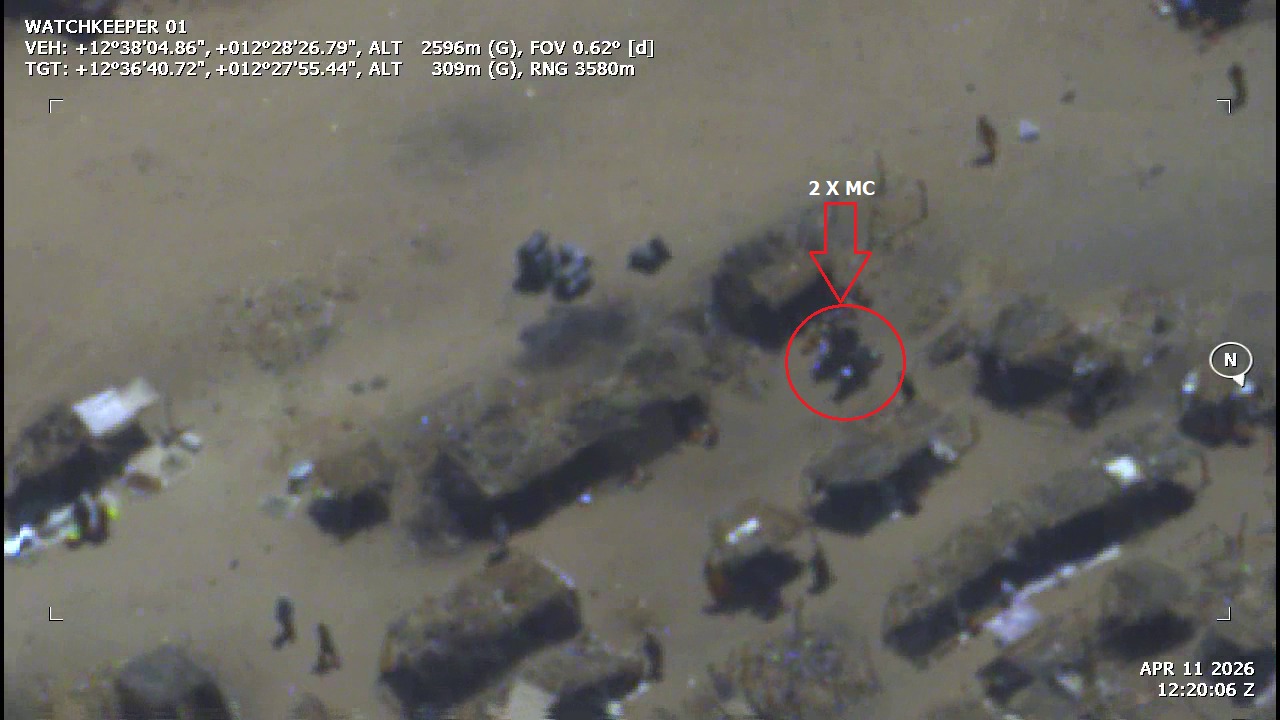
In a statement on Sunday, the Media Information Officer of the Northeast Joint Task Force, Operation Hadin Kai, Lt. Col. Sanni Uba, said the operation followed sustained intelligence, surveillance, and reconnaissance missions that tracked the movements of suspected terrorists, including motorcycles and gun trucks, converging on the area.
“The Air Component of Joint Task Force (North East) Operation HADIN KAI, in a carefully, well-coordinated, planned, and intelligence-driven operation, has successfully conducted a precision air strike on a known terrorist enclave and logistics hub located near the abandoned village of Jilli in Gubio Local Government Area of Borno State.
“The successful strike, executed on 11 April, 2026, followed sustained intelligence, Surveillance and Reconnaissance (ISR) missions over the Bindul–Jilli axis, an area long identified as a major terrorist movement corridor and convergence point for Islamic State West Africa Province terrorists and their collaborators”, he said.
Sanni cited a recent attack on troops in the area, which led to the death of eight soldiers, while several others were wounded in action.
“It will be recalled that in January 2026, troops moving from Gubio towards Damasak came under a major Improvised Explosive Device attack along the road at Bindul, resulting in the tragic loss of eight soldiers, while several others were wounded in action. More recently, on 9 April, coordinated attacks were recorded in Ngamdu and Benisheik, supported by the same terrorist logistics network.’’
He said, consequently, the Theatre intensified overhead surveillance and intelligence gathering across the area in response to persistent reports of terrorist movement and logistics activity.
According to him, multiple reports were received on 11 April 2026, stating that ISWAP gun trucks and motorcycles were moving along the axis.
“Consequently, ISR coverage over the area was immediately intensified. During the surveillance mission, a contingent of motorcycles was observed moving in the direction of Jilli, followed shortly by the movement of several additional vehicles, all converging on the same location. These suspicious movements were subsequently corroborated by credible human intelligence sources, confirming that the converging elements were terrorists, their collaborators, and logistics handlers,” he said.
“It is imperative to state that, in line with established operational procedures, a rigorous and professional targeting process was undertaken”, he added.
He further noted that target fidelity was confirmed through multiple credible human intelligence sources, supported by persistent aerial surveillance.
“Upon final validation, the Air Component executed a series of precision strikes on the objective, while surveillance platforms maintained continuous overwatch for real-time battle damage assessment,” he said.
“Equally important to know, the post-strike assessment confirmed that the target area was struck with high accuracy, destroying the identified terrorist logistics enclave. Scores of terrorists were neutralised in the strike, with their vehicles and technicals destroyed, while surviving elements were observed fleeing in multiple directions.”
According to him, intelligence further indicates that the neutralised elements were in the final stages of receiving logistics from couriers, for coordinated attacks on troop locations within the Gubio axis.
“This decisive action has therefore significantly disrupted imminent terrorist plans and degraded their operational capability within the Theatre,” he stated.
He further explained that on Sunday, a terrorist logistics courier identified as “Turja Bulu”, was arrested at Ngamdu Town, and upon preliminary investigation confessed that he took part in the attack at 29 Bde location on 9 April 2026 at Benisheik and had been dispatched by ISWAP from Jilli where most of his fellow terrorists were hibernating to provide food items for another group of terrorists currently hibernating around the Magumeri-Gubio general area.
“This successful strike is yet another demonstration of the resolve and operational capability of OPHK to sustain relentless pressure on terrorist elements, disrupt their logistics networks, and deny them freedom of movement within the Theatre.”
He reiterates the command’s ban on the use of motorcycles across the North-East operational theatre, particularly in Borno and Yobe States, due to their established and continued use by terrorist elements for movement, logistics, and attack operations.
“Any such movements in restricted areas are therefore treated with the utmost seriousness in line with existing operational directives,” he said.
However, the Yobe State Emergency Management Agency confirmed that civilians, including traders, were affected in what it described as an accidental air strike at the Jilli Saturday Market in Gubio Local Government Area.
According to the agency, victims included residents from Geidam in Yobe State who had crossed into the border community for market activities.
“The Yobe State Emergency Management Agency wishes to inform the general public that it has received preliminary reports of an incident on Saturday evening at Jilli Saturday Market in Gubio Local Government Area bordering Geidam, which reportedly resulted in casualties affecting some traders from Geidam LGA, Yobe State.
“In response, SEMA, as directed by Governor Mai Mala Buni, in collaboration with relevant security agencies and health authorities, has immediately activated emergency response mechanisms and deployed assessment teams to the affected area to ascertain the facts and provide necessary support to victims,” the statement added.
Borno State Governor, Prof Babagana Zulum, warned residents against aiding, harbouring, or providing logistical support to Boko Haram insurgents.
In a statement on Sunday by the Special Adviser to the Governor on Media, Dauda Iliya, Zulum described the Jilli market as a notorious hub allegedly used by insurgents and their logistics suppliers.
“I have been properly briefed on the airstrike carried out by the Air Component of Operation Hadin Kai on Jilli market, a border town between Borno and Yobe states. Let me state categorically that the Borno State Government closed Jilli and Gazabure markets five years ago,” the governor said.
“I am in close consultation with the Government of Yobe State and the military hierarchy on the matter,” he added.
Zulum explained that the Borno State Government maintains close coordination with the military and other security agencies before resettling any community or reopening markets, particularly in areas affected by insurgency.
He reiterated his administration’s unwavering commitment to safeguarding law-abiding citizens and sustaining collaborative efforts with security agencies to restore lasting peace and stability across the state.
The governor further urged residents to remain vigilant and cooperate with security agencies by providing credible information that will aid ongoing military operations.
The Yobe State Government on its part acknowledged that the operation targeted a Boko Haram stronghold, but noted that civilians were inadvertently hit during the strike.
Special Adviser on Security Matters, Brig.-Gen. Dahiru Abdulsalam (retd.) said those injured had been evacuated to the hospital and were responding to treatment.
Amnesty International condemned the strike, describing it as “reckless” and calling for an immediate and impartial investigation.
The group alleged that over 100 people may have been killed, citing witness accounts that military jets bombed the busy market.
“Launching air raids is not a legitimate law enforcement method by anyone’s standard. Such reckless use of deadly force is unlawful, outrageous and lays bare the Nigerian military’s shocking disregard for the lives of those it supposedly exists to protect.
“The Nigerian authorities must immediately and impartially investigate the incident and ensure that suspected perpetrators are held to account, “ AI said.
Similarly, former Vice-President Atiku Abubakar decried the incident, calling it a “devastating failure” and questioning the value placed on Nigerian lives.
“While targeting insurgents, innocent Nigerians were once again reduced to collateral damage. How long will citizens remain unsafe both from terrorists and from the very operations meant to protect them? Just a few days ago, the United States deployed over 150 aircraft and spent an estimated $300 million to rescue just one pilot in Iran, even destroying equipment worth over $100 million each to protect a single life. That is the value they place on one citizen.
“Here at home, we must ask: what is the value of Nigerian lives? This demands urgent review, accountability, and decisive action to prevent a recurrence. My heartfelt condolences go to the bereaved families and affected communities. Nigeria must uphold its duty to protect its citizens. That is the ultimate essence of national security,” he said.
In response to the controversy, the Nigerian Air Force said it had initiated a probe into allegations of civilian casualties.
The Service, in a statement on Sunday by the Director of Public Relations and Information, Ehimen Ejodame, noted that it had activated its Civilian Harm Accident and Investigation Cell to conduct a fact-finding mission.
“The Service treats all reports of possible civilian harm with the utmost seriousness and empathy, as the protection of innocent lives remains central to all NAF operations. In line with this commitment, the CAS has directed an immediate activation of the Civilian Harm Accident and Investigation Cell to immediately proceed to the location on a fact-finding mission on the allegation.
“The NAF remains firmly committed to professionalism, accountability, and transparency in the conduct of its missions, and will work closely with relevant authorities and community representatives to establish the facts, “ the statement read in part.
Security experts have also weighed in, urging the military to adopt more precise targeting measures and strengthen intelligence verification to avoid civilian harm during operations.
The Managing Director of Beacon Security and Intelligence Ltd, Kabir Adamu, said the incident highlights gaps in ongoing civilian protection measures.
“I know NAF’s ongoing Civilian Harm Mitigation plan is meant to address this challenge of unintended blue on blue killings. However, it is unclear what progress or stage this plan is at,” he said.
He added, “To address these devastating events, a systemic overhaul of the military’s air campaign is required. This must focus on intelligence, targeting procedures, civilian harm mitigation, accountability, and advanced equipment.”
Adamu called for transparency and an immediate investigation into the strike. “The Nigerian Air Force should publicly confirm its involvement, clarify the intended target, and detail the sequence of events,” he said.
He also advocated compensation for victims, noting, “There should also be a demonstrable compensation measure where a standard system for ‘condolence’ or ‘solatium’ payments to victims’ families for death, injury, and property damage, regardless of fault.”
According to him, long-term reforms must include institutionalising civilian protection mechanisms across the security architecture.
“The other systemic and long-term policy reforms, including the institutionalisation of civilian protection through the full implementation of the Civilian Harm Mitigation and Response Board and its Action Plan, ensuring it is well-resourced and has authority across all branches,” he said.
The security expert further urged coordination among key government institutions to standardise civilian protection practices.
Adamu emphasised the importance of compliance with both national and international legal frameworks.
Highlighting operational gaps, he called for improved intelligence and training.
“The DHQ should pursue comprehensive training and operational reforms. Including advanced Intelligence capabilities in the areas of Human Intelligence, Signals intelligence and Imagery Intelligence before strikes and avoiding an over-reliance on air power alone without proper intelligence, which is a major risk factor,” he said.
He also pointed to the need for stricter targeting protocols. “Another area that requires improvement is in targeting protocols. Here, there is a need for NAF to adopt multi-layered verification for airstrike authorisation. Drills to handle dynamic or ‘fleeting’ targets must emphasise that civilians are never a legitimate target.”
The expert further recommended integrating civilian protection training across all levels of the military.
Reacting to the incident, security analyst Chidi Omeje described the development as tragic but reflective of the realities of asymmetric warfare.
“It is actually a very sad one, and it is recurring. I don’t think it has to do with our military’s incompetence or whatever. It’s just the nature of this operation,” he said.
Omeje explained that identifying targets in such conflicts is often difficult. “And sometimes, you know, because the enemies are embedded with the people, it is difficult to actually tell who is the combatant, who are the adversaries, and all that, because this is a very asymmetric warfare,” he added.
Drawing from his experience, he said, “I have had opportunities to be embedded with troops in some theatres of operation in Maiduguri, in Sokoto, and all that. And I know exactly the difficulties, the intricacies of these things.”
He further noted, “But then again, this is not to discountenance the possibility of weak intelligence because intelligence is always the key in this kind of operation. If they had good intelligence, I am sure they might get their targets right.”
Omeje stressed that mistakes, while tragic, can occur in such operations.
On the need for improvement, he added, “We must anchor our counter-terrorist operation on intelligence, human intelligence. We must have robust community relations so that people can see something and say something. We also must invest in technology. Intelligence is just inevitable.”
Also reacting, security expert Jackson Ojo expressed concern over what he described as a deteriorating security environment and a lack of accountability.
“The way the situation is now, we are in an unsafe territory. That is the territory where things are happening anyhow,” he said.
He questioned the precision of military operations, stating, “If it is our military people, why is it that they are not being precise? Precision is supposed to be the watchword of military air strikes. They must be precise.”
Ojo further raised concerns over the uncertainty surrounding responsibility for such incidents. “Is it the handiwork of the Nigerian Air Force? Nobody knows. Is it Boko Haram? Is it foreign support? Nobody knows,” he said.
Expressing frustration over accountability, he said, “Immediately after the airstrike, heads would have rolled. But nobody is querying anybody. Anybody can just do anything and just go scot-free.”
He warned that the situation is eroding confidence within the security community, noting, “Even in the security society, I think we are confused. We don’t know what is happening now.”
Buratai backs military
Defending the military, a former Chief of Army Staff, Lt. Gen. Tukur Buratai (retd.), described the area as a known terrorist enclave.
The retired army chief said that although the loss of innocent lives was tragic, the operation was based on credible intelligence indicating that insurgents were using the market as a logistics base.
Buratai, in a statement issued on Sunday and made available to The PUNCH, commended the Nigerian Air Force and the intelligence community for what he termed their “courage and professionalism.”
“Any loss of innocent life is deeply unfortunate and painful. However, the operation was a targeted military action based on credible intelligence.”
According to him, the market had for years served as a hub for terrorists affiliated with Boko Haram and the Islamic State West Africa Province.
He explained that insurgents allegedly used the location to collect illegal levies, procure supplies, and plan attacks against communities and security forces.
“The public should understand the history of Jilli Market. It has long been a notorious terrorist logistics hub,” he added.
Buratai recalled that troops had previously raided and shut down the market during operations, including the 2018 Operation LAST HOLD, where soldiers engaged insurgents in the area.
Despite repeated crackdowns, he said the terrorists continued to operate the market, allegedly with the cooperation of some civilians.
“It is deeply regrettable that innocent lives may have been caught in the strike, but the responsibility rests with the terrorists who deliberately embed themselves within civilian populations,” he stated.
The former army chief stressed that no military intends to harm civilians but must act when threats persist over time.
He appealed to residents of Geidam, Gubio, Damasak and Ngamdu to support security agencies by avoiding markets infiltrated by insurgents.
“Communities that continue to trade with such elements may inevitably find themselves in harm’s way,” he warned.
Buratai reaffirmed that sustained military action, backed by civilian cooperation, remained key to ending insurgency in the North-East.
The latest accidental bombing along the Borno–Yobe border comes less than a month after a similar tragedy in the region, highlighting ongoing concerns over civilian safety in conflict zones.
On March 16, 2026, airstrikes hit crowded public areas in Borno State, including a market, a location near a post office, and the gate of the University of Maiduguri Teaching Hospital.
The incident left at least 23 people dead and 108 others injured, drawing widespread criticism and calls for greater caution in military operations.
However, when contacted, the councillor of Fichiram Ward, Malam Lawan Zannah, confirmed the incident, stating that he had verified the number of casualties at about 200.
“The incident affected many people in the area, and from the information available to us, the number of those who lost their lives is very high.
“I personally verified the figures, and they show that about 200 people have died as a result of the incident.
“At the moment, only 23 victims are receiving treatment within Geidam Local Government Area of Yobe State, as there are no available vehicles to transport many of the injured to hospitals.
“The situation is very critical because several victims still need urgent medical attention, but the lack of transportation is making it difficult to move them to appropriate medical facilities,” he said.