• Candidates urged to re-check new results after 48 hours, students protest, parents slam CBT plans
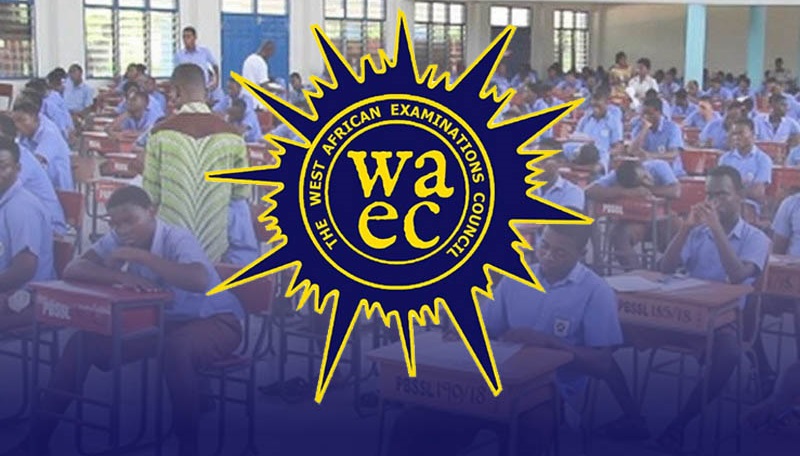
There was outrage after the West African Examinations Council denied candidates access to its results portal for the 2025 West African Senior School Certificate Examination for School Candidates following technical glitches.
A statement by the Head of Public Affairs, WAEC National Office, Moyosola Adesina, revealed that the Council identified bugs in its result system following a post-release review of the 2025 WASSCE results, which led to the access denial.
The Council said access to the result checker portal had been temporarily suspended, urging candidates who had previously checked their results to re-check from Friday for the updated versions.
While defending its serialisation method for Mathematics, English Language, Biology, and Economics, WAEC admitted that the post-release quality checks exposed technical glitches in its backend systems.
The statement read in part, “The West African Examinations Council sincerely regrets to inform the general public of technical issues discovered during the internal review of the recently released results of the West African Senior School Certificate Examination for School Candidates, 2025.
“As part of our efforts to curb malpractice, the Council embarked on an innovation—paper serialisation—already deployed by a national examination body. It is worth noting that this is in line with best assessment practices. The paper serialisation was carried out in Mathematics, English Language, Biology, and Economics. However, an internal post-release procedure revealed some technical bugs in the results.
“The Council, being a responsive body that is sensitive to fairness and professionalism, has decided to urgently review and correct the technical glitches that led to the situation. As a result, access to the WASSCE SC 2025 results has been temporarily denied on the result checker portal.
“We extend our deep and sincere apologies to all affected candidates and the general public. We appreciate their patience and understanding as we work diligently to resolve this matter with transparency and urgency within the next 24 hours. On this note, candidates who have previously checked their results are advised to re-check after 24 hours from now.”
Thursday’s clarification came less than 24 hours after WAEC, via its official X handle, declared a temporary shutdown of its result portal, citing “technical issues.”
The Council has been under intense scrutiny since Monday, when the Head of National Office, Dr. Amos Dangut, revealed that only 38.32 per cent of the 1,969,313 candidates who sat the 2025 WASSCE obtained credits and above in five subjects, including English Language and Mathematics.
The figure, the worst in a decade, sparked widespread concerns among stakeholders about the state of education, increasing exam malpractice, and readiness for a full digital transition in the conduct of national examinations.
Among those who reacted to Thursday’s development were the Nigeria Union of Teachers, the National Association of Parent-Teacher Associations of Nigeria, and the National Association of Nigerian Students.
Speaking, the National President of NAPTAN, Haruna Danjuma, said while it was commendable that WAEC accepted responsibility, he described the planned transition to full Computer-Based Testing for external exams as impracticable.
“It is good for whoever made a mistake to acknowledge it. But this idea of moving WASSCE and NECO entirely to CBT is unrealistic,” Danjuma said.
He stressed that there were two major challenges: inadequate infrastructure and poor computer literacy levels among pupils.
“If truly we want our children to succeed in CBT, let the government at all levels provide computers in schools and ensure students become computer-literate.
“Right now, about 80 to 90 per cent of students, especially in rural areas, are not computer literate. If WAEC and NECO are going CBT in 2026, let governors start equipping schools now, maybe begin with SS2. That way, we can start seeing changes.”
However, the National Association of Nigerian Students came down hard on WAEC, accusing it of incompetence.
NANS Assistant General Secretary, Adejuwon Olatunji, faulted WAEC for failing to thoroughly test its systems before release, saying the situation had caused unnecessary psychological distress for candidates and parents.
“This incident is not just regrettable; it is a clear sign that the leadership of WAEC has failed,” Olatunji said.
“For an exam body responsible for millions of West African students, there’s no excuse for this level of incompetence. Introducing new systems without proper testing or backup plans shows disregard for the emotional, academic, and financial impact on candidates.
“The result checker portal is not a minor tool—it’s the final step in a long academic journey. Any glitch at that stage is an unforgivable failure.”
He dismissed WAEC’s apology, demanding that those responsible be sanctioned.
“Students received the wrong results. Some couldn’t access theirs. Others were misled into thinking they had failed. And now, WAEC quietly makes corrections.
“This is about more than tech failure. It’s failed leadership, poor oversight, and no accountability. The Head of WAEC must go. One blunder too many.
“The Council withheld over 192,000 results for alleged malpractice, yet it couldn’t even get its process right. If WAEC wants to enforce integrity, it must start with itself.”
He added, “This is a call for accountability. The WAEC leadership has proven unfit to manage an institution this vital. We demand change—competent, transparent, and responsible leadership. Our education system must not be a haven for carelessness.”
Nigerians on social media also said they patiently awaited the miracle that WAEC intended to come up with in 24 hours.
SeyiB, @SaintSeyiB wrote, “I’m curious about how they intend to justify the 24-hour ‘miracle’ of grade changes. Many parents will likely demand a review of their children’s scripts. Whatever you’re working on, ensure it’s done correctly, or you could face a year of lawsuits. Parents are upset… And not everyone would smile at any crocodile tears on national television.”
Tweeting at @peculiarpat1, PATO PATO slammed WAEC for failing to conduct its reviews and due diligence before announcing the release of the result.
He wrote, “The question is, why the haste to release results? Shouldn’t all the reviews take place before results are released? JAMB did theirs and now WAEC. If people didn’t complain, would there have been any review? Why is it that institutions often compound people’s challenges in our climate? Do all the reviews and due diligence before releasing results. There is no gain in giving our young ones unnecessary heartaches!!”
Similarly, Dum Spiro Spero, @Inv_Dos wrote, “When you marked the scripts and saw massive failure in English, were you not supposed to review it first before releasing it to the public? Bunch of incompetent officials.”
Carpe Diem, @esoonet, said officials found culpable for the glitches should be sacked.
He wrote, “If no one is held accountable, if there are no resignations by Monday, then President Bola Tinubu is not ready to hold these incompetent people strongly before they kill his dream for him.”
Several Nigerians, including Kayode Abaniwonnda, Akabani2005 and Ade @I_am_Adedolapo_ _, described as baffling the failure of WAEC to conduct an efficient internal review of the result before announcing the result.
President of the NUT, Audu Amba, called for WAEC to return to the drawing board, noting the public outcry was justifiable, especially as many students who passed other subjects failed English Language and Mathematics.
He knocked critics blaming teachers for the mass failure, instead, he called attention to student attitude, parental involvement, government funding, and ineffective quality assurance.
“As far as the teaching profession is concerned, there is no teacher assigned to teach who will not give their best. The pride of every teacher is to pass knowledge,” Amba said.
“But the teacher also needs assistance. First, the students. Are they even willing to learn? Are today’s students ready to study? Today’s children are different. We studied by candlelight. How many students would do that today?”
On the part of parents, Amba asked, “Do they check their children’s academic performances? How many ask their children what they were taught in school? A child should know that if he doesn’t perform, his parent will follow up.”
He questioned the government’s political will to fund education to improve the learning and teaching environment, pointing to decrepit infrastructure, apart from a lack of effective monitoring by relevant government agencies.
“Thirdly, does the government have the political will to fund education as it should? In many schools today, pupils sit on bare floors, there are no teaching materials, and classrooms are dilapidated. Teachers aren’t well cared for, and learning environments are poor.
“Some schools don’t even have chairs for teachers to mark scripts. And how effective are the Quality Assurance Departments in our ministries of education? Are they properly funded? At the end of the day, people blame the teachers. But who recruited them: The government or school proprietors?”
While commending WAEC for owning up, Amba said the Council ought to have completed its internal checks before the results were released.
“But I want to sincerely commend them for owning up. They’ve admitted to technical issues. Let’s follow up and see,” he said.
Meanwhile, the Federal Ministry of Education has confirmed that the glitch has been resolved.
In a statement on Thursday, Director of Press, Folasade Boriowo, said the Ministry commended WAEC for its swift response, transparency, and professionalism in addressing the issue.
“Updated results will be accessible via the result checker portal within the next 24 hours. The Ministry also appreciates the patience of affected candidates and assures the public of its continued pursuit of fairness and credibility in assessment processes,” Boriowo said.
She added that the development aligns with the Minister’s broader reform agenda, which prioritises integrity in examination bodies, especially WAEC and NECO.
Both bodies, she noted, would begin phased implementation of CBT for objective components from November 2026.
According to the Ministry, the CBT initiative aims to curb malpractice, prevent exam leakages, and restore public trust in the exam system.
“It is a necessary reform to ensure Nigerian students are assessed strictly on merit and that their certificates retain credibility both locally and internationally,” the statement added.
FOLLOW US ON:
FACEBOOK
TWITTER
PINTEREST
TIKTOK
YOUTUBE
LINKEDIN
TUMBLR
INSTAGRAM